
Why Are Chicken Thighs Healthier Than Breasts? Nutritional Differences Explained
You might assume chicken breast always wins on health, but that’s not the whole story. Chicken thighs deliver similar high-quality protein, more iron, zinc, and certain B vitamins, and their higher fat content can make them more satisfying and easier to cook without drying out. They fit well into a balanced diet when you prepare them with healthy methods.
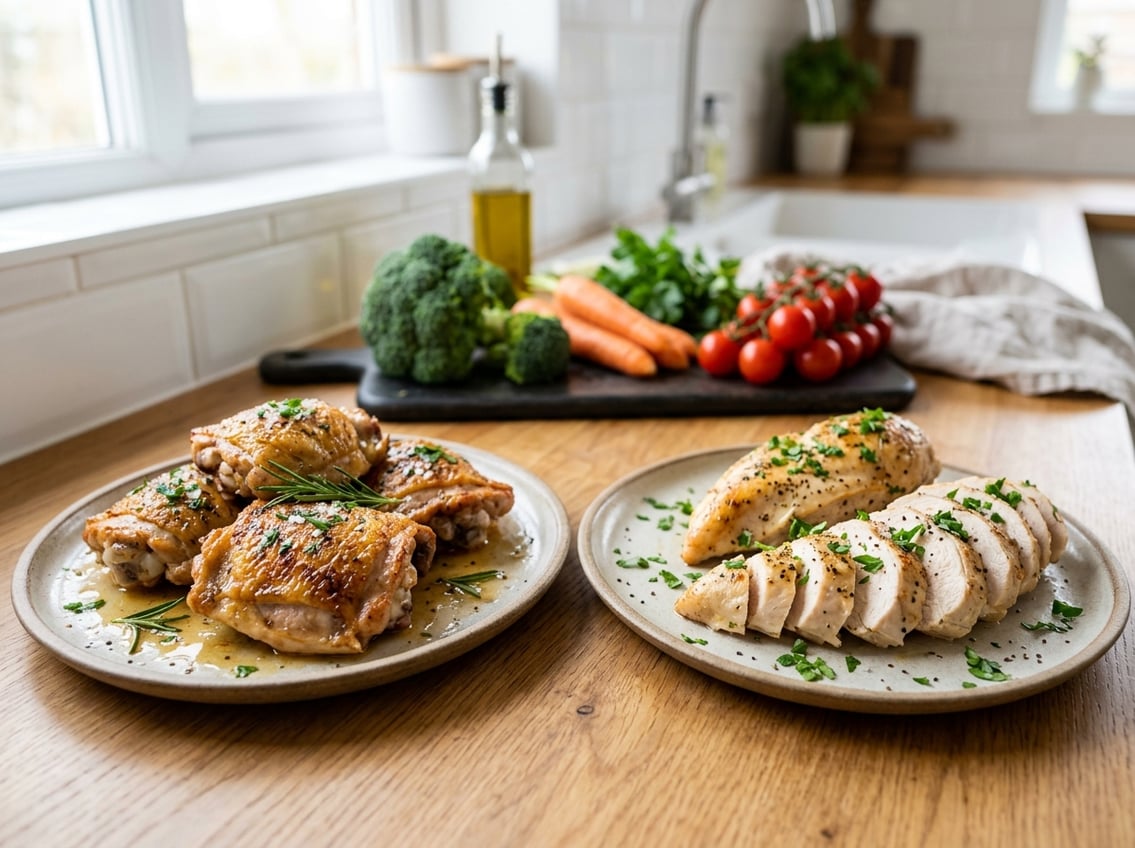
You’ll get a clear nutrient comparison, learn which cooking methods preserve health benefits, and see when thighs may serve your goals better than breasts. Expect practical guidance on calories, fat, flavor, and tips to help you choose the cut that matches your nutrition and culinary priorities.
Nutritional Breakdown of Chicken Thighs and Breasts

You’ll find measurable differences in calories, fat, protein, and micronutrients between thighs and breasts. Choose skinless cuts to compare lean protein values directly and to control added fats.
Calorie and Protein Content
Skinless chicken breasts deliver more protein per calorie than skinless chicken thighs. For a 100 g serving, expect roughly 22–24 g of protein and about 100–120 kcal from a boneless, skinless breast.
Skinless chicken thighs provide about 18–20 g of protein per 100 g but pack more calories, typically 140–160 kcal, because of higher fat. If you want a more energy-dense, satisfying portion, thighs do that without dropping protein below meaningful levels.
Fat Profile and Types
Thighs contain substantially more total fat than breasts, even when both are skinless. Expect roughly 6–9 g of total fat per 100 g in skinless thighs versus about 2–3 g in skinless breasts.
Saturated fat rises modestly in thighs compared with breasts, but the majority of the fat is monounsaturated and polyunsaturated. Keeping the skin off reduces saturated fat further.
If you manage LDL cholesterol or aim for lower saturated fat, prioritize skinless breasts or trim visible fat from thighs and use low-fat cooking methods like grilling or roasting.
Key Vitamins and Minerals
Thighs supply higher amounts of iron and zinc than breasts because dark meat has more myoglobin. You’ll get more iron per serving from skinless chicken thighs, which supports oxygen transport and can matter if you’re iron-sensitive or have higher iron needs.
Breasts are richer in vitamin B6 and niacin per gram, nutrients that support energy metabolism and nervous system function. Both cuts offer selenium and phosphorus in meaningful amounts.
If you rotate between skinless chicken breasts and thighs, you balance higher iron and zinc from thighs with higher B vitamins from breasts.
Health Benefits Associated With Chicken Thighs
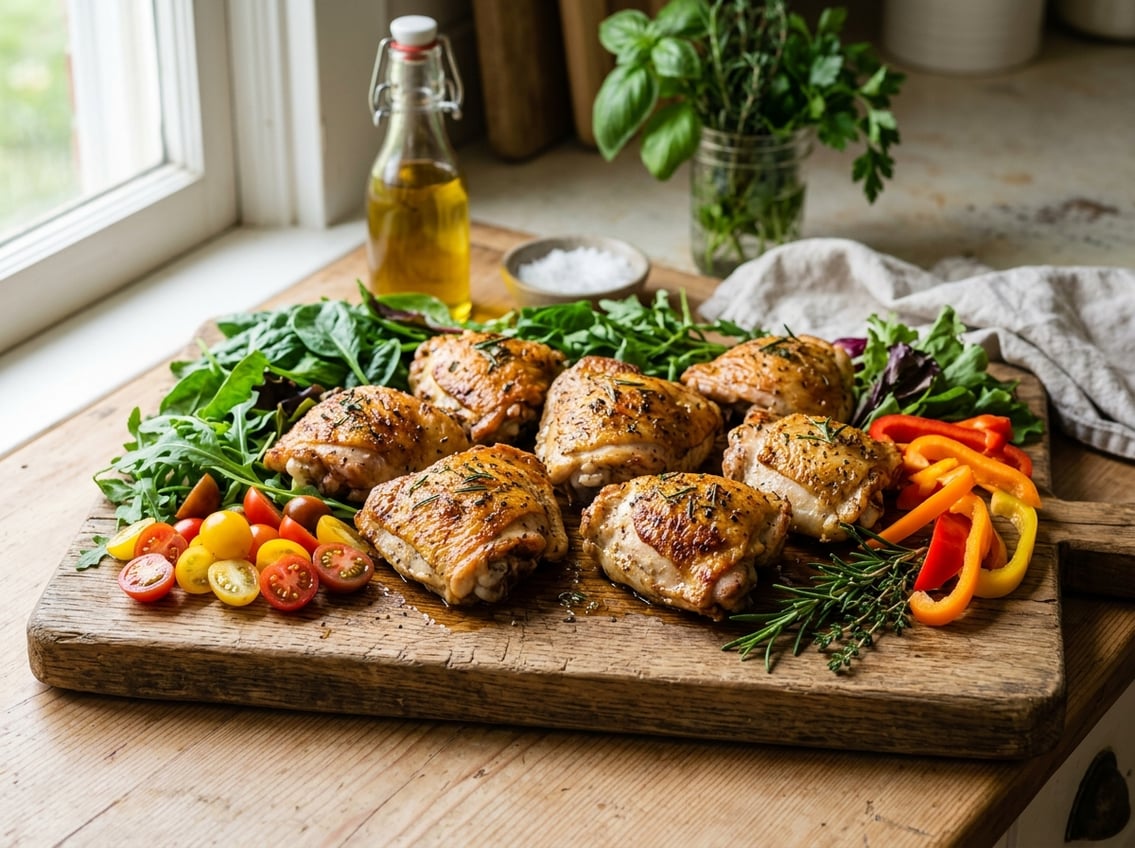
Chicken thighs deliver more calories, fat, and micronutrients per ounce than breasts. They provide satisfying protein that supports appetite control and important minerals like iron and zinc.
Satiety and Fullness
Chicken thighs contain about 9 g of total fat and 20 g of protein per 3‑ounce cooked, skinless serving, compared with roughly 3 g of fat and a similar protein amount in the same size breast. That additional fat slows gastric emptying, which helps you feel full longer after a meal.
Combined with the high-quality lean protein in thighs, this promotes preservation of muscle mass while reducing the urge to snack between meals.
If you manage weight or appetite, choose thighs in balanced portions and pair them with fiber-rich vegetables or whole grains. The combination of protein, fat, and fiber produces a steadier blood glucose response than a low‑fat, high‑glycemic meal.
Essential Minerals and Micronutrients
Thighs provide higher amounts of several micronutrients per serving than breasts, notably iron, zinc, and B vitamins. A 3‑ounce cooked thigh typically supplies more heme iron and zinc, nutrients you need for energy production, oxygen transport, and wound repair.
If you are at risk for low iron or have higher mineral needs, swap some breast servings for thighs to increase your intake without adding processed foods or supplements. Keep portions moderate and use cooking methods like grilling or roasting to limit added fat.
Support for Immune Function
Chicken thighs supply zinc and selenium, both important for immune cell function and antioxidant defense. Zinc supports white blood cell activity and wound healing, while selenium contributes to antioxidant enzymes that reduce oxidative stress during infections.
You don’t need large portions to get benefits. Regular inclusion of thighs in a varied diet helps maintain adequate zinc and selenium levels.
Pair thighs with vitamin C–rich vegetables to enhance iron absorption and further support immune processes.
Flavor, Texture, and Culinary Advantages
Chicken thighs deliver richer flavor, more forgiving texture, and greater versatility in recipes compared with breasts. They stay moist at higher temperatures, work across global dishes, and usually cost less per pound.
Juiciness and Cooking Versatility
Thighs contain higher intramuscular fat and connective tissue than breast meat, which keeps them moist during long cooking and high-heat methods. You can sear, braise, grill, or deep-fry thighs and still get tender results.
Even skinless chicken thighs resist drying out better than skinless breasts. If you make fried chicken, thighs give juicier bites under a crisp crust because the fat renders slowly and protects the meat.
For quick weeknight cooking, thinly pounded breasts can work, but thighs tolerate variable timing, making them more user-friendly for home cooks.
Role in Different Cuisines
Thighs appear in stews, curries, and braises where collagen breaks down into a silky mouthfeel, enhancing dishes like coq au vin, chicken tikka masala, and gumbo. Their stronger flavor stands up to bold spices and long marination, so you can push acids, chilis, and fermented ingredients without losing meat character.
In grilling and rotisserie applications, skin-on thighs produce crisp skin and flavorful drippings. If you prefer leaner meals, skinless chicken thighs still contribute more depth than breasts in rustic and sauced recipes, letting sauces cling and carry the dish’s flavor.
Cost-Effectiveness of Chicken Thighs
Thighs typically cost less per pound than boneless, skinless breasts, giving you more protein and flavor for your budget. That price difference matters if you cook for a family or prepare batch meals.
Because thighs tolerate diverse cooking methods and reheating, they reduce waste. Leftovers remain tender and reheated textures stay pleasant.
That practical durability translates into both monetary and time savings when you plan menus or preserve cooked portions.
Comparing Fat and Calorie Content for Weight Management
Chicken thighs contain more fat and calories than breasts, which affects meal planning, satiety, and portion sizes. If you choose skinless cuts and account for cooking method, you control energy intake while keeping protein high.
Impact of Skin-On Versus Skinless Cuts
Skin adds substantial calories and saturated fat to both thighs and breasts. A 100 g skinless chicken breast has roughly 100–110 kcal and 2–3 g fat, while a 100 g skinless thigh is closer to 140–150 kcal and 7–9 g fat.
Leaving the skin on can add 50–100+ kcal per serving depending on size and cooking method. If you want richer flavor with fewer added calories, remove the skin after cooking or use skinless chicken thighs.
Roasting or grilling drains fat better than pan-frying in oil, so the same cut can differ by tens of calories based on technique.
Role in Balanced Diets
Both thighs and breasts deliver high-quality lean protein that supports muscle maintenance and metabolic health. Use chicken breasts when you need a lower-fat option around workouts or on higher-protein, lower-calorie days.
Include skinless chicken thighs when you want longer satiety. Their higher fat slows digestion and can reduce snacking.
Balance portions by pairing thighs with non-starchy vegetables and controlled grains to keep total meal calories appropriate for your goals.
Considerations for Weight Loss
If weight loss is the objective, prioritize skinless chicken breast for a lower-calorie, higher-protein option that fits a calorie deficit more easily. You can still lose weight while eating skinless chicken thighs—just adjust portion size and total daily calories.
Track serving sizes. A typical cooked thigh (about 85–100 g) can contain 160–220 kcal depending on skin and cooking.
Swap cooking oils for herbs, citrus, or spice rubs to maintain flavor without adding significant calories.
Cooking Methods and Their Nutritional Impact
Different cooking methods change calorie density, fat content, and nutrient retention in both thighs and breasts. Choose techniques that limit added fats and preserve moisture to keep skinless chicken thighs and breasts nutritious and satisfying.
Benefits of Grilling, Baking, and Roasting
Grilling, baking, and roasting let you cook chicken thighs and chicken breasts with minimal added fat. Skinless chicken thighs retain moisture better than breasts during these dry-heat methods, so you can avoid adding oils or butter to prevent dryness while keeping calories lower than frying.
Grilling at medium-high heat chars surface fat and juices, which reduces the final fat content slightly and gives flavor without batter or oil. Baking or roasting at moderate temperatures (325–375°F / 160–190°C) cooks thighs through while preserving B vitamins and minerals more effectively than prolonged high-heat frying.
If you want lean protein, roast or bake skinless chicken breasts but watch cooking time to avoid dryness. For thighs, these methods maintain a richer texture that increases satiety.
Use herbs, citrus, and spice rubs instead of oil-heavy marinades to add flavor without many extra calories.
Risks of Frying and Added Oils
Frying, especially deep-frying, substantially raises calories and fat in both fried chicken and pan-fried cuts. A single serving of battered, fried chicken can contain two to three times the fat of the same portion baked or grilled.
That extra fat often includes saturated and trans fats from reused oils or hydrogenated coatings, which can raise LDL cholesterol if you eat them frequently. Pan-frying without batter still increases calories when you use tablespoons of oil; a tablespoon of oil adds about 120 calories.
Skin-on thighs absorb more surface fat during frying than skinless chicken thighs, so removing the skin or choosing skinless chicken breasts or thighs reduces added fat.
To lower risk while frying, use small amounts of high-smoke-point oils, maintain proper oil temperature (around 350–375°F / 175–190°C), and drain on paper towels. Prefer grilling, baking, or roasting when your goal is lean protein with controlled calorie and fat intake.
Expert Insights and Dietary Guidance
Chicken thighs supply more fat, certain micronutrients like iron and zinc, and often more flavor than breasts. Breasts deliver slightly more protein per ounce and less saturated fat.
Choose thighs when you want higher iron, zinc, and culinary juiciness. Choose breasts when you need lower calories or lower total fat.
Recommendations From Registered Dietitians
Registered dietitians recommend matching the cut to your goals and cooking method. If you need higher iron or more calories for energy, choose thighs. If you aim to reduce total calories or saturated fat, choose skinless breasts.
Dietitians also stress portion control. A standard serving is about 3–4 ounces cooked.
Track how you prepare the meat. Grilling or roasting keeps added fats low, while frying or heavy sauces can negate the nutritional edge of either cut.
Pay attention to sodium on packaged products. Many retail chicken products are injected with salt or brines, so read labels if you limit sodium.
Include both white and dark poultry across meals to benefit from varied nutrients without relying on one cut exclusively.
Guidance From the Academy of Nutrition and Dietetics
The Academy recommends poultry without skin as a lean protein swap for red meat because it typically provides less saturated fat.
When comparing breasts and thighs, the Academy notes breasts are leaner per ounce. Thighs contain more total and saturated fat but offer more iron and flavor.
Remove skin before eating to lower saturated fat intake. Use healthy cooking methods like baking, grilling, or roasting to control added fats.
The Academy also emphasizes food safety and label reading. Cook poultry to an internal temperature of 165°F.
Thaw frozen poultry safely in the fridge. Check Nutrition Facts for added sodium or solutions.


