
Which Is Better: Chicken Thighs or Drumsticks? Nutrition, Flavor, and Cooking Guide
When you want juicy, forgiving meat for slow cooking or a richer flavor, choose chicken thighs. If you want budget-friendly, handheld pieces with crispy skin, go for drumsticks.
You’ll learn how each cut’s anatomy, fat content, and meat-to-bone ratio affect flavor and cooking so you can pick the best option for your meal and budget.
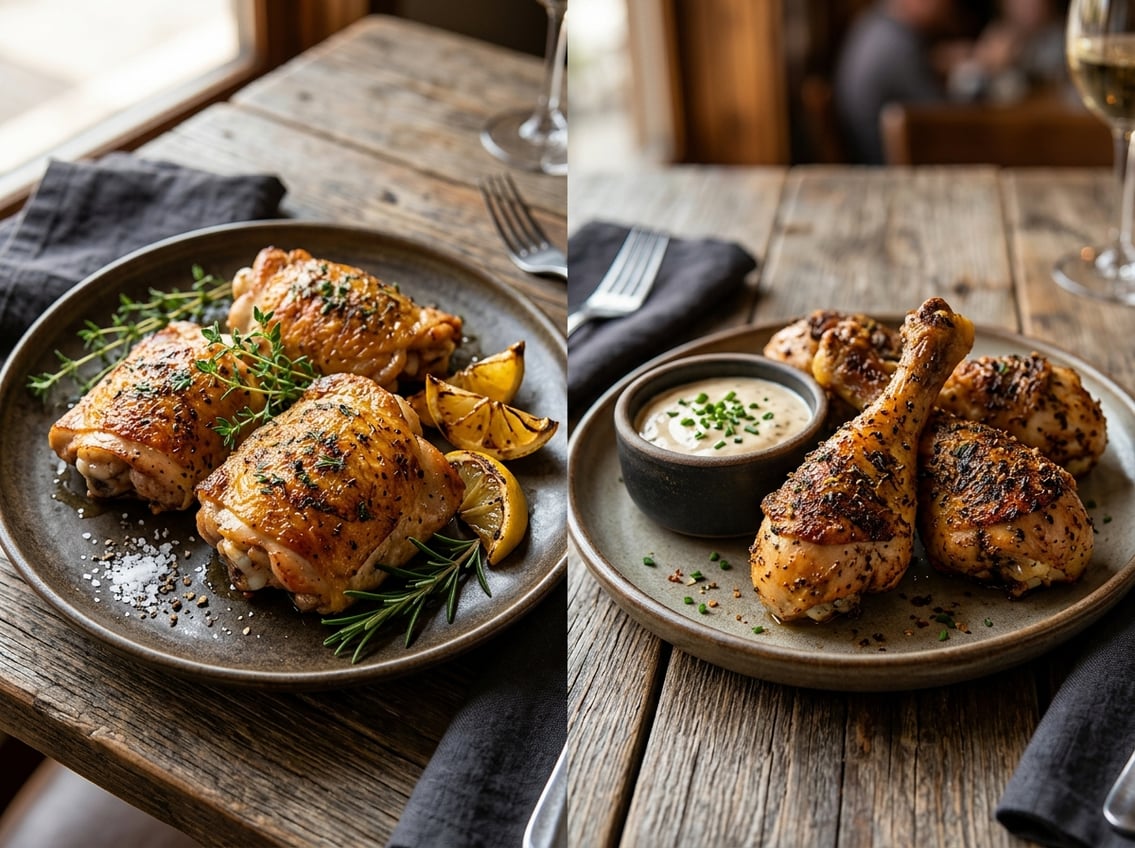
Expect clear comparisons of nutrition, texture, and cooking methods, plus practical tips to keep your choice healthy and delicious.
Understanding Chicken Leg Cuts
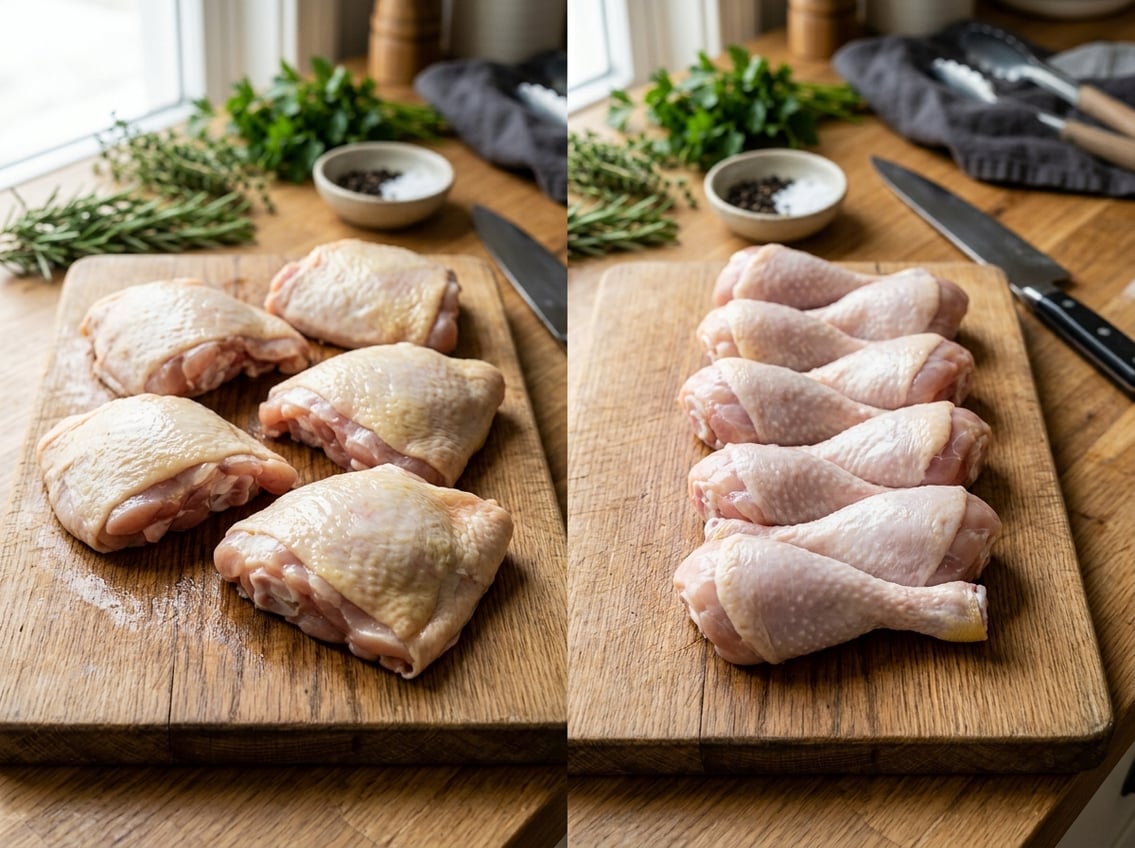
You’ll learn where each cut comes from and how their bones and fat affect cooking. You’ll also see the common boneless or skinless options you’ll find at the store.
Anatomy of the Chicken Thigh and Drumstick
The thigh sits on the upper leg and contains the femur and the hip joint. It has more muscle mass and visible fat pockets, which give chicken thigh richer flavor and juicier results when you roast or braise it.
The drumstick is the lower leg, built around the tibia and a kneecap joint. It has denser connective tissue and a slightly firmer bite than the thigh.
Drumsticks are easy to handle for grilling or frying because of their shape. Both cuts are dark meat, meaning higher myoglobin and fat than breast, which translates to more flavor and a forgiving cook window.
Difference Between Chicken Leg, Thigh, and Drumstick
A “chicken leg” commonly refers to the entire leg portion: thigh plus drumstick joined at the joint. When you order a leg, you often get both pieces together.
A thigh refers specifically to the upper section attached to the body, while a drumstick is the lower section that tapers toward the foot. In retail labeling, you’ll see “leg” used interchangeably, so check whether the seller means a whole leg or just one portion.
Meat yield differs: thighs generally give you more meat per piece and a higher fat content. Drumsticks offer a satisfying single-serve portion with slightly less fat.
Choose by portion size, texture, and how you plan to cook them.
Bone-In vs. Boneless and Skinless Options
Bone-in chicken thighs and drumsticks keep moisture and flavor during long cooks. The bone conducts heat and helps the meat stay juicy.
Use bone-in cuts for roasting, smoking, or slow braising. Boneless thighs cook faster and are easier to cut into strips or cubes for stir-fries, sandwiches, and burgers.
They have slightly less flavor than bone-in but remain forgiving because of higher fat. Skinless chicken options reduce calories and crispiness but cook faster and need careful timing to avoid drying out.
If you want crisp skin, buy bone-in chicken thighs or drumsticks with skin and roast at higher heat.
Quick comparison:
- Bone-in, skin-on: best for roasting, BBQ, long cooks.
- Boneless, skinless thighs: best for quick sautés, kebabs, fillings.
- Drumsticks (bone-in): best for grilling, frying, single portions.
Nutrition Facts and Health Considerations
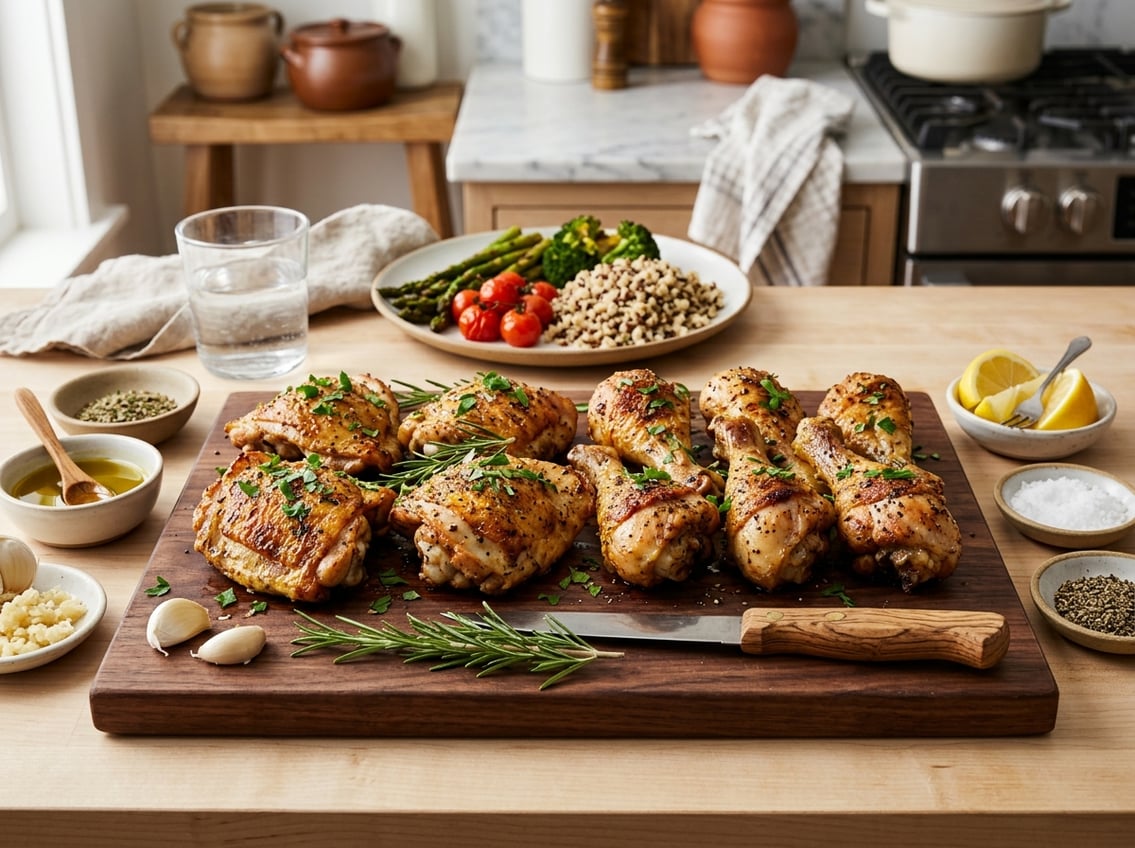
You’ll see small but meaningful differences between chicken thighs and drumsticks that affect calories, fat, protein, and certain minerals.
Calorie, Protein, and Fat Comparison
Per 100 g raw, skinless portions, chicken thigh typically provides about 121 kcal, 19.7 g protein, and 4.1 g total fat. A comparable chicken drumstick (skinless) gives about 116 kcal, 19.4 g protein, and 3.7 g fat.
Protein amounts are nearly identical, so both cuts serve well for muscle-building or high-protein meals. Drumsticks are slightly leaner, about 4–5 kcal and 0.4 g fat less per 100 g.
If you count calories, choosing drumsticks or trimming thighs can shave intake. If you prioritize richer flavor and slightly higher fat, thighs deliver that.
Vitamins, Minerals, and Micronutrients
Dark meat contains more myoglobin and therefore some different micronutrient levels than white meat. Chicken thighs tend to be a touch higher in iron, which supports oxygen transport.
Drumsticks often contain more zinc per 100 g, which aids immunity and wound healing. Both cuts supply B vitamins (especially niacin and B6) important for energy metabolism.
If you rely on poultry for key minerals, check portion sizes. Differences are modest but can be relevant over frequent servings.
Skin-On vs. Skinless Choices
Leaving the skin on increases calories and fat substantially for both thigh and drumstick. For example, a skin-on thigh can raise calories by about 100 kcal per 100 g versus skinless and add around 12 g fat.
A skin-on drumstick adds less but still increases calories by roughly 40–50 kcal. If you want to reduce saturated fat and total calories without lowering protein, remove the skin before cooking.
If flavor and juiciness are your priorities and your overall diet can accommodate extra fat, cook with the skin on but account for the added calories. Watch for pre-seasoned or injected products, as they can raise sodium and caloric content even when the piece is skinless.
Flavor, Texture, and Eating Experience
You’ll find thighs and drumsticks both deliver dark meat richness, but they differ in flavor intensity, texture, and how much meat you get per bone.
Taste Differences Between Thighs and Drumsticks
Thighs generally taste richer because they contain more intramuscular fat and connective tissue. That rendered fat carries savory compounds that amplify umami and make seasonings meld into the meat.
Drumsticks have a slightly milder, more direct chicken flavor. Their flavor reacts well to bold sauces and high-heat techniques that add crispness.
If you prefer pronounced fattiness, choose thighs. If you want a meatier, sauce-friendly bite, choose drumsticks.
Juiciness, Tenderness, and Mouthfeel
Thighs stay juicier during cooking because the higher fat content and marbling protect the muscle fibers. When cooked properly, thigh meat has a softer, almost silky mouthfeel.
Drumsticks can be firmer and slightly chewier due to denser muscle and less fat. Slow-cooking tenderizes drumsticks, while quick frying or grilling gives them a satisfying exterior crunch.
Both cuts hold moisture better than white meat. For maximum juiciness, monitor internal temperature: aim for about 175–185°F (79–85°C) for thighs and 165–175°F (74–79°C) for drumsticks, depending on your texture preference.
Meat-to-Bone Ratio
Drumsticks have a higher bone-to-meat ratio than thighs. That single large bone runs through most of the drumstick, so you get less edible meat per piece but a convenient portion size.
Thighs offer more meat relative to bone. The bone structure is broader but surrounded by thicker muscle, so you yield more shredded or sliced meat from each thigh.
Bones add flavor during cooking by releasing collagen and marrow compounds. If you need maximum yield, choose boneless thighs. If you value portion control and hands-on eating, drumsticks deliver a compact, flavorful serving.
Cooking Methods and Recipe Versatility
Thighs and drumsticks both handle high heat and slow cooking well. Each cut shines with specific techniques.
Choose thighs for moist, richly flavored dishes. Drumsticks are great when you want a sturdy, hand-held piece with crisp skin.
Best Cooking Techniques for Each Cut
Bone-in chicken thighs hold moisture during grilling, braising, and roasting. They tolerate long braises like chicken tikka masala or oven stews without drying.
Use boneless thighs for quick pan-sears, stir-fries, or flattening into cutlets for sandwiches. Drumsticks roast, grill, and deep-fry well because the meat stays attached to the bone and develops a crisp exterior.
Air-frying or broiling produces crunchy skin with minimal oil. When you slow-cook drumsticks, the connective tissue breaks down into tender meat.
For both cuts, pat skin dry, season or brine, and use a thermometer. Target 165°F (74°C) internal temperature; thighs often benefit from slightly higher carryover to render fat.
Popular Dishes
Use drumsticks for classic fried chicken and backyard grilling. Drumsticks also suit BBQ rubs, honey-glazed roasts, and rustic braises.
Choose bone-in chicken thighs for richer dishes like chicken tikka masala, adobo, and casseroles. Boneless thighs work in stir-fries, tacos, and quick weeknight recipes where you want bite-sized pieces.
For parties, buffalo-style drumsticks mimic wings but are meatier and easier to eat. Thighs can be chopped for buffalo chicken dip or shredded for sliders.
Ease of Preparation and Meal Types
If you want low-effort prep, drumsticks require minimal trimming and hold marinades with little hands-on work. They’re ideal for sheet-pan dinners, kids’ meals, and grilling sessions.
Thighs demand slightly more attention when boneless. You may need to trim fat or butterfly for even cooking.
Boneless thighs cook faster and adapt to sautés, skewers, and bowls. Use drumsticks when you want easy handling and crisp skin. Pick thighs when you need juicy, forgiving meat that soaks up sauces and spices.
Cost, Availability, and Choosing the Right Cut
You’ll weigh price, how easy each cut is to find, and which option stretches your budget best.
Price Comparison
Thighs typically cost more per pound than drumsticks, especially when sold boneless and skinless. Bone-in thighs and whole drumsticks often sit at lower prices.
Drumsticks can show the lowest sticker price because of their higher bone-to-meat ratio. Compare by yield: a package of drumsticks may look cheaper, but you get less edible meat per pound than boneless thighs.
If a recipe calls for shredded or cubed meat, boneless thighs can be more economical once you factor prep time and waste. Watch for sales and buy larger packs to lower per-serving cost.
Availability in Stores and Markets
Supermarkets commonly stock both bone-in thighs and drumsticks year-round. Boneless thighs are widely available but can sell out faster at higher-end or organic sections.
Farmer’s markets and butcher shops often carry whole legs and custom cuts, so you can request bone-in or boneless options. Regional demand affects shelf presence.
Drumsticks may be more common in stores aiming for budget shoppers, while boneless thighs appear more in stores targeting convenience. When you need a specific cut, call ahead or check online inventory.
Selecting Cuts for Different Budgets
If you’re on a tight budget, choose bone-in drumsticks for the lowest upfront cost per package. They work well for roasting, grilling, and kid-friendly meals.
For mid-range budgets, bone-in thighs offer a balance of flavor and meat yield. If convenience and quick prep matter, opt for boneless thighs despite the higher price.
Mix cuts when meal-planning: use cheaper drumsticks for bulk meals and reserve thighs when flavor or texture matters most.
Tips for Making a Healthy and Tasty Choice
Choose the cut that fits your meal plan and cooking method. Control portion size, and use techniques that reduce added fat while preserving flavor.
Portion Sizes and Serving Suggestions
Serve 3–4 ounces of cooked chicken per person, about the size of a deck of cards. For drumsticks, choose one medium drumstick per serving.
For boneless thighs, plan on one small thigh or half a large thigh per person. Trim visible fat from skin-on pieces or remove the skin after cooking to reduce saturated fat while keeping the meat juicy.
Serve slightly larger portions of skinless chicken thighs, since they have less surface fat. Fill half the plate with nonstarchy vegetables, one-quarter with a cooked grain or starch, and one-quarter with chicken.
Bake a mix of drumsticks and boneless thighs for family meals to meet different texture preferences and help with portion control.
Healthier Cooking Practices
Choose baking, grilling, steaming, or air-frying instead of deep-frying. Roast at 425°F (220°C) for 25–35 minutes or use an air fryer for 18–22 minutes, turning once, to get crispy skin without frying.
Marinate chicken with acids like lemon or vinegar, along with herbs and spices, to add flavor without many calories. Use a light brush of olive oil or a spray to prevent sticking instead of submerging pieces in oil.
If you crave fried chicken, use a thinner batter and pan-fry in a shallow oil layer, then drain on paper towels. You can also coat skinless chicken with panko and bake it for a crunchy texture.
Monitor the internal temperature of boneless thighs and cook to 165°F (74°C) to avoid overcooking and losing excess moisture.
Pairing Chicken with Sides
Choose high-fiber, low-sugar sides to keep the meal filling and nutritious.
Roasted Brussels sprouts, a bean salad, or steamed green beans provide fiber and micronutrients that pair well with drumsticks or thighs.
Swap starchy sides for portion-controlled grains like ½ cup cooked quinoa or brown rice.
If you serve fried chicken, increase vegetable portions and skip heavy gravies to offset calories.
For sauces, choose tomato-based salsas, chimichurri, or yogurt-based dips to add flavor without excess saturated fat.
When you serve skinless chicken, add a bright herb sauce or citrus to boost taste without adding many calories.


