
Will Chicken Thighs Cook in Slow Cooker: Guide to Juicy, Flavorful Results
You can reliably cook chicken thighs in a slow cooker. They turn tender, juicy, and remain forgiving even if you step away from the kitchen.
Set the cooker to low for 4–6 hours or high for 2–3 hours. The thighs reach safe, pull-apart doneness while soaking up sauces and seasonings.
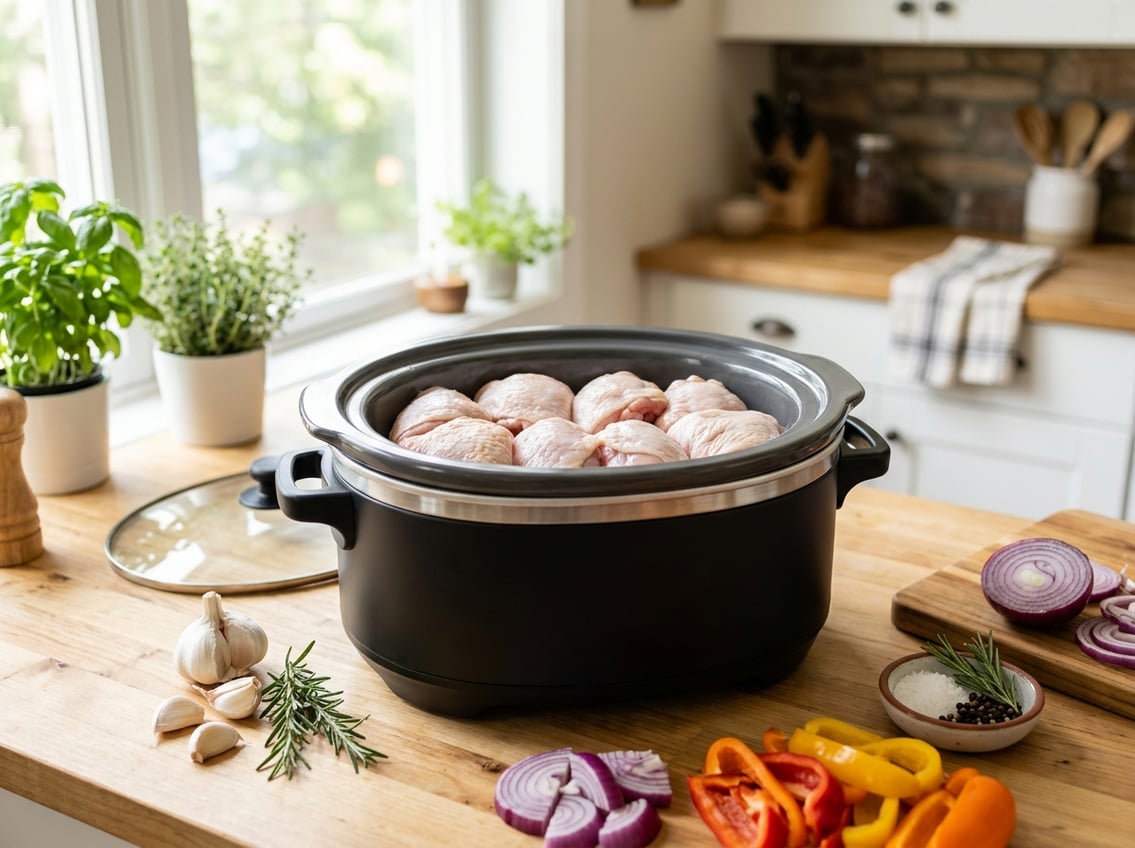
Slow cookers transform chicken thighs, whether bone-in or boneless, and both work well depending on your goal. Different seasoning approaches give great results.
You’ll find step-by-step timing, ingredient ideas for easy crockpot chicken dinners, and tips for storing and reheating leftovers.
How Slow Cookers Transform Chicken Thighs
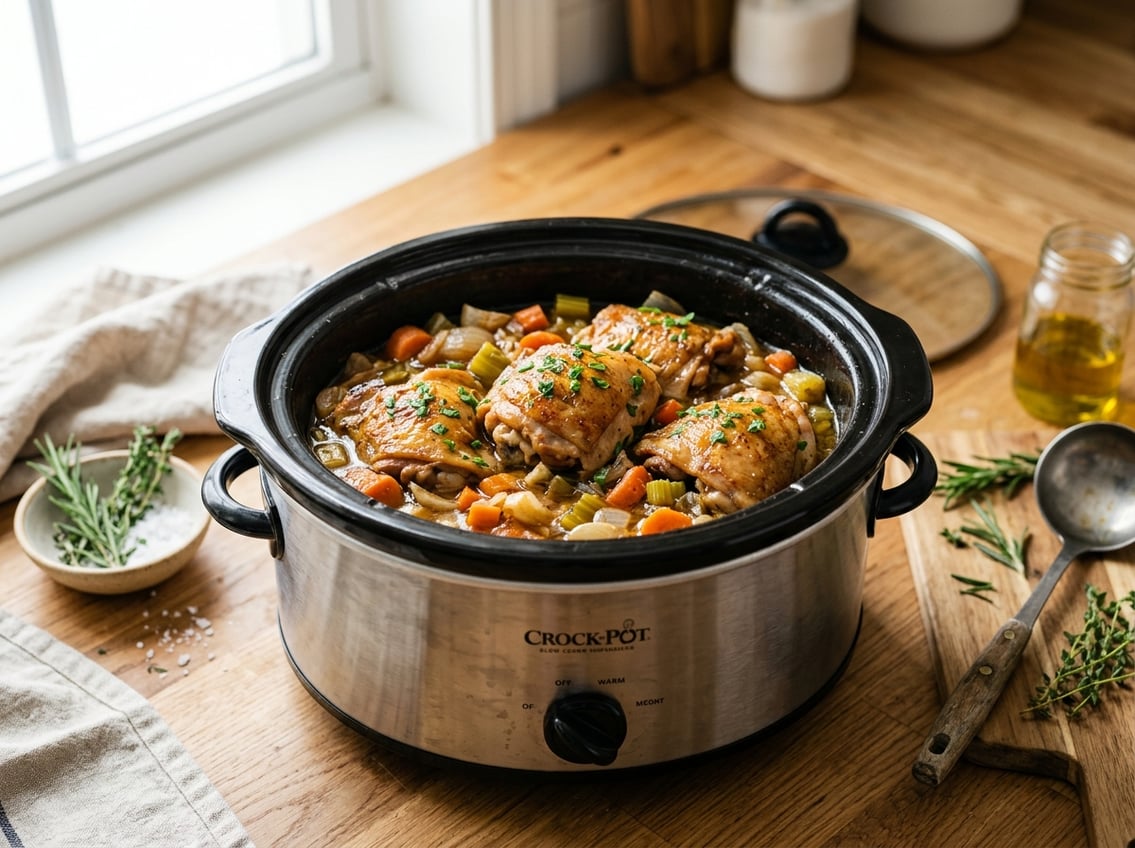
Slow cooking converts connective tissue, concentrates flavors, and keeps meat moist. You get tender, juicy chicken thighs with minimal hands-on time.
This method suits weeknight dinners and bulk meal prep.
Why Choose Chicken Thighs for Slow Cooking
Chicken thighs contain more connective tissue and fat than breasts. This benefits low-and-slow cooking.
Collagen in thighs breaks down into gelatin during gentle heat. This produces chicken that stays moist instead of drying out.
Thighs tolerate longer cook times without becoming stringy. You can set the crockpot and leave it.
Bone-in thighs add extra flavor. Boneless thighs make carving and reheating easier.
Use skin-on thighs for richer sauce, or skinless to reduce surface fat.
For a simple slow cooker chicken thigh recipe, pair thighs with aromatics like onion and garlic, a cup of broth or sauce, and your favorite seasonings. This yields juicy chicken and a flavorful cooking liquid you can turn into gravy or a sauce for rice and potatoes.
How Slow Cookers Ensure Tender and Juicy Meat
Slow cookers apply steady, low heat (typically 170–280°F) that prevents rapid moisture loss. This gentle environment lets muscle fibers relax while collagen converts to gelatin, locking in juices and producing a melt-in-your-mouth texture.
Add a small amount of liquid such as broth, tomato sauce, or marinade to maintain juiciness. The meat cooks in a humid environment and avoids drying out.
Avoid lifting the lid while cooking. This drops temperature and extends cooking time.
Use a meat thermometer to check thighs reach 165°F internal temperature. Remove once done and let rest briefly for best texture.
Searing thighs first in a skillet enhances flavor through browning, but you can skip this step. Even without searing, the slow cooker produces tender chicken thighs for shredding, slicing, or serving whole.
Benefits for Busy Cooks and Meal Prep
Slow cooker chicken thigh recipes free you from stovetop timing and hands-on steps. You can start in the morning and return to a completed dinner.
Thighs reheat better than breasts, making them ideal for meal prep. Cook a large batch with vegetables, then divide into containers for several days of lunches or dinners.
Label containers with date and sauce type to simplify reheating. Use boneless thighs for faster serving.
Switch the cooker to “warm” if you’ll be gone longer than the recipe time. Reserve some cooking liquid to keep portions moist when reheating.
Bone-In vs. Boneless Chicken Thighs
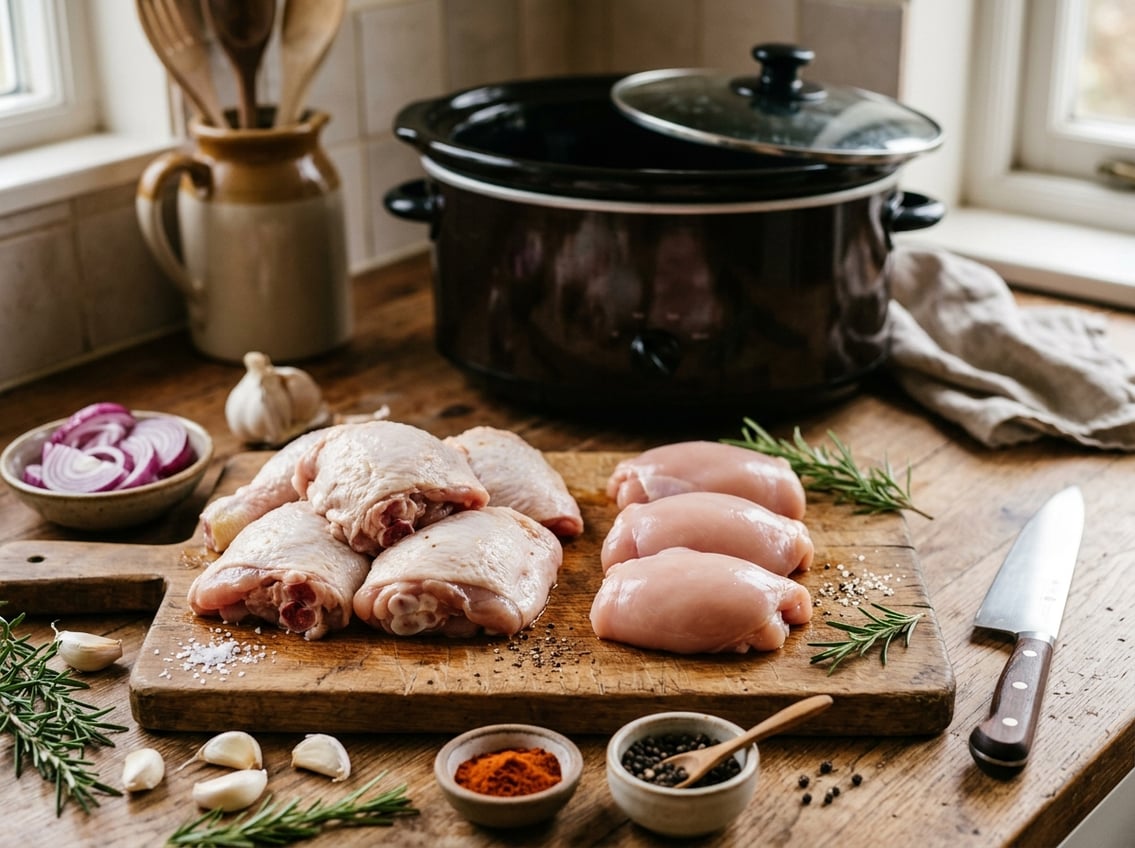
Bone-in thighs hold more fat and connective tissue. This gives you richer flavor and extra moisture.
Boneless thighs cook faster and are easier to portion and shred.
Flavor and Texture Differences
Bone-in chicken thighs deliver deeper, more concentrated taste. The bone and marrow add savory notes during slow cooking.
The skin and extra fat melt into the braising liquid, keeping meat tender and producing juicier chicken that resists drying.
Boneless chicken thighs have a more uniform texture and absorb sauces quickly. They shred easily and work well for tacos or salads.
You lose some depth of flavor compared with bone-in, but gain convenience and faster sauce infusion.
Cooking Time Considerations
Bone-in, skin-on thighs require longer slow-cooker time because the bone insulates the meat. Plan on 6–8 hours on low or 3–4 hours on high for tender results.
Use a meat thermometer to check for 165°F (74°C) in the thickest part, avoiding contact with the bone.
Boneless, skinless thighs typically finish in about 4–6 hours on low or 2–3 hours on high. They reach safe temperature faster and are less likely to stall the cooker’s heat.
If you start with large or very cold pieces, add 30–60 minutes to ensure juicy chicken thighs.
Best Use Cases for Each Type
Choose bone-in thighs for maximum flavor and a sauce-rich finish. Braises and slow-cooked barbecue benefit most from this cut.
Use bone-in for recipes where tenderness and richer pan juices matter.
Pick boneless thighs for shredded-chicken recipes, tacos, sandwiches, and meal prep. They save prep time and give consistently sized pieces for even cooking.
If you want a crisp skin finish, remove bone-in thighs after slow cooking and broil briefly.
Essential Ingredients and Seasoning Tips
Use a reliable salt amount, a clear seasoning plan, and decide whether to add liquid or rely on the chicken’s own juices.
Pick complementary aromatics and a fat source to control browning and mouthfeel.
Classic Spice Blends for Slow Cooker Chicken
Start with salt and freshly ground black pepper, then build flavor with dried spices. A simple blend: 1 tsp garlic powder, 1 tsp onion powder, 2 tsp paprika, and 1 tsp dried herb (thyme or oregano) per 2 pounds of thighs.
Adjust salt to taste; kosher salt gives you more control.
For a bolder profile, add 1/2–1 tsp smoked paprika and 1/2 tsp crushed red pepper. If you use a store rub with salt, reduce added salt by about 25–50%.
Rub the spice mix under and over the skin for even seasoning. Let it rest 15–30 minutes if possible.
Enhancing Flavor with Liquids and Aromatics
You can cook thighs in their own juices, but adding a small amount of liquid improves sauce and keeps meat juicy. Use 1/2 to 1 cup low-sodium chicken broth for a 6-quart slow cooker with 6 thighs.
Low-sodium broth prevents over-salting and still yields flavorful jus.
Add aromatics for bright, layered flavor: 3–4 smashed garlic cloves or 1 teaspoon minced garlic, 1 small sliced onion, and 1 tablespoon lemon juice. Place aromatics under the thighs to infuse the cooking juices.
Reserve lemon juice for the last 15–30 minutes if you want fresher acidity.
Butter, Oils, and Fats: What to Use and When
Fat affects texture and mouthfeel. Use olive oil (1–2 tablespoons) to help dry rubs adhere and promote browning if you sear first.
For richer flavor, add 1–2 tablespoons butter to the cooking liquid or dot butter on top of thighs before cooking. Butter melts into the jus and adds silkiness.
If you prefer crispier skin, don’t add extra liquid and avoid butter directly on the skin while slow cooking. Finish under a broiler or in a hot skillet with a teaspoon of oil to crisp.
For braising-style dishes, rely on fat from bone-in, skin-on thighs and add a splash of olive oil to control sticking.
Step-by-Step Slow Cooker Chicken Thigh Method
This method focuses on seasoning and optional browning, arranging thighs with vegetables or liquid, and choosing the right temperature and time for tender, safe results.
Prepping the Chicken Thighs
Pat each thigh dry with paper towels to remove surface moisture. This helps seasoning adhere and reduces splatter if you sear.
Trim large pieces of excess fat or loose skin, but keep a bit of fat for flavor.
Season generously with salt and pepper, plus 1–2 teaspoons total of your preferred herbs or spice blend per pound. Paprika, garlic powder, thyme, or cumin work well.
If marinating, do so in the refrigerator for 1–4 hours. Avoid long marinades with acid over 8 hours to prevent mushy texture.
If using bone-in thighs, the bone adds flavor and helps prevent overcooking. Two to three pounds serves 4–6 people.
Searing vs. Direct Slow Cooking
Sear thighs in a hot skillet for 2–3 minutes per side to create brown crust and deeper flavor. Use a tablespoon of oil and a hot pan, then transfer seared thighs to the slow cooker.
You can skip searing and place seasoned thighs directly in the cooker. Cook time remains similar.
Direct slow cooking yields tender chicken thighs and saves prep time. Expect slightly less caramelized flavor and no crisp skin without finishing.
To get crispy skin, remove cooked thighs and broil skin-side up for 2–4 minutes on high. Use an oven-safe tray and watch closely.
Layering and Adding Ingredients
Arrange root vegetables like potatoes, carrots, and onions in a single layer on the bottom. They take longer to cook and prevent burning.
Place thighs on top of the vegetables or slightly overlapped for even heat circulation.
Add liquid: ½ to 1 cup of chicken broth, canned tomatoes, or a sauce per 2–3 pounds of chicken. Use just enough to create steam and prevent drying.
For a glaze or sauce, reserve some to pour over the thighs in the last 30 minutes.
Avoid overcrowding the crockpot. Leave space for steam to circulate.
Add delicate vegetables like peas or zucchini in the last 30–60 minutes to prevent mushiness.
Cooking Times and Settings
Cook bone-in thighs on LOW for 6–8 hours or HIGH for 3–4 hours. Boneless thighs finish in LOW 4–6 hours or HIGH 2–3 hours.
Check internal temperature with an instant-read thermometer. Target 165°F (74°C) at the thickest part near the bone.
If the thermometer reads 165°F but the meat feels very soft, it’s fine. Slow cooking can produce extremely tender texture.
Avoid lifting the lid during cooking. Each lift adds 15–20 minutes of cooking time.
For crispy skin, transfer thighs to a baking sheet and broil 2–4 minutes skin-side up after slow cooking.
Recommended Variations and Recipe Ideas
These variations use simple, readily available ingredients and straightforward techniques. Each idea notes key steps and flavor-builders so you can adapt to your pantry or dietary needs.
Honey Garlic
Use bone-in or boneless thighs; both stay juicy in the slow cooker.
Combine 1/3 cup honey, 1/4 cup low-sodium soy sauce or tamari, 3–4 cloves minced garlic, 1 tablespoon rice vinegar, and 1 teaspoon grated ginger. Pour over the thighs and cook on low for 6–7 hours or high for 3–4 hours until the internal temperature hits 165°F.
For a thicker glaze, remove thighs at the end and simmer the sauce on the stove with a cornstarch slurry (1 tsp cornstarch mixed with 1 tbsp water) for 1–2 minutes. Return the chicken to coat.
Serve with steamed rice and green onions. For less sugar, halve the honey and add a splash of extra vinegar or citrus.
Lemon Herb
This bright option highlights lemon juice, fresh herbs, and garlic for a clean, roast-like profile.
Whisk 1/4 cup lemon juice, 2 tablespoons olive oil, 3 cloves minced garlic, 1 teaspoon lemon zest, 1 teaspoon each dried thyme and rosemary, plus salt and pepper. Add 1/2 cup low-sodium chicken broth to the slow cooker to keep the thighs moist.
Arrange thighs skin-side up if using skin-on. Cook on low for 6–7 hours.
Finish by spooning pan juices over the meat and broil for 2–3 minutes if you want browned edges. Pair with roasted potatoes or a simple couscous tossed with parsley.
Adjust herb amounts to taste. Use fresh herbs near the end for a brighter finish.
BBQ and Global Flavors
Transform thighs into barbecue-style or international dishes by swapping the sauce base. For classic BBQ, mix 1 cup low-sodium BBQ sauce, 2 tablespoons brown sugar, 1 tablespoon Worcestershire, and 2 cloves minced garlic.
Cook on low for 6 hours. Shred and serve on buns or over mashed potatoes.
For global twists, try teriyaki with soy sauce, mirin, garlic, and ginger. For Mexican flavors, use cumin, chili powder, diced tomatoes, and jalapeño.
For curry, combine coconut milk, curry paste, and turmeric. Add about 1/2–1 cup liquid such as broth, coconut milk, or tomato to ensure even cooking.
Taste and adjust spices at the end. Increase seasoning slightly compared to stovetop recipes because slow cookers mute spices.
Low-Sodium and Healthy Alternatives
You can keep thighs flavorful while reducing sodium and fat. Start with skinless thighs and use low-sodium chicken broth (1/2 to 1 cup) as the cooking liquid.
Build flavor with aromatics like 3–4 cloves minced garlic, chopped onions, lemon juice, and a mix of dried herbs such as oregano, thyme, and bay leaf. Add vegetables like carrots and potatoes for a complete one-pot meal.
For thickening, stir in Greek yogurt off-heat or use a small amount of cornstarch slurry to avoid added sodium. If you need further sodium reduction, swap soy sauce for a splash of balsamic or extra lemon juice.
Increase fresh herbs and garlic to compensate for less salt.
Proper Storage and Reheating Methods
Store cooked chicken thighs promptly and use sealed containers to preserve juiciness and safety. Cool leftovers to room temperature for no longer than two hours before refrigerating or freezing.
Airtight Containers and Shelf Life
Place cooled chicken thighs into airtight containers that seal tightly against air and moisture. Use rigid plastic or glass containers with locking lids, or heavy-duty resealable bags with excess air pressed out.
Pack thighs with 1/4–1/2 cup of reserved cooking liquid or chicken broth to keep the meat moist. This prevents the surface from drying and preserves texture.
Label containers with date and contents. Refrigerate at or below 40°F (4°C) and eat within 3–4 days.
If you detect off-odors, sliminess, or an unusual color, discard immediately. Do not leave cooked chicken at room temperature longer than two hours (one hour if above 90°F/32°C).
Freezing and Thawing Leftovers
For longer storage, freeze chicken thighs in airtight containers or vacuum-sealed bags. Portion into meal-sized packs and include a tablespoon or two of broth to protect the meat from freezer burn.
Remove as much air as possible. When frozen properly, thighs stay good for up to 3 months with minimal quality loss.
Thaw in the refrigerator overnight for best texture and safety. For faster thawing, submerge sealed bags in cold water, changing the water every 30 minutes until thawed.
Cook or reheat thawed chicken within 24 hours. Avoid thawing at room temperature or in warm water to prevent bacterial growth.
Reheating for the Best Texture
Reheat gently to preserve juicy chicken thighs and avoid drying. Use a low oven (275–300°F / 135–150°C) for 15–25 minutes, covered, with a splash of chicken broth or reserved sauce to maintain moisture.
This way, you heat the chicken evenly and keep the skin tender. If you use a microwave, cover the thighs with a microwave-safe lid or damp paper towel.
Heat in 30–60 second bursts, flipping once, until the internal temperature reaches 165°F (74°C). For stovetop reheating, warm thighs in a skillet over low heat with 2–3 tablespoons of broth.
Keep a lid on for 6–10 minutes, turning once. Always check the temperature with a probe thermometer and remove the chicken as soon as it hits 165°F.


