
Chicken Thighs Compared to Chicken Breast Macros: Nutrition, Fat, and Cooking Insights
Chicken thighs pack more fat and calories. Chicken breasts deliver more protein per gram.
Thighs have roughly double the fat and higher calories per 100 g. Chicken breasts provide more protein per calorie, making them better for lean-protein goals.
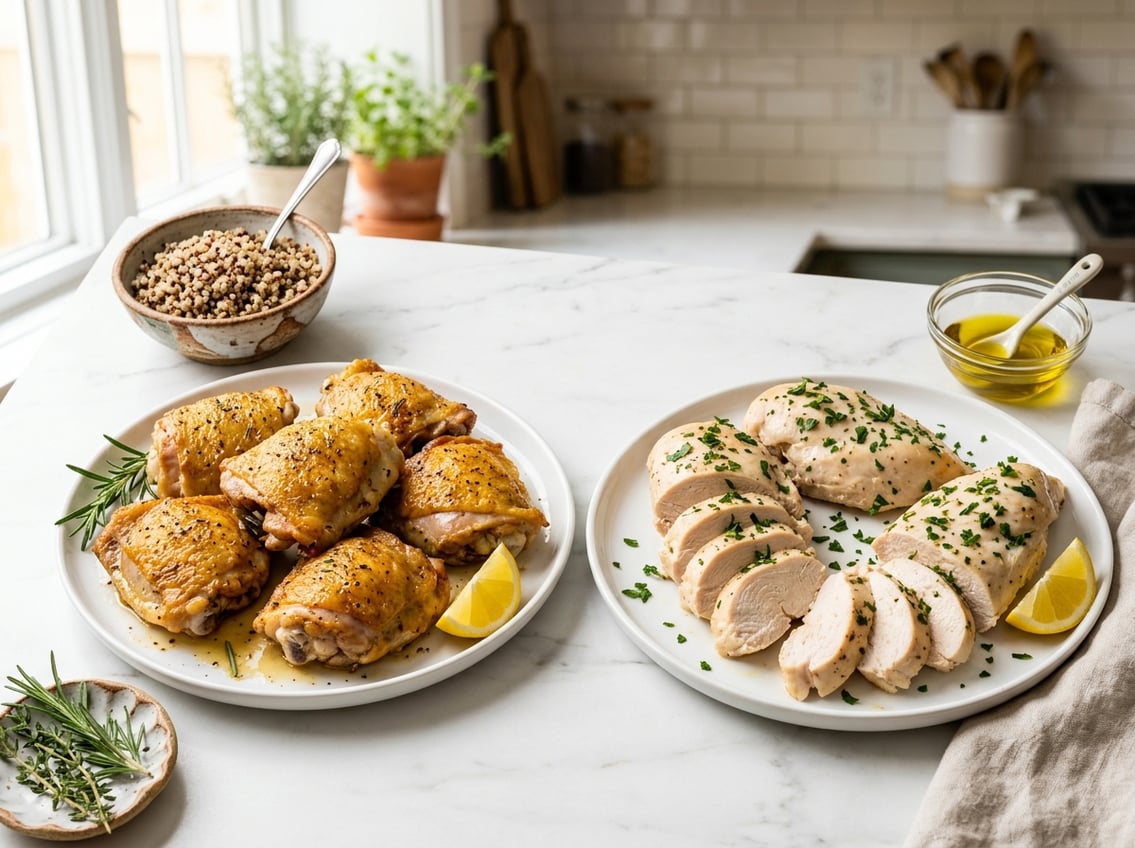
This post breaks down macros (protein, fat, calories), compares micronutrients like iron and B12, and shows how cooking methods and portion sizes change what you actually eat.
Expect guidance on when thighs help meet calorie or taste goals and when breasts help you hit strict protein targets.
Macro Breakdown: Chicken Thighs vs. Chicken Breast
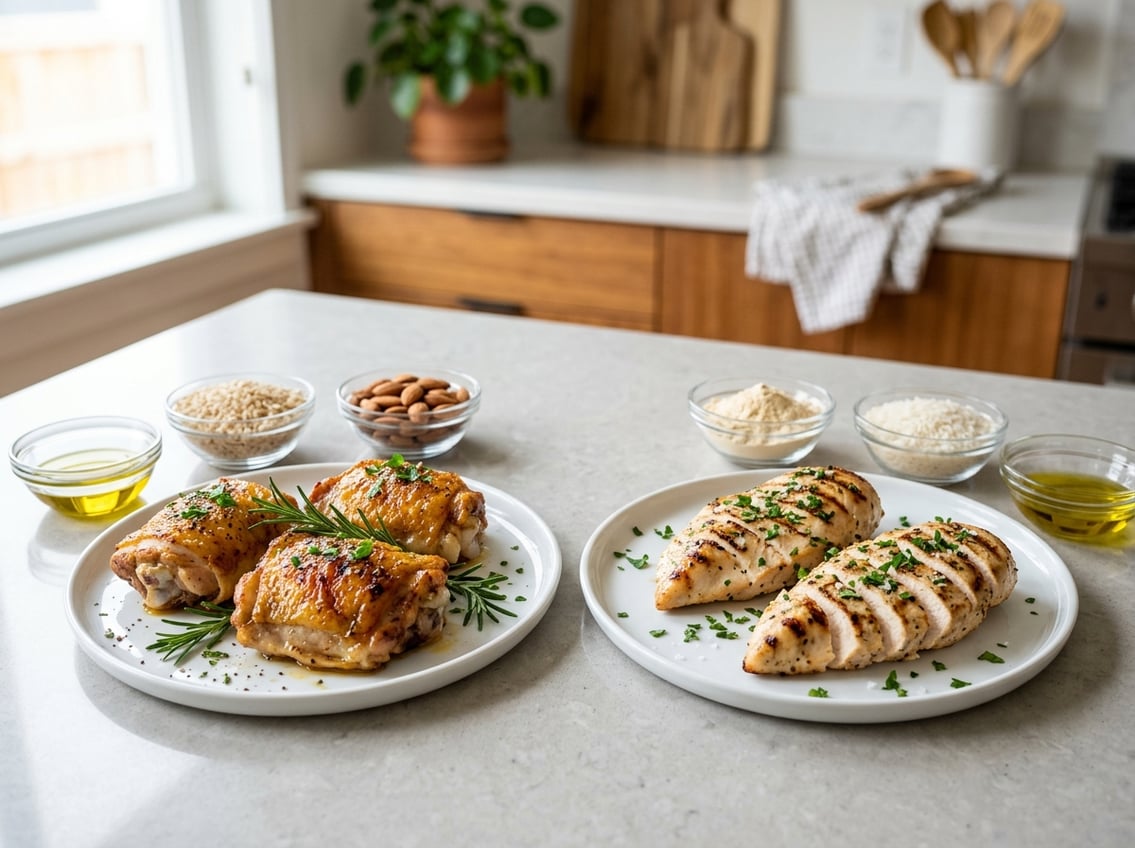
Chicken thighs deliver more fat and slightly fewer grams of protein per 100 g than breasts. Thighs provide more iron and B12.
Chicken breasts give higher protein per calorie and lower saturated fat. This matters if you track macros or aim for lean meals.
Protein Content Comparison
Chicken breast typically supplies about 31–33 g protein per 100 g cooked. A cooked boneless, skinless thigh gives roughly 25–28 g per 100 g.
Breast offers about 15–25% more protein by weight. You get more protein for the same serving size.
If you track protein intake, note protein density per calorie. Breast often provides roughly 18 g protein per 100 kcal, versus about 13 g per 100 kcal for thigh.
Use breast to hit tight protein targets with fewer calories. Use thighs when you prioritize flavor and satiety but still need substantial protein.
Weigh cooked portions for accuracy. Cooking method changes water weight and concentrates protein, so log cooked weights if that’s how you eat them.
Fat Content and Types
Thighs contain more total fat than breasts. A typical cooked, skinless thigh has about 9–11 g fat per 100 g, while a cooked, skinless breast has about 4–5 g.
Fat type also differs. Thighs have higher monounsaturated and polyunsaturated fats and more saturated fat (about 2.5–3.0 g vs 1.2–1.3 g in breast per 100 g).
If you keep the skin on, expect an additional ~4–8 g fat and 40–80 kcal per 100 g portion. This depends on cooking and rendering.
Choose skinless breasts to reduce saturated fat and overall calories. Choose thighs to add healthy fats and improve mouthfeel while adjusting portion sizes to fit your macro targets.
Calorie Content Differences
Calories track closely with fat content. Cooked, skinless chicken breast often falls between 165–190 kcal per 100 g. Cooked, skinless thighs generally range 205–230 kcal per 100 g.
That difference equals about 30–60 kcal per 100 g, mainly from fat.
Portion examples: a 175 g cooked breast may provide ~300–330 kcal and 55–60 g protein. A 120 g cooked thigh might give ~240–275 kcal and 30–35 g protein.
Account for cooking additions. Oils, breading, or sauces can add 20–300+ kcal per 100 g. Log added ingredients separately when macro tracking.
Carbohydrate Profile
Both chicken breast and thigh are negligible carbohydrate sources. Typical values sit at 0–1 g carbs per 100 g cooked for plain, unbreaded cuts.
Your meal’s carbohydrate load will come from sides, marinades, or coatings, not the meat.
If you use marinades with sugar or bread the chicken, include those carbs in your tracking. For strict macro tracking, record plain cooked, skinless values and add any sauce or coating grams separately.
Micronutrient Content and Nutrient Density
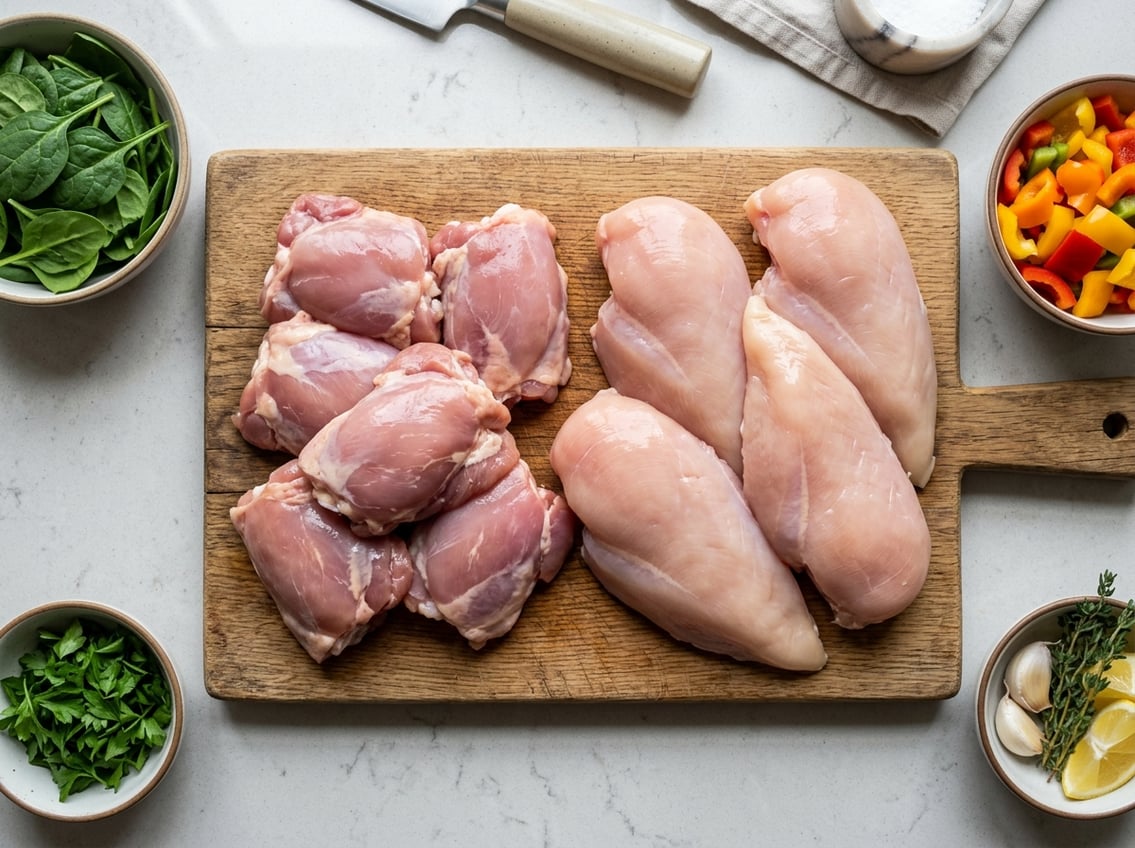
You get different micronutrient profiles from thighs and breasts. Thighs provide more iron, zinc, and some B‑vitamins per gram.
Breasts deliver similar selenium and more choline per calorie. Choose the cut that better fits your needs for iron, zinc, B‑vitamins, or overall calorie-to-nutrient efficiency.
Vitamin and Mineral Highlights
Chicken thighs contain higher total fat, which concentrates fat‑soluble and some water‑soluble micronutrients compared with breast on a per‑gram basis.
Per 100 g cooked, thighs typically have slightly higher iron and zinc, and a bit more vitamin B12. Breasts tend to offer more niacin (vitamin B3) and comparable selenium.
If you track nutrient density (nutrients per calorie), breast often wins for protein‑to‑calorie ratio and for niacin per kcal. Thighs provide greater micronutrient amounts per serving when you prioritize iron and zinc.
Check whether the skin is on. Skin increases calories and fat but does not meaningfully raise minerals or B‑vitamins.
Iron, Zinc, and Phosphorus Levels
Iron and zinc are higher in dark meat because of greater myoglobin and mineral content.
Expect approximately 10–20% more iron and 50–100% more zinc in thighs versus breast, depending on cooking and whether skin is removed.
Phosphorus appears in both cuts in similar ranges and supports bone and energy metabolism. Per 100 g cooked, phosphorus differences are small.
If you rely on poultry for micronutrients, include thighs when you want higher iron and zinc. Use breast when minimizing calories but still getting phosphorus and selenium.
B Vitamins, Choline, and Potassium
B‑vitamin profiles vary by cut. Breasts typically supply more niacin and vitamin B6 per 100 g, which support energy metabolism.
Thighs generally have modestly higher B12, important for nerve function and red blood cell production.
Choline, needed for brain and liver health, is present in both cuts. Per calorie, breast can supply more choline because of lower fat and calorie content.
Potassium levels are similar across cuts, contributing to fluid balance and muscle function.
If you need to raise B12 or zinc, favor thighs. If you aim for niacin, B6, or higher choline per calorie, choose breast.
Impact of Fat Types and Healthy Fat Content
Chicken thighs contain more total fat than breasts. Much of that fat includes monounsaturated and polyunsaturated fats as well as some saturated fat.
Those differences affect calorie density, nutrient absorption, and how filling a serving will be.
Monounsaturated and Polyunsaturated Fats
Thighs provide higher amounts of monounsaturated fat (MUFA) and polyunsaturated fat (PUFA) per 100 g than skinless breast.
MUFAs such as oleic acid support stable blood lipid profiles when they replace saturated fat in the diet. PUFAs include omega-6 and small amounts of omega-3 fatty acids that contribute to cell membrane function and support inflammatory balance.
If you want to increase healthy fat intake without adding processed oils, choose skin-on or lightly trimmed thighs and use cooking methods that render but retain some fat (roasting, grilling).
Track portions. A typical 100 g cooked thigh has roughly double the MUFA/PUFA of a breast, which raises calories but supplies fat-soluble nutrient absorption and flavor.
Saturated Fat Considerations
Thighs contain more saturated fat than breast meat, though the absolute amount per serving remains moderate.
Saturated fat can raise LDL cholesterol when consumed in excess, so control portion sizes if you manage cardiovascular risk or overall saturated fat intake.
To limit saturated fat while keeping flavor, remove visible fat and consider skin removal after cooking.
A 100 g cooked thigh often has about 2–3 g saturated fat versus roughly 1–1.5 g in a cooked, skinless breast.
Small switches in cooking method (grilling vs frying) also strongly affect final saturated fat content.
Health Implications and Satiety
The higher MUFA/PUFA content in thighs increases meal satiety compared with breast alone. The extra fat slows gastric emptying and enhances mouthfeel.
Thighs add calories via fat but supply fats that aid absorption of vitamins A, D, E, and K.
If your goal is lean protein with minimal added fat, choose skinless breast. If you need greater satiety, higher calorie needs, or improved palatability while still getting healthy fats, include thighs in measured portions.
Serving Size, Portion Control, and Calorie Management
You can control calories and macros by choosing the right portion and weighing servings.
Small swaps—skinless thigh vs. breast, or changing portion grams—move protein and fat totals more than you might expect.
Standard Serving Sizes
A common standard serving is 3–4 ounces (85–113 g) cooked for both breast and thigh.
Per 100 g, skinless roasted breast typically yields about 31 g protein and ~165 kcal. Skinless roasted thigh gives ~25 g protein and ~175–180 kcal.
If you keep skin on, add roughly 25–30% more calories and a notable rise in saturated fat.
Label servings on packaged chicken often use raw weights. Cooked weights shrink ~20–25% due to moisture loss, so weigh after cooking for accuracy.
Quick cheatsheet:
- 3 oz (85 g) cooked breast ≈ 25–27 g protein.
- 3 oz (85 g) cooked thigh ≈ 20–22 g protein and more fat.
Weighing or using a food scale beats visual estimates for precise calorie control.
Weight-Based and Portion Comparisons
Compare by grams. Swapping 100 g thigh for 100 g breast reduces fat and calories and increases protein-per-calorie.
If you track calories, note that 100 g breast often saves ~10–20 kcal versus thigh when skinless. Differences grow with skin or added oil.
For portion control, use these tactics:
- Measure cooked grams with a scale.
- Divide a whole thigh into portions if serving multiple people.
- Plate proteins first, then add controlled sides to limit total calories.
Adjust portion size to hit your protein goal. For example, if your target is 30 g protein, you’ll need about 100–115 g cooked breast or roughly 135–150 g cooked thigh.
Use those numbers to plan meals and avoid accidental calorie creep.
Macro Tracking for Meal Planning
Log by weight and cooking method in your tracker. Select entries that specify “cooked, skinless” or “skin-on” to match actual calorie content.
Account for oils, sauces, and breading separately—they can add 50–200+ kcal per serving.
Set target macros first, such as 30–40% protein of total calories or a fixed protein gram goal. Then choose portion weights to meet protein while keeping fat within your limit.
A 120 g cooked breast provides roughly 37 g protein and minimal fat. A 120 g cooked thigh gives ~30 g protein and higher fat.
Use simple tracking rules:
- Weigh cooked meat.
- Enter exact grams into your app.
- Add cooking fats as tablespoons (1 tbsp oil ≈ 120 kcal).
This approach keeps your calorie content and macro ratios accurate for consistent meal planning.
Preparation Methods and Their Effect on Macros
When you handle skin and use different cooking techniques, you change calories and fat more than the cut itself.
Weigh cooked portions, track added oils, and account for breading or marinades when logging macros.
Skin-On vs. Skinless Options
Keeping the skin adds significant fat and calories while changing protein minimally.
For a 100 g cooked thigh, skin-on typically adds 40–80 kcal and 4–8 g fat compared with skinless. A breast shows a smaller absolute increase but similar proportional change.
If you remove skin before cooking, you cut most surface fat and reduce saturated fat intake.
Removing skin after roasting retains more flavor but still lowers calories compared with eating skin.
For tracking, log skin-on and skinless separately. Use package labels or database entries that match the cooked state you eat.
If you weigh raw, apply the raw-to-cooked conversion factors for accuracy.
Cooking Techniques
Grilling and roasting let fat drip away, lowering calories per gram for skin-on pieces compared with pan-frying. When you grill boneless skinless chicken breast or thigh, moisture loss concentrates protein by weight, so cooked weights matter for macro accuracy.
Baking skinless chicken usually requires minimal added oil. Expect a small calorie increase (about 20–40 kcal) from a light oil spray.
Roasting skin-on enhances flavor but retains more fat unless you discard drippings. Frying and pan-frying add substantial calories from oil absorption and any batter.
Breaded fried chicken can add 150–300 kcal per 100 g. Pan-frying with 1–2 tbsp oil typically adds 80–200 kcal to the cooked portion depending on absorption.
Log added oil and batter separately to avoid undercounting.
Oil, Marinades, and Breaded Variations
Oils add concentrated calories: 1 tbsp oil is about 120 kcal. If you brush a thigh with 1 tbsp olive oil before baking, add that 120 kcal to the piece, even if some runs off.
High-heat searing uses less oil overall than shallow frying but can still add 1–2 tbsp per pan session. Marinades with sugar, honey, or yogurt change carbs and calories.
A soy-sugar marinade will add carbohydrate per serving. A yogurt-based marinade adds small amounts of fat and protein.
Always estimate marinade intake if you consume pan sauce. Breading multiplies calories: flour, egg wash, and crumbs absorb oil and increase carbs.
For macro tracking, separate the protein (chicken) from coatings and oils. Use recipe-level totals or weigh final cooked portions for the most accurate numbers.
Meal Prep and Recipe Ideas
Choose cooking methods that fit your macro goals when meal prepping. For lean, high-protein meals, use boneless skinless chicken breast baked or grilled with a spray of oil.
Portion 4–6 oz cooked for about 25–40 g protein. For higher-calorie, flavorful prep, use boneless skinless chicken thighs in stir-fries, braises, or coconut curries.
Thighs tolerate long cooking and keep moisture. Cook with 1–2 tbsp oil per batch and distribute those calories across servings.
If you plan multiple meals, weigh cooked meat per container and log added oils, marinades, or breading. Example batch options:
- Grilled breasts (minimal oil) for salads and grain bowls.
- Braised thighs for shredded chicken tacos or curries.
- Pan-seared thighs for quick stir-fries, using measured oil.
Choosing Based on Dietary Goals and Health Preferences
Chicken thighs and breasts differ mainly in calories, fat, and protein density. Choose between them based on whether you want lower calories and higher protein per calorie or greater fat and flavor for satiety.
Weight Loss and Satiety Factors
If you want calorie control, skinless chicken breast gives more protein per 100 g and fewer calories and saturated fat than thighs. That helps you hit a higher protein intake while keeping total energy lower, supporting weight loss with a calorie deficit.
Thighs contain more natural fat, which raises calories but slows gastric emptying and can improve fullness between meals. If low-fat meals leave you hungry, modest portions of thigh (or leaving skin off and controlling portion size) can increase satiety without exceeding your daily calories.
Target about 25–35 g protein per meal for satiety and muscle preservation during weight loss. Measure portions—100–120 g cooked breast versus 80–100 g cooked thigh will yield different calorie and fat loads.
Muscle Building and High-Protein Diets
For muscle gain, you need a calorie surplus and consistent high protein intake across the day. Breast provides the most grams of protein per calorie, making it efficient for hitting targets like 1.6–2.2 g/kg body weight.
Thighs still provide quality protein and offer extra calories useful when you struggle to reach a surplus. The additional fat helps you reach energy goals without forcing large meal volumes, which may be easier if appetite is limited after heavy training.
Use both strategically. Prioritize breast when you need lean protein per meal, and include thigh when you need extra calories or want more flavorful meals that encourage consistent protein intake.
Macro Balance for Different Lifestyles
If you follow a low-fat or calorie-restricted plan, favor skinless breast to reduce fat and saturated fat while maximizing protein per bite. That supports weight management and cardiovascular risk reduction.
If your lifestyle requires higher energy (hard training, long workdays) or you value meal satisfaction, thighs provide extra fat and calories that can reduce grazing and help maintain overall protein intake.
For flexible dieting, track macros. A 100 g cooked breast vs thigh differs by about 150–200 kcal and 6–10 g fat depending on skin and cooking method.
Use breast in salads and lean bowls. Use thigh in stews, grain bowls, or dishes where fat improves texture.
Monitor your daily protein intake and adjust portions so you meet your target for weight loss or muscle building without exceeding your calorie goal.
Comparison With Other Chicken Cuts
You’ll see clear differences in calories, protein, and fat across common cuts. Choose wings, drumsticks, breast, or thighs based on your protein targets, calorie budget, and whether you prefer lean or richer flavor.
Chicken Thighs and Breast vs. Wings Macros
Chicken wings contain more fat and calories per ounce than breast and usually more than skinless thighs, especially when skin-on.
Per 100 g, boneless skinless breast gives about 22–23 g protein and 100–115 kcal. Skinless thigh gives about 18–20 g protein and 140 kcal.
Wings (with skin) often deliver about 20 g protein and over 200 kcal because of higher fat and skin.
If you track macros, wings raise your fat and calorie totals quickly. They add flavor and satiety but can undermine a low-fat plan.
For higher-protein, lower-calorie meals, choose breast. For more calories and fat-soluble nutrients, thighs or wings with skin work better.
How Drumsticks and Whole Chicken Compare
Drumsticks provide macros that fall between thighs and wings.
Per 100 g cooked, drumsticks usually supply about 18–19 g protein and around 160 kcal.
Most of the fat is near the bone.
Whole chicken averages vary based on cut distribution and skin.
A mix of breast, thigh, drumstick, and skin raises overall calories and fat compared to breast-only meals.
If you prepare a whole bird and remove the skin, you improve your meal’s protein-per-calorie ratio.
Choose drumsticks or whole chicken for balanced macros and richer flavor.
Pick skinless breast when you want the leanest protein per calorie.


