
What Are the Macros in Chicken Thighs: Nutrition, Fats, and Comparisons
You often pick chicken thighs for flavor and cost, but you probably want to know what that choice does to your macros.
A typical cooked, skinless chicken thigh gives about 25–27 g of protein and 9–11 g of fat per 100 g (roughly 25 g protein and 15–20 g fat per medium thigh). This makes it a protein-rich option with higher fat than breast meat.
That balance makes thighs a practical choice when you want satiation and flavor without sacrificing protein goals.

This post breaks down the macro profile, protein quality, types of fat, key vitamins and minerals, and how cooking changes those numbers. You’ll find straightforward numbers and context for meal planning next.
Macro Profile of Chicken Thighs
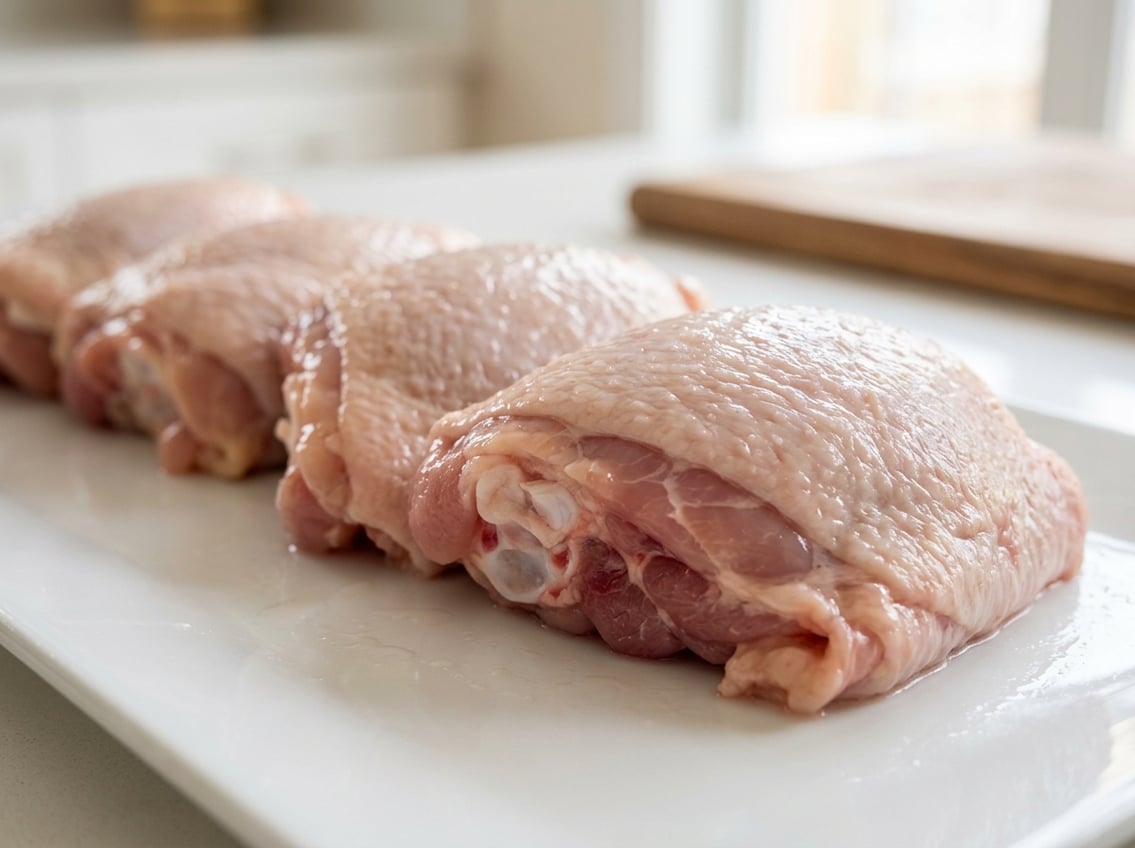
A typical chicken thigh delivers a mix of protein and fat with virtually no carbohydrates.
Exact values change with weight, cooking method, and whether the skin or bone remain.
Protein, Fat, and Carbohydrate Breakdown
A 100 g cooked boneless, skinless chicken thigh typically provides about 25 g protein and roughly 8 g total fat, yielding about 179 kcal.
Protein supplies most of the calories that support muscle maintenance and satiety.
You can expect roughly 50% of calories from protein in that example.
Fat content varies by cut and cooking. Monounsaturated and saturated fats are present, while polyunsaturated fats are lower.
Carbohydrates are essentially zero in plain chicken thighs, so net carbs remain negligible for most diets.
Serving Size Impact on Macros
Macros scale directly with weight.
One average boneless, skinless thigh (about 85–100 g cooked) gives around 21–25 g protein and 7–9 g fat.
If you double the serving, you double protein and fat and nearly double calories.
Raw and cooked numbers differ because cooking reduces water weight and concentrates nutrients.
Weigh cooked meat for precise tracking.
Tracking apps and USDA data list both raw and cooked values. Confirm which you use to avoid errors.
Skin-On vs. Skinless Variations
Skin adds substantial calories and fat.
A skin-on thigh (same meat weight) can increase total fat by 50–100% compared with skinless, depending on how much skin remains after cooking.
That extra fat raises calories and shifts the macronutrient ratio toward fat.
If you focus on higher protein-per-calorie intake, choose boneless, skinless chicken thighs.
If you prioritize flavor and higher calorie density, keep the skin but account for the added fat in your macros.
Essential Amino Acids and Protein Quality

Chicken thighs supply a complete set of amino acids and a high proportion of the branched-chain amino acids that directly support muscle synthesis and recovery.
They also provide nonessential amino acids that aid metabolic pathways, collagen synthesis, and energy production.
Amino Acid Profile
You get all nine essential amino acids from chicken thighs: histidine, isoleucine, leucine, lysine, methionine, phenylalanine, threonine, tryptophan, and valine.
Leucine stands out; a 100 g cooked portion typically provides roughly 1.5 g of leucine, which is a key trigger for muscle protein synthesis.
Chicken thighs also contain conditionally essential and nonessential amino acids such as arginine, cystine, tyrosine, alanine, aspartic acid, glutamic acid, glycine, proline, and serine.
Arginine supports blood flow and wound healing.
Glycine and proline contribute to collagen production and joint support.
Methionine supplies methyl groups needed for creatine synthesis and other metabolic reactions.
Nutrient density varies by cut and cooking method.
Skin-on or fatty preparations slightly dilute amino acid concentration per 100 g because of higher fat.
Weigh cooked meat to track protein and amino acid intake precisely.
Benefits for Muscle and Recovery
You benefit from chicken thighs’ high-quality protein when you aim to build or maintain muscle.
The BCAAs—especially leucine, isoleucine, and valine—provide direct substrates and signaling for muscle protein synthesis after resistance exercise.
Typical servings supply enough leucine to stimulate that pathway when combined with a full meal.
Recovery processes also use other amino acids.
Lysine aids tissue repair, threonine supports immune function and collagen, and tryptophan contributes to serotonin and sleep regulation, which affects recovery.
Nonessential amino acids such as glutamic acid and alanine help shuttle nitrogen and carbon for fuel and gluconeogenesis during long workouts.
Fatty Acid Composition of Chicken Thighs
Chicken thighs contain a mix of saturated, monounsaturated, and polyunsaturated fats.
You’ll get more total fat from skin-on or fried thighs, and the fatty acid profile shifts slightly with cooking and whether the skin or bone remain.
Types of Fats Present
Chicken thigh fat includes saturated fats (SFA), monounsaturated fats (MUFA), and polyunsaturated fats (PUFA).
Saturated fats are present but lower than in fattier red meats.
MUFAs, primarily oleic acid, make up a large share and are liquid at room temperature.
MUFAs support flavor and mouthfeel in dark meat.
PUFAs in thighs include omega-6 linoleic acid as the dominant PUFA.
Omega-3s (EPA/DHA) are present only in trace amounts unless birds were fed omega-3–enriched diets.
Amounts of gamma-linolenic acid (GLA) and dihomo-gamma-linolenic acid (DGLA) are minimal in typical chicken thigh fat.
Key Fatty Acids in Dark Meat
Oleic acid (C18:1) commonly accounts for the largest single fatty acid in chicken thigh fat.
Linoleic acid (C18:2, omega-6) often ranks second and can represent several grams per 100 g cooked thigh, depending on skin and cooking method.
Linoleic acid affects inflammation pathways when consumed in high excess relative to omega-3s.
EPA and DHA (long-chain omega-3s) are typically negligible in conventionally raised chicken thighs.
If you choose thighs from hens fed flaxseed, fish oil, or algae, EPA and DHA levels rise but remain modest compared with fatty fish.
GLA and DGLA appear at trace levels and do not significantly affect the overall PUFA profile for most consumers.
Micronutrients and Vitamins in Chicken Thighs
Chicken thighs provide several B vitamins, minerals, and fat-soluble nutrients concentrated in the dark meat and surrounding fat.
You’ll get meaningful amounts of vitamin B6, vitamin B12, iron, zinc, selenium, and phosphorus, plus small amounts of vitamin D and fat-soluble compounds that vary with skin and cooking.
Vitamin and Mineral Highlights
A typical cooked, skin-on thigh provides about 20–30% of your Daily Value (DV) for vitamin B6 and roughly 20–25% DV for vitamin B12.
These vitamins support energy metabolism and nerve function.
Iron and zinc appear in moderate amounts, helping with oxygen transport and immune function.
Selenium and phosphorus are present at levels that assist antioxidant defense and bone and ATP chemistry.
Fat-soluble nutrients concentrate when the skin is left on.
Vitamin D appears in small but variable amounts; values rise if the bird had diet or sun exposure that enriched vitamin D.
Retinol (preformed vitamin A) is low, and most vitamin A activity from chicken is minimal compared with liver.
Folate is present in modest amounts, while menaquinone-4 (a form of vitamin K2) and betaine exist in trace to low amounts depending on feed and processing.
Comparison to Chicken Breast and Wings
Compared with chicken breast, thighs deliver more fat, which increases calories and concentrates fat-soluble vitamins like vitamin D and menaquinone-4.
You’ll get higher iron and zinc per serving in thighs than in breast, and more B12 and B6 by weight.
Breast provides more protein per calorie and less saturated fat, so it’s a better choice if you prioritize lean protein over micronutrient density.
Compared with wings, thighs usually contain similar or slightly higher levels of iron and B vitamins, because thighs are larger and contain more myoglobin-rich muscle.
Wings with skin add comparable fat and fat-soluble nutrient content, but portions are smaller so micronutrient intake per eating occasion can be lower.
Influence of Cooking Methods on Macros
Cooking changes weight, water content, and added ingredients, which alters calorie, protein, and fat values per serving.
You’ll see higher calories and fat when oil, skin, or breading are involved, and protein appears denser after cooking because moisture is lost.
Grilled, Roasted, and Fried Chicken Thighs
Grilling and roasting typically drop moisture and let some fat render away.
A boneless skinless chicken thigh, 100g raw (about 120 kcal, 20g protein, 4g fat), commonly becomes about 100–140 kcal per 100g cooked, with protein concentration rising to about 26g per 100g cooked.
Fat increases slightly per cooked gram because water leaves the meat.
Frying adds both oil and retained fat.
A skin-on, battered fried thigh can double calories versus a grilled thigh and add 10–20g extra fat per 100g cooked.
If you track macros, weigh raw for consistency or use entries labeled “cooked” and note the method (grilled vs fried) to avoid underestimating calories and fat.
Impact of Breading, Oil, and Preparation
Breading adds carbohydrates and absorbs oil. A 3.5 oz fried thigh increases from about 8–9g fat (grilled or baked, skinless) to about 18–22g fat and 8–18g carbs when battered.
Pan-frying or roasting with oil raises total fat. Each tablespoon of oil that stays on the meat adds about 120 kcal and 14g fat.
Leaving skin on adds about 50–70 kcal per thigh and most of the extra fat. Marinating or brining can add sodium and sugar, depending on the recipe.
Sugary marinades affect calories and carbs. Track boneless skinless chicken thigh separately from skin-on or breaded versions to keep nutrition facts accurate.


