
How Long Does Chicken Thighs Take to Defrost: Safe Methods and Timing
You can usually thaw chicken thighs in the refrigerator overnight. Expect about 24 hours for a standard package to fully defrost.
Cold water and microwave methods cut that time to between about 1–3 hours or minutes depending on thickness. If you want the safest, hands-off option, plan for roughly a day in the fridge.
If you’re short on time, use cold water (change every 20–30 minutes) or the microwave and cook immediately after.
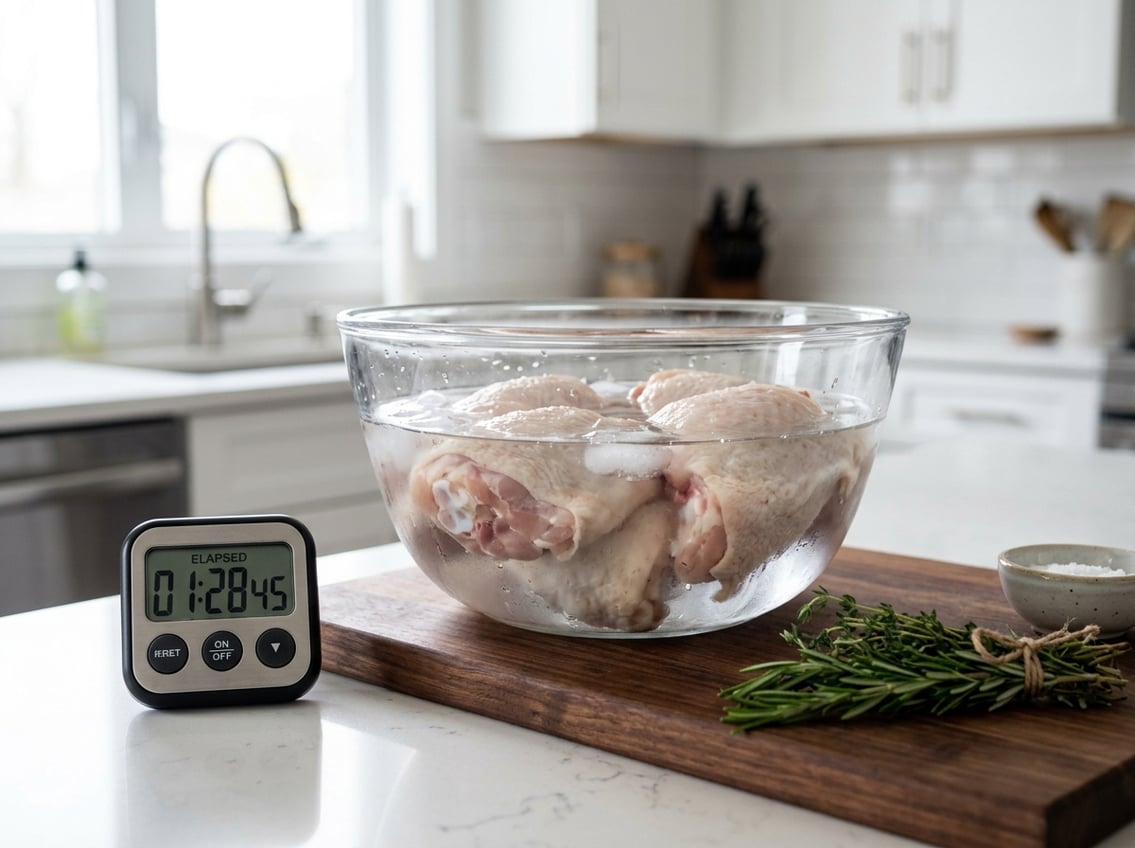
This guide explains when to choose each method and how long each takes. You’ll learn quick tips for defrosting chicken thighs, safe handling and storage, and when it’s okay to cook from frozen.
Defrosting Chicken Thighs in the Refrigerator
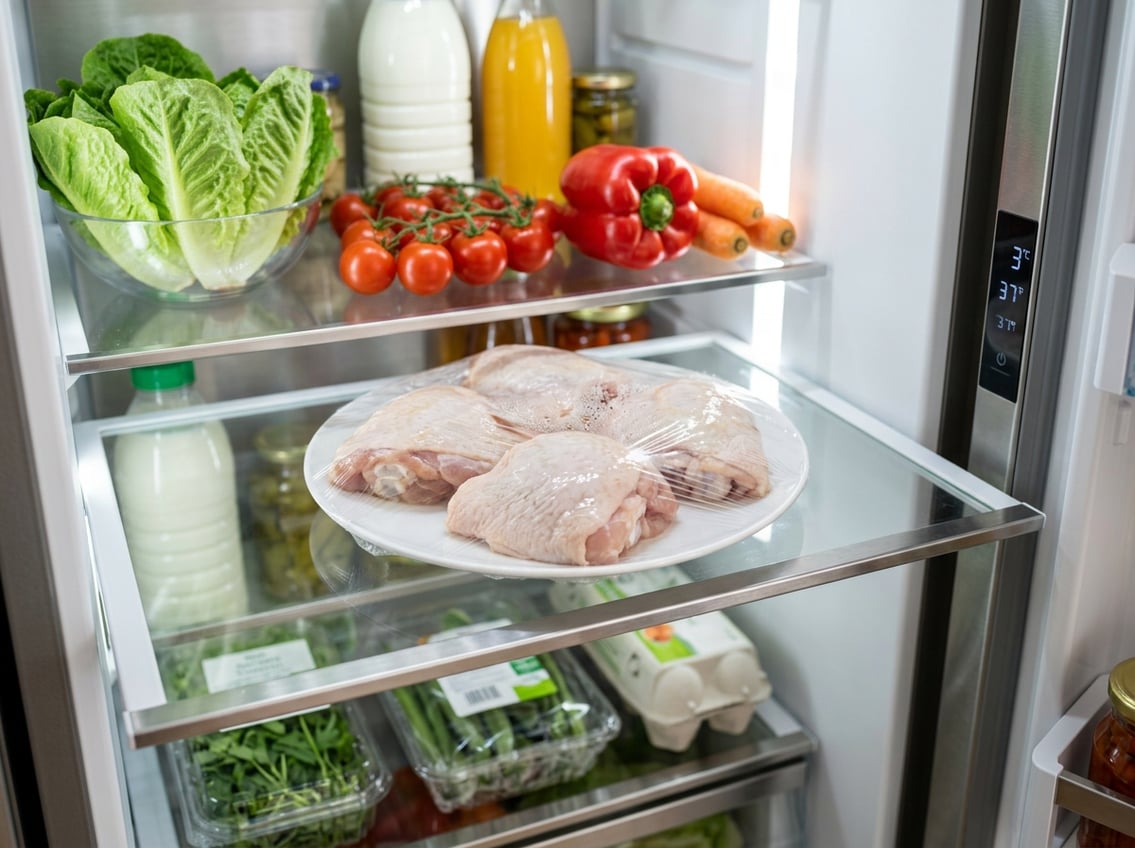
Use the fridge to thaw chicken thighs safely and keep temperatures below 40°F. Plan at least a day for typical packages and always contain any drip to avoid cross-contamination.
Step-by-Step Fridge Thawing Process
Place frozen thighs in their original airtight packaging or a sealed zip-top bag. Put the package on a rimmed tray or shallow pan to catch juices and set it on the bottom shelf of the refrigerator.
Let thighs thaw undisturbed. If you need to speed things slightly, separate pieces so cold air can circulate between them, but keep them on a tray and sealed.
Cook thighs within 1–2 days after thawing for best quality and safety. If you thaw in the microwave or cold water, cook immediately rather than storing in the fridge.
Timing Estimates by Weight and Packaging
Estimate roughly 24 hours of fridge thawing per 4–5 pounds of chicken parts. For a 1–2 pound package of thighs, expect about 12–24 hours depending on thickness and how tightly they’re packed.
Boneless, thinner thighs thaw faster than large bone-in pieces. A single bone-in thigh can take closer to 12–24 hours on its own.
Vacuum-sealed or tightly wrapped multi-pound packs take longer than loosely packed pieces because air circulation is limited.
Use this quick guide:
- 1 lb (loose pieces): 8–12 hours
- 2–4 lbs (small family pack): 12–24 hours
- 4–5+ lbs (bulk pack): ~24 hours or more
Best Storage Practices After Thawing
Keep thawed thighs on the bottom shelf and in a leak-proof container until you cook them. Use within 1–2 days and mark the date on the package if you won’t cook immediately.
You may refreeze thighs that you thawed in the refrigerator, but expect some loss of quality. If you refreeze, either cook first and then freeze cooked portions or refreeze raw within that 1–2 day window.
Never refreeze chicken thawed by cold water or microwave without cooking it first. Those methods can move meat into the 40–140°F danger zone, so cook thoroughly before refreezing.
Cold Water Thawing
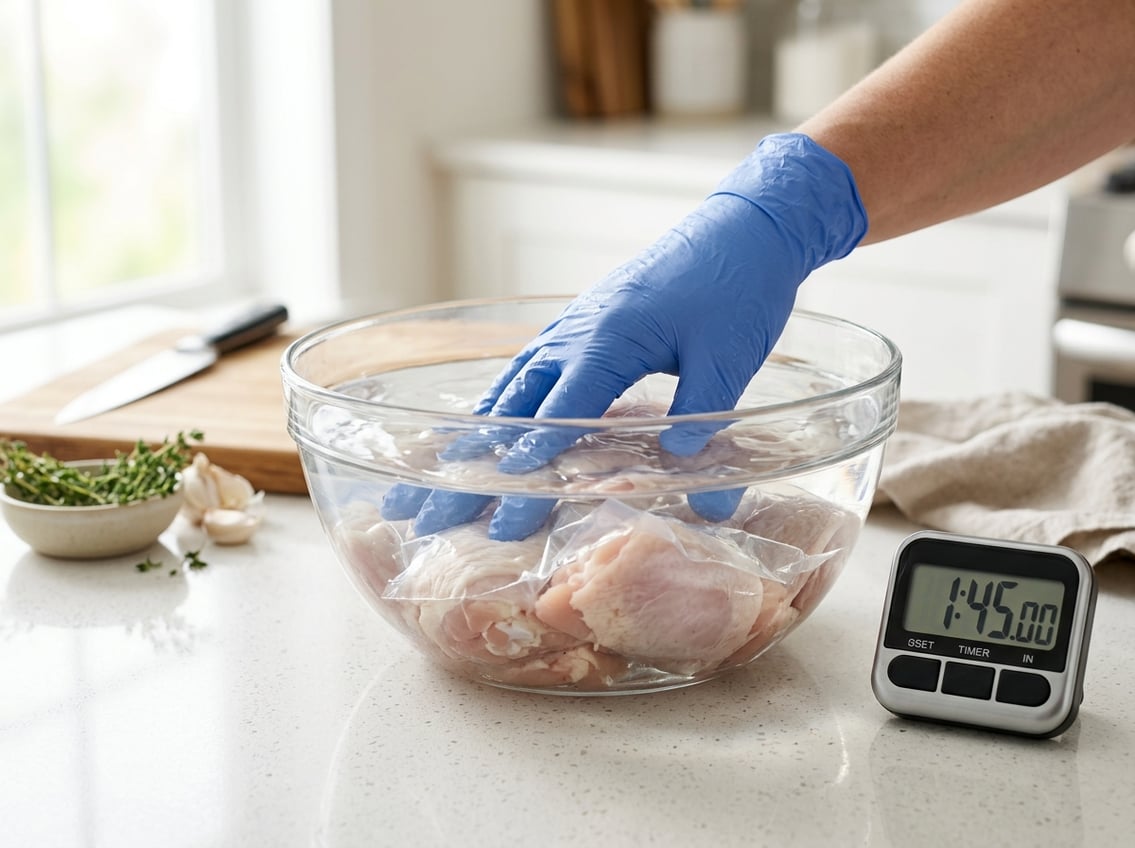
Cold water thawing gets frozen chicken thighs fully thawed in about 45 minutes to 2 hours, depending on package size and thickness. Keep the chicken sealed, use cold tap water, and change the water regularly to keep thawing steady.
Cold Water Thawing Steps
Place the sealed package of frozen chicken thighs into a leak-proof plastic bag if it isn’t already sealed. Set the bag in a large bowl, sink, or container and fill with cold tap water until the chicken is fully submerged.
About 1 pound of thighs typically takes 45–90 minutes; a 2-pound family pack can take up to 2 hours. Leave the thighs submerged and check after 30 minutes by feeling the thickest part through the bag.
Continue until pliable and cold throughout. Cook immediately after thawing.
Safety Guidelines and Water Temperature
Keep the water temperature cold, roughly 55–65°F (13–18°C). Do not use warm or hot water.
Always keep the chicken in intact packaging to prevent cross-contamination. After thawing by cold water, cook the thighs right away and do not refreeze raw chicken that has been thawed in water unless you cook it first.
How and When to Change Water
Change the water every 30 minutes to maintain a steady cold temperature and speed thawing. Drain the bowl or sink, refill with fresh cold tap water, and re-submerge the sealed package.
Set a timer for 30-minute intervals and inspect the thighs each time you change the water. If any packaging leaks or feels swollen, transfer the chicken to a clean leak-proof bag before continuing.
Microwave Thawing
Microwaving gives you the quickest way to defrost chicken thighs so you can cook them the same day. Use low power, short intervals, and cook immediately afterward to prevent uneven thawing and bacterial growth.
How to Defrost Chicken Thighs in the Microwave
Remove chicken thighs from store packaging and put them on a microwave-safe plate or shallow dish to catch juices. If the thighs are in a sealed freezer bag, use only microwave-safe bags and vent them.
Use your microwave’s DEFROST setting or set power to 30–50%. Arrange thighs in a single layer if possible and rotate or flip them halfway through.
Check for flexibility and absence of ice crystals. Cook the thighs immediately after thawing.
Never leave defrosted raw chicken at room temperature. If parts have started to cook, proceed to cook those sections right away to reach a safe internal temperature.
Adjusting for Weight and Portions
Microwave defrosting takes about 3–4 minutes per pound on a 1,000W microwave at 50% power. Smaller single thighs will need less time than a large cluster or bone-in pieces.
If you have multiple thighs, separate them when possible. For packed or stacked pieces, defrost in 2-minute increments and check between cycles.
When using a manufacturer’s smart-defrost function, enter the correct weight. If unsure of wattage, use shorter intervals and test more frequently.
Tips to Avoid Partial Cooking
Defrost at reduced power (30–50%) rather than full power to minimize cooked spots while thawing. Use short cycles of 1–2 minutes, then inspect and redistribute the thighs.
Turn or flip thighs and rearrange positions during the process. Pause to separate pieces that are still stuck together.
If any edges begin to turn white, stop defrosting and move to immediate cooking. Use a meat thermometer when you start cooking and aim for 165°F (74°C) internal temperature.
Never refreeze raw chicken thawed in the microwave. Cook it first, then refrigerate or freeze cooked leftovers.
Direct Cooking From Frozen
You can cook chicken thighs straight from the freezer when you’re pressed for time. Increase cooking time and monitor internal temperature closely.
How to Safely Cook Frozen Chicken Thighs
Cook frozen chicken thighs without thawing, but never partially cook and then finish later or refreeze raw meat. Start by separating thighs if they’re not stuck together.
Use a thermometer and cook until the internal temperature reaches 165°F (74°C) in the thickest part. Check temperature at multiple points because frozen meat heats unevenly.
Prefer oven roasting, braising, or baking in a covered dish for even heat transfer. If using a skillet, increase time and finish covered, or transfer to the oven.
Recommended Cooking Time Extensions
Add about 50% more time compared with thawed thighs. For example:
- Thawed bone-in thighs roast 30–40 minutes at 375°F (190°C); plan 45–60 minutes from frozen.
- Boneless skinless thighs bake 20–25 minutes thawed; plan 30–40 minutes frozen.
Adjust times by method and thickness. Lower oven temperatures (350–375°F / 175–190°C) give more even cooking for frozen pieces.
Use a meat thermometer reading 165°F (74°C) as the final check. If you start on the stovetop to brown skin or sear, reduce oven time accordingly but always finish until the internal temp reaches 165°F.
Safe Handling, Storage, and Refreezing Guidelines
Keep chicken cold, avoid the 40–140°F (4–60°C) danger zone, and limit how long thawed thighs sit before cooking or refreezing. Use airtight packaging and label with the date to prevent freezer burn and track storage time.
Food Safety Best Practices
Thaw chicken thighs in the refrigerator, in cold water (sealed bag, change water every 30 minutes), or in the microwave if you plan to cook immediately. Place thawing packages on a plate or in a container on the bottom shelf to catch drips.
Wash hands and sanitize surfaces after handling raw chicken. Cook thawed thighs to an internal temperature of 165°F (74°C) measured at the thickest part.
If you thawed in cold water or the microwave, cook the chicken right away. Do not leave it standing at room temperature.
Store raw, thawed thighs in the fridge for no more than 1–2 days before cooking. Keep cooked leftovers in airtight containers and refrigerate within two hours of cooking.
Label packages with dates to track freshness.
When Refreezing Thawed Chicken Is Allowed
You can refreeze thawed chicken thighs if you thawed them in the refrigerator and kept them at 40°F (4°C) or below the entire time. Wrap them tightly in freezer-grade bags or vacuum seal to reduce freezer burn and moisture loss.
Do not refreeze if thighs were thawed in cold water or the microwave unless you fully cook them first. Cooking eliminates bacteria that may have multiplied during those quicker thawing methods.
Once cooked, you may freeze the cooked chicken within two hours and label it with the cooking date. Limit the number of freeze–thaw cycles for best quality.
If you plan to refreeze raw portions, divide them into meal-sized packs before initial freezing so you only thaw what you need.
Mistakes to Avoid When Defrosting Chicken Thighs
Follow safe techniques and keep packaging intact until you use the meat. Avoid shortcuts that raise surface temperatures or spread juices to other foods.
Thawing at Room Temperature vs. Safe Methods
Never leave chicken thighs on the counter to defrost. Room temperature thawing lets the surface enter the 40–140°F (4–60°C) danger zone, where bacteria can multiply fast.
Use the refrigerator, cold-water, or microwave methods instead. In the fridge, plan about 24 hours for a pound of thighs and keep the package on a rimmed tray.
For faster thawing, submerge the sealed package in cold tap water and change the water every 30 minutes until thawed. If you use the microwave’s defrost setting, cook immediately afterward because edges can heat into the danger zone while the center remains cold.
Packaging and Cross-Contamination Risks
Keep chicken thighs sealed while defrosting. Frozen packages often leak as they thaw.
Juices contain pathogens that can contaminate surfaces, produce, and ready-to-eat foods. Place the package on a rimmed tray or in a shallow pan in the fridge to catch drips.
If you use the cold-water method, keep the chicken in its original airtight packaging or a leakproof bag. Avoid rinsing thawed chicken under running water because that sprays bacteria around the sink.
Always wash hands, utensils, and any surfaces that touched the raw, thawing poultry with hot, soapy water or a sanitizer before preparing other foods.


