
Is It OK to Eat Pink Chicken Thighs? Safety, Doneness, and Color Explained
You might spot a faint pink tint in cooked chicken thighs and worry it means the meat is unsafe. As long as the thighs reach an internal temperature of 165°F (74°C) and there’s no raw texture or unthawed bone marrow, slight pinkness alone does not mean the meat is unsafe.
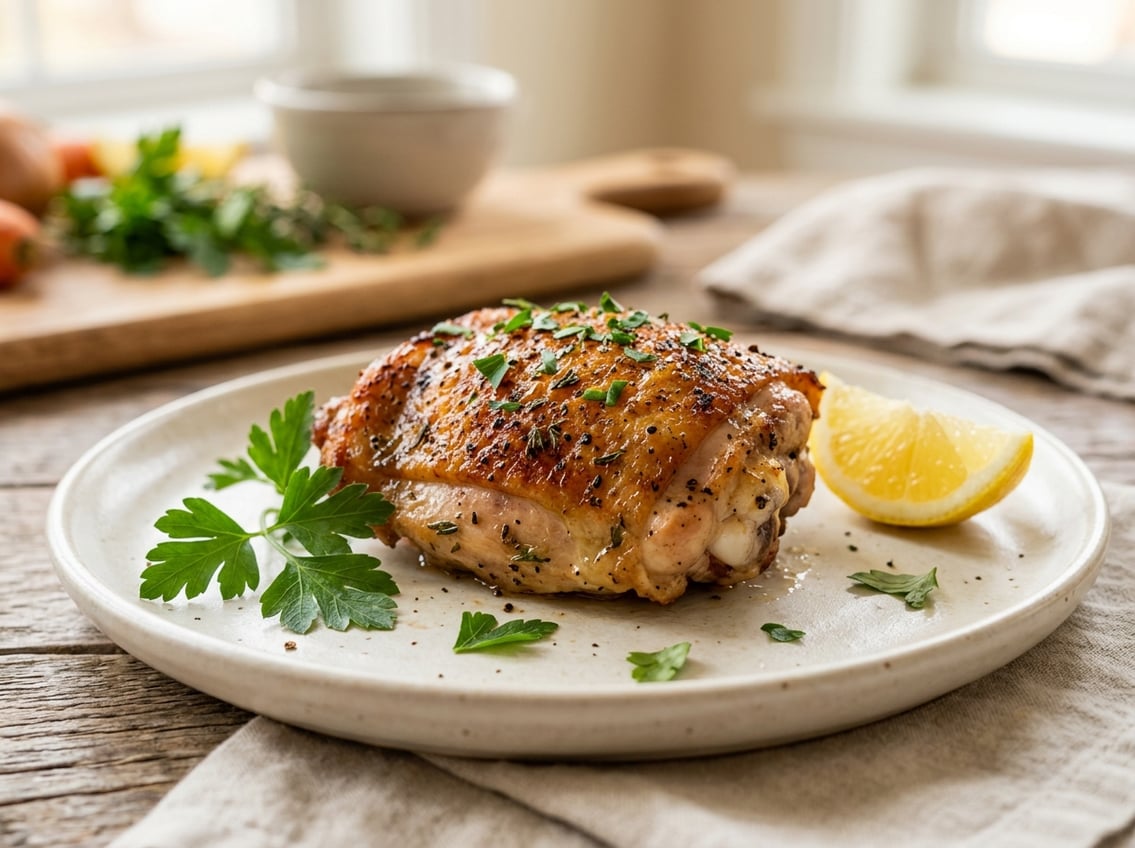
Color can be misleading. Myoglobin, smoking, brines, and bone proximity can keep dark meat looking pink even when it’s fully cooked.
You can check doneness reliably with a thermometer. The real food-safety risks come from bacteria like campylobacter, and different cooking methods affect both safety and appearance.
Food Safety Risks
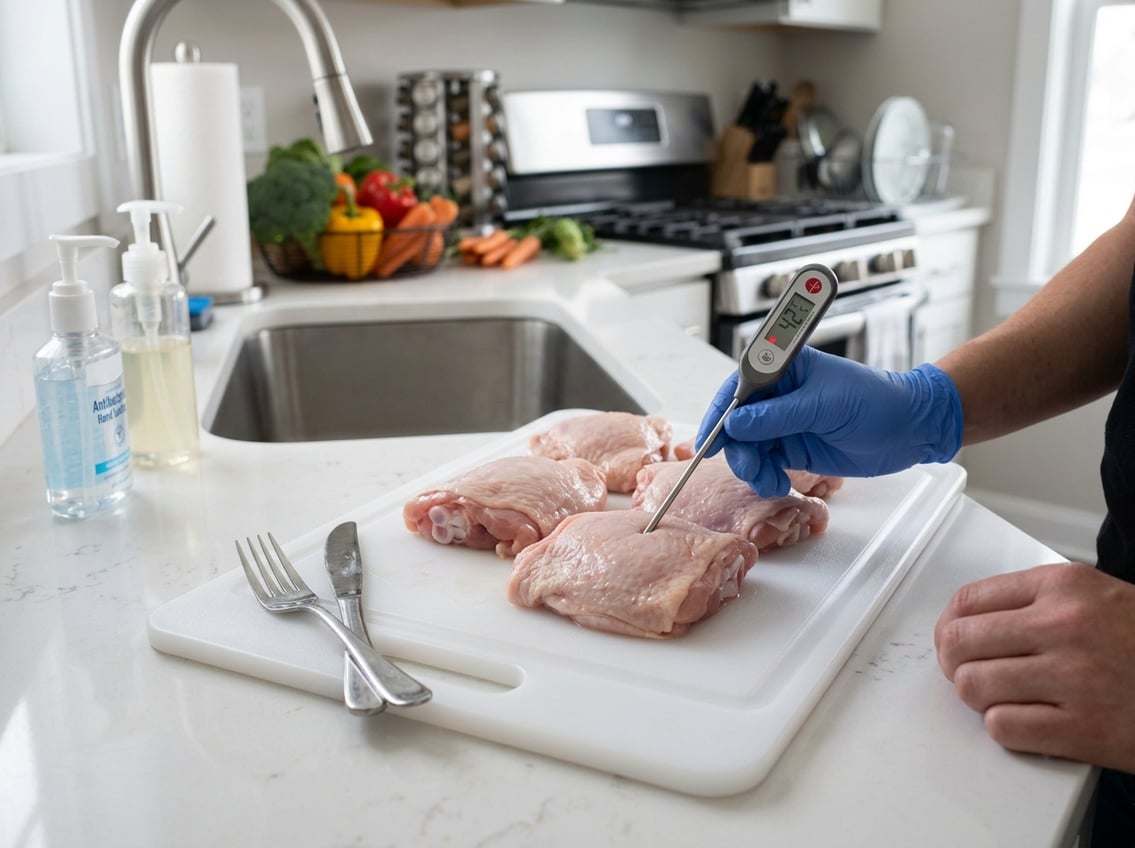
Undercooked chicken thighs can harbor bacteria that cause serious illness. Knowing which pathogens are most common and the safe internal temperature to reach will help you avoid foodborne infection.
How Bacteria Threaten Undercooked Chicken
Campylobacter lives in poultry intestines and can contaminate meat during processing. Even a small number of cells can cause illness, so a faint pink color near the bone might mean live bacteria remain.
Salmonella and, less commonly, Clostridium perfringens also appear on raw chicken and increase risk when you undercook. Cross-contamination from cutting boards, utensils, or splashed juices can magnify exposure.
Always wash hands and surfaces after handling raw thighs. Never use the same plate for cooked chicken that held raw pieces unless washed first.
Symptoms from these infections include diarrhea, fever, and abdominal pain. Young children, older adults, and people with weakened immune systems face higher risk of severe outcomes.
Internal Temperatures for Safety
Use an instant-read thermometer inserted into the thickest part of the thigh, avoiding bone, to verify doneness. The USDA recommends cooking all poultry to an internal temperature of 165°F (74°C) to reliably kill Campylobacter and most other bacterial pathogens.
If you rest thighs after cooking, residual heat continues to destroy bacteria, but you must still reach 165°F before serving. Check multiple pieces in a batch because size and thickness vary.
Visual cues like color and clear juices are unreliable. Only a thermometer gives a specific, measurable assurance that the chicken is safe to eat.
Color and Doneness in Chicken Thighs
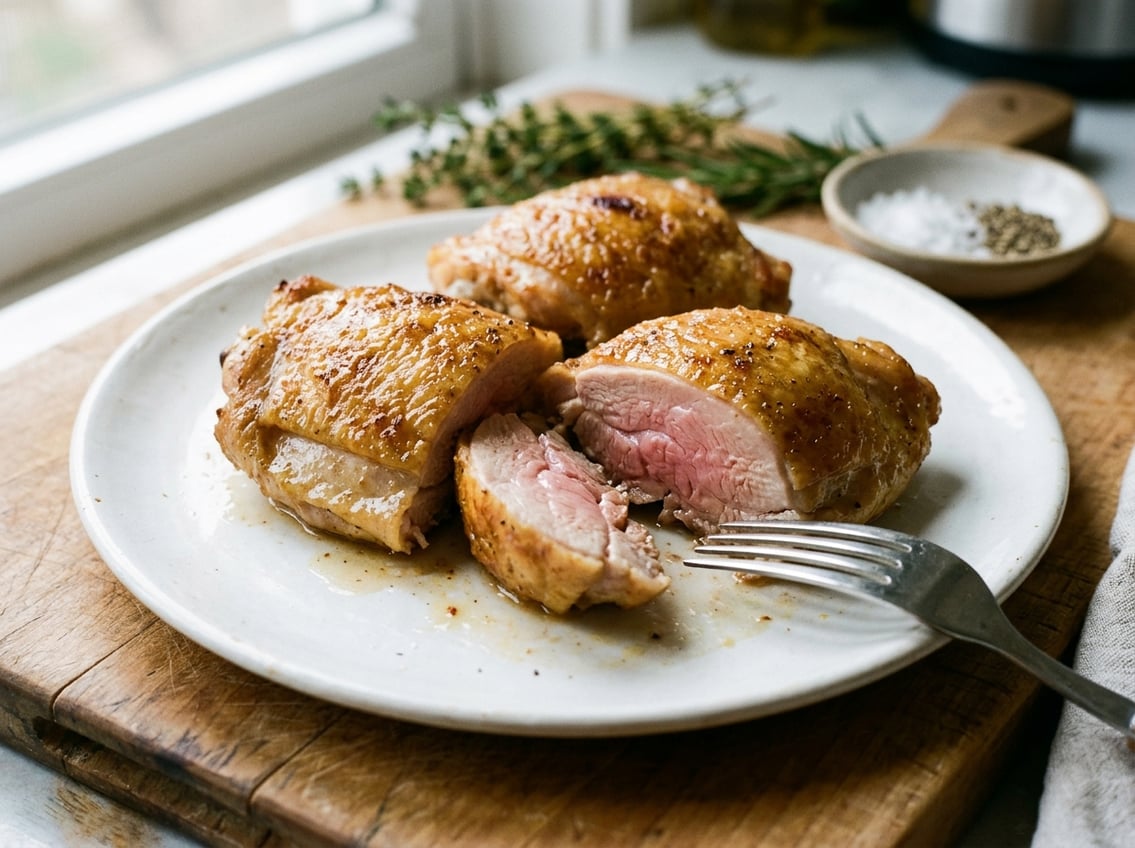
Color alone can mislead you about safety. Use a thermometer and judge doneness by internal temperature, not hue.
Pink can result from muscle pigments, bone marrow, or cooking method and does not always mean the meat is unsafe.
Why Pink Chicken Doesn’t Always Mean Undercooked
Dark meat contains more myoglobin and connective tissue than breast meat, which can retain a pink tint after heating even when pathogens have been destroyed.
High-heat searing or smoking can brown the surface quickly while the interior still shows pink. Brining and acidic marinades can also stabilize pink pigments.
Always check the thickest part of the thigh with an instant-read thermometer and avoid touching bone. The safety target is 165°F (74°C).
Visual checks can help, but thermometer verification prevents dangerous guesswork.
Myoglobin and Chicken Thigh Color
Myoglobin is the primary pigment that determines thigh color. It stores and transports oxygen in muscle, so dark meat has higher myoglobin levels than white meat.
Heat changes myoglobin’s structure, usually turning it brown, but chemical interactions and pH can stabilize a pink form. Nitrites from curing or compounds from smoke can bind myoglobin and create a persistent pink hue.
Younger birds often have less developed bone marrow and different myoglobin behavior, which can affect color too.
Rely on temperature rather than pigment changes. Myoglobin behavior varies with temperature, pH, and cooking method, so color is an inconsistent doneness indicator.
Pink Near the Bone
Pink near the bone often comes from bone marrow and pigments leaching during cooking. Bones conduct heat differently than muscle, so tissue adjacent to the bone can heat unevenly and show red or pink tones even after the meat reaches safe temperatures.
You may also see a pink “smoke ring” when smoking thighs. Nitrogen dioxide from wood reacts with myoglobin to create a stable pink layer under the surface.
Brining and salt can draw pigments toward the bone area too, deepening color there. To confirm safety, insert the thermometer probe into the thickest part of the thigh away from the bone.
If that spot reads 165°F (74°C) or higher, the pink near the bone does not indicate undercooking.
Reliable Ways to Check Chicken Thigh Doneness
Use temperature as the primary check. Confirm with a couple of visual or texture cues when needed.
Measure at the thickest part of the thigh, avoid the bone, and let the meat rest briefly to allow carryover cooking.
Why You Need a Meat Thermometer
A digital instant-read or probe thermometer gives a precise reading of chicken thigh doneness. Insert the probe into the thickest part of the thigh muscle without touching bone, because bone conducts heat and will give a falsely high temperature.
Target an internal temperature of 165°F (74°C) for immediate safety. If you use sous-vide or hold at lower temps, follow tested time-and-temperature charts.
Use a thermometer that reads quickly and accurately. Calibrate yours occasionally by testing in ice water (32°F/0°C) and boiling water (212°F/100°C at sea level).
For whole birds or large batches, use a leave-in probe to monitor temperature without opening the oven or grill.
Visual and Texture Cues
Color alone is unreliable for chicken thigh doneness. Thighs can remain slightly pink even at safe temperatures because of myoglobin, smoking, or young birds.
Don’t rely on “clear juices.” Juices can appear clear before the meat reaches 165°F.
Check texture and firmness. Properly cooked thighs feel springy and yield easily to a fork but are not mushy.
If you cut near the bone, the meat should separate cleanly and fibers should not look translucent. If you see dark pink near the bone, confirm with a thermometer rather than discarding the meat.
Use a short checklist while serving:
- Probe temperature = 165°F (74°C) at thickest point (avoid bone).
- Meat pulls away from bone slightly and feels firm, not rubbery.
- Juices mostly clear but verify with temperature if unsure.
When Is Pink Chicken Thigh Meat Safe to Eat?
You need clear signs to know when pink chicken thighs are safe. Look for proper internal temperature and distinguish harmless pink from dangerous red or bloody spots.
Rely on a thermometer, observe juices, and consider factors like brining or young birds that can tint meat.
Pink vs. Red
Pink can be an innocuous hue caused by myoglobin, bone marrow pigments, or smoking and brining. If the thigh meat has an even pink tint but feels firm and the juices are clear or slightly tinted, that pink alone does not mean the chicken is unsafe.
Red or dark spots near the bone, a gelatinous texture, or a metallic-smelling juice indicate undercooking or blood that hasn’t been fully heated. Visible red that looks like fresh blood usually means the meat hasn’t reached safe heat throughout.
When in doubt, cut through the thickest part and check color near the bone as well as the center.
Temperature Over Color
Temperature is the definitive test. Insert a probe thermometer into the thickest part of
Proper Storage and Reheating for Leftovers
Refrigerate cooked chicken thighs within two hours of removing them from heat. Shorten that to one hour if ambient temperature exceeds 90°F (32°C).
Store chicken in shallow, airtight containers to cool quickly. Label containers with the date.
Consume refrigerated leftovers within 3–4 days. For longer storage, freeze in portion-sized airtight bags or containers at 0°F (-18°C).
Thaw frozen cooked thighs in the refrigerator or in the microwave. Avoid thawing on the counter.
Reheat leftovers to an internal temperature of 165°F (74°C) before serving. Use an oven or microwave and check the thickest part with an instant-read thermometer.
Reheat leftovers only once. Repeated reheating increases bacterial risk.


