
What Happens If You Overcook Chicken Thighs: Texture, Taste, and Recovery Tips
You want to know what happens if you overcook chicken thighs and whether you can still end up with juicy, tender meat.
If you cook thighs gently and long enough, they become more tender as connective tissue breaks down into gelatin. If you cook them too hot or too long without moisture, they turn dry, stringy, and less appealing.
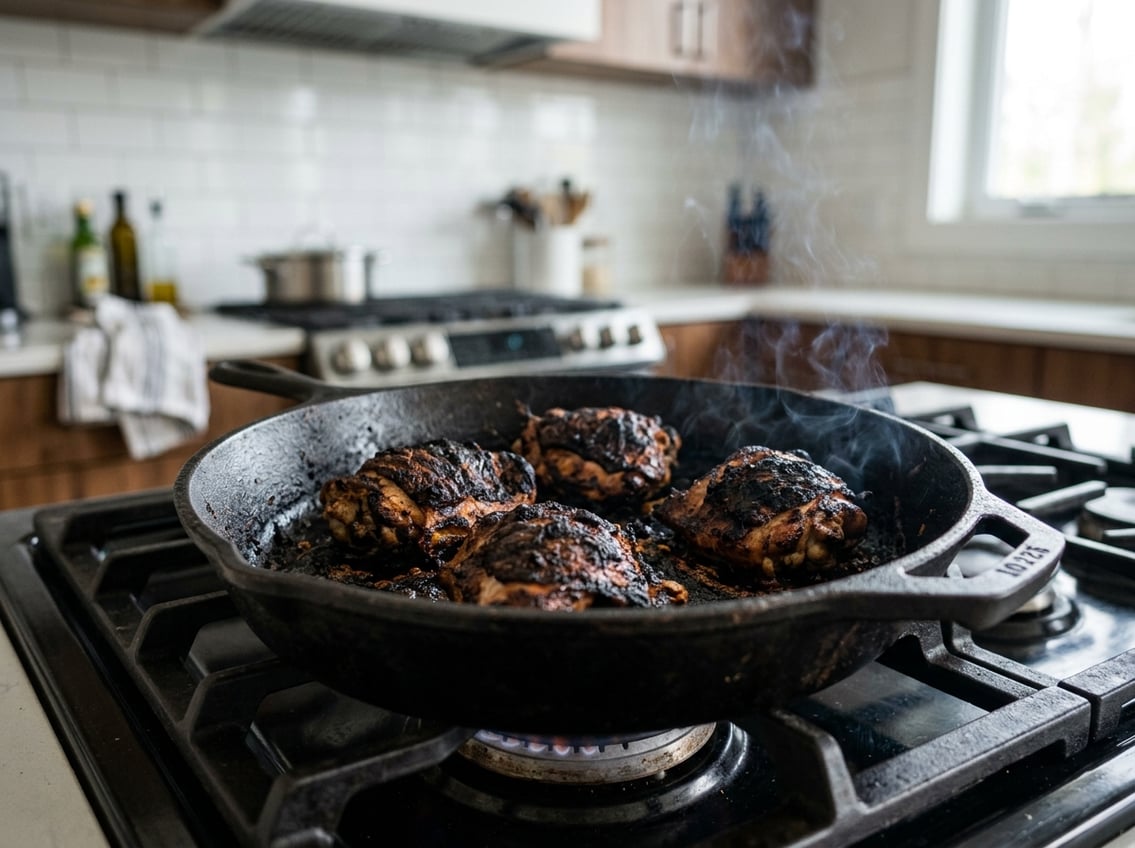
Chicken thighs behave differently than breasts. Internal temperature affects texture, and common mistakes can cause dryness. You can use practical techniques to prevent or rescue overcooked chicken.
Why Chicken Thighs React Differently Than Other Cuts
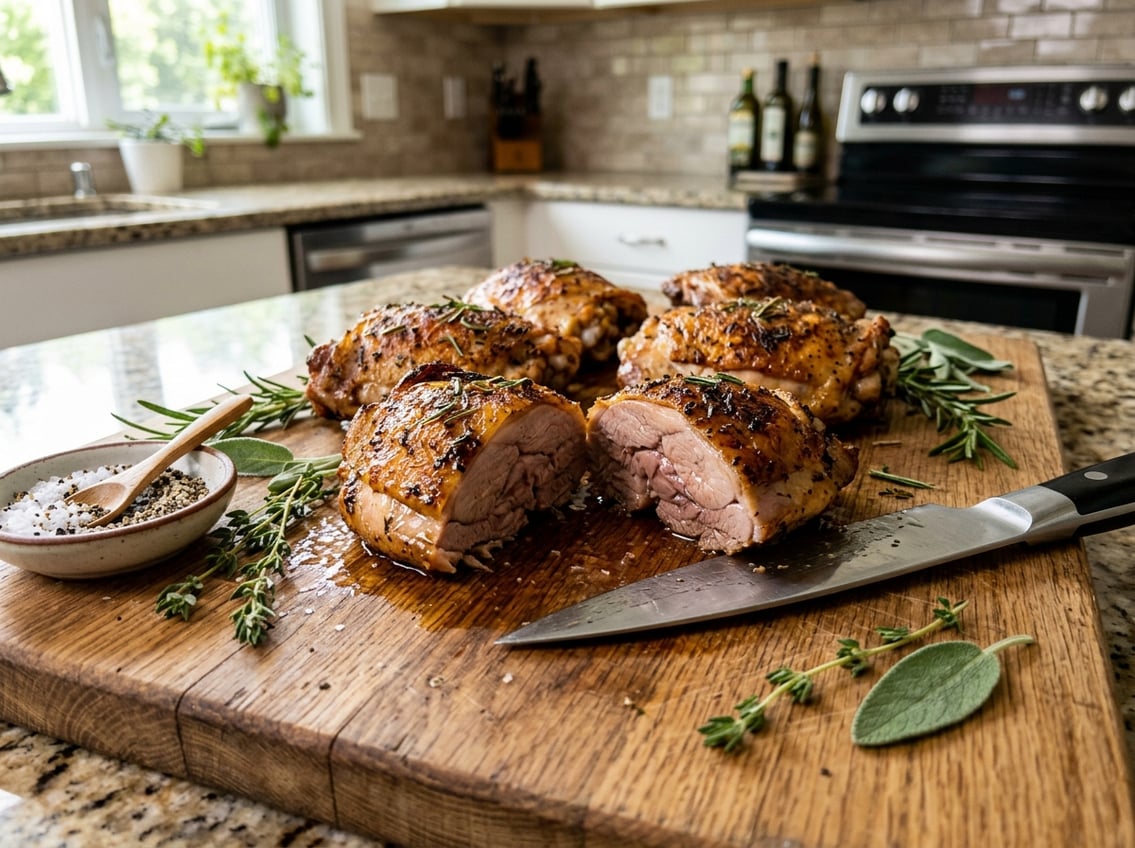
Dark meat thighs contain more fat, collagen, and connective tissue than breast meat. These components change texture as they heat.
You can cook thighs well past 165°F to dissolve collagen into gelatin and render fat, which makes them more forgiving of long cooking times.
The Science of Dark Meat Chicken
Thighs have higher myoglobin and connective tissue than breast, which gives them deeper flavor and a darker color.
As you heat the meat, collagen denatures and converts to gelatin between roughly 160–185°F.
That gelatin dissolves into the cooking juices, increasing juiciness and body.
If you maintain gentle heat, the collagen melts without causing the muscle fibers to squeeze out moisture.
Bone proximity affects heat flow. The bone conducts heat differently than muscle, so temperature readings near the bone can lag.
Use a probe in the thickest part of the thigh, avoiding the bone, to track true internal temperature.
Fat Content and Connective Tissue
Thighs contain more intramuscular fat and connective tissue than breasts, which changes how they respond to prolonged cooking.
Rendered fat lubricates muscle fibers and carries flavor into the meat as it melts during slow cooking.
Connective tissue (collagen) requires time and sustained temperatures to break down into gelatin. That gelatin thickens pan juices and gives pull-apart texture when properly rendered.
If you cook thighs too quickly at high heat without enough time for collagen to dissolve, the exterior browns while the interior remains tough.
Slow methods such as braising, low oven roasting, or sous vide let fat render and collagen convert without drying out the muscle.
Temperature Tolerance Compared to Chicken Breast
Breast meat is lean and tight-grained. It loses moisture and firms up sharply once its proteins denature around 140–160°F.
Thighs tolerate and often benefit from higher internal temperatures.
Cook them into the 175–195°F range to convert collagen to gelatin and render fat, producing tender, moist meat.
Use these practical temperature guideposts:
- 165°F: safe, still slightly resilient.
- 175°F: more rendered fat, juicier bite.
- 185–195°F: collagen mostly converted, meat pulls from bone.
Track temperature and choose a cooking method that keeps the thigh in the collagen-conversion window long enough to render fat without over-drying the muscle.
Signs and Effects of Overcooking Chicken Thighs
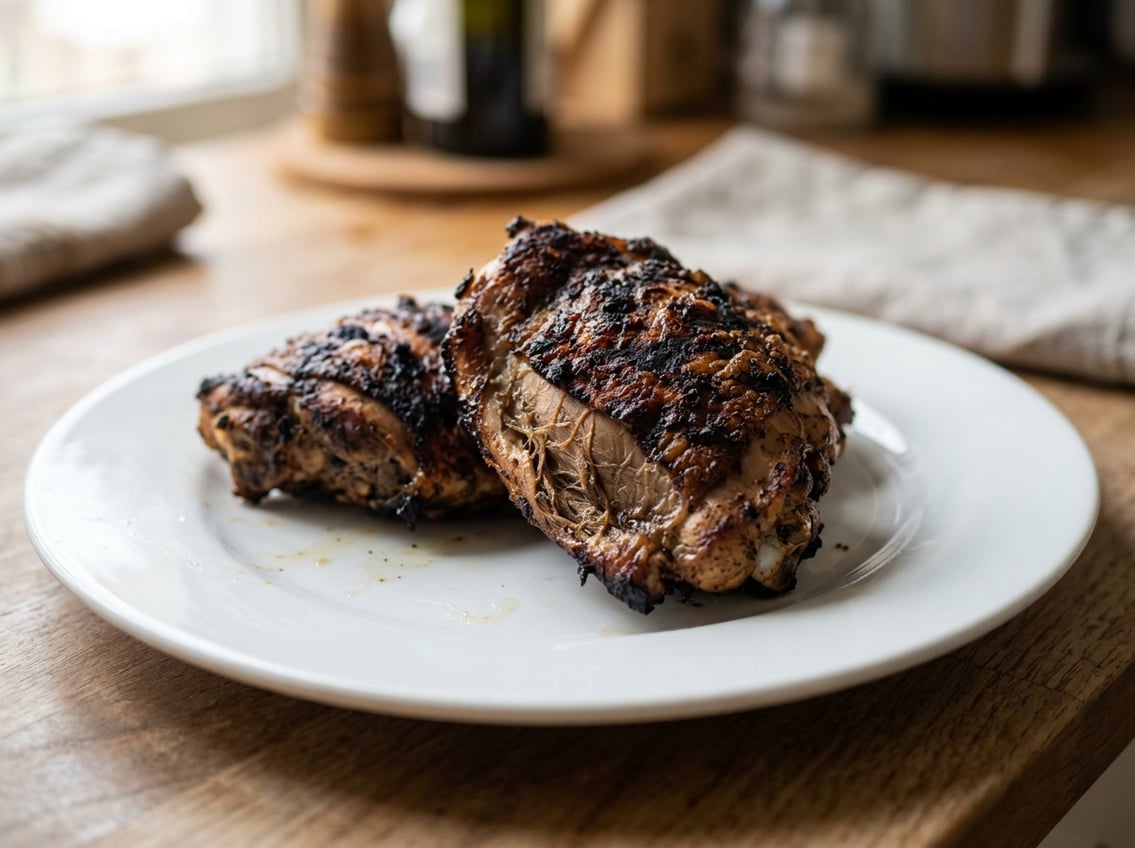
You will see clear visual, textural, and flavor changes when chicken thighs pass their ideal cooking window.
Pay attention to internal temperature, moisture loss, and how the meat separates from the bone to judge doneness.
Physical and Visual Indicators
Look at color and juices first.
Properly cooked thigh meat is opaque with a slight pink tint near the bone. Overcooked chicken thighs often show a dry, chalky white or gray color and pale, sticky skin.
Check the juices. When you pierce the thickest part, clear juices indicate doneness but watery, scant juices point to moisture loss from overcooking.
Observe how the meat sits on the bone. If it pulls away excessively and the joint looks bare, the meat has likely been cooked past optimal tenderness.
Use internal temperature as an objective sign. Thighs at 165°F are safe, but if the probe reads 185–200°F and you used high, dry heat, expect significant moisture loss and a firmer appearance.
Texture Changes: From Juicy to Dry
Your first tactile clue is bite.
Juicy chicken thighs yield a tender, slightly springy chew. Overcooking makes muscle fibers contract and squeeze out moisture, producing a dry, stringy texture.
When you cook thighs low and slow to about 185–195°F, collagen converts to gelatin and can make meat tender and pull-apart.
Rapidly driving the internal temperature too high or holding it too long in the 200°F+ range causes the protein matrix to tighten and become chewy.
Tender chicken thighs feel moist and coat the palate. Overcooked chicken thighs feel dry, fibrous, and may stick to teeth.
Juicy thighs reheat and shred well. Overcooked ones become tough in sauces.
Flavor Impact and Nutritional Considerations
Overcooking dulls flavor compounds and concentrates fat, which can make the meat taste bland or slightly bitter.
Juicy chicken thighs retain more brothiness and fat-soluble flavor. Overcooked chicken often lacks that depth.
Some overcooking will render fat and add richness, but excessive heat oxidizes fats and reduces perceived juiciness.
Seasonings may seem muted on overcooked meat because less moisture carries the flavors to your palate.
Overcooking causes minimal safety issues if the chicken reached safe temperatures. However, prolonged high heat degrades heat-sensitive nutrients and reduces moisture-soluble vitamins.
Aim for controlled temperatures and use methods like braising, sous-vide, or low roasting to preserve juiciness and tender chicken thighs.
Understanding Internal Temperatures for Thigh Perfection
Aim for temperatures that keep the meat safe while letting connective tissue convert to gelatin for tenderness.
Learn exactly where and how to measure so you hit the sweet spot between safe and succulent.
Safe vs. Ideal Temperature Ranges
The USDA minimum for poultry safety is 165°F (74°C). Reaching that temperature destroys harmful bacteria.
For bone-in chicken thighs, safety is only the baseline.
You get better texture by going higher. Temperatures around 175°F give more rendered fat and a juicier bite.
If you want fall-apart thighs, target 185–195°F where collagen breaks down into gelatin and the meat becomes silky.
Avoid pushing past 200–210°F; muscle fibers will dry and turn stringy regardless of collagen content.
Use a meat thermometer to choose the range that fits your recipe: 165°F for safety, 175°F for everyday roasting, 185–195°F for braises, pulled chicken, or slow-roasted thighs.
How Temperature Influences Texture
Collagen begins to soften around 140–150°F and converts more fully as the internal temp climbs into the 180s.
That conversion releases gelatin that moistens and lubricates the muscle fibers.
At lower end temps (165–175°F) thighs are safe and still somewhat firm; they hold their shape and slice cleanly.
At 185–195°F thighs become tender enough to pull from the bone and feel richly juicy.
Fast, high-heat methods can force the internal temp to rise quickly and dry the meat before collagen melts.
Slow, moist methods or controlled low-and-slow dry heat keep the meat in the right temperature window long enough to transform texture without drying it out.
Where to Place the Thermometer
Insert the thermometer probe into the thickest part of the thigh, avoiding contact with bone.
Bone conducts heat and gives a falsely high reading.
For bone-in pieces, aim the probe parallel to the bone and center it in the meat mass.
For boneless thighs, probe the thickest point lengthwise.
Digital instant-read thermometers and leave-in probes both work.
Use an instant-read for last checks and a leave-in probe for oven or grill cooking.
Wait a few seconds for the reading to stabilize before deciding to remove the chicken from heat.
Most Common Causes of Dry or Stringy Chicken Thighs
You’ll usually find the problem comes down to excessive heat, the wrong method for the cut, or poor timing relative to piece size.
Each cause affects moisture and connective tissue differently.
High Heat and Moisture Loss
High, direct heat drives moisture out of the meat quickly.
When you sear or roast thighs at very high temperatures and leave them exposed, the muscle fibers contract and squeeze out juices.
Fat in thighs protects them somewhat, but it can’t compensate for prolonged surface heat.
If you grill over roaring coals or roast at 450°F+ without adjusting time, the surface overcooks before internal collagen converts to gelatin.
Use a moderate oven (300–375°F) or finish high only briefly to crisp skin.
Lower the cooking temperature, add a braising liquid, or use indirect grill zones to retain moisture.
Always check internal temperature in the thickest part and avoid relying on color alone.
Cooking Method Mismatches
Some techniques demand different endpoints.
Quick-pan searing or fast grilling suits skin-on, small thighs only when you watch time closely.
Slow braising, sous-vide, or low-and-slow roasting suits larger bone-in thighs because those methods let connective tissue break down into gelatin instead of tightening into tough strands.
If you use a dry, fast method meant for breasts on bone-in thighs, you’ll likely overcook the muscle while the collagen hasn’t converted.
Treating thighs like stew meat (too wet and low) without afterward crisping the skin can leave you with limp texture and unappealing mouthfeel.
Use sous-vide or braise for tender pull-apart thighs. Use high-heat sear plus brief oven finish for small, boneless pieces.
Adjust times rather than assuming one approach fits all.
Timing and Size Pitfalls
Piece thickness and bone presence change cooking time dramatically.
A thick bone-in thigh can take 20–30 minutes longer than a split boneless thigh to reach the same internal temperature.
If you follow a recipe’s clock without measuring internal temp, you’ll either undercook or overcook some pieces in the same batch.
Uneven sizes in a pan create mixed textures.
Smaller pieces dry out while larger ones remain underdone.
Crowding the pan also traps steam, which can prevent proper browning and force longer cooking.
Pound or halve very thick pieces, group similar sizes, leave space between pieces, and check multiple thighs with a thermometer.
Rotate or remove done pieces early to avoid overcooking the rest.
Techniques to Prevent Overcooking Chicken Thighs
You can keep thighs juicy by choosing a cooking method that matches your time and texture goals.
Use a proper thermometer and follow a few repeatable habits during prep and cook.
Focus on gentle heat, internal temperature targets, and finishing steps that protect moisture while delivering texture.
Choosing the Right Cooking Method
Pick a method that provides steady, even heat so connective tissue breaks down without drying muscle fibers.
For fall-apart, tender chicken thighs, use braising (low simmer in stock or sauce for 45–75 minutes) or low oven roasting (275–325°F).
These methods render fat and convert collagen to gelatin, producing juicy chicken thighs.
If you want crispy skin and juicy meat, use indirect grilling or reverse sear.
Cook over indirect heat until the internal temp approaches 160–175°F, then sear or move to direct high heat to crisp skin.
Sous vide gives precise control. Set 165–170°F for 1.5–4 hours, then sear quickly.
Avoid high, dry heat from the start unless pieces are small or you monitor with a thermometer.
Match cooking time and heat to thickness and bone-in vs. boneless status.
Employing a Meat Thermometer Effectively
Always use a reliable instant-read or probe thermometer.
Insert the probe into the thickest part of the thigh, avoiding bone, and wait for a steady reading.
For safe, tender results target 165°F if you prefer firmer meat, or 185–195°F for fall-apart thighs when using low-and-slow methods.
For oven or grill sessions, use a leave-in probe connected to an alarm and set a target temperature 3–5°F below your final target to allow for carryover.
Check multiple thighs for consistency when cooking a batch.
Calibrate inexpensive thermometers periodically in ice water (32°F) or boiling water (212°F at sea level).
Tips for Consistently Juicy Results
Let chicken thighs reach room temperature by removing them from the fridge 20–30 minutes before cooking. Pat them dry for crisping, then season and coat with a light oil layer to help transfer heat and protect against drying during searing.
Use braising in flavorful liquid, roasting at lower temperatures, or a foil tent during resting to control moisture. Rest thighs 5–10 minutes after cooking so juices redistribute and moisture loss reduces when you cut.
When grilling or roasting, monitor the distance from heat and flip only when the skin releases easily. Rotate pieces and check temperatures across the pan when cooking in batches.
How to Rescue Overcooked Chicken Thighs
You can restore moisture, hide dryness in other dishes, or change texture to make the thighs feel tender again. Each approach adds liquid, uses complementary ingredients, or alters the meat.
Moisture-Adding Solutions
Test doneness with a quick cut. If the meat is dry, gently add liquid to avoid further drying.
Poach thighs in low simmering chicken stock or broth for 5–10 minutes. Use just enough liquid to cover the thighs halfway and keep the temperature below a simmer to prevent further overcooking.
Try a quick reverse marinade. Mix 1/2 cup plain Greek yogurt or mayonnaise with 1–2 tablespoons mustard or vinegar and a pinch of salt. Rub this over sliced or whole thighs and rest 15–30 minutes in the fridge.
Brush with compound butter made from softened butter, herbs, lemon zest, and a little olive oil. Briefly reheat under a low broiler or in a 325°F oven for 5–8 minutes so the fat melts into the surface.
Repurposing Dry Thighs in Other Dishes
Shred or dice the thighs to maximize surface area for sauces and dressings. Shredded chicken absorbs moisture quickly, making it ideal for soups, stews, chilis, or braises where broth will plump the meat.
Use the meat as a filling for sauced dishes like enchiladas, tacos with salsa verde, BBQ pulled-chicken sandwiches, or baked pasta. Mix shredded chicken with a flavorful binder such as barbecue sauce, tomato sauce, or a cream-based sauce before assembling.
For cold dishes, make a chicken salad with Greek yogurt or mayonnaise, mustard, diced apple or celery, and chopped herbs. The dressing hides dryness and adds texture.
Enhancing Texture with Sauces and Shredding
Choose sauces with both fat and acid to balance flavor and mouthfeel.
Creamy sauces like alfredo, curry, or tahini-based ones coat fibers and provide lubrication.
Vinaigrettes or salsas add brightness and help mask dryness.
Shred the meat into thin strands so it soaks up sauce quickly.
Use two forks or pulse briefly in a food processor to create an even texture.
Toss the meat in warm sauce and let it rest for 5 to 10 minutes so the strands absorb liquid.
Finish with texture contrasts such as crisped onions, toasted nuts, or fresh herbs.
These elements elevate the final dish without additional cooking.


