
How Long Does It Take Chicken Thighs: Timings for Every Method
You want juicy, safe chicken thighs without guesswork. Bake bone-in thighs about 35–45 minutes at 375°F (190°C), and boneless thighs about 25–35 minutes, or cook until the internal temperature reaches 165°F (74°C).
Use a meat thermometer to confirm doneness rather than relying on time alone.
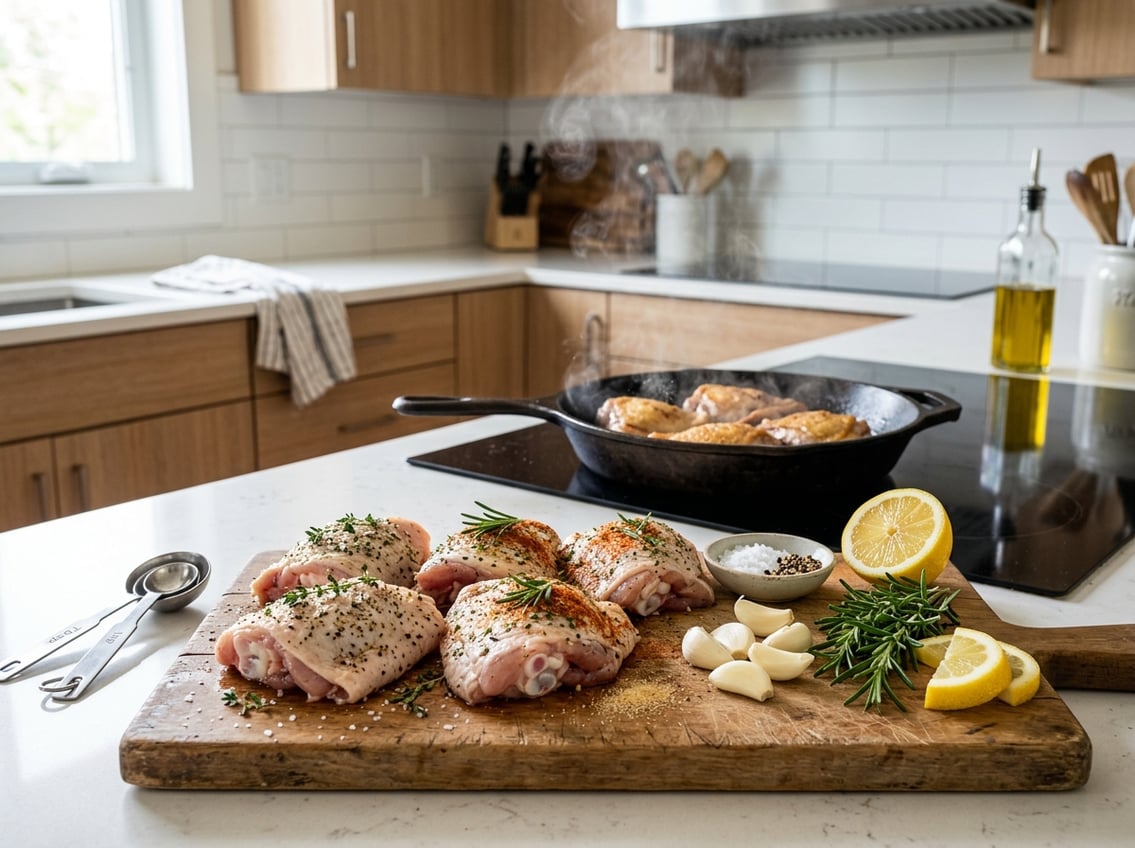
This article explains oven temperatures and exact cooking times. It also covers grilling, marinating, and choosing between bone-in or boneless thighs.
Oven Baking Times and Temperature Guidelines
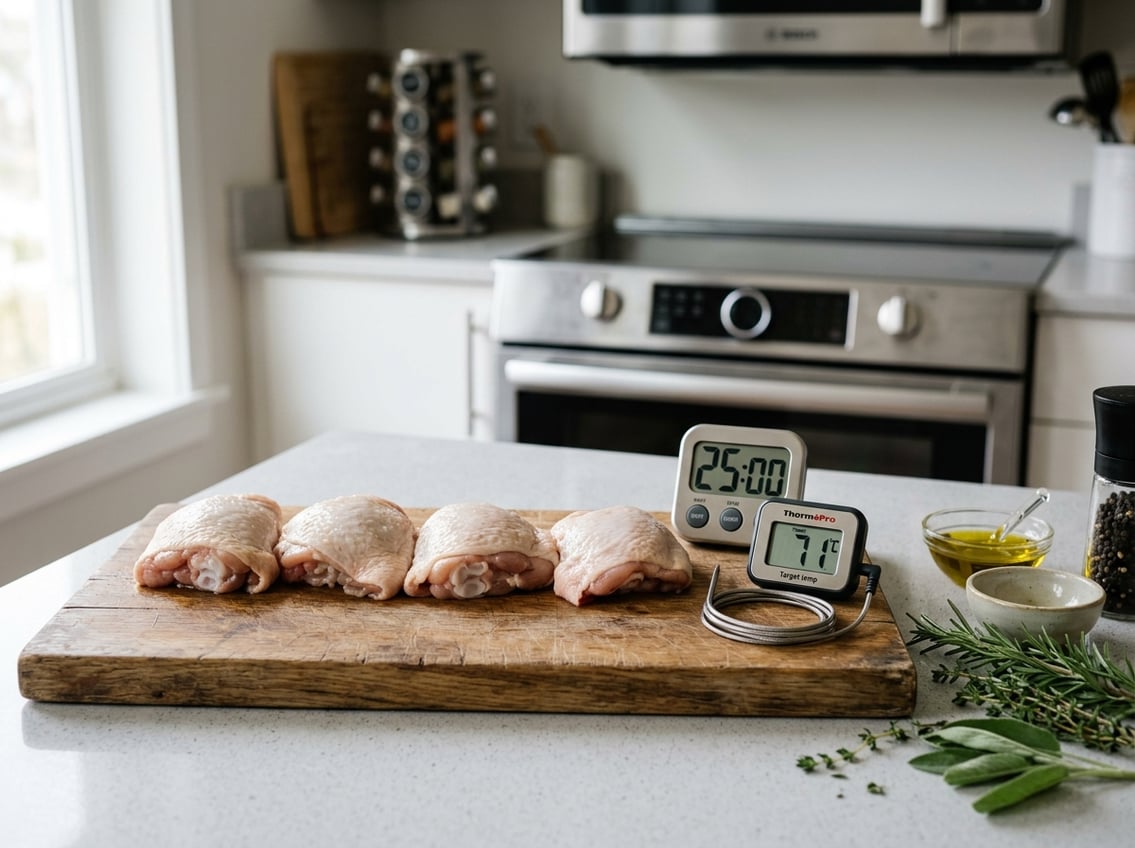
Check practical oven temperatures and timing ranges for bone-in and boneless thighs. Skin and bone affect cook time and texture.
Use a meat thermometer and adjust minutes based on thigh size and oven hot spots.
Bone-In and Boneless Chicken Thigh Timing Charts
Bone-in thighs take longer because the bone slows heat penetration. Expect about 35–45 minutes at 400°F (205°C) for medium bone-in thighs (4–6 oz each).
Larger bone-in pieces may need up to 50 minutes. Boneless thighs cook faster since heat reaches the center directly.
Bake boneless thighs at 375–425°F (190–220°C) for 20–30 minutes depending on thickness. Thicker pieces at the lower end of the temp range will sit closer to 30 minutes.
Use this quick reference:
- Bone-in, 350°F: 40–50 minutes
- Bone-in, 400–425°F: 35–45 minutes
- Boneless, 375°F: 20–25 minutes
- Boneless, 425°F: 20–30 minutes
Always check internal temperature: 165°F (74°C) in the thickest part. Rest thighs 5–10 minutes after baking to let juices redistribute.
Key Differences Between Skin-On and Skinless Thighs
Skin-on thighs need slightly longer high-heat exposure to crisp the skin without overcooking meat. Roast skin-on at 400–425°F to render fat and get a golden crust.
Timing matches the bone-in or boneless ranges above, but aim for the higher end if you want crisp skin. Pat skin dry and use a light oil to improve browning.
Skinless thighs cook more evenly and quickly. They respond well to moderate heat (375–400°F) and are less likely to need extra resting for texture.
Marinated or sauced skinless thighs may require a few extra minutes. In both cases, check for 165°F (74°C) internal temperature rather than relying on time alone.
Best Oven Temperatures for Juicy Results
Choose temperature based on texture goals. For juiciness and gentle cooking, use 375°F (190°C); this gives even cooking with lower risk of drying, especially for boneless or skinless thighs.
Expect times near the midpoints listed previously. For crispy skin or faster cooking, use 400–425°F (205–220°C).
That range promotes browning and shortens bake time but requires closer monitoring to avoid overcooking.
Place thighs on a rimmed baking sheet or in a shallow pan with space between pieces for even airflow. Use a probe or instant-read thermometer to confirm 165°F (74°C).
Remove thighs a few degrees before target if you prefer carryover cooking, then rest 5–10 minutes.
Using a Meat Thermometer for Perfect Doneness
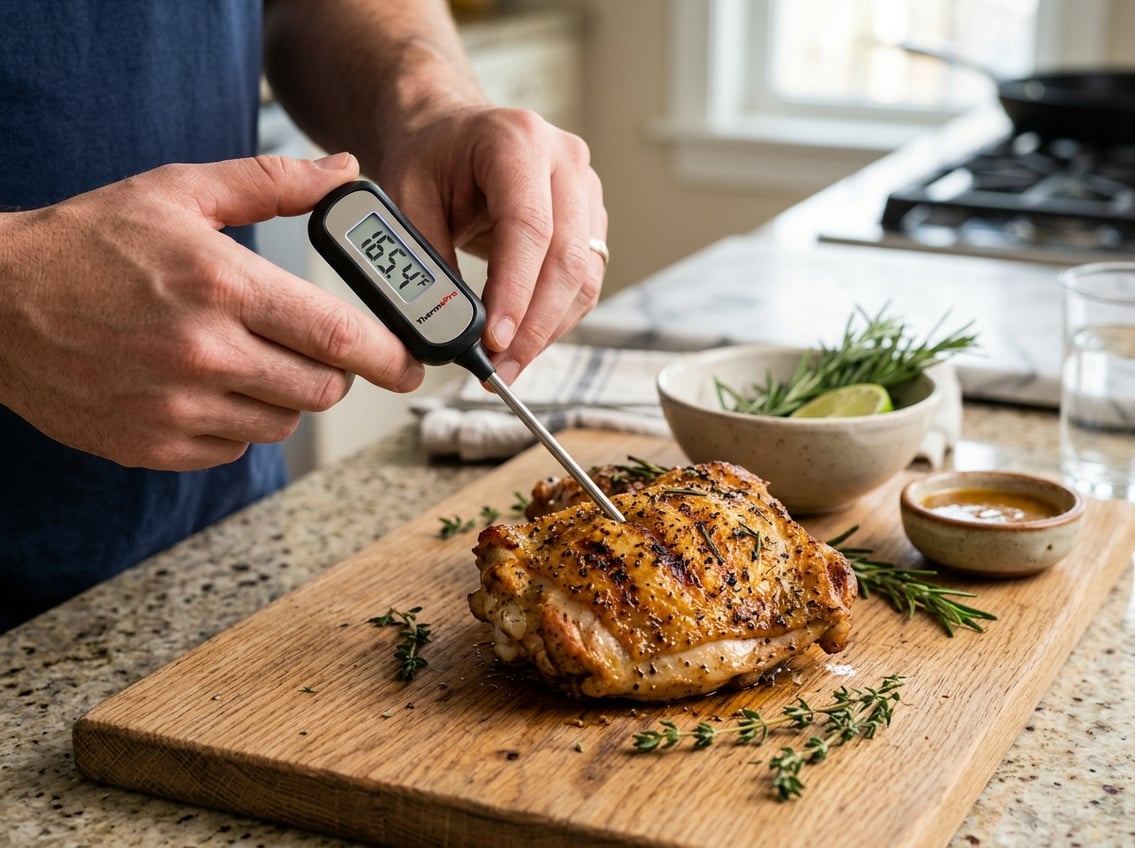
Use a reliable instant-read or probe thermometer to check doneness. Aim for the coolest part of the thigh (near the bone) and measure until the reading stabilizes.
Recommended Internal Temperatures
Cook chicken thighs to a safe minimum internal temperature of 165°F (74°C) where the thickest part near the bone reaches that number. Many cooks prefer holding the meat a bit longer — 175–185°F (79–85°C) — to break down connective tissue and get more tender results.
If you plan to rest the meat, remove it from heat when it hits 162–163°F; carryover will usually bring it to 165°F within a few minutes.
Use Fahrenheit if your thermometer is calibrated that way. If you use Celsius, target 74°C for safety and 79–85°C for more tender texture.
How and Where to Insert the Thermometer
Insert the probe horizontally into the thickest part of the thigh, avoiding bone. Bone conducts heat and gives falsely high readings, so position the tip in the center of meat closest to, but not touching, the bone.
For bone-in thighs, push the probe from the outer side toward the bone so the tip sits beside the bone. If you use an instant-read thermometer, insert at least 1–2 inches and wait a few seconds for a stable reading.
For thin or boneless thighs, insert into the deepest point of the meat. For leave-in probes used during roasting, place the tip where you want the final reading and check periodically.
Verify with an instant-read at the end to confirm.
Grilling and Alternative Cooking Methods
Check out specific cook times and techniques for boneless and bone-in thighs using grilling, air fryer, pan-roast, slow-cooker, and braise methods. Each method highlights target temperatures, approximate timing, and tips for skin-on or skinless pieces.
Grill Timing: Boneless vs. Bone-In
Grill boneless chicken thighs over medium-high heat (around 400°F) for about 4–6 minutes per side. Aim for an internal temperature of 165°F for safety.
Many cooks prefer 175–185°F for more tender dark meat. Sear skin-on thighs over direct heat to crisp, then move them to indirect heat to finish.
For bone-in chicken thighs, preheat the grill to 375–450°F and plan on 20–30 minutes total. Start skin-side down to render fat, flip once or twice, and move to indirect heat with the lid closed until the thickest part reads 175–185°F.
Trim excess fat to reduce flare-ups and rest the thighs 5–10 minutes before serving.
Air Fryer and Pan-Roasting
In an air fryer, arrange boneless chicken thighs in a single layer at 380°F. Cook 10–14 minutes, flipping halfway; check for 165°F minimum.
Skin-on thighs crisp well in the final 2–3 minutes at 400°F. Avoid overcrowding to keep the exterior crisp.
For pan-roasting, sear skin-side down in a hot skillet with oil until golden, about 4–6 minutes. Transfer the skillet to a 400°F oven (or finish on lower stove heat with a lid) and roast boneless thighs 8–12 minutes.
Bone-in will need 18–25 minutes. Use a thermometer and rest meat briefly.
These methods work well if you don’t grill and mimic that crisp skin and controlled finish.
Slow Cooking and Braising Guide
Slow cookers make bone-in thighs fork-tender without attention. Cook on low for 4–6 hours or high for 2–3 hours with liquid (broth, sauce, or tomatoes).
The meat will exceed 165°F safely and become fall-apart tender. Reduce salty seasonings since juices concentrate.
Braising on the stove or in the oven gives a deeper sauce and tender texture. Brown skin-on or boneless thighs first, then simmer covered at 300–325°F (oven) or low on the stove for 45–90 minutes depending on size.
Bone-in thighs typically need longer. Finish uncovered briefly to concentrate sauce.
Marinating and Prepping Chicken Thighs
Marinate times, ingredient choices, and small prep steps determine whether your thighs finish juicy, tender, or crispy. Follow precise timings for acidic versus oil-based marinades, and prep differently for skin-on and skinless thighs.
Why and How to Marinate
Marinating infuses flavor and can tenderize. For skinless chicken thighs, use a short acid-based marinade (30 minutes to 2 hours) — lemon, yogurt, or vinegar will penetrate quickly and add tang without turning meat mushy.
For skin-on or bone-in thighs, you can marinate longer; 4–12 hours lets oil-based or herb-forward marinades deepen flavor without damaging texture.
Combine oil, aromatics, salt, and optional acid. Use ½–1 cup of marinade per pound of chicken.
Refrigerate in a sealed bag or container and turn once for even coating. Discard used marinade or boil before basting.
If you’re short on time, score thicker pieces or make small slits to help flavors enter faster. Salt or a light brine (2–6 hours) works well for both cuts to improve juiciness.
Prepping for Crispy Skin or Tender Meat
Decide final texture before you cook. For crispy skin on skin-on chicken thighs, pat the skin very dry and season with salt at least 30 minutes before cooking (or overnight uncovered in fridge).
Avoid oil-heavy marinades that prevent crisping. Bring thighs to fridge-cold dryness, then roast at high heat (425–450°F) or sear skin-side down in a hot pan to render fat and crisp the skin.
For tender meat with skinless chicken thighs, focus on gentle cooking after marinating. Pat lightly, avoid over-salting, and cook over moderate heat to an internal temperature of 165°F.
If you want shreddable texture, cook longer at lower temperatures (sous-vide or braise) after marinating. Always rest cooked thighs 5–10 minutes before slicing or serving.
Bone-In vs. Boneless: Which to Choose?
Bone-in thighs hold more fat and connective tissue and usually need longer cooking time. Boneless thighs cook faster and fit quick recipes.
Choose bone-in when you want moisture retention and slow roasting. Choose boneless for even, quick cooking and easy slicing.
Flavor and Juiciness Comparisons
Bone-in chicken thighs stay juicier during long cooks because the bone and surrounding connective tissue slow heat transfer and protect inner meat. That slower heat helps collagen convert to gelatin, which keeps the flesh moist and adds mouthfeel.
Boneless chicken thighs still deliver rich dark-meat flavor due to higher fat content than breasts, but they lose moisture faster if overcooked. If your recipe relies on quick marinades or intense searing, boneless pieces absorb flavors more uniformly and finish without long cook times.
Use bone-in for applications where sustained heat will render collagen (roasting at 375–425°F, or low-and-slow braises). Use boneless when you need fast, even cooking (stir-fries, pan-searing, or grilling at higher heat).
Speed and Convenience Factors
Boneless chicken thighs usually finish 10–20 minutes faster than bone-in pieces in the oven or on the grill because cutting out the bone reduces thickness and removes the insulative core. For example, boneless thighs often reach safe internal temperature in roughly 12–25 minutes depending on cooking method.
Bone-in thighs commonly require 30–45 minutes in the oven. Boneless thighs offer easier prep, simpler portioning, and faster slicing for sandwiches or skewers.
They’re ideal when you need consistent cook times across pieces and want minimal knife work after cooking. Choose bone-in when you can accept longer cook times for improved moisture and slightly different texture.
Choose boneless when you prioritize speed, uniform doneness, and convenient serving.
Tips for Consistently Delicious Chicken Thighs
Control temperature, timing, and placement to get juicy meat and crisp skin every time. Use a meat thermometer, arrange thighs so hot air circulates, and rest them briefly before serving.
Resting Chicken After Baking
After you bake chicken thighs, remove them from the oven when the thickest part reads 165°F (74°C). Tent loosely with foil and let them rest for 5–10 minutes; this lets juices redistribute and raises the internal temperature slightly without overcooking.
Shorter rests (3–5 minutes) work for boneless thighs. Bone-in benefits from the full 8–10 minutes.
During rest, place thighs on a wire rack over a sheet pan to keep skin crispy. Do not stack pieces or cover tightly, which traps steam and softens skin.
Use the resting period to finish sauces or sides so the thighs stay hot when plated. If you must hold them longer, keep at 140–150°F in a low oven to preserve texture and safety.
Simple Seasoning and Pan Arrangements
Season the chicken thighs generously. Salt the thighs at least 30 minutes before baking or right before they go in the oven.
Use a basic rub of kosher salt, black pepper, garlic powder, and a little smoked paprika for color and balanced flavor.
Arrange the thighs skin-side up on a rimmed baking sheet or in a shallow roasting pan. Leave at least 1 inch between pieces so hot air can circulate.
Crowded pans steam the skin and lengthen bake times. For extra crispness, place the thighs on a wire rack set in the pan so fat can drain away.
If you bake boneless thighs, reduce the baking time and check earlier. Boneless thighs often finish in 20 to 30 minutes at 400 to 425°F.
For bone-in thighs, plan for 35 to 45 minutes at 375 to 425°F depending on size. Always verify doneness with a thermometer instead of relying on time alone.


