
How Long Do Chicken Thighs Take to Cook: Oven Timing and Tips
You want juicy, safe chicken thighs on the table with as little guesswork as possible. Boneless thighs usually take about 20–30 minutes at 425°F, while bone-in, skin-on thighs generally need about 30–40 minutes at 400–425°F.
Check for doneness by measuring the internal temperature in the thickest part. The chicken is ready when it reaches 165°F.
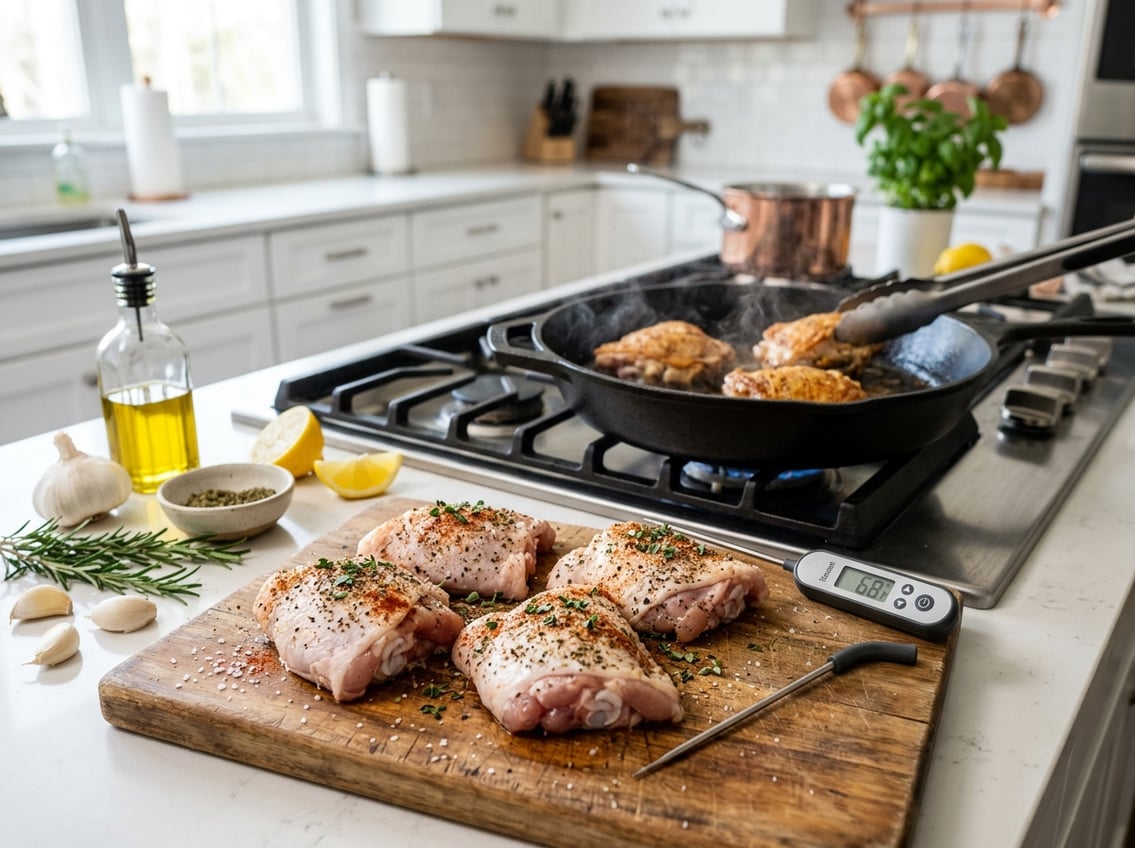
Several factors affect cooking time: thigh size, bone or boneless, oven temperature, and how you prep the meat. Choose the method that fits your schedule and taste.
You’ll find temperature and timing guidance, prep tips for texture and flavor, roasting techniques for crisp skin, and checks to avoid undercooking or drying out the meat.
Key Factors That Influence Chicken Thigh Cooking Times
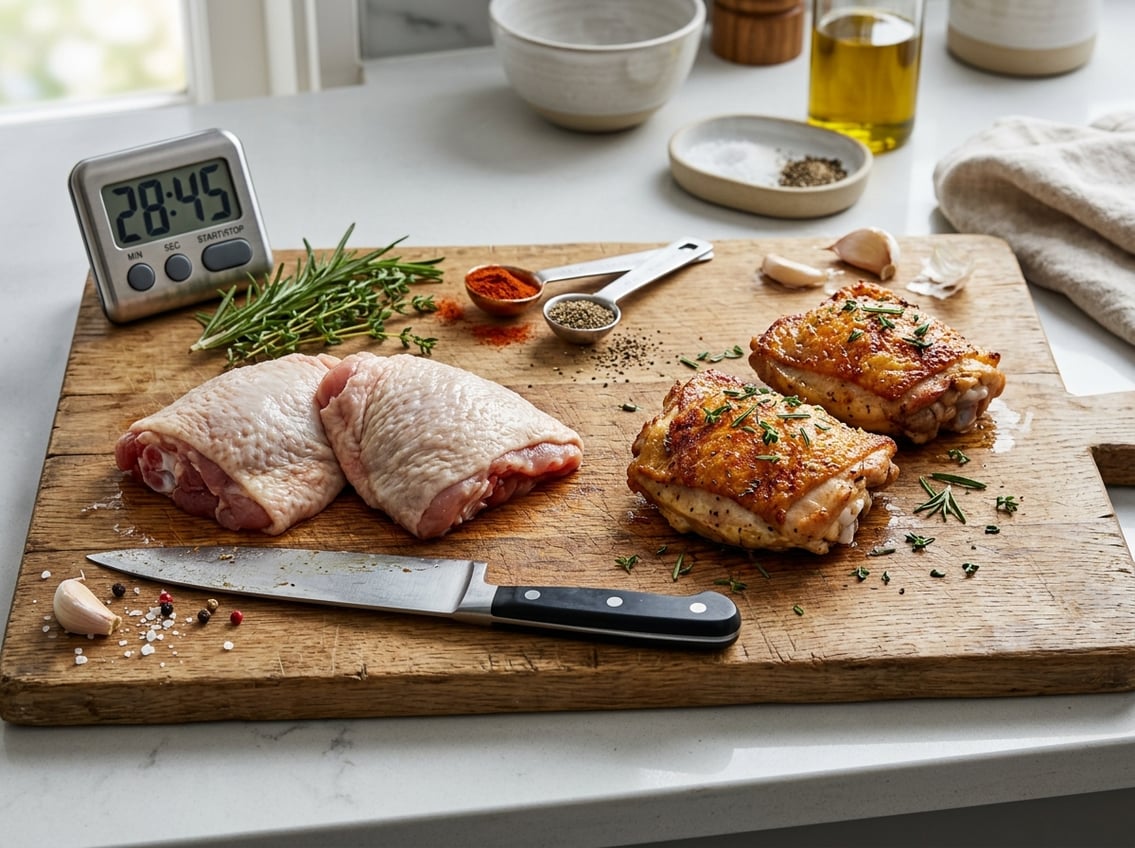
You’ll adjust cook time based on three main factors: whether the thigh has a bone, whether it has skin, and the piece’s size or marinade. Each factor changes how heat moves through the meat and how long the dark meat needs to reach safe, juicy doneness.
Bone-In vs. Boneless Differences
Bones slow heat transfer in chicken thighs, so bone-in pieces reach 165°F more slowly than boneless ones. Bone-in thighs (about 4–8 oz each) need about 35–50 minutes at moderate oven temperatures.
Boneless thighs of similar weight often finish in 20–30 minutes at higher temps. Check temperature by inserting an instant-read thermometer into the thickest part, avoiding the bone.
If you don’t have a thermometer, cut into the thickest spot and look for clear juices and opaque meat. Rotate pan positions for even cooking, since bones can cause local hot spots.
Skin-On and Skinless Variations
Skin-on chicken thighs take a bit longer to cook as the fat renders and the skin crisps, but the skin helps keep the meat moist. Roast skin-on thighs at higher heat (425°F or above) for 25–35 minutes for boneless and 30–45 minutes for bone-in, depending on size.
Skinless thighs cook faster and can dry out more easily. Use a lower oven temperature or a brief marinade to keep them juicy, and watch the internal temperature closely.
Basting or adding a sauce late in cooking helps retain moisture without stopping browning.
Size, Thickness, and Marination Effects
Thicker or larger chicken thighs take longer to cook. Two 6–8 oz bone-in thighs need more time than four small 3–4 oz boneless pieces.
Flatten or pound thighs to even thickness and shorten cook time. Marinades with acid (lemon, vinegar) can tenderize the surface and slightly reduce cooking time for thin pieces.
Salt-heavy brines help retain moisture during longer cooks, especially for skinless or boneless thighs.
Recommended Oven Temperatures and Timing
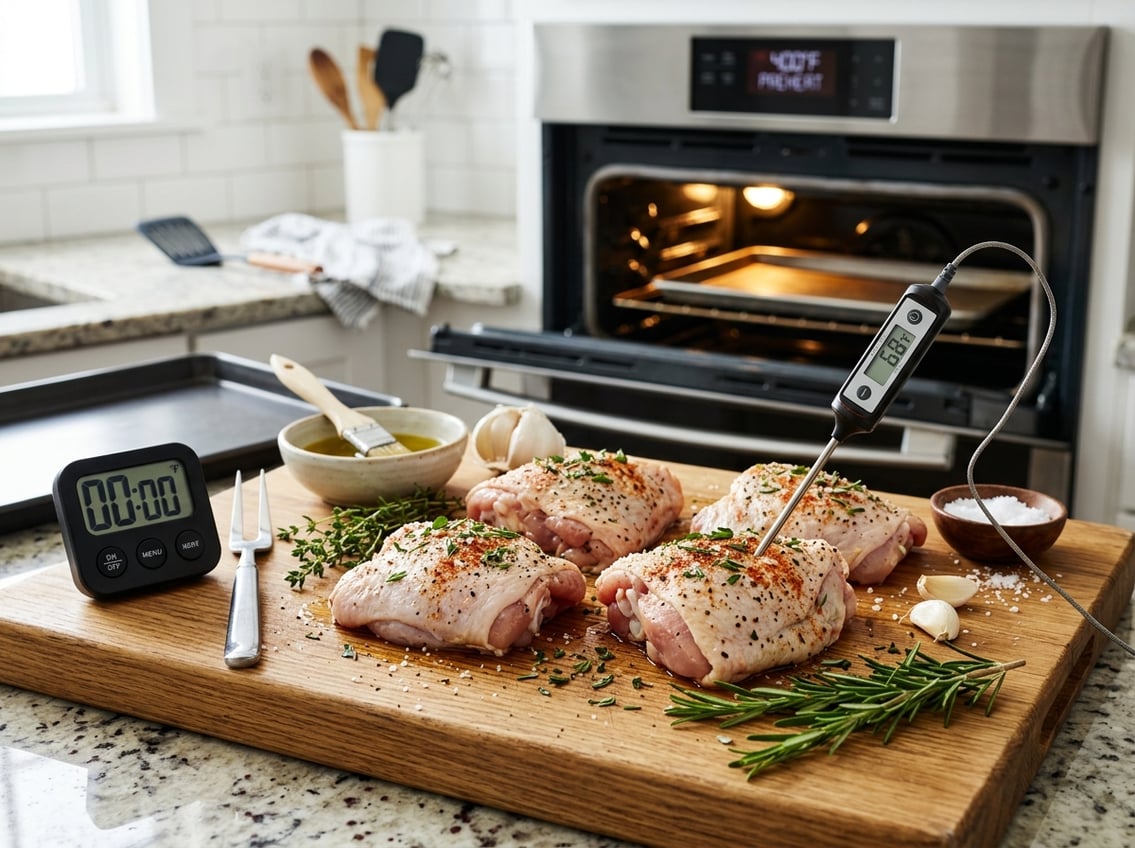
Use a hotter oven for crisp skin and shorter cook time. Use moderate heat for more even cooking.
Bone-in pieces need longer than boneless, and skin-on requires higher temperature to render fat and crisp.
Standard Baking Times for Bone-In Thighs
Bake bone-in chicken thighs at 400°F (205°C) for reliable results. Average 6–8 ounce thighs need 35–45 minutes; larger pieces may need up to 50 minutes.
Check doneness with an instant-read thermometer in the thickest part without touching bone. Target 165°F (74°C).
Place thighs skin-side up on a baking sheet or in a shallow pan spaced at least 1 inch apart. Use a rimmed sheet for drippings and consider a wire rack for even browning.
Optimal Cooking Time for Boneless Thighs
Boneless chicken thighs cook faster than bone-in cuts. Bake boneless thighs at 375–400°F (190–205°C) for about 20–30 minutes depending on thickness.
Thin cutlets reach 18–22 minutes; thicker boneless pieces need nearer 28–30 minutes. Aim for 165°F (74°C) internal temperature.
Arrange boneless thighs in a single layer with minimal overlap. Finish under the broiler for 2–3 minutes to improve color.
Adjustments for Skin-On and Skinless Cuts
Bake skin-on chicken thighs at 400–425°F (205–220°C) for 30–45 minutes for bone-in, and 25–35 minutes for boneless. Start skin-side down for 5–7 minutes to render fat, then flip skin-side up to finish crisping.
Skinless thighs cook more evenly but dry faster. Lower the oven to 375°F (190°C) and cut 5–10 minutes from the time you’d use for skin-on.
Finish with 2–4 minutes under a preheated broiler for extra crisp skin. Watch closely to prevent burning.
How Oven Temperature Impacts Results
Higher temperatures (400–425°F / 205–220°C) shorten cook time and brown the skin and edges. You get crispy skin but a smaller window before the interior overcooks.
Moderate temperatures (350–375°F / 175–190°C) give gentler, more even cooking and help retain moisture. Use this range for mixed cuts, skinless thighs, or when using sauces that could burn at high heat.
Convection ovens reduce times by about 10–15% and improve crisping. Reduce temperature by 25°F (15°C) if using convection, and always confirm internal temperature before serving.
Essential Preparation Steps Before Baking
Prepare the meat and seasoning so the thighs cook evenly and develop crisp, flavorful skin. Focus on surface dryness, trimming, and seasoning that penetrates the meat.
Patting Dry and Trimming
Pat the thighs dry with paper towels, pressing on both sides and into creases around the bone if using bone-in chicken thighs. Removing moisture from the skin helps browning and reduces baking time variability.
Trim excess fat and loose skin that might burn or shrink unevenly during roasting. For boneless chicken thighs, remove large bits of connective tissue so pieces lay flat.
If you plan to brine, do it before drying. A short brine (30–60 minutes in 5% salt solution) firms the meat and helps retain juices. Rinse briefly, then dry completely before seasoning.
Effective Seasoning Methods
Salt both sides of the thighs at least 15–30 minutes before baking, or up to overnight in the fridge for bone-in chicken thighs. Salt draws moisture then reabsorbs it, seasoning the meat throughout.
Combine oil and aromatics for surface seasoning to encourage browning. Mix olive oil with minced garlic, lemon zest, and black pepper, then rub this over the thighs to create an even crust.
Use herbs and spice blends sparingly. Paprika adds color; thyme, rosemary, or sage pair well with bone-in chicken thighs. Tuck fresh herbs under the skin or sprinkle dried herbs on the exterior.
Techniques for Perfectly Roasted Chicken Thighs
Control oven temperature, spacing, and finish method to get tender dark meat and crisp skin. Use a hot oven, space pieces for air flow, and finish with a short broil if you want extra crunch.
Arranging Thighs for Optimal Air Circulation
Place skin-on chicken thighs on a wire rack set inside a rimmed baking sheet. Space thighs at least 1 inch apart so hot air circulates around each piece.
If you don’t have a rack, use a preheated sheet pan and rotate pieces halfway through cooking to promote even browning. Keep bone-in pieces with the bone oriented toward the center of the pan for more even heat.
Pat thighs dry and season just before roasting. Excess moisture prevents crisping, while salt improves browning.
Roasting for Crispy Skin
Preheat the oven to 425–450°F (218–232°C) for bone-in skin-on thighs. Use 400–425°F (204–218°C) for smaller boneless thighs.
Start thighs skin-side up on the middle rack and roast until a thermometer reads 165°F (74°C) in the thickest part, avoiding the bone. Typical times: 25–30 minutes for boneless, 30–40 minutes for bone-in.
Brush a light coating of oil or melted butter on the skin before roasting to promote even browning. Let thighs rest 5–10 minutes after roasting to redistribute juices.
Broiling for Extra Crispiness
If the skin isn’t as crisp as you want, switch the oven to broil for 2–4 minutes at the end of cooking. Move the pan to the top rack so thighs sit 4–6 inches from the broiler element.
Watch constantly during broiling; skin can burn quickly. Use tongs to rotate pieces if one side browns faster, and remove as soon as the skin blisters and deepens in color.
For a flavored finish, brush a thin glaze (honey, soy, or mustard mixture) 1 minute before broiling. Keep broiling time minimal to avoid burning the glaze.
Checking Doneness and Avoiding Common Mistakes
You need a precise internal temperature and clear visual cues to ensure thighs are safe and juicy. Avoid overcrowding the pan and use the right thermometer technique to prevent undercooking or drying out the meat.
Using a Meat Thermometer
Use an instant-read thermometer for accuracy. Insert the probe into the thickest part of the thigh without touching bone.
Aim for 165°F (74°C) as the minimum safe internal temperature. For more tender dark meat, cook bone-in thighs to 175–185°F (79–85°C).
Check temperature in multiple thighs if you’re cooking a batch. Test the deepest piece and one from the center of the pan.
Visual and Texture Cues
Look for clear juices and no pink near the bone as initial signs of doneness. Slight pink close to bone can occur in fully cooked thighs, so use a thermometer first.
Skin should be golden-brown and crisp if you cook skin-on thighs at 400–425°F (204–218°C). Flesh should pull apart easily and feel slightly springy, not rubbery.
Avoid overcrowding the pan, skipping the thermometer, and cutting into a thigh too early. Let baked thighs rest 5–10 minutes so juices redistribute.
Tips for Serving and Meal Planning with Chicken Thighs
Plan for juicy dark meat and crispy skin when desired. Rest the meat and pair with sides that match the flavor and cooking method.
Letting Thighs Rest After Baking
After you remove baked chicken thighs from the oven, let them rest uncovered for 5–10 minutes on a cutting board or wire rack.
Resting allows juices to redistribute through the dark meat so slices stay moist.
If you cooked bone-in, skin-on thighs to a higher finished temperature (175–185°F) for tenderness, this also helps the connective tissue relax.
Tent lightly with foil only if you need to keep them warm for a short time. Tight foil traps steam and softens crispy skin.
Use this time to finish a pan sauce or warm side dishes.
If you plan to shred thighs for salads or tacos, rest 10 minutes, then shred. The meat will be easier to pull and retain more moisture.
Pairing with Sides and Vegetables
Balance the richness of dark meat with sides that offer texture and acidity. Roast or sauté vegetables such as Brussels sprouts, carrots, or broccolini to add caramelized flavor and a firm bite.
Serve baked chicken thighs with a starch for a complete plate. Choose herbed rice, mashed potatoes, or farro.
For lighter meals, pair thighs with a tangy salad. Try arugula and shaved fennel with lemon vinaigrette to brighten the dish.
Add sauces and finishes for extra flavor. Use a pan jus, chimichurri, or yogurt-cucumber sauce to bring acidity, or a honey-mustard or soy-based glaze for savory-sweet notes.
Store thighs separately from wet sides during meal prep. Reheat skin-on pieces in a 400°F oven for 8–10 minutes to keep them crisp.


