
How Long to Grill Chicken Thighs: Time, Temperature, and Best Methods
You want juicy, well-charred grilled chicken thighs without guessing at the clock. For boneless thighs, grill for about 8–10 minutes total over direct medium-high heat. For bone-in thighs, grill for 20–30 minutes using a mix of direct and indirect heat until the thickest part reads 165–175°F.
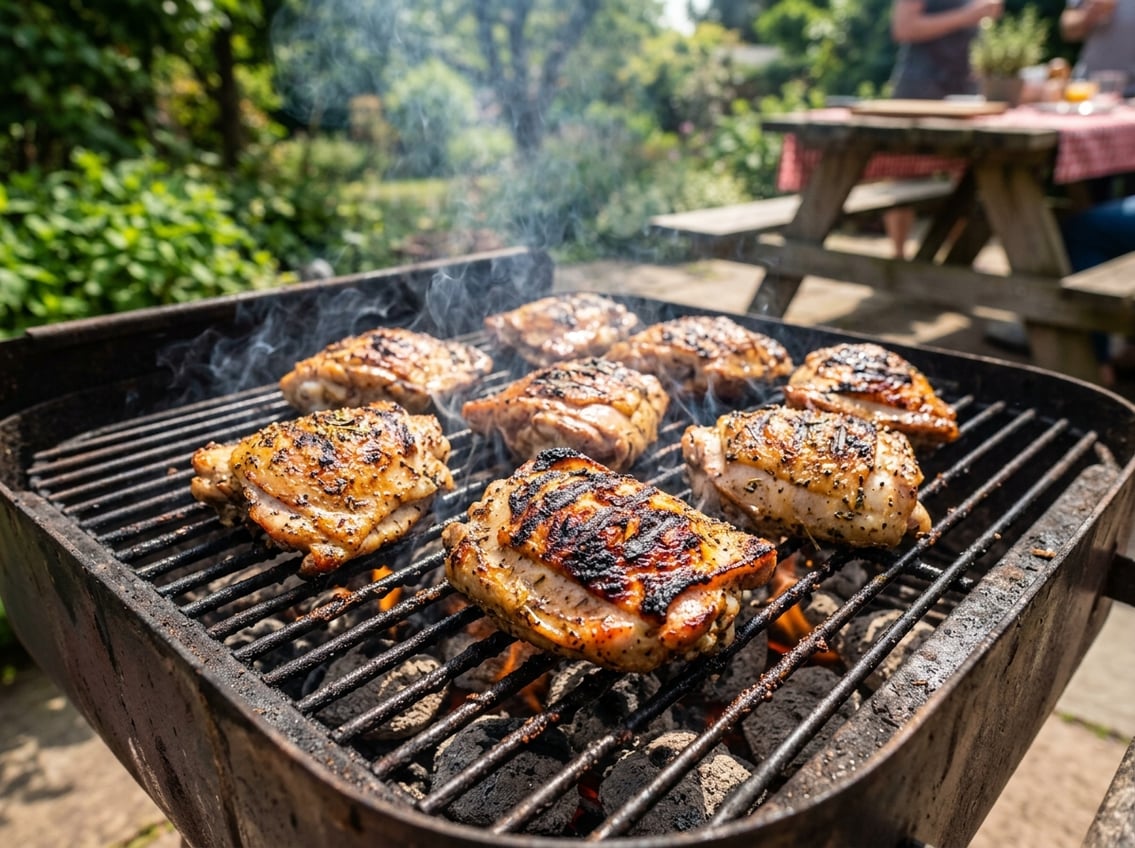
This guide explains timing, temperatures, and simple techniques so you can grill confidently with gas or charcoal. Learn how to adjust for bone-in vs. boneless cuts and pick up quick marinade and rub ideas to boost flavor.
Timing Basics for Grilled Chicken Thighs
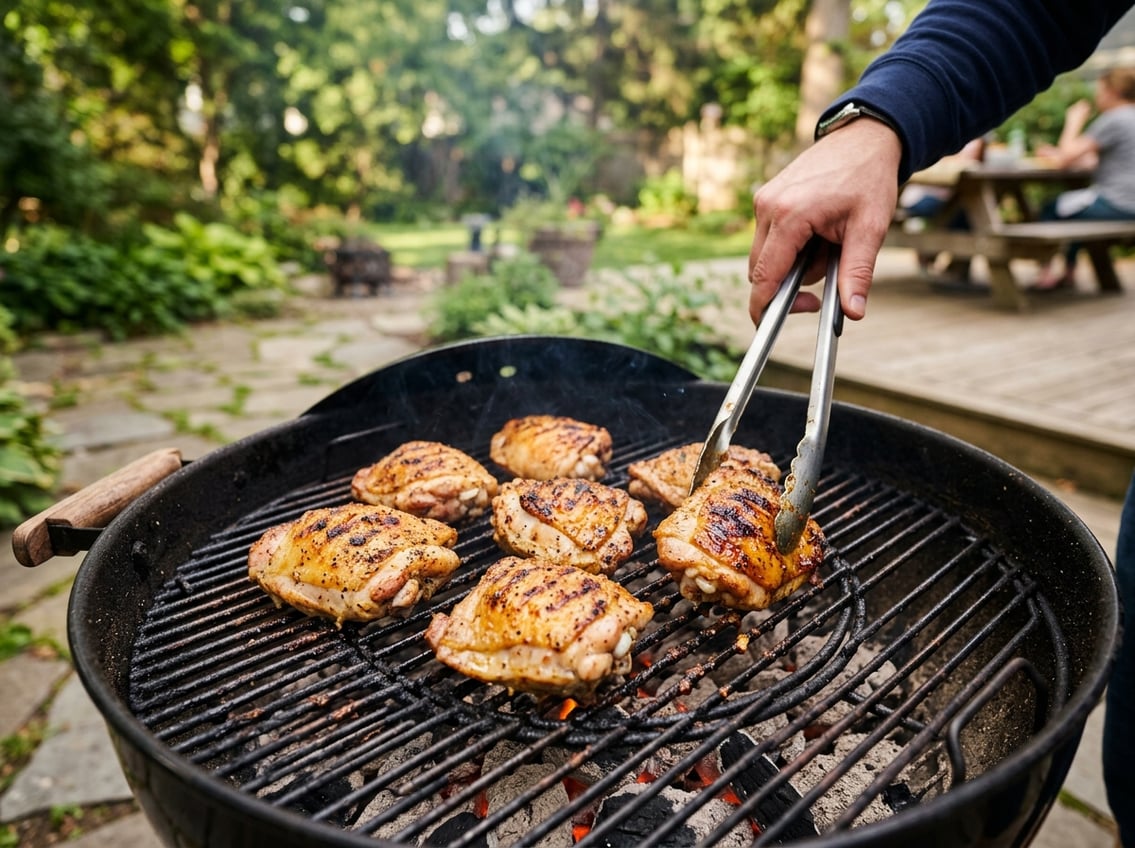
Start with a hot grill at about 425–450°F surface temperature. Plan time by whether the thighs have bone and skin.
Use a meat thermometer to guide you. Time alone won’t guarantee tender, safe results.
Bone-In Chicken Thighs
Grill bone-in chicken thighs for about 25–30 minutes on a 425–450°F grill. Sear over direct heat for short intervals, then move to a cooler spot to finish.
Flip and rotate every 4–6 minutes to prevent charring on one side. Check with a meat thermometer and pull when the thickest part reaches your target temperature.
Boneless Chicken Thighs
Boneless thighs cook faster, typically 10–15 minutes at 425–450°F. Sear each side for 3–5 minutes, then lower heat or move to an indirect area if browning too quickly.
Brush lightly with oil to prevent sticking. Flip every 3–4 minutes to avoid drying the meat.
Begin checking internal temperature after 8 minutes to avoid overcooking.
Internal Temperature Targets
Use a meat thermometer for accuracy. For chicken thighs, aim for 185°F in the thickest part for tender, pull-apart texture.
Insert the thermometer into the thickest portion without touching bone. Check temperature toward the end of the expected time window and again after resting.
Essential Grill Temperatures and Techniques
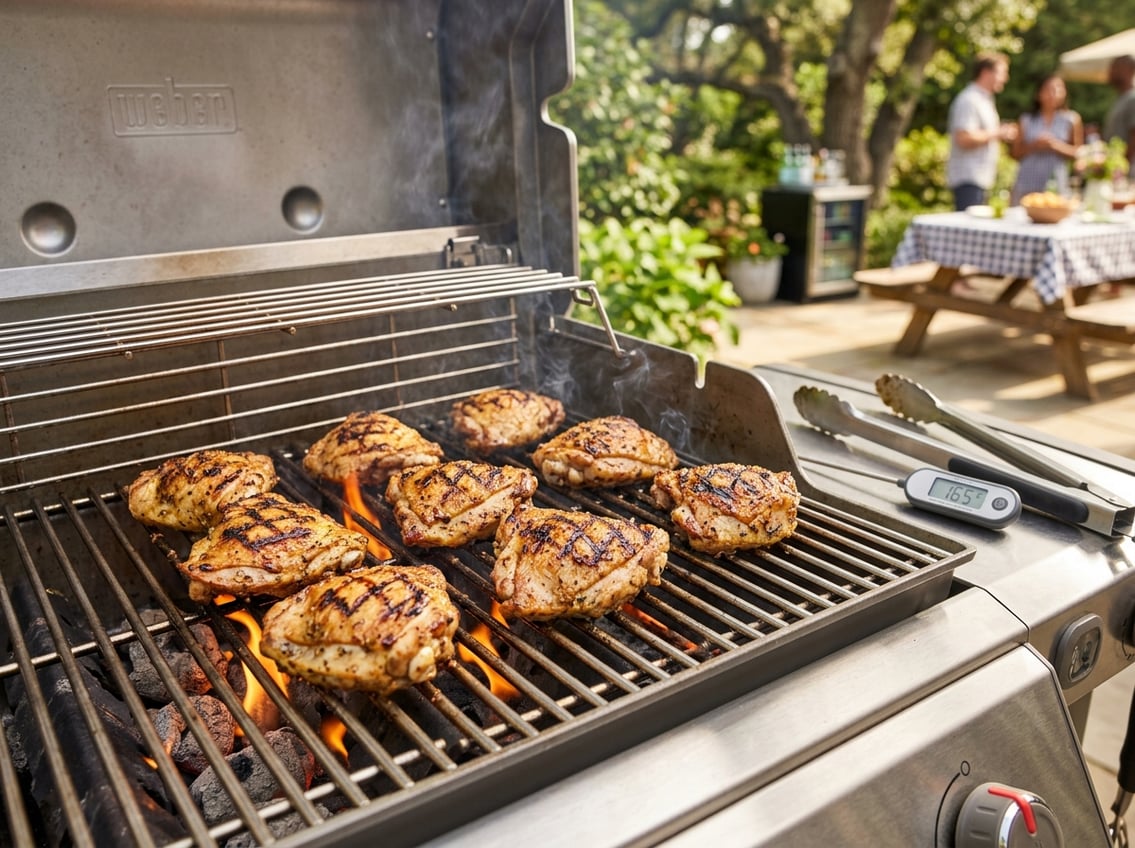
Maintain a controlled surface temperature and set up proper heat zones. Monitor internal and surface temps for consistent results.
Gas vs. Charcoal Grill Temperature
On a gas grill, set burners to achieve a surface temperature near 450°F for bone-in thighs and slightly lower for boneless. Gas grills provide precise, steady heat, so you can maintain 425–475°F across the main cooking area.
Use a grill-surface thermometer for accuracy. The hood gauge often reads high.
On a charcoal grill, bank coals to one side for direct heat and let the grate stabilize before cooking. Aim for a grate temperature of about 450°F over the coals.
Add or remove coals to adjust heat, and use vents to fine-tune. Trim excess fat and oil the grill grates to reduce sticking and flare-ups.
Direct and Indirect Heat
Use direct heat for initial searing and skin crisping. For bone-in thighs, sear skin-side down 3–5 minutes, then move to indirect heat to finish cooking.
For boneless thighs, sear for 2–3 minutes per side, then finish over indirect heat if needed. Indirect heat means placing the thighs away from flames or turning off one burner and closing the lid.
Arrange a two-zone fire: high heat on one side, cooler zone on the other. Flip and move pieces between zones as needed to control flare-ups and achieve even browning.
Monitoring and Adjusting Heat
Use an instant-read meat thermometer and pull boneless thighs at 175–185°F, bone-in at about 185°F. Check surface temperature with a probe or infrared gun to keep the grate near 450°F.
Manage flare-ups by moving thighs to a cooler zone and trimming visible fat before grilling. Lower the heat or raise the grate if the skin darkens too fast.
Oil the grill grates lightly before cooking to prevent sticking. Adjust burners, add charcoal, or close vents to stabilize temperature while you finish cooking.
Step-by-Step Guide to Grilling Chicken Thighs
Prepare the thighs by trimming excess fat and bringing them to room temperature. Choose skin-on or skinless based on the texture you want.
Use a clean, oiled grill set to about 450°F. Use a probe-style or instant-read thermometer to confirm doneness.
Trimming, Prepping, and Seasoning
Trim visible fat and any loose skin so fat drips cause fewer flare-ups. Pat thighs dry with paper towels.
If using skinless thighs, lightly brush both sides with oil to prevent sticking. Season simply and evenly.
Sprinkle kosher salt first, then add black pepper and any dry rub or paprika for color. For boneless thighs, rest 15–30 minutes after seasoning; for bone-in, rest 20–30 minutes at room temperature.
Oil the grill grates with a high-smoke-point oil before placing the chicken. For skin-on thighs, start skin-side up to render fat, then flip and move occasionally.
For skinless, place directly over medium-high heat and flip every 4–5 minutes.
Using a Meat Thermometer
Insert the thermometer into the thickest part of the thigh, avoiding bone. Aim for 185°F for thighs; the USDA minimum of 165°F is safe but may be less tender.
Use an instant-read for a final check. Check several thighs when cooking multiple pieces.
Pull thighs when they reach target temp, not by time alone. Account for carryover heat; thighs typically rise 3–7°F during resting.
Resting and Serving
Rest thighs 5–10 minutes on a plate tented loosely with foil. Resting lets juices redistribute and finishes the carryover cooking.
For skin-on thighs, rest uncovered for 2–3 minutes first to keep skin crisp, then cover briefly if needed. Brush with sauce during the last 1–2 minutes of grilling, not during rest.
Serve on a warm platter and slice against the grain if boneless. Store leftovers in an airtight container for 3–4 days refrigerated, or freeze up to 3 months.
Tips for Grilling Different Chicken Thigh Cuts
Choose the right heat and timing for the cut you have. Use a thermometer to confirm doneness.
Manage flare-ups for skin-on pieces. Shorten cook time for boneless thighs to avoid drying.
Bone-In Chicken Thighs
Start with a two-zone fire: medium-high direct heat for searing and medium indirect heat for finishing. Sear skin-side down 3–5 minutes, then move thighs to indirect heat at about 350–375°F.
Cook until the thickest part reads 165°F. Larger thighs often need 30–40 minutes total.
If you prefer more tender, pull-apart meat, cook to 175°F. Keep the lid closed to maintain even temperature.
Rest for 5–10 minutes before serving. Use a dry rub before grilling to avoid burning spices during the longer indirect cook.
Boneless and Skinless Thighs
Heat the grill to high (450–500°F) for quick, even cooking. Oil the thighs lightly and place over direct heat, flipping once after 4–5 minutes.
Most boneless thighs finish in 8–12 minutes depending on thickness. Aim for an internal temperature of 165°F and remove promptly.
If you use an acidic marinade, limit marinating to 30 minutes–4 hours to avoid mealy texture. Pound thicker pieces to uniform thickness or butterfly them.
A short rest of 3–5 minutes helps stabilize juices.
Maintaining Juiciness With Skinless Cuts
Brine, marinate, or use higher endpoint temperatures to keep skinless thighs juicy. Quick brine (30–60 minutes in 1/4 cup kosher salt per quart of water) increases moisture retention and seasons evenly.
Use oil and moderate acid in marinades to flavor without breaking down texture. Keep acidic components under 4 hours.
Cook over medium-high heat and remove at 160–165°F, then tent and rest 3–5 minutes. Slice against the grain and serve immediately.
Flavor Boosters: Marinades and Rubs
Use an acidic component to tenderize, oil to carry flavors, and salt or soy to season deeply. Rubs add crust and spice without changing texture, while marinades infuse taste and can change tenderness.
Classic Chicken Marinades
Build a balanced marinade with acid, oil, and aromatics. For acid, use lemon juice, apple cider vinegar, or yogurt.
For oil, use olive or vegetable oil. For aromatics, use garlic, soy sauce, honey, mustard, and herbs.
A reliable ratio is 1 part acid to 2–3 parts oil, plus 1–2 tablespoons of a salty element per pound of chicken. Combine in a resealable bag, add thighs, massage to coat, and refrigerate.
For skin-on thighs, pat skin dry before searing to help crisp the exterior.
How and When to Marinate Chicken
Short marinate: 30–60 minutes for a surface flavor boost. Optimal marinate: 2–4 hours for deeper flavor penetration.
Avoid marinating more than 12–24 hours if your mix contains strong acids. Use a nonreactive container or a zip-top bag and refrigerate while marinating.
Discard used marinade or boil it 3–5 minutes before using as a sauce. Bring thighs to near-chill temperature before grilling.
Tips for BBQ Chicken Thighs
Start skin-side down on a medium-hot grill (about 375–425°F) to render fat and crisp skin. Move thighs to indirect heat after searing if they brown too quickly.
Cook until internal temperature reaches 165°F in the thickest part. Reserve unused marinade for basting at the end to avoid flare-ups.
For a dry rub, apply 1–2 tablespoons per pound, press it into the meat, and let sit 30–60 minutes before grilling.
Troubleshooting and Pro Grill Tips
Keep the grill hot and the grates oiled. Use a meat thermometer to prevent problems.
Control flare-ups by trimming fat and move pieces to cooler zones when needed.
Avoiding Sticking and Flare-Ups
Oil the grill grates with a high-smoke-point oil right after preheating to about 450°F. Clean, well-oiled grates and dry, patted chicken skin reduce sticking and promote even sear marks.
Trim large fat deposits from the thighs and tuck loose skin to limit drips. Move pieces to a cooler zone and lower the lid when flames flare.
Turn every 4–6 minutes instead of flipping repeatedly. Set up two-zone heat if you expect heavy dripping so you can move thighs away from flare-ups without losing surface temperature.
Preventing Overcooking or Dryness
Use a calibrated meat thermometer and pull bone-in thighs at 185°F for tender results. The USDA minimum is 165°F, but thighs become more tender at a higher temperature.
Insert the probe into the thickest part without touching bone for an accurate reading.
Control grill temperature around 425 to 450°F for a good balance of crispy skin and internal cooking. If thighs brown too quickly, lower heat to 375 to 400°F and finish over indirect heat.
Boneless thighs cook faster. Check them around 10 to 12 minutes.
Let thighs rest 5 to 10 minutes after grilling so juices redistribute. Resting preserves moisture and helps prevent a dry bite when you slice into the meat.


