
How Long Do I Bake Chicken Thighs Boneless: Timing, Tips, and Best Results
You want juicy boneless chicken thighs without guessing at time and temperature. Bake boneless chicken thighs at 425°F (220°C) for about 20–25 minutes, or until the internal temperature reaches 165°F (74°C). This gives you reliably cooked, tender results.
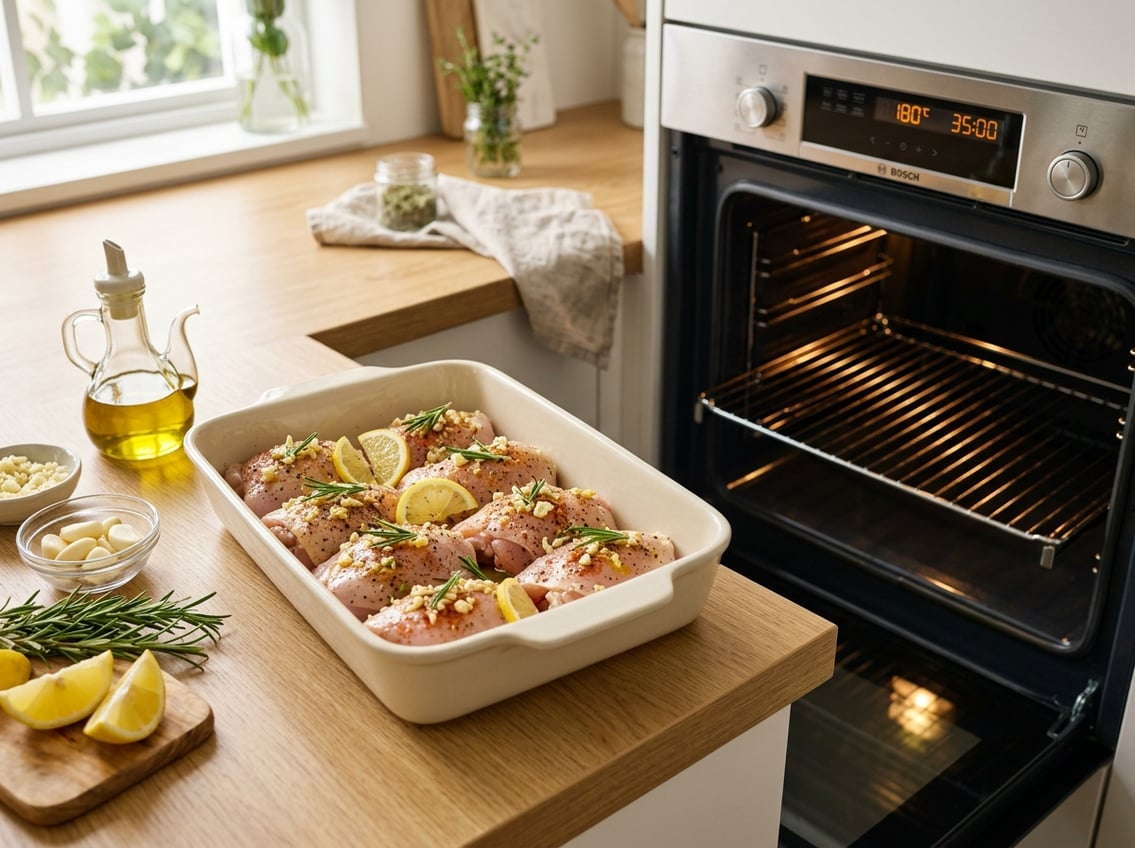
This guide shows precise baking times, simple prep steps, and tricks to keep thighs moist while getting a lightly caramelized exterior. You’ll also learn easy flavor variations, how boneless compares to bone-in and skin-on, and safe storage and reheating tips.
Recommended Baking Times and Temperatures
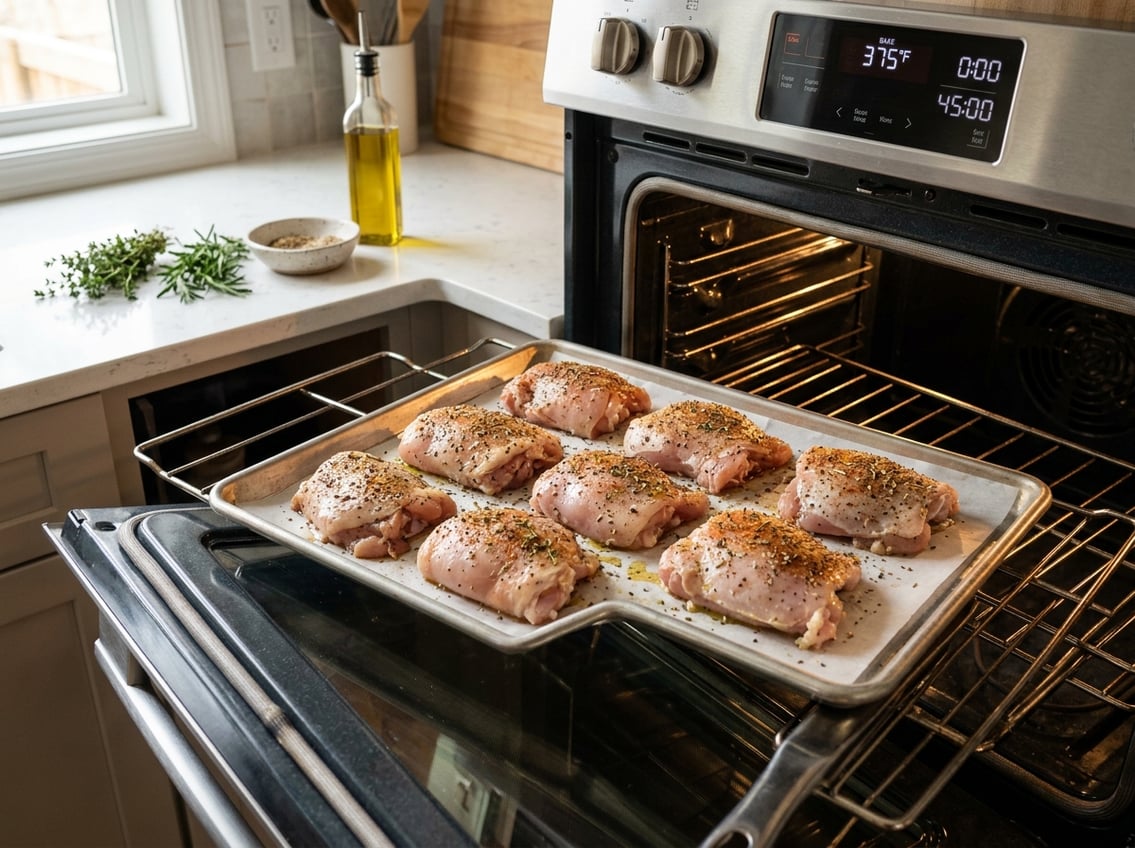
Use a high oven temperature for short cook times to get juicy baked boneless skinless chicken thighs with browned edges. Always check the thickest part with an instant-read thermometer to confirm doneness.
Optimal Oven Settings for Even Cooking
Set your oven between 400°F and 425°F for best results when you bake boneless chicken thighs. At 400°F, bake average 4–6 oz thighs for 20–25 minutes. At 425°F, plan for 18–22 minutes.
If thighs are larger (8 oz or more), add 3–6 minutes and space pieces so they do not touch. Use a rimmed baking sheet with a wire rack if you want crisper edges.
Arrange thighs skin-side up if skin is present. For skinless thighs, coat lightly with oil to help browning.
Preheat the oven fully and use the middle rack for even air circulation. Avoid crowded pans or deep baking dishes that trap steam and extend cook time.
Internal Temperature for Safe Consumption
Cook boneless chicken thighs to an internal temperature of 165°F measured in the thickest part. Insert an instant-read thermometer horizontally into the center and avoid touching bone or the pan.
Once the thermometer reads 165°F, remove the thighs from the oven immediately. Rest the thighs 3–5 minutes before slicing to keep juices inside.
If you prefer slightly more tender results, remove the thighs at 160–162°F and rest to reach 165°F. Always verify the final temperature before serving.
Techniques for Achieving Juicy Boneless Chicken Thighs
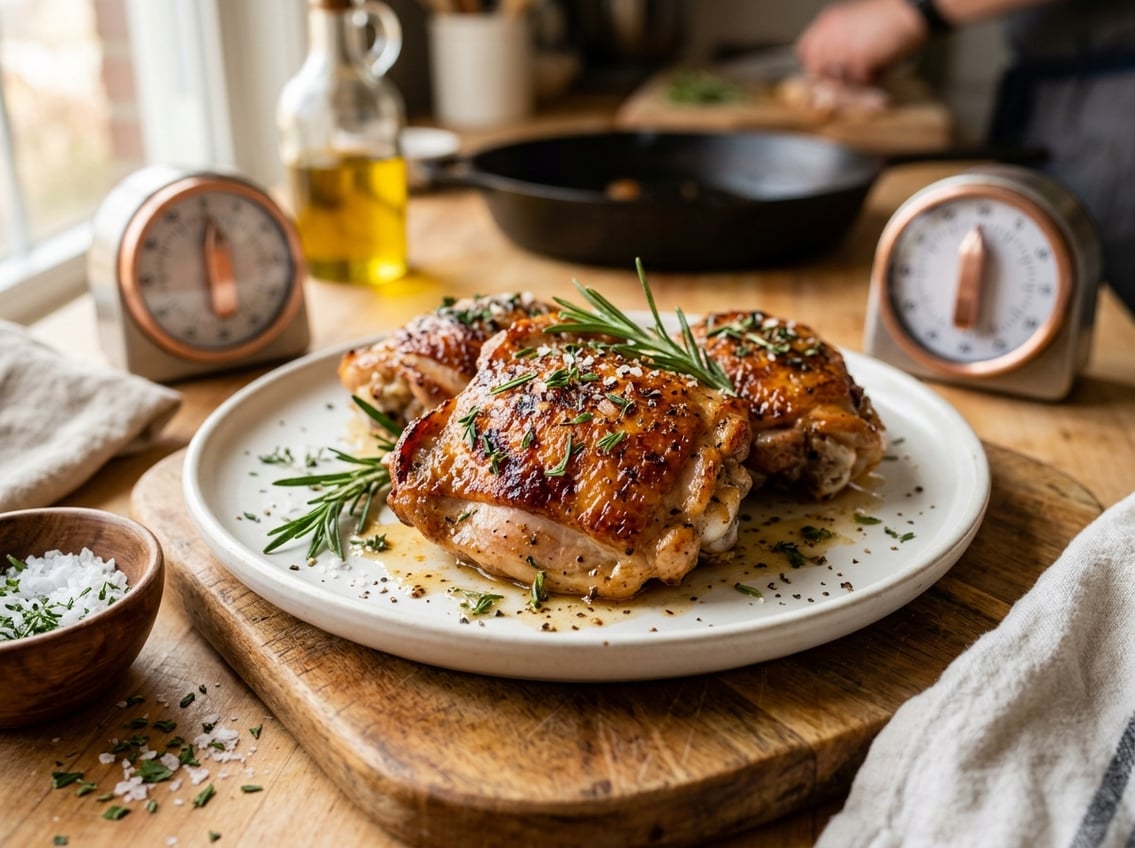
Control temperature, avoid overcooking, and give the meat time to settle so juices redistribute. Use oil, proper seasoning, and single-layer spacing to promote even browning and moist interiors.
Why Resting Chicken Matters
Resting lets internal juices move from the hot center back toward the surface, so when you slice boneless skinless chicken thighs the juices stay in the meat. Let thighs rest for 5–10 minutes after baking; larger or thicker pieces benefit from the longer end of that range.
Use a loose tent of foil to keep heat while preventing steam buildup that would soften any crisped edges. During rest, carryover cooking raises the internal temperature 3–5°F, so remove thighs when your thermometer reads about 160–162°F if you aim for a final 165°F.
Resting also evens out texture, making the meat easier to slice cleanly. This step is quick but has a large effect on producing juicy baked boneless chicken thighs.
Preventing Dryness During Baking
Start with a light coating of oil or a thin marinade to lock moisture and encourage browning on the outside of baked boneless chicken thighs. Season under the oil so salt penetrates the surface and helps retain juices during cooking.
Bake at a moderate-high temperature (about 400°F) so the exterior browns in 25–30 minutes while the interior reaches 165°F. Use an instant-read thermometer in the thickest part and remove thighs the instant they hit 165°F.
For thinner cutlets, expect 18–20 minutes. Arrange thighs in a single layer with space between pieces.
Crowding causes steaming and pale, dry results. If you want crisp edges, bake uncovered and flip once halfway.
For extra moisture, baste once or cover loosely with foil for part of the bake.
Preparation Essentials for Baked Chicken Thighs
Trim excess fat and pat thighs dry for better browning. Season simply but deliberately and choose a sturdy rimmed baking sheet to keep juices contained and promote even cooking.
Trimming and Seasoning for Flavor
Trim visible fat and any silver skin from boneless chicken thighs with a small sharp knife. Too much fat causes flare-ups and uneven browning.
Pat each thigh dry with paper towels for a better sear and crisper edges. Season immediately after drying.
Use 1/2 to 3/4 teaspoon kosher salt per thigh and a few cracks of black pepper as a base. Add garlic powder, smoked paprika, or a pinch of cayenne for depth.
If you marinate, do so up to 4 hours. Acid-heavy marinades longer than that can change texture.
For quick flavor, brush thighs with 1 tablespoon olive oil before seasoning to help spices adhere and encourage golden color.
Using a Rimmed Baking Sheet for Best Results
Use a rimmed baking sheet (at least 1 inch high) lined with foil or parchment for easy cleanup and to catch rendered juices. Arrange skinless or boneless chicken thighs in a single layer with 1/2–1 inch between pieces to allow hot air to circulate.
Preheat the sheet in a 425°F oven for crisper bottoms, or place it cold if you prefer gentler cooking. Both work for baked boneless chicken thighs but preheating speeds browning.
If juices pool, tilt the sheet to spoon them away from the thighs during the last 5 minutes to help crisp the exterior. Use an instant-read thermometer and remove thighs at 165°F for safe, juicy results.
Flavor Variations and Simple Sauce Ideas
Keep flavors focused and easy to execute. Choose either a dry rub for crisped edges or a simple sauce to add gloss and moisture after baking.
Easy Dry Rubs and Spice Blends
Dry rubs let you season baked boneless skinless chicken thighs quickly and develop browned, flavorful edges at 400–425°F. Pat the thighs dry first so the rub adheres and the surface crisps.
Use 1–2 tablespoons oil per pound to help spices stick. Try a basic all-purpose rub: 1 tsp salt, ½ tsp black pepper, 1 tsp garlic powder, 1 tsp smoked paprika, and ½ tsp onion powder.
For heat, add ¼–½ tsp cayenne. For Mediterranean notes, swap smoked paprika for 1 tsp dried oregano and add lemon zest.
For an Asian-inspired rub, mix 1 tsp ground ginger, ½ tsp garlic powder, 1 tsp brown sugar, and 1 tsp five-spice. Massage the rub into each thigh and arrange in a single layer on a rimmed baking sheet.
Roast until the internal temperature reaches 165°F. Rubs perform best when you bake at higher heat for a short time to encourage caramelization without drying.
Adding Sauces Before or After Baking
Decide whether a sauce should go on before baking to meld flavors or after to preserve brightness and texture. Brush thick glazes with sugar or honey during the last 8–10 minutes to avoid burning.
Thin marinades or wet sauces work better if you marinate for 30 minutes to several hours before baking. Mix 2 tbsp honey, 1 tbsp soy sauce, 1 tsp Dijon, and 1 clove minced garlic for a sticky glaze.
Brush once at 10 minutes remaining, then again after resting. If you prefer a fresh finish, toss baked chicken thighs in a quick pan sauce of 1 tbsp butter, 1 minced shallot, 2 tbsp lemon juice, and 2 tbsp chopped parsley.
Heat briefly and spoon over the thighs. For bolder profiles, serve baked chicken thighs with a cold yogurt-tahini sauce or a chimichurri.
These sauces add moisture and contrast without risking overcooking during the bake.
Comparing Boneless, Bone-In, and Skin-On Chicken Thighs
You’ll see clear differences in baking time, texture, and final flavor when you choose boneless, bone-in, skin-on, or skinless thighs. Use cook time and desired crispness to pick the right cut for your recipe and schedule.
Differences in Baking Time and Texture
Bone-in chicken thighs take longer to reach 165°F than boneless thighs because the bone slows heat transfer. Bake bone-in, skin-on thighs at 350°F for about 40–50 minutes or at 425°F for roughly 30–40 minutes.
Boneless skinless or boneless skin-on thighs cook faster—typically 20–30 minutes at 425°F or 35–45 minutes at 350°F depending on thickness. Texture differs with cut.
Bone-in thighs stay juicier and feel more tender because the bone and surrounding fat retain moisture. Skin-on thighs crisp on the exterior when roasted at higher heat.
Skinless thighs won’t develop a crispy exterior but can brown and caramelize if roasted hot and dry. Use an instant-read thermometer in the thickest part, avoiding bone contact, to verify doneness.
When to Choose Each Cut
Choose boneless skinless chicken thighs when you need quick cooking and easy slicing for salads, grain bowls, or stir-ins. They reduce prep time and fit recipes that call for uniform pieces or faster meal prep.
Pick bone-in skin-on chicken thighs when you prioritize flavor and moistness for sheet-pan dinners or braises. The skin crisps and the bone adds richness, making them better for longer roasts or recipes where presentation matters.
Opt for skin-on boneless thighs if you want a compromise: faster than bone-in but with some exterior crisp. Skinless bone-in is less common but works when you want the bone’s cooking benefits without crisp skin.
Tips for Storing and Reheating Baked Boneless Chicken Thighs
Store cooled thighs promptly, use airtight containers, and reheat gently to preserve moisture and food safety. Refrigerate within two hours and consume within four days, or freeze for longer storage.
Keeping Leftovers Juicy
Cool the baked boneless chicken thighs on a wire rack for 10–15 minutes, then transfer to airtight containers or heavy-duty freezer bags. Remove as much air as possible.
For containers, press a piece of parchment directly onto the meat to limit air exposure and slow drying. If you plan to eat the thighs within four days, refrigerate at 40°F (4°C) or below.
For longer storage, freeze at 0°F (-18°C) and use within 2–3 months for best quality. Label the container with the date so you can track freshness.
When reheating from cold, add a splash (1–2 tbsp) of chicken stock, water, or a light sauce to the container to restore moisture. Thighs slice and reheat faster, so cut into even pieces before storing if you expect to reheat single servings.
Safe Reheating Methods
The oven gives the most even results. Preheat to 325–350°F (160–175°C).
Place thighs in a baking dish and add 1–2 tablespoons of liquid per cup of meat. Cover tightly with foil and heat for 15–20 minutes from refrigerated or 25–30 minutes from frozen, until the internal temperature reaches 165°F (74°C).
Use a microwave for quick reheating. Arrange pieces in a single layer on a microwave-safe plate and cover with a damp paper towel.
Heat in 30–45 second bursts, flipping between intervals to avoid hot spots. Check the temperature with an instant-read thermometer.
For crisp skin or edges, finish in a 400°F (200°C) oven or under a broiler for 2–4 minutes after warming. Watch closely to prevent drying.
Never reheat more than once. Discard any leftovers that have been reheated previously or left at room temperature over two hours.


