
How Long Do Chicken Thighs Cook For: Ultimate Timing and Tips
You want juicy, safe chicken thighs every time. Boneless, skinless thighs usually take about 20–30 minutes at 400–425°F (200–220°C). Bone-in, skin-on thighs generally need about 30–40 minutes at 375–425°F (190–220°C), or until the internal temperature reaches 165°F (74°C).
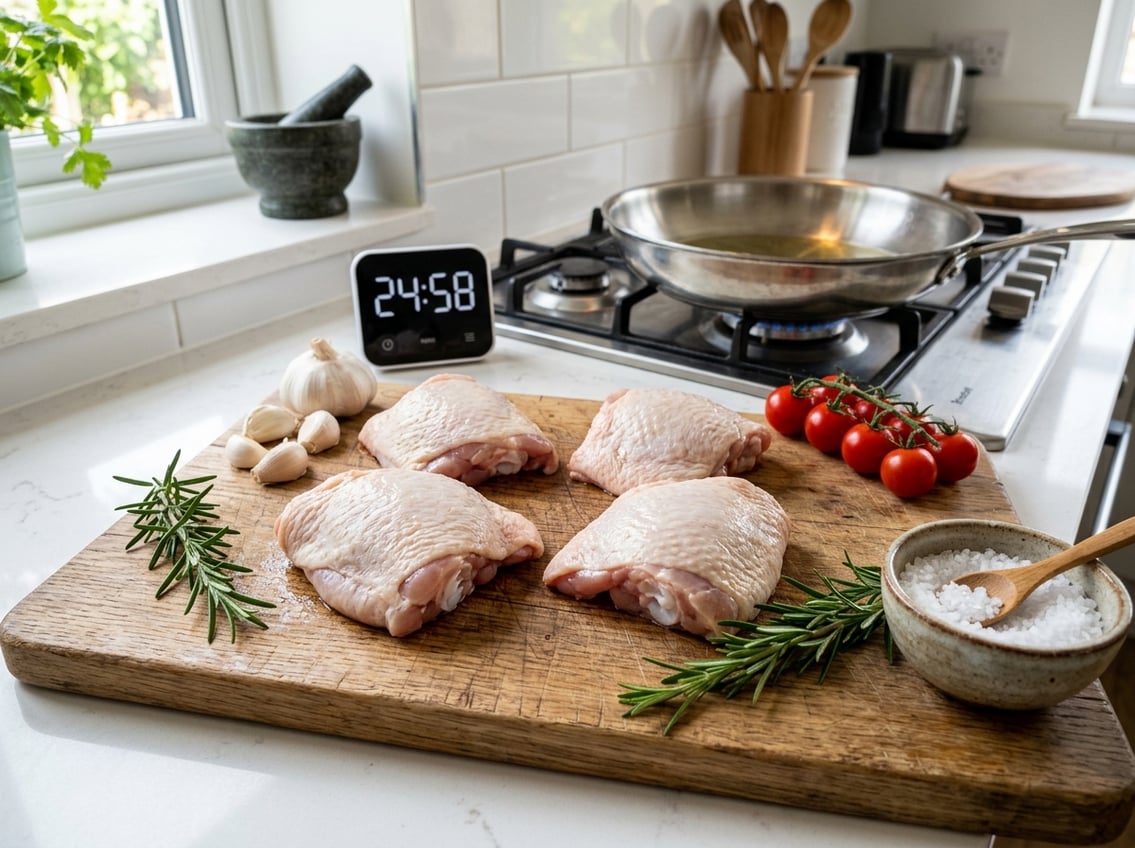
This guide covers oven times, safe internal temperatures, and how grilling or stovetop methods change the clock. You’ll also see how size, bone presence, skin, and marinades affect cooking duration with tips for juicy meat and crisp skin.
Oven Baking Times for Chicken Thighs
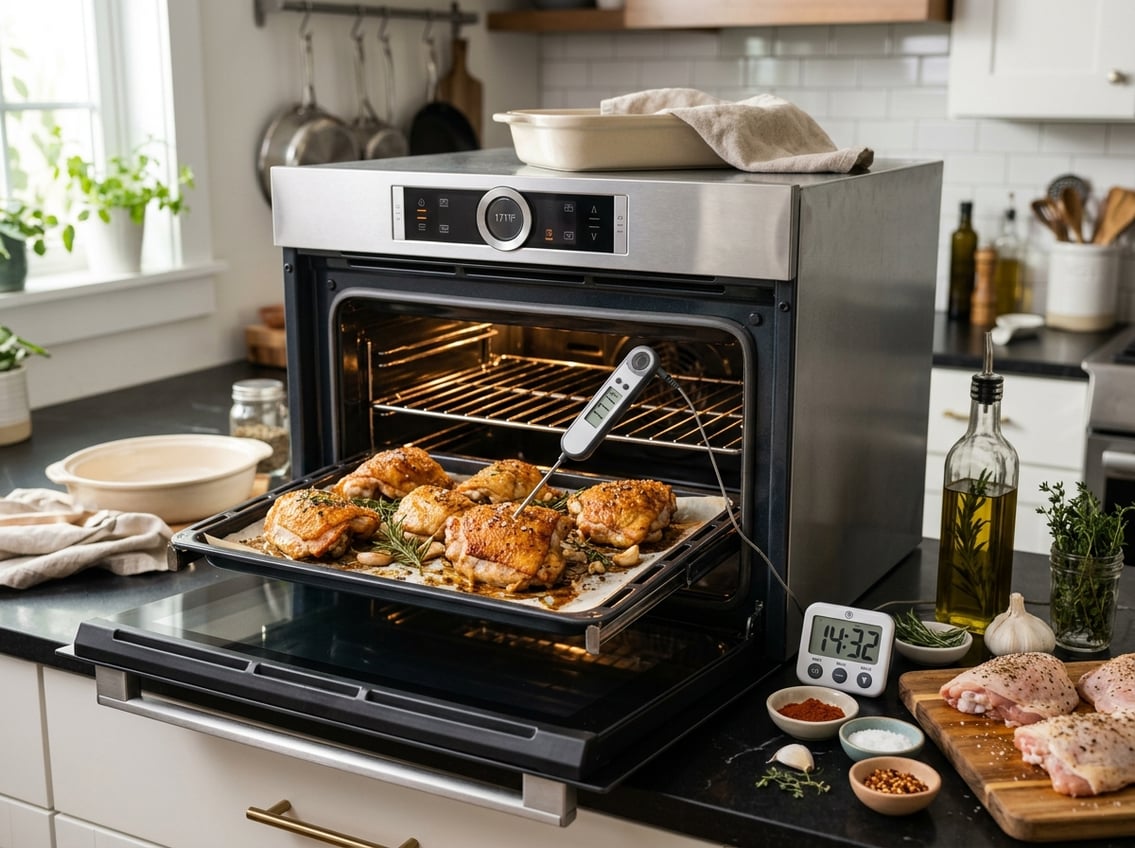
Here are practical oven temperatures and times for bone-in and boneless thighs. Skin and temperature changes affect texture and safety.
Follow these times and temperature targets for juicy meat and crisp skin.
Timing for Bone-In vs. Boneless Thighs
Bone slows heat penetration, so bone-in chicken thighs take longer. At 375°F (190°C), cook average-sized bone-in thighs for 40–50 minutes. At 425°F (220°C), they usually finish in 35–45 minutes.
Check with an instant-read thermometer and target 165°F (74°C) in the thickest part, not touching bone.
Boneless thighs are thinner and cook faster. At 375°F (190°C), cook for 25–35 minutes. At 425°F (220°C), cook for 20–30 minutes.
Remove boneless thighs from the oven at 160–162°F and rest 3–5 minutes. Carryover heat brings them to 165°F.
Skin-On vs. Skinless Thigh Differences
Skin-on thighs take slightly longer but give fat and connective tissue time to render, adding flavor and moisture. Roast skin-side up on a rack or baking sheet for air circulation and crisping.
At 425°F, skin-on bone-in thighs often crisp within 35–45 minutes.
Skinless thighs cook a bit faster and won’t brown the same way. Use a higher oven temperature (400–425°F) or finish with a short broil to get surface color.
Check doneness early and rely on the thermometer, not just appearance.
Adjusting Oven Temperatures for Best Results
Higher temperatures shorten cook time and promote browning. Moderate temperatures produce more even doneness.
- 375°F (190°C): gentler cooking, juicier interior, good for bone-in (40–50 min).
- 400°F (205°C): balanced browning and time savings, good for both types (bone-in 35–45, boneless 25–30).
- 425°F (220°C): fastest crisping and browning, use for skin-on or when short on time (bone-in 35–45, boneless 20–30).
Arrange thighs in a single layer with space between pieces.
Timing at a glance:
- Bone-in, skin-on: 375°F = 40–50 min; 425°F = 35–45 min
- Boneless, skinless: 375°F = 25–35 min; 425°F = 20–30 min
Confirm doneness with an instant-read thermometer at 165°F (74°C).
Safe Internal Temperatures and Doneness
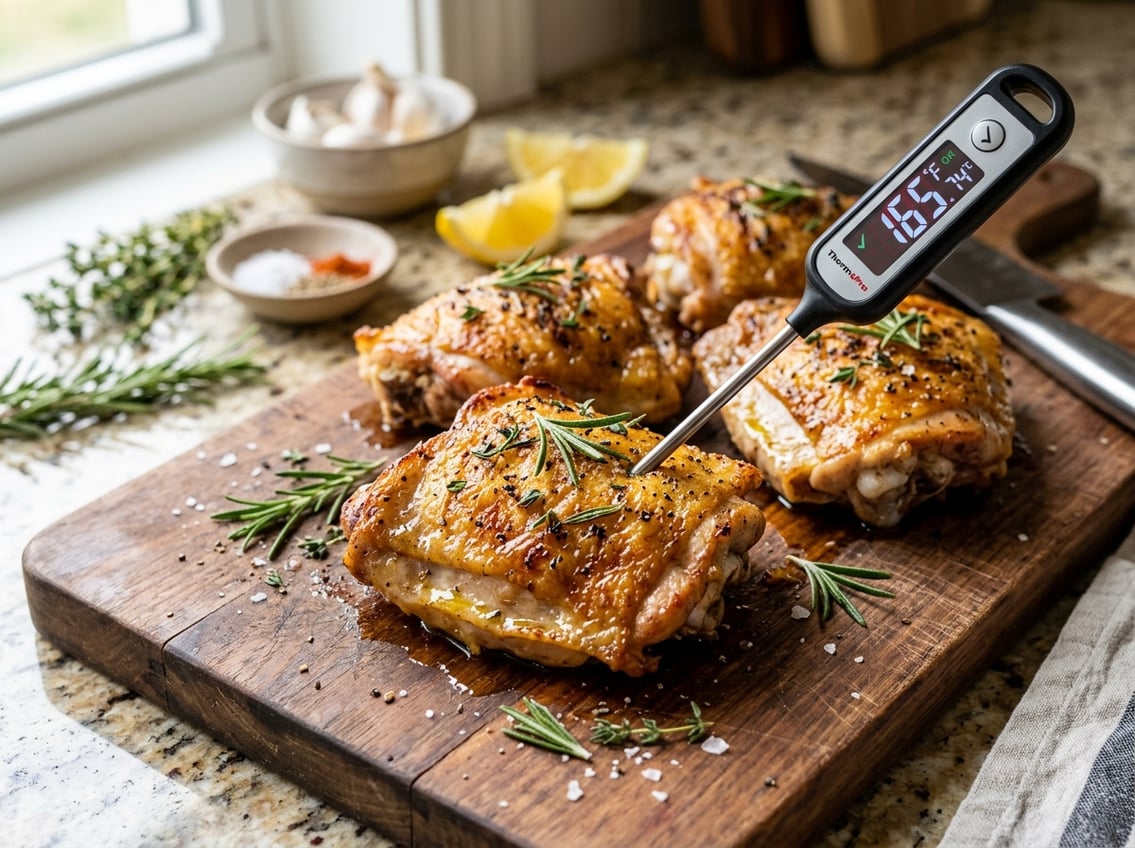
Aim for a reliable target temperature and use a clear method to check doneness. Rest thighs briefly to lock in juices.
How to Check Chicken Thighs for Doneness
Use an instant-read thermometer. Insert the probe into the thickest part of the thigh, avoiding bone.
When roasting several thighs, check the largest and one from the middle of the pan. For a visual check, cut into the thickest part; juices should run clear and meat should be opaque with no pink near the bone.
Press the meat gently; properly cooked thighs feel springy but not rock hard.
Don’t rely only on cooking time. Oven temperature, thigh size, and bone-in or boneless status all affect cook time.
Use time as a guideline, but verify with temperature.
Recommended Internal Temperatures
The USDA minimum safe temperature for poultry is 165°F (74°C) in the thickest part.
For more tender, pull-apart meat, cook thighs to 175–195°F (79–90°C). For firmer, sliceable thighs, stop at 165–175°F.
For shreddable thighs, reach 185–195°F.
If you pull bone-in thighs at 165°F, let them rest to improve juiciness. If you cook to 185–195°F, expect more rendered fat and softer meat.
Resting After Cooking
Let thighs rest for 5–10 minutes before slicing or serving. Carryover cooking raises internal temperature and juices redistribute.
Place thighs on a warm plate and tent loosely with foil. Resting keeps meat moist; cutting immediately releases juices and dries it out.
For shredded preparations, rest or hold covered for 10–15 minutes to make pulling easier.
Grilling and Stovetop Methods
These methods use surface temperature and direct contact, so monitor with a thermometer for doneness.
Grilling Chicken Thighs: How Timing Differs
Grill bone-in, skin-on thighs for about 25–30 minutes over medium-high heat (around 450°F surface). Start skin-side up to render fat, then flip and move pieces periodically.
Use the “flip and move” approach: 4–6 minutes per interval, rotating positions to avoid burning.
Boneless, skinless thighs cook faster—expect 10–15 minutes total at the same grill temperature. Check internal temperature and pull thighs at 185°F for tender dark meat or at least 165°F for safety.
Rest for 5–10 minutes so juices redistribute.
Use an instant-read thermometer, tongs, and a grill surface thermometer if needed. Trim excess fat to reduce flare-ups.
Stovetop and Air Fryer Cooking Times
On the stovetop, pan-sear bone-in thighs for 20–30 minutes on medium heat. Start skin-side down in a hot, oiled pan for 5–8 minutes, then reduce heat and cover or finish in the oven at 375°F until internal temperature reaches 185°F.
Boneless thighs take 8–12 minutes, flipping once or twice.
In an air fryer, set 375°F for bone-in thighs and cook 18–25 minutes, turning halfway. For boneless thighs, plan 10–15 minutes.
Check 165–185°F with a thermometer. Avoid overcrowding; leave space for air circulation.
Sautéing for Quick Results
Sauté boneless, skinless thighs cut into strips or thin cutlets for fastest results. Heat a skillet over medium-high with a tablespoon of oil.
Cook pieces 3–5 minutes per side depending on thickness. Smaller strips can finish in 6–8 minutes total.
Use even-sized pieces for uniform cooking. Season just before cooking and avoid wet marinades that splatter.
Finish thicker pieces by covering the pan briefly or adding a splash of broth and reducing heat until the internal temp reaches at least 165°F. Rest briefly before serving.
How Preparation Affects Cooking Duration
Your choices before cooking affect how long chicken needs and how reliably it reaches 165°F.
Size, starting temperature, and surface treatments change heat transfer and moisture loss.
Impact of Size and Thickness
Thicker thighs take longer because heat must reach the center. A 4–8 ounce boneless thigh finishes in 20–30 minutes at 425°F. A similar bone-in thigh needs 30–45 minutes at 375–400°F.
If thighs are uneven, use a meat mallet or make shallow cuts to even them out.
Bone-in pieces heat more slowly; the bone raises oven time by 5–15 minutes versus boneless cuts of similar size.
Skin-on thighs develop crisp skin at higher temperatures. Always check the thickest point with a thermometer and avoid touching bone.
Starting Temperature and Even Cooking
Cold thighs from the fridge take longer to cook than room-temperature ones. Let chicken sit 15–30 minutes at room temperature (no more than 2 hours total for safety).
Arrange thighs with space between them for even air circulation. Crowding lowers oven temperature and increases cooking time by 10–25%.
Use a preheated baking sheet for skin-on, bone-in thighs to help crisp the skin and speed browning.
A rack gives more uniform heat around skin-on and bone-in pieces. Direct contact with a hot pan favors browning for boneless or skinless thighs.
Rotate the pan once if your oven has hot spots.
The Role of Seasoning and Oils
Salt enhances flavor and encourages browning. A dry-brine (salt applied 30–60 minutes before cooking) can reduce surface moisture and improve crisping for skin-on thighs.
Brining increases internal moisture and can add a few minutes to cook time.
A thin coat of oil promotes browning and prevents sticking. Sugary glazes accelerate surface browning and may require you to finish cooking at a lower temperature or tent with foil to avoid burning.
Seasoning layers can insulate the surface slightly. Always confirm doneness with a thermometer.
Marinating Chicken Thighs for Enhanced Flavor
Marinating boosts flavor and can tenderize dark meat. Use an acid or enzyme, balance salt and oil, and refrigerate while marinating.
Marinating Time Guidelines
Aim for 2 to 24 hours depending on the marinade’s strength and texture you want.
- Short soak (30 minutes–2 hours): good for light oil-based or herb marinades.
- Moderate soak (2–6 hours): ideal for balanced marinades with some acid or soy.
- Long soak (8–24 hours): use only with mild marinades and moderate salt.
Always marinate in the refrigerator. Use a sealed container or zip-top bag and turn thighs once or twice for even coverage.
Discard used marinade or boil it for 5 minutes before using as a sauce.
Best Marinade Ingredients
Focus on three roles: acid or enzyme, fat, and seasoning.
Lemon, lime, vinegar, yogurt, or pineapple and kiwi contain acids or enzymes that tenderize meat. Use these in moderate amounts and limit contact time when using strong fruit enzymes.
Olive oil or neutral oils carry fat-soluble flavors and help the skin brown. Use about 1 to 3 tablespoons per pound of chicken.
Salt or soy penetrate the meat, while garlic, onion, paprika, cumin, and fresh herbs add aroma. Use 1 teaspoon kosher salt per pound as a baseline.
For convenience, mix 3 tablespoons olive oil, 2 tablespoons lemon juice, 1 teaspoon kosher salt, 1 teaspoon black pepper, 2 minced garlic cloves, and 1 teaspoon smoked paprika. Marinate 2 to 6 hours for balanced flavor without compromising texture.
Tips for Juicy and Crispy Chicken Thighs
Control surface dryness, oven temperature, and placement to get crisp skin and tender meat.
Use a wire rack for airflow, pat skin thoroughly, and adjust cook times by cut and bone presence.
Pat Dry for Crispy Skin
Remove excess moisture from skin-on chicken thighs before seasoning. Use paper towels to blot both sides until the skin looks matte rather than wet.
Salt the skin at least 20 to 30 minutes before cooking, or leave it overnight in the fridge uncovered for deeper flavor and drier skin.
If you brine, rinse lightly and dry well afterward to avoid soggy skin.
Apply oil sparingly, using just enough to promote even browning and help spices adhere. Too much oil pools and prevents crisping.
Season right before the oven if you skipped the rest time in the fridge.
Using Racks and Liners
Place skin-on chicken thighs on a wire rack set over a rimmed baking sheet. Air circulates under the thighs, so heat crisps skin on all sides and juices collect in the pan.
Line the sheet with foil or parchment for easier cleanup, but put the rack directly on the liner.
If you don’t have a rack, use crumpled foil as feet to lift thighs off the pan surface.
Preheat the pan briefly in the oven before adding the thighs. This quick blast of heat encourages a crisp exterior while the inside cooks evenly.
Timing for Different Cuts
Bone-in, skin-on thighs usually need about 35–45 minutes at 400–425°F (200–220°C) until the internal temperature reaches 165°F (74°C). Check near the bone, as it holds heat and cooks more slowly than boneless meat.
Boneless, skinless thighs cook faster. They generally take 20–30 minutes at 400–425°F because heat penetrates more quickly.
If you sear the skin first, finish the thighs in a 375–400°F oven and shorten the total bake time by 5–10 minutes. Use an instant-read thermometer for accuracy.
Let thighs rest 5–10 minutes before serving to redistribute juices.


