
Why Are Chicken Thighs Cheaper Than Breasts? Pricing, Demand, and Industry Factors Explained
You probably notice thighs go on sale more often than breasts. Consumer demand, processing efficiency, and market pricing make breasts a premium cut while thighs—being darker, fattier, and less popular—often sell for less.
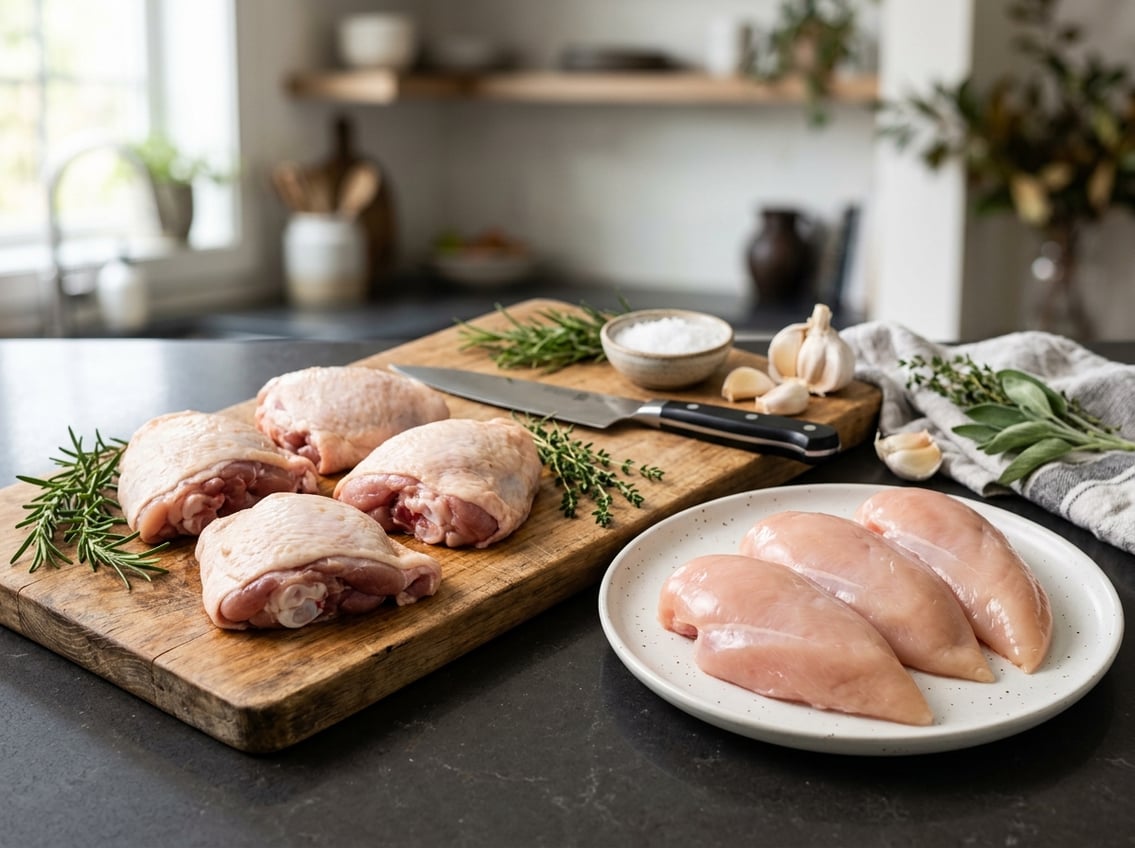
Breasts dominate menus and health-focused marketing, so producers and retailers give them higher value. This shapes how prices are set and what you see in stores.
Consumer Preference and Market Demand
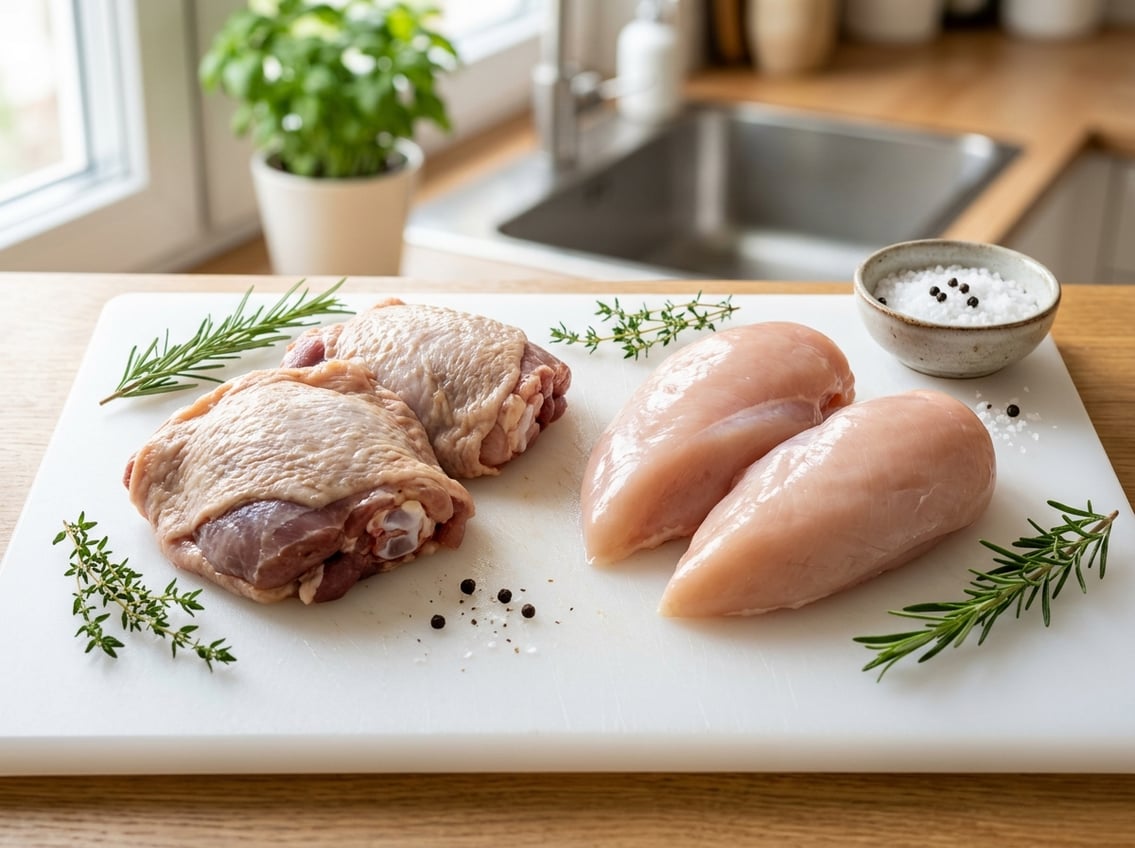
Consumer choices, cultural habits, and health-driven buying shape prices more than production alone. Changes in what people buy and how often they buy it directly affect retail pricing.
Popularity of White Meat vs. Dark Meat
White meat—especially boneless skinless breasts—has long dominated demand in the U.S., which drove higher prices and more large-scale processing for breasts. In recent years, sales data show thighs growing faster than breasts, and retailers report rising demand for boneless skinless thighs, narrowing the price gap.
Producers used to export much of the darker meat overseas, treating thighs as lower-margin byproducts. As more consumers buy thighs, that export flow tightens and domestic supply falls, which pushes prices up.
Cultural and Culinary Influences
Your cooking habits affect demand for certain cuts. Many international cuisines and home-cooking trends favor darker, fattier meat for braises, curries, and fried chicken because thighs resist drying and hold flavor better.
Chefs and food influencers who showcase thigh-based recipes increase consumer interest. Retailers respond by stocking more thighs, offering prepared thigh products, and marketing new recipes.
Health Perceptions and Buying Patterns
Many people choose breasts for their leanness and reputation in low-fat diets, which kept demand high for white meat. However, changing nutrition advice and shifting taste preferences have softened that edge.
Consumers now prioritize flavor and cooking reliability, and many view thighs as an affordable protein that provides more forgiving results. These buying patterns influence how much supermarkets and foodservice order from processors.
Production and Processing Costs
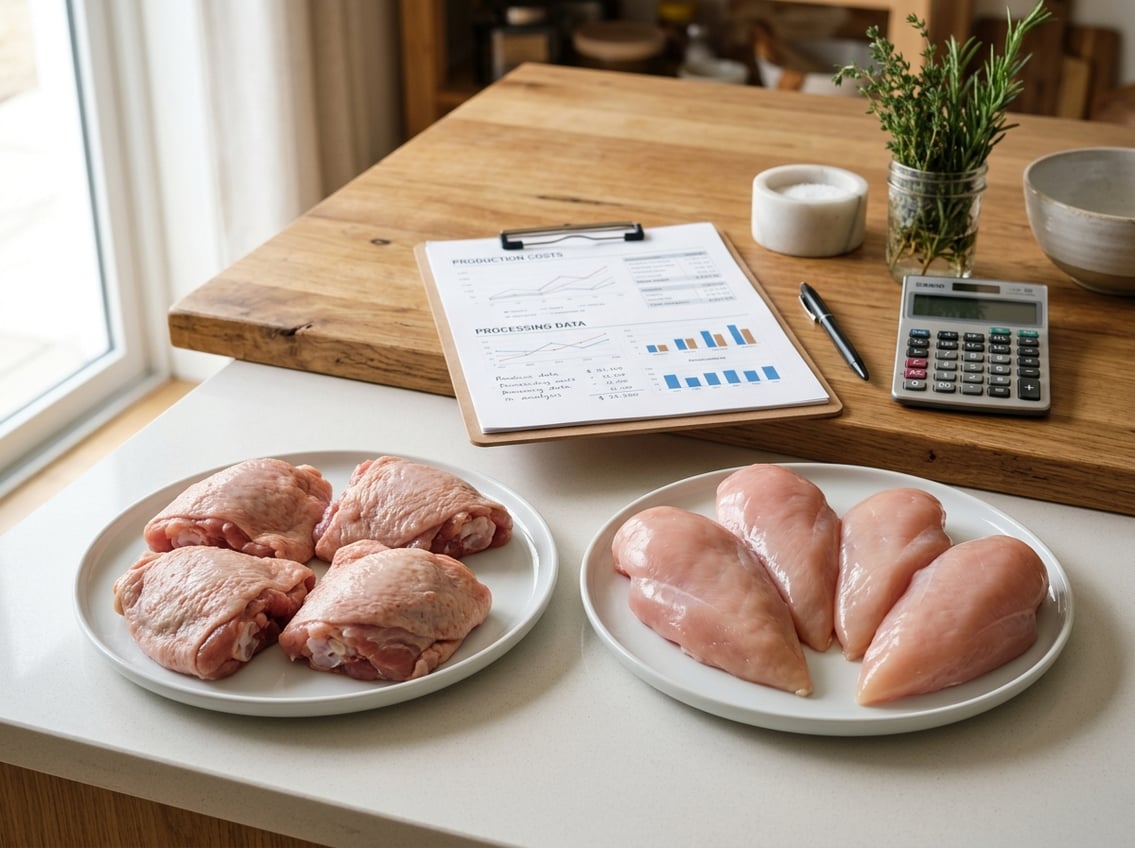
Chicken thighs often cost less because they require less labor-intensive processing and attract lower demand than breasts. These factors affect feed allocation, cutting steps, packaging, and final retail pricing.
Deboning and Packaging Differences
Deboning chicken breasts takes more precision and time than deboning thighs. Breasts are often sold boneless and skinless, so processors spend extra labor and use more machinery to trim and inspect each fillet.
Packaging for breasts usually uses individual trays or vacuum-sealed portions aimed at convenience and health value. Thighs are more often sold bone-in or in bulk packs, reducing packaging costs.
You pay more for breasts because added processing steps raise costs. Less handling for thighs means fewer defects, less waste, and lower packaging expenses.
Labor and Feed Costs in Poultry Production
Feed makes up a large share of production costs; breast meat yield versus thigh yield influences how feed cost divides across cuts. Producers may target specific genetics to maximize white-meat yield, which can increase feed demands.
Labor costs rise when processors need skilled workers for deboning and quality control of breasts. These extra wage hours and inspection steps increase the per-pound cost at retail.
Other overhead like veterinary care, utilities, and transportation applies to both cuts, but breasts have higher marginal labor and handling costs.
Economies of Scale in Large Operations
Large poultry companies lower average costs by processing high volumes and standardizing lines. Automated deboning lines and specialized equipment can reduce per-unit costs for breasts if demand is high enough, but the equipment costs are substantial.
If demand for breasts drops or equipment is underused, the fixed costs for breast processing raise unit prices. Thighs, which need simpler cutting lines, benefit more immediately from scale because they require less specialized machinery.
Your final retail price reflects how efficiently a plant matches equipment, labor, and production volume to market demand.
Price Structure and Cost Comparisons
Price gaps depend on who buys the meat, how it’s processed, and where it sells. Expect differences in per-pound pricing, retail markups, and the effect of promotions or bulk deals.
Wholesale vs. Retail Pricing
Wholesale price reflects what processors and distributors charge grocery chains and foodservice buyers. For bone-in thighs, processors often get lower per-pound returns because dark meat historically had weaker demand. Breasts brought higher wholesale prices when white meat dominated.
Retail price adds distribution, packaging, and retailer margin. Grocers may mark up breasts more if demand is higher, or they may promote thighs to move inventory.
Price Per Pound Differences
Price per pound varies by cut, season, and region. Traditionally, boneless skinless breasts cost much more than thighs—sometimes by 30 to 100 percent—because breasts are large single muscles with higher perceived value. Recently, boneless skinless thighs have closed that gap and in some markets briefly exceeded breast prices.
When comparing prices, check if the listing is boneless or bone-in. Bone-in thighs often cost less per pound but provide less edible meat.
Impact of Promotions and Bulk Buying
Promotions can quickly flip price relationships. Retailers sometimes run loss-leader sales on breasts, making them cheaper than thighs during a sale week. Loyalty coupons and digital rebates can further change the price you pay at checkout.
Buying bulk or whole birds lowers your average cost because fixed processing and packaging costs spread across more pounds. Foodservice contracts usually lock in lower wholesale prices than retail per pound.
Flavor, Texture, and Cooking Versatility
Chicken thighs offer richer flavor, more forgiving texture, and broader cooking options than breasts. Thighs hold moisture and tolerate higher heat and longer cooking times, while breasts reward quick, precise techniques.
Flavor and Texture Profiles
Thighs are dark meat with more intramuscular fat and connective tissue, giving a deeper savory flavor and juicier texture. That fat also carries marinades and spices well.
Breasts are lean with a milder flavor and a firmer, drier texture when overcooked. You must monitor internal temperature closely to avoid dryness.
Cooking Methods for Thighs and Breasts
Thighs handle slow-cooking, high-heat roasting, grilling, and pan-searing because collagen breaks down over time. You can braise, confit, or shred thighs for tacos and stews with little risk of drying out.
Breasts work best with quick, high-heat searing, poaching, or thin-slice preparations. They excel in stir-fries, pan-roasts, and sous-vide where precise timing preserves juiciness.
Role of Skin-On and Bone-In Cuts
Skin-on thighs add flavor and texture; rendered skin provides crispy contrast and bastes the meat. Bone-in thighs retain heat and moisture, improving flavor during long cooks.
Skinless, boneless breasts cook faster and slice easily, but lose the self-basting benefit. If you prefer skinless cuts, use brining, marinades, or a finishing sauce to restore moisture.
Nutritional Considerations
Chicken breasts and thighs differ in calories, fat, protein, and some micronutrients. These differences affect cost-per-nutrient, cooking behavior, and which cut fits your diet.
Differences in Nutritional Value
Breasts provide leaner white meat, lower in total fat and calories per 100 grams, making them suitable for calorie-controlled meals. Thighs deliver more fat and calories, which helps prevent dryness during cooking and improves flavor.
Dark meat contains more connective tissue and myoglobin, raising iron and zinc levels and contributing to a juicier mouthfeel.
Protein, Fat, and Micronutrient Content
Per 100 grams cooked, breast typically provides about 30 grams protein and 3 to 4 grams fat. Thighs give roughly 24 to 26 grams protein and 8 to 12 grams fat, depending on trimming.
Thighs usually contain higher iron and zinc and slightly more B vitamins. Breasts tend to have higher vitamin B6 by weight.
Industry Trends and Special Varieties
Pricing, demand shifts, and trade routes all influence what you find on the shelf. You’ll see organic and specialty labels, changes in domestic preference, and steady exports of thighs that affect local prices.
Organic and Free-Range Chicken Options
When you choose organic or free-range chicken, expect higher prices for both breasts and thighs, but the premium often differs by cut. Organic chicken thighs usually remain cheaper than organic breasts because breast meat still commands a health and convenience premium.
Organic certification raises costs through feed, veterinary care, and record-keeping. Free-range labeling adds costs tied to space and management. These expenses push up wholesale prices; retailers then price breasts higher when demand favors lean, boneless portions.
You’ll also see organic chicken thighs sold bone-in or boneless. Boneless, skinless organic thighs narrow the convenience gap with breasts but often cost less per pound.
Changes in Demand Over Time
Breasts dominated U.S. demand for decades, but consumption patterns are shifting toward thighs. Chefs and home cooks now favor thighs for flavor and forgiving cooking qualities, and processors have mechanized deboning for thighs, increasing supply of boneless thigh products.
This demand shift narrows the price gap. As thigh popularity rises, retail prices for thighs have climbed and sometimes match or exceed breast prices.
Seasonality and supply shocks also affect prices. Avian influenza outbreaks reduce overall supply and can push prices across all cuts upward, but the relative change depends on processing yields and export commitments. Watch promotional cycles and demand tied to grilling season or holiday cooking, when wings and leg quarters may influence how retailers price thighs versus breasts.
Export Markets and International Trade
You rely on a global market that redistributes chicken parts to match regional tastes.
The U.S. historically exported much dark meat to markets that prefer it. This practice kept domestic thigh prices lower.
When export demand rises, especially from countries that favor dark meat, domestic thigh supply tightens. Retail prices can increase as a result.
Trade policy and tariffs also influence the market. Changes to export agreements or sudden spikes in foreign orders can reroute thighs away from U.S. grocery shelves to ports for importers.
If you buy pre-cooked or value-added thigh products, remember that exporters and importers trade in processed items as well as raw cuts.
That trade affects domestic availability of lower-cost leg quarters and thighs. It can influence how retailers price pre-cooked convenience items compared to raw breasts.
Consider food-safety standards and labeling requirements when purchasing imported or exported specialty poultry. This helps ensure compliance with your local regulations.


