
Where Is the Thigh on a Chicken? Anatomy, Cuts, and Cooking Tips
You can find the thigh on a whole chicken at the upper part of each leg, just above the drumstick where it connects to the body near the hip joint.
The thigh is the dark-meat portion of the leg, nestled between the drumstick and the chicken’s body. It’s the cut you want when you’re after moist, flavorful meat.
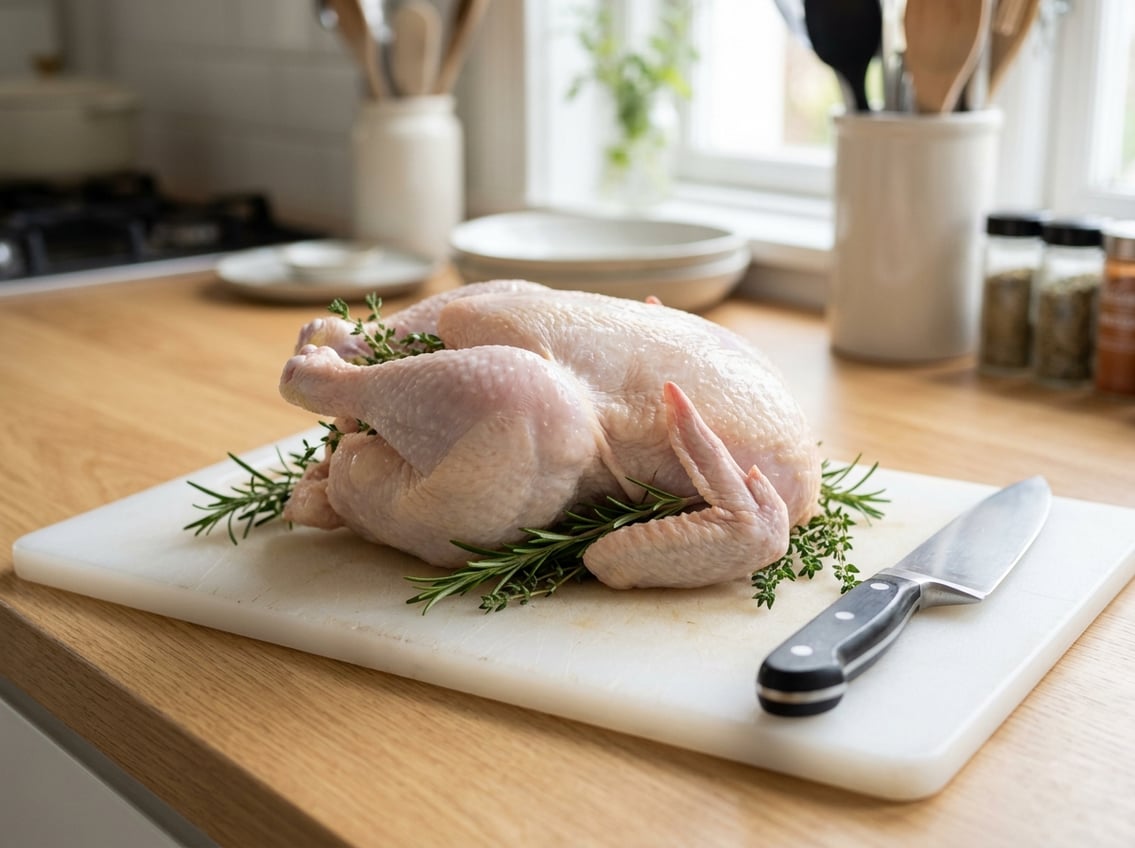
If you’ve ever wondered how thighs differ from drumsticks or where to locate them when breaking down a bird, this guide will walk you through chicken anatomy and clear visual cues to tell thigh from other cuts.
You’ll also learn what makes thigh meat unique and how to pick, store, and cook thighs for best results.
Chicken Anatomy: Understanding the Location of the Thigh
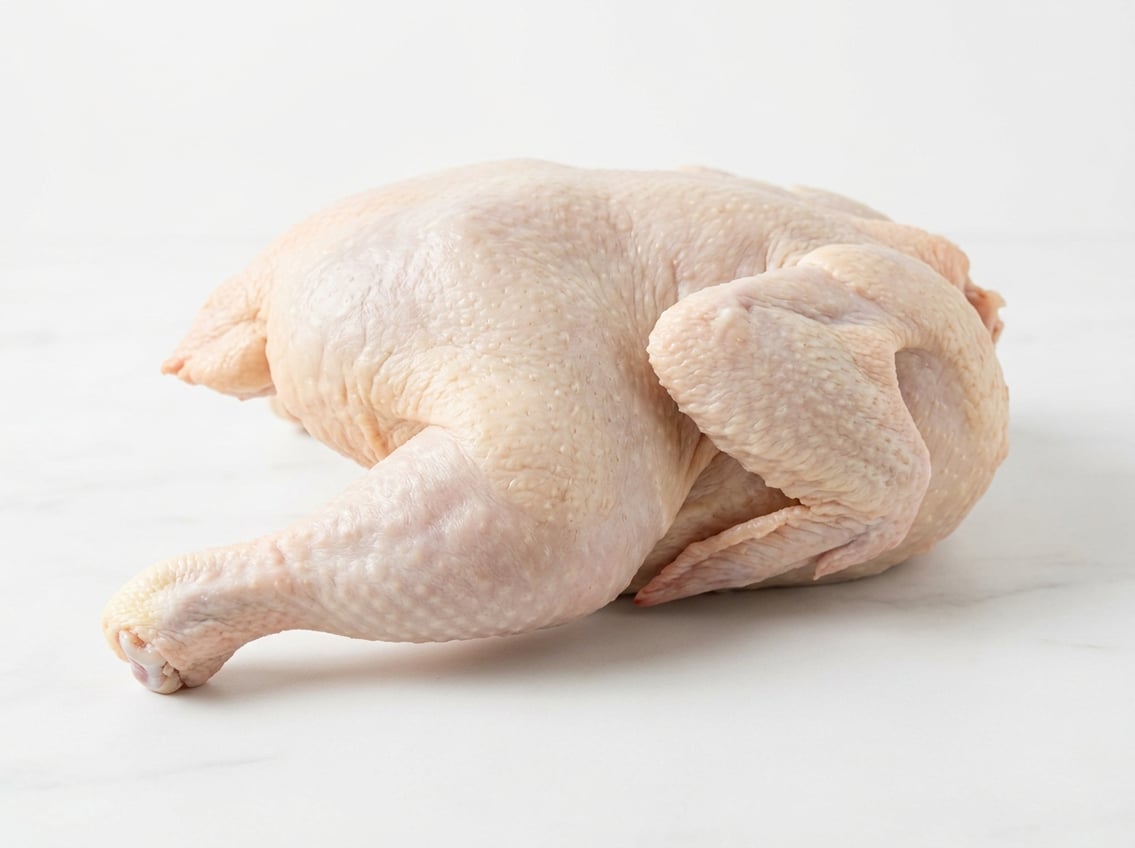
You can see exactly where the thigh sits on a chicken and how it connects to other leg parts.
Simple ways to spot it on a whole bird focus on bone landmarks, meat color, and practical identification when buying or carving.
Position of the Thigh on the Bird
The thigh is the upper portion of each leg, attached to the body at the hip joint.
It runs from the hip down to the knee joint, where it meets the drumstick.
The thigh contains the femur and a larger muscle mass than the drumstick.
Broilers have sizable, meaty thighs, while hens and roosters often show differences in size and toughness.
Thigh meat is darker and fattier because those leg muscles do more sustained work.
When the bird lies breast-side up, the thigh sits close to the body cavity under the wing line.
For butchery, cut at the hip joint to separate the thigh cleanly from the carcass.
Relation to Drumstick and Breast
The thigh sits between the drumstick and the body, and the knee joint separates thigh from drumstick.
The drumstick is the lower leg segment below the knee and contains the tibiotarsus bone.
The thigh contains more myoglobin and intramuscular fat than the breast, giving you darker color and richer flavor.
The breast is a pectoral muscle on the bird’s front and cooks faster and stays leaner than thigh meat.
If you buy leg quarters, you get both thigh and drumstick attached.
Thighs tolerate longer, moister cooking methods while breasts require gentler heat to avoid drying.
How to Identify the Thigh on a Whole Chicken
Look for the chunky meat section directly above the tapered drumstick when the chicken lies breast-side up.
Feel for the hip joint where the leg meets the body; the thigh starts there.
Visual cues include a darker pink-to-red raw color, a broader and flatter shape than the rounded drumstick, and often a thicker skin layer if sold skin-on.
When you bend the leg outward, you expose the joint. Slice along that natural seam to remove the thigh without tearing breast meat.
If you buy pieces, labels will read “bone-in thigh,” “boneless thigh,” or “leg quarter.”
Broiler thighs tend to be large and uniformly shaped; hen thighs are smaller and firmer.
Differentiating Thighs, Drumsticks, and Chicken Legs
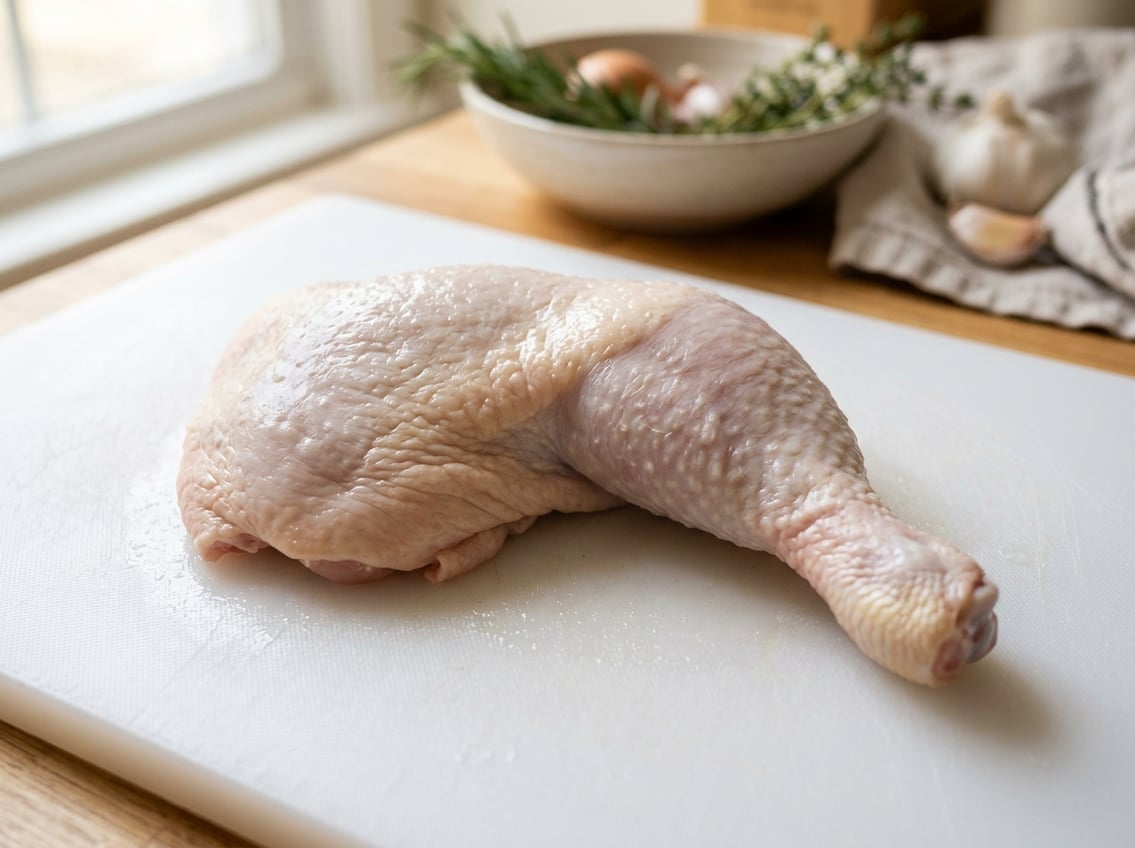
The thigh sits above the drumstick, and a whole leg or leg quarter refers to both pieces together.
Defining the Chicken Thigh and Drumstick
The chicken thigh is the upper part of the bird’s leg, located between the body cavity and the knee joint.
It contains a single femur bone, darker meat, and more connective tissue and fat than the drumstick, which gives it extra juiciness and tolerance for longer, slower cooking.
The drumstick is the lower leg portion below the knee, centered on the tibia and fibula.
It has a single, slender bone running through the center and less muscle bulk than the thigh.
You’ll often see drumsticks sold whole or paired; they’re popular for grilling, frying, and serving by hand.
Key differences:
- Thigh: upper leg, femur, fattier, good for braising and roasting.
- Drumstick: lower leg, thinner bone, easy to eat, crisp-skinned when roasted.
Chicken Leg Quarters Explained
A leg quarter combines the thigh and drumstick with a portion of the bird’s back attached.
When you buy a leg quarter, you get both the femur and tibia sections connected at the joint, plus extra skin and some back meat.
Leg quarters give a larger portion size and work well in ovens, grills, and slow cookers because the two pieces cook well together.
Cooking times can vary between the thigh and drumstick inside a quarter.
The thigh’s thicker meat holds moisture better, while the drumstick’s shape exposes more surface area for browning.
When preparing leg quarters, position the drumstick and thigh so heat reaches both evenly.
You may baste or tent to prevent the drumstick from drying while the thigh finishes.
Thigh and Drumstick Versus Chicken Cuts
When someone refers to a “chicken leg,” they usually mean the whole leg: both thigh and drumstick together or the leg removed at the hip joint.
Retail packaging can label parts as “legs,” “thighs,” “drumsticks,” or “leg quarters,” so check the cut before you buy.
Butchers cut along the joint between femur and tibia to separate thigh from drumstick for recipes that require one or the other.
Common uses by cut:
- Thighs: stews, curries, boneless preparations, and shredding.
- Drumsticks: barbecues, finger food, and frying.
- Leg quarters: economical roasting and braising where both textures are desired.
If you need a specific texture or cooking profile, choose thighs for moist, shreddable meat.
Pick drumsticks for handheld, bone-in servings.
Select leg quarters for large, hearty portions.
Characteristics of Thigh Meat
Thigh meat is richer and moister than many other cuts, with higher fat and connective tissue that affect flavor, cooking, and nutrition.
You’ll notice distinct differences in texture and taste compared with breast meat, and those differences guide the best cooking methods and portion choices.
Flavor and Texture
Thigh meat delivers a deeper, more savory taste because it contains more intramuscular fat and myoglobin.
You’ll get a pronounced, slightly sweet umami note when you roast, braise, or grill chicken thighs.
The skin crisps and concentrates flavor while the meat stays juicy.
The texture is tender and forgiving.
Connective tissue breaks down during low-and-slow cooking, so thighs become soft and shreddable.
If you cook them quickly (pan-sear or grill), expect a firmer bite than slow-braised meat but still more forgiving than lean cuts.
Key points:
- Sear skin-side down to crisp the skin and render fat.
- Use a thermometer: target 165°F (74°C) in the thickest part, then rest for carryover heat.
- For shreddable results, braise at low heat until collagen dissolves.
Comparison to Breast Meat
Breast meat is significantly leaner and milder in flavor than thigh meat.
Breast cooks faster and can dry out if left even slightly over the recommended temperature.
Thighs tolerate longer cook times and higher heat without losing juiciness.
If you swap thighs for breasts, expect a richer taste and chewier texture; adjust cooking time and consider reducing added fats.
If you swap breasts for thighs, shorten cooking time or cut thighs into smaller pieces to avoid overcooking other ingredients.
Trade-offs:
- Thighs: more forgiving in mixed dishes, better for slow-cooking and bold marinades.
- Breasts: better for quick pan-frying, poaching, and dishes where a neutral flavor is desired.
Nutritional Profile
Thigh meat contains more calories and fat than breast meat, largely because of higher saturated and monounsaturated fat content.
You’ll get more iron and zinc per ounce from thighs, and slightly higher amounts of certain B vitamins tied to myoglobin-rich dark meat.
A typical skinless, cooked chicken thigh (about 3 ounces) provides:
- Calories: ~170–200
- Protein: ~19–22 g
- Fat: ~9–12 g
- Iron and zinc: higher than an equivalent portion of breast
If you keep the skin on, expect an added 50–80 calories and a notable increase in fat.
Choose skinless thighs to lower fat while preserving much of the dark-meat flavor.
For balanced meals, pair thighs with vegetables and whole grains to offset higher fat and calorie density.
Buying, Storing, and Selecting Chicken Thighs
Choose the right cut for your recipe, check packaging dates and appearance, and store portions to keep quality and safety.
Focus on bone-in vs. boneless options, fridge/freezer timing, and visual cues at the store.
Bone-In vs. Boneless Thighs
Bone-in chicken thighs keep more flavor and resist drying during long roasts or grilling.
The bone adds cooking time but improves juiciness and gives richer stock if you save scraps.
Boneless, skinless thighs cook faster and fit stir-fries, soups, and quick sautés.
They’re easier to eat and portion, but cost a bit more since the butcher removed bone and skin.
Use skin-on, bone-in thighs when you want crisp skin and deep flavor.
Choose boneless, skinless for even slicing, faster cooking, or recipes where you want the meat to absorb marinades quickly.
How to Store Chicken Thighs
Refrigerate chicken thighs at 40°F (4°C) or below and cook within 1–2 days of purchase.
Keep them in original sealed packaging or move to an airtight container to prevent cross-contamination.
Freeze for longer storage: wrap in freezer paper or vacuum-seal in portion-sized packs and label with date.
Boneless thighs stay best for up to 6–9 months; bone-in may tolerate similar times but can be bulkier to thaw.
Thaw safely by moving frozen packs to the fridge for 24 hours, or use cold-water submersion in a sealed bag for quicker thawing.
Never refreeze raw thighs after thawing unless you cook them first.
Identifying Thighs at the Store
Look for thighs with uniform color, moist but not slimy surface, and no strong odor.
Packages should display a sell-by date and clear labeling (bone-in chicken thighs vs. boneless) so you can match the cut to your recipe.
Check the package weight and trim level; family packs often offer better price per pound, but buy portion-sized bags for convenience.
For skin-on pieces, inspect the skin for intactness—broken or patchy skin can signal rough handling.
If you want bone-in thighs with skin but prefer boneless, ask the butcher to debone on request.
Save bones in the freezer for stock if you remove them at home.
Cooking with Chicken Thighs
Chicken thighs give you forgiving cooking times, deep flavor, and options for both quick weeknight meals and slow-cooked dishes.
You can sear, roast, braise, or simmer them; each method changes texture and timing, but all benefit from a simple seasoning and an internal temperature check.
Popular Methods to Cook Chicken Thighs
Use bone-in, skin-on thighs when you want crispy exterior and richer flavor.
They tolerate higher heat and longer cook times.
For oven-roasting, preheat to 425°F (220°C), pat thighs dry, season, and roast skin-side up for 25–35 minutes until skin is brown and internal temp is 165°F (74°C).
If you prefer pan-searing, start skin-side down in a hot, dry skillet to render fat, then finish in a 375°F (190°C) oven for 10–15 minutes.
Boneless, skinless thighs work best for stir-fries or grilling; they cook faster (6–8 minutes per side on a hot grill) and slice easily.
For slow-cooker or braising recipes, brown thighs first, then simmer in liquid at low heat for 1.5–2 hours to break down connective tissue and deepen flavor.
Quick reference:
- Oven roast (bone-in, skin-on): 425°F, 25–35 min.
- Pan-sear + oven finish: sear 5–7 min, oven 10–15 min.
- Grill (boneless): 6–8 min per side.
- Braise/slow-cook: 1.5–2 hours low.
Always check internal temperature at the thickest point.
Using Thighs in Soups and Stews
Chicken thighs add richness to broths because their higher fat and connective tissue release gelatin during long simmering.
Use bone-in thighs for the deepest flavor; simmer gently for 45–90 minutes depending on recipe to extract collagen without shredding all the meat.
If the recipe needs shredded chicken, remove thighs after cooking, shred, and return to the pot near the end to keep pieces intact.
For quicker soups, use boneless thighs cut into 1–1.5 inch pieces and simmer 20–30 minutes until tender.
Salt later in the cooking process to avoid over-seasoning as the broth concentrates.
Strain or skim excess fat if you want a cleaner broth, or leave some for mouthfeel and flavor.
Best Practices to Retain Juiciness
Pat thighs dry before cooking. Brine or marinate them briefly for better moisture and flavor.
Use a 30-minute saltwater brine or a 1–2 hour acidic marinade. Pull thighs at 160–163°F (71–73°C) and let them rest for 5–10 minutes so the temperature reaches 165°F (74°C).
Cook bone-in thighs over moderate heat to let connective tissue break down without drying the meat. Sear skin quickly using high heat to protect juices, then lower the heat or finish in the oven.
Cut across the grain when shredding or slicing to keep the meat tender. If cooking from frozen, increase the time by 50% and check the temperature in the thickest part.


