
Is It Good to Marinate Chicken Thighs Overnight? Flavor, Texture, and Marinade Tips
You can marinate chicken thighs overnight to achieve better flavor and tenderness, especially when you use a low-acid base like yogurt or buttermilk or keep the acid level moderate.
Overnight marination deepens seasoning and helps dark meat relax, but timing and ingredients matter. Too much citrus or vinegar can break down proteins and make the texture mushy.

Want juicy, well-seasoned marinated chicken thighs every time? The following sections explain how overnight marination changes the meat and which ingredients work best.
You’ll also find ideal time windows for bone-in and boneless thighs, step-by-step overnight methods, cooking tips, and safety practices.
How Overnight Marination Affects Chicken Thighs
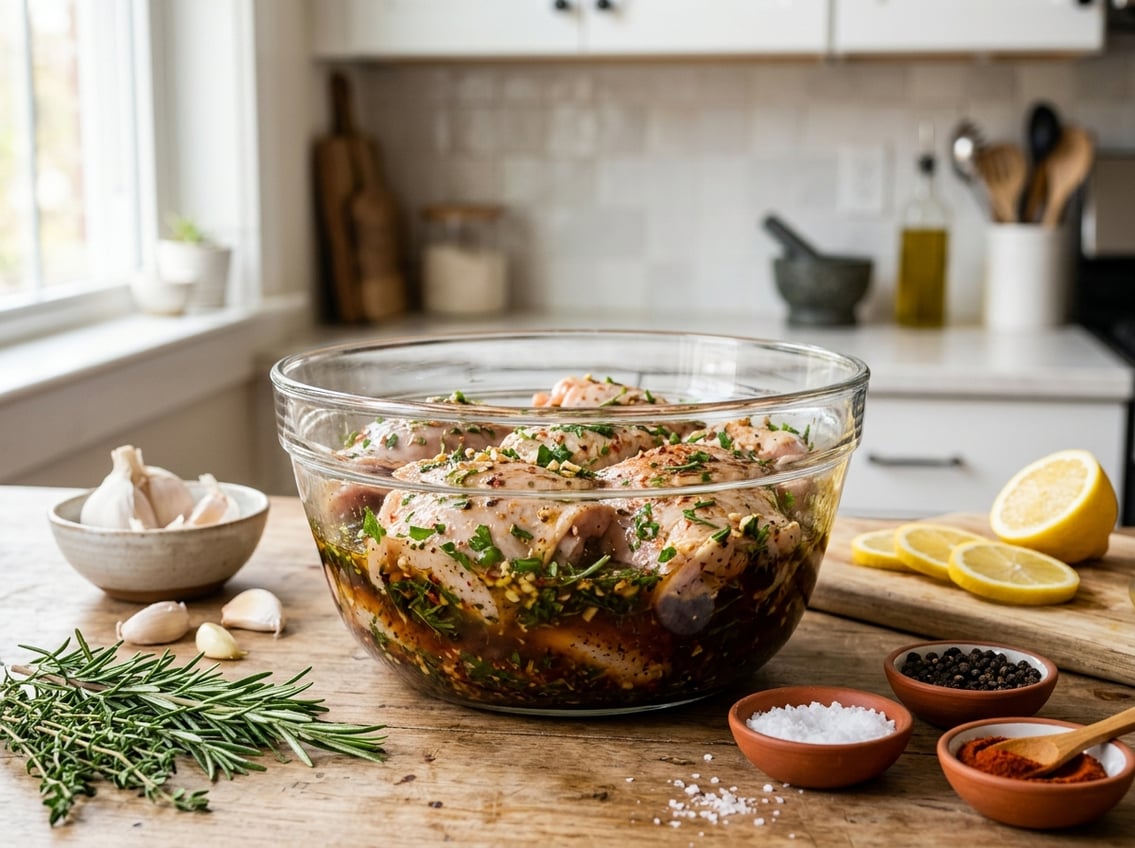
Overnight marination deepens flavor and helps the meat hold moisture during cooking. The texture changes depending on marinade composition and time.
These effects are strongest in bone-in, skin-on thighs. Acid, dairy, or enzymatic ingredients influence the results.
Flavor Infusion Over Time
When you marinate chicken thighs overnight, aromatic compounds move from the surface into the outer layers of the meat. Garlic, herbs, and spices become more pronounced compared with a short soak.
Thick, bone-in thighs gain the most depth of flavor because their larger mass benefits from longer contact time. Use an oil-based or balanced marinade for even flavor.
If you want citrus or vinegar tang, limit strong acids to prevent surface over-acidification. Rotate or press thighs in a sealed bag so every side contacts the marinade.
Benefits for Moisture Retention
Chicken thighs retain more juice during high-heat cooking when you marinate overnight. Oil and salt in the marinade help reduce moisture loss by coating the skin and altering the muscle’s water-holding properties.
Dairy-based marinades like yogurt or buttermilk gently loosen protein bonds and lock in liquid. Refrigerate below 40°F (4°C) and avoid overly salty brines that can draw out moisture if left too long.
Texture and Tenderness Enhancement
Mild acids or dairy soften connective tissue in thighs, producing a tender, juicy bite after roasting or grilling. Dark meat tolerates longer marination than breast meat, so thighs rarely become mushy with overnight durations.
Avoid enzymatic fruit marinades like pineapple, papaya, or kiwi overnight. Their proteases can over-tenderize and create a mushy texture.
Choose yogurt, buttermilk, or a balanced oil-acid mix and keep the time within 8–24 hours depending on marinade strength.
Ideal Marinating Times for Chicken Thighs

Marinating affects flavor penetration and texture. The right timing balances taste development with meat integrity and depends on your marinade’s acidity and whether the thighs are boneless or bone-in.
Recommended Duration for Best Results
For most marinades, aim for 2 to 12 hours to get clear flavor improvement without damaging texture. If your marinade is mild—oil, herbs, soy sauce, garlic—you can safely marinate for 4–12 hours.
If the marinade contains strong acid like citrus juice or vinegar, or a high enzymatic component such as pineapple or papaya, limit marinating to 30 minutes–4 hours. Acids and enzymes act quickly to break down proteins.
For a straightforward overnight plan, 8–12 hours works well with balanced marinades like soy, oil, and aromatics. This gives good depth of flavor while avoiding over-softening, assuming the marinade isn’t highly acidic.
Risks of Over-Marinating
Over-marinating mainly affects texture. Acidic or enzymatic marinades continue breaking down muscle fibers, and after 12–24 hours, meat can become stringy or mealy.
Salt-forward or strongly spiced marinades can overpower the chicken if you marinate too long. Always marinate in the refrigerator; leaving chicken in marinade above 40°F for extended periods increases bacterial risk.
If you need long marination for scheduling, use milder ingredients or reduce acid concentration. Reserve some uncontaminated marinade for finishing sauce to reintroduce bright flavor without overexposing the raw meat.
Differences Between Cuts: Bone-In vs. Boneless
Boneless thighs absorb marinade more quickly because the meat is thinner and lacks bone. Plan on 2–8 hours for boneless pieces with balanced marinades, or 30 minutes–4 hours if acidic.
Bone-in thighs require more time for flavors to reach the interior near the bone. Target 6–12 hours for balanced marinades, or up to 24 hours if the marinade is very mild and you want deeper penetration.
Bone-in pieces take longer to cook, which can help meld flavors during cooking. Adjust marinating time downward if your marinade is acidic and you have bone-in thighs.
Key Ingredients for an Effective Marinade
A strong marinade balances tenderizing acid, a fat-based carrier for flavor, and concentrated seasonings that add depth. Each component has a clear role: acid for texture, oil for moisture and flavor transfer, and herbs, spices, or umami for taste complexity.
Acidic Marinades and Their Purpose
Acidic ingredients like lemon juice, vinegar, yogurt, or buttermilk break down surface proteins and slightly tenderize thigh meat. For chicken thighs, you can use stronger acids for longer periods, but limit citrus- or vinegar-forward mixes to about 6–12 hours.
Acids also brighten flavors, so pair them with salt to push taste deeper. For overnight marination, use gentler acids like yogurt or buttermilk, or dilute citrus or vinegar with oil and a touch of water.
Keep acid at roughly 10–20% of the marinade volume for effective tenderizing without overdoing it.
Role of Oils Like Sesame Oil
Oil carries fat-soluble aromatics and helps the chicken retain moisture during high heat cooking. Use neutral oils such as avocado or canola for most marinades.
Add small amounts of sesame oil for its toasty flavor, but use it sparingly—about 1 teaspoon per cup of marinade. Oil moderates acid action by coating fibers and slowing penetration, which is helpful for longer marinating windows.
When grilling, choose oils with higher smoke points for searing. Reserve flavorful oils like sesame for finishing or lower-heat cooking to preserve aroma.
Herbs, Spices, and Umami Components
Herbs and spices define the profile. Garlic, ginger, rosemary, smoked paprika, and black pepper each contribute specific notes.
Use fresh herbs for bright flavors and dried spices for concentrated warmth. Add salt sources such as kosher salt or soy sauce, which also supplies umami and color.
For deeper savory character, incorporate small amounts of miso, fish sauce, or Worcestershire. Sweeteners like honey or brown sugar help with caramelization, but reduce quantity if you plan direct high heat grilling.
Essential Steps for Marinating Chicken Thighs Overnight
Prepare thighs for even flavor absorption, combine a balanced marinade, and store everything safely in the refrigerator. Follow measured steps for trimming, marinating, and cold storage to get juicy, well-seasoned chicken thighs.
Preparing and Trimming Chicken Thighs
Trim excess fat and loose skin so the marinade contacts flesh evenly. If you use bone-in, skin-on thighs, leave skin intact for extra juiciness.
For boneless skinless thighs, remove silver skin and any connective tissue that can prevent flavor penetration. Pat the pieces dry with paper towels before salting or adding a marinade.
Drying reduces surface moisture so your marinade clings and improves seasoning adhesion and browning during cooking. If you plan to brine lightly, dissolve 1 tablespoon kosher salt per cup of water and soak for 30–60 minutes, then rinse and pat dry.
For quick flavor boost without brining, score the surface lightly with shallow cuts. This helps thicker marinades and coarse spices reach more surface area.
Mixing and Applying the Marinade
Use a basic marinade template: acid, oil, salt, and aromatics. Use 2–3 tablespoons acid per pound of thighs, 2–4 tablespoons oil, and 1–1.5 teaspoons kosher salt per pound.
Add garlic, herbs, spices, and 1 tablespoon sweetener if desired. Avoid high-acid blends when marinating overnight; for 8–12 hours, prefer yogurt, buttermilk, or a low-acid soy-based mix.
If you use citrus or vinegar, shorten time to 4–8 hours for bone-in thighs and 2–4 hours for boneless. Place thighs and marinade in a zip-top bag or nonreactive bowl, squeeze out air, and massage for 30 seconds to coat.
Reserve a small portion of marinade separately if you plan to use it as a finishing sauce. Discard any marinade that contacted raw chicken unless you boil it first.
Safe Refrigeration Techniques
Always marinate in the refrigerator at 40°F (4°C) or below. Use the coldest shelf and avoid leaving the container on the countertop.
Use a leak-proof container or double-bag to prevent cross-contamination. Label the bag with the start time and date so you don’t over-marinate.
Set a timer for 8–12 hours if you choose overnight. When ready to cook, remove thighs from the fridge 20–30 minutes before cooking to take the chill off.
Discard used marinade or bring it to a vigorous boil for at least 1–2 minutes before using as a sauce.
Tips for Cooking Marinated Chicken Thighs
Marinated chicken thighs benefit from two practical steps: remove excess surface moisture before cooking, and choose a cooking method that matches your marinade and texture goals.
Both steps affect browning, flavor concentration, and final juiciness.
Pat Dry Before Cooking for the Best Crust
Pat the thighs dry to remove excess marinade that prevents browning. Use paper towels and press gently until the surface is damp, not dripping.
This helps the Maillard reaction create a crisp, flavorful crust. If you used a very sugary or soy-heavy marinade, pat extra thoroughly to avoid burning on high heat.
After drying, season lightly with salt if the marinade was low-sodium. Let the thighs sit 5–10 minutes after patting so the surface dries slightly before you cook.
For skin-on pieces, drying is essential to get the skin crisp. For boneless skinless thighs, drying improves searing and prevents oil splatter.
Always discard or boil leftover marinade before using as a sauce.
Cooking Methods: Grill, Bake, or Pan-Fry
Grilling: Preheat the grill to medium-high (about 400–450°F/200–230°C). Oil the grates and cook 4–6 minutes per side for boneless thighs, longer for bone-in.
Watch for flare-ups with sugary marinades and move pieces to indirect heat if charring. Baking: Preheat oven to 400°F (200°C).
Arrange thighs on a wire rack over a sheet pan for even air circulation and crisp outsides. Bake 20–35 minutes depending on size and bone-in status.
Finish under broil 1–2 minutes for extra color. Pan-frying: Heat a heavy skillet over medium-high and add a thin layer of oil.
Sear 3–5 minutes per side for boneless thighs, reduce heat and finish cooking through. For thicker or bone-in thighs, brown first then cover and lower heat to finish to 165°F (74°C) internal temp.
Always check internal temperature with an instant-read thermometer inserted into the thickest part. Aim for 165°F (74°C).
Let the thighs rest 5 minutes before serving to redistribute juices for juicier, more flavorful chicken thighs.
Safety Considerations When Marinating Chicken Overnight
Keep the chicken refrigerated at 40°F (4°C) or below. Prevent raw juices from contacting other foods or surfaces.
Use non-reactive containers and plan how you will handle or dispose of the marinade after it touches raw chicken.
Storage Containers and Cross-Contamination
Choose glass, ceramic, or food-grade plastic containers for marinating chicken thighs overnight. These materials do not react with acidic ingredients like lemon, vinegar, or yogurt.
They are also easy to sanitize. If you use a resealable plastic bag, press out excess air and place the bag on a rimmed tray to catch leaks.
Store the container on the bottom shelf of the refrigerator to prevent drips from contaminating other items. Keep the temperature at or below 40°F (4°C) and check the fridge thermometer if you are unsure.
Wash or sanitize any utensils, cutting boards, counters, and your hands immediately after they touch raw chicken or its marinade.
Handling and Disposing of Used Marinade
Never reuse marinade that touched raw chicken unless you cook it to a rolling boil for at least one minute to kill bacteria.
If you want to use the marinade as a sauce, transfer a portion to a clean pot before adding any raw chicken juices. Boil it for safety.
To dispose of used marinade, pour it into the sink and run hot water while you scrub the container. You can also seal the marinade in a disposable bag and put it in your trash if you can’t clean it right away.
Always wash the container and any tools in hot, soapy water or in the dishwasher. Use a sanitizer if you serve the chicken to people with weakened immune systems.


