
Is It Safe to Defrost Chicken Thighs in Cold Water? Best Practices & Food Safety Tips
You can safely defrost chicken thighs in cold water if you keep the water cold, seal the meat in a leak-proof bag, and change the water every 30 minutes. Cook the thighs immediately after they thaw.
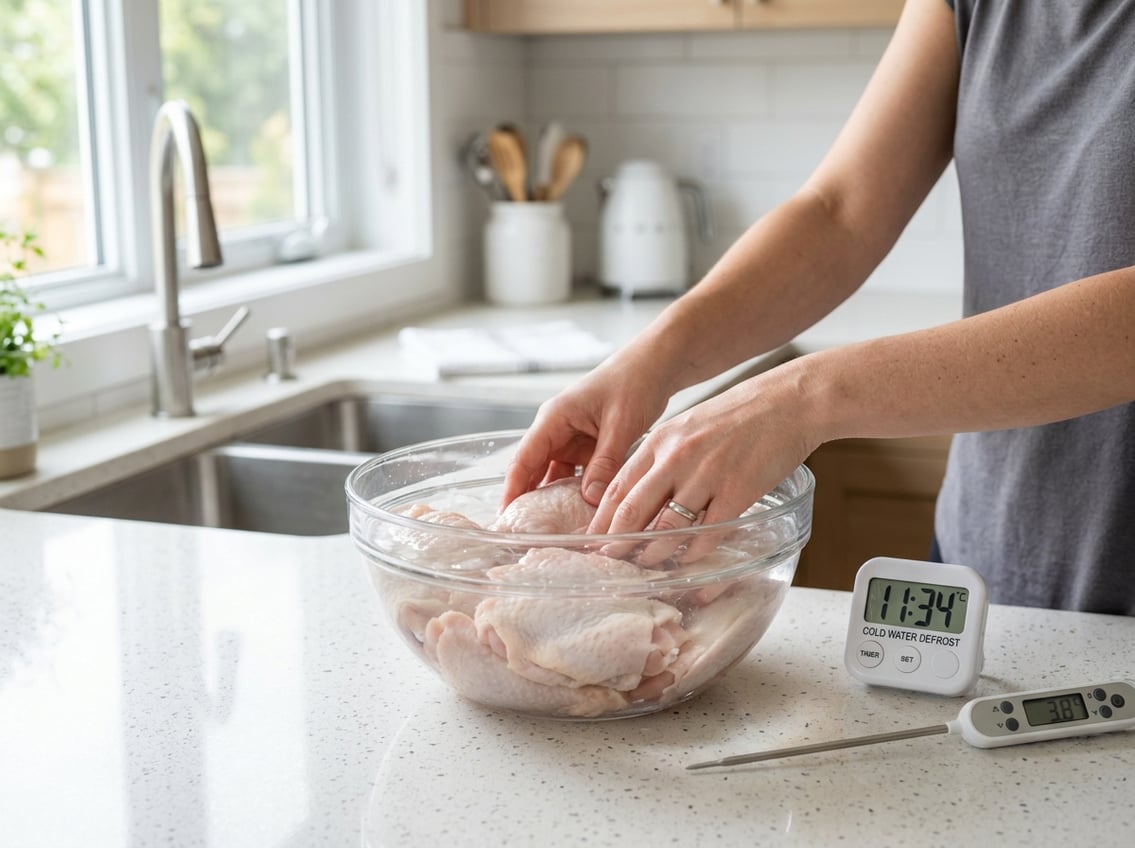
Cold-water thawing gives you a faster alternative to the refrigerator without pushing the meat into the temperature danger zone. This method is popular when you need dinner on the table sooner.
Thaw times depend on thickness and package size. Plan for an hour or more for typical thigh packages and adjust if pieces are thicker or frozen together.
Why Cold Water Defrosting is Popular
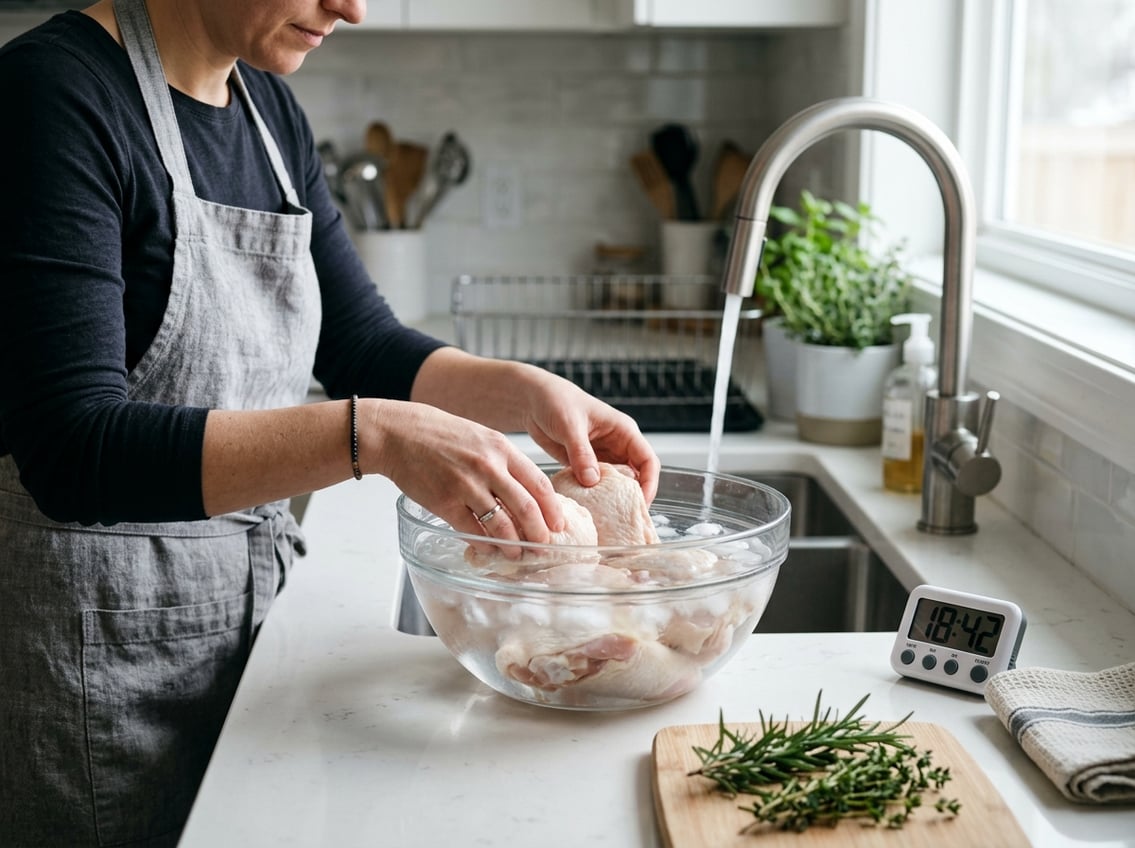
You can thaw chicken thighs faster than in the fridge but safer than leaving meat on the counter. The cold water method gives reliable timing and retains texture better than microwaving.
This method fits into last-minute meal planning.
Quick Thawing for Busy Cooks
The cold water method speeds thawing by surrounding sealed chicken thighs with a consistent, cool temperature. A typical 1-pound package of thighs often thaws in 45 minutes to 2 hours, depending on thickness and packaging.
Change the water every 20–30 minutes to keep it cold. This prevents the bath from warming and slowing thawing.
This method lets you start cooking the same evening instead of waiting a full day for fridge thawing.
Balancing Speed and Safety
Cold water defrosting lowers bacterial risk compared with warm or room-temperature thawing because the water stays below the danger zone (40–140°F / 4–60°C). Use airtight packaging to prevent contamination and cross-contact with sink water.
The USDA recommends cooking poultry immediately after cold-water thawing because surface temperatures can approach the danger zone even if the center stays cold. Change the water regularly and never use hot water.
Comparing to Refrigerator and Room Temperature Thawing
Refrigerator thawing keeps chicken thighs at a safe, steady temperature below 40°F and preserves texture best, but it usually takes a day for a 1–2 pound package.
Thawing on the counter at room temperature is unsafe because outer layers enter the danger zone long before the center thaws. This increases the risk of pathogens like salmonella.
Microwave thawing is faster than cold water but often cooks edges unevenly and degrades texture. Cold water offers a middle ground: much quicker than the fridge and gentler on texture than microwaving.
How to Safely Defrost Chicken Thighs Using Cold Water
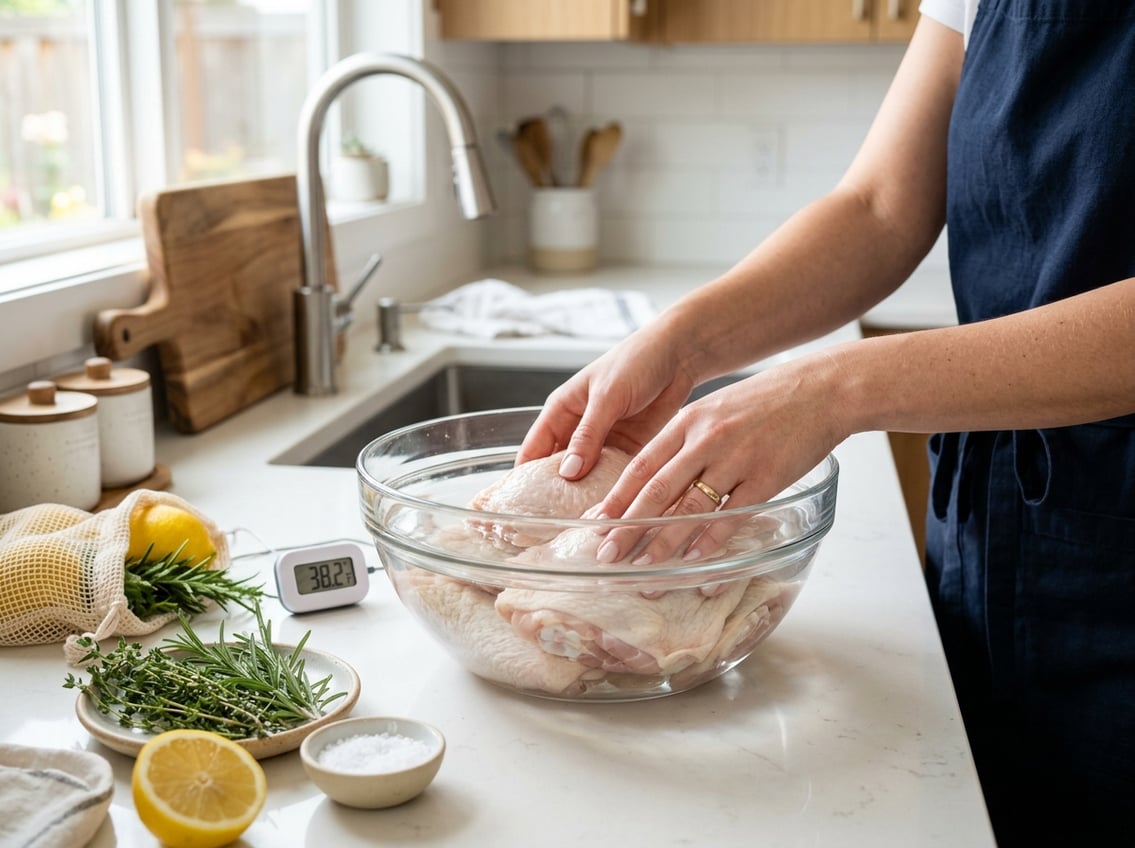
This method gives faster thawing than the refrigerator while keeping the chicken out of the temperature danger zone.
You will submerge the thighs in cold water, keep the bag sealed, change the water regularly, and cook immediately after thawing.
Step-by-Step Instructions
Place the frozen chicken thighs in a large bowl, basin, or clean sink that can fully submerge the package. Use cold tap water (not warm) and pour enough to cover the thighs completely.
Make sure the thighs are in a leak-proof bag. Submerge the bag, weigh it down with a plate if it floats, and set a timer.
Change the water every 30 minutes to maintain cold temperature and speed thawing. Small packages often thaw in under an hour; thicker or larger packages can take up to two hours.
Once the thighs feel pliable and no large ice crystals remain, remove them from the water and cook them immediately. Do not refreeze thawed raw chicken unless you first cook it.
Importance of Using a Leak-Proof Bag
Always put the chicken thighs inside a leak-proof resealable plastic bag or vacuum-sealed pack before submerging. A secure barrier prevents water from diluting juices and stops bacteria in the sink or bowl from contaminating the meat.
Check the bag for holes, double-seal the zipper, and squeeze out excess air to improve contact with the cold water. If you only have original store packaging that’s not watertight, transfer the thighs to a proper bag first.
Using a leak-proof bag also makes it easy to lift the thighs from the water without splashing or dripping onto other surfaces.
Recommended Water Temperature
Keep the water temperature below 70°F (21°C), ideally as close to refrigerator temperature (around 40°F/4°C) as possible. Cold tap water usually starts colder than 70°F.
Changing the water every 30 minutes restores cold temperature and removes any warming layer that formed around the bag. Use a kitchen thermometer if you want precision.
If the water feels warm to the touch, replace it immediately.
Verifying Full Thaw
Check for thaw completeness by feeling the thighs through the sealed bag. The meat should be soft and yield under light pressure with no solid ice in the center or around bones.
Inspect visually for any remaining white, icy spots. If you suspect partial thawing, keep the bag submerged and continue changing the water every 30 minutes until fully thawed.
Once thawed, pat the thighs dry with paper towels before seasoning or cooking. Cook the chicken immediately after thawing to prevent bacterial growth.
Preventing Foodborne Illness and Bacterial Growth
Thaw chicken thighs safely to keep their surface temperature low, avoid cross-contamination, and ensure you cook them to a safe internal temperature immediately after thawing.
Small actions like changing the water and using a food thermometer directly reduce risk from pathogens such as Salmonella and Campylobacter.
Understanding the Danger Zone
The “danger zone” is the temperature range where bacteria multiply rapidly: 40°F to 140°F (4°C to 60°C). If chicken spends more than 2 hours in this range, or more than 1 hour above 90°F (32°C), bacterial counts can increase.
Salmonella and Campylobacter are common on raw poultry and grow quickly when the surface warms. Keep chicken cold by thawing in the refrigerator, or use the cold-water method while maintaining water below 40°F.
Avoid room-temperature thawing on counters or in warm water. These practices let the exterior reach the danger zone long before the interior thaws.
Always use a thermometer to check fridge temperature and the chicken’s internal temperature during cooking.
Why Changing Cold Water Matters
You must keep the water cold for cold water thawing to work. Bacteria multiply when water warms above 40°F, so change the water every 30 minutes to maintain safe temperatures.
Use a sealed leak-proof bag for the chicken to prevent water contact and cross-contamination. Place the bagged thighs in a bowl or sink filled with cold tap water, then replace the water every half-hour.
For large pieces, expect 1–3 hours to thaw depending on weight; smaller thighs will thaw faster. If the water feels warm to the touch, discard and replace it immediately.
Changing water stops the formation of warm pockets that promote Salmonella and Campylobacter growth.
Immediate Cooking After Thawing
Cook chicken immediately after defrosting in cold water or the microwave. Bacteria that survived freezing begin multiplying as soon as the meat warms.
Use an accurate instant-read thermometer and cook thighs to an internal temperature of 165°F (74°C). Insert the thermometer into the thickest part without touching bone.
If you marinated during thawing, discard the marinade or boil it before using as a sauce to kill pathogens.
If you cannot cook the chicken right away, refrigerate it and use within 1–2 days. Never refreeze raw chicken thawed in cold water unless you cook it first.
Key Safety Precautions When Handling Defrosted Chicken
Handle thawed chicken so it never touches ready-to-eat foods, sits at room temperature for long, or remains in the danger zone (40–140°F / 4–60°C).
Keep your workflow deliberate: separate raw from cooked, store promptly, and clean thoroughly.
Avoiding Cross-Contamination
Keep raw chicken thighs sealed and isolated from other foods. Use a dedicated cutting board and knife for raw poultry, or clean them between uses with hot soapy water followed by a bleach rinse if you prefer sanitizer.
Always wash your hands for 20 seconds after touching raw chicken and before touching anything else. Never place cooked chicken back on a plate that held raw thighs unless you first wash it.
Use tongs or clean utensils to move thawed chicken to the pan to avoid hand contact.
If you marinate, do so in the refrigerator and discard the marinade or bring it to a rolling boil before repurposing as a sauce. Label any containers with the date and time you finished thawing.
Safe Storage of Thawed Chicken
Store thawed chicken in its sealed bag or an airtight container on the bottom shelf of the refrigerator. That prevents drips onto other foods and keeps the chicken at a safe temperature.
Cook chicken thawed in cold water within 1–2 days. If you can’t cook within that window, refreeze only if you thawed it in the refrigerator; otherwise cook before refreezing.
Keep refrigerator temperature at or below 40°F (4°C) and check with a thermometer regularly.
When transporting thawed chicken home, keep it in an insulated bag or cooler and refrigerate within two hours (one hour if ambient temperature is above 90°F / 32°C). Label containers with use-by times.
Proper Cleaning of Utensils and Surfaces
Immediately wash knives, cutting boards, bowls, and countertops that contacted raw chicken with hot, soapy water. Scrub for at least 20 seconds, then rinse and air dry or dry with a clean towel.
Sanitize surfaces after washing. Use a commercial kitchen sanitizer or a bleach solution (1 tablespoon bleach per gallon of water). Apply and let sit for one minute, then air dry or rinse if the product label requires.
Clean sponges and dishcloths frequently; replace them weekly or sanitize in the dishwasher. Launder towels and aprons that touched raw chicken in hot water.
Wash your hands again after cleaning to remove any residual contaminants.
Alternative Thawing Methods Compared
Cold water, the refrigerator, and the microwave each control temperature and time differently. Pick the method that matches how much time you have and how you plan to cook the chicken.
Refrigerator Thawing Recommendations
Thawing chicken thighs in the refrigerator keeps the meat below 40°F (4°C) and minimizes bacterial growth. Place thighs in a sealed bag or on a plate to catch drips, and set them on the bottom shelf to prevent cross-contamination.
Expect 12–24 hours for most packs; thicker or bone-in thighs may need longer.
You can safely refreeze chicken that was thawed in the refrigerator without cooking it first. Quality may decline after refreezing, so use refrigerated-thawed thighs within 1–2 days or cook and then freeze for better texture.
Best practices:
- Keep original packaging or use a leak-proof bag.
- Store on lowest shelf in a tray.
- Plan ahead: refrigeration preserves safety and quality but takes time.
Defrosting Chicken in the Microwave
Microwave thawing is the fastest option and useful when you need to cook immediately. Use the microwave’s defrost setting and remove any packaging that could melt.
Rotate or rearrange pieces every few minutes to avoid hot spots and partial cooking. Cook the thighs immediately after defrosting.
Do not refreeze chicken thawed in the microwave unless you cook it first. Cooking kills bacteria that might have developed.
Microwave tips:
- Use a microwave-safe dish to catch juices.
- Check thickness; split thicker pieces to speed even defrosting.
- Cook to 165°F (74°C) internal temperature right away.
When to Refreeze Chicken
You can refreeze chicken safely only under specific conditions. If you thawed the thighs in the refrigerator and kept them below 40°F the whole time, you can safely refreeze them from a food-safety standpoint.
Expect some moisture loss and texture change after refreezing. Do not refreeze chicken thawed in cold water or the microwave unless you cook it first.
Cold water or microwave thawing can expose the surface to warmer temperatures that encourage bacterial growth. If you cooked previously frozen thighs, you can refreeze the cooked meat.
Label with the date and consume within recommended storage times.
Quick checklist:
- Thawed in refrigerator → you may refreeze raw.
- Thawed in cold water or microwave → cook before refreezing.
- Cooked after thawing → safe to refreeze cooked leftovers.
Common Mistakes to Avoid with Cold Water Thawing
Cold water thawing works well when you control temperature, prevent contamination, and limit time out of refrigeration. Pay attention to water temperature and how long the chicken sits.
Make sure the packaging is sealed to prevent bacterial growth and cross-contamination.
Using Hot or Warm Water
Never use hot or warm water to speed thawing. Warmer water raises the surface temperature of the chicken into the bacterial danger zone (above 40°F/4°C), which allows pathogens such as Salmonella to multiply quickly.
Uneven thawing increases that risk because the exterior can reach unsafe temperatures long before the center thaws. Stick to cold tap water and change it every 30 minutes to keep the temperature low.
If you need faster thawing, use a microwave on the defrost setting or plan ahead and thaw in the refrigerator. Always cook thawed chicken immediately when you use a faster method.
Leaving Chicken at Room Temperature
Do not leave frozen chicken on the counter to thaw. Room temperature often sits within the danger zone where bacteria grow rapidly, especially on the surface of thighs and larger pieces.
Two hours is the common safe maximum at room temperature; beyond that, bacterial counts can rise to unsafe levels. If you must thaw quickly, use cold water in a sealed bag or the microwave.
Otherwise, thaw in the fridge on the bottom shelf in a tray to catch drips. Always wash surfaces and utensils that touched raw chicken to prevent cross-contamination.
Soaking Without a Sealed Bag
If you submerge unsealed chicken directly in water, you risk contamination and watery, less flavorful meat.
Bacteria can enter the meat through the water, and raw juices may leak into your sink or container. This creates cross-contamination hazards for other foods and surfaces.
Always put chicken in a leak-proof plastic bag before thawing it in cold water.
Seal the bag tightly and remove excess air. Then fully submerge the bag.
Change the water every 30 minutes. Cook the chicken immediately after thawing to reduce any bacterial growth risk.


