
Is It Safe to Defrost Chicken Thighs in the Microwave? Essential Guidelines and Best Practices
You can safely defrost chicken thighs in the microwave if you follow a few precise steps to avoid partial cooking and bacterial growth.
Use the microwave’s defrost setting, work in short intervals, and cook the thighs immediately after thawing to keep food safe and preserve texture.
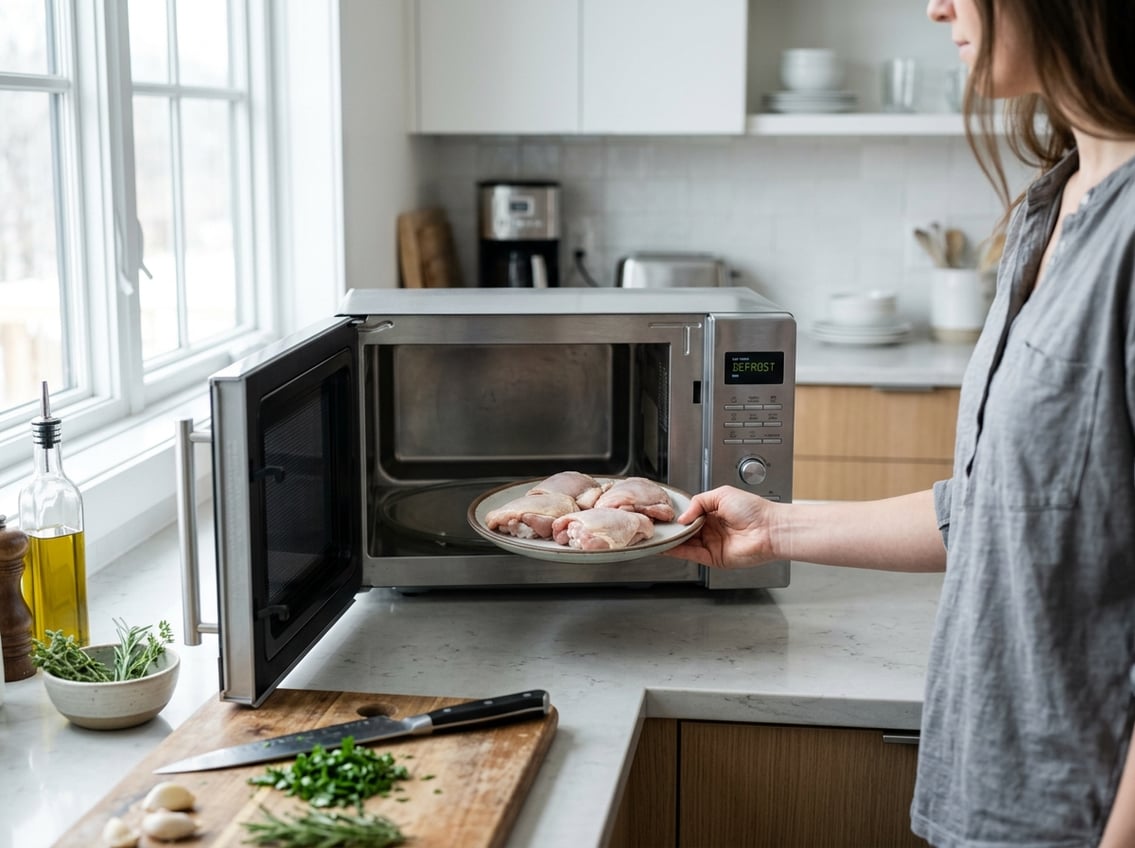
Microwave defrosting saves time and helps you get dinner ready quickly.
Pay attention to thickness, placement, and timing to prevent hot spots or cold centers.
Why Microwave Defrosting Requires Special Care
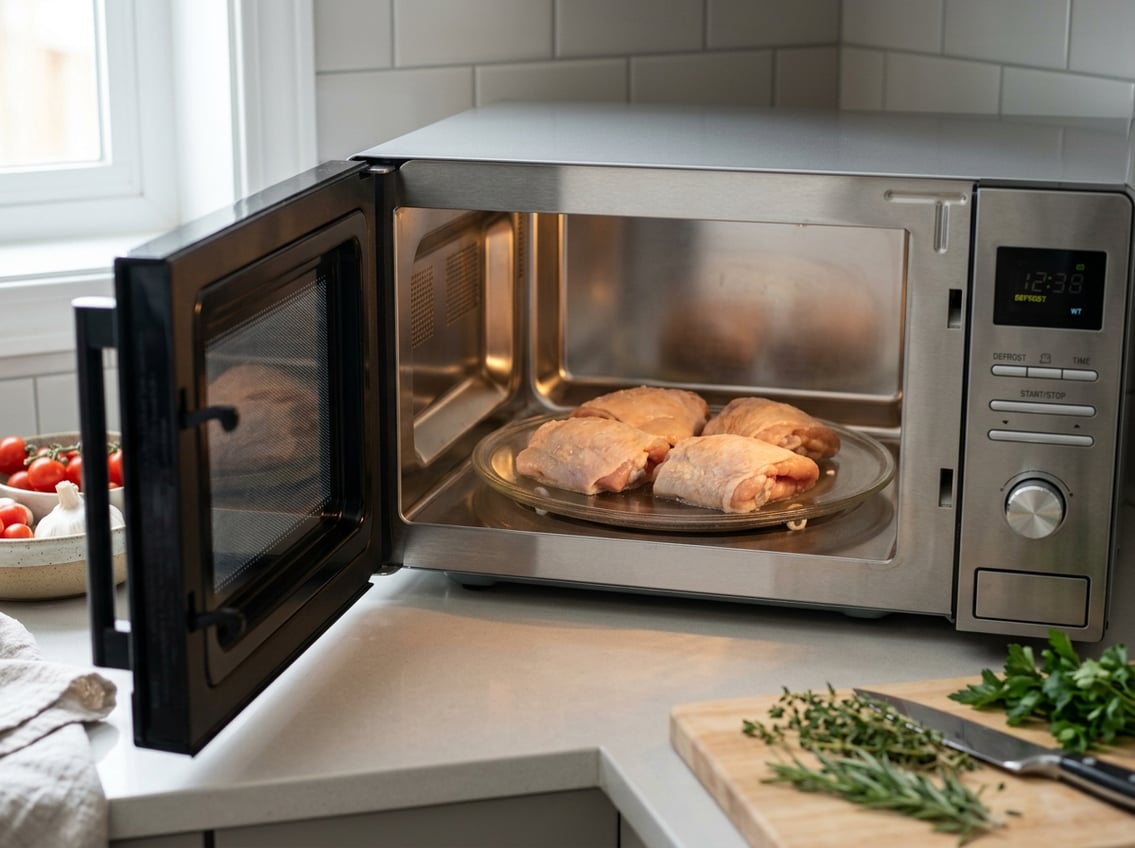
Microwave thawing works fast but often creates hot spots, partially cooked edges, and temperature ranges where bacteria thrive.
You must manage timing, reposition the chicken, and cook immediately to keep chicken thighs safe and high quality.
Understanding Food Safety Risks
Bacteria multiply fastest between 40°F and 140°F, known as the “danger zone.”
When you defrost chicken thighs in the microwave, outer layers can warm into this range while the center stays frozen.
This uneven temperature lets bacteria grow on the warmer surfaces.
If the microwave partially cooks any area, those portions may not reach a safe internal temperature when you cook the whole piece.
Some bacteria survive partial cooking and multiply during the holding period.
Always cook defrosted chicken thighs immediately and do not leave them at room temperature.
How Microwaves Thaw Meat
Microwaves heat food by agitating water molecules, but they do not heat evenly.
Thicker parts of a chicken thigh absorb less energy and stay colder, while thin edges or bone-adjacent tissues heat faster.
You’ll often notice cooked edges and a still-frozen center.
Use the microwave’s defrost setting or low power to slow down heating.
Pause periodically to flip or rotate the thighs so heat distributes more evenly.
Remove packaging that isn’t microwave-safe and place thighs on a microwave-safe plate to catch juices and prevent cross-contamination.
Challenges With Uneven Thawing
Uneven thawing forces you to balance speed and safety.
If you stop microwave defrosting too soon, the center stays frozen and cooking time increases.
If you stop too late, edges begin to cook.
Check thickness with your hands, separate pieces that are stuck together, and use short defrost intervals (1–2 minutes) with rotation and inspection between intervals.
After thawing, cook chicken thighs immediately to 165°F (74°C) measured at the thickest part to ensure safety.
Best Way to Defrost Chicken Thighs in the Microwave
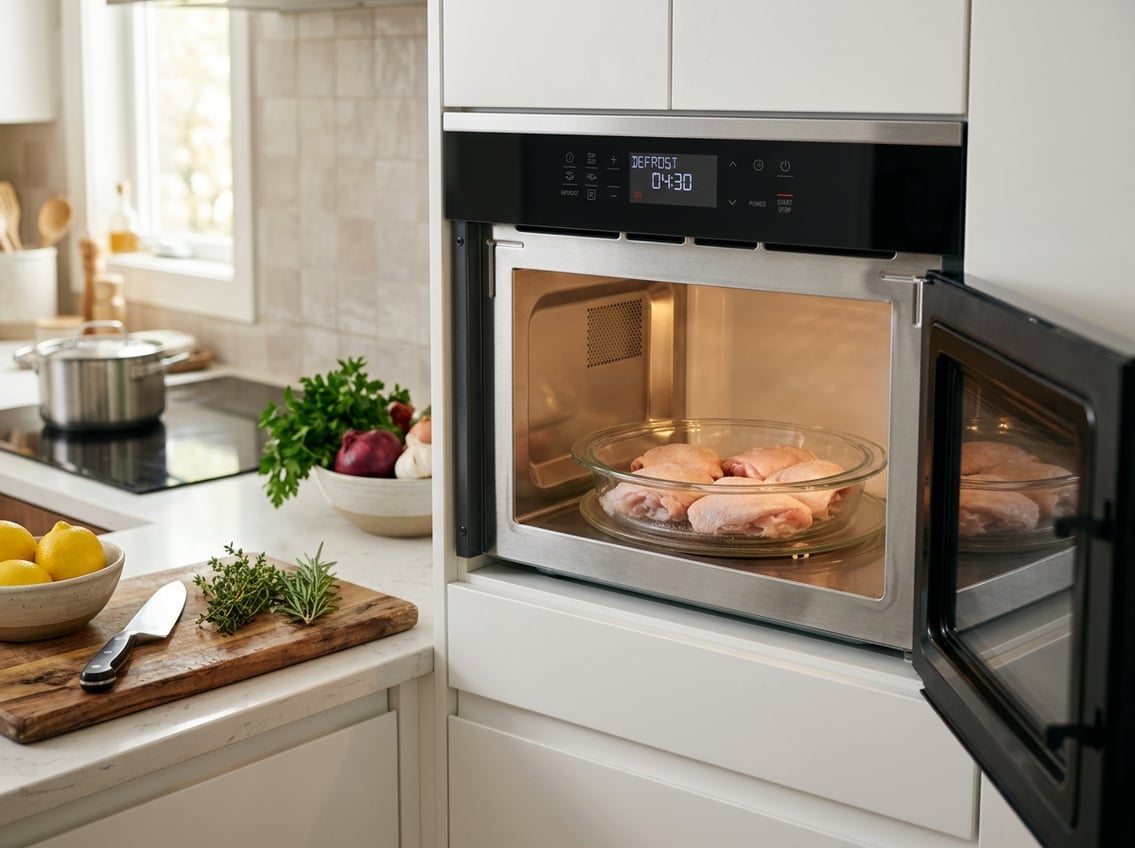
Defrost chicken thighs using a low power cycle, check and turn pieces often, and cook immediately when thawed.
Use a microwave-safe dish, separate pieces as they loosen, and target an internal temperature of 165°F when cooking.
Essential Steps for Safe Microwave Defrosting
Remove all packaging and place the thighs in a single layer on a microwave-safe dish or plate.
If pieces are stuck together, try to separate them; if not possible, defrost briefly and separate as they loosen.
Use the microwave’s defrost function or set power to 20–30%.
Run short intervals (1–2 minutes), then pause to check and flip each piece.
Always monitor for warm spots and partial cooking.
If you see gray-brown cooked areas, stop defrosting and begin cooking immediately.
Do not leave thawed chicken at room temperature; transfer to the stove, oven, or air fryer right away.
Recommended Microwave Settings and Timing
If your microwave lists a poultry setting, use it and enter the weight.
For manual control, set power to 20–30% (low).
Expect roughly 8–12 minutes per pound as a starting point, but adjust by microwave wattage and thigh thickness.
Use cycles of 1–2 minutes followed by inspection and repositioning.
Thinner boneless thighs may thaw in 4–6 minutes total.
Bone-in or thicker pieces commonly take 10–15 minutes; check every 2–3 minutes to avoid partial cooking.
Keep a thermometer handy for cooked results, not for raw thawing.
Cook immediately after defrosting so bacteria don’t multiply in any warm zones created by the microwave.
Using a Microwave-Safe Container or Plate
Choose a flat, microwave-safe glass or ceramic dish large enough to hold thighs in a single layer.
Avoid plastic that isn’t labeled microwave-safe because it can melt or leach chemicals into the meat.
Cover loosely with a microwave-safe lid or vented plastic wrap to retain moisture and reduce splatter.
Poke one or two vents in plastic wrap to let steam escape.
Do not seal airtight; steam needs to vent.
Use a plate to catch juices.
Place a paper towel under each thigh if you want to reduce splatter and make handling easier.
Clean and sanitize the dish immediately after use to prevent cross-contamination.
Handling Different Quantities and Bone-In vs. Boneless
For one or two boneless thighs, use shorter cycles (1–2 minutes) and check after each cycle.
Spread pieces apart so microwaves reach each surface evenly.
For four or more pieces, arrange them spaced in a single layer and expect longer total defrost time.
Rotate the dish midway and flip every piece to minimize cold centers and hot edges.
Bone-in thighs thaw more slowly due to mass and bone conduction.
Increase check frequency and allow extra cycles of 2–3 minutes.
If parts begin to cook, separate those pieces and start cooking them while finishing the rest.
If you must thaw a large package, consider cold-water thawing instead for more even results.
Use the microwave only for smaller quantities or last-minute thawing.
Tips for Achieving Even Results
You can get safe, even thawing by moving pieces, controlling moisture, and avoiding heat that cooks the edges.
Use low power, a microwave-safe plate or container, and short intervals to keep the meat out of the danger zone.
Flipping and Rotating During Defrost
Flip and rotate the thighs every 1–2 minutes during the microwave’s defrost cycle.
Moving the pieces exposes colder areas to more energy and reduces hot spots that start to cook.
Arrange thighs in a single layer with space between pieces so microwaves reach the sides evenly.
If they’re stacked, separate them or defrost one layer at a time.
Use the turntable if your microwave has one, and pause to manually rotate plates that don’t turn.
For larger or uneven pieces, reposition thick ends toward the outside of the plate where they get more exposure.
Managing Moisture and Preventing Dryness
Place thighs on a microwave-safe plate or shallow microwave-safe container to collect any purge.
Cover loosely with microwave-safe plastic wrap or a vented microwave-safe lid to trap steam and keep surfaces from drying while still allowing moisture to escape.
Do not seal airtight; trapped steam can raise surface temperatures and encourage partial cooking.
Check and blot excess liquid with a paper towel between intervals to improve even thawing and reduce splatter.
If you plan to cook immediately, pat the meat dry before seasoning to promote browning.
If you must hold thawed thighs briefly, keep them refrigerated and cook within two hours to avoid bacterial growth.
Avoiding Partial Cooking
Use the microwave’s defrost function or set power to 20–30% rather than full power.
Lower power heats more gently and reduces the chance that edges will reach 140°F while centers remain frozen.
Limit each defrost burst to 1–2 minutes, then check and reposition.
If you notice any white, opaque areas or firm spots, stop microwaving and let residual heat finish thawing for a minute or two before continuing.
If parts begin to cook, transfer those pieces to immediate cooking so you don’t leave partially cooked meat sitting at room temperature.
When in doubt, finish thawing under cold running water while the rest thaws in the microwave-safe plate to protect quality and safety.
Handling Chicken Thighs Post-Defrost
After microwave thawing, act quickly: cook the thighs immediately or follow strict cold-storage rules.
Avoid leaving them at room temperature or sitting in the microwave-safe dish for long to prevent bacterial growth.
Immediate Cooking After Thawing
Cook chicken thighs right after microwave thawing because parts may reach 40–140°F.
Place thawed thighs on a preheated pan or in a preheated oven; this minimizes time spent at intermediate temperatures.
Use an instant-read thermometer and cook until the internal temperature reaches 165°F (74°C) measured in the thickest part.
Pat the thighs dry with paper towels to promote even browning and reduce splatter.
Season and handle with clean hands or utensils to prevent cross-contamination.
Discard any juices collected in the microwave dish or sanitize the container before reuse.
Refreezing Guidelines
If you thawed chicken thighs in the microwave, do not refreeze them raw unless you fully cook them first.
Microwave thawing can partially warm meat into the danger zone, allowing bacteria to grow even if the center is still cold.
Cook the thighs to 165°F, cool them quickly, then freeze.
When refreezing cooked thighs, divide into shallow, airtight containers or heavy-duty freezer bags to speed freezing and preserve quality.
Label with the date and use within 3 months for best texture.
If you thawed in the refrigerator, you may refreeze raw thighs within 1–2 days without cooking, but expect some quality loss.
Safe Storage If Not Cooking Right Away
If you cannot cook immediately after microwave thawing, transfer the thighs to the refrigerator and use them the same day.
Place thighs in a shallow covered container on the bottom shelf to catch drips and prevent cross-contamination with ready-to-eat foods.
Keep refrigerator temperature at or below 40°F (4°C).
Do not leave thawed thighs at room temperature for more than 2 hours, or 1 hour if ambient temperature exceeds 90°F (32°C).
If you notice an off odor, slimy texture, or excessive purge, discard the meat.
Common Mistakes and How to Avoid Them
Microwave defrosting saves time but creates hot spots and partial thawing that raise food-safety and quality concerns.
Follow precise steps and timing to avoid bacteria growth, tough or rubbery meat, and uneven cooking.
Risks of Leaving Meat at Room Temperature
Leaving chicken thighs on the counter or in warm water lets the surface enter the 40–140°F danger zone where bacteria multiply rapidly.
Even if the interior remains frozen, surface bacteria can reach infectious levels in under two hours.
Always keep chicken in sealed packaging while moving it and never leave it out longer than necessary.
If you need faster thawing than the refrigerator allows, use the microwave’s defrost setting or a cold-water bath with the chicken in a leak-proof bag, changing the water every 30 minutes.
If you use the microwave, cook the thighs immediately after thawing.
Microwaves can heat outer layers into the danger zone while the center is still frozen.
Immediate cooking kills pathogens that may have multiplied at the surface.
Over-Defrosting and Texture Issues
Microwaving too long or at high power partially cooks proteins, causing rubbery, dry, or stringy chicken thigh meat.
Over-defrosted points then lose moisture during finishing cooking, which hurts both texture and flavor.
Use the microwave’s defrost function or set power to about 30% and check every 60–90 seconds.
Rotate and flip the package to promote even thawing.
If edges begin to warm or change color, stop and let residual heat finish thawing briefly, then cook right away.
If parts are partially cooked, trim or rearrange them so finishing cook time is even.
For best texture, consider finishing in a hot pan or oven at moderate heat to quickly bring the center to safe temperature without further drying the meat.
Alternative Methods to Microwave Defrosting
These options prioritize food safety and consistent texture.
Each method explains timing, steps, and when it’s the best choice for thawing chicken thighs.
Refrigerator Thawing
Refrigerator thawing is the safest and best way to defrost chicken thighs when you can plan ahead.
Place thighs on a rimmed tray or in a leakproof container to catch drips and prevent cross-contamination.
Keep the fridge at 40°F (4°C) or below.
Small batches (1–2 lbs) usually thaw in 12–24 hours.
A larger tray may need 24 hours.
Because temperature stays low, bacterial growth is minimized and you preserve texture.
Once thawed in the fridge, you can store the thighs refrigerated for 1–2 days before cooking or refreeze them safely.
Use this method when quality matters, such as roasting, grilling, or recipes where texture and even cooking are important.
Cold Water Method
This method is faster than the fridge and still safe if you follow rules.
Seal thighs in a leakproof plastic bag to keep water out and avoid cross-contamination.
Submerge the bag in cold tap water and change the water every 30 minutes.
You can also run a gentle stream of cold water over the package.
Expect 1–2 hours for a pound or two of thighs.
Larger volumes take longer.
Cook the thighs immediately after thawing with this method.
Do not refreeze them without cooking first.
Use this method when you need thawed thighs the same day and want better texture and safety than countertop thawing or microwave defrosting.
Cooking Chicken Thighs From Frozen
You can cook chicken thighs directly from frozen using many methods. This approach eliminates thawing risks.
Increase cooking time by about 50% compared with thawed thighs. Use a thermometer to ensure the internal temperature reaches 165°F (74°C).
Oven baking and air-frying work well. Bake at 350–375°F (175–190°C) until the thickest part reads 165°F.
Adjust air-fryer time and check early to avoid overcooking the edges. Sautéing and stir-frying are possible but require lower starting heat.
Watch the timing to avoid burning the exterior before the center cooks. Cooking from frozen helps when you want to skip thawing and still achieve safe, well-cooked thighs.


