
Is It Better to Debone Chicken Thighs? Benefits, Drawbacks, and How-Tos
Deciding whether to debone chicken thighs depends on what you want from the dish. If you want quicker, more uniform cooking and easier eating, boneless thighs usually work better.
If you want maximum flavor and a juicier texture, keep the bone in.
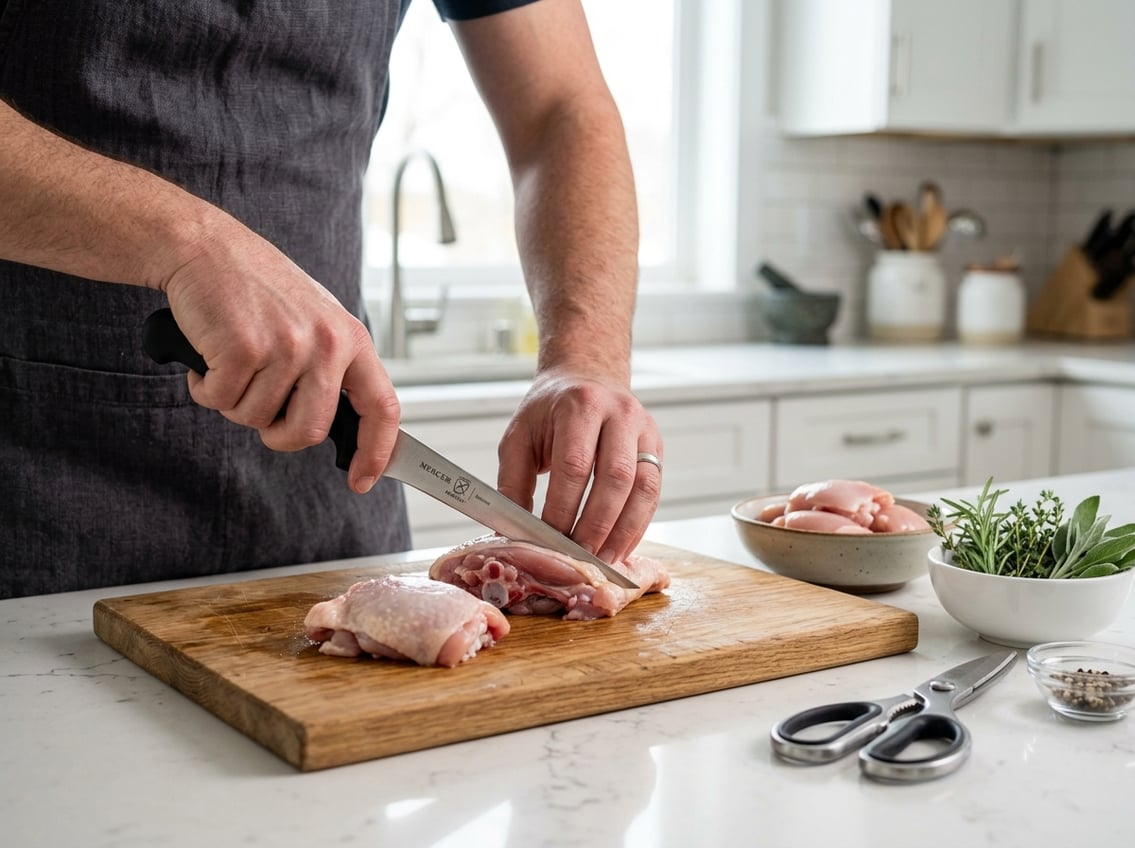
Bone-in and boneless cuts differ in cooking time, flavor, and presentation. Knowing when to debone at home and understanding the trade-offs can help you choose the best option for your recipe and schedule.
Key Differences Between Bone-In and Boneless Chicken Thighs
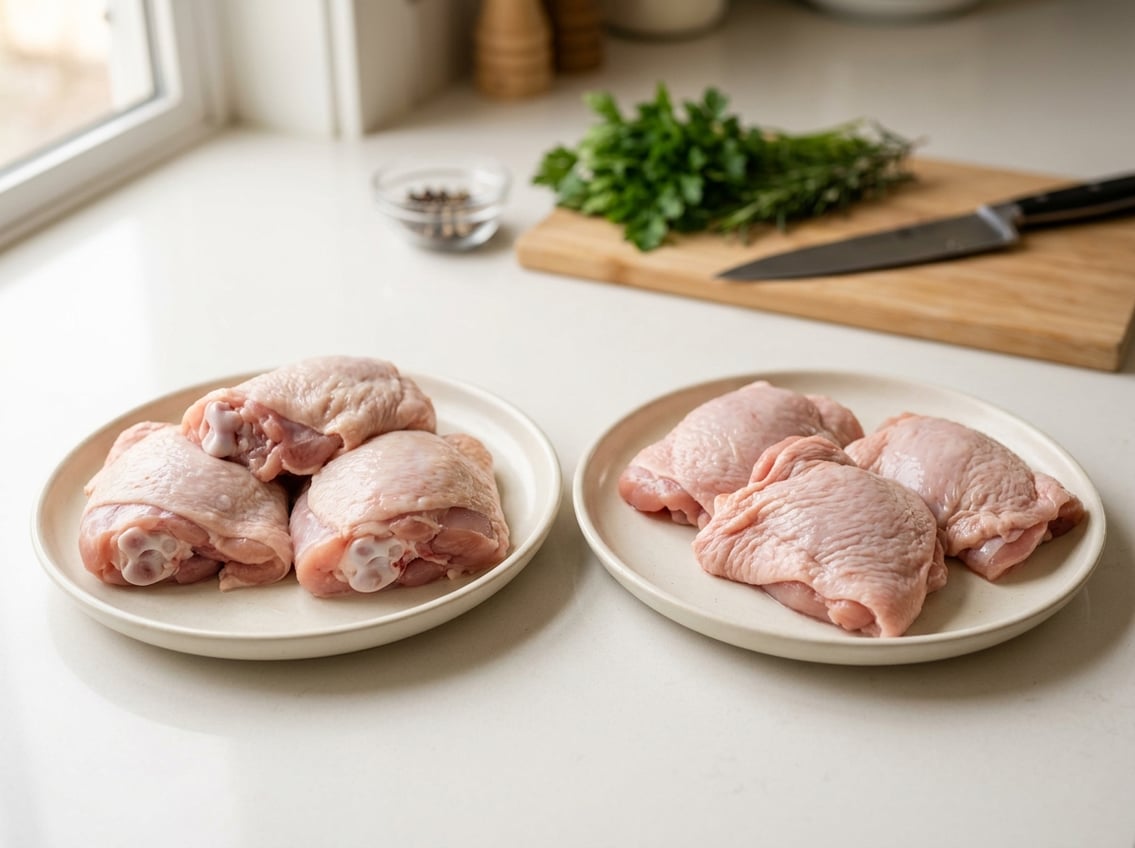
Choosing bone-in or boneless thighs affects flavor, cook time, and price. Each option changes how you prep, cook, and serve the dish.
Texture and Flavor Considerations
Bone-in chicken thighs deliver more pronounced flavor and juiciness because the bone and nearby connective tissue release collagen and fats during cooking. You get a richer mouthfeel and deeper poultry taste in roasted or braised dishes.
Boneless chicken thighs give you consistent, uniform pieces that soak up marinades quickly and shred or dice easily for tacos, stir-fries, or salads. They can taste milder, so use bolder seasoning or sauces.
If you want crisp skin, bone-in, skin-on thighs hold their shape better and render fat more evenly. For tender, pull-apart meat in sandwiches, boneless thighs make portioning simpler and speed up finishing.
Cooking Time and Evenness
Bone-in chicken thighs take longer to reach safe internal temperature because the bone slows heat penetration. Expect about 10–20 minutes longer in the oven or on the grill compared to boneless thighs of similar thickness.
Boneless chicken thighs cook faster and more predictably. They work well for quick pan-sears, stir-fries, or weeknight sheet-pan dinners. Because pieces are flat and uniform, you get consistent doneness and reduce the risk of dry edges if you remove them promptly at 165°F (74°C).
When you need even cooking across mixed cuts, butterfly boneless thighs to match thickness or cook bone-in separately to ensure proper doneness.
Cost and Availability
Bone-in chicken thighs usually cost less per pound because they require less butchery and often come with skin attached. You can find them in larger packages at supermarkets and butcher counters.
Boneless chicken thighs cost more due to extra processing but save time in prep and reduce waste when you don’t want to remove bones. They’re common in pre-marinated or ready-to-cook options and are convenient for portion control.
If budget and flavor matter most, buy bone-in. If convenience and uniform cooking are priorities, choose boneless chicken thighs.
Advantages of Deboning Chicken Thighs Yourself
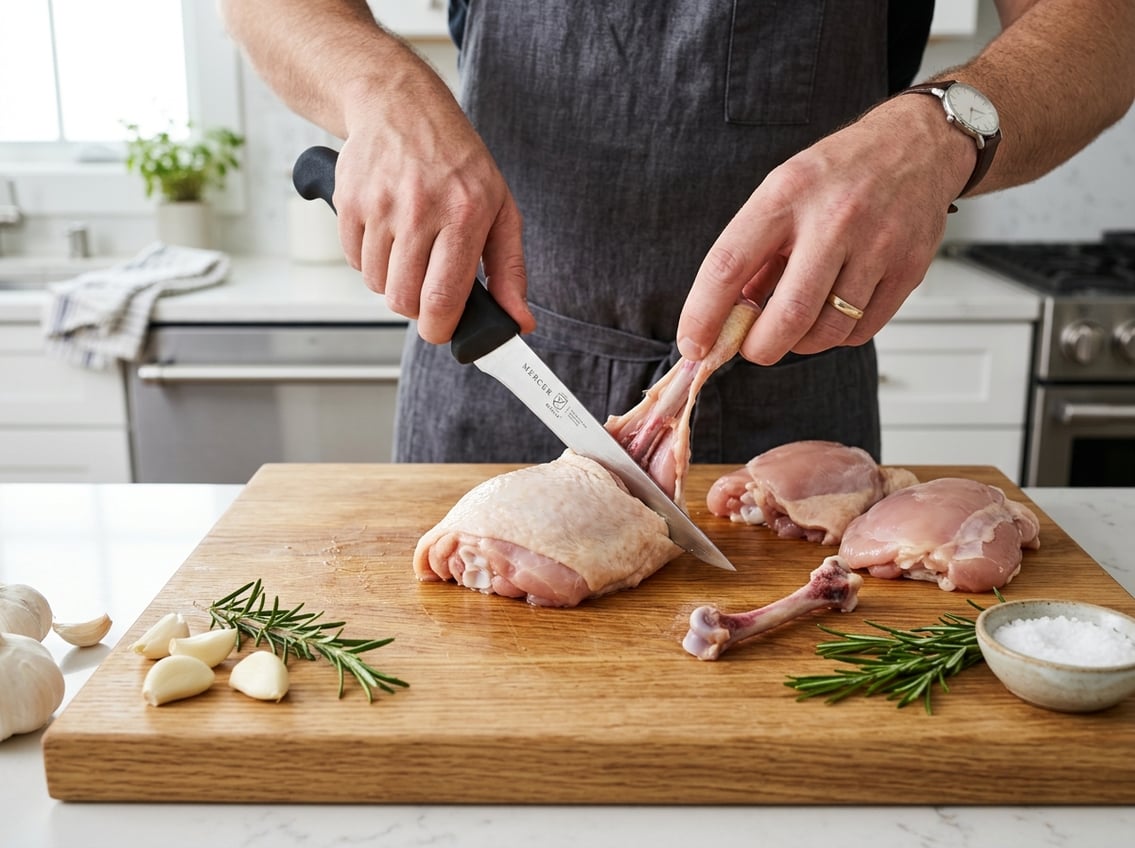
Deboning thighs yourself saves money, keeps the skin intact, and speeds up cooking. You gain more control over portion size, seasoning, and trimming unwanted fat.
Uniform Cooking and Better Seasoning
When you debone chicken thighs, the meat cooks more evenly because you remove the thick bone-centered heat sink. That reduces overcooking near the bone and undercooking at thin edges, so grilling or pan-searing finishes in a narrower time window.
You also season more effectively. With the bone out, you can flatten the thigh for even thickness and apply dry rubs or marinades directly to all surfaces. This shortens marinating time and makes internal flavor more consistent.
For recipes that call for quick cooking, such as stir-fries or sautés, deboned thighs reach safe temperature faster. That preserves juiciness and gives you predictable timing.
Versatility in Recipes
Deboned thighs adapt easily to many dishes without extra prep steps. You can stuff, roll, or slice them for skewers, tacos, or stir-fries without working around a bone.
Boneless, skin-on thighs give you the option of crisping the skin separately or leaving it on for texture. You can also cut uniform strips for salads or dice them for stews, ensuring consistent portion control.
For recipes that require shredding or quick chopping, like curries and sandwiches, deboning first saves time during cooking and serving.
Control Over Quality and Waste
When you debone chicken thighs at home, you inspect each piece and trim excess fat, cartilage, or bruising before cooking. This raises the quality of the meat you serve.
You can save the bones and trimmings for stock, turning what would be waste into a useful ingredient. Buying bone-in thighs and deboning them yourself typically costs less per pound than pre-cut boneless thighs.
Deboning also lets you portion thighs to exact weights for meal prep and freezing. That improves storage efficiency and reduces leftovers.
Potential Drawbacks to Removing the Bone
Removing the bone changes how the meat cooks, how much prep time you need, and what happens to leftover parts. Expect trade-offs in flavor retention, required skill, and potential waste when you choose boneless over bone-in thighs.
Loss of Moisture and Flavor
When you debone chicken thighs, you remove a natural heat and flavor conductor. The bone slows heat transfer during cooking, which helps retain internal moisture and allows collagen and marrow compounds to enrich the meat and sauce.
Without that heat buffer, the thigh can cook more quickly and may dry out unless you adjust time and temperature. You can use lower, gentler heat, brines, or marinades, and monitor internal temperature closely. Leaving skin on helps preserve juiciness, but it won’t fully replace the depth of flavor the bone contributes.
Time and Skill Required
Deboning takes practice, a sharp boning knife, and steady hands. If you’re not confident, you may tear meat, leave bone fragments, or cut away usable meat.
Plan for 2–4 extra minutes per thigh once you’re comfortable. Beginners often take longer. If you need speed or consistent portioning for high-volume cooking, buying pre-boneless thighs saves time.
Maintain sanitation: clean surfaces and careful handling prevent cross-contamination when deboning at home.
Waste Considerations
Removing bones generates scrap that can feel wasteful if you don’t use it. Bones contain flavor and nutrients best captured by making stock or simmering them with aromatics to extract gelatin and taste.
If you discard bones, you lose that culinary resource. Boneless thighs reduce packaging and plate-side waste for guests. Decide ahead whether you’ll save bones for stock or accept the loss.
Step-By-Step Guide to Deboning Chicken Thighs
Use the right tools, handle the meat safely, and follow proper technique to debone chicken thighs while keeping the skin intact. Make short, controlled cuts and use a steady hand for clean results.
Essential Tools and Knife Selection
Use a sharp boning knife with a narrow, flexible blade (5–7 inches). The flexible blade lets you follow the bone’s curve.
Have a non-slip cutting board and paper towels to pat the thigh dry. Kitchen shears help trim sinew and excess skin.
Keep a clean towel or damp cloth under the board to prevent sliding. Maintain sharpness by using a honing steel between thighs.
Safe Handling and Preparation Steps
Work with cold but not frozen thighs; cold meat holds shape and separates cleanly from the bone. Pat the skin-side dry so your fingers and knife don’t slip.
Place the thigh skin-side down. Feel for the bone running lengthwise. Use short, shallow cuts along each side of the bone to loosen connective tissue and tendons.
Fold the meat away from the bone and cut the remaining attachments at the joint. Trim silver skin, excess fat, and cartilage.
Rinse the board and knife between pieces to avoid cross-contamination. Pat the boneless thigh dry before seasoning.
Common Mistakes and Solutions
If you press too hard or use large strokes, you may tear the meat or cut into the bone. Use light, controlled cuts and let the knife do the work.
A dull blade makes the job harder and increases slipping. Sharpen or hone before starting for smooth cuts.
To keep the skin, place the thigh skin-side down and keep the skin taut with your non-dominant hand. Trim only what’s necessary.
Run your fingers along the deboned thigh to feel for lumps and remove any cartilage or bone fragments with small, precise cuts or tweezers. Clean equipment immediately to prevent contamination.
Tips for Keeping the Skin Intact
Start skin-side down and anchor the skin with your thumb or the side of your hand. Work the knife between skin and meat with shallow, sweeping motions.
Use your non-dominant hand to lift the meat away from the skin as you cut. This helps you separate the bone cleanly without tearing the skin.
If you need to remove excess fat, trim away only the outer edges. For crispy skin, leave a thin layer of fat attached to preserve moisture and improve browning during cooking.
Best Cooking Methods for Deboned Thighs
Deboned thighs cook faster and take seasoning well. Use high heat for browning or quick, even heat for stir-fry and stuffing.
Control temperature, watch for 165°F (74°C) internal temp, and rest briefly to retain juices.
Grilling and Pan-Searing
Use medium-high to high heat to develop a deep brown crust on boneless chicken thighs. Pat the thighs dry, oil lightly, and season in advance to promote browning and prevent sticking.
For grilling, preheat the grates and cook 3–5 minutes per side depending on thickness. Flip once and use a thermometer to reach 165°F (74°C) at the thickest point.
For pan-searing, choose a heavy skillet. Sear skinless boneless thighs 3–4 minutes per side, then lower heat and finish for another 3–6 minutes until the internal temp is safe.
Deglaze the pan with stock or wine to make a quick pan sauce.
Stir-Frying and Sautéing
Cut boneless chicken thighs into uniform strips or bite-size pieces for consistent cooking. Thigh meat tolerates high heat and stays moist, so use a hot wok or large skillet and avoid overcrowding.
Marinate briefly (15–30 minutes) with acid, oil, and seasonings to add flavor and tenderize. Cook in small batches for 1–3 minutes per side until browned.
Finish with sauce and toss just long enough to coat and heat through. Use cornstarch in the marinade for a glossy sauce cling.
Keep vegetables and protein separate until both are nearly done to preserve texture.
Stuffed and Rolled Dishes
Deboned thighs work well for stuffing because they lie flat and roll easily. Pound to an even thickness, place filling, then roll and secure with toothpicks or kitchen twine.
Sear rolls seam-side down to seal and create color, 2–3 minutes per side. Finish in the oven at 350°F (175°C) for 12–20 minutes, depending on size, until the center reaches 165°F (74°C).
Alternatively, braise gently in a flavorful liquid for 20–30 minutes for added moisture. Slice rolls against the grain for presentation.
Storing Deboned Chicken Thighs Safely
Keep deboned thighs cold, airtight, and separated from other foods to prevent bacterial growth and cross-contamination. Label packages with the date so you use the oldest first.
Refrigerating and Freezing
If you plan to cook within 48 hours, store deboned chicken thighs in the fridge at 4°C (40°F) or below.
Use an airtight container or wrap each thigh tightly in plastic wrap, then place in a sealed bag to minimize air exposure and prevent drying.
Place the package on the lowest shelf or in a meat drawer to stop juices from dripping onto other foods.
For longer storage, freeze deboned thighs at -18°C (0°F) or lower.
First, flash-freeze the thighs on a tray for 1–2 hours so pieces don’t stick.
Then transfer them to a vacuum-seal bag or heavy-duty freezer bag, removing as much air as possible.
Label with the freeze date and use within 6–9 months for best quality.
After thawing, cook the thighs within 24 hours if you keep them in the refrigerator.
Storage Tips for Raw and Cooked Thighs
Store raw and cooked deboned thighs separately to prevent cross-contamination.
Place raw thighs in leak-proof packaging and keep them on a bottom fridge shelf.
Wash your hands, utensils, and surfaces after handling raw meat.
Cool cooked deboned thighs faster by placing them in shallow, airtight containers.
Divide large quantities into several shallow containers to speed up cooling.
Refrigerate leftovers within 2 hours and use them within 3 to 4 days.
Reheat thighs to an internal temperature of 74°C (165°F) before eating.
Re-freeze cooked thighs only after they have fully cooled and you have frozen them within the 3 to 4 day window.


