
How Long Does It Take to Cook Chicken Thighs: Oven Timing & Tips
You want juicy, safely cooked chicken thighs without guessing at times and temperatures.
Boneless thighs usually cook in about 20–30 minutes at 425°F. Bone-in, skin-on thighs often need roughly 30–40 minutes at 400–425°F or about 40–50 minutes at 350°F. Always check for an internal temperature of 165°F.
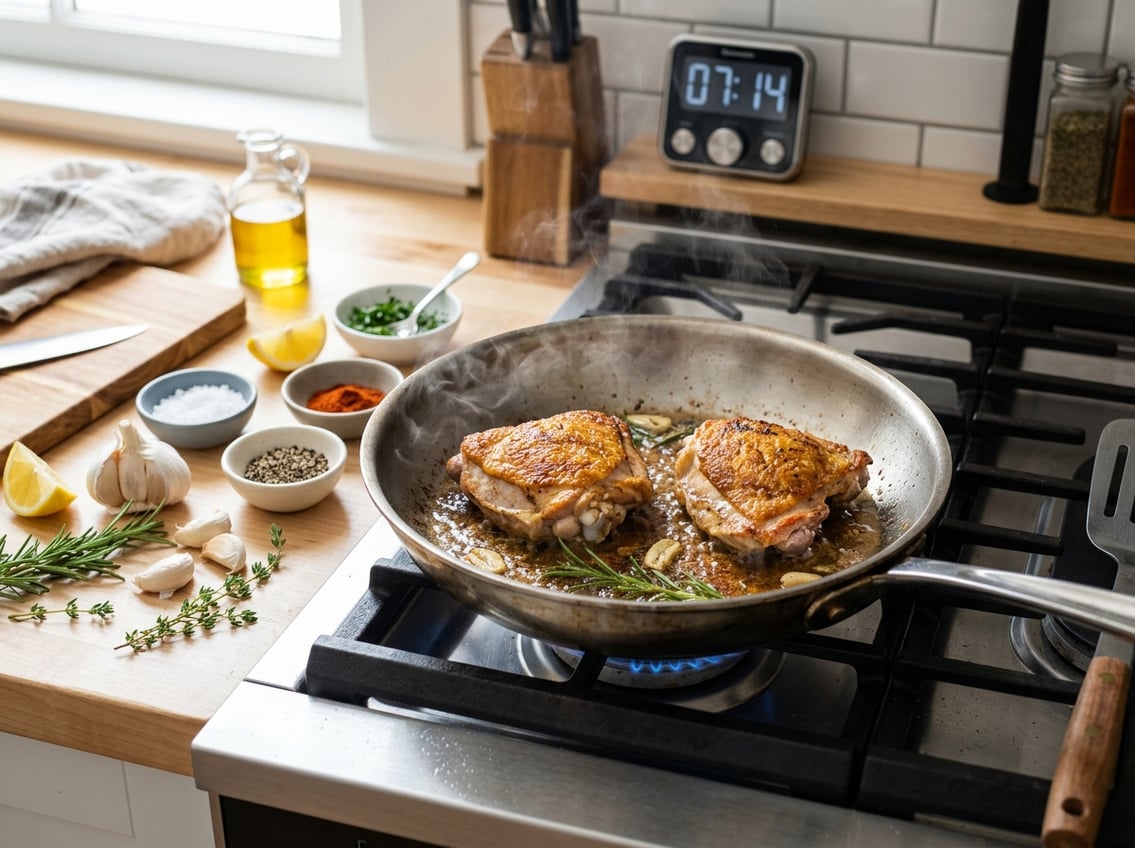
This guide explains oven times for different cuts, recommended temperatures, methods, how to check doneness, factors that affect cook time, and a simple baking guide with popular variations.
Essential Oven Times for Different Chicken Thigh Cuts
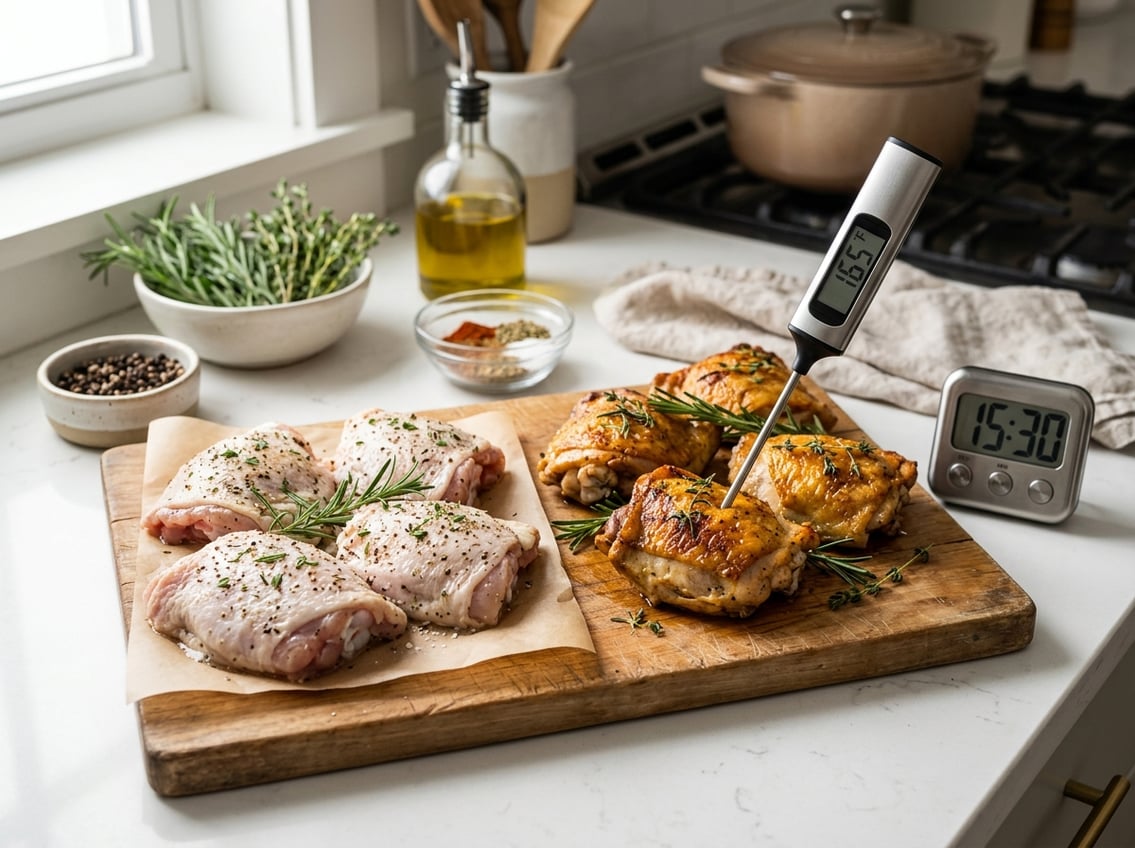
You’ll see clear time and temperature ranges for the two main cuts and a direct comparison of skin-on versus skinless timing.
Times below assume a preheated conventional oven and an instant-read thermometer to confirm doneness.
Bone-In, Skin-On Chicken Thighs
Bone-in, skin-on chicken thighs take longer because the bone slows heat penetration and the skin benefits from higher heat to crisp.
Roast at 400°F (200°C) for 35–45 minutes for average-sized thighs (about 6–8 ounces each). Thicker or very cold pieces may need up to 50 minutes.
Use an instant-read thermometer and target 165°F (74°C) at the thickest part without touching bone.
If you want crisper skin, start at 425°F (220°C) for the first 10–15 minutes, then drop to 375–400°F to finish.
Let thighs rest 5 minutes after baking to redistribute juices.
Boneless, Skinless Chicken Thighs
Boneless, skinless chicken thighs cook faster because there’s no bone or skin barrier.
Bake at 400°F (200°C) for 20–30 minutes depending on thickness. Flattened or thin pieces may finish in 15–18 minutes.
Check for an internal temperature of 165°F (74°C). Overcooking dries them quickly, so use a thermometer and aim for the shorter time.
Arrange thighs in a single layer with small gaps for even cooking. If you finish under the broiler for color, watch for 1–2 minutes to avoid drying.
Skin-On vs. Skinless: Timing Differences
Skin-on thighs need about 15–20 more minutes than comparable boneless, skinless pieces at the same temperature.
The skin insulates and benefits from higher initial heat to render fat and crisp, while skinless meat cooks faster.
Use these ranges:
- Bone-in, skin-on: 35–50 minutes at 375–425°F (190–220°C)
- Boneless, skinless: 15–30 minutes at 375–425°F (190–220°C)
Always confirm doneness with an instant-read thermometer at 165°F (74°C).
Adjust time for oven hot spots, thigh size, and whether thighs are room temperature or straight from the fridge.
Recommended Oven Temperatures and Methods
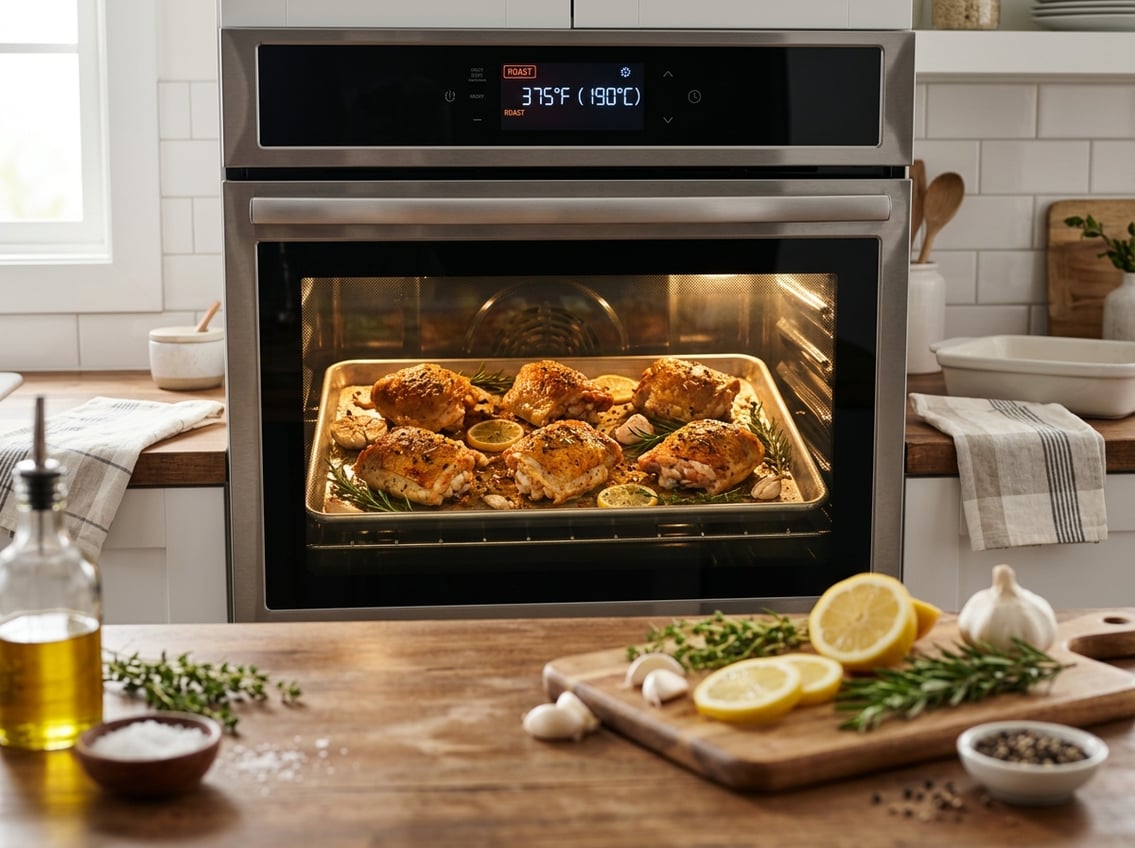
Choose a temperature that balances crisp skin and juicy meat.
Pick the right oven mode for consistent timing, and set up your pan to promote even browning and airflow.
Best Temperature for Juicy Chicken Thighs
Bake chicken thighs at 400–425°F (200–220°C) for the best balance of crispy skin and moist interior.
At 400°F, bone-in, skin-on thighs typically take 35–45 minutes. Boneless skinless thighs take about 20–30 minutes.
Higher temps (425°F) reduce time to roughly 25–30 minutes for bone-in and 18–25 minutes for boneless, and they help render fat and crisp skin.
Always check internal temperature with an instant-read thermometer and aim for 165°F (74°C) in the thickest part.
Rest thighs 5–10 minutes after baking so juices redistribute.
If you prefer very tender, fall-off-the-bone thighs, lower the oven to 325–350°F and extend time, but the skin won’t be as crisp.
Convection vs. Standard Oven Cooking Times
Convection ovens circulate hot air and cook chicken thighs faster with more even browning.
Reduce temperature by 20°F (10–15°C) or cut cooking time by about 10–25% compared to a conventional oven.
For example, a bone-in thigh that needs 40 minutes at 400°F in a standard oven will take about 30–36 minutes in convection at 380–400°F.
Monitor internal temperature rather than relying on time alone. Start checking 5–8 minutes earlier than the adjusted time.
If your convection fan is strong, rotate the tray halfway through to avoid over-browning.
Baking Sheet, Pan, and Rack Setups
Use a rimmed baking sheet or shallow roasting pan for baked chicken thighs. These allow airflow and collect drippings.
Line the sheet with foil or parchment for easier cleanup. Place thighs skin-side up on a wire rack inside the sheet for maximum crispness.
The rack elevates thighs so hot air circulates underneath.
For braising-style roasted chicken thighs, use a shallow pan without a rack and bake at lower temperature with a small amount of liquid.
Cast-iron skillets work well for starting on the stovetop to sear skin, then finish in the oven.
Arrange thighs in a single layer with 1–2 inches between pieces for even cooking.
How to Know When Chicken Thighs Are Done
Check temperature first, then confirm with visual and textural cues.
Both bone-in and boneless thighs finish reliably when the thickest part reaches the right temperature and the meat shows clear juices and a tender, springy feel.
Using a Meat Thermometer for Accuracy
Use an instant-read thermometer for consistent results.
Insert the probe into the thickest part of the thigh, avoiding bone and excess fat. For bone-in thighs, slide the probe alongside the bone but not touching it.
Target 165°F (74°C) as the safe minimum internal temperature.
Let cooked thighs rest 5–10 minutes on a cutting board. This evens temperature and redistributes juices for juicier meat.
Visual and Textural Signs of Doneness
Check the juices and color after a small incision in the thickest spot.
Clear juices and opaque, uniformly colored meat indicate doneness. Pink or red near the bone means more time is needed.
Press the thigh with your fingertip or tongs. Properly cooked thighs feel springy and slightly firm, not mushy or rock-hard.
For baked chicken thighs, the skin should be golden-brown and crisp on the outside for skin-on pieces.
If you grill or sear before finishing in the oven, expect slightly darker crusts but still rely on temperature and juices rather than color alone.
Factors Affecting Cooking Time
Several variables change how long chicken thighs need in the oven.
Bone-in or boneless, thickness, marinade, starting temperature, and pan crowding all affect timing.
Bone-In vs. Boneless Thickness Variations
Bone-in chicken thighs hold heat differently than boneless thighs because the bone slows heat transfer and adds mass.
Expect bone-in thighs to need about 5–15 minutes more than similarly sized boneless pieces at the same temperature.
For example, boneless thighs baked at 425°F often finish in about 25–30 minutes. Bone-in, skin-on thighs at that temp typically take 30–40 minutes.
Thickness matters more than weight. A 1-inch-thick boneless thigh cooks far faster than a 1.5-inch-thick one.
Use a thermometer and aim for 165°F in the thickest meat, avoiding the bone on bone-in pieces.
If you don’t have a thermometer, cut into the thickest spot: juices should run clear and meat must be opaque.
Marinades, Starting Temperature, and Oven Accuracy
Marinated chicken thighs may cook a little faster if the marinade contains acidic ingredients that slightly break down proteins, but the time savings are small.
Oil- or sugar-heavy glazes can increase surface browning and may require lower temperatures to prevent burning.
Starting temperature matters. Thighs straight from the fridge lengthen cook time by about 5–10 minutes compared with thighs at room temperature.
Let boneless thighs sit 15–20 minutes at room temp for more even cooking. Avoid leaving bone-in pieces out longer than 30 minutes for safety.
Oven accuracy changes cook time significantly. Calibrate with an oven thermometer.
A 25°F error can shorten or lengthen baking by 5–15 minutes.
Convection ovens shorten times by roughly 5–10 minutes. Reduce temperature by 25°F if using convection and check early.
Batch Cooking and Crowd Considerations
When you bake many thighs at once, avoid overcrowding the pan.
Crowded pans trap steam, lowering surface temperature and extending bake times by 10–20 minutes.
Arrange bone-in chicken thighs skin-side up with space for airflow, or use two pans placed on separate racks for even heat.
If you need to hold cooked thighs, plan for carryover cooking. Thighs continue to rise 5–10°F after removal.
Pull bone-in thighs at about 160°F and let rest to reach 165°F.
For buffet service, keep cooked thighs in a 140–150°F holding drawer to maintain safety without overcooking.
Easy Step-by-Step Guide to Baking Chicken Thighs
Prepare the thighs, apply a simple seasoning or short marinade, and finish them in a hot oven until the skin is crisp and the internal temperature reaches a safe range.
Adjust time and temperature for bone-in vs boneless and skin-on vs skinless pieces.
Trimming and Preparing Chicken Thighs
Trim excess fat and loose skin with a sharp knife to prevent flare-ups and uneven cooking.
Pat each thigh completely dry with paper towels; dry skin crisps much better in the oven.
If using bone-in, leave the skin on for flavor and moisture. For boneless or skinless thighs, expect shorter bake times and slightly less juiciness.
Bring thighs to near room temperature by resting them 15–30 minutes before baking. This shortens cook time and promotes even doneness.
Arrange thighs on a rimmed baking sheet or in a shallow roasting pan with space between pieces.
Line the pan with foil or parchment for easier cleanup. Place a wire rack on the sheet if you want crispier skin.
Basic Seasoning and Marinade Tips
Season simply and evenly with kosher salt, freshly ground black pepper, and a neutral oil rubbed over the skin.
For a basic herb profile, use garlic, dried thyme or rosemary, and lemon zest.
For quicker flavor, toss thighs in a 30-minute marinade of olive oil, minced garlic, Dijon mustard, and herbs.
For overnight tenderness, add plain yogurt or buttermilk to the marinade; the acidity and enzymes help break down connective tissue in bone-in thighs.
If you prefer a hands-off method, coat skin with a thin layer of mayonnaise or oil and sprinkle the dry rub on top. Pat excess marinade off before baking to avoid steaming the skin.
Resting and Serving for Optimal Juiciness
Remove thighs from the oven when an instant-read thermometer reads 165–175°F (74–79°C) in the thickest part.
Tent loosely with foil and rest 5–10 minutes to let juices redistribute.
Slice bone-in thighs away from bone and serve immediately, or serve whole to preserve presentation and moisture.
Use the pan juices for a quick sauce: skim fat, add a splash of lemon or stock, and reduce briefly on the stovetop.
Store leftover baked thighs in an airtight container in the fridge for up to 4 days.
Reheat gently in a 325°F oven to protect texture and avoid drying the meat.
Popular Variations and Baked Chicken Thigh Recipes
Try classic oven-roasted thighs, swap seasonings for different flavor profiles, and use safe methods for storing and reheating leftovers.
Use high oven heat for crisp skin, measure internal temperature for doneness, and adapt marinades or rubs to suit your meal plan.
Classic Baked Chicken Thigh Recipes
Bone-in, skin-on thighs roast best at higher heat for crisp skin and tender meat. Preheat the oven to 425°F (220°C).
Season the thighs with salt, pepper, and a neutral oil. Roast them on a rimmed sheet or in a cast-iron pan for 25–35 minutes until an instant-read thermometer reads 165°F (74°C) in the thickest part away from bone.
For boneless, skinless thighs, bake at 400–425°F for 20–30 minutes. Brine or marinate them for 15–30 minutes to help keep the meat juicy.
Try a simple pan-roast method. Sear the thighs skin-side down to render fat, then finish them in the oven for even browning and crispness.
Ideas for Different Flavor Profiles
Switch the flavor by changing the seasoning base and cooking technique. Use a citrus-soy marinade with soy sauce, orange juice, garlic, and ginger, then broil briefly at the end for glazed, Asian-inspired roasted chicken thighs.
For Mediterranean notes, rub the thighs with olive oil, lemon zest, oregano, and smoked paprika before baking. Add halved potatoes and olives to the pan for a one-sheet meal.
If you want crispy, breaded thighs, coat boneless thighs with seasoned panko. Bake them on a rack at 425°F until golden.
Try dry rubs, wet marinades, or finish with compound butter or pan sauce to vary texture and richness.
Storing and Reheating Leftover Chicken Thighs
Let cooked thighs cool to room temperature for no longer than two hours. Then refrigerate them in an airtight container for up to 4 days.
Label the container with the date to track freshness.
To preserve texture when reheating, place the thighs in a 350°F oven for 10 to 15 minutes. Cover loosely with foil if they start to dry out.
You can also use an air fryer at 350°F for 5 to 8 minutes to revive crisp skin.
For microwave reheating, add a splash of broth and cover the chicken to retain moisture. Make sure the internal temperature reaches 165°F before serving.
Freeze cooked thighs in a single layer. After they freeze, transfer them to a sealed bag for up to 3 months.
Thaw the thighs overnight in the refrigerator before reheating.


