
How Long Does It Take to Boil Chicken Thighs: Methods, Times, and Tips
You can boil chicken thighs quickly and safely. Boneless, thawed thighs take about 10 minutes, while bone-in, thawed thighs need about 15 minutes. Frozen bone-in pieces can require 30–40 minutes depending on size.
Check that the internal temperature reaches 165°F (74°C); this is the real check for doneness, not time alone.
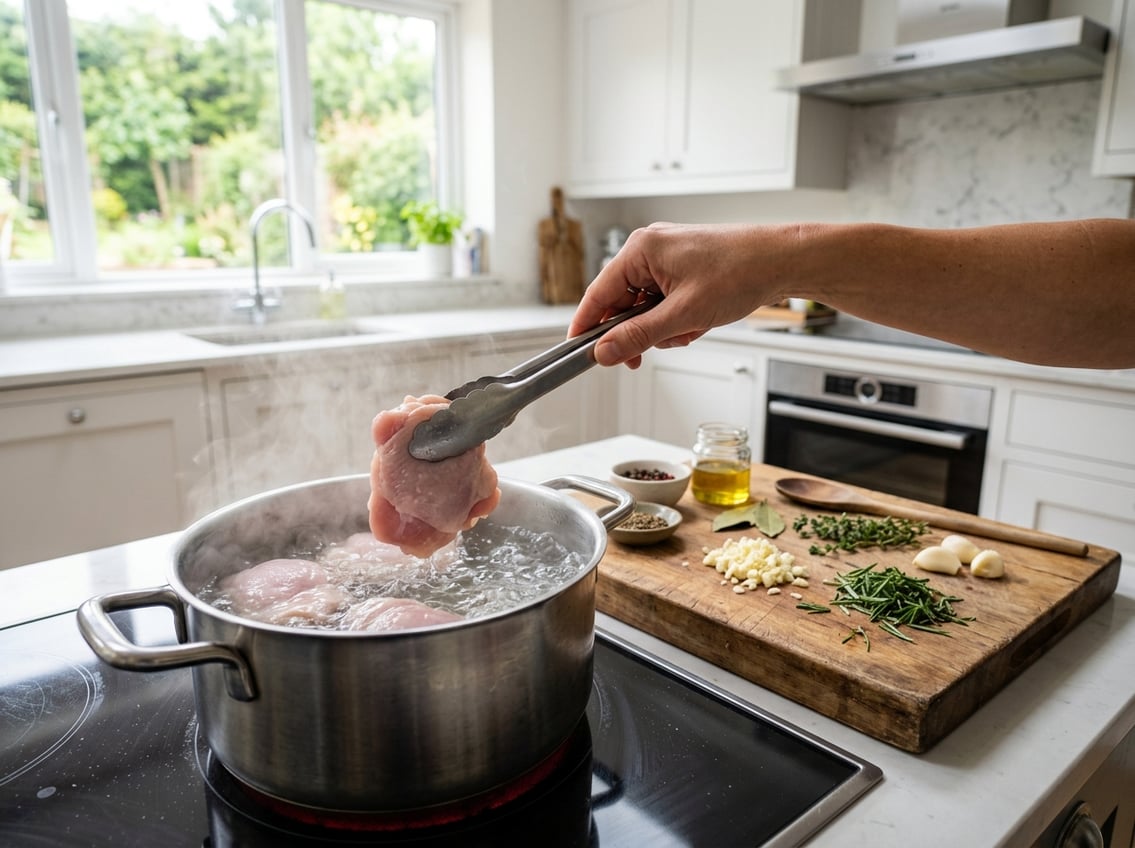
Find exact times by type and size, plus simple steps for boiling chicken thighs so they stay juicy and versatile for soups, salads, sandwiches, or meal prep.
This article compares poaching and boiling, shows ways to boost flavor, and covers storage and reheating tips.
Boiling Times for Chicken Thighs by Type
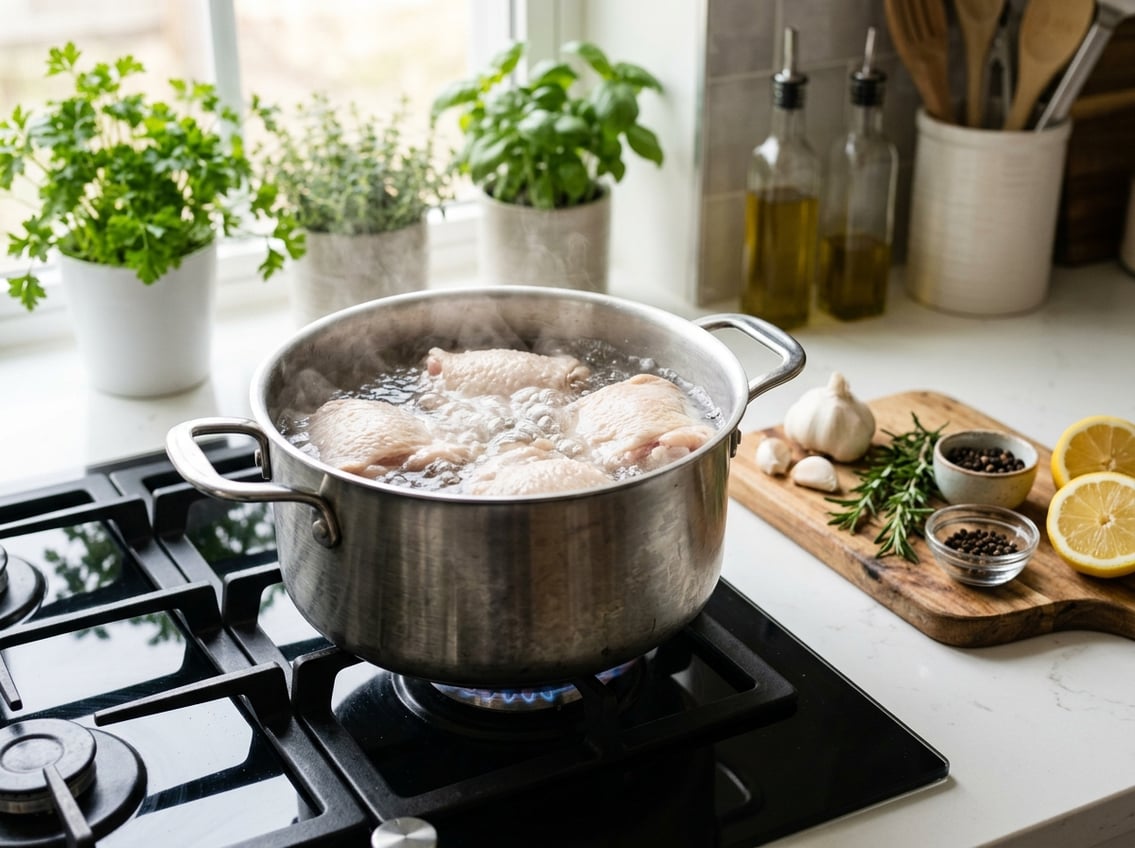
Cook times and technique change depending on whether the thighs are boneless, bone-in, or frozen. Use salted or seasoned cooking liquid, keep a gentle simmer, and check doneness with an instant-read thermometer for best results.
Boil Boneless Chicken Thighs
Boneless chicken thighs reach safe doneness faster than bone-in pieces. Simmer boneless thighs for about 10–12 minutes if they start fresh and single-layered.
Use an instant-read thermometer and remove the meat at 165°F (74°C). Let the thighs rest 3–5 minutes before slicing or shredding.
Season the poaching liquid with 1–2 teaspoons salt per quart or use low-sodium stock for more flavor. Keep a gentle simmer to keep the meat tender. If you want browned skin or crust, sear briefly skin-side down after boiling.
Boil Bone-In Chicken Thighs
Bone-in chicken thighs need longer heat exposure because the bone slows internal warming. Simmer bone-in thighs about 15–18 minutes for fresh pieces.
Check the internal temperature of 165°F (74°C) near the bone. Arrange thighs in a single layer with about 2 inches of liquid above them so they cook evenly.
Flip once midway if pieces crowd the pan. Bone-in thighs add more gelatin and flavor to the liquid, which works well for soups or sauces.
For very tender, fall-off-the-bone texture, extend simmering in 3–5 minute increments and monitor temperature to avoid drying.
Boil Frozen Chicken Thighs
Frozen thighs need extra time and careful handling. Simmer individually frozen boneless thighs about 12–14 minutes; if they are thicker or rolled, cook 15–17 minutes.
For individually frozen bone-in thighs, plan for 22–26 minutes. Start with cold water, bring it up to a simmer, and then begin timing.
Separate pieces as soon as they loosen. If frozen in a block, thawing first is safer and gives better texture.
Always check for 165°F (74°C) at the thickest part. Increase simmer time rather than raising heat to avoid tough meat and uneven cooking.
Essential Steps for Boiling Chicken Thighs
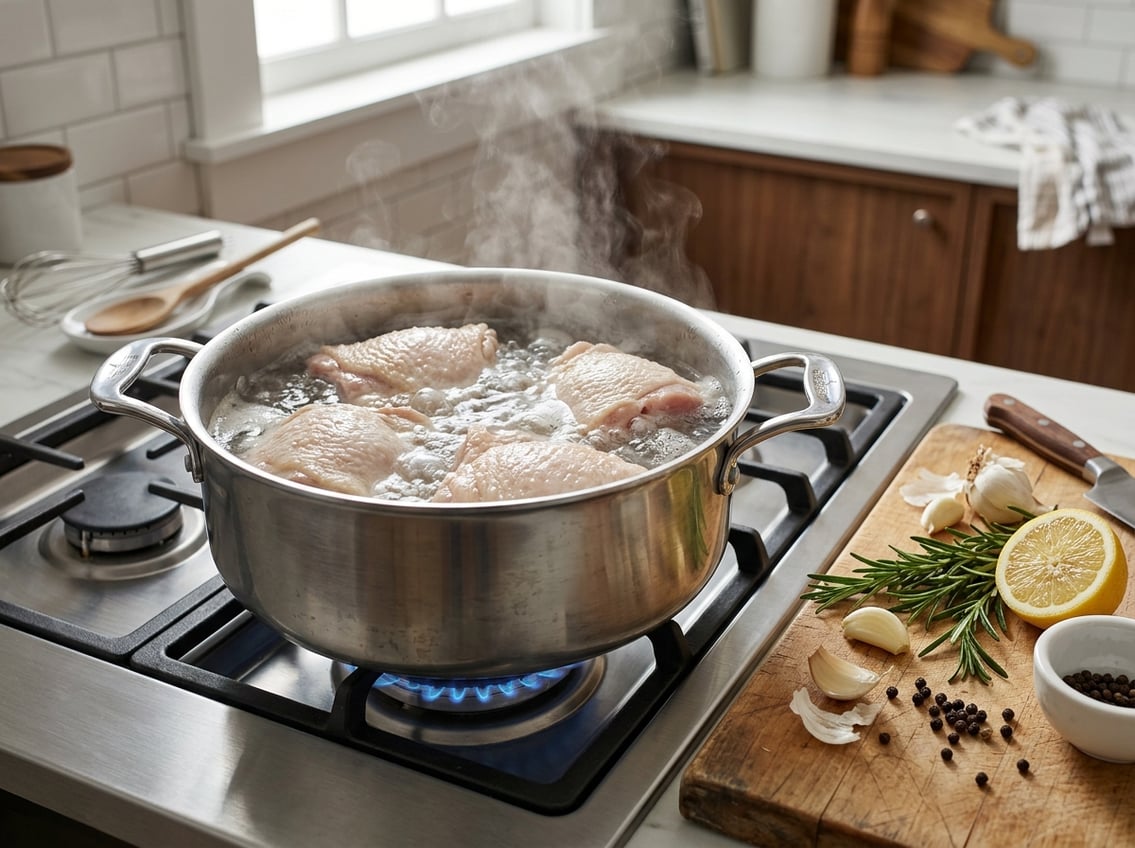
Prepare clean thighs, choose the right pot and water level, control a gentle simmer, and check doneness with a thermometer for safe, tender meat.
Preparing and Trimming Chicken Thighs
Trim excess fat, loose skin, and any remaining feather quills. Pat thighs dry with paper towels to help seasonings stick.
Leave bones in for more flavor or use boneless for quicker, leaner results. Season both sides with salt, pepper, and aromatics like a halved onion, crushed garlic, and bay leaf.
You can brine for 15–30 minutes for juicier meat by dissolving 1 tbsp salt per cup of water. Place thighs in a single layer in a pot so water covers them by about 1 inch.
Avoid overcrowding to ensure even cooking.
Boiling Process
Start with cold water or low-sodium broth so flavor and temperature rise together. Cover the pot and bring to a gentle boil.
Reduce heat to maintain a low simmer. Timing depends on type: boneless thighs usually take about 15–20 minutes; bone-in thighs about 20–25 minutes after the pot reaches a simmer.
Check for clear juices and tender texture, but rely on temperature for safety. Keep aromatics and salt in the cooking liquid.
If you plan to use the broth, skim foam and simmer gently to keep it clear and flavorful.
Resting and Checking Temperature
Remove thighs with tongs and let them rest 5–10 minutes. Carryover heat evens temperature and helps juices redistribute.
Check doneness with an instant-read thermometer inserted into the thickest part without touching bone. The target internal temperature is 165°F (74°C).
If any pieces read lower, return them to simmering liquid for a few minutes and recheck. After resting, shred or slice as needed for salads, soups, sandwiches, or meal prep.
Save the strained cooking liquid for stock or sauces.
Techniques for Maximizing Flavor
Use a flavorful cooking liquid and build layers of aromatics so the meat absorbs seasoning while it cooks. Salting early, choosing the right broth, and adding concentrated aromatics make the biggest difference in boiled chicken thighs.
Choosing Liquid Bases and Broth
Use low-sodium chicken broth for a rich base without over-salting, or use water if you plan to heavily season the thighs or reduce the liquid into a sauce. For a deeper, gelatinous feel, include one or two bone-in thighs in the pot even if you add boneless thighs.
Measure enough liquid to cover the thighs by about 1 inch. If making boiled chicken thighs for soup or stock, add a peeled carrot, celery stalk, and a halved onion for body.
For quick meals, use half broth and half water to save sodium but keep flavor. To add an herby finish, use chicken or vegetable broth and add a tablespoon of concentrated ingredients like tomato paste, miso, or reduced stock.
Strain and reserve the cooking liquid for sauces, rice, or reheating the chicken to maintain moisture.
Seasoning and Aromatics
Salt the thighs before cooking. A light dry-salt 15–30 minutes ahead improves seasoning penetration.
Add whole peppercorns, crushed garlic, and bay leaves directly to the pot so flavors infuse. Use fresh herbs like thyme, rosemary, or parsley tied in a bundle or added late in the simmer to avoid bitterness.
For a citrus lift, add a few strips of lemon or orange peel in the last 5–10 minutes of cooking. For a spicy edge, toss in a dried chili or 1–2 teaspoons of crushed red pepper flakes.
Keep the seasoning simple so you can finish with sauces or dressings that match salads, sandwiches, or stews.
Poaching Versus Boiling
When you poach chicken thighs, you cook them gently in liquid kept below a boil. This low-and-slow approach preserves moisture and yields tender, more uniformly textured meat.
Boiling chicken thighs uses a rolling boil and higher temperatures. That faster, more aggressive heat can tighten proteins and squeeze out juices, producing firmer or drier meat if you overcook.
Choose poaching for juicy, sliceable thighs for salads, sandwiches, or delicate dishes. Choose boiling for quick, shreddable meat for soups, tacos, or batch cooking.
Key differences:
- Temperature: Poaching around 160–180°F (71–82°C). Boiling around 212°F (100°C).
- Time for thighs: Poaching 20–30 minutes; boiling 15–20 minutes (times vary by size and bones).
- Texture: Poaching gives tender, moist meat. Boiling gives firmer, easily shredded meat.
Check doneness with a thermometer—165°F (74°C) at the thickest part. Rest poached thighs for 5–15 minutes to let juices redistribute.
If you want flavor in the cooking liquid, poaching lets you infuse herbs and aromatics without agitating the meat.
Finishing Options and How to Use Boiled Chicken Thighs
Boiled chicken thighs give you tender meat and a neutral base you can adapt. You can crisp the skin for texture or shred or slice the meat for salads, tacos, soups, and sandwiches.
Crisping Skin After Boiling
If your boiled chicken thighs have skin, it will be soft and rubbery straight from the pot. Pat the skin dry with paper towels to remove surface moisture.
Heat a skillet over medium-high and add a thin layer of oil with a high smoke point such as canola, grapeseed, or avocado. Place thighs skin-side down and press gently so the skin makes full contact.
Cook 3–6 minutes until golden-brown and crisp, then flip briefly to warm the meat through. You can also use a broiler: arrange thighs on a rimmed baking sheet skin-side up, brush lightly with oil, and broil 2–5 minutes until crisp.
Watch closely to avoid burning. For flavor, sprinkle salt, smoked paprika, or a little garlic powder before crisping.
Shredding or Slicing for Recipes
Let boiled chicken thighs rest 5 minutes to retain juices before shredding. Use two forks to pull the meat apart into bite-sized shreds, or place warm thighs in a stand mixer with the paddle on low for 20–30 seconds for fast shredding.
Slice if you want defined pieces for salads or sandwiches. Rest and then slice across the grain into ¼–½-inch strips to keep the meat tender.
If using in warm dishes, briefly reheat slices in pan sauce or broth to prevent drying. Store shredded or sliced boiled chicken in an airtight container with a tablespoon of its cooking liquid to keep it moist.
Use within 3–4 days in the fridge or freeze in meal-sized portions for up to 3 months.
Storage, Reheating, and Meal Prep Advice
Store cooled boiled chicken thighs in airtight containers or heavy-duty freezer bags to prevent moisture loss and cross-contamination. Place them in the refrigerator within 2 hours of cooking, and keep the fridge at or below 40°F (4°C).
Use cooked chicken thighs within 3–4 days if refrigerated. For longer storage, freeze portions flat in labeled bags for up to 2–3 months for best quality.
Reheat leftovers until they reach an internal temperature of 165°F (74°C). Warm them gently in the microwave, oven, or on the stovetop with a splash of broth or sauce to keep the meat moist.
For meal prep, divide chicken into single-meal servings before storing for quicker thawing and even reheating. Use shallow containers to cool chicken rapidly and avoid the “danger zone” (40–140°F).
Label each container with the date and contents to help use older items first.
Try shredding chicken for salads, tacos, or sandwiches. Add to grain bowls, stir-fries, or soups for quick meals.
Blend chicken into sauces or casseroles to stretch protein across several dishes.
Thaw frozen thighs overnight in the fridge, or use the microwave or cold-water methods if short on time. Avoid refreezing meat that was thawed at room temperature.


