
Is It Better to Use Chicken Thighs or Breasts? Nutrition, Flavor, and Cooking Advice
Choose the cut that fits your goal. Pick breasts for lean, high-protein meals and thighs for juicier, more flavorful dishes that keep you satisfied longer.
If you need lower calories and more protein per ounce, use chicken breasts. If you want richer taste, more fat-soluble nutrients, and forgiving cooking, choose chicken thighs.
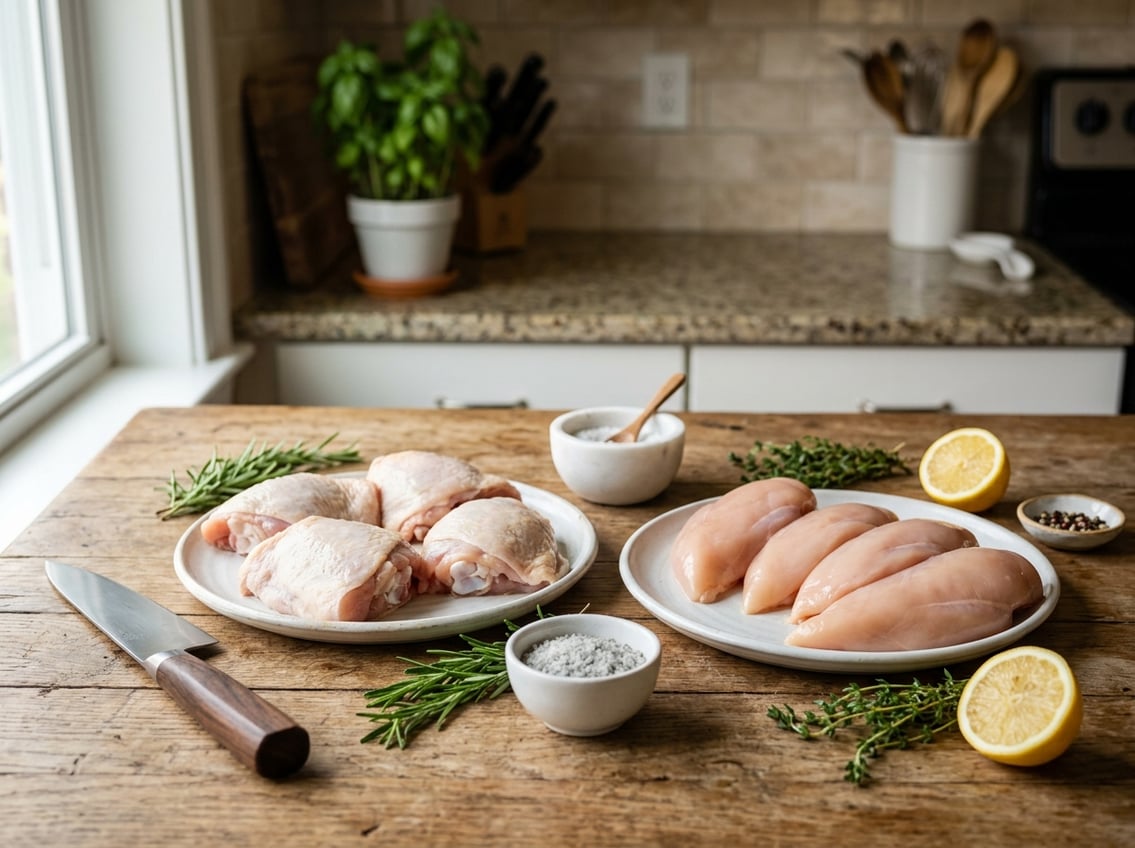
Chicken thighs and breasts differ in nutrition, taste, cooking methods, and cost. You can decide based on appetite, health goals, and time in the kitchen.
Find practical tips for swapping one for the other and getting the best results from each.
Understanding Chicken Cuts: Thighs vs. Breasts
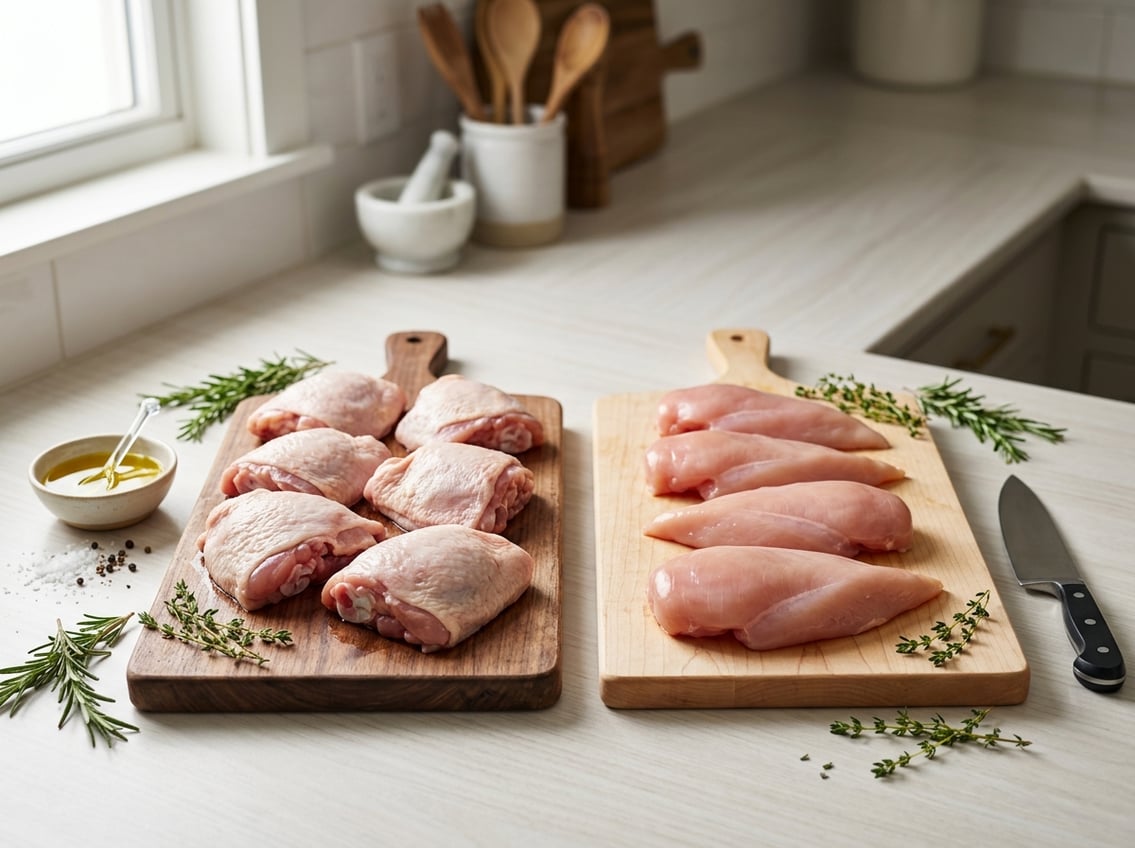
Chicken thighs and breasts differ in flavor, fat content, and cooking behavior. These differences affect which cut works for your meal plan, cooking method, and desired texture.
What Are Chicken Thighs?
Chicken thighs come from the bird’s upper leg and are dark meat. They contain more connective tissue and intramuscular fat than breasts, which gives them a richer flavor and greater tolerance for longer, slower cooking.
Bone-in, skin-on thighs deliver the most flavor and stay moist during braises, roasting, or grilling. Skinless chicken thighs are still more forgiving than breasts and work well in stews, stir-fries, and dishes where you want a tender, juicy bite without crisp skin.
Thighs also offer modestly higher iron and zinc compared with breasts.
Defining Chicken Breasts
Chicken breasts are the large white-meat pectoral muscles, prized for their high protein-to-calorie ratio and mild flavor. Skinless chicken breast is the leanest common option, making it a frequent choice for calorie- or protein-focused meals and quick-cook recipes like pan-searing or stir-fries.
Breasts are low in fat and dry out quickly if overcooked. Brining, pounding thin, or cooking to medium doneness helps maintain juiciness.
Bone-in breasts take slightly longer to cook and sometimes retain more moisture than boneless, skinless chicken breast, but they still have less richness than thighs.
Bone-In, Skin-On, and Skinless Options
Bone-in cuts add cooking time but improve flavor and moisture retention. Bones conduct heat and help meat stay juicy; use bone-in, skin-on thighs or breasts for roasting or grilling when you want depth of flavor.
Skin-on chicken develops crisp, savory texture when roasted or pan-seared. The fat under the skin bastes the meat.
Removing the skin yields skinless chicken breast or skinless chicken thighs, which cut calories and saturated fat but require gentler cooking or added fat (oil, butter, or sauces) to avoid dryness.
Use skinless chicken breast in quick, lean dishes and skinless chicken thighs when you need juicier, more forgiving protein.
Nutritional Comparison and Health Considerations
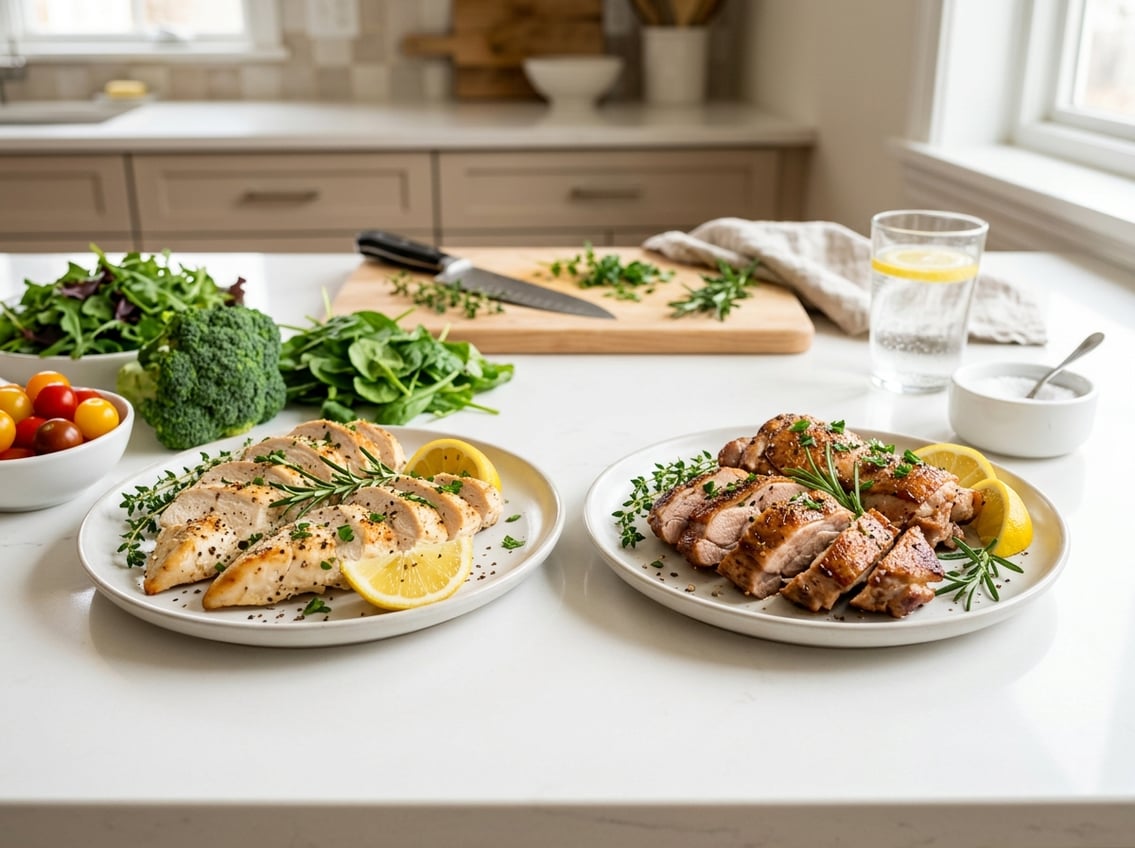
Chicken breast and thigh differ in calories, fat, protein, iron, and how filling a meal will be. Choose based on your calorie goals, need for satiety, and which micronutrients you want to prioritize.
Calories, Fat, and Protein Content
Skinless chicken breast is leaner, with about 100–110 calories and roughly 22–24 g protein per 100 g cooked, and around 1–3 g total fat.
Skinless chicken thighs have roughly 140–170 calories and 17–20 g protein per 100 g cooked, with about 6–9 g fat depending on trimming.
Removing the skin cuts a lot of saturated fat and calories in both cuts. For weight or fat-loss goals, breasts give more protein per calorie.
If you need more energy or want a juicier texture that tolerates longer cooking, thighs supply extra fat and slightly fewer protein grams per ounce.
Micronutrients and Dietary Benefits
Thighs contain more iron and zinc than breasts because dark muscle has higher myoglobin content. Those minerals support oxygen transport and immune function.
Breasts supply higher amounts of niacin (B3) and vitamin B6 per ounce, which help energy metabolism and protein use.
If you or someone you feed has low iron, rotating in skinless chicken thighs can boost intake. If you track B vitamins for exercise recovery or metabolic needs, include skinless chicken breast.
Balance both cuts across the week to cover a broader micronutrient profile.
Lean Protein and Healthy Meal Planning
If you prioritize lean protein, skinless chicken breast fits best: high protein, low fat, and versatile for salads, stir-fries, and post-workout meals.
If you want meals that stay satisfying longer, skinless chicken thighs provide more fat to slow digestion and increase satiety.
Use breasts the days you’re calorie-conscious or combining with higher-fat foods (avocado, olive oil). Choose thighs when you need richer flavor or plan slow-cooking methods.
Keep overall portion control and cooking methods (grilling, baking, braising) aligned with your health goals.
Understanding Serving Sizes
A standard cooked serving is 3–4 ounces (85–113 g): about one medium skinless chicken breast or one to two smaller skinless chicken thigh pieces depending on size.
Per serving, expect roughly 20–30 g protein from a breast and 15–22 g from a thigh; calories will scale accordingly.
If you count calories or macros, weigh cooked portions for accuracy. Adjust serving size for activity level: athletes may eat larger portions for protein needs, while sedentary individuals may prefer smaller portions and pair with vegetables and whole grains.
Flavor and Texture Differences
Thighs and breasts differ mainly in fat, connective tissue, and myoglobin, which shape taste and mouthfeel. These differences determine which cut fits dishes where richness, holding power, or quick cooking matter most.
Taste Profiles of Dark vs. White Meat
Dark meat (chicken thighs) tastes richer and more savory because it contains more fat and myoglobin. You’ll notice deeper umami notes and a slightly gamey edge, which holds up well to strong spices, braises, and long marinades.
Thighs pair naturally with bold flavors like soy, smoked paprika, and curry because the fat carries and amplifies these seasonings.
White meat (chicken breasts) is milder and cleaner-tasting, so your seasoning choices show more directly. Breasts work well when you want the sauce or vegetables to dominate the plate, as in lemon-herb, light pan sauces, or delicate stir-fries.
If you prefer subtlety or plan to marinate briefly, breasts let those lighter flavors come through.
Moisture, Tenderness, and Juiciness
Chicken thighs retain moisture at higher internal temperatures due to higher fat and connective tissue. Thighs stay tender even if cooked a bit longer.
The rendered fat also creates a silky mouthfeel and helps the meat resist drying in reheating.
Chicken breasts provide dense, lean protein but dry quickly if overcooked. Use gentle, fast methods (poaching, quick searing, thin-cut grilling) or brines to keep them juicy.
For predictable results, cook breasts to 60–65°C (140–149°F) and thighs to 70–75°C (158–167°F) when texture matters.
Best Cooking Methods for Each Cut
Choose methods based on fat content, thickness, and whether the piece is bone-in or boneless. Thighs tolerate longer, higher-heat cooking and braising. Breasts need gentler, shorter cooking to stay moist.
Grilling, Baking, and Sautéing Tips
For chicken breasts, use quick, direct heat. Pound thicker breasts to even thickness, brush with oil, and grill or sauté over medium-high heat 3–6 minutes per side until an instant-read thermometer reads 160–165°F.
Rest 3–5 minutes before slicing to retain juices.
For thighs, use slightly lower grill or oven temperatures when cooking bone-in to allow heat to penetrate without burning the skin. Sear skin-side down in a hot pan to render fat, then finish in a 350°F oven for 15–25 minutes depending on size, or grill over medium heat until 175–185°F.
Use a thermometer, not timing alone. Season simply for breasts (salt, pepper, citrus) and use bolder rubs or marinades for thighs to match their richer flavor.
Braising and Slow Cooking Approaches
Choose thighs for braising or slow cooking; their higher fat and connective tissue benefit from long, moist heat. Brown skin-on thighs first to develop flavor, then simmer in 1–2 cups of stock, wine, or tomato-based sauce at a gentle simmer for 45–90 minutes until meat pulls easily from the bone.
Avoid braising breasts unless you cut them into pieces, because long wet cooking will make intact breasts stringy and dry.
If you braise breast pieces, poach at a low temperature (just below a simmer) for 20–30 minutes and remove promptly.
In slow cookers, use thighs on low for 4–6 hours or high for 2–3 hours. Thighs stay moist and absorb flavors. Add breasts late in the cook cycle to avoid overcooking.
Frying and Other Popular Techniques
Frying suits both cuts but with different approaches. For classic fried chicken, use bone-in, skin-on thighs for juicy interior and crisp skin. Fry at 325–350°F until internal temp reaches 175–185°F.
For pan-fried or breaded breasts, keep oil temperature steady at 325–350°F and monitor thickness—thin cutlets cook in 3–5 minutes per side. Use a thermometer or cut a small slit to check for doneness and avoid overcooking.
Poaching or sous-vide work best for breasts when you want ultra-tender, evenly cooked meat (sous-vide 140–145°F for 1–2 hours). Air-frying gives thighs great skin crisping and cooks breasts quickly. Adjust time to avoid dryness.
Cost, Convenience, and Versatility in the Kitchen
Balance price, ease of prep, and how well the cut fits the cooking method when choosing between thighs and breasts. Consider purchase cost, storage and prep time, and whether the cut holds up to the recipe’s heat and sauce.
Affordability and Availability
Chicken thighs typically cost less per pound than chicken breasts in most U.S. and Canadian markets, often 10–25% cheaper depending on store and season.
Buying thighs in bulk or frozen packs can lower your per-meal cost further, and they freeze well for several months.
Breasts remain widely available and often sold boneless/skinless, which saves prep time but raises price. If you shop sales, compare unit prices and factor in trimming time for thighs.
Local demand and store stocking patterns affect availability, so you might find thighs in larger packs at lower cost while breasts sell individually at a premium.
Substituting Thighs for Breasts in Recipes
You can substitute boneless skinless chicken thighs for breasts in most recipes, but adjust cooking time and seasoning. Thighs need slightly longer to reach 165°F and tolerate higher heat without drying, so reduce liquid or shorten simmer time in sauces to avoid dilution.
For grilling or quick pan-searing, cut thighs into uniform pieces to match breast cook times. When a recipe relies on very mild flavor—like delicate poached chicken—use breasts or tone down thigh-rich seasoning to avoid overpowering other ingredients.
Use a meat thermometer to ensure safe doneness whether you choose thigh or breast.
Choosing the Right Cut for Your Dish
Choose breasts when you need lean protein that won’t compete with subtle flavors. Use them in salads, light sandwiches, or recipes where you want the texture to stay firm.
Breasts provide a neutral base for bold sauces or marinades that supply fat and moisture.
Pick thighs for long braises, curries, shredded chicken, or any dish where juiciness and flavor matter more than minimal fat. Thighs release fat that enriches stews and keeps meat tender during reheating.
Use breasts for quick, dry-heat cooking. Choose thighs for slow, moist, or high-heat applications that benefit from extra fat and forgiving texture.


