
Which Is Better: Chicken Thighs or Tenderloins? Flavor, Nutrition, and Cooking Compared
The best choice between chicken thighs and tenderloins depends on what you value most: flavor, nutrition, cooking speed, and budget.
If you want richer, more forgiving meat that shines in braises, grills, and slow cooking, choose thighs.
If you need quick, lean protein that adapts to fast sears, salads, and breaded preparations, choose tenderloins.
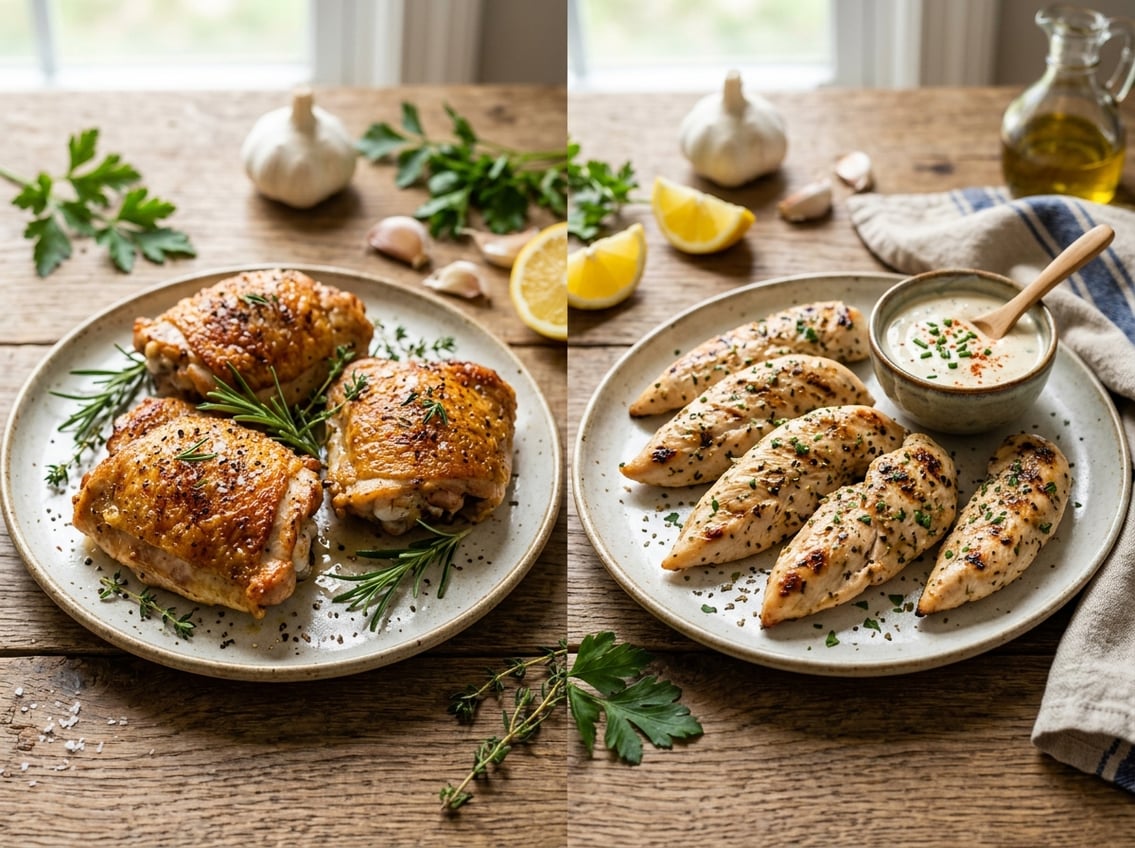
As a home cook, you’ll weigh texture, fat content, and versatility.
Thighs bring juiciness and deeper flavor, while tenderloins give lean convenience and predictable portioning.
This article explains where each cut comes from, how they differ in flavor and nutrition, the best cooking methods for each, and how to pick for your meals and budget.
Identifying Chicken Thighs and Tenderloins
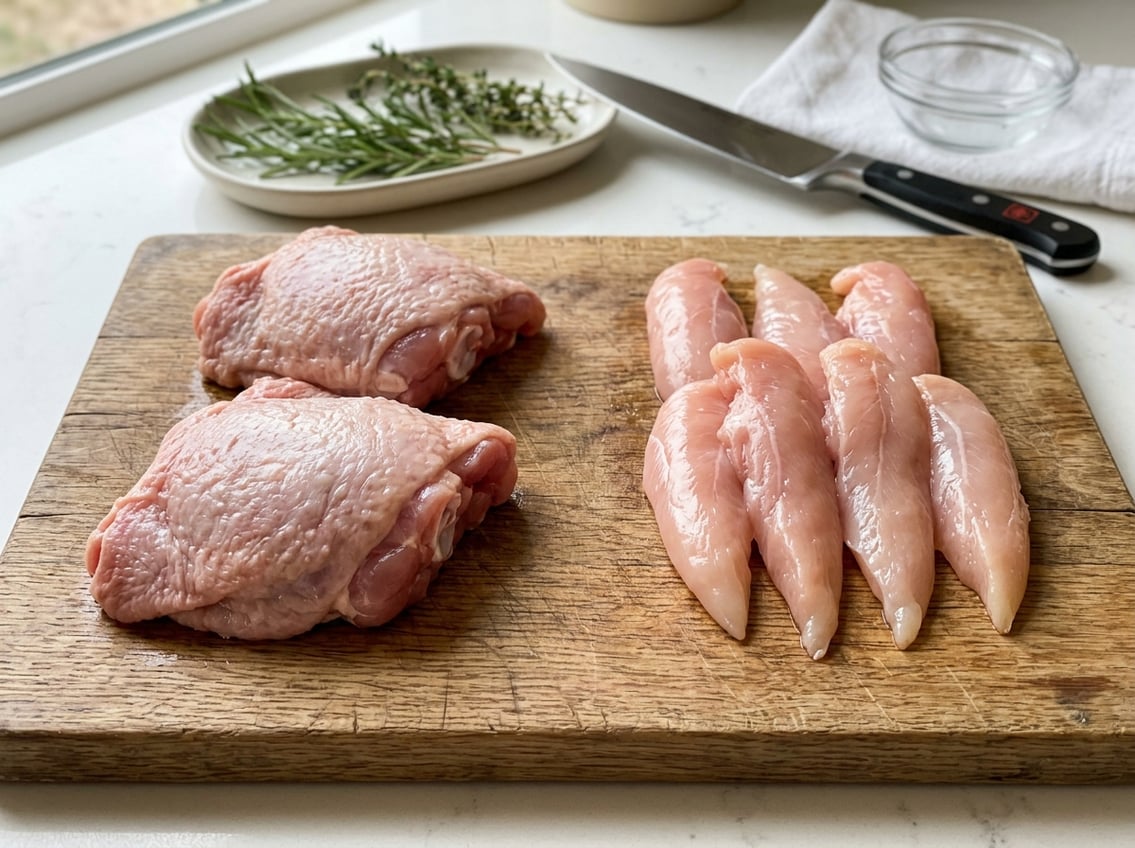
You can tell these cuts apart by where they come from on the bird, how they look and feel, and whether they include bone or skin.
Knowing those differences helps you pick the right cut for cooking method, nutrition goals, and budget.
Anatomy and Location on the Bird
Chicken thighs sit on the upper leg. They are part of the dark meat and connect to the drumstick at the knee joint.
The muscle does more work during the bird’s life, so thighs contain more fat and connective tissue like collagen.
That anatomy makes thighs forgiving during long cooking and gives them a richer flavor.
Tenderloins are a narrow strip of muscle tucked under the breastbone, directly under the main breast muscle.
They do very little work, which is why they’re the most tender piece of chicken and classify as white meat.
Butchers remove tenderloins from breasts. You’ll often find them sold separately as boneless, skinless pieces.
Appearance and Size Differences
Thighs are wider, thicker, and darker in color than tenderloins.
They have a roughly oval shape with visible grain and sometimes small bands of fat.
A boneless skinless thigh typically weighs 3–5 ounces raw. Bone-in thighs weigh more because of the skeleton.
Tenderloins are long, thin, and pale.
They taper at one end and usually measure 3–4 inches long and 1–1.5 inches wide, weighing about 1.5–3 ounces raw each.
Their lean, uniform shape makes them ideal for quick sears, slicing for stir-fries, or breading.
Color and texture differences affect cooking times and seasoning choices.
Bone-In and Boneless Varieties
Thighs commonly come in three retail forms: bone-in skin-on, bone-in skinless, and boneless skinless.
Bone-in skin-on thighs deliver the most flavor and crisp skin when roasted or grilled.
Boneless skinless thighs cook faster and remain forgiving for sautés, stews, and shredding.
Tenderloins are almost always sold boneless and skinless.
That makes them convenient and fast-cooking but less forgiving if overcooked.
If you want bone-in white meat for presentation, choose a breast with the tenderloin attached rather than a standalone tenderloin.
Ask your butcher if you want thighs trimmed or tenderloins left whole for consistent portions.
Flavor Profile and Texture
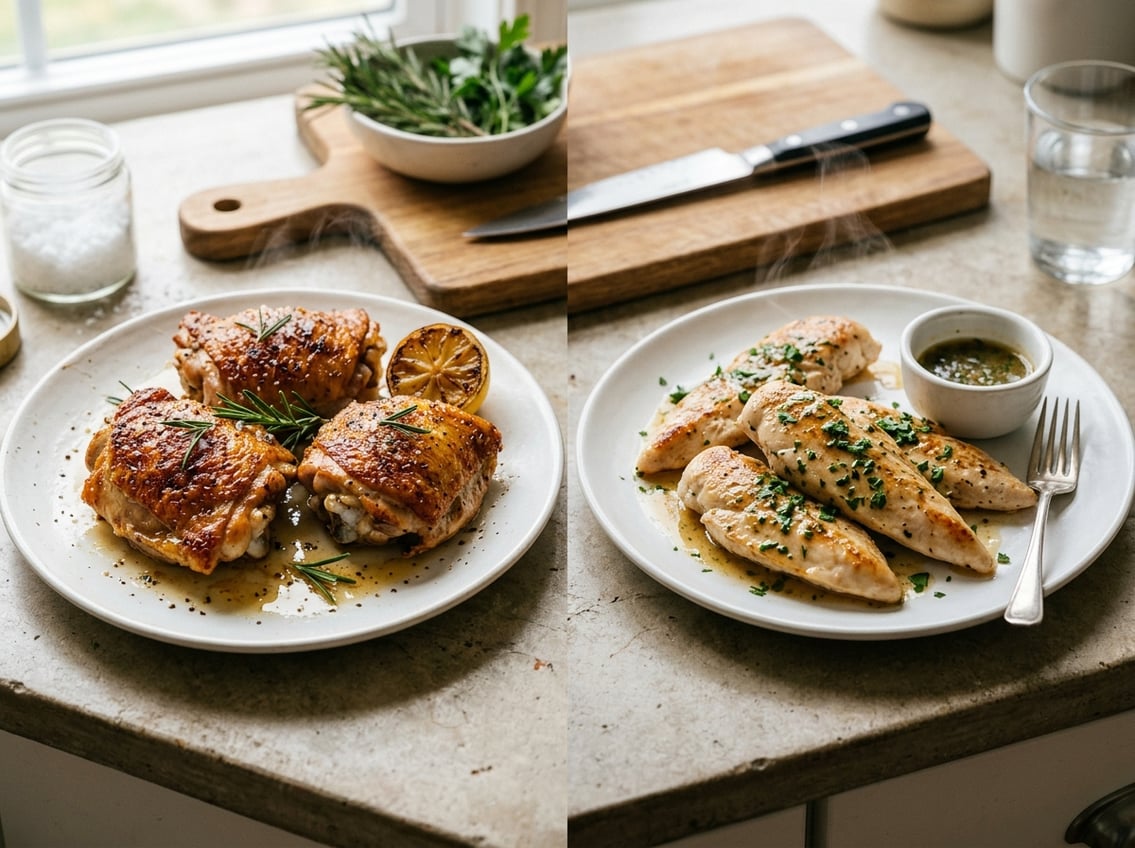
Thighs deliver richer, meatier notes and wider cooking forgiveness.
Tenderloins offer a very mild taste and need precise, fast cooking to stay tender.
Rich Flavor Versus Mild Taste
Chicken thighs come from the leg and have higher fat and connective tissue, which produces a pronounced, savory flavor when cooked.
You’ll notice deeper, beef-like notes in long braises and grilled dishes because rendered fat carries and amplifies taste.
Tenderloins sit under the breast and taste much milder.
Their low fat means they won’t add richness on their own, so you should rely on marinades, strong spices, or sauces to introduce bold flavors.
Use tenderloins when you want the chicken to support rather than dominate a dish.
Juiciness and Tenderness
Thighs stay juicy across a broader internal temperature range because intramuscular fat and collagen convert to gelatin during cooking.
You can roast or braise thighs without chasing a narrow doneness point, and they resist drying in higher-heat methods.
Tenderloins are naturally the most tender cut by muscle use, but they dry quickly if overcooked.
Cook them fast or use moist methods such as poaching, quick sears, or sous-vide to preserve a soft, plump texture.
Rest briefly after cooking to let juices redistribute.
Umami and Seasonings
The higher fat content in thighs enhances umami and makes simple salt-and-pepper seasoning taste more impactful.
You can often get strong savory depth with minimal additions like garlic, soy, or a pan sauce.
Tenderloins benefit from assertive seasonings, acidic marinades, or brines to build flavor quickly.
Bold rubs, citrus, soy-based marinades, or breading help the mild meat stand up in a dish.
Use finishing acids or herbs to lift both cuts without masking their inherent qualities.
Nutritional Value and Health Considerations
You’ll see clear tradeoffs between calorie and fat load versus micronutrient density and cooking flexibility.
Focus on portion size and cooking method to match the cut to your nutrition goals.
Fat and Calorie Differences
Chicken thighs contain more total fat and calories than tenderloins.
A typical 3‑ounce (85 g) cooked, boneless, skinless thigh has roughly 170–210 calories and about 9–11 g of total fat.
The same amount of tenderloin (lean white meat) is closer to 120–140 calories and 2–4 g of fat.
That extra fat in thighs increases energy density, so portions matter if you track calories.
If you remove skin and trim visible fat, thighs’ calorie gap narrows but does not disappear.
Use cooking methods that let fat render away, such as grilling or broiling, to lower final fat per serving.
For calorie control, choose tenderloins or reduce thigh portion size.
Protein Content and Vitamins
Both cuts provide high-quality animal protein.
Per 3‑ounce cooked portion, protein usually ranges from 20–25 g.
Thighs can offer slightly more protein by weight in some servings, but the difference is small relative to total intake.
Lean tenderloins give dense protein with fewer calories, which helps if you need high protein without extra energy.
Thighs tend to have higher amounts of certain micronutrients such as iron, zinc, vitamin B6 and B12, and folate.
Dark meat stores more myoglobin and other nutrients.
Tenderloins still supply niacin and B vitamins but in slightly lower concentrations.
If you need iron or zinc, adding thighs occasionally benefits your intake.
Saturated Fat and Cholesterol
Thighs contain more saturated fat than tenderloins, though most of the fat in chicken thighs is monounsaturated and polyunsaturated.
A 3‑ounce thigh typically contains about 2–3 g of saturated fat.
A tenderloin portion often has under 1 g.
Cholesterol values are similar between the cuts, around 60–80 mg per 3‑ounce serving.
If you have elevated LDL cholesterol or a history of heart disease, prioritize tenderloins, remove skin, and use low‑fat cooking methods.
Otherwise, moderate thigh consumption within a balanced diet can fit heart‑healthy patterns, especially when paired with vegetables, whole grains, and limited added saturated fats.
Suitability for Specific Diets
For calorie‑restricted or weight‑loss plans, tenderloins fit better because they deliver more protein per calorie.
They also work well for high‑protein, low‑fat regimes and many clinical diets that limit saturated fat.
If you follow a paleo or whole‑food plan, both cuts are acceptable.
Thighs give more flavor and micronutrients, which can help nutrient-dense meal planning.
For people managing iron deficiency or needing more zinc and B vitamins, incorporate thighs into meals a few times weekly.
For heart‑health, low‑saturated‑fat needs, or strict calorie limits, choose tenderloins and avoid frying or heavy sauces.
Adjust portion sizes and cooking methods to meet your specific nutrition targets.
Best Cooking Methods for Each Cut
Thighs reward slow, moist heat and high-heat roasting.
Tenderloins excel with quick, high-heat techniques or gentle baking.
Pay attention to fat content, thickness, and whether the cut is bone-in or boneless when choosing method and timing.
Braising and Stewing for Thighs
Use braising or stewing when you want fall-apart, richly flavored meat.
Sear bone-in or boneless thighs first to brown the skin and render fat, then add 1–2 cups of braising liquid such as stock, wine, or tomato base.
Cover and simmer on low or transfer to a 325°F (163°C) oven for 45–75 minutes depending on size.
The connective tissue in thighs breaks down with low, steady heat, so you can cook longer without drying the meat.
These methods work well for stews, curries, and saucy dishes where thighs contribute body and flavor.
Brown in batches to avoid steaming, and finish uncovered for 10–15 minutes to reduce and concentrate the sauce.
Grilling, Stir-Frying, and Baking Tenderloins
Treat tenderloins as quick-cooking pieces that need high heat or gentle baking to stay tender.
Grill or pan-sear tenderloins over medium-high heat for 2–3 minutes per side until they reach 160–165°F (71–74°C), then rest.
They brown fast and get a nice crust.
For stir-fry, slice tenderloins thinly across the grain, marinate briefly, then cook in a hot wok 2–4 minutes with oil.
Keep vegetables and sauce hot to avoid overcooking the meat.
For breaded chicken tenderloins, bake at 400°F (204°C) for 12–18 minutes or shallow-fry until golden, flipping once.
Use gentle baking at 350–375°F (177–190°C) for stuffed or crusted tenderloins to ensure even cooking without drying.
Roasting, Frying, and Pan-Seared Options
Roast bone-in, skin-on thighs at 425°F (218°C) for 30–40 minutes for crisp skin and juicy interior.
Place thighs on a rack so air circulates and skin crisps evenly.
For whole roasted chicken, spatchcocking shortens time and evens browning between white and dark meat.
Frying and pan-frying suit both cuts when you want a crisp exterior.
For fried chicken thighs, use a seasoned flour or batter and fry at 350–375°F (177–190°C) until internal temp is safe and crust is golden.
Pan-searing works well for boneless thighs and tenderloins.
Preheat the pan, use oil with a high smoke point, and finish thicker pieces in the oven.
Sauté when you want quick browning with a skillet sauce.
Deglaze the pan with wine or stock to build flavor.
Cooking Time and Internal Temperature
Aim for safe, precise temperatures to avoid dry meat.
Use these internal targets with an instant-read thermometer inserted into the thickest part, avoiding bone:
- Chicken tenderloins: 160–165°F (71–74°C). Pull at 160°F and rest to reach 165°F.
- Boneless chicken thighs: 165°F (74°C) for safety. Thighs remain juicy if cooked slightly higher, up to 175°F (79°C) in braised dishes.
- Bone-in thighs and drumsticks: 175°F (79°C) in the thigh near the bone yields tender results.
- Whole roasted chicken: breast 165°F (74°C), thigh 175°F (79°C).
Approximate cooking times depend on size and method:
- Pan-seared tenderloin: 4–6 minutes total.
- Grill or bake breaded tenderloins: 12–18 minutes at 400°F.
- Roasted bone-in thighs at 425°F: 30–40 minutes.
- Braised thighs: 45–75 minutes at 325°F or low simmer.
Rest cooked chicken 5–10 minutes before slicing to let juices redistribute.
Versatility in Everyday Meals
Both cuts adapt well across meal types.
Thighs give richer flavor and stand up to long cooking.
Tenderloins cook quickly and stay lean.
Choose thighs for slow braises, fried preparations, and hearty mains.
Choose tenderloins for quick grills, salads, and handhelds.
Main Dishes and Comfort Foods
Chicken thighs excel in braises, roasts, and fried classics because their higher fat and connective tissue keep meat moist during long cooks. Use bone-in thighs for oven-roasted dinners, confit-style preparations, or shredded fillings for tacos and enchiladas.
You can slice and pan-sear tenderloins for weeknight plates or pound and grill them for quick kebabs. Tenderloins work well when you need a fast, uniform protein.
If you swap breast for thighs in a recipe, you get more flavor and slightly higher calories. If you replace thighs with tenderloins, cut cooking time and watch for drying; brining or a quick marinade helps.
Salads, Wraps, and Sandwiches
Tenderloins work well in cold or room-temperature salads because their mild flavor and lean profile slice thinly without overwhelming greens. Grill or poach tenders, then chill and toss with lemon vinaigrette for a protein-forward salad.
Thighs add depth to warm salads, grain bowls, and robust sandwiches. Shredded roasted thigh gives a juicier texture in wraps and paninis.
For sandwiches and wraps, both cuts perform well. Use tenderloins for cleaner, lower-fat handhelds and thighs when you want richness, especially in barbecue-style or spicy mayo recipes.
Curries, Stews, and Casseroles
Choose thighs for curries, stews, and most casseroles where long simmering extracts flavor and softens connective tissue into a silky texture. Thigh meat holds shape in tomato- or coconut-based curries and resists drying in baked casserole dishes.
You can use tenderloins in quicker stews or cream-based casseroles that simmer briefly. Cut them into uniform pieces and add late in cooking to prevent toughness.
In chicken pot pie or baked pasta, thighs often give a more succulent bite. Use tenderloins when you want a leaner, faster-cooking protein in the same format.
Breaded, Finger, and Tenders-Style Recipes
Tenderloins are the traditional choice for chicken fingers and tenders because of their slim, uniform shape. They bread evenly and cook rapidly to a tender center.
Coat tenderloins with seasoned flour, egg, and panko for crispy results, or air-fry for a lighter finish. Thighs can be cut into strips for breaded recipes when you prefer fattier, juicier bites.
Expect a shorter cook time and a richer flavor with thighs. For fried chicken and chicken sandwiches, thighs offer superior juiciness. For finger foods or uniform plating, tenderloins make portioning and presentation simpler.
Choosing Based on Personal Preferences and Budget
Decide by weighing flavor, cooking method, and how much you want to spend. Think about whether you prioritize richer taste and forgiving cooking or leaner protein and quicker cooks.
Flavor Versus Leanness
If you want richer flavor and more forgiving results, choose chicken thighs. Thighs deliver higher fat content and a deeper umami note, which holds up to long braises, roasting, and bold spices.
The extra fat keeps meat juicy even if you cook longer or at higher heat. If you prioritize lean protein and lower calories, pick tenderloins.
Tenderloins are very lean with a mild flavor that lets marinades, herbs, and sauces dominate. They cook fast and work well for stir-fries, sandwiches, and salads where crisp timing and texture matter.
Use this rule: pick thighs when flavor and juiciness are primary, tenderloins when leanness and quick cooking are primary.
Cost and Accessibility
Thighs are generally cheaper per pound than tenderloins, especially bone-in, skin-on thighs. That makes thighs a better choice if you cook for a family, meal-prep in bulk, or shop on a budget.
Tenderloins cost more because they are a smaller, premium cut and require more trimming by the butcher. You’ll often find tenderloins sold separately or packaged in small portions at higher per-pound prices.
If your local butcher or store runs specials, buy thighs in larger quantities and freeze portions. If you want convenience and portion control and can absorb the price, buy tenderloins for quick meals.
Swapping Cuts in Recipes
You can swap thighs and tenderloins in many recipes. Adjust technique and timing when you do so.
When you replace thighs with tenderloins, shorten cooking time and lower the heat to avoid drying the meat.
If you use thighs instead of tenderloins, expect longer cook times and more rendered fat. Use lower, slower methods or sear the thighs, then finish in the oven to render fat and develop a brown crust.
Quick reference:
- Swap thighs to tenderloins: reduce cook time, use gentle heat, add moisture.
- Swap tenderloins to thighs: increase time, allow fat to render, use braising or roasting.
Label marinades and timings when meal-prepping to prevent mix-ups and preserve the intended flavor profile.


