
How Do They Make Boneless Chicken Thighs: Methods, Recipes, and Tips
You want to know how boneless skinless chicken thighs are made and what to watch for when you buy or cook them.
Producers remove the bone by hand or with machines that cut along the joint. This leaves you a tender, easy-to-cook thigh that keeps more flavor and fat than breast meat.
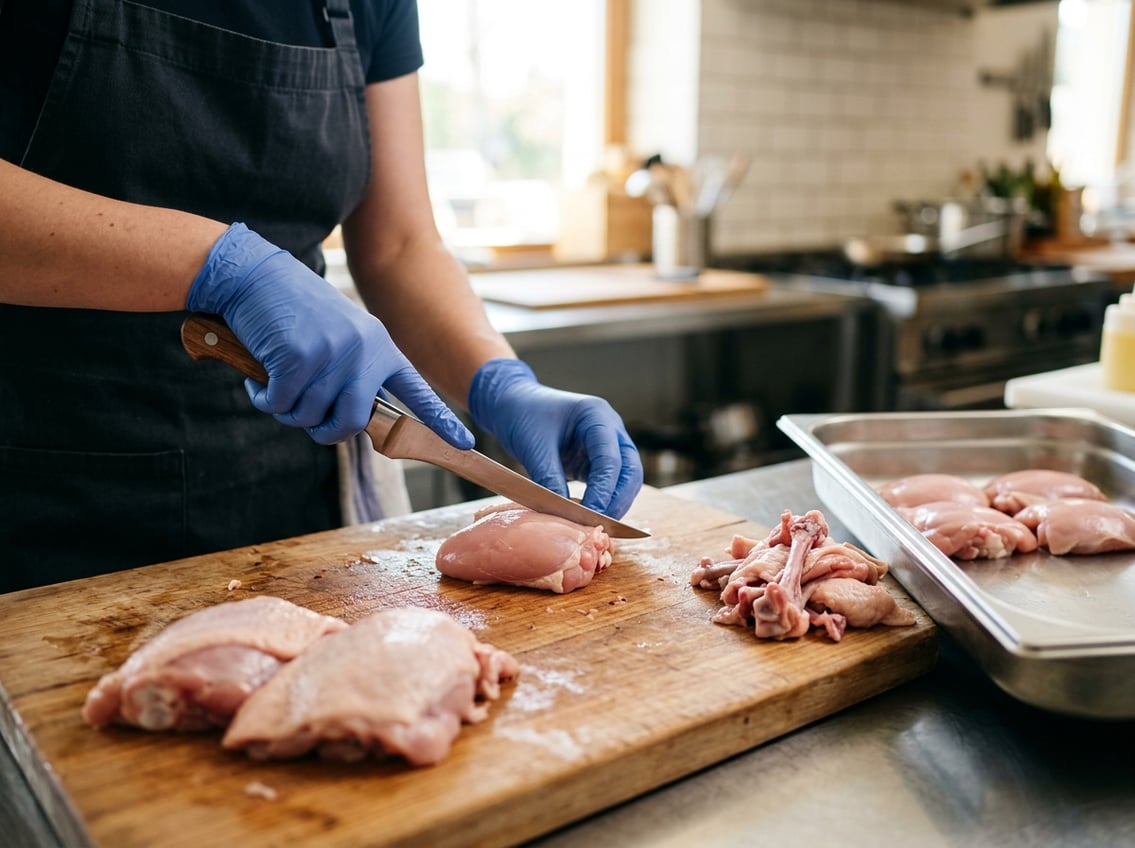
You’ll learn how industrial deboning works, what to look for when selecting the best boneless chicken thighs at the store, and which cooking methods and seasonings make them shine.
Expect practical tips for perfectly cooked thighs and a few reliable recipe ideas for your weeknight rotation.
How Chicken Thighs Are Deboned in the Industry
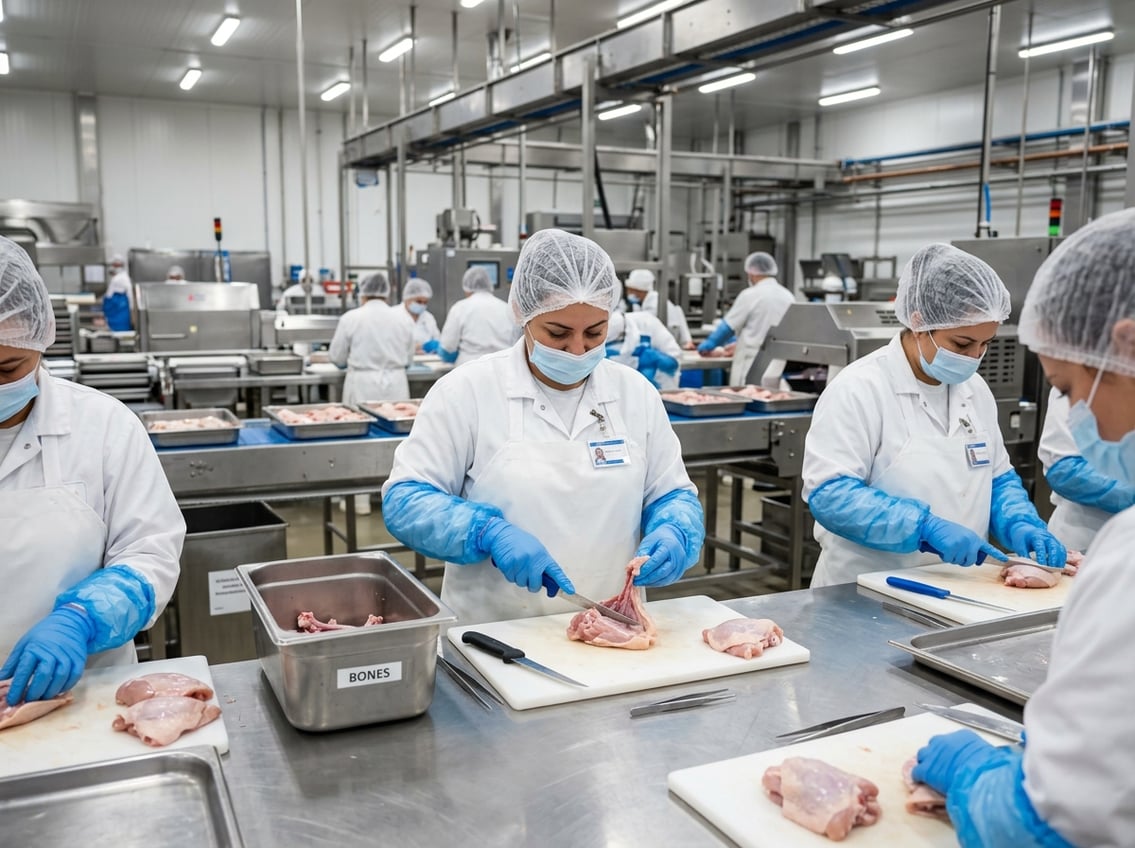
Processors in industrial lines turn bone-in thighs into boneless, skinless chicken thighs with automated machines and hand-finishing.
They prioritize speed, yield, and food safety while preserving meat quality and appearance.
Deboning Process
After evisceration and chilling, workers feed whole thigh portions into conveyors.
Machines separate meat from the femur and pelvic bone using controlled pressure and cutting actions.
Some plants use mechanical thigh fillet systems that push bone through a rubber diaphragm or guide the bone past blades. This produces high throughput, sometimes hundreds of thighs per minute.
After machine separation, workers inspect and trim cartilage, tendon, and small bone fragments. This creates boneless chicken thighs ready for packaging.
Wet deboning uses water spray and rinsing, while dry deboning keeps added moisture minimal for fresh boneless skinless chicken thighs.
Tools and Techniques
Automated deboning machines include mechanical pressing units, thigh fillet systems, and blade-guided separators.
A typical thigh deboner uses a rubber diaphragm and pressing plate to force the bone free while preserving meat integrity.
Hand tools like boning knives, trimming shears, and small hook tools help workers remove silver skin, cartilage, and bone shards.
X-ray and metal-detect systems catch foreign objects and bone fragments before packaging.
Plants adjust machine speed, blade sharpness, and pressure to balance yield and product appearance.
Skin-on and skinless boneless thighs require different setups, since skin retention changes how machines and operators handle the cut.
Quality and Safety
Workers control microbial risk by chilling carcasses promptly and keeping equipment surfaces hygienic.
Deboning lines include sanitation cycles, frequent knife sharpening, and temperature controls to keep product safe.
Bone fragment detection and trimming are critical for safety and compliance.
Processing plants use metal detectors, X-ray checks, and visual inspections to ensure boneless chicken thighs meet standards for absent bone pieces.
Traceability and labeling let you track production if contamination or defects appear.
These practices help protect food safety and the consistency of boneless skinless chicken thighs you buy.
Selecting the Best Boneless Chicken Thighs
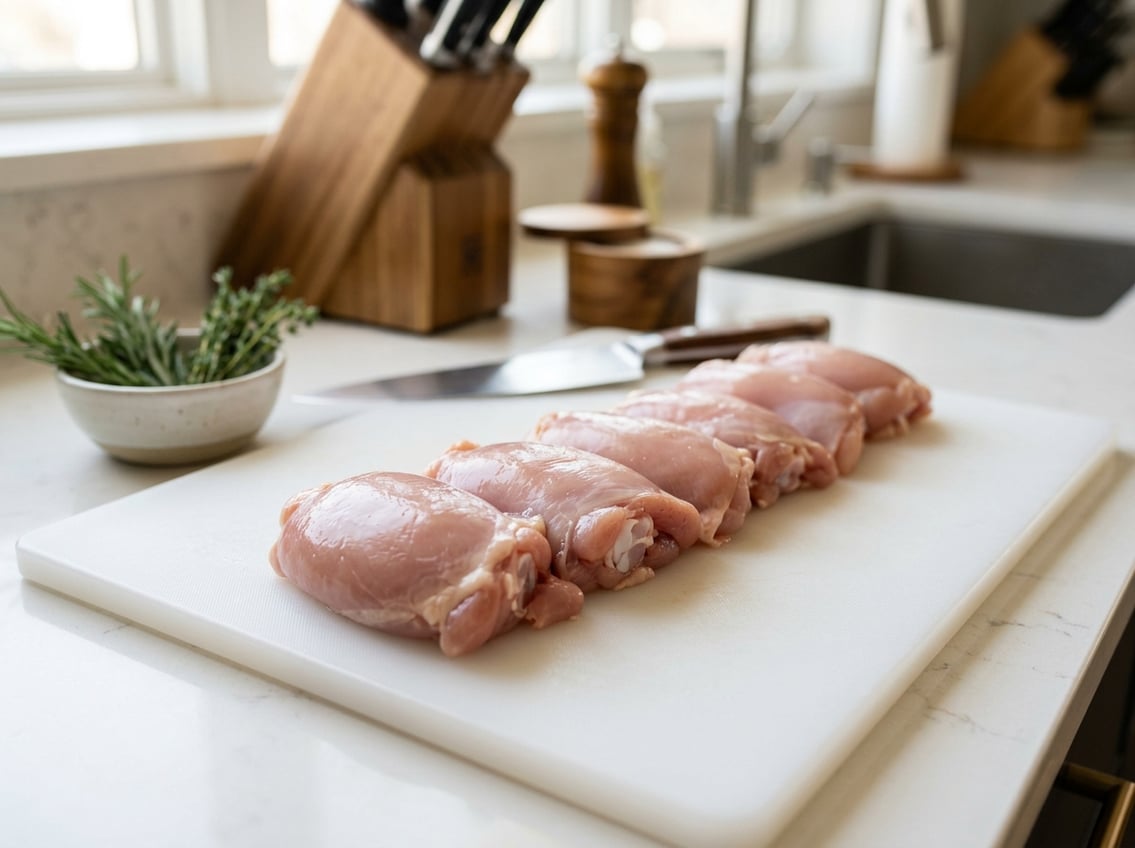
Pick thighs that balance freshness, minimal processing, and clear labeling for juicy meat that cooks predictably.
Check packaging dates, appearance, and any added solutions before you buy.
Fresh vs. Pre-Packaged
Inspect fresh, butcher-cut boneless skinless chicken thighs from the meat counter when possible.
You’ll often get cleaner trimming, consistent portion sizes, and you can ask when they were cut.
Fresh-cut thighs may cost more, but they usually contain no added water or salt solutions.
Pre-packaged boneless chicken thighs offer convenience and longer shelf life.
Read the label for terms like “enhanced,” “solution,” or “contains up to X% of a saline/phosphate solution.”
These products weigh more and may cook faster but can taste briny and lose searing performance.
If you choose pre-packaged, pick the shortest “sell-by” date and choose vacuum-sealed packs to reduce surface drying.
What to Look for at the Store
Look for light pink, moist—not slimy—surfaces.
Avoid gray edges, greenish hues, or any sticky film.
Press gently; the meat should spring back and not be overly soft.
Check labels for:
- Packaging date / sell-by — choose the most recent date.
- Ingredients — prefer “chicken thigh” only; avoid added phosphates or saline for cleaner flavor.
- Origin and grade — country of origin and any quality claims (e.g., “air-chilled,” “antibiotic-free”).
- Portion size — pick uniform pieces for even cooking.
Smell the product if possible; a faint neutral odor is normal, but sour or chemical smells mean spoilage.
For frozen thighs, look for minimal ice crystals and intact seals to avoid freezer burn.
Recipe Preparation and Cooking Methods
Pat boneless skinless chicken thighs dry and season them well to set up good browning or even cooking.
Trim excess fat, measure internal temperature with an instant-read thermometer, and let thighs sit at room temperature 10–15 minutes before cooking.
Baking for Juicy Results
Preheat the oven to 400–425°F.
Arrange boneless chicken thighs in a single layer in a baking dish or on a parchment-lined sheet pan. Brush with oil and season with salt, pepper, and your chosen spices.
Bake uncovered for 20–30 minutes until the thickest part reads 165°F. Flip once at mid-cook for more even color.
For crisper edges, broil 1–2 minutes at the end while watching closely.
Drain excess pan juices if using the meat immediately, or reserve juices for pan sauce or casseroles.
Tips:
- Pat dry to reduce steaming.
- Use a thermometer to avoid overcooking.
- Marinate 30 minutes to overnight for more flavor.
Grilling and Pan-Searing
For grilling, preheat to high heat (450–475°F) and oil the grates.
Lightly coat boneless chicken thighs with oil and a simple rub.
Grill 4–6 minutes per side until char marks form and internal temp reaches 165°F.
Rest 5 minutes before serving to redistribute juices.
For pan-searing, use a heavy skillet over high heat and add a thin film of oil.
Sear presentation side 4–6 minutes without moving to develop a deep brown crust, then lower heat and cook 3–5 minutes more, finishing to 165°F.
Deglaze the pan with stock, wine, or lemon and spoon the sauce over the thighs.
Quick checklist:
- High heat for crust and flavor.
- Avoid overcrowding the pan or grill.
- Rest briefly before slicing.
Slow Cooker and Instant Pot
Use the slow cooker for shreddable, tender boneless chicken thighs.
Add thighs with aromatics and 1/2–1 cup of liquid (broth, sauce, or seasoned water).
Cook on low 4–6 hours or high 2–3 hours until meat pulls apart at 165–175°F.
Shred in the pot and mix with cooking liquid for moist results.
For the Instant Pot, brown thighs quickly on sauté to lock flavor, then add 1 cup of liquid and cook at high pressure 5–8 minutes with a short natural release.
This yields moist thighs for tacos, salads, or casseroles.
Brown the exterior after pressure cooking if you want color.
Notes:
- Slow cooker concentrates flavor but can mute crust.
- Instant Pot is fast and consistent; finish with a sear if appearance matters.
Seasoning and Flavor
Choose seasoning to match cooking method and desired outcome.
Salt helps penetration, acid adds brightness, and fat or oil carries flavors.
Focus on balance—use aromatics, one dominant spice, and a complementary herb to keep boneless skinless chicken thighs tasting focused and juicy.
Classic Spice Blends
Start with salt and pepper as your base.
Add garlic (fresh or powder) and onion powder for savory depth.
For a reliable everyday blend, mix 1 tsp salt, 1/2 tsp black pepper, 1 tsp smoked paprika, 1/2 tsp garlic powder, and 1/2 tsp dried oregano per pound of thighs.
Use oil to help the rub adhere and promote browning.
Pat the thighs dry before applying the blend.
If you want a touch of sweetness, add 1/2 tsp brown sugar to encourage caramelization.
Adjust heat with 1/4–1/2 tsp cayenne or crushed red pepper per pound if you want spice.
For oven-baked thighs, use slightly more salt (up to 1.25 tsp per pound) for better seasoning after moisture loss.
International and Creative Marinades
For bold variation, build a simple marinade: acid + salt + oil + aromatics.
Combine 2 tbsp soy sauce, 1 tbsp rice vinegar, 1 tbsp oil, 1 tsp grated ginger, and 1 clove minced garlic for a soy-ginger marinade.
Try citrus-garlic: 2 tbsp lemon juice, 1 tbsp olive oil, 1 tsp honey, minced garlic, and chopped thyme.
Let thighs marinate 30 minutes to 2 hours depending on acid strength.
Avoid overnight in strong citrus or vinegar to prevent mushy texture.
For smoky or North African flavors, use smoked paprika, cumin, coriander, and a pinch of cinnamon.
Combine with oil and a little lemon or yogurt if grilling.
Always reserve or boil used marinade before serving if it touched raw chicken, or make a fresh finishing sauce.
Tips for Perfectly Cooked Boneless Chicken Thighs
Trim excess fat, pat the pieces dry, and season well.
Manage heat so thighs reach 165°F without overcooking, then rest briefly before slicing or saucing.
Trimming and Prepping
Remove visible fat and any bits of cartilage with a sharp knife.
If your thighs have small bones or cartilage, feel along the meat and cut them away.
Pat each boneless skinless chicken thigh very dry with paper towels before seasoning.
Dry surfaces brown and caramelize better.
For even cooking, press thicker areas thin with a meat mallet or cut very large thighs in half.
If you plan to marinate, do it for 30 minutes to 4 hours.
Season generously just before cooking with salt, pepper, and any dry rub or herbs you prefer.
Cooking Time and Temperature
Preheat your oven to 400–425°F for baked chicken thighs.
Arrange thighs in a single layer spaced slightly apart on a rimmed sheet or shallow pan.
Use a hot skillet for searing: 3–5 minutes per side over medium-high heat gives a golden crust before finishing in the oven.
For boneless thighs, expect 15–20 minutes total in the oven at 425°F, and 10–12 minutes on a hot grill.
Always check with an instant-read thermometer and remove at 165°F (74°C).
If you prefer more forgiving texture, pull at 163–164°F and let carryover heat reach target.
Avoid overcrowding the pan or baking dish.
If you use a sauce, add it near the end of baking or after resting.
Resting and Serving
Let thighs rest 5–7 minutes after cooking on a warm plate tented loosely with foil.
Resting allows juices to redistribute so the meat stays moist when you cut it.
Slice against the grain for the most tender bites.
If you baked seasoned chicken thighs and want a glossy finish, brush a small amount of sauce or melted butter just before serving.
For salads, sandwiches, or bowls, slice into strips while still warm so seasoning and juices coat other ingredients.
Store leftovers in an airtight container in the fridge for up to 3–4 days.
Reheat gently in a skillet over medium-low heat or in a 325°F oven with a splash of stock to prevent drying.
Popular Boneless Chicken Thigh Recipes
You’ll find recipes that are quick enough for weeknights, flexible for meal prep, and forgiving if you adjust seasoning or cook time.
Focus on a reliable method—sear then finish in the oven, bake straight through, or use a slow cooker—to get consistent results from boneless skinless chicken thighs.
Easy Family Dinner Ideas
Use boneless chicken thighs for recipes that balance speed and flavor.
Try a simple baked chicken thighs sheet-pan meal. Pat thighs dry, season with salt, pepper, garlic powder, and smoked paprika.
Sear the chicken skin-side down in a hot skillet for 3–4 minutes. Finish cooking in a 425°F oven for 12–15 minutes until the internal temperature reaches 165°F.
Serve the chicken with roasted potatoes and green beans.
For saucy weeknight options, make honey-garlic or teriyaki thighs in a skillet. Sauté garlic, add a sauce of soy, honey, and vinegar, and simmer until glossy.
Toss the cooked thighs in the sauce to coat. Serve them as tacos, rice bowls, or over pasta.
Grill or broil marinated thighs for tacos and kebabs. Use acidic marinades like lime, yogurt, or vinegar for 30–60 minutes to tenderize.
Shred leftover thighs for enchiladas, soups, or fried rice.
Meal Prep and Storage Advice
Cool cooked boneless chicken thighs to room temperature within 2 hours to limit bacterial growth. Place them in airtight containers.
Refrigerate for up to 4 days or freeze for 2–3 months for best quality. Slice the chicken before storing to make reheating and portioning easier.
Reheat gently to prevent drying. Warm in a 300°F oven for 10–15 minutes with a splash of broth.
Microwave covered at 50% power in 30-second intervals. For sauced recipes, reheat in a skillet over low heat to keep the glaze and texture.
Label containers with the date and recipe name. Move frozen thighs to the fridge overnight to thaw or use your microwave’s defrost setting.
Finish cooking immediately after thawing if needed.


