
Is Chicken Thighs a Good Source of Protein? Nutrition, Health, and Comparisons
Chicken thighs are a solid source of protein that fit well into many diets.
A cooked chicken thigh typically delivers about 25–29 grams of protein per 100 grams, giving you substantial protein along with more flavor and moisture than leaner cuts.
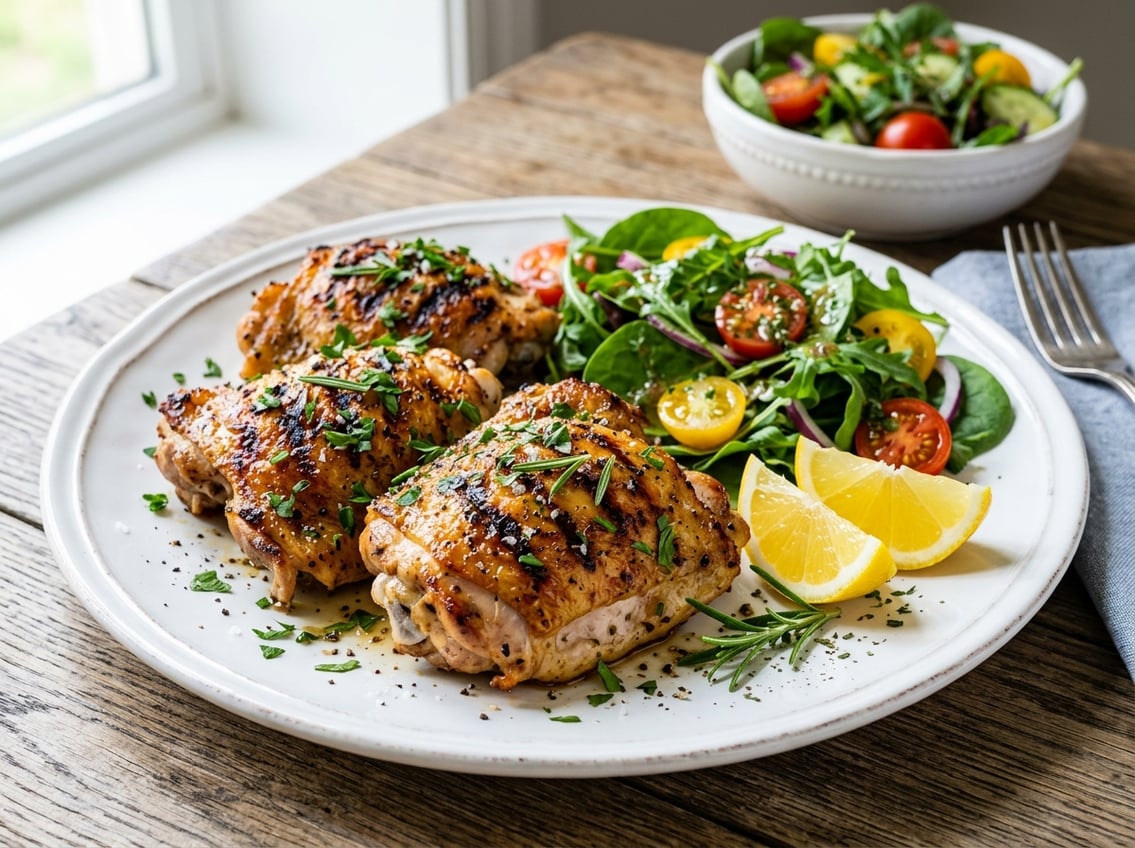
If you care about calories, fat, or specific nutrients, thighs bring a different nutrition profile than breasts.
You get a bit more saturated fat and calories, plus beneficial B vitamins and iron.
Protein Content in Chicken Thighs
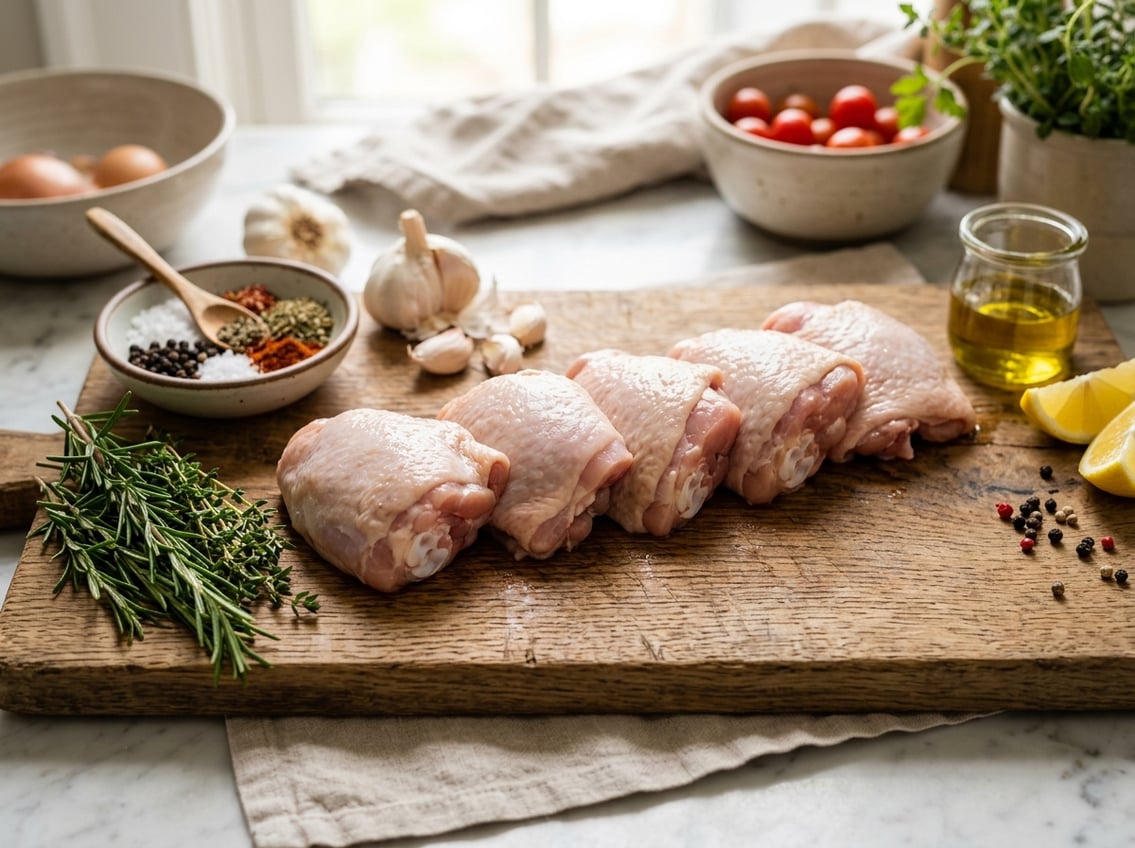
Chicken thighs provide substantial protein per typical portion and contain more fat than breast meat.
Expect roughly 24–26 grams of protein per 100 grams of cooked, skinless chicken thigh, with values changing slightly by portion size and cooking method.
Protein per Serving and Portion Size
A standard cooked, skinless chicken thigh (about 100–115 g) supplies roughly 24–27 g of protein.
If you eat two medium thighs (about 200–230 g cooked), you get roughly 48–54 g of protein.
Factors that change the number include whether the thigh is skin-on or skinless and how much moisture it loses during cooking.
Skin-on thighs add fat and calories but contribute negligibly to protein content.
Weigh cooked meat for the most accurate protein estimate because raw-to-cooked shrinkage concentrates nutrients.
Comparison With Other Chicken Cuts
Chicken breast typically provides about 30–32 g of protein per 100 g cooked, while thighs provide about 24–26 g.
Thighs contain more fat and calories, which can be beneficial if you need extra energy or a higher dietary fat intake.
Dark meat offers similar protein to wings and drumsticks on a per-weight basis but consistently trails breast meat.
Choose thighs when flavor and satiety matter; choose breast when you need the highest protein-to-calorie ratio.
Effect of Cooking Methods on Protein Levels
Cooking method affects final protein per weight by altering moisture loss and fat retention.
Grilling, roasting, or pan-searing concentrates protein as water evaporates, so 100 g cooked contains more protein than 100 g raw.
Boiling or braising can retain more moisture, slightly lowering protein concentration by weight.
Adding marinades or breading changes weight and calorie density without adding much protein.
Removing the skin after cooking reduces fat but leaves most of the protein intact.
For precise tracking, measure cooked, skinless thigh weight and use 24–26 g protein per 100 g as a practical estimate.
Chicken Thigh Nutrition Profile
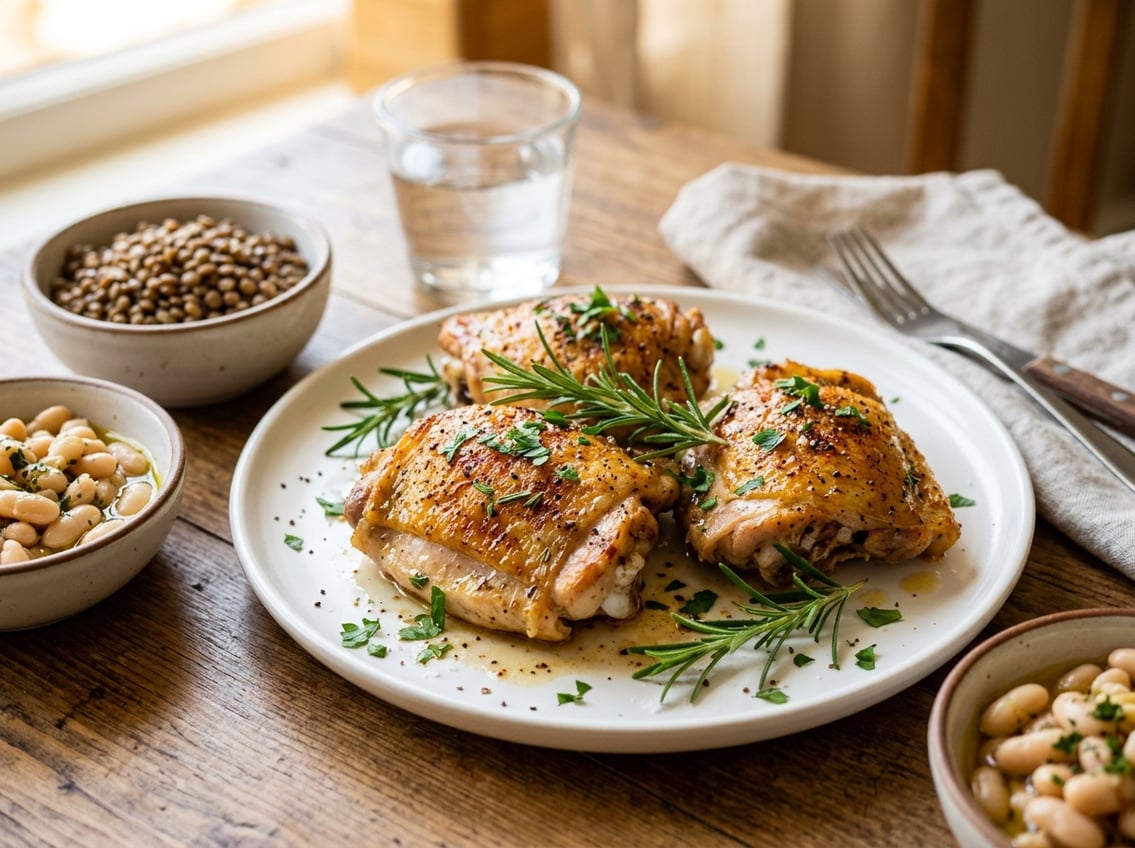
Chicken thighs deliver concentrated protein, more iron and zinc than breast meat, and a higher fat content that raises calories but adds flavor and satiety.
You’ll see meaningful differences between skin-on and skinless thighs and between raw and cooked weights.
Macronutrients: Calories, Fat, and Carbohydrates
A 100 g serving of cooked, skinless chicken thigh typically provides about 25–27 g of protein and roughly 200–210 calories.
Fat content is the main variable: expect around 8–10 g of fat per 100 g for skinless, cooked thighs, while skin-on portions can add substantially more calories and fat.
Carbohydrates are essentially zero in plain chicken thighs.
If you track macros, thighs give a solid protein return with moderate fat, making them useful for muscle maintenance or moderate-calorie meal plans depending on whether you remove the skin.
Micronutrients: Vitamins and Minerals
Chicken thighs contain higher amounts of iron and zinc than white meat, which supports oxygen transport and immune function.
You also get B vitamins—especially B6 and B12—that support energy metabolism and nervous system health.
Portion for portion, thighs often provide more heme iron than breast, making them a better choice if you need dietary iron.
If you rely on poultry for micronutrients, choose thighs when you want extra minerals without switching to red meat.
Role of Healthy Fats in Chicken Thighs
The fats in chicken thighs are a mix of monounsaturated and saturated fats, with monounsaturated fat comprising a substantial share.
Those fats increase calorie density but help with nutrient absorption and meal satisfaction.
For lower calories and less saturated fat, remove the skin or cook using draining methods.
If you follow a low-carb or ketogenic approach, the additional fat in thighs can help meet your dietary needs without adding carbs.
Comparing Chicken Thighs and Chicken Breasts
Chicken thighs and chicken breasts differ mainly in protein, calories, and fat.
Thighs deliver more fat and iron, while skinless chicken breast gives more protein per calorie and lower saturated fat.
Protein and Calorie Comparison
A typical 3-ounce cooked skinless chicken breast provides about 25–30 grams of protein and roughly 140 calories.
That makes chicken breast one of the leanest, most protein-dense options per calorie.
A 3-ounce cooked chicken thigh (skin removed) usually offers about 20–22 grams of protein and about 170 calories.
You get slightly less protein but more energy from the extra fat.
Consider portion size: a whole breast often weighs more than a single thigh, so absolute protein per piece can differ.
Adjust portions based on your target protein intake rather than assuming equal pieces deliver equal protein.
Differences in Fat Content
Skinless chicken breast contains about 3 g total fat and about 1 g saturated fat per 3-ounce serving.
That low saturated fat content helps reduce dietary saturated fat when you choose white meat over darker cuts.
Skinless chicken thigh contains closer to 9 g total fat and around 3 g saturated fat for the same 3-ounce portion.
The higher fat raises calories but also improves moisture and flavor during cooking.
If you keep the skin on, both cuts add significant extra fat and calories; remove the skin to control saturated fat more reliably.
If you monitor cholesterol or saturated-fat limits, favor skinless chicken breast.
If you need more calories or prefer a higher-fat profile for ketogenic or higher-energy diets, thighs fit better.
Taste and Cooking Flexibility
Chicken breast is mild and absorbs marinades well, but it dries out faster because of lower fat.
You’ll need shorter cooking times, brines, or moist methods like poaching or sous-vide to keep breast meat tender.
Chicken thighs are more forgiving; the extra intramuscular fat keeps them juicy across grilling, braising, roasting, or slow-cooking.
Dark meat holds up better in high-heat and long-cook applications without becoming tough.
Choose breast when you want lean protein with neutral taste or thin slices for salads and sandwiches.
Choose thigh when flavor, juiciness, or dishes that tolerate longer cooking are your priority.
Health Benefits and Drawbacks
Chicken thighs provide concentrated protein, B vitamins, iron, and zinc, while also containing more total and saturated fat than breast meat.
How you prepare them and whether you eat the skin strongly affect their nutrient profile and health impact.
Impact on Muscle Building and Recovery
Chicken thighs provide about 20–32 grams of high-quality protein per 3–4 ounce cooked serving, supplying all nine essential amino acids you need for muscle repair.
They also contain vitamin B12, niacin, and zinc—nutrients that support energy metabolism and tissue repair.
If you’re an athlete or strength trainer, pair thighs with a carbohydrate source within 1–2 hours after exercise to optimize glycogen replenishment and muscle synthesis.
Choose skinless thighs or trim visible fat if you want the protein benefits with fewer calories and less fat.
Cooking methods like grilling, baking, or broiling preserve protein while limiting added fats compared with frying.
Weight Management and Satiety
The higher fat content in thighs increases calorie density but also promotes satiety more than very lean cuts.
That can help you control overall intake by reducing hunger between meals, especially when you include vegetables and whole grains on your plate.
A typical 3-ounce skinless thigh has around 160 calories and 9 grams of fat; leaving the skin on raises calories substantially.
If you track energy balance for weight loss, use skinless thighs or adjust portion size to fit your daily calorie goal.
Fat also slows digestion, which steadies blood sugar and can decrease cravings.
Cook thighs without heavy sauces or excess oil to preserve satiety advantages without undermining a calorie-controlled diet.
Saturated Fat and Heart Health
Chicken thighs contain more total and saturated fat than chicken breast.
A 3-ounce skinless thigh often has about 2 grams of saturated fat.
Most of the fat in thighs is monounsaturated and polyunsaturated, which are neutral or beneficial for heart health when they replace saturated fats.
Pay attention to added fats from cooking methods; deep frying or butter-heavy recipes increase saturated fat and sodium, raising cardiovascular risk.
To protect heart health, favor skinless thighs, grill or bake them, and pair them with fiber-rich vegetables and whole grains.
Monitor total saturated fat across the day to keep it below recommended limits.
Choosing the Best Cut for Your Diet
You’ll weigh calories, protein per ounce, fat content, and cooking needs to match a cut to your goals.
Choose breast when you need lean protein and thighs when you want more flavor, moisture, and some extra fat-based nutrients.
Best Use Cases for Different Goals
If your priority is calorie control or maximizing protein per calorie, choose skinless chicken breast.
A 3-ounce cooked breast delivers more protein with less total and saturated fat than an equivalent thigh.
If your goal is satiety, flavor, or budget-friendly meals, choose skinless chicken thigh.
Thighs provide about the same protein per serving as breast but contain more healthy monounsaturated and saturated fats that improve mouthfeel and keep you fuller longer.
Use thighs for slow-cooked dishes, stews, or grilling where moisture matters.
For muscle building or active lifestyles, both cuts work.
Pair either with carbohydrate and vegetable sides to support recovery.
Rotate cuts to avoid diet monotony and to gain different micronutrients that thighs provide, such as slightly higher iron and zinc.
Incorporating Thighs and Breasts in Balanced Meals
Build a plate with 3–5 ounces of cooked chicken as a protein portion for most adults.
For a leaner plate, place skinless chicken breast over 1–1.5 cups of nonstarchy vegetables and ½–1 cup of whole grains.
That combination keeps calories controlled while delivering about 20–30 g of protein.
When using skinless chicken thigh, balance the higher fat by increasing vegetables and choosing whole grains with fiber.
A typical balanced meal could be 3 ounces thigh, 1 cup roasted vegetables, and ½ cup quinoa.
This supplies protein, healthy fats, fiber, and micronutrients without excess calories.
Swap cuts across meals: use breast in calorie-targeted lunches and thighs for family dinners or recipes that require longer cooking.
This approach preserves variety and nutrients while fitting specific meal goals.
Tips for Healthier Preparation
Remove skin to cut substantial calories and saturated fat. A roasted thigh with skin adds roughly 100 extra calories per 3-ounce portion.
Choose skinless chicken thigh or breast when you want lower fat content without changing flavor much. Select cooking methods that don’t add much oil, such as grilling, baking, broiling, steaming, or stir-frying with minimal oil.
Use herbs, citrus, vinegar, and spices instead of heavy sauces to control sodium and calories. These options also boost taste.
Trim visible fat and measure portions after cooking. When you use thighs for slow-cooked dishes, drain excess fat from the pan and skim fat from broths.
Alternate breast and thigh across your weekly plan to balance lean-protein needs with the healthy fats and micronutrients thighs provide.


