
When Baking Chicken Thighs: Should You Cover or Leave Uncovered?
Decide whether to cover chicken thighs based on the result you want. Cover for juicier, more evenly cooked meat; uncover for crispier skin.
If you want tender, fall-off-the-bone thighs, cover during the early part of baking. If you want golden, crackling skin, leave them uncovered or uncover for the final minutes.
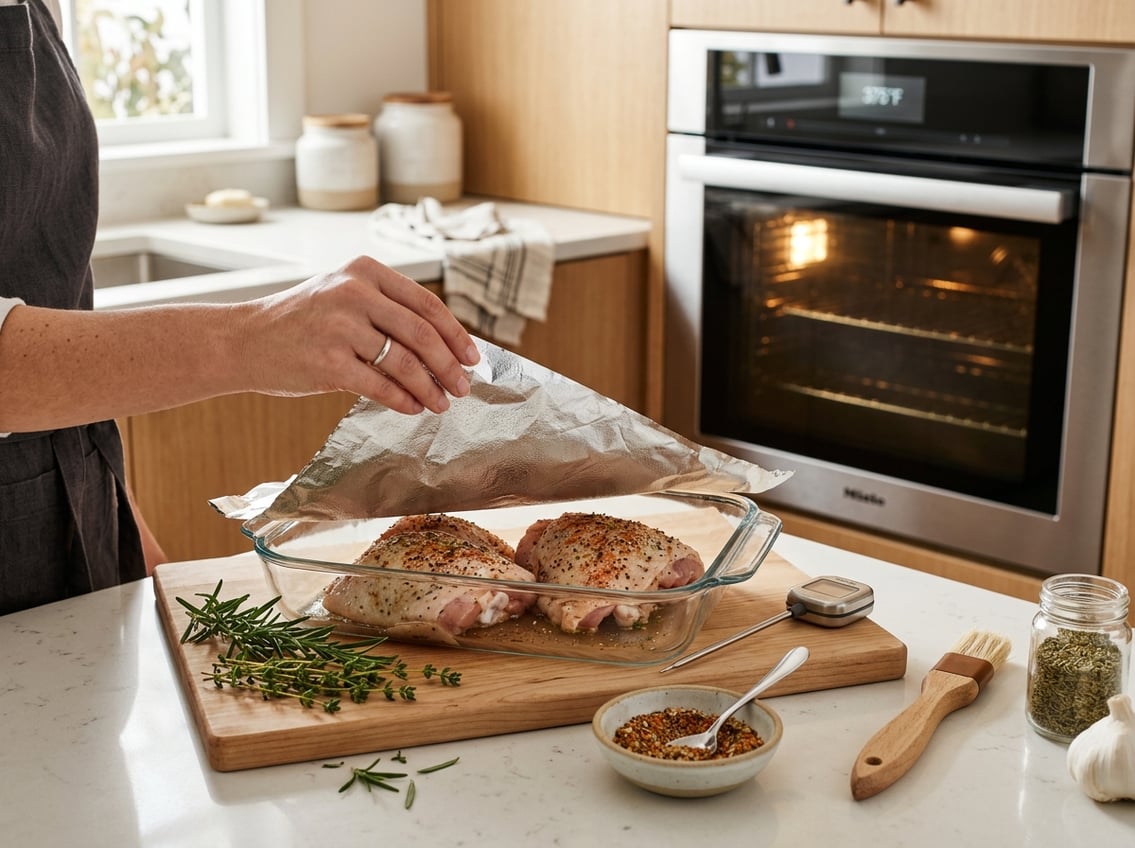
Covering affects moisture, texture, and cooking time. You can use hybrid methods to achieve both juiciness and crispness.
You’ll find tips on temperatures, timing, seasoning, and common mistakes to help your next tray of thighs turn out the way you want.
The Impact of Covering Chicken Thighs During Baking
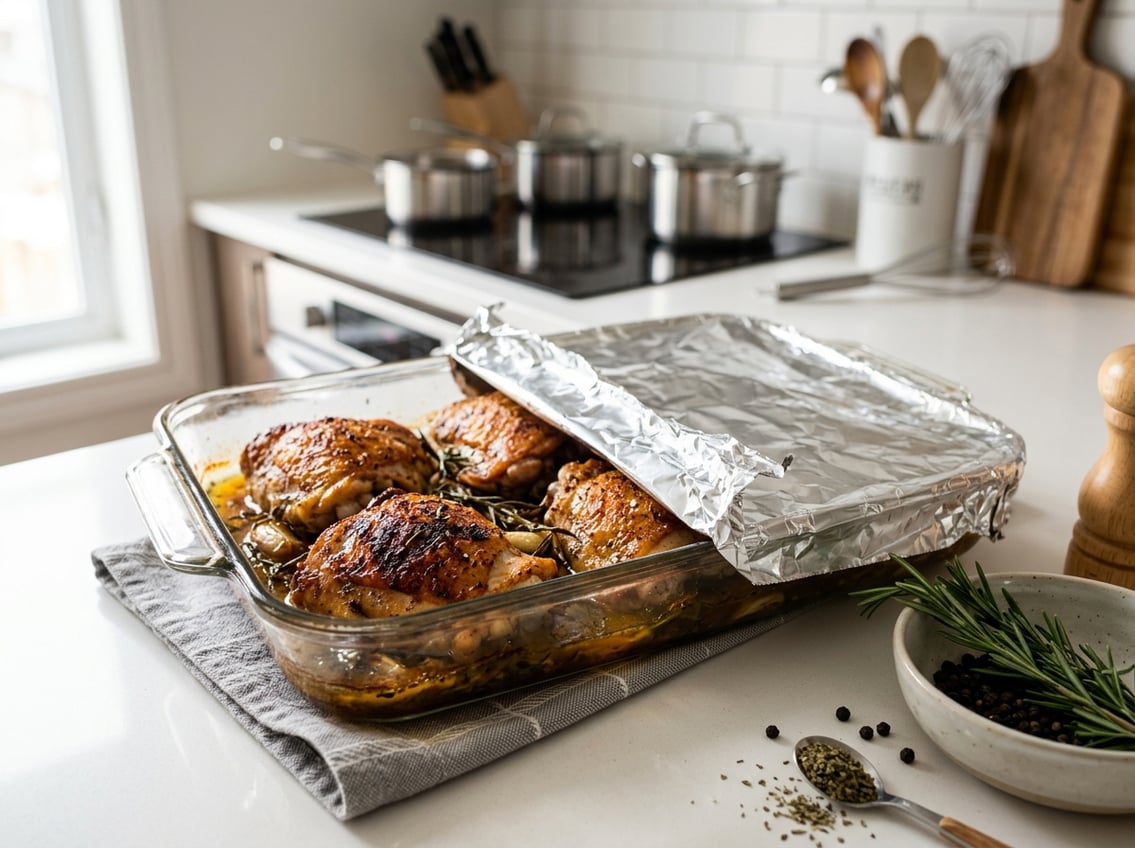
Covering chicken thighs changes how heat and steam interact with the meat. Your choice directly affects texture, cooking time, and skin outcome.
Use covering to keep thighs moist and evenly cooked. Remove it to brown and crisp the skin.
How Covering Traps Moisture and Affects Texture
When you cover chicken thighs with foil, a lid, or parchment, you trap steam in the pan. That humid environment slows surface evaporation and reduces moisture loss from the meat.
The thighs stay tender and the exterior does not dry out during longer bakes. Trapped steam also evens out temperature differences between the surface and the interior.
Thicker bone-in thighs reach safe internal temperature with less risk of the outer meat becoming tough. While covered, you’ll see less browning and a softer texture rather than crisp skin.
Use an instant-read thermometer to check doneness at 165°F/74°C when baking covered. Rest the thighs after baking to let juices redistribute and keep them juicy.
Crispy Skin Versus Juiciness: Weighing The Benefits
If you want crispy skin, bake uncovered at a higher temperature (around 400–425°F/200–220°C). Dry heat promotes browning and crisp skin while keeping the interior juicy if you avoid overcooking.
If you want maximally juicy chicken thighs, especially bone-in or larger pieces, start covered for 20–30 minutes at a moderate temperature (about 375°F/190°C). Then remove the cover and increase heat for 8–15 minutes to finish and crisp the skin.
This two-stage approach balances tenderness and surface browning. For boneless, skinless thighs, covering provides less benefit because there’s no skin to crisp.
Adjust timing based on thigh size and whether they start cold from the fridge.
Covering With Foil, Parchment, or Lids
Aluminum foil creates a tight seal and traps steam quickly. Use foil when you want consistent moisture retention or when braising-style juices matter.
Tent the foil slightly to avoid touching the skin if you plan to finish uncovered. Parchment or a parchment-and-foil combo lets some steam escape and reduces direct contact with acidic marinades.
Parchment is a good compromise when you want moisture but less condensation pooling on the skin. A fitted oven-safe lid yields the most even heat distribution and works well for bone-in thighs you want tender throughout.
Lids are reusable and reduce hot-spot browning. Remove the lid near the end to crisp the surface.
Quick guide:
- Foil: best seal, maximum moisture retention.
- Parchment: gentler steam, less condensation on skin.
- Lid: even heat, consistent cooking for large pieces.
Choose the covering method that matches your goal: full moisture retention, partial steam control, or easy finishing for crispy baked chicken thighs.
Uncovered Baking for Maximum Crispiness
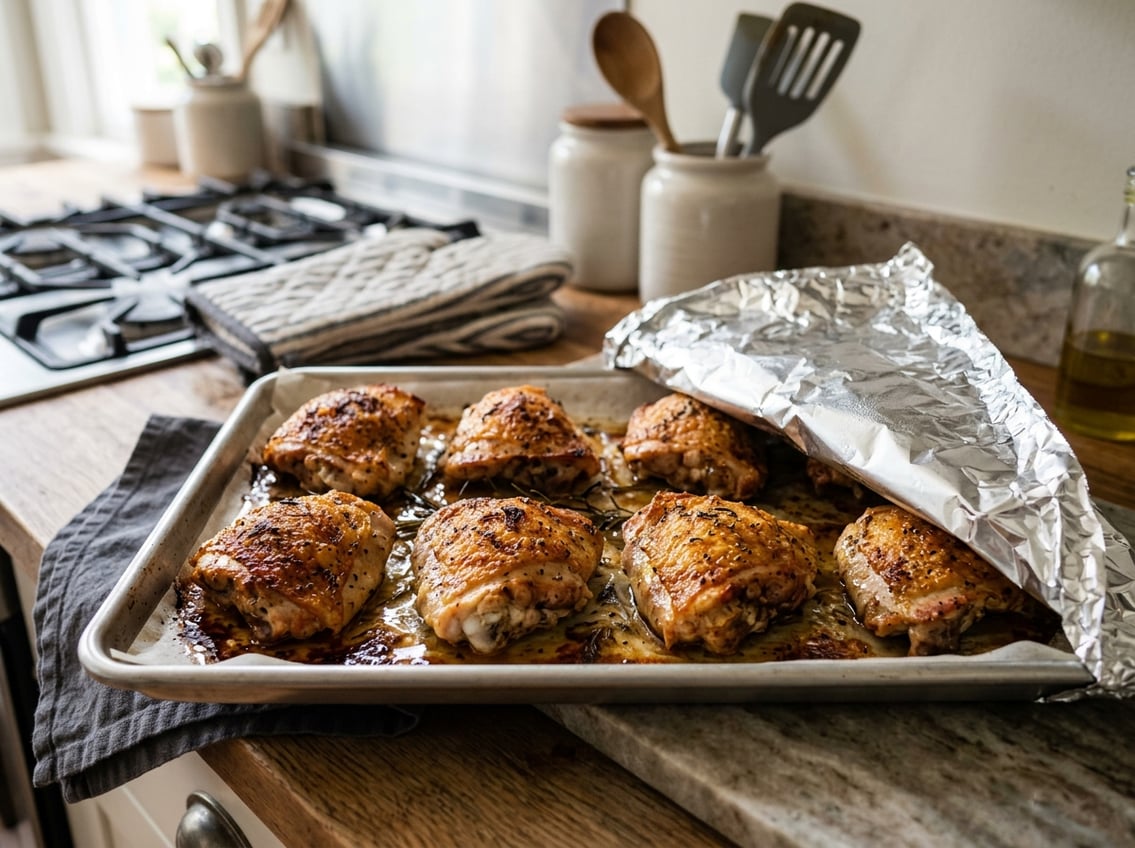
When you leave skin-on chicken thighs uncovered, the skin gets exposed to dry oven heat so it crisps and browns. Use higher heat during the final stage and monitor internal temperature to keep meat juicy while getting the texture you want.
The Science Behind Browning and Skin-On Chicken Thighs
Baking chicken thighs uncovered lets hot, dry air draw moisture from the skin surface. Less surface moisture allows the skin to dehydrate and tighten, resulting in a crisp texture.
Position the thighs on a wire rack over a sheet pan or on a lightly oiled baking sheet. This setup allows air to circulate under and around each piece and prevents steaming.
Use a moderate-to-high oven temperature—around 400–425°F (200–220°C)—for browning without overcooking. Cook bone-in thighs longer than boneless.
Check the thickest point with a probe thermometer and remove at 165°F (74°C). Rest the thighs for 5–10 minutes so juices redistribute without making the skin soggy.
Maillard Reaction and Flavor Development
The Maillard reaction needs high heat and a dry surface to form brown crusts and complex flavors on baked chicken thighs. Proteins and sugars on the skin react between 300–350°F (150–175°C) and intensify as temperature rises, producing savory, roasted notes.
To maximize browning, pat the skin dry with paper towels and season it with salt at least 15–20 minutes before baking. Salt draws out surface moisture and enhances flavor.
Arrange thighs with space between them because crowded pieces steam instead of brown. If the skin hasn’t crisped by the time the internal temperature is reached, finish under the broiler for 1–3 minutes while watching closely to prevent burning.
Hybrid Techniques for Perfect Results
Start with a covered phase to lock in moisture, then finish uncovered to crisp skin and concentrate flavor. Time the switch so the thighs reach near-target internal temperature before exposing them to high heat.
Baking Covered Then Uncovered: Step-by-Step Guide
Preheat oven to 400°F (200°C). Arrange skin-on, bone-in thighs on a rimmed baking sheet or in a shallow roasting pan.
Pat skin dry and season. Tent loosely with aluminum foil or use a lidded pan to trap steam.
Bake covered for 20–30 minutes depending on size. This phase steams the meat, reducing moisture loss and producing juicy chicken thighs without overbrowning.
Check internal temperature; when thighs reach about 155–160°F (68–71°C), remove the cover. Increase oven to 425–450°F (220–230°C) or switch to broil for the final 5–10 minutes.
Place thighs skin-side up and return to oven until skin crisps and internal temp hits 165°F (74°C). Rest 5 minutes before serving.
When to Remove the Cover for Best Texture
Remove the cover once the meat is nearly cooked but still slightly under target temperature. Aim for 155–160°F (68–71°C) before uncovering to allow carryover cooking to finish without drying the meat.
If you want very crispy skin, uncover for the last 8–12 minutes at 425–450°F (220–230°C). For gentler crisping, uncover and finish at 400°F (200°C) for 10–15 minutes.
Use a digital thermometer inserted into the thickest part without touching bone to judge timing accurately. If thighs are small or boneless, reduce the covered phase by 5–10 minutes and watch closely when uncovered, since baking time will be shorter and overrunning can dry them out.
How Covering or Uncovering Changes Baking Time
Covering traps steam and slows surface evaporation, often adding a few minutes to total bake time while keeping meat juicier. Leaving thighs uncovered speeds surface browning and can reduce time to reach safe doneness for the exterior, but risks drier meat unless you adjust temperature or technique.
Effect on Even Cooking and Doneness
When you cover chicken thighs, steam circulates and raises humidity around the pieces. That moist environment transfers heat more evenly, so thick or uneven thighs reach 165°F (74°C) with less overbrowning.
Covered baking usually adds about 5–15% more time compared with fully uncovered at the same oven temperature because the foil or lid slightly insulates the surface.
If you bake chicken thighs uncovered, direct dry heat promotes browning and crisp skin. Uncovered thighs often hit target internal temperature faster at the surface, but the interior can lag if pieces are uneven.
Use a probe thermometer in the thickest part to confirm 165°F (74°C). Rotate the pan and space pieces so hot air circulates evenly.
Adjusting for Bone-In or Boneless Thighs
Bone-in thighs take longer to cook than boneless because the bone absorbs heat and slows center temperature rise. If you bake bone-in thighs covered, plan on 10–20 extra minutes versus boneless covered thighs at the same oven setting.
For example, boneless thighs at 375°F (190°C) often finish in 20–30 minutes uncovered. Bone-in covered might require 35–45 minutes.
With boneless thighs, you can use higher temps and shorter times to preserve juiciness while crisping skin. If you choose to cover boneless thighs partway, reduce oven time by about 5–10 minutes from the uncovered schedule and still verify 165°F (74°C).
For bone-in pieces, consider starting covered to cook through, then uncovering for the last 8–12 minutes to brown the exterior.
Flavor, Moisture, and Seasoning Techniques
You can control both flavor and moisture by choosing seasonings and techniques that suit covered or uncovered baking. Small changes—when you salt, whether you dry the skin, or when you baste—make a big difference to juicy, skin-on baked chicken thighs.
Seasoning Approaches for Covered vs. Uncovered Baking
For uncovered baking, focus on dry rubs and surface treatments that promote crisp skin. Pat skin-on chicken thighs very dry with paper towels, then rub with oil and a mix of coarse salt, black pepper, smoked paprika, garlic powder, and a little sugar for browning.
Arrange thighs skin-side up on a wire rack so hot air circulates and skin crisps evenly. When you plan to cover the pan, use wetter marinades or sauces that benefit from steam.
Marinate thighs 30 minutes to 12 hours in a mixture with acid (lemon or vinegar), oil, and aromatics so flavor penetrates the meat. Reduce strong sugars in the marinade if you’ll cook covered for the whole time to avoid a too-soft surface.
Finish uncovered for 5–10 minutes if you want some skin color.
Moisture-Retention Tips Without Covering
To keep baked chicken thighs juicy while leaving them uncovered, start by brining or salting ahead. A 30–60 minute dry brine (salt sprinkled over thighs and refrigerated) helps the meat retain moisture during high-heat baking.
Use a high oven temperature (400–425°F / 200–220°C) so the exterior seals quickly while the interior stays moist. Cook bone-in thighs to an internal temperature of 175°F (80°C) for optimal texture; remove at 160–163°F (71–73°C) and rest 5–10 minutes to reach safe doneness and preserve juiciness.
Baste once or twice with pan juices or a little melted butter during the last third of cooking to boost flavor without steaming the skin.
Common Mistakes and Expert Tips for Baking Chicken Thighs
Keep skin crisp and meat juicy by controlling moisture and heat. Use a thermometer, rack, and a rimmed sheet to avoid soggy skin or burned edges.
Preventing Over-Browning or Soggy Skin
Bake chicken thighs uncovered on a wire rack set over a rimmed baking sheet to keep the skin crisp. The rack lets hot air circulate so skin dries and browns instead of steaming against the pan.
Pat thighs very dry with paper towels and season; excess moisture is the main cause of soggy skin. If pieces brown too quickly, move the tray down one oven rack or reduce temperature by 10–15°F (5–8°C).
For bone-in, skin-on thighs you can start hot (425°F/218°C) for 10–15 minutes, then lower to 375°F/190°C to finish without burning. Avoid covering skin with foil; covering traps steam and softens the skin, though you may tent foil briefly at the end to prevent excess darkening.
Best Practices for Oven Setup and Monitoring
Place thighs skin-side up and leave at least 1 inch between each piece so the edges crisp evenly.
Apply a light coating of oil to help with browning. Add heavy sauces only in the last 5–10 minutes if you want a glaze.
Reduce bake time for boneless thighs and start checking them earlier to prevent overcooking.
Insert an instant-read thermometer into the thickest part, making sure it does not touch the bone.
Remove thighs from the oven when they reach 160–165°F (71–74°C), as carryover heat will finish the cooking.
Rotate the pan halfway through baking if your oven has hot spots.
If you want very moist meat, cover the thighs for part of the bake, but remove the cover for the last 10–15 minutes to bring back some crispness.


