
How Long Should You Cook Chicken Thigh For: Temperatures, Methods, and Juiciness Tips
You want juicy, safe-to-eat chicken thighs without guessing at time and temperature. For bone-in, skin-on thighs, bake at 400°F (200°C) for about 35–45 minutes.
For boneless thighs, bake at 400°F (200°C) for about 20–30 minutes. Always cook until the internal temperature reaches 165°F (74°C).
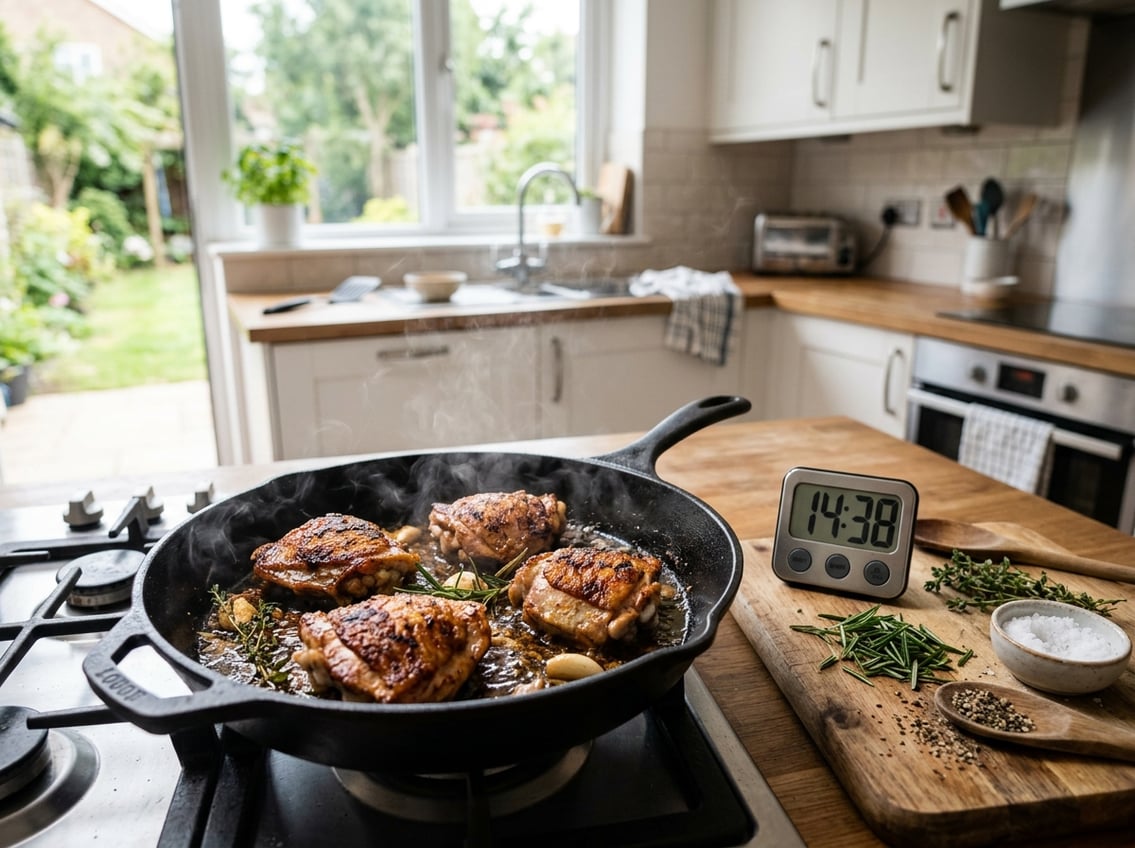
This guide explains how bone-in or boneless cuts, skin, and oven temperature affect cook time. You’ll also find practical oven-time charts, seasoning and marinating tips, and a few reliable recipes.
Understanding Chicken Thigh Types and Their Impact on Cooking Time
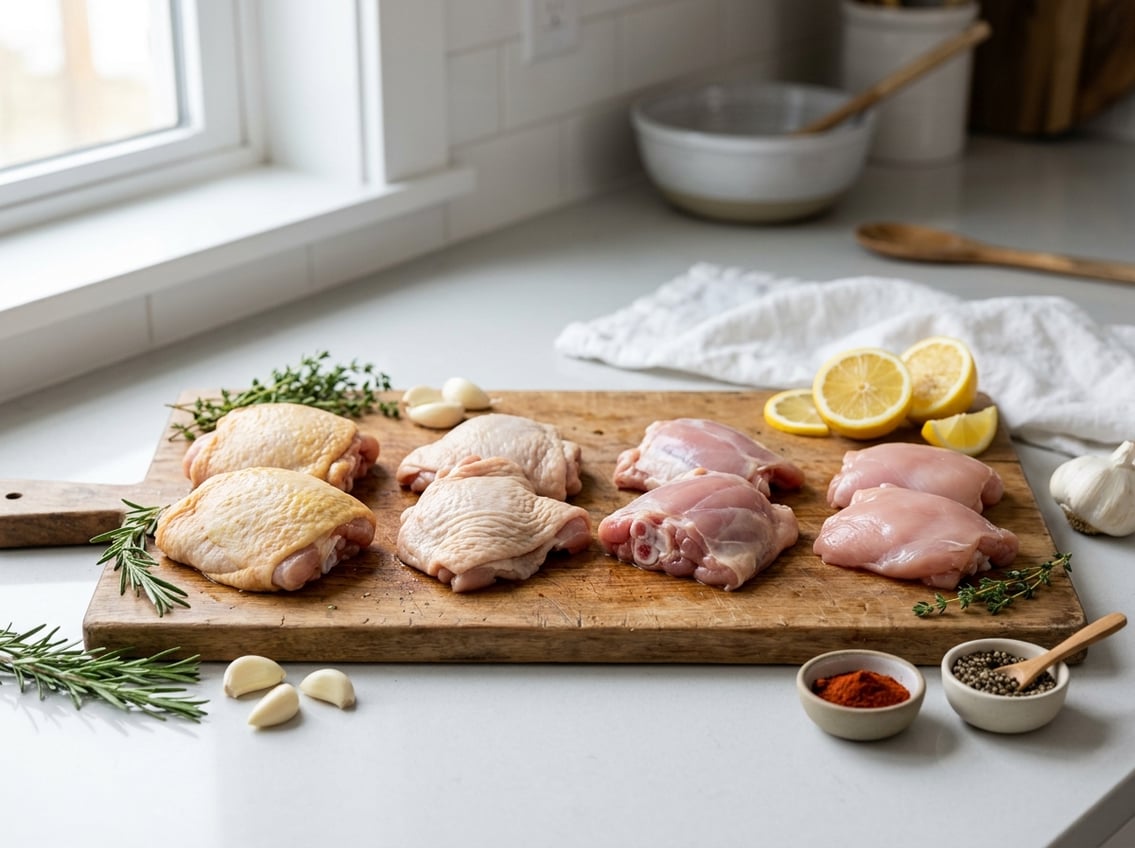
Different thigh types change how heat moves through the meat and how long you need to cook them to reach 165°F. Knowing whether your thighs are bone-in or boneless, skin-on or skinless, helps you pick temperature, time, and method confidently.
Bone-In vs Boneless Chicken Thighs
The bone in chicken thighs slows heat penetration, so bone-in thighs take longer to reach a safe internal temperature. Expect bone-in thighs (4–8 oz each) to need roughly 35–50 minutes at 350°F, depending on size.
Higher temperatures like 425°F reduce time to about 30–40 minutes and help with browning. Use an instant-read thermometer and probe the thickest meat near the bone, avoiding contact with the bone for an accurate reading.
Boneless chicken thighs heat faster and more evenly. At 425°F, they typically finish in about 20–30 minutes; at 350°F, plan on 25–40 minutes depending on thickness.
Rest boneless pieces 5–10 minutes after cooking to let juices redistribute. If you cook mixed batches, stagger or separate bone-in and boneless to avoid overcooking the boneless pieces.
Skin-On vs Skinless Chicken Thighs
Skin-on chicken thighs have a fat layer that insulates the meat and protects it from drying, slightly increasing cook time compared to skinless pieces. The skin crisps when exposed to high heat.
Roast skin-side up at 425–450°F for 25–35 minutes for crisp skin and juicy meat. The rendered fat helps brown the surface and adds flavor.
Skinless thighs cook more quickly and absorb marinades well. At 400–425°F, skinless thighs finish in about 20–30 minutes.
Because there’s less insulating fat, check internal temperature early and rest briefly to retain moisture. When cooking both skin-on and skinless, remove skinless earlier or place them on a hotter rack to balance cooking.
Recommended Temperatures for Baking and Roasting
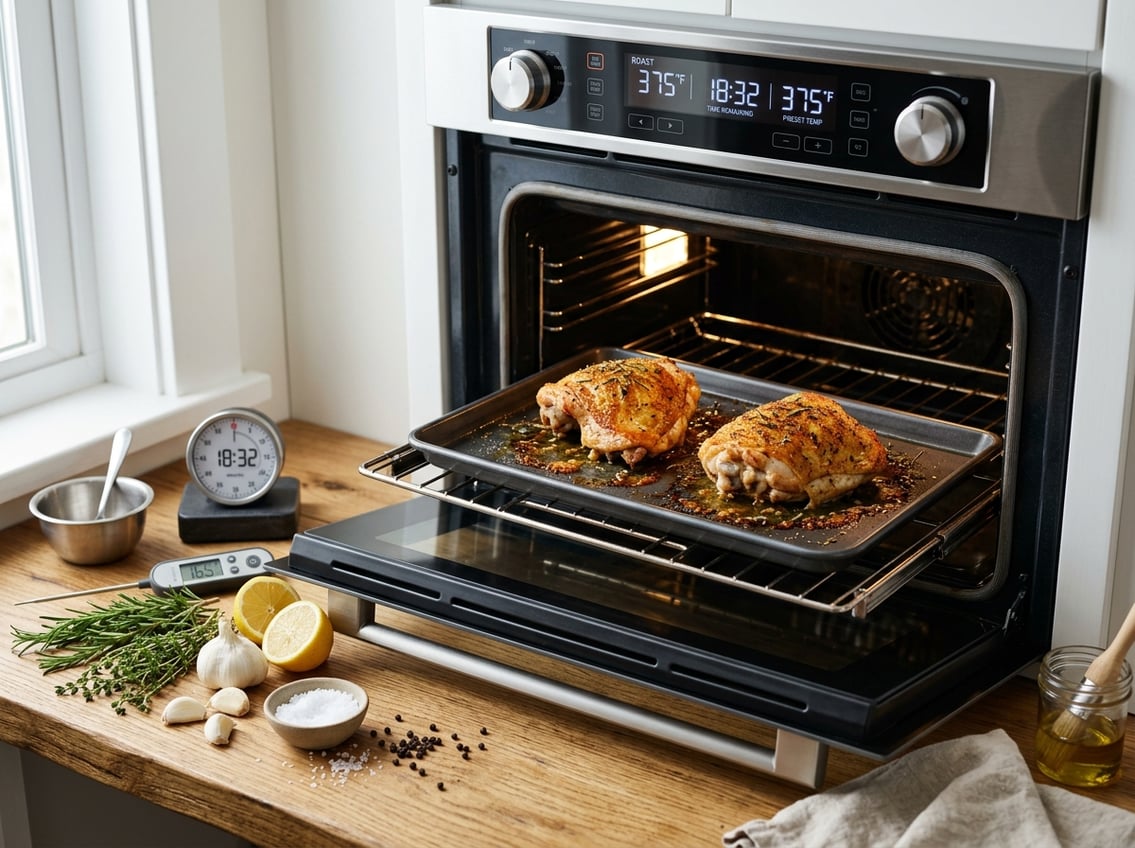
Set your oven between 325°F and 425°F depending on whether you want juiciness or crisp skin. Always verify doneness with an internal temperature reading.
What Temperature to Cook Chicken Thighs
Bake bone-in, skin-on thighs at 400–425°F for crispy skin and brown color. At 425°F, cook for about 25–35 minutes; at 400°F, cook for about 30–40 minutes.
Lower temperatures (325–375°F) cook more gently and can take 40–50 minutes but reduce the chance of over-browning. Boneless thighs cook faster: 375–400°F for roughly 20–30 minutes, depending on thickness.
Use a single layer on a rimmed sheet or pan for even heat and avoid crowding to maintain crisping. If you roast a whole tray, choose 400°F as a balance between crisp skin and a moist interior.
Adjust time for thigh size: larger (6–8 oz) need more time than smaller (3–4 oz).
Why Internal Temperature Matters
The safe minimum internal temperature for all poultry is 165°F measured in the thickest part. Reaching 165°F ensures harmful bacteria are destroyed.
Thighs contain dark meat that stays juicier at slightly higher finish temps. You can remove thighs at 165–170°F and let carryover heat raise the internal temperature by a few degrees during resting.
Always check the thickest point, avoiding bone contact, for an accurate reading.
How to Use a Meat Thermometer
Insert the thermometer probe into the thickest part of the thigh without touching bone. For bone-in thighs, aim the probe toward the center of the meat, parallel to the bone, to avoid false high readings.
Use an instant-read digital thermometer for quick checks. For long roasts, you can use an oven-safe probe thermometer and set an alert for 165°F.
After the thermometer reads 165°F, rest the thighs 5–10 minutes before serving. Resting evens temperature, finishes carryover cooking, and helps retain juices.
Oven Cooking Times Based on Cut and Preparation
Bone-in or boneless, skin-on or skinless, oven temperature and thigh size change times by 5–15 minutes. Check internal temperature rather than relying on the clock.
How Long to Bake Bone-In Chicken Thighs
Bone-in chicken thighs take longer because the bone slows heat transfer. At 400°F (200°C), expect 35–45 minutes for medium-sized thighs (about 6–8 oz each).
Larger thighs can need up to 50 minutes. Use an instant-read thermometer and pull when the thickest part (avoiding bone) reads 165°F (74°C).
If you want crisp skin, finish under the broiler for 1–3 minutes, watching closely to avoid burning. For juicier results, bake at 350°F (175°C) for 40–50 minutes.
Rest the thighs 5–10 minutes before serving to let juices redistribute.
How Long to Bake Boneless Chicken Thighs
Boneless chicken thighs cook more quickly because heat reaches the center faster. At 425°F (220°C), plan on 15–20 minutes for 4–6 oz pieces; at 400°F, allow 18–22 minutes.
Thicker or crowded pieces can add 3–7 minutes. Always verify with an instant-read thermometer and target 165°F (74°C) at the thickest point.
If you marinate or brine, reduce bake time slightly because moisture speeds heat conduction. For shredding or stir-fry use, bake to 170–175°F then rest.
Key Differences for Baking Skin-On Chicken Thighs
Skin-on thighs need attention to surface heat. To get crisp skin, start at a higher temperature (425°F/220°C) for the first 10–15 minutes, then lower to 375°F (190°C) for the remaining time.
This method helps render fat without burning the skin. Cooking times align with bone-in or boneless guidelines, but skin can mask doneness, so always check internal temperature.
Place thighs skin-side up on a rack or raised on vegetables to allow air circulation and promote even browning.
Essential Techniques for Juicy and Tender Chicken Thighs
Control temperature, timing, seasoning, and handling to get juicy, tender meat with crisp skin. Small actions during and after cooking—internal-temp checks, resting, and finishing methods—make the biggest difference.
Resting After Baking
Resting locks in juices and finishes carryover cooking. Remove thighs from the oven when the thickest part reaches 160–165°F (71–74°C) for boneless or 170–175°F (77–80°C) for bone-in.
The internal temperature will rise 3–5°F as the meat rests. Transfer thighs to a warm plate and tent loosely with foil for 5–10 minutes for boneless, 10–15 minutes for bone-in.
This pause lets muscle fibers relax and reabsorb expelled juices. Slice against the grain after resting to shorten muscle fibers and maximize tenderness.
If you cut immediately, juices run out and the meat will seem drier.
Avoiding Overcooking
Use an instant-read thermometer to avoid guessing. Check at the thickest point without touching bone and stop cooking once the target temperature is hit.
If the skin browns before the meat reaches temperature, lower oven heat to 350°F (175°C) and tent with foil to finish without drying. For boneless thighs, reduce oven time by about 5–10 minutes compared with bone-in cuts.
Avoid prolonged high heat for large batches and rotate the pan for even exposure. Brines or marinades with a little acid and salt help retain moisture, but avoid long acidic marination that can make texture mushy.
Achieving Crispy Chicken Thighs
Dry skin yields crispy skin. Pat thighs completely dry with paper towels before seasoning.
Start skin-side up in a hot oven (425–450°F / 220–230°C) for 20–30 minutes for bone-in, or 18–25 minutes for boneless, then check doneness. For extra crispness, begin on the stovetop skin-side down in a hot, oven-safe skillet for 3–5 minutes to render fat, then transfer to the oven.
Finish under the broiler for 1–3 minutes if needed, watching closely. Rest briefly after crisping to let juices settle.
Preparation and Marination for Enhanced Flavor
Proper prep and a balanced marinade make chicken thighs flavorful. Focus on surface drying, even thickness, and a marinade with acid, oil, and seasoning to both tenderize and flavor the meat.
How to Marinate Chicken Thighs
Trim excess fat and pat thighs dry with paper towels; dry skin crisps better when cooking. If pieces vary in thickness, pound gently to even thickness for consistent cooking.
Use a non-reactive container or a resealable plastic bag to coat thighs completely. Turn or massage the bag every few hours so the marinade contacts all surfaces.
If your marinade includes strong acid (lemon, vinegar, yogurt), keep marinating times shorter for boneless cuts to avoid mushy texture. Reserve a small portion of marinade before adding raw chicken if you plan to use it as a sauce.
Marinating Time Guidelines
Aim for 30 minutes to 2 hours for light flavor infusion. Marinate 4–8 hours for deeper flavor and tenderness.
Up to 24 hours is fine for robust marinades without excessive acid. Avoid exceeding 24 hours to prevent protein breakdown and a soft texture.
For boneless, skinless thighs, 2–6 hours usually gives ample flavor. For bone-in, skin-on thighs, you can marinate 6–12 hours because the bone and skin buffer the meat.
If you’re short on time, even 30–60 minutes will improve flavor compared with no marinade. Always refrigerate while marinating and discard any marinade that touched raw chicken unless boiled for at least 3–5 minutes.
Seasoning Tips
Build the marinade using three parts: acid (lemon, vinegar, yogurt), oil (olive, neutral), and flavor agents (garlic, soy, herbs, spices). Salt is essential; include it in the marinade to help the meat retain moisture and carry flavors inward.
Use fresh aromatics for brighter flavor such as minced garlic or chopped rosemary. For balanced heat, add chili flakes or a small amount of hot sauce.
For crisp skin, pat skin dry before cooking and don’t over-saturate with wet marinade immediately before searing or grilling. If you want a glaze, brush reserved, boiled marinade or a separate sauce during the last few minutes of cooking.
Popular Oven-Baked Chicken Thigh Recipes
These recipes use reliable temperature and timing choices and simple seasoning techniques. You’ll find straightforward methods for both boneless and bone-in thighs plus a couple of flavor twists to try.
Classic Baked Chicken Thighs
Bake boneless, skinless thighs at 425°F (218°C) for about 22–28 minutes. Bake bone-in, skin-on thighs at 400–425°F for 30–40 minutes until the internal temperature reaches 165°F (74°C).
Insert an instant-read thermometer in the thickest part and avoid touching the bone for accurate readings.
Season the thighs with olive oil, kosher salt, black pepper, and garlic powder. Arrange them on a rimmed baking sheet or in a shallow roasting pan with space between each piece so hot air circulates and the exterior browns.
Let the cooked thighs rest for 5 minutes before slicing to retain juices.
Cool the thighs completely and store them in a sealed container in the refrigerator for up to 4 days. Reheat gently in a 325°F oven or covered skillet to avoid drying.
Creative Roasted Chicken Thigh Variations
Marinate boneless thighs in a soy-garlic-ginger mixture for 30 minutes to overnight. Broil them for 2–3 minutes at the end for a charred finish.
For bone-in, skin-on thighs, preheat a baking sheet in a 500°F oven. Place the thighs skin-side up on the hot sheet to start crisping, then roast for 25–35 minutes depending on size.
Rub thighs with smoked paprika, cumin, and brown sugar for a caramelized crust. Bake at 425°F until they reach an internal temperature of 165°F.
Roast thighs on a bed of root vegetables tossed in the same oil and seasoning. The vegetables absorb pan juices and finish in the same 30–40 minute window for bone-in pieces.
For hands-off cooking, briefly braise thighs on the stovetop. Finish them uncovered in a 375°F oven for 20–30 minutes to meld the sauce and roast the exterior.


