
Is Chicken Thigh Skin Bad for You? Nutrition, Fat, and Cooking Insights
You can enjoy chicken thigh skin without guilt if you keep portions and cooking method in mind.
Chicken thigh skin adds only a modest number of extra calories and contains mostly unsaturated fats, so it’s not inherently “bad.” However, it can raise saturated fat and calorie intake if you eat it often or prepare it with lots of added oil.
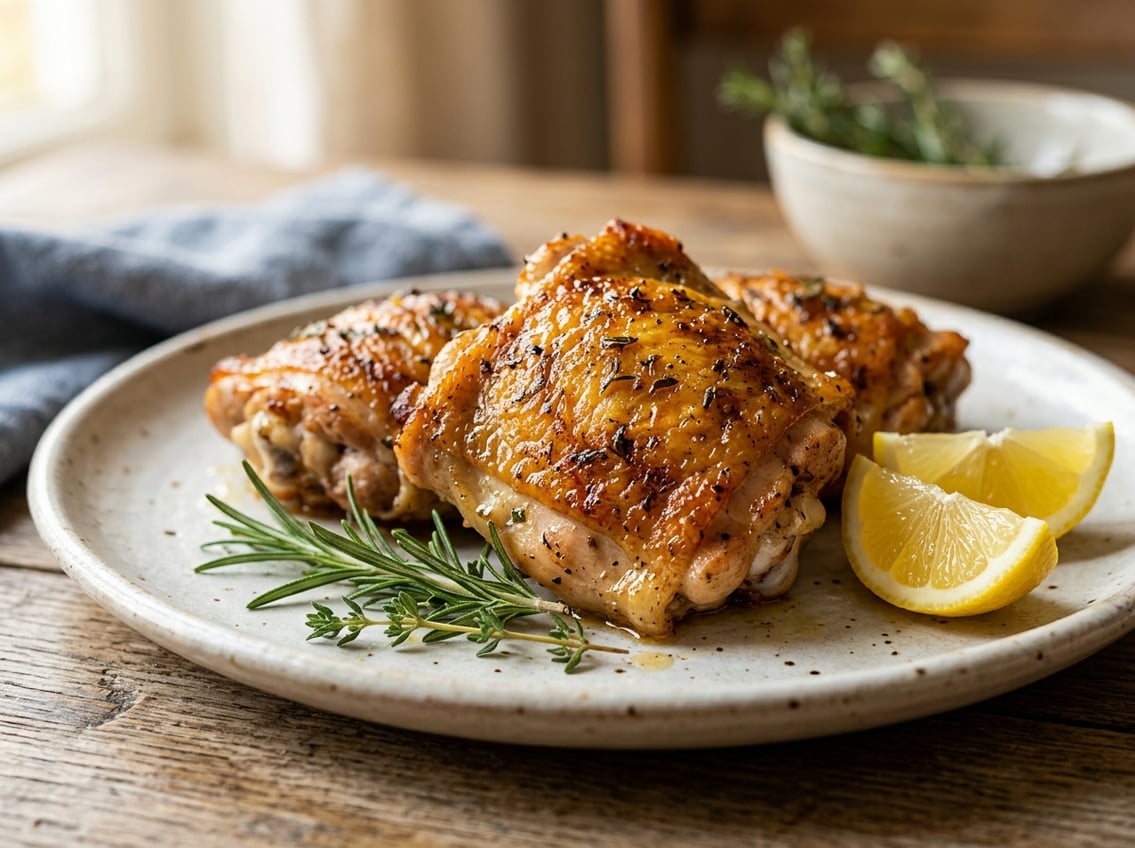
This post explains the skin’s nutrition, compares skin-on and skinless thighs, covers fat and cholesterol, and gives practical cooking and moderation tips.
Nutritional Profile of Chicken Thigh Skin

Chicken thigh skin contributes most of the fat and calories in a thigh. It adds flavor and moisture, and supplies small amounts of protein, collagen, and fat-soluble nutrients.
Know what changes when you keep or remove the skin so you can match portions to your calorie, fat, and flavor goals.
Macronutrient Breakdown
Chicken skin is predominantly fat.
Per 100 g of raw chicken skin you’ll typically find about 30–40 g of total fat, with monounsaturated fats (oleic acid) making up a large share, saturated fat around one-quarter of the fat content, and negligible carbohydrates.
Protein in skin is low compared with the meat; expect roughly 10 g protein per 100 g skin versus about 20 g in 100 g of boneless, skinless thigh meat.
A single skin-on chicken thigh adds roughly 50–80 extra calories and 5–8 g more fat compared with the same thigh without skin.
If you track macros, remove the skin to cut fat and calories while keeping most of the thigh’s protein.
Micronutrients and Collagen Content
Chicken thigh skin contains small amounts of fat-soluble vitamins and minerals.
You’ll find traces of vitamin A and vitamin E in the fat, and modest amounts of zinc and iron compared with the meat.
These amounts are not large, but fat helps absorption of fat-soluble nutrients present in a mixed meal.
Skin also has connective tissue and collagen.
Collagen content is higher in the skin and around joints than in the muscle.
When cooked low and slow, that collagen breaks down into gelatin, slightly changing texture and providing glycine and proline.
Those amino acids are present in modest amounts and don’t substantially raise total protein intake from the thigh.
Calories in Skin-On vs. Skinless Chicken Thighs
Keeping the skin materially raises calories per serving.
A 100 g raw boneless, skinless chicken thigh typically provides roughly 120–140 kcal.
The same weight with skin can approach 200–220 kcal depending on how much skin and visible fat are included.
For a single medium thigh, skin-on adds about 50–90 kcal over skinless; exact numbers vary by size and trimming.
Cooking method alters final calories.
Roasting or grilling allows some fat to render away.
Frying or leaving the skin untrimmed increases retained fat and calories.
If you want the flavor but fewer calories, you can roast skin-on and remove the crisped skin before eating to capture some flavor while reducing intake.
Fat Composition and Cholesterol Considerations
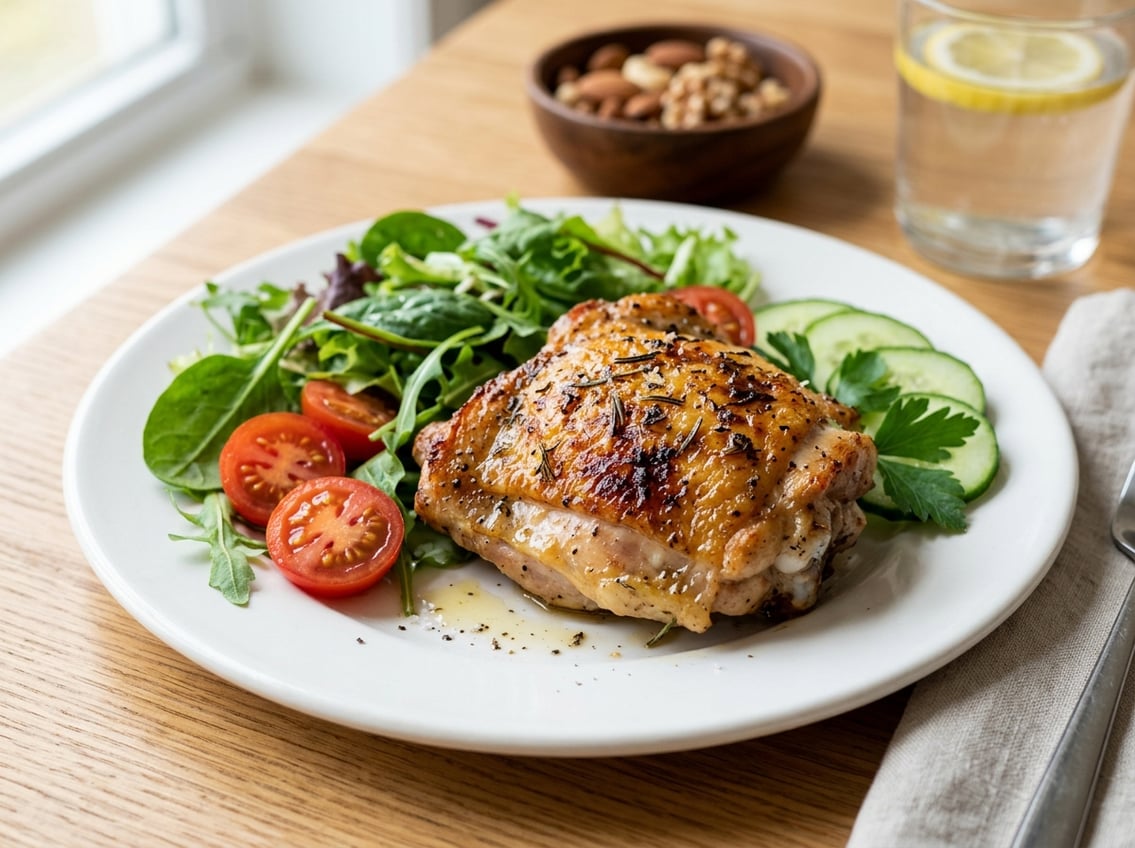
Chicken thigh skin contains most of the piece’s fat calories, with a mix of saturated and unsaturated fats and measurable cholesterol.
Unsaturated vs. Saturated Fat
Chicken thigh skin is higher in total fat than skinless thighs, and a substantial portion of that fat is unsaturated—mainly monounsaturated and some polyunsaturated fats.
These unsaturated fats tend to have neutral or beneficial effects on blood lipid profiles when they replace saturated fat in your diet.
The skin also contains significant saturated fat.
Saturated fat raises low-density lipoprotein (LDL) cholesterol in many people, so eating skin-on chicken thighs frequently can increase your intake of this lipid.
If you want to reduce saturated fat without giving up thighs, remove the skin or choose cooking methods that don’t add extra fat.
Quick comparison (approximate per 100 g skin-on thigh):
- Saturated fat: higher than breast, but less than red meats.
- Monounsaturated fat: the largest single category.
- Polyunsaturated fat: present in smaller amounts.
Cholesterol Content and Health Implications
Chicken thigh meat and skin contain dietary cholesterol; the presence of skin increases total fat but only moderately changes cholesterol per 100 g.
Typical values for thigh (meat and skin) are around 90–100 mg cholesterol per 100 g, higher than skinless breast but similar to other dark cuts.
Dietary cholesterol can raise blood cholesterol for some people, though saturated and trans fats have a stronger effect on LDL.
If you have high LDL, familial hypercholesterolemia, or established cardiovascular disease, limiting skin-on poultry and focusing on low-saturated-fat choices will more reliably lower LDL than reducing cholesterol alone.
Practical steps you can use:
- Remove skin before cooking for the largest reduction in saturated fat.
- Use skinless thighs or lean breast for daily consumption.
- Reserve skin-on preparations for occasional meals.
Omega-6 and Inflammation
Chicken skin contributes polyunsaturated fats, including omega-6 linoleic acid.
Omega-6s are essential fats your body needs, but high omega-6 intake relative to omega-3 can promote pro-inflammatory signaling in some contexts.
Most Western diets are already high in omega-6, so adding skin-on chicken occasionally won’t dramatically change your balance.
If your diet is heavy in processed oils and omega-6–rich foods, prefer skinless cuts and increase omega-3 sources like fatty fish, flaxseed, and walnuts to restore a healthier ratio.
Practical notes for controlling inflammation risk:
- Limit added vegetable oils when cooking skin-on thighs.
- Pair poultry meals with omega-3 rich foods.
- Rotate to skinless options if you consume poultry multiple times weekly.
Comparing Skin-On and Skinless Chicken Thighs
Skin-on thighs add fat and flavor but increase calories.
Skinless thighs reduce calories and saturated fat while still delivering moist, iron-rich dark meat.
Cooking method and whether you remove skin before or after cooking affect final fat retained and texture.
Differences in Fat and Calorie Content
Skin-on chicken thighs contain substantially more fat than skinless chicken thighs.
For a 100 g raw portion, expect roughly 16 g total fat and about 220 kcal with skin, versus about 4 g fat and about 120 kcal without skin.
Most of the added calories come from the skin’s fat layer.
Removing the skin saves roughly 50–100 kcal per thigh depending on size.
Saturated fat also increases with the skin.
That matters if you monitor cholesterol or saturated-fat goals.
If you roast with skin and remove it after cooking, some fat still renders into the meat, so calorie reduction is smaller than removing skin before cooking.
Texture, Flavor, and Cooking Techniques
Skin-on chicken thighs brown and crisp, creating a contrast between crunchy skin and juicy meat.
That browned skin traps moisture and often makes thighs taste richer.
If you want crisp skin, high dry heat—roasting, grilling, or pan-searing—works best.
Skinless chicken thighs absorb marinades faster and cook slightly quicker.
They can dry if overcooked, but their higher fat content than breasts keeps them more forgiving.
For leaner results, grill, broil, or pan-sear on a rack so fat drips away.
Removing skin after roasting keeps more flavor than discarding it pre-cook while still cutting some fat.
Skinless Chicken Thighs vs. Skinless Chicken Breast
Skinless chicken thigh and skinless chicken breast differ mainly in fat, calories, and iron.
Per 100 g cooked, thighs offer about 7–9 g fat and 150–190 kcal, while breasts sit near 2–4 g fat and 120–165 kcal.
Thighs provide more iron and slightly more flavor because they are dark meat.
Breasts provide more protein per gram and fewer calories.
Choose thighs when you want juicier texture and richer taste with modestly higher fat.
Choose breasts when you need the leanest cut for strict calorie or fat targets.
Health Benefits of Chicken Thighs
Chicken thighs deliver concentrated protein and several micronutrients in a compact, affordable cut.
You get more iron, zinc, and B vitamins per serving than in white meat, and the fat content helps absorb fat‑soluble nutrients and adds flavor for easier adherence to healthy meals.
Protein Quality and Nutrient Density
A 3-ounce skinless chicken thigh provides about 20–25 grams of high-quality protein, supplying all nine essential amino acids you need to maintain and build muscle.
That makes thighs a practical choice after workouts or when you need to preserve lean mass during aging.
Thighs also supply notable amounts of iron, zinc, selenium, niacin, and vitamin B12.
These micronutrients support oxygen transport, immune function, and energy metabolism.
Compared with a similar portion of breast meat, thighs typically contain more iron and zinc per serving.
If you keep the skin, calories and total fat rise substantially.
Removing the skin cuts fat roughly in half while leaving the protein and most micronutrients intact, so you can tailor portions to your energy and fat goals.
Potential Benefits for Skin, Joint, and Heart Health
Chicken thighs contain nutrients that support tissue repair and metabolic health.
Collagen precursors and amino acids in dark meat contribute to connective tissue maintenance, which can benefit joint integrity and skin repair when combined with a balanced diet.
The monounsaturated and polyunsaturated fats in the meat portion can help improve your lipid profile when they replace saturated fats from other sources.
Selenium and zinc in thighs support antioxidant defenses and wound healing.
Be mindful of saturated fat and sodium when you eat skin-on or highly seasoned thighs.
Choosing skinless thighs, grilling, baking, or stir-frying with small amounts of healthy oil preserves the nutrient benefits while limiting factors that could raise cardiovascular risk.
Best Cooking Methods for Chicken Thighs
You can get crispy skin, juicy meat, or lower fat depending on the method you choose.
Focus on temperature, cooking time, and whether you keep or remove skin to control texture and calories.
Baking, Grilling, and Roasting
Roasting or baking at high heat (400–450°F / 200–230°C) crisps skin while keeping the thigh meat tender.
Arrange skin-side up on a rimmed sheet pan or rack to let fat render away from the meat and promote even browning.
Use a thermometer and remove when internal temperature reaches 165°F (74°C), then let rest 5–10 minutes.
Grilling gives the skin a smoky flavor and direct heat for crispness.
Preheat to medium-high, oil the grates, and cook skin-side down first to render fat, flipping once.
Bone-in thighs need longer (15–25 minutes); boneless cook faster (10–15 minutes).
If you want less fat but still good texture, roast skin-on then remove the skin before eating.
That preserves moisture during cooking while reducing calories on the plate.
Frying Chicken Skin and Its Impact
Pan-frying or deep-frying produces the crispiest chicken skin but adds more fat and calories.
When you fry skin-on chicken thighs, most excess fat stays in the pan or oil, but the meat absorbs some oil during cooking.
Use a thermometer to maintain oil at 350–375°F (175–190°C) for even browning and minimal oil uptake.
Shallow frying (in a few tablespoons of oil) gives good texture with less oil than deep-frying.
After frying, drain on a rack or paper towel and blot to remove surface oil.
If you regularly fry skin-on thighs, balance portions and frequency to manage saturated fat and caloric intake.
You can also crisp skin in a skillet first, then finish in the oven.
That workflow yields crunchy skin with more controlled oil use than continuous frying.
Seasoning and Portion Control Tips
Season skin with salt at least 30 minutes before cooking to help it crisp.
Pat dry before applying oil or rub.
Use bold, low-sugar spice blends like smoked paprika, garlic powder, and black pepper to add flavor without added calories.
Marinades with acidic components (vinegar, lemon) help tenderize but avoid sugary glazes if you want lower calorie results.
Control portions by serving one thigh (bone-in) or two smaller boneless thighs per person depending on hunger and overall meal composition.
If you keep the skin while cooking for juiciness, remove it before eating to cut fat while retaining moisture.
Pair thighs with high-fiber sides like vegetables or whole grains to help balance a meal that includes fried or skin-on chicken.
Guidelines for Moderation and Dietary Choices
You can include skin-on chicken thigh in meals if you control portions and match cooking methods to your health goals.
Focus on serving size, cooking technique, and how often you eat skin to balance flavor with nutrition.
Portion Sizes and Frequency
Eat about 3 ounces (≈85 g) of cooked chicken thigh meat per meal when you track calories or saturated fat. This portion gives you roughly 160–180 kcal and about 8–10 g fat for skinless thigh.
Adding the skin raises calories to ~250–280 kcal and increases fat and saturated fat. Limit skin-on servings to 1–2 times per week if you monitor cholesterol, aim for weight loss, or follow a heart-healthy plan.
On other days, choose skinless thighs, chicken breast, or plant proteins to keep weekly saturated fat within recommended limits. Remove skin before cooking, or roast whole with skin but discard it after cooking to retain moisture while cutting fat.
Pair chicken thighs with high-fiber vegetables and whole grains to increase satiety and offset calorie density.
Considerations for Specific Health Goals
If you manage high LDL or established cardiovascular disease, choose skinless chicken thigh and limit skin-on portions to occasional meals.
Track total daily saturated fat. Keep it under 10% of calories to lower risk factors linked to high cholesterol.
For muscle building or older adults needing more calories, a skin-on thigh can help meet protein and energy needs efficiently.
Balance your intake by choosing leaner meals earlier or later in the day. Prioritize grilled or baked preparation over frying.
If you follow calorie-restricted or weight-loss plans, choose skinless thighs and measure portions.
For flexible eating patterns without medical restrictions, enjoy skin-on chicken thigh occasionally. Emphasize home cooking methods that reduce added fats and sodium.


