
How Long to Bake Chicken Thighs at 400°F: Complete Timing Guide
You want juicy, safe chicken thighs with crisped edges without wasting time guessing oven minutes. Bake bone-in, skin-on thighs at 400°F for about 35–40 minutes, and boneless thighs for about 25–30 minutes, or until the internal temperature reaches 165°F.
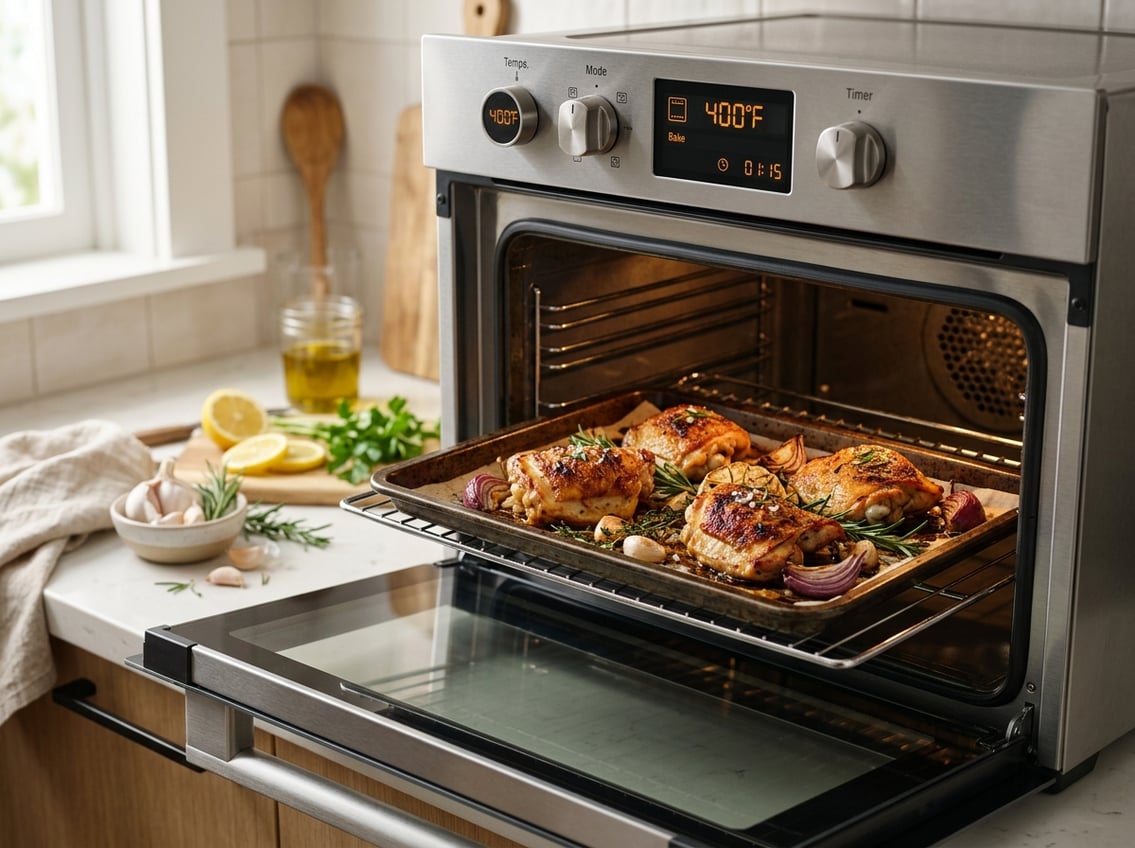
This guide explains oven times, step-by-step baking, tips for tenderness, and mistakes to avoid. You’ll find storage advice and serving ideas for reliable results.
Oven-Baking Times for Chicken Thighs at 400°F
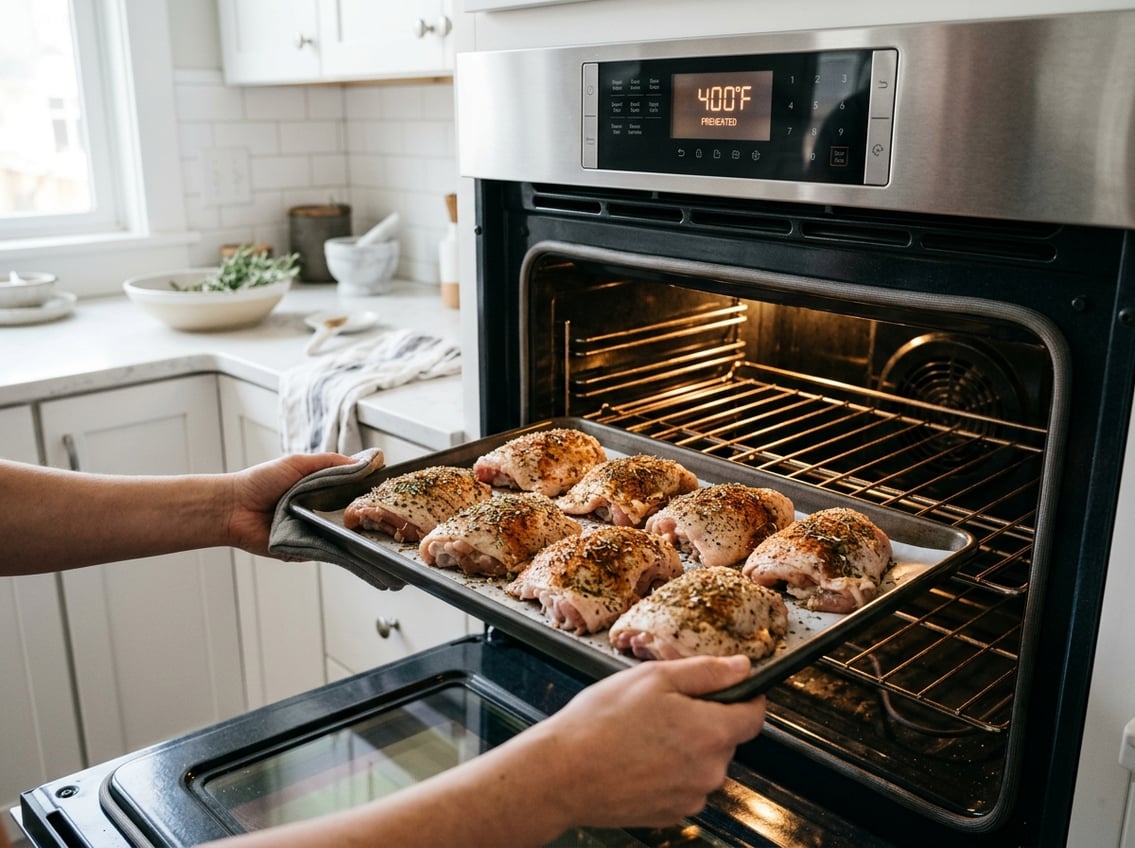
Baking time depends on bone, skin, and thickness. Use a thermometer and visual checks in addition to timing.
Bone-In vs. Boneless Timing Differences
Bone-in, skin-on thighs take longer because the bone absorbs heat and the cut is thicker. Bake these for about 40–45 minutes at 400°F for average pieces (4–6 oz each).
This timing crisps the skin and cooks the meat through. Boneless, skinless thighs cook faster because they’re thinner and heat penetrates evenly.
Expect roughly 25–35 minutes at 400°F for standard boneless thighs (3–5 oz each). Flip once halfway through for even browning and to avoid drying the surface.
If you use a sheet pan with a rack, both types brown better and may finish a few minutes sooner. Give each piece at least 1 inch of space to avoid crowding and increase browning.
Thickness and Size Considerations
Thickness matters more than weight. A 1-inch thick thigh needs less time than a 1.5-inch piece.
Measure across the thickest part and adjust cooking time by about 5–7 minutes per additional half-inch at 400°F. Smaller thighs (under 3 oz) can finish in 20–25 minutes if boneless.
Larger bone-in thighs (8 oz or more) may require up to 50 minutes. Use similar sizes on the pan for even cooking.
Remove smaller pieces earlier and tent with foil to keep warm. Start with a hot oven to promote even cooking and crisp skin.
Using a Meat Thermometer for Doneness
Use an instant-read thermometer for safety and quality. Insert it into the thickest part without touching bone and target 165°F (74°C).
Some chefs pull thighs at 160–162°F and rest them 5 minutes; carryover brings the temperature to 165°F. If you like firmer meat, cook to 170–175°F, but expect a drier texture.
Check multiple pieces if sizes vary. If skin hasn’t crisped by the time the temperature is reached, broil 1–2 minutes and watch closely.
Step-by-Step Guide to Baking Chicken Thighs
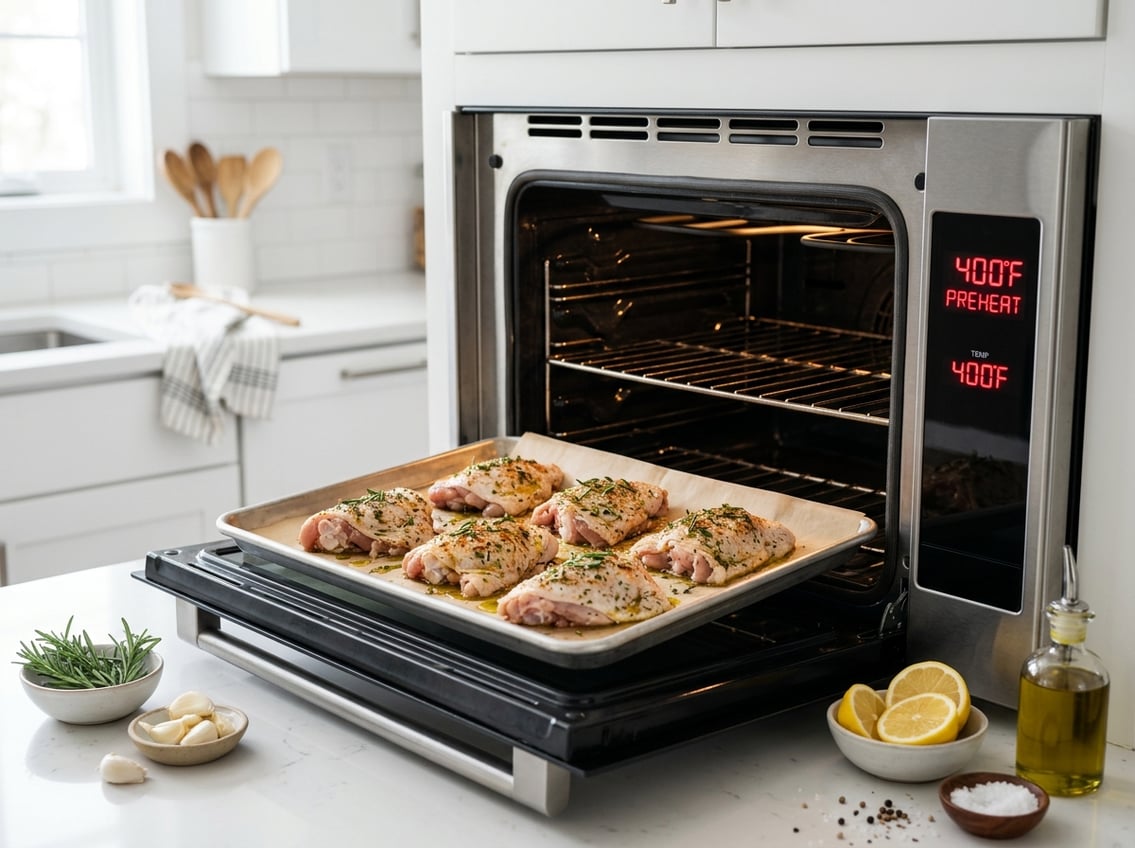
Prepare and season the thighs for flavor and moisture. Set up the oven and pan for even heat and crisping, then let the meat rest so juices redistribute.
Preparation and Seasoning Techniques
Pat chicken thighs dry with paper towels. Moisture prevents crisping.
Leave skin intact on bone-in, skin-on thighs and dry thoroughly. For boneless thighs, trim excess fat and pound slightly for even thickness.
Sprinkle ¾–1 tsp kosher salt per pound and let sit 15–60 minutes or refrigerate uncovered overnight to dry-brine. Rub with 1–2 tbsp oil to help seasonings stick and promote browning.
Use a simple mix: 1 tsp paprika, ½ tsp garlic powder, ½ tsp onion powder, ¼ tsp black pepper per pound. Adjust spices to taste.
If you marinate, limit time to 2–4 hours for boneless thighs and 4–8 hours for bone-in. Bring chicken to room temperature for 20–30 minutes before baking.
Proper Oven Setup and Arrangement
Preheat the oven to 400°F (204°C) and verify with an oven thermometer. Position a rack in the middle for even air circulation.
Use a rimmed baking sheet lined with foil or parchment for easy cleanup. For best skin crisping, set thighs on a wire rack over the sheet.
Space thighs at least 1 inch apart. Overcrowding causes steaming and soft skin.
Bake times: boneless skinless thighs typically take about 20–30 minutes; bone-in skin-on thighs usually take about 30–40 minutes. Insert a meat thermometer into the thickest part (avoid bone).
Remove at 165°F (74°C) for safety. You can pull at 160–162°F and rest to reach final temperature.
Resting the Chicken for Best Results
Let the chicken rest 5–10 minutes on the baking sheet after you remove it from the oven. Resting allows carryover cooking and redistributes juices.
Cover loosely with foil to retain warmth but avoid sealing tightly. For boneless thighs, a 5-minute rest is usually enough.
For larger bone-in thighs, rest 8–10 minutes to even out internal temperature. After resting, check temperature again if needed and transfer to a cutting board.
Slice against the grain for the most tender bites and serve immediately.
Boneless Chicken Thighs: Tips for Juicy Results
You can get tender, juicy boneless chicken thighs at 400°F by controlling time, surface temperature, and moisture. Focus on accurate timing, a short high-heat roast, and simple techniques like brining or oil.
Optimal Cooking Time for Boneless Thighs
Bake boneless chicken thighs at 400°F for about 18–23 minutes depending on thickness. Thin thighs (about 3/4 inch) will be done near 18 minutes; thicker pieces (1–1.25 inches) need closer to 22–23 minutes.
Use an instant-read thermometer inserted into the center and target 165°F. Avoid touching the thermometer to the pan.
If you prefer a slight carryover for tenderness, pull the thighs at 160–162°F and rest 5 minutes. Resting keeps juices from running out when you slice.
Ensuring Moisture Without the Bone
Brine for 15–30 minutes in a salt solution (1 tablespoon kosher salt per cup of water) to add juiciness and season evenly. Pat the thighs dry before oiling so the surface browns.
A light coating of oil or melted butter promotes browning and locks in moisture. Use high heat for a shorter period and check temperature early to avoid overcooking.
Roast on a rack over a rimmed sheet for air circulation. You can also bake in a shallow pan with a splash of stock or sauce to reduce surface drying.
Popular Flavor Variations and Marinades
Try a basic marinade: 2 tablespoons olive oil, 1 tablespoon soy sauce, 1 teaspoon honey, 2 cloves minced garlic, and 1/2 teaspoon black pepper. Marinate 20–60 minutes for flavor.
For a dry rub, blend paprika, garlic powder, onion powder, salt, and a pinch of cayenne. Apply immediately before roasting to keep the coating crisp.
Citrus-based marinades (orange or lemon with a teaspoon of grated zest) brighten flavor. Don’t exceed 2 hours to avoid texture changes from acid.
Use these approaches to match cooking time at 400°F with flavor and moisture goals.
Common Mistakes and Troubleshooting
Most problems come from timing, temperature, and how you arrange the thighs in the pan. Adjust these areas to prevent dryness, uneven doneness, and soggy skin.
Overcooking or Dryness Issues
Overcooking causes dry chicken thighs, especially boneless ones. Use an instant-read thermometer and remove thighs at 165°F (74°C).
For bone-in thighs, you can pull them at 170–175°F (77–80°C) for a firmer texture. If pieces vary in thickness, check the thickest part.
Let the meat rest 5–8 minutes after the oven so juices redistribute. If you overcook, slice against the grain and serve with a simple pan sauce, stock, or a drizzle of olive oil.
Uneven Cooking and Oven Calibration
Inconsistent oven temperature or varied piece sizes cause uneven cooking. Test your oven with two thermometers placed front and back at rack level.
Arrange thighs so thicker pieces sit toward the hotter part of the oven, usually the back. Rotate the pan halfway through the cook time to even out hot spots.
Flatten thicker boneless pieces with a meat mallet to equalize cooking time. If one side browns but the center remains underdone, raise the rack or broil for 1–2 minutes at the end.
Avoiding Crowding and Achieving Crispy Texture
Leave at least 1 inch between pieces on a rimmed sheet pan or use a wire rack over the pan for air circulation. Pat skin dry with paper towels and lightly coat with oil or a pinch of baking powder for extra browning.
Sear boneless or bone-in thighs in a hot skillet for 2–3 minutes per side before transferring to the oven to render fat and start crisping. If skin remains limp after baking, finish under the broiler 1–3 minutes while watching closely.
Use tongs to move pieces if one area browns faster to prevent burning.
Best Practices for Storage and Reheating
Store cooked chicken promptly, keep it cold, and reheat only once to a safe internal temperature while preserving moisture.
Safe Refrigeration and Freezing Methods
Cool baked chicken thighs within two hours of cooking. Place individual thighs on a shallow tray until they reach room temperature, then transfer to airtight containers or freezer bags.
Label containers with the date. Refrigerate at 40°F (4°C) or below and use within 3–4 days.
Freeze for longer storage; cooked thighs maintain best quality for about 2–3 months. Remove as much air as possible when freezing to reduce freezer burn.
Thaw frozen baked chicken thighs in the refrigerator for 24 hours per 1–2 pounds. For faster thawing, use the microwave’s defrost setting and reheat immediately after.
How to Reheat Baked Chicken Thighs Without Drying Out
Preheat your oven to 325–350°F (160–175°C) for even reheating. Arrange thighs in a single layer in a baking dish and add 2–4 tablespoons of chicken broth, water, or a light pan sauce.
Cover tightly with foil to trap steam and heat for about 15–25 minutes, depending on thickness, until the internal temperature reaches 165°F (74°C). For boneless thighs, reduce reheating time by a few minutes.
If you want crisp skin on bone-in thighs, remove the foil for the last 3–5 minutes and broil briefly. Use a probe thermometer to check temperature and rest the thighs 2 minutes before serving.
Serving Suggestions and Meal Ideas
Pair baked chicken thighs with sides that match their seasoning and texture. Plan simple ways to reuse leftover thighs for quick meals during the week.
Side Dishes That Complement Baked Chicken Thighs
Choose sides that balance the rich, juicy meat and crispy skin.
Roast vegetables like carrots, Brussels sprouts, or cauliflower at 400°F alongside the thighs. They take 20–30 minutes and develop caramelization that complements savory spices.
Serve garlic mashed potatoes or a lemon-herb rice pilaf for starches. Both absorb pan juices well and add moisture to each bite.
If you want a lighter contrast, toss a crisp salad with arugula, sliced pear, toasted walnuts, and a vinaigrette with mustard and lemon to cut the fat.
When you cook boneless chicken thighs, time your sides to finish a few minutes earlier so everything stays hot.
Use pan drippings as a simple sauce. Deglaze with white wine or chicken stock, reduce, and spoon over both thighs and sides.
Incorporating Thighs in Meal Prep and Leftovers
Slice or shred cold boneless chicken thighs for quick lunches or bowls. Add them to grain bowls with quinoa, roasted vegetables, avocado, and a yogurt-tahini dressing for a balanced meal.
Portion these meals for 3 to 4 days. Turn leftovers into sandwiches or wraps by layering sliced thighs with pickled red onion, spinach, and a smear of mayo or chimichurri on crusty bread.
Chop thighs for soups and stews and add them near the end of simmering. They retain moisture better than breast meat and won’t dry out.
Label containers with the date and reheating instructions. Reheat to 165°F and consume within 3 to 4 days.
Freeze cooked boneless thighs in portions for up to 3 months. Thaw overnight in the fridge before using.


