
What Happens When You Boil Chicken Thighs: Texture, Flavor, and Cooking Science
Boiling chicken thighs breaks down connective tissue, cooks the meat through, and extracts flavor into the cooking liquid. When you simmer bone-in thighs to the proper temperature, typically around 165°F (74°C) at the thickest part, you get tender, fully cooked meat plus a flavorful broth. Slightly higher temps, around 175°F (80°C), yield more fall-apart tenderness.
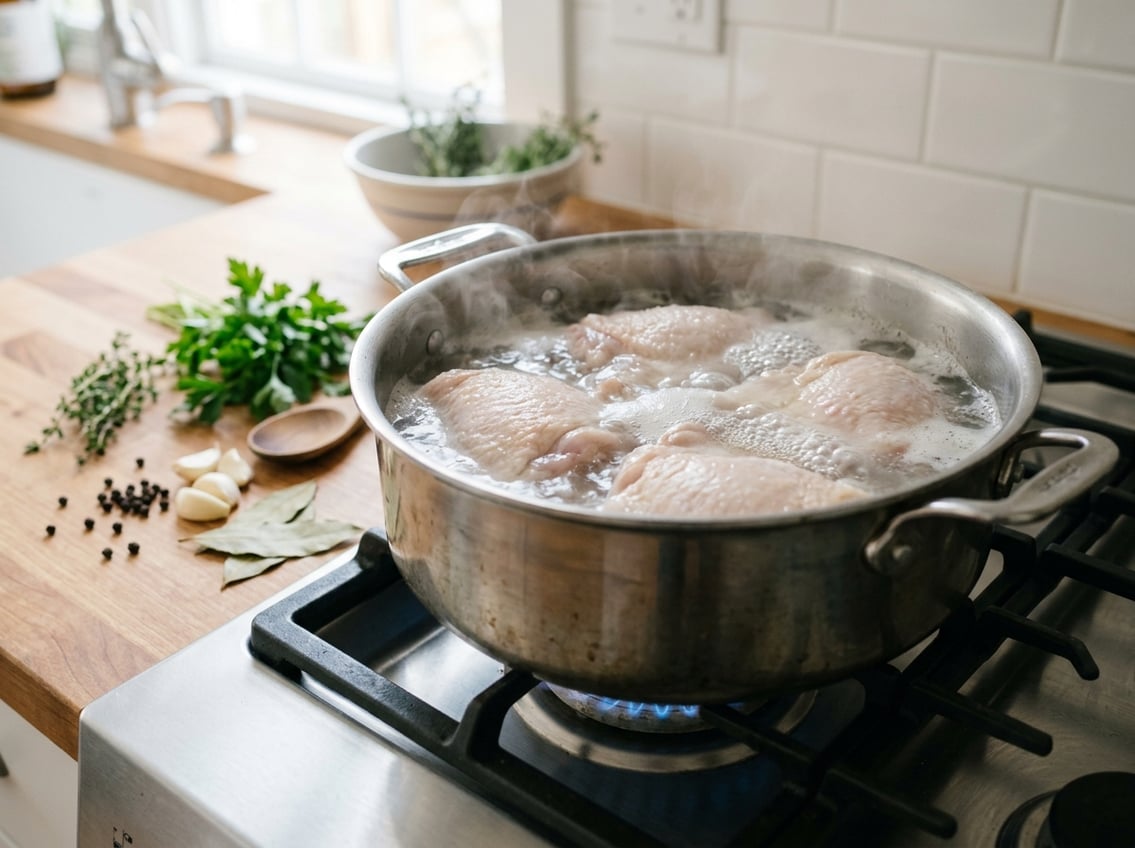
You will learn what happens to proteins, fat, and collagen during boiling. You’ll also see how simmering versus rapid boiling changes texture, and get timing and thermometer tips to avoid rubbery or undercooked results.
You’ll find practical techniques for seasoning and finishing boiled thighs, plus quick ideas for using the meat and the stock in soups, salads, tacos, and meal prep.
Physical and Chemical Changes During Boiling
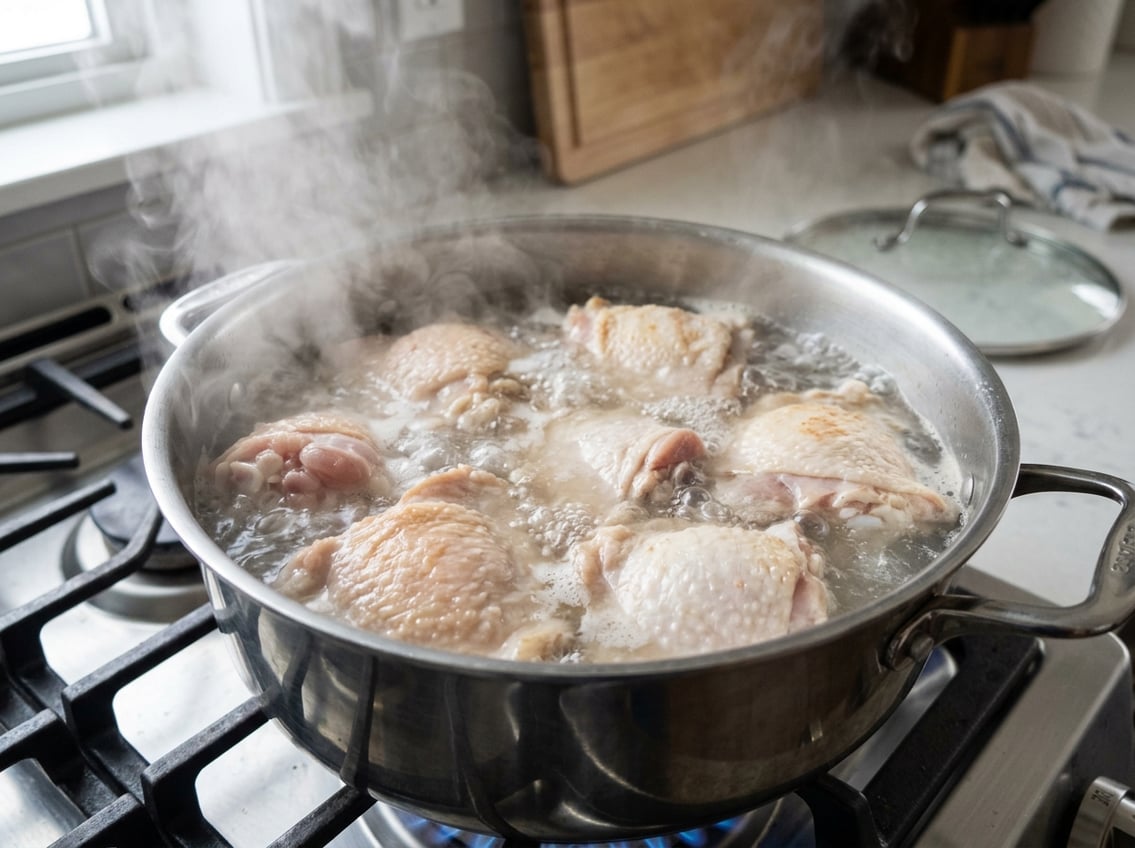
Boiling changes water content, fat, collagen, and muscle proteins in predictable ways. These changes affect moisture, flavor transfer to the cooking liquid, and the final bite of chicken thighs.
Moisture Retention and Fat Breakdown
When you boil chicken thighs, heat contracts muscle proteins and forces out some water. Bone-in thighs often retain slightly more moisture because the bone slows heat penetration.
Fat melts at cooking temperatures and moves into the surrounding liquid. Skin-on thighs release rendered fat that flavors the broth.
Skinless thighs lose moisture faster and produce a leaner, less oily cooking liquid. If you simmer instead of boiling rapidly, you reduce agitation and keep more liquid in the meat.
Salt in the poaching liquid increases water retention by partially denaturing surface proteins and helps thighs stay juicier.
Collagen and Connective Tissue Transformation
Connective tissue in thighs contains collagen that turns to gelatin when exposed to sustained heat and moisture. This starts around 60–70°C and continues as temperature and time increase.
Bone-in thighs need a bit more time for full collagen conversion because the bone slows heating. Gelatin adds mouthfeel and thickens the cooking liquid, improving texture in stews and soups.
If you overcook, collagen breaks down to smaller pieces, which can help flavor, but too much time at high heat will dry out the meat. Gentle simmering breaks down collagen and keeps the meat tender.
Impact on Texture and Tenderness
Protein denaturation firms the muscle, causing a transition from soft to springy before the meat becomes tender. For boneless thighs, heat reaches the center faster so they become tender sooner but can dry out if left too long.
Bone-in thighs take longer to reach the same internal temperature, giving collagen more time to convert and helping the meat stay succulent.
Texture also depends on cooking method. Rapid boiling agitates and can make the surface ragged, while a controlled simmer keeps fibers intact.
Use an instant-read thermometer and remove thighs at 74°C (165°F) for safety. Rest them briefly to allow juices to settle.
How Boiling Affects Flavor Development
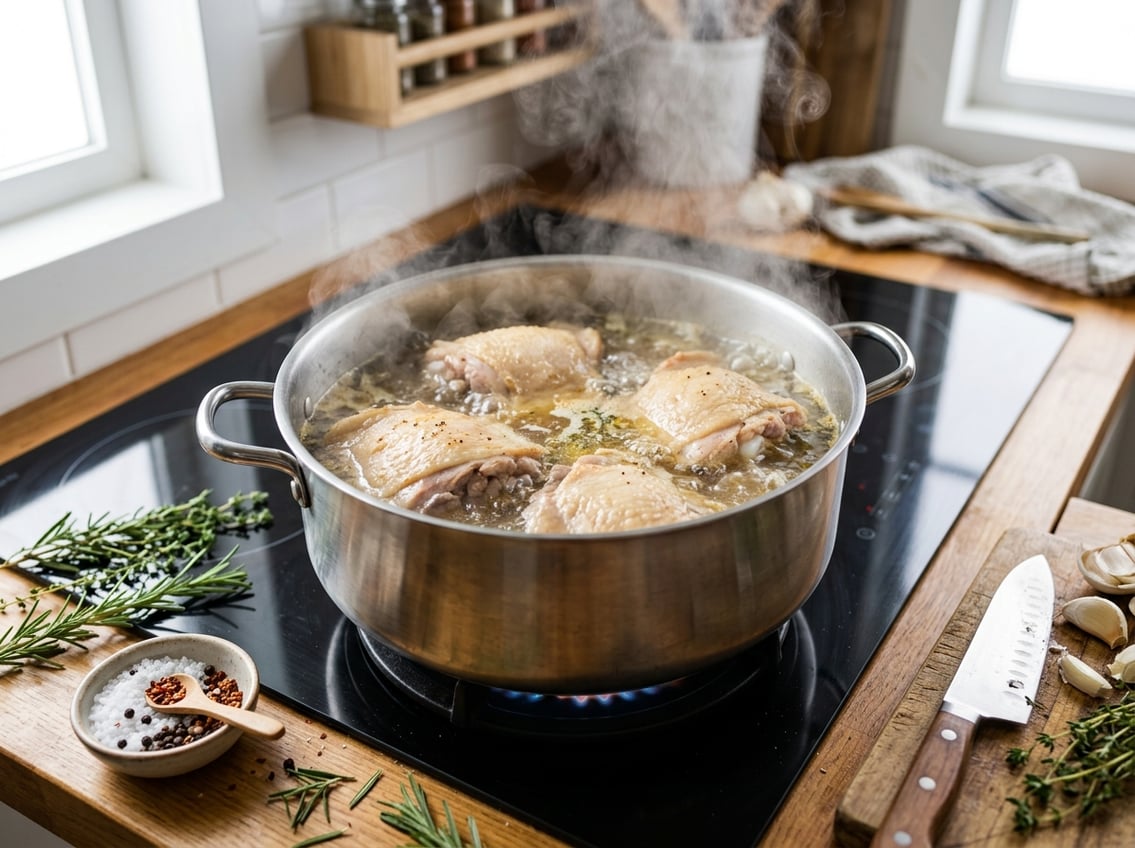
Boiling concentrates some flavors, dilutes others, and extracts aromatic compounds into the cooking liquid. You should balance direct seasoning of the thighs with the flavors you want in the broth.
Infusion of Seasonings and Aromatics
When you add thyme, parsley, or whole garlic cloves, volatile oils and water-soluble flavor compounds move from herbs and aromatics into both the surface and interior of the thighs. Gentle simmering preserves delicate herb notes, while high heat drives off aromatics and flattens flavor.
Chop or bruise fresh herbs to increase extraction. Add hard aromatics like carrots and onion early, and delicate herbs such as parsley or thyme sprigs in the last 10–15 minutes.
Powdered seasonings like garlic powder release quickly into the liquid, so add them later if you want a stronger taste on the meat.
Role of Salt and Spices
Salt seasons and modifies protein structure. If you salt thighs before boiling, sodium penetrates the meat and enhances juiciness and flavor inside.
If you salt only the liquid, the broth will taste seasoned but the meat’s interior may remain underseasoned. Ground black pepper and curry powder disperse into the cooking liquid.
Curry powder colors and dominates the broth, while black pepper gives sharp top notes. For balanced results, use some salt directly on the thighs and adjust the pot liquid to taste.
Add delicate spices late to preserve brightness.
Flavor Transfer to Broth or Stock
Chicken thighs release collagen and soluble proteins during simmering, which increases body and savory depth in the liquid. Use chicken broth or water as your base depending on how much chicken flavor you want.
Simmer at low temperatures to extract gelatin without emulsifying fats. This gives you a clearer, more flavorful stock.
Strain solids and add chopped parsley or a sprig of thyme to the finished broth for fresh herb brightness. Taste and re-season with salt or black pepper after reducing if you plan to use the liquid.
Timing and Doneness of Chicken Thighs
You’ll typically cook thighs until the internal temperature reaches a safe minimum. The exact time depends on bone presence and whether the meat is frozen.
Shorter times deliver firm, sliceable meat. Longer simmering breaks down collagen for shreddable, fall-apart thighs.
How Long to Boil Chicken Thighs
Aim for an internal temperature of 165°F (74°C) for safety. For fresh, boneless thighs, simmer about 10–15 minutes and check the thickest part with a thermometer.
If you want more tender, shreddable dark meat, simmer up to 40–60 minutes until the meat reaches 180–195°F (82–90°C) and the collagen has converted to gelatin.
Maintain a gentle simmer to avoid tightening the muscle and drying the meat. Cooked thighs are opaque throughout and juices run clear.
Rest the thighs 5 minutes off heat before slicing or shredding to let juices redistribute.
Boil Bone-In vs. Boneless Chicken Thighs
Bone-in thighs take longer because heat transfers slower around bone. Expect about 20–25 minutes for bone-in thighs to reach 165°F, compared with 10–15 minutes for boneless thighs.
Larger or thicker bone-in pieces may need a few extra minutes. Bones add flavor and help retain moisture, so bone-in pieces are less likely to dry out during longer simmering.
If you want fall-apart texture from bone-in thighs, simmer 40–50 minutes until connective tissue softens and the meat pulls away from the bone.
Always measure temperature in the thickest part, avoiding the bone which can read hotter and give a false positive for doneness.
How Long to Boil Frozen Chicken Thighs
Boiling from frozen increases cook time by roughly 30–50% compared with fresh pieces. For frozen boneless thighs, expect about 30–35 minutes to reach 165°F.
For frozen bone-in thighs, plan for 45–50 minutes, depending on size. Start in cold water and bring to a simmer to heat the meat evenly and reduce surface overcooking.
Use a thermometer through the thickest section after the core thaws and heats. Cut one open if you’re unsure—the meat must be opaque with clear juices.
If you want shreddable texture from frozen bone-in thighs, continue simmering until the internal temperature reaches 180–195°F and the meat pulls from the bone.
Practical Techniques for Boiling Chicken Thighs
You will learn the steps to boil thighs safely, how to keep pieces the same size for even cooking, and which mistakes can change texture or flavor.
Step-by-Step Method
Place chicken thighs in a single layer in a large pot. Use bone-in or boneless as desired; bone-in usually needs about 25–30 minutes, boneless about 20–25 minutes.
Cover the pieces with cold water by 2–3 inches to promote even heating. Add ½ teaspoon salt per pound and one or two aromatics, such as bay leaf, halved onion, or peppercorns.
Bring the pot to a boil, skim off any foam, then reduce to a gentle simmer and cover. Check doneness with a meat thermometer: 165°F (74°C) for boneless, 175°F (79°C) for bone-in near the bone.
Rest the thighs briefly before shredding or using. Strain and reserve the cooking liquid for broth.
Tips for Even Cooking
Match thigh sizes before boiling. Trim large fat deposits and cut larger thighs in half if needed so cooking time stays consistent.
Arrange thighs without crowding. Overcrowding drops water temperature and prolongs cooking.
Start with cold water to help heat penetrate evenly and reduce the chance of overcooked exteriors with undercooked centers. Maintain a gentle simmer to prevent toughening the meat and keep the broth clear.
If using frozen thighs, add about 10–15 minutes to total time and confirm temperature in the thickest part. For a crisper finish after boiling, pat skin dry and broil 3–5 minutes.
Common Mistakes to Avoid
Do not start with hot water, as this can firm the outer proteins before the center cooks. Avoid cooking at a rolling boil the entire time, which agitates the meat and releases more foam.
Do not rely on time alone; use a thermometer or cut into the thickest part to ensure no pink near the bone. Save the cooking liquid for broth after skimming foam and straining solids.
Avoid overcrowding and uneven piece sizes, as both cause variable doneness and longer cooking. Do not over-salt at the start; season the water moderately and adjust after tasting the finished meat or broth.
Uses and Applications for Boiled Chicken Thighs
Boiled chicken thighs give you tender, easily shredded meat and a flavored cooking liquid you can use as broth or stock. You can add them to salads, tacos, soups, casseroles, and many other dishes that call for cooked or shredded chicken.
Making Shredded Chicken
Boiled chicken thighs shred easily because the connective tissue and fat break down during gentle simmering. Remove thighs from the liquid, let rest 5 minutes, then use two forks or your hands to pull the meat apart into long, moist strands for tacos, sandwiches, and enchiladas.
If you want uniform pieces, shred while still warm. For chunkier texture, chill the meat and break into bite-sized pieces.
Season shredded chicken with reserved cooking liquid, a splash of vinegar, or a simple rub of salt, pepper, and smoked paprika to refresh the flavor before assembling dishes.
Enhancing Soups and Stews
Boiled thighs add body and mouthfeel to soups and stews without extra fat from frying. Cut or shred the cooked meat and add in the last 10–15 minutes of simmering so it warms through without falling apart.
Use the natural gelatin from thighs to thicken brothy soups like chicken noodle, tortilla soup, or hearty stews such as gumbo. For clear soups, skim fat and foam from the cooking liquid before adding the meat back in to keep the broth bright.
Broth and Stock Creation
The water you use to boil thighs becomes a usable broth or light stock rich in flavor and some gelatin. Strain the liquid through a fine sieve or cheesecloth, cool, and refrigerate. Fat will congeal on top for easy removal if you want a leaner broth.
Enhance the broth by adding aromatics such as onion, carrot, celery, bay leaf, and peppercorns while boiling. Use this homemade chicken stock for risotto, gravy, braising, or as a flavorful cooking liquid for grains and legumes.
How to Use Boiled Chicken Thighs in Recipes
Add shredded or chopped boiled chicken thighs directly to many recipes.
Use about 1 cup of shredded chicken (roughly 180–200 g) for a 4-serving recipe such as salads, casseroles, or pasta dishes.
For sandwiches and wraps, toss the shredded meat with a dressing or sauce like BBQ, buffalo, or mayonnaise-based slaw.
Serve the meat warm or chilled.
In baked dishes, fold chicken into the filling.
If the casserole looks dry before serving, add a few tablespoons of reserved broth.


