
Is It Good to Boil Chicken Thighs? Benefits, Techniques, and Tips
Boiling chicken thighs is a smart, practical choice when you want tender, moist meat without fuss. This method works especially well if you plan to shred the meat for salads, soups, or sandwiches.
You get safe, reliably cooked chicken with minimal hands-on time. Bone-in thighs yield a richer broth, while boneless thighs cook faster for weeknight meals.
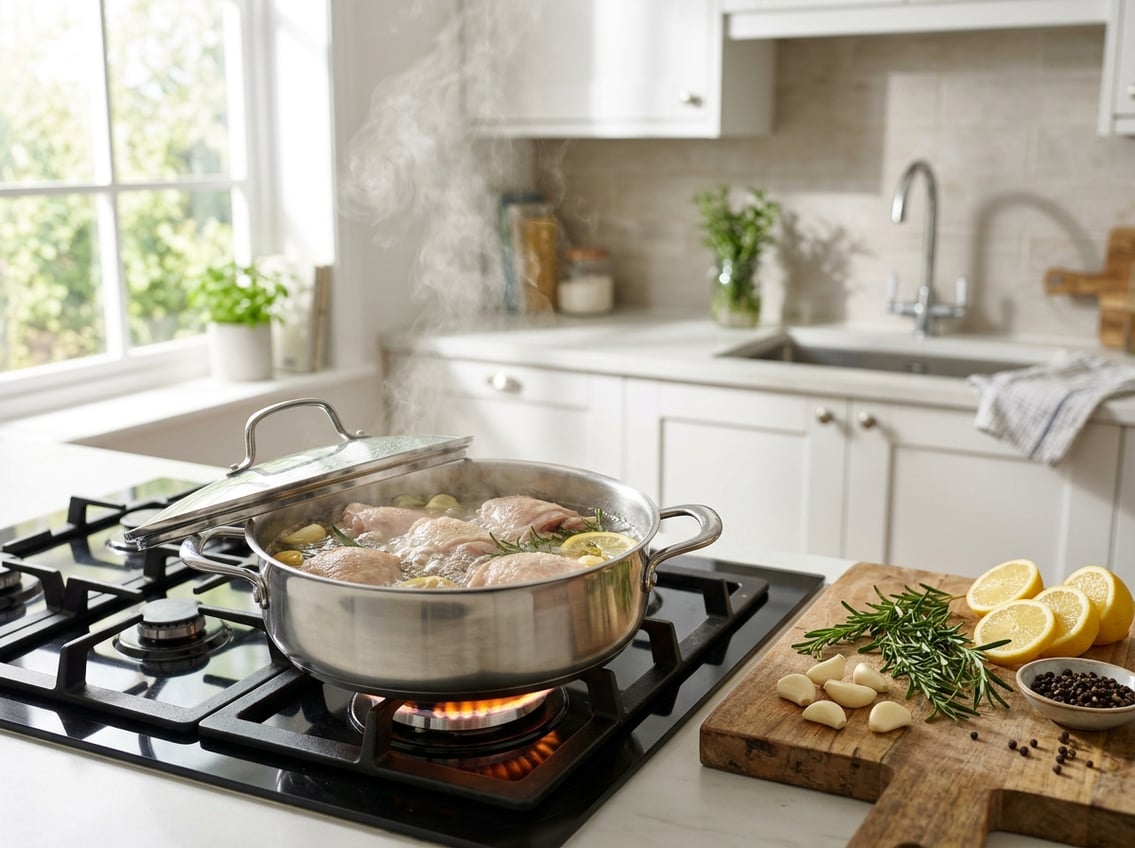
Boiling won’t give crisp skin or the caramelized flavor of roasting, but it excels at producing shreddable, consistently cooked meat and a usable cooking liquid. You can use boiled chicken thighs in a variety of dishes and make use of the flavorful broth.
Boiling Versus Other Cooking Methods
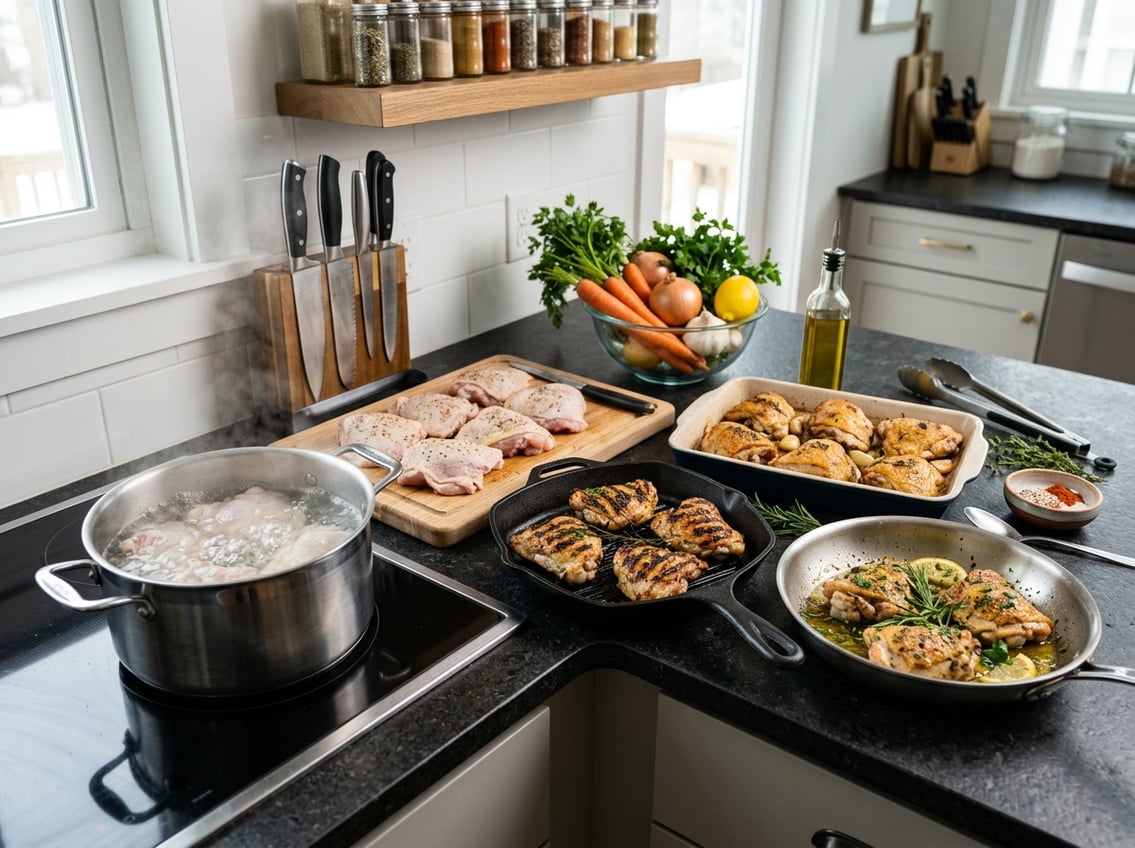
Boiling yields tender, easily shredded meat and a usable cooking liquid. Dry-heat methods deliver browning and texture.
Choose boiling when you need moist meat for soups, salads, or meal prep. Choose dry heat when you want crisp skin and concentrated flavor.
Comparing Boiled and Roasted Chicken Thighs
Simmer chicken thighs in liquid for about 15–25 minutes depending on boneless or bone-in, and check that the internal temperature reaches 165°F (74°C). You get uniformly cooked, moist meat that’s easy to shred for tacos, salads, or casseroles.
Roast thighs for 35–45 minutes at around 375°F (190°C) to produce crisp skin and browning that adds flavor and visual appeal. Roasting concentrates juices and renders fat, making portions feel richer.
If you plan to use the meat in a broth-based dish or want low-effort meal prep, boil and reserve the cooking liquid as stock. For presentation, bite contrast, or a caramelized exterior, roast or finish boiled thighs under a broiler or with a quick sear.
Grilling and Baking Compared to Boiling
Grill thighs over high, direct heat for smoky flavors and crisp edges within 10–20 minutes, depending on thickness. Baking in the oven offers more control and still yields browning and rendered fat, usually in 30–45 minutes.
Boiling lacks surface browning, so flavor comes from the poaching liquid. Use broth, aromatics like garlic, bay leaf, peppercorns, and salt to infuse meat.
To combine benefits, boil until cooked through, then sear or broil for 3–5 minutes to add texture. For frozen thighs, boil from frozen but add several minutes and check temperature closely.
Nutritional Impact of Boiling
Boiling chicken thighs lets you control fat and sodium more easily. Fat renders into the liquid and you can skim it off, lowering final fat content compared with frying.
Water-soluble B vitamins move into the cooking liquid. Preserve them by using the broth in soups or sauces.
Boiling avoids formation of char-related compounds that can occur with high-heat grilling or frying. If you use salty broth or soy-based liquids, sodium content can increase, so adjust seasoning before serving.
Choosing the Right Chicken Thighs for Boiling
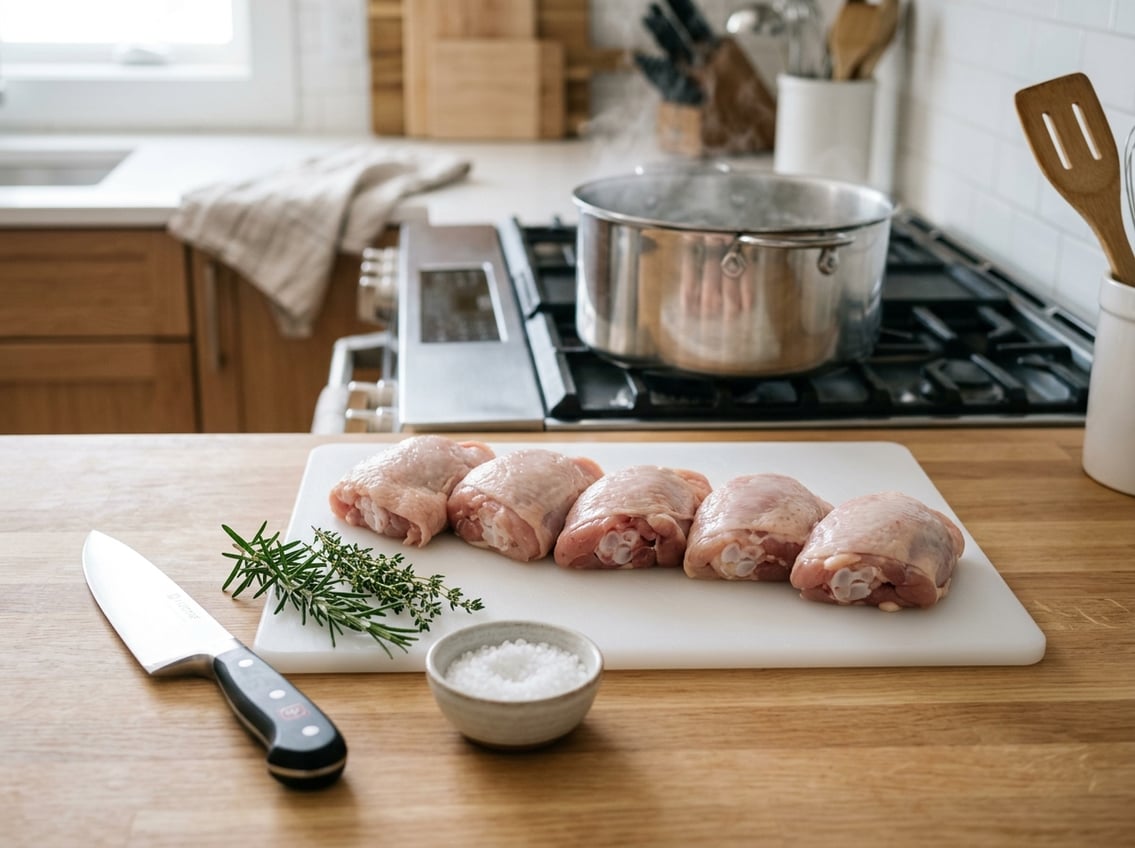
Pick thighs that match the dish you want to make and the time you have. Bone-in, boneless, skin-on, skinless, fresh, and frozen choices each change flavor, cooking time, and broth quality.
Bone-In Versus Boneless Varieties
Bone-in chicken thighs add richness and body to the cooking liquid because marrow and connective tissue release gelatin as they simmer. This makes the broth more flavorful and gives shredded meat a juicier texture, but expect 30–40 minutes of simmering for fully cooked bone-in pieces.
Boneless chicken thighs cook faster, usually 20–30 minutes, and are easier to shred or chop for salads and tacos. Combine boneless pieces for the meat and one or two bone-in thighs to boost flavor if you want both convenience and richer stock.
Skin-On Versus Skinless Options
Skin-on chicken thighs contribute fat and flavor to the cooking liquid, which improves mouthfeel in soups and stews. The skin protects meat from drying, so the flesh stays tender during simmering.
Remove skin after cooking if you prefer lower-fat meat. Skinless chicken thighs reduce greasiness in the broth and yield leaner meat faster.
They suit dishes where a clear, light broth matters or when you plan to shred chicken into salads and wraps. If using frozen pieces, skinless thighs thaw and cook more evenly than skin-on cuts.
Fresh and Frozen Chicken Thighs
Fresh chicken thighs give the best texture and shortest, most predictable cooking time. Use fresh bone-in skin-on thighs for maximum broth flavor or fresh boneless skinless when speed matters.
You can boil frozen chicken thighs safely, but adjust the method. For frozen bone-in chicken thighs, start in cold water and increase simmer time by 10–15 minutes to reach 165°F (74°C) at the bone.
Frozen boneless chicken thighs thaw and cook more evenly but still need extra time. Plan on about 25–35 minutes.
Always verify temperature with a probe thermometer.
Optimal Boiling Times and Techniques
Boil chicken thighs until they reach an internal temperature of 165°F (74°C). Timing varies by bone, thickness, and whether they’re frozen.
Use a gentle simmer rather than a rolling boil to preserve tenderness and prevent the meat from becoming stringy.
Timing for Bone-In Chicken Thighs
Bone-in chicken thighs typically take about 15–18 minutes in simmering liquid when fresh and arranged in a single layer. Start in cold water or stock, bring to a brief boil, skim any foam, then reduce to a simmer.
Use an instant-read thermometer inserted near the bone to check for 165°F (74°C). If pieces are large or thick, add 3–5 minutes and recheck temperature.
Keep skin on if you plan to sear after boiling. Otherwise, remove the skin after cooking.
Timing for Boneless Chicken Thighs
Boneless thighs cook faster, usually 10–12 minutes in simmering liquid for standard 1-inch-thick pieces. Place them in a single layer with about 2 inches of liquid above them.
Bring the pot up to a boil, then immediately lower to a gentle simmer. For thinner or pounded pieces, check at 8 minutes.
For thicker pieces, allow up to 14 minutes. Verify doneness by temperature and by ensuring juices run clear.
Adjusting for Frozen Chicken Thighs
Frozen boneless thighs that are separated and roughly 1-inch thick need about 12–14 minutes of simmering from frozen. If frozen in a thicker bundle or rolled form, expect 15–17 minutes.
Frozen bone-in thighs generally require 22–26 minutes to reach 165°F. If pieces are stuck together in a block, bring to a simmer and gently separate with tongs as they loosen.
Continue timing from separation—typically 12–15 minutes more for boneless, 15–20 minutes more for bone-in. Always confirm with a thermometer.
Tips for Tender and Juicy Results
Simmer, don’t boil: keep the liquid at a gentle bubble to retain moisture and avoid stringy texture. Use seasoned stock or water with 2 teaspoons salt per 6 thighs to infuse flavor during cooking.
Arrange thighs in a single layer so heat circulates evenly. If you must stack, rotate pieces every 5 minutes.
Rest cooked thighs on a plate for 5 minutes before slicing or shredding to let juices redistribute. Sear after boiling if you want crisp skin: pat dry, heat a skillet with a tablespoon of oil, and brown skin-side down for 4–6 minutes.
Always confirm internal temperature of 165°F (74°C).
Enhancing Flavor in Boiled Chicken Thighs
Boost flavor by seasoning the cooking liquid, using a quality broth or chicken bouillon, and finishing the meat to add texture and richness. Small choices like salt level, aromatics, and a final sear or glaze make a big difference in taste and mouthfeel.
Seasoning and Aromatics in the Cooking Liquid
Start with kosher salt in the water at about 1 teaspoon per quart to season the meat throughout. Add aromatics: quartered onion, smashed garlic cloves, celery ribs, and carrot chunks give savory depth.
Include fresh herbs like thyme and parsley or dried bay leaves and a smashed lemon for brightness. For heat or smokiness, add smoked paprika or a sliced jalapeño.
Simmer gently so the aromatics infuse without toughening the thighs. Strain the cooking liquid if you plan to use it for sauces or soup.
Reserve a cup of the poaching liquid to loosen shredded chicken for salads or tacos.
Using Chicken Bouillon or Broth
Choose low-sodium chicken broth if you want control over final salt levels. If using bouillon, dissolve it in hot water and taste.
Bone-in, skin-on thighs pair well with homemade or good-quality commercial broth because the bones add gelatin and mouthfeel. If you use store-bought broth, check the ingredient list for excessive sugar or additives.
For a concentrated flavor boost, reduce two cups of broth by half in a pan and use that as your poaching liquid.
Finishing Techniques for Better Texture
After boiling, rest the thighs 5–10 minutes to let juices redistribute. For crisper skin and caramelized flavor, pat skin dry and sear skin-side down in a hot skillet with a tablespoon of oil for 2–4 minutes.
Alternatively, shred warm thighs and toss with a spoonful of reserved poaching liquid plus a tablespoon of olive oil or mayo for salads and sandwiches. For a glaze, mix honey with soy sauce and brush on thighs, then broil 1–2 minutes for a sticky finish.
Use the reduced poaching liquid as a binder or broth to keep the meat moist and flavorful in tacos or soup.
Serving and Using Boiled Chicken Thighs
Boiled chicken thighs give you tender meat and a flavorful cooking liquid you can use immediately or store. There are practical ways to incorporate the thighs, the best shredding and slicing methods, and safe storing and reheating practices.
How to Use Boiled Chicken Thighs in Recipes
Use shredded or sliced boiled thighs in tacos, grain bowls, salads, and soups. Toss shredded meat with lime juice, chili powder, and a pinch of salt for quick tacos.
Slice thighs into strips to top stir-fries or pasta, finishing with a bit of sauce to keep the meat moist. Turn the cooking liquid into broth: strain it, skim fat, then add vegetables and pasta or rice for an instant soup.
For casseroles, cube the thighs and mix with sauce and cooked grains before baking at 375°F (190°C) until hot and bubbly. Use skin-on boiled thighs for richer dishes; remove skin if you prefer lighter texture.
Shredding and Slicing Techniques
Shred warm thighs with two forks or a stand mixer on low for even strands. Shred while the meat is still slightly warm so it separates more cleanly and absorbs sauces better.
For neat slices, chill thighs for 10–15 minutes to firm the meat, then use a sharp knife to cut across the grain. Use slicing for salads, sandwiches, or platters where presentation matters.
Keep a small bowl of cooking liquid handy to spoon over sliced or shredded chicken to maintain juiciness during assembly.
Storing and Reheating Boiled Chicken
Let boiled thighs and broth cool to room temperature within two hours. Refrigerate them in shallow, airtight containers.
Keep cooked chicken in the fridge for 3–4 days. Freeze meal-sized portions for up to 3 months.
Label packages with the date and use them within the recommended timeframes.
Reheat gently to keep the meat moist. Try these methods:
- Stovetop: Warm chicken in a skillet with 2–3 tablespoons broth over medium-low heat until it reaches 165°F (74°C).
- Oven: Cover with foil, add a splash of broth, and bake at 325°F (160°C) until the chicken reaches 165°F.
- Microwave: Cover and heat in 30–45 second bursts, stirring and adding broth as needed.
Check that the internal temperature reaches 165°F (74°C). Thaw frozen thighs in the refrigerator overnight before reheating for the best texture.


