
Can You Use Chicken Breast Instead of Thighs? Expert Guide and Recipes
You can swap chicken breast for thighs in many recipes, but you must adjust cooking time and add a little fat to prevent dry, bland results.
Use breasts when you want leaner, milder meat and can control temperature and moisture. Choose thighs when you need extra flavor and forgiveness during longer cooking.
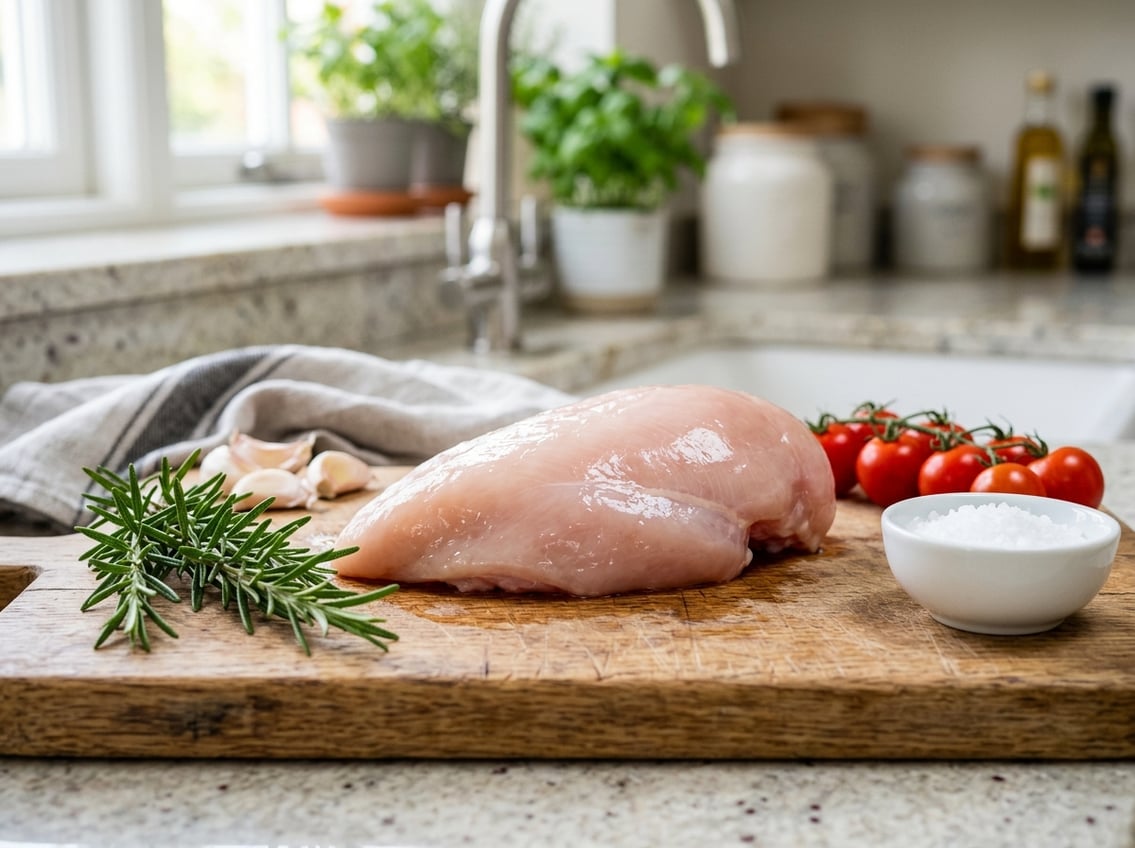
Consider texture, flavor, nutrition, and cost when deciding to substitute chicken breast for thighs. Each cut behaves differently during cooking and gives distinct results on the plate.
Key Differences Between Chicken Breasts and Thighs
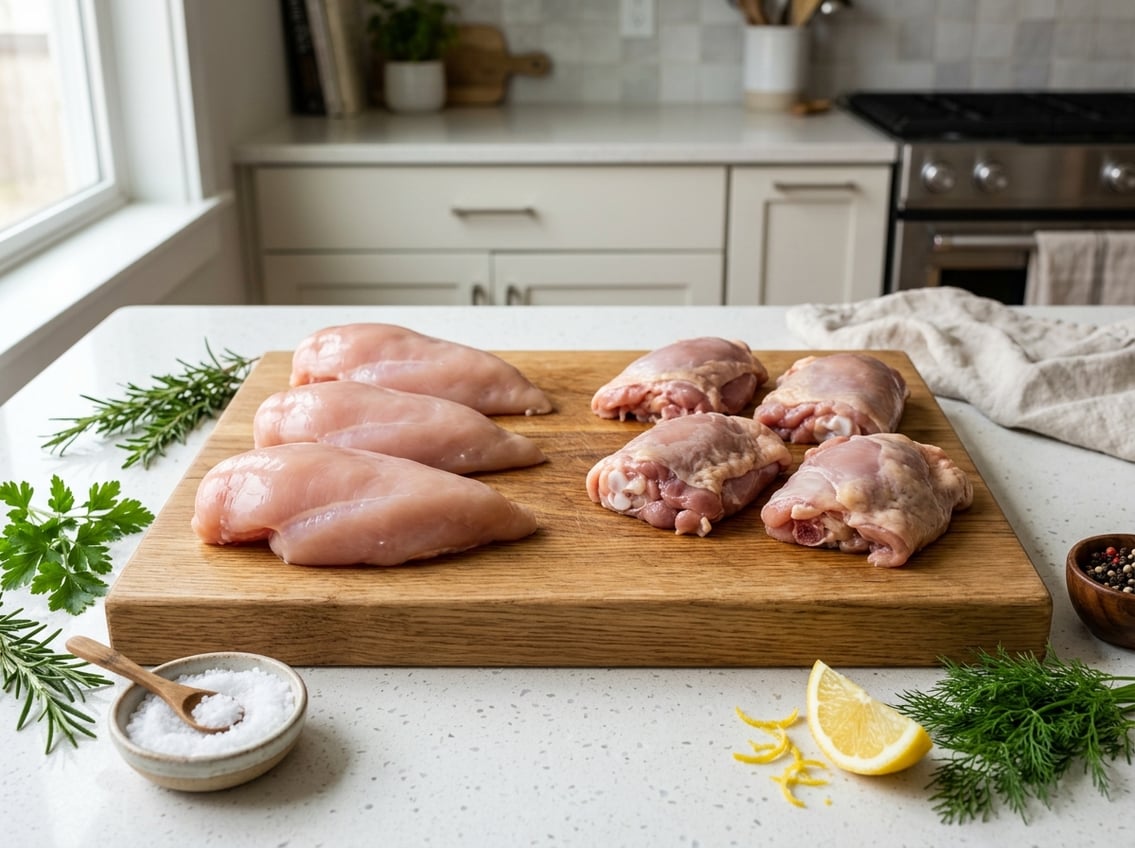
You’ll decide based on texture, flavor, and nutrition when swapping cuts.
Texture and Tenderness
Chicken breasts contain mostly white muscle fibers that contract tightly when heated. That makes them firmer and more prone to drying if overcooked even slightly.
To keep breasts tender, use brines, marinades, lower-temperature methods, or cut them into smaller pieces for quick high-heat cooking.
Chicken thighs contain more connective tissue and intramuscular fat. That connective tissue breaks down with moderate heat into gelatin, so thighs stay moist and forgiving even if cooking times vary.
Thighs work better for slow braises, long roasts, and dishes where you want pull-apart texture.
Flavor and Fat Content
Chicken breasts are mild and lean, so they take on the taste of marinades, sauces, and seasonings rather than contributing strong flavor themselves. That neutral profile makes breasts ideal when you want a light protein or to highlight other ingredients.
Chicken thighs have higher fat content and more myoglobin, producing richer, deeper flavor and a slightly darker color. The extra fat also helps with browning and mouthfeel, giving roasted or pan-fried thighs a more savory result without relying solely on added butter or oil.
Nutritional Variations
A 3-ounce cooked skinless chicken breast typically contains about 25–30 g protein, 3–4 g fat, and roughly 120–140 calories. That makes breasts a leaner choice if you track saturated fat or total calories.
A 3-ounce cooked skinless chicken thigh delivers around 20–22 g protein, 8–10 g fat, and about 160–190 calories. Thighs contain more monounsaturated and saturated fat and slightly higher iron and zinc levels due to darker meat.
When to Substitute Chicken Breast for Thighs
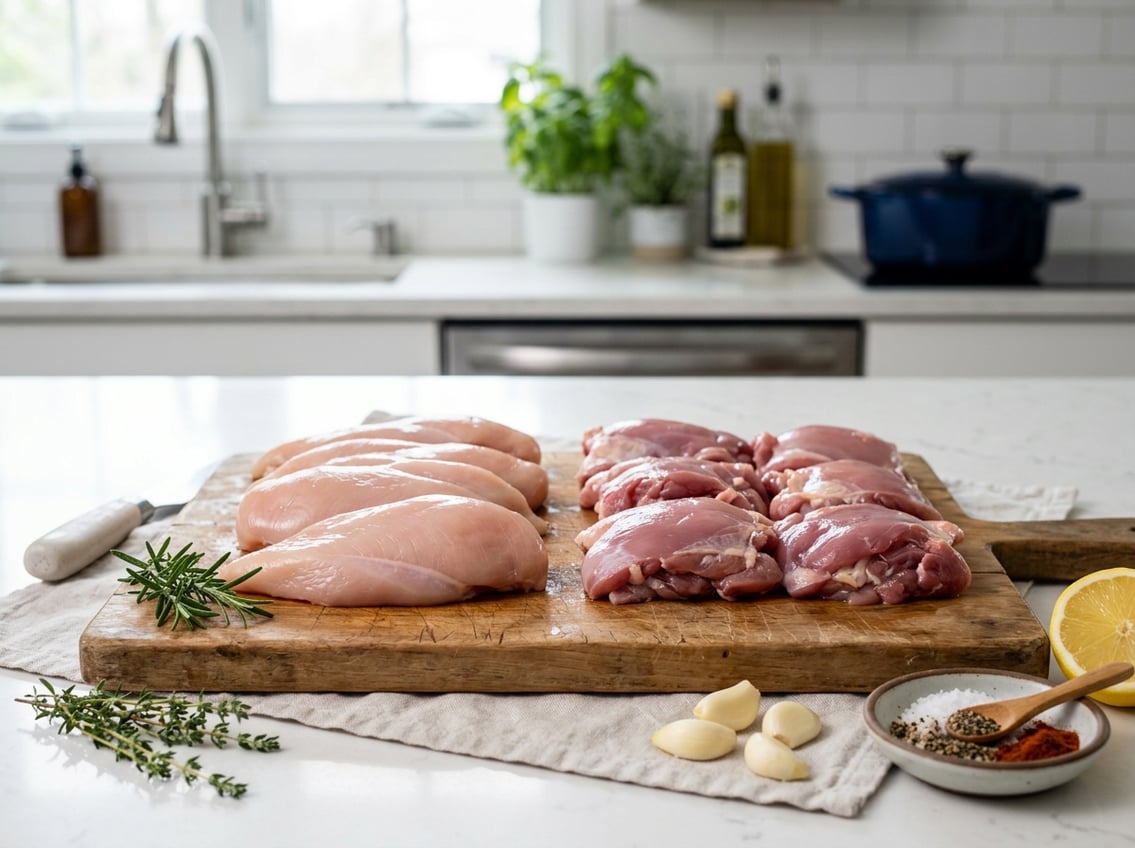
You can swap breasts for thighs when the recipe benefits from leaner, milder meat or when shorter cook times and a firmer texture are acceptable.
Be ready to adjust cooking time, add fat or a sauce, and watch for dryness.
Best Recipes for Substitution
Use chicken breast instead of thighs in quick-cook, high-heat dishes like chicken salad, stir-fries, and chicken fajitas. These recipes rely on slicing or shredding and often include dressings, marinades, or sauces that restore moisture and add flavor.
For chicken salad, poach or poach-then-shred breasts and toss with a creamy or vinaigrette dressing so the lean meat stays tender. For fajitas, slice breasts thin across the grain and cook briefly over high heat with oil, peppers, and onions; the quick sear prevents overcooking.
Grilled skewers and sandwiches also work well because you can brine, marinate, or slice thin to reduce dryness.
Recipes Where Substitution Is Not Ideal
Avoid replacing thighs with breasts in long braises, slow-cooked stews, or recipes that depend on rendered fat and connective tissue for flavor and mouthfeel. Dishes such as coq au vin, slow-simmered curries, and many roast or barbecue recipes gain succulence and richness from thigh fat that breasts lack.
If a recipe instructs for skin-on, bone-in thighs or long, low-temperature cooking, substituting boneless breasts will likely produce dry, less flavorful results. If you must substitute in those cases, add oil or butter, use bone-in breasts if available, and reduce cook time or use a sauce to compensate.
Adjusting Cooking Methods and Times
Change how you cook and how long you cook when substituting chicken breast for thighs. Focus on preserving moisture, lowering cooking temperatures when appropriate, and using marinades or sauces that add fat and acidity.
Managing Moisture and Preventing Dryness
Chicken breasts are leaner than thighs and dry out faster, so aim for shorter, gentler cooking. Pound breasts to even thickness (about ¾-inch) for uniform doneness, or slice into cutlets to reduce cook time.
Use an instant-read thermometer; pull breasts at 155–160°F and let them rest to reach 165°F carryover. When braising or making dishes like chicken parmesan, brine breasts in a 5–8% salt solution for 30–60 minutes to increase juiciness.
For pan-searing, finish in the oven at 325–350°F rather than cooking through on high heat. Covering with sauce or using a pan lid traps steam and preserves moisture during finishing.
Optimizing Cooking Temperatures
Adjust oven and pan temperatures downward compared with thigh recipes to prevent overcooking. Roast bone-in thighs comfortably at 400–425°F.
For breasts, roast at 325–350°F and expect shorter total time—typically 18–25 minutes for whole boneless breasts depending on thickness.
For stovetop cooking, sear quickly over medium-high heat (1–2 minutes per side) then reduce to medium-low and finish covered for several minutes. When grilling, use two-zone heat: sear over direct heat then move breasts to indirect heat to finish.
Always verify doneness with a thermometer, not by time alone.
Recommended Marinades and Sauces
Use marinades that add fat and acid to balance lean breast meat. A basic marinade: 2 tablespoons olive oil, 1 tablespoon lemon juice or vinegar, 1 minced garlic clove, ½ teaspoon salt, and ¼ teaspoon black pepper for 30–60 minutes.
Yogurt- or buttermilk-based marinades add tenderness for 1–4 hours. Sauces like tomato-basil for chicken parmesan, cream sauces, or pan sauces made from butter and wine help compensate for lost fat.
When breading breasts for dishes such as chicken parmesan, lightly oil the exterior or brush with beaten egg before breadcrumbs to seal in moisture.
Nutritional and Dietary Considerations
You’ll weigh calories, protein, and fat when deciding whether to swap breasts for thighs. Consider how those differences affect satiety, cooking outcome, and any diet goals you’re following.
Calories and Macros
Per 100 g, boneless, skinless chicken breast generally provides about 100–110 calories and ~22–24 g protein with ~1.5–3 g fat. Boneless chicken thighs of the same weight typically contain roughly 140–160 calories, ~18–19 g protein, and ~7–9 g fat.
If you track calories or follow a calorie deficit, breasts give you more protein per calorie and lower total energy. Thighs add extra calories from fat, which can increase meal palatability and help you meet higher daily energy needs without large portions.
Adjust portion size: a 120 g breast vs a 120 g thigh changes calorie and fat intake substantially, so swap portions or cooking fat to keep targets steady.
Protein and Fat Comparison
Breasts deliver higher protein density, so they’re efficient when you need 20–30 g of protein per meal. That helps with muscle maintenance, post-workout recovery, and meeting daily protein goals without added fat.
Thighs contain more intramuscular fat and slightly less protein by weight. The extra fat increases tenderness and slows gastric emptying, improving satiety.
If you need lean protein (for weight loss or low-fat plans), pick chicken breasts. If you need longer-lasting fullness or prefer richer flavor, choose boneless chicken thighs.
You can balance both by removing skin, trimming visible fat, or pairing breasts with healthy fats (olive oil, avocado) to improve absorption of fat-soluble vitamins.
Choosing the Best Cut for Your Diet
Match the cut to specific dietary needs: choose chicken breasts when you want lower calories, higher protein-per-calorie, and minimal saturated fat. They suit meal prep, precise macros, and lean-eating plans.
Pick chicken thighs when you prioritize taste, moisture, and micronutrients like iron and zinc that are modestly higher in dark meat. Thighs work well if you follow a moderate- or higher-fat plan, or if you need more calories without larger portions.
If your diet is flexible, rotate cuts. Use breasts around training days for lean protein and thighs on rest days or in stews and slow-cooked dishes where fat safeguards texture.
If swapping in recipes, adjust cooking time and any added fats to preserve both nutrition targets and final texture.
Tips for Successful Substitution in Popular Dishes
Using chicken breast instead of thighs works well when you adjust cooking time, add moisture, and match cut size to the recipe. Plan for faster cooking, more seasoning or fat, and brief resting so the breast stays tender.
Stir-Fries and Quick Meals
Cut breast into uniform thin strips or small cubes so pieces cook as quickly as the vegetables. Pat the pieces dry, then toss with 1–2 teaspoons cornstarch and a splash of soy sauce or marinade for 10–15 minutes; the cornstarch helps lock in juices and creates a better sear.
Cook over high heat in a hot wok or skillet for 2–4 minutes, stirring constantly, and remove as soon as the center is opaque to avoid dryness. If you make chicken fajitas, slice breasts across the grain into thin strips and cook in batches so the pan stays hot.
Finish with a squeeze of lime and a quick rest off the heat to keep the meat juicy.
Grilled and Baked Chicken
For whole breasts or bone-in pieces, brine for 20–30 minutes (salt + sugar in water) to increase moisture retention. If you grill, use medium-high heat and cook 4–6 minutes per side for boneless halves, turning once; use an instant-read thermometer and remove at 160°F, resting to reach 165°F.
For baking, lay breasts in a shallow dish, add a tablespoon of olive oil or butter per breast, and bake at 375°F for 18–22 minutes depending on thickness. Consider pounding to even thickness for consistent cooking.
If a recipe calls for thighs, add a sauce or glaze toward the end so the lean breast absorbs flavor without prolonged exposure to heat.
Chicken Salad and Cold Dishes
Poach breasts gently: simmer in salted water or broth with aromatics for 12–15 minutes until just cooked, then cool quickly in an ice bath to preserve texture. Shred or dice while still slightly warm so it absorbs dressings and seasonings better for chicken salad.
When replacing chicken thighs in cold bowls or pasta salads, toss breast with a fatty dressing (mayonnaise, yogurt, or oil-based vinaigrette) and let it marinate for at least 30 minutes to compensate for lower fat. Add crunchy or oily mix-ins like avocado, olives, or toasted nuts to improve mouthfeel and balance the lean protein.
Cost, Availability, and Convenience of Chicken Cuts
You’ll see price, store availability, and prep work influence whether you choose breasts or thighs for a recipe.
Price Differences Between Cuts
Chicken thighs typically cost less per pound than chicken breasts in many U.S. markets, often by 10–30%. That gap widens for boneless chicken thighs versus boneless breasts because deboning raises the price of any cut.
If you track unit prices, thighs usually win for budget cooking and bulk meal prep. Breasts offer higher protein per ounce, so compare price-per-protein if that matters for your diet.
Sales and seasonal demand (grilling season raises breast prices) can flip the equation temporarily, so check per-pound pricing before you buy.
Accessibility in Stores
Supermarkets usually stock both breast and thigh options year-round, but form and packaging vary by retailer. Large chains and warehouse clubs commonly offer boneless, skinless breasts in smaller packs and thighs in family-size trays or bulk cases.
Smaller grocers and farmers’ markets may favor bone-in cuts or whole birds, which changes what you can buy. If you need boneless chicken thighs specifically, call ahead or check online inventory, as they can sell out faster than breasts in some areas.
Frozen options expand choices and make bulk buying practical.
Prepping Boneless Versus Bone-In
Boneless chicken thighs and boneless breasts save time because you don’t need to debone them. They also cook faster and more evenly.
You pay more per pound for boneless cuts, but you spend less time on prep and reduce the risk of overcooking.
Bone-in thighs cost less and add more flavor and moisture. You can use the bones for stock.
Plan for extra prep time if you need to debone or portion bone-in thighs. If you buy bone-in to save money, trim and cook them longer for even doneness.
Use a sharp knife to remove bones yourself or ask the butcher to do it if you want convenience without paying a premium price.


