
What Is the Best Way to Cook Chicken Thighs and Legs: Expert Tips and Methods
You want juicy, tender meat with crisp, flavorful skin. The easiest way to get that is to pan-sear bone-in, skin-on thighs or drumsticks and finish them in the oven for even cooking and consistent results.
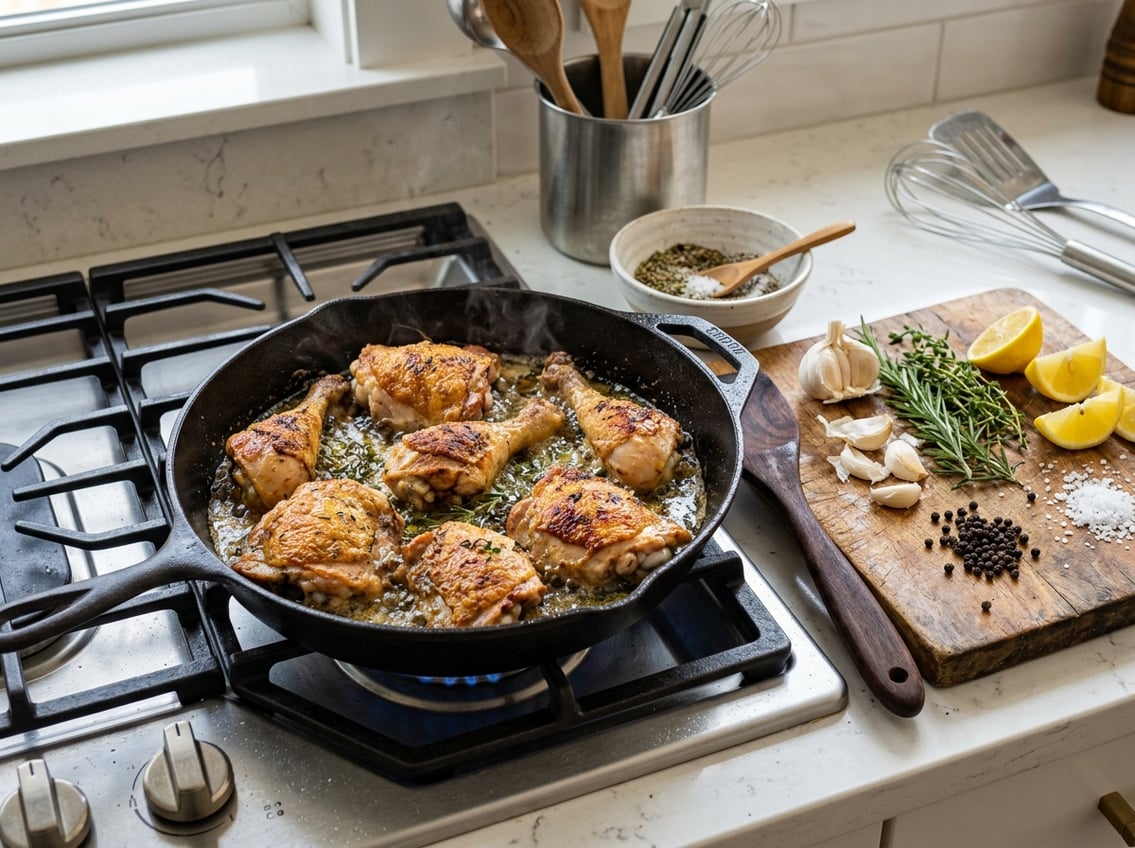
This technique uses high heat to render and crisp the skin. Then, gentle oven heat breaks down connective tissue in thighs and legs so the meat becomes tender without drying out.
Here’s how thighs and drumsticks differ, which seasonings and cuts work best, an oven-baked go-to method, smart alternatives, and simple best practices to lock in moisture and maximize flavor.
Chicken Thighs vs. Drumsticks: Key Differences
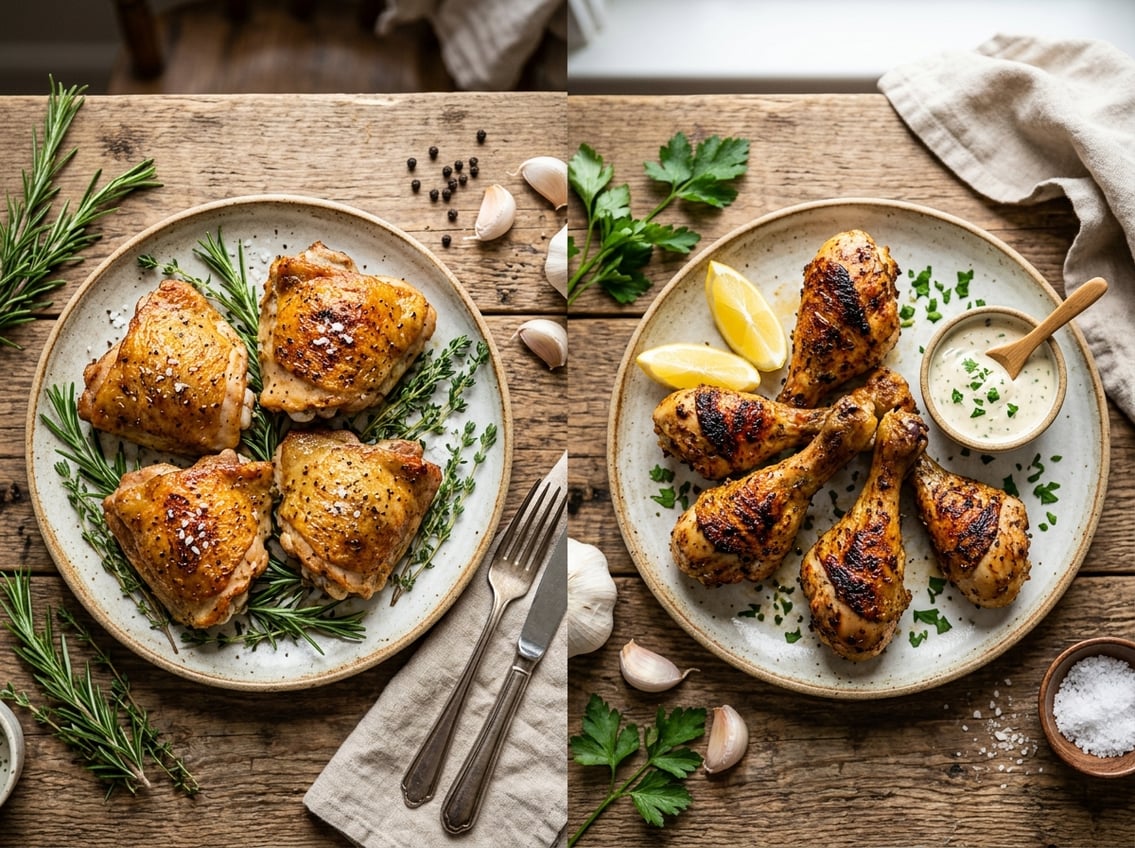
Thighs and drumsticks both come from the chicken leg but differ in meat volume, fat distribution, and cooking behavior. These physical differences determine which cut stays juicier, which crisps better, and how you portion for a meal.
Flavor and Texture Comparison
Thighs have higher intramuscular fat and more connective tissue, so they deliver richer, more savory flavor and a silkier mouthfeel. Bone-in, skin-on chicken thighs render fat during cooking, which deepens taste and keeps the meat tender.
Drumsticks are leaner per edible ounce and have firmer, chewier muscle fibers. The meat around the tibia concentrates flavor near the bone, so skin-on drumsticks crisp well and taste punchy after high-heat grilling or frying.
If you remove the skin, both cuts lose surface fat but retain dark-meat richness. Boneless chicken thighs give you the same tenderness with faster cook time and easier slicing for tacos or salads.
Choose drumsticks when you want a handheld, rustic bite.
Cooking Time and Techniques
Bone-in chicken thighs take longer to reach safe internal temperature than boneless chicken thighs because the femur slows heat transfer. Roast bone-in, skin-on thighs at 400°F (200°C) for 35–45 minutes to crisp skin while keeping meat juicy.
For shreddable results, braise thighs 30–60 minutes in liquid at low simmer. Drumsticks cook through faster than thick bone-in thighs but need extra surface time to crisp skin.
Grill or roast drumsticks at 425°F (220°C) for 30–40 minutes, turning to avoid burning. Fry whole drumsticks at 350°F (175°C) until they reach 165°F (74°C) internal temperature.
Use probe thermometers and target 165°F (74°C) for safety, then allow a short rest to redistribute juices. Skinless pieces cook quicker, so reduce times and watch for dryness.
Popular Cuts and Uses
Bone-in chicken thighs work best for braises, curries, and dishes where rendered fat enriches sauce. Use bone-in, skin-on thighs for sheet-pan dinners and roasted entrees.
Boneless chicken thighs excel in stir-fries, kebabs, sandwiches, and recipes that call for uniform pieces. Drumsticks suit casual meals, barbecues, and kid-friendly plates because they’re easy to hold.
Skin-on drumsticks are ideal for smoking and rotisserie since the shape promotes even browning. Skinless drumsticks reduce calories while keeping iron-rich dark meat.
For mixed platters, combine chicken thighs and drumsticks. Thighs provide shredded meat, drumsticks provide presentation and texture.
Plan portions by weight—estimate about 6–8 ounces raw per adult for thighs, or 2 drumsticks per person for a casual serving.
Essential Ingredients and Seasonings
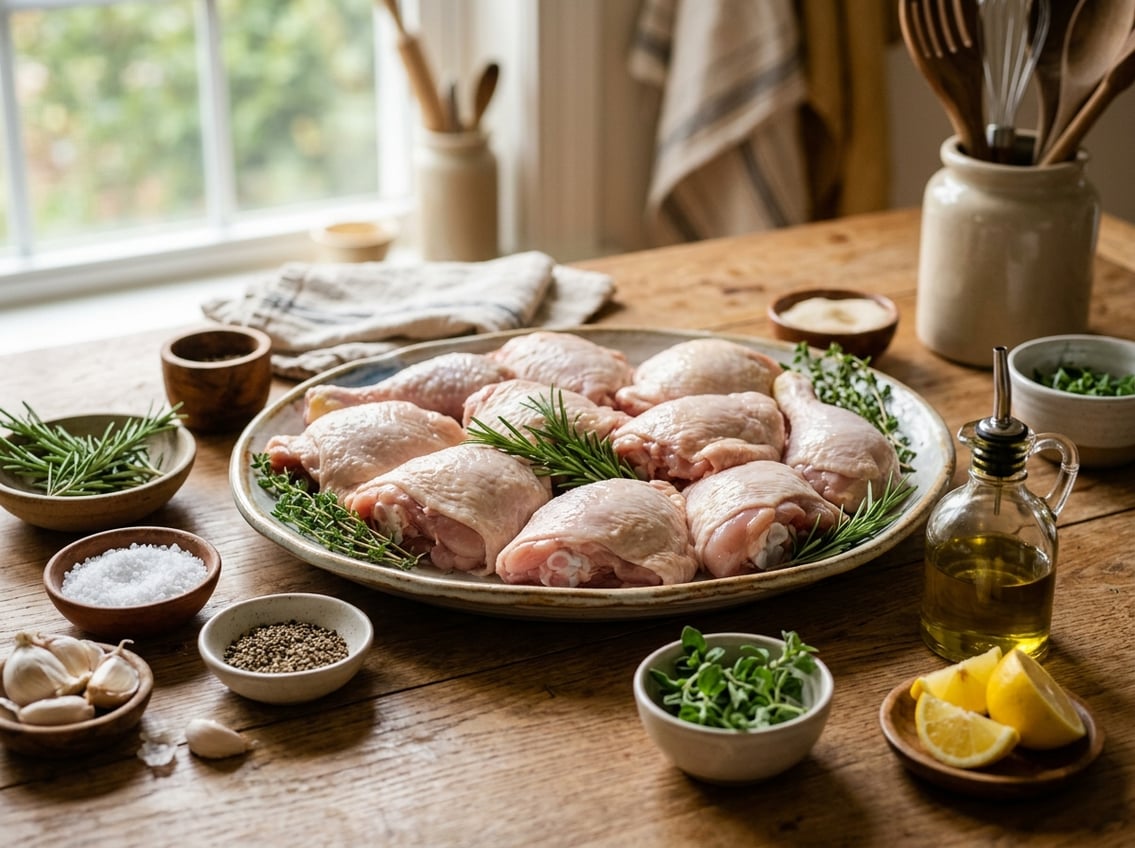
Focus on salt, a fat, and a balanced blend of spices or herbs to get crispy skin and juicy meat. Adjust spice ratios and oil or marinade time to change crispness, browning, and flavor intensity.
Classic Spice Rubs
Use kosher salt as your base—about 3/4–1 teaspoon per thigh or leg—to season through the meat and improve browning. Build a simple rub with 1 teaspoon paprika, 1/2–1 teaspoon garlic powder, 1/2 teaspoon onion powder, and 1/4–1/2 teaspoon freshly ground black pepper per pound of chicken.
Add 1/2 teaspoon smoked paprika or a pinch of cayenne for heat. Rub the mix under and over the skin for even flavor.
If you want a crunchy crust, pat the skin very dry, apply the rub just before cooking, and let the chicken sit skin-side up in the fridge 30–60 minutes to dry the surface.
Herbs for Chicken Thighs and Legs
Fresh or dried herbs change the tone. Use thyme and oregano as your go-to herbs.
For a pan-roast or skillet finish, tuck 4–6 sprigs of fresh thyme under the skin or scatter leaves in the pan. If using dried herbs, use about one-third the volume of fresh (for example, 1 teaspoon dried oregano equals 1 tablespoon fresh).
Combine oregano with thyme and a little lemon zest for brightness. Add herbs toward the end of long braises to preserve aroma, or mix dried herbs into a rub for roasting and grilling where they’ll crisp and concentrate.
Role of Olive Oil and Marinades
Olive oil helps transfer heat for browning and carries fat-soluble flavors like paprika and oregano into the meat. Use 1–2 teaspoons of olive oil per piece to coat skin lightly.
For skin-on thighs or legs, oil also improves crisping in the oven or skillet. Marinades with acid (lemon juice or vinegar), oil, and aromatics can tenderize and flavor; marinate 30 minutes to 4 hours.
Avoid overnight acidic marinades on skin-on pieces, which can break down surface proteins and affect browning. If you want crisp skin, remove excess marinade, pat dry, and apply a dry rub before cooking.
Oven-Baked Perfection
Baking chicken thighs and legs locks in flavor while giving you a reliable path to crispy skin and juicy meat. Use bone-in, skin-on pieces, a hot oven, and an instant-read thermometer for consistent results.
How to Bake Chicken Thighs
Pat the skin dry with paper towels to remove surface moisture. This helps the skin crisp.
Season both sides with salt and your chosen spices—garlic powder, paprika, and black pepper work well—and let the chicken rest at room temperature for 15–20 minutes if you can.
Arrange thighs skin-side up on a rimmed baking sheet or in a shallow roasting pan. Use a wire rack set over the pan if you want more even airflow and crisper skin.
Bake bone-in, skin-on chicken thighs for better flavor and juiciness. Check doneness with an instant-read thermometer inserted into the thickest part without touching bone.
When the thermometer reads 165°F (74°C) the thighs are safe. For more tender results, cook to 170–175°F, then rest.
Best Temperatures and Timing
Preheat your oven to either 425°F (220°C) for a shorter, crisper cook or 375°F (190°C) for a gentler, juicier finish. At 425°F, expect 25–35 minutes for bone-in thighs depending on size.
At 375°F, plan for 35–45 minutes. If you use a convection setting, reduce temperature by about 25°F (15°C) and shorten cooking time slightly.
Watch skin color to avoid over-browning. Always rely on the instant-read thermometer rather than time alone, because oven variability and piece size change cook times.
If you choose to broil at the end, do so only for 1–2 minutes and watch closely to avoid burning the spices or skin.
Tips for Crispy Skin and Juiciness
Start with dry skin and high initial heat. Pat-drying and a light coating of oil or melted butter promotes browning and an attractive crust.
Don’t overcrowd the pan; leave space between thighs so hot air can circulate. Season under the skin for deeper flavor: gently lift skin and rub a little seasoning or garlic-herb butter onto the meat.
Use bone-in, skin-on chicken thighs to retain moisture during baking. Rest the chicken 5–10 minutes after removing it from the oven to allow juices to redistribute.
If skin sogs from resting in the pan, transfer thighs to a rack while resting. Use the instant-read thermometer again after resting if you want to confirm final internal temperature.
Alternative Cooking Methods
These methods balance crisp skin, moist meat, and ease of execution. Each uses a clear workflow, minimal equipment, and small technique changes that affect texture and flavor.
Pan-Searing and Oven Finishing
Pan-searing then oven-finishing gives you deep browning on the skin with reliable internal doneness for both bone-in and boneless chicken thighs. Heat a 10-inch cast-iron or heavy skillet over medium-high until shimmering.
Add 1 tablespoon olive oil and place well-dried, seasoned thighs skin-side down. Don’t crowd the pan; work in batches if needed.
Sear without moving until the skin is golden and releases easily, about 6–10 minutes for skin-on thighs. Transfer the whole skillet to a 400–425°F oven and roast until an instant-read thermometer reads 165°F (about 8–15 minutes depending on size).
For skinless or boneless thighs, shorten sear time and reduce oven time by several minutes.
Tips:
- Pat meat dry and salt 30 minutes ahead if possible.
- Use a thermometer to avoid overcooking.
- Rest 5 minutes before serving to redistribute juices.
Air Frying for Crispiness
Air frying creates very crisp skin quickly, which works well for skin-on thighs and drumsticks. Preheat the air fryer to 400°F.
Pat thighs dry, brush lightly with olive oil, and season. Cook skin-side up on the basket for 12–20 minutes depending on piece size, flipping halfway to promote even browning.
Air fryers circulate hot air, so the exterior crisps while the interior cooks fast. For boneless or skinless chicken thighs, reduce time and check at 8–10 minutes to avoid drying.
Place larger drumsticks on the lower rack or stagger batches for airflow.
Quick adjustments:
- If meat dries, lower temp to 375°F and add 2–3 minutes.
- Use a light oil spray to aid browning without excess fat.
- Let juices collect briefly after cooking; do not stack while hot.
Slow Cooking and Braising
Slow cooking and braising prioritize tenderness and flavor infusion, ideal for bone-in thighs and drumsticks that you’ll shred or serve with sauce. Brown thighs first in a skillet with 1 tablespoon olive oil to develop flavor, then transfer to a slow cooker or Dutch oven.
Add aromatics and 1–2 cups of liquid (broth, wine, or tomatoes) to partially submerge the meat. For slow cooker, cook on low for 4–6 hours or high for 2–3 hours until meat reaches 165°F and pulls easily from the bone.
For braising in the oven, cover and bake at 325°F for 45–75 minutes depending on size. Prolonged moisture will soften skin, so crisp separately under a broiler or in a hot skillet if you want contrast.
Practical notes:
- Reduce liquid after cooking for a concentrated sauce.
- Use bone-in pieces for better flavor and texture.
- Season toward the end if using salty broth to avoid over-salting.
Best Practices for Juicy, Tender Results
Target precise internal temperature, let meat rest to redistribute juices, and use bone-in chicken thighs or drumsticks for better moisture and flavor retention. Use an instant-read thermometer to judge doneness rather than relying on time alone.
Always rest the pieces uncovered briefly before serving to preserve crisp skin.
Using a Thermometer for Doneness
Use an instant-read thermometer for every bone-in chicken thigh or drumstick you cook. Insert the probe into the thickest part of the meat, avoiding contact with the bone, which reads hotter and gives a false high temperature.
Aim for 175–185°F for thighs and drumsticks if you want tender, pull-apart texture. 165°F is safe but can leave connective tissue firmer.
For crispy skin with moist meat, sear skin-side down then finish in a 350–400°F oven and check temperature toward the end of cooking. Calibrate or compare your thermometer occasionally.
Digital instant-read models give fast, reliable readings and help you cook multiple pieces to consistent doneness.
Resting and Serving Tips
After you remove bone-in chicken thighs or drumsticks from heat, rest them uncovered for 5–10 minutes. Resting lets juices redistribute and internal temperature to rise a few degrees, which continues collagen breakdown and increases tenderness.
If you want to preserve skin crispness, rest on a wire rack set over a sheet pan rather than piling pieces on a plate. For sauced preparations, rest briefly then toss in sauce right before serving so skin stays texturally appealing.
Slice or pull near the bone when you serve; that exposes the juiciest parts and makes portioning easier. Use the thermometer again if unsure. Carryover cooking can vary by piece size and oven temperature.
Serving and Flavor Variations
Choose bold, simple accents that match the cooking method and don’t overpower the meat.
Focus on a primary herb or spice, a finishing acid like lemon or vinegar, and a drizzle of oil or pan juices to unify the plate.
International Spice Blends
Change the flavor profile quickly by using spice blends.
For a Spanish-style feel, mix smoked paprika, oregano, black pepper, and a pinch of salt. Rub the mixture under the skin and sear skin-side down until crisp. Finish the dish in the oven.
For a Mediterranean twist, combine thyme, oregano, crushed garlic, lemon zest, and olive oil. Marinate for 30 to 60 minutes and roast until the internal temperature reaches your preferred doneness.
If you want North African flavors, blend ground cumin, smoked paprika, coriander, and a little black pepper. Add olive oil to make a paste and coat the thighs or legs.
For a simple herb-forward option, toss chopped thyme and oregano with olive oil and lemon juice. Brush this on during the last 10 minutes of roasting to keep the herbs bright.
Taste for salt and finish with an acid like lemon or a splash of sherry vinegar to brighten rich, fatty pieces.
Side Dishes and Meal Ideas
Pair crispy-skinned thighs with a creamy element like mashed potatoes or a yogurt-cucumber salad. A lemony or herbed couscous complements the oregano and thyme notes from the poultry.
For weeknight bowls, shred roasted legs and toss them with roasted vegetables, a drizzle of olive oil, black pepper, and paprika. Finish with fresh herbs and a squeeze of lemon.
Serve over rice or warmed pita with pickled onions for contrast.
For a simple family meal, roast legs with smashed potatoes tossed in olive oil, thyme, and black pepper on the same pan. The potatoes soak up pan juices and the dish needs minimal plating.


