
Is It OK to Marinate Chicken Thighs for 24 Hours? Expert Guide
You can safely marinate chicken thighs for 24 hours in the refrigerator. Whether you should do so depends on the marinade’s strength and the texture you want.
If your marinade is oil- or dairy-based (like yogurt or buttermilk) or mild in acid, 24 hours will deepen flavor and tenderize without making the meat mushy. If it’s highly acidic, limit marinating to a few hours to avoid an overly soft texture.

Marination penetrates dark meat and the right timing improves both flavor and texture. Knowing optimal marinating times, risk factors, and safe storage practices will help you get the best results.
How Marination Works for Chicken Thighs

Marinating changes flavor, texture, and moisture in three main ways. Acids and enzymes alter proteins, oil carries fat-soluble flavors and protects surfaces, and seasonings diffuse into the meat.
Temperature and time control how deep and how fast these changes happen.
Acid, Oil, and Flavor Infusion
Acids (lemon, vinegar, yogurt) and enzymatic ingredients (pineapple, papaya) start breaking down surface proteins. This helps surface flavors penetrate and softens connective tissues near the exterior.
Strong acids can work faster and risk a mushy surface if left too long. Oil carries fat-soluble flavors (like garlic-infused oil or paprika oil) and promotes even browning when you cook.
Oil helps spices adhere and slows moisture loss during high heat cooking. Salt and salt-containing components (soy sauce, miso) pull moisture out briefly, then help it reabsorb, carrying dissolved flavors deeper.
Herbs, garlic, and spices mainly season the outer layers but contribute aroma during cooking.
The Science of Marinating
Marinades work through diffusion and chemical reaction. Small molecules (salt, acids, some aromatics) diffuse faster into muscle than large molecules (whole herbs, oil droplets).
A thigh in a typical fridge marinade absorbs flavors a few millimeters to a centimeter deep over several hours. Acid denatures proteins by uncoiling peptide chains.
Moderate denaturation increases tenderness and allows more flavor binding. High-acid marinades beyond 12 to 24 hours often create a mealy or mushy texture, especially on thinner or boneless pieces.
Keep the marinade below 40°F (4°C) to prevent bacterial growth. Vacuum sealing or massaging increases surface contact and speeds up flavor penetration.
Effects on Tenderness and Juiciness
Chicken thighs contain more connective tissue and fat than breasts, so they tolerate longer marinating without turning rubbery. A balanced, low-acid or dairy-based marinade can tenderize for 12 to 24 hours while preserving a pleasant texture.
Salt-brine effects improve juiciness. Salt draws out water, then proteins rebind that water more tightly, helping the thigh hold onto moisture during cooking.
Too much acid or excessive time can cause protein breakdown that squeezes out liquid, producing a dry or mushy mouthfeel. To preserve juiciness, use moderate acid, include some oil, limit highly acidic marinades to shorter times, and always refrigerate while marinating.
Optimal Marinating Times
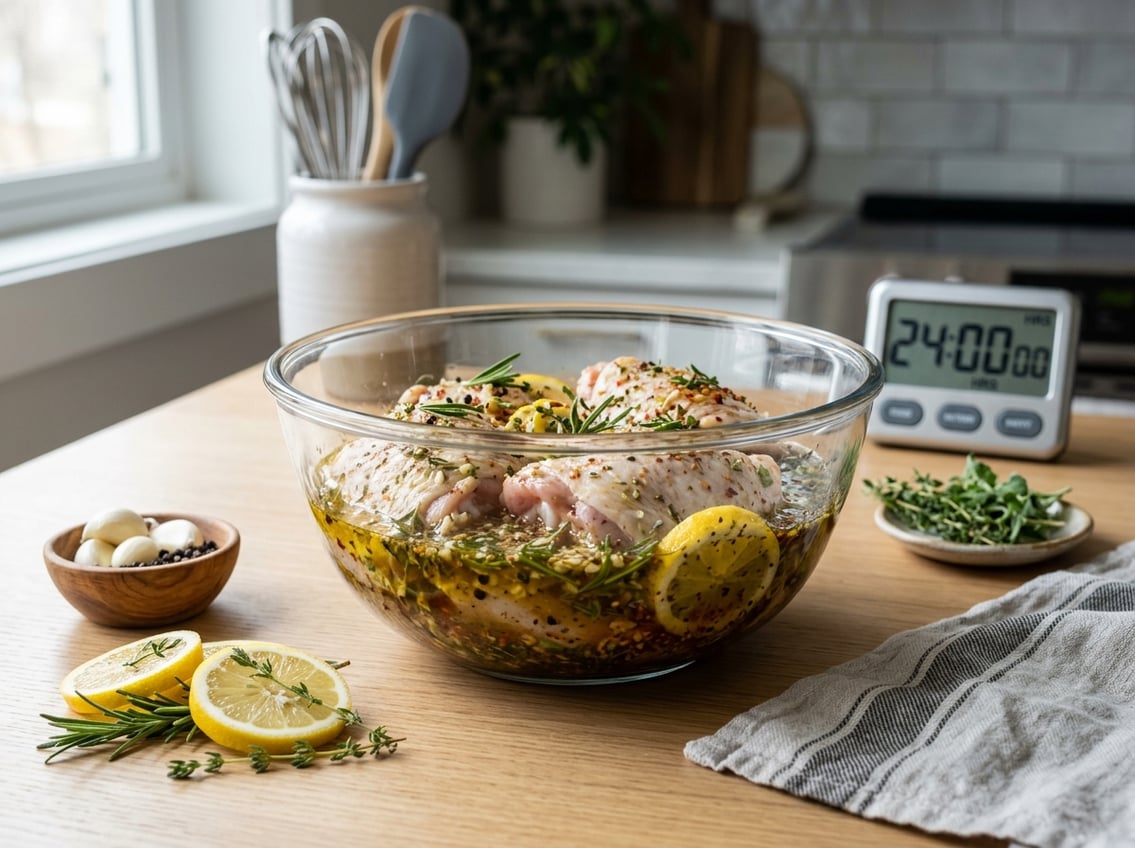
Quick marinating times add surface flavor, while longer times allow deeper penetration and more tenderizing. Adjust the time based on marinade ingredients and cut thickness.
Short vs. Long Marinating Time
Short marinating time (15 to 60 minutes) works well for thin, boneless thighs or when using oil-based or mildly seasoned marinades. The surface quickly picks up aromatics without altering texture.
Long marinating time (4 to 24 hours) allows flavors to penetrate bone-in or thicker thighs and tenderizes the meat more. Aim for 4 to 12 hours for the best results, and extend toward 24 hours only with mild, low-acid marinades.
Always refrigerate while marinating. Short marination gives a flavor bump, while long marination provides deeper flavor and tenderness but increases the risk of texture change.
Recommended Durations by Marinade Type
Acidic marinades (citrus, vinegar, wine): 30 minutes to 6 hours.
High acid breaks down proteins; use 30 to 120 minutes for boneless thighs and 2 to 6 hours for bone-in. Beyond 6 hours, you risk a mushy surface.
Oil-based or herb-forward marinades: 1 to 24 hours.
These rely on fat and aromatics, so you can safely marinate up to 24 hours for thicker pieces.
Enzyme-based marinades (pineapple, papaya, ginger): 15 minutes to 2 hours.
Natural enzymes act quickly; keep times short to prevent excessive breakdown.
Salt-forward brines: 1 to 8 hours.
Brining seasons and firms meat; use 1 to 4 hours for boneless thighs and 4 to 8 hours for bone-in.
How Long to Marinate Chicken Thighs Safely
For most chicken thighs, 2 to 12 hours balances flavor and texture. If using a mild, oil-based, or savory marinade, you can stretch to 24 hours for deeper flavor, but do not exceed 24 hours.
Keep chicken refrigerated at 40°F (4°C) or below while marinating. Discard any marinade that contacted raw poultry or boil it for at least 5 minutes before using as a sauce.
Label the container with the start time, use a shallow, nonreactive vessel, and place it on the lowest fridge shelf. If the marinade is highly acidic or contains enzymes, shorten the time to avoid a mealy or mushy texture.
Benefits and Risks of 24-Hour Marination
A 24-hour soak deepens flavor and tenderizes dark meat, but it can also alter texture if the marinade is too acidic or unbalanced. Keep refrigeration, container choice, and ingredient strength in mind to control outcomes.
Flavor Enhancement and Tenderization
Marinating thighs for 24 hours lets seasonings and fat-soluble aromatics penetrate the meat more thoroughly than short soaks. You’ll notice stronger salt, spice, and herb presence through the flesh, not just on the surface.
If your marinade uses oil, garlic, paprika, soy sauce, or yogurt, those compounds will distribute evenly and improve mouthfeel and juiciness.
The longer time particularly benefits bone-in, skin-on thighs because the connective tissue and fat respond well to prolonged exposure. If you plan to marinate frozen chicken, submerge it in the marinade while thawing in the fridge to speed thawing and infuse flavor safely.
Texture Changes and Over-Marinating
Acidic ingredients like lemon juice, vinegar, or large amounts of wine break down proteins over time. After about 12 to 24 hours, you risk denaturing fibers enough to cause a mushy or mealy texture in thinner pieces.
Thighs tolerate acid better than breasts, but concentrated acid or salt can still make the meat feel soft or grainy. Salt and enzymatic tenderizers (like pineapple or papaya) must be balanced.
Excess salt can draw out moisture and stiffen surface proteins, creating a rubbery bite. Use moderate acid, keep oil in the mix, and refrigerate below 40°F to avoid over-marinating and bacterial risk.
Signs of Over-Marinated Chicken
Check texture and smell before cooking. Over-marinated thighs often feel unusually soft, almost falling apart to the touch, or have a slightly rubbery resistance when chewed.
Visual cues include a ragged grain or a slimy surface, not to be confused with normal marinade residue. If the marinade smells overwhelmingly sour, fermented, or off, discard the batch.
Don’t reuse raw marinade; instead, reserve a portion before adding raw chicken or boil used marinade for sauce use. Use non-reactive containers, refrigerate constantly, and adjust time and acid level to the cut you have.
Key Factors Affecting Marination Outcome
Your choice of ingredients, the cut and thickness of the thighs, and how you handle temperature determine whether 24 hours improves flavor or harms texture. Pay attention to acid levels, salt, and refrigeration for consistent results.
Marinade Ingredients and Acidity
Acidic ingredients like lemon juice, vinegar, wine, or yogurt break down muscle proteins and speed flavor penetration. A low-acid base (yogurt or buttermilk) tenderizes gently and tolerates longer contact.
Strong acids (straight lemon or vinegar) can turn meat mushy if left 24 hours. Salt and enzymes (soy sauce, pineapple, papaya) also change texture.
Salt enhances moisture retention and helps flavors penetrate. Enzyme-heavy ingredients digest proteins quickly, so reduce time when you use them.
Use oil or oil-based components to carry fat-soluble flavors and protect surfaces from drying. For a 24-hour plan, prefer milder acids, moderate salt, and avoid fresh pineapple or concentrated papaya unless you shorten the marinating time.
Chicken Cut and Thickness
Bone-in, skin-on thighs tolerate longer marination than thin, boneless cuts. The thicker the piece, the slower flavors travel to the center, so a whole bone-in thigh can benefit from up to 24 hours without major texture loss.
Boneless thighs absorb flavors faster; they need less time, often 2 to 8 hours, before the interior tastes fully seasoned. If you brine or heavily acidify thin pieces, check texture early.
Consider surface area: diced or flattened pieces reach flavor saturation quickly, so scale your time to size.
Temperature and Food Safety
Keep marinating chicken at or below 40°F (4°C) to prevent bacterial growth. Store thighs in a sealed container or zip-top bag, fully submerged when possible, and place on a refrigerator shelf for the most stable temperature.
Never marinate at room temperature. For a 24-hour soak, check that your fridge holds a consistent safe temperature and discard any marinade that contacted raw chicken unless you boil it before reuse.
If you use vacuum sealing, marination speeds up, so shorten the time and still refrigerate.
Best Practices for Marinating Chicken Thighs
Keep chicken refrigerated while marinating. Limit acidic marinades to a few hours and always separate used marinade from cooked meat.
Follow safe storage times, avoid reusing raw marinade, and pat thighs dry before cooking to get a proper sear.
Safe Handling and Storage
Store marinating chicken in the coldest part of your refrigerator at 40°F (4°C) or below. Use a leakproof container or a sealed zip-top bag placed on a tray to prevent cross-contamination.
Limit marinating times based on marinade type: 2 to 4 hours for citrus or vinegar-based mixes, and up to 24 hours for oil-based or mild marinades. Label the container with the time you started marinating.
If you need longer storage, freeze the thighs in the marinade. Thaw in the fridge and cook within 24 hours after thawing.
Discard any marinade that has sat at room temperature for more than 2 hours.
Don’t Reuse Marinade
Never reuse raw marinade that has contacted uncooked chicken unless you bring it to a vigorous boil for at least 1 to 2 minutes. Boiling kills surface bacteria and makes the liquid safe to use as a sauce.
If you plan to serve a sauce made from the marinade, separate a portion before adding raw chicken. Keep the reserved portion refrigerated.
Labeling and using two bowls, one for raw and one for cooked, reduces mistakes and contamination. When in doubt, discard leftover raw marinade.
Pat Dry Before Cooking
Remove thighs from the marinade and let excess drip off for a minute or two. Pat the skin or surface dry with paper towels.
Drying removes surface moisture that would otherwise steam the meat and prevents browning. For skin-on thighs, focus on drying the skin to encourage crisp, golden results when roasting or grilling.
For boneless thighs, lightly pressing with a paper towel helps the meat form a good sear during high-heat pan-cooking. After patting dry, season lightly with salt if needed.
If you reserved marinade for a sauce, bring it to a full boil and spoon or brush it on near the end of cooking.
Freezing and Storing Marinated Chicken Thighs
Freezing preserves safety and most flavor. Acid-heavy marinades and poor packaging can harm texture.
Pack portions, remove air, and label with the date to track quality.
Freeze Marinated Chicken
Use the freshest raw thighs you have and keep them chilled until packing. Place the marinated pieces into heavy-duty freezer bags or airtight containers and press out as much air as possible to reduce freezer burn.
Label each package with the date and type of marinade. Store chicken at 0°F (-18°C) and aim to use within 3 to 6 months for best texture and flavor. Use a shorter storage time for citrus or vinegar-heavy marinades.
Do not refreeze after thawing.
Freeze Marinated Chicken Thighs
Portion the thighs into meal-sized packs so you thaw only what you need. Lay thighs flat in a single layer on a tray and freeze until solid.
Move the frozen thighs into a labeled freezer bag to prevent pieces from sticking together and to speed thawing. Vacuum sealing gives the best shelf life and reduces oxidation.
If you use containers, leave minimal headspace and ensure lids close tightly. Watch for ice crystals, off-odors, or discoloration, as these indicate quality loss and mean you should discard the meat.
Tips for Marinating and Freezing
Marinate for 30 minutes to 12 hours for most recipes. Use highly acidic mixes for less than 6 hours to prevent a mushy texture.
Choose oil-based or low-acid marinades for long-term storage. Boil a separate batch of marinade if you want to use it for basting or sauce later.
Do not reuse raw marinade without boiling. Thaw frozen packs in the refrigerator overnight or use the cold-water method for faster defrosting.
Cook to 165°F (74°C) after thawing.


