
Is It OK If Chicken Thighs Are a Little Pink? Food Safety Facts
You might pull chicken thighs from the oven and see a faint pink tinge and wonder if they’re safe.
If the thickest part of the thigh has reached a safe internal temperature of 165°F (74°C), a bit of pink color does not mean it’s unsafe to eat.
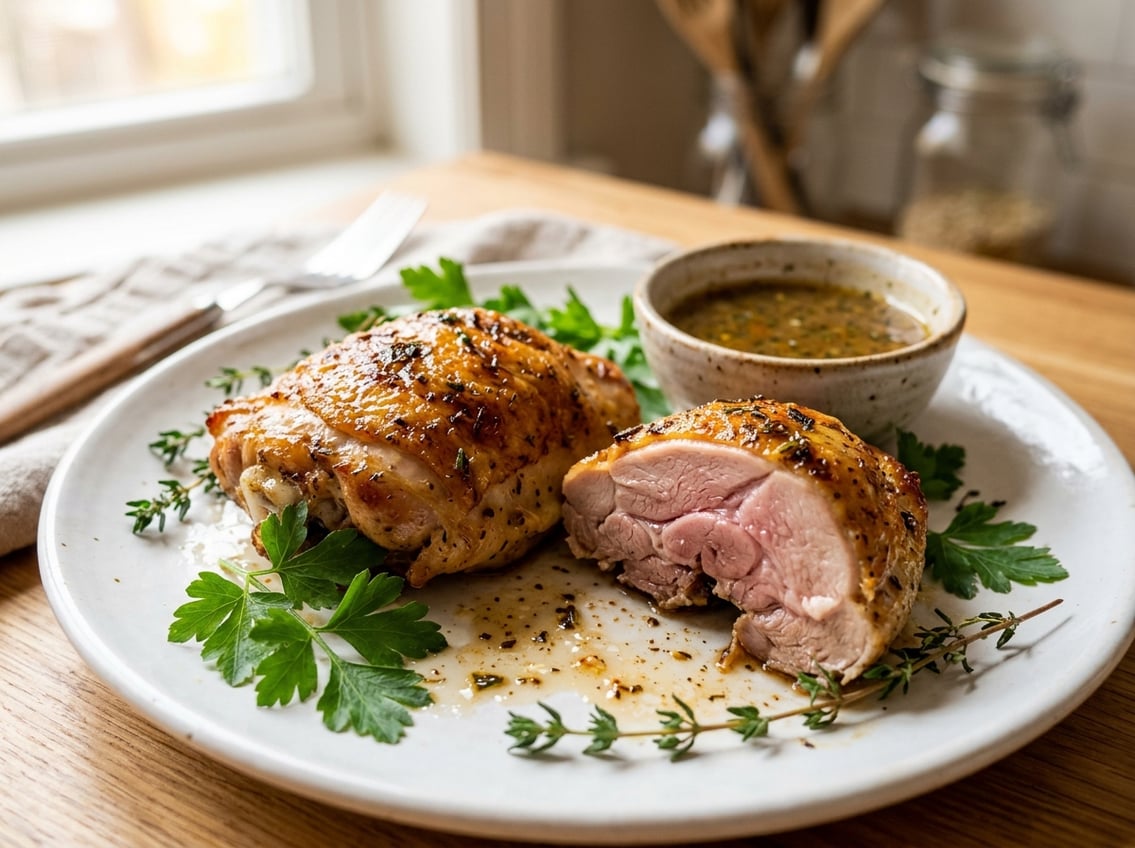
Dark meat can stay pink even when fully cooked. Myoglobin, cooking method, brining, or smoking can affect color, so the thermometer matters more than appearance.
You’ll find food-safety tips and cooking steps to keep your thighs juicy and safe.
Why Cooked Chicken Thighs Can Be Pink
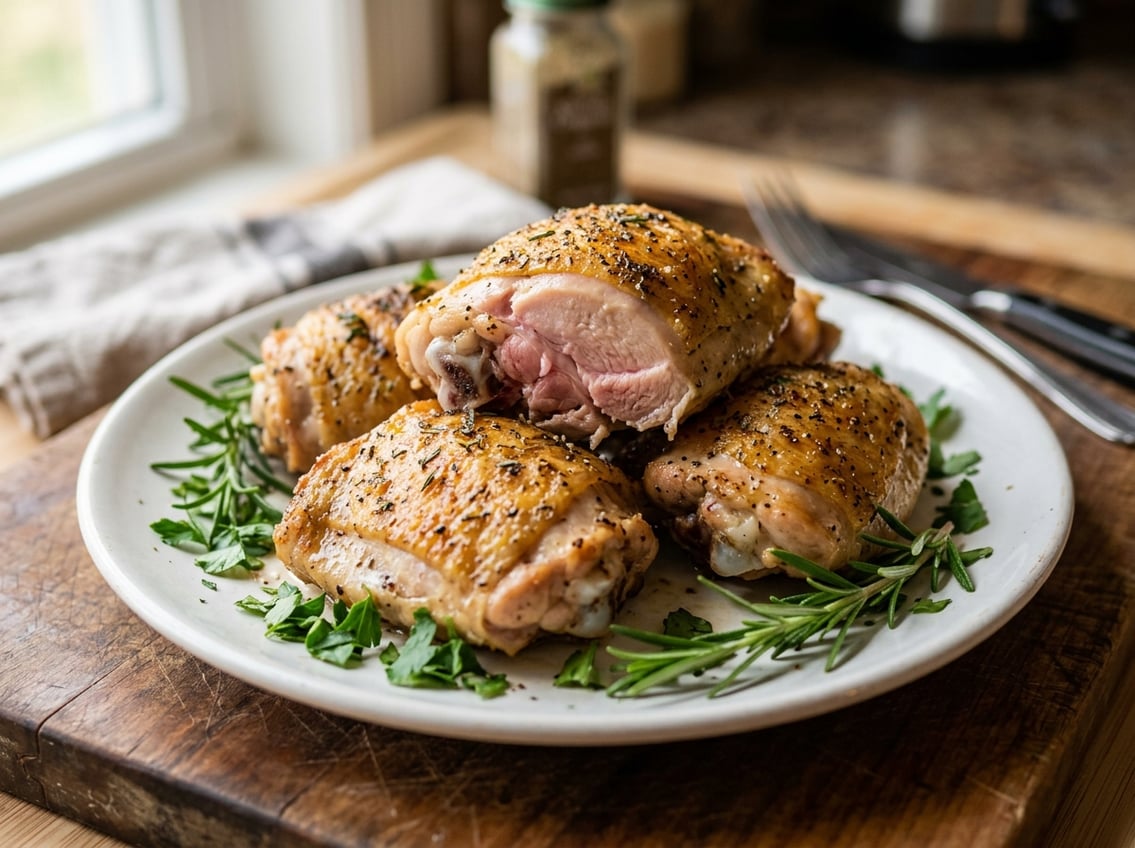
You may see pink near the bone, a rosy smoke ring, or uniformly pink thigh meat even when the chicken reaches a safe internal temperature.
Several physical and chemical factors explain those color variations.
Role of Myoglobin in Dark Meat
Myoglobin is the oxygen-binding protein concentrated in thigh muscles.
Dark meat contains more myoglobin than breast meat, so when you cook thighs the pigment can persist as a pink or reddish hue even after proteins denature.
Heat changes myoglobin’s structure. At typical safe temperatures the pigment may turn brownish, but factors like final temperature, pH, and marinades can stabilize a pink tone.
Acidic or salty marinades alter protein chemistry and can make myoglobin retain color longer.
Rely on a thermometer rather than color to confirm doneness.
Influence of Bone-in and Boneless Thighs
Bone proximity affects how heat distributes through a thigh and how color appears near the bone.
Hemoglobin and marrow near bone can leach pigments into surrounding tissue, producing a pink ring or spot in bone-in thighs.
Boneless thighs heat more uniformly and usually show less residual pink around a central bone area.
When checking doneness, insert your probe into the thickest part away from the bone.
If a bone-in thigh looks pink near the joint but the thermometer reads 165°F (74°C) or higher, the color alone is not a safety problem.
Impact of Cooking Methods and Marinating
High-heat searing, quick grilling, or pan-frying browns the surface fast while the interior may remain pink longer.
Slow braising or roasting raises internal temperature evenly and can break down connective tissue, which darkens meat but may also retain a pink cast in some spots.
Marinating with salt, acids (lemon, vinegar), or nitrite-containing ingredients changes protein behavior and can lock in pink color.
Brining increases moisture and translucency, which can make cooked thigh meat look darker or pinker.
Use an instant-read thermometer to verify safety rather than judging by surface color or translucence.
Smoke Rings and Color Variations
When you smoke chicken thighs, nitrogen dioxide and compounds in smoke react with myoglobin to form a stable pink layer called a smoke ring.
That ring can be several millimeters deep and remain pink after full cooking.
Nitrosomyoglobin-like compounds produced during smoking or curing give the meat a pink hue unrelated to undercooking.
If you see a smoke ring or a pink band near the surface, check the internal temperature in the thickest part.
Clear juices and 165°F (74°C) at the center confirm safety despite color variations.
Understanding Safe Cooking Temperatures
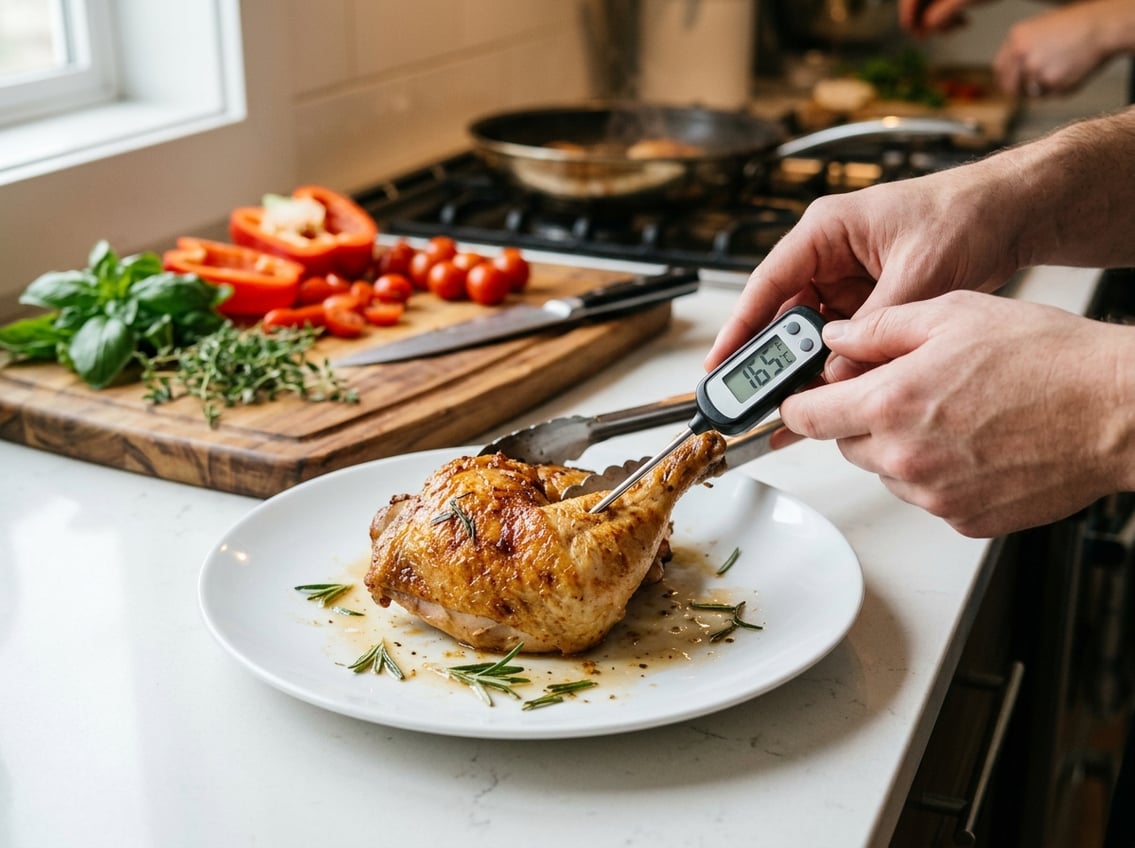
You need a clear target temperature and a reliable way to measure it.
Follow specific temperature guidance and proper thermometer use to cook chicken thighs safely without overcooking.
Why 165°F (74°C) Matters
165°F (74°C) is the temperature at which common poultry pathogens such as Salmonella and Campylobacter are inactivated quickly.
The USDA sets 165°F as the safe internal temperature for all poultry cuts because it provides an immediate margin of safety when that temperature is reached in the thickest part of the meat.
If your thermometer reads 165°F (74°C) at the thermal center of a thigh (avoiding bone), the meat is safe to eat even if some pink remains near bones or in juices.
Dark meat can tolerate higher final temperatures for texture reasons. Many cooks aim for 170–175°F for thighs to break down connective tissue, but 165°F is the core safety threshold.
Using a Meat Thermometer Correctly
Use a calibrated food thermometer or meat thermometer with a thin probe for quick, accurate readings.
Insert the probe into the thickest part of the thigh, avoiding contact with bone or fat since bone conducts heat and gives falsely high readings.
Wait for the display to stabilize or follow the probe’s built-in confirmation.
For whole thighs, check in two places: the deepest part of the meat and near the center to confirm even cooking.
Account for carryover cooking by removing the meat when it’s within 2–5°F of your target, then rest 5–10 minutes so temperature evens out.
Checklist:
- Calibrate thermometer periodically.
- Probe into thickest meat, not bone.
- Let reading stabilize; check multiple spots.
- Rest meat for 5–10 minutes for carryover.
Temperature vs. Color as a Doneness Indicator
Color is unreliable.
Pink near bone, a pink tint in dark meat, or slightly colored juices can persist after the meat has reached 165°F (74°C).
Factors like young birds, myoglobin, and bone marrow can cause pink hues independent of safety.
Rely on internal temperature instead of visual cues.
If your thermometer registers 165°F (74°C) at the thermal center of the thigh, the chicken is safe regardless of color.
For texture preferences, you can target 170–175°F for thighs to soften connective tissue, but always confirm safety with a thermometer first.
Food Safety Issues With Chicken Thighs
You must check internal temperature rather than color.
Safe handling, cooking to the right temperature, and proper storage prevent most risks tied to pink thighs and undercooked poultry.
Risks of Undercooked Chicken
Undercooked chicken can contain live pathogens that cause foodborne illness.
If the thickest part of a chicken thigh remains below 165°F (74°C), you risk exposing yourself to bacteria such as Salmonella and Campylobacter.
Undercooked meat may feel gelatinous near the bone and produce cloudy or bloody juices.
If you suspect undercooking, return the thigh to heat until a calibrated digital thermometer reads 165°F in the thickest spot away from bone.
Reheat leftovers to the same temperature before serving.
Campylobacter and Other Bacteria
Campylobacter and Salmonella are the main bacterial threats in poultry.
Campylobacter commonly lives in raw chicken and causes diarrhea, fever, and abdominal pain within 2–5 days after exposure.
These bacteria die at proper cooking temperatures, so achieving 165°F (74°C) in the thickest part of the thigh is essential.
Cross-contamination during prep spreads pathogens to cutting boards, utensils, and hands.
Wash hands for 20 seconds after handling raw chicken, use separate boards, and sanitize surfaces.
Vulnerable people—young children, pregnant people, elderly, and immunocompromised—face higher risk and should avoid any doubt about doneness.
Clear Juices and Visual Signs
Clear juices do not guarantee safety, and pink meat does not always mean undercooked.
Myoglobin, bone marrow, smoking, and brines can cause a pink tint even when the internal temperature is safe.
Use a thermometer as your primary test.
Secondary checks such as juices running clear, meat pulling from the bone, and firm texture help but should not replace temperature verification.
If juices are bloody or the flesh is gummy near the bone, continue cooking.
When in doubt, cook to the recommended temperature and rest the thighs 5–10 minutes to allow carryover heat to finish the process.
The Science of Color and Cooking
Thigh meat can stay pink after cooking due to chemical and practical factors.
Knowing how proteins and pigments react helps you judge doneness more reliably than color alone.
Protein Denaturation and Changes in Pigment
Heat denatures muscle proteins like myosin and actin, changing texture and usually lightening meat color.
Myoglobin, the oxygen-binding pigment concentrated in dark meat, undergoes chemical changes when heated.
At around 60–65°C (140–149°F) myoglobin begins to brown, but pockets of myoglobin or partially denatured protein can remain pink at safe temperatures.
Bone proximity and connective tissue slow heat penetration, so tissue near the bone can appear pink even after the center reaches 74°C (165°F).
Rapid searing or smoking can set the exterior while leaving interior pigments less altered.
Use an instant-read thermometer in the thickest part of the thigh, away from bone, because temperature—not color—shows when pathogens are destroyed.
Factors Like Age, Breed, and Marinades
Younger birds and some breeds have less oxidized myoglobin and more translucent tissue, which makes cooked thighs look pinker.
Bone marrow from younger chickens also leaches hemoglobin during cooking, producing a red or pink tint near the bone.
Fat content and connective tissue vary by breed and affect how light scatters through cooked meat, altering perceived color.
Marinades and cures change pigment chemistry.
Nitrite-containing cures form nitrosomyoglobin, a stable pink compound that resists browning.
Acidic or salty brines can stabilize myoglobin and slow its heat-induced color change.
Smoking produces a pink smoke ring from reactions between smoke gases and myoglobin, which looks like undercooking but isn’t.
Check internal temperature and storage history to decide if pink thighs are safe for your meal.
Best Practices for Cooking Chicken Thighs
Follow safe handling, use a reliable thermometer, and choose bone-in, skin-on thighs for juicier results.
Sear in a hot pan to crisp skin, then finish in the oven or smoker to break down connective tissue without drying the meat.
Proper Handling and Preparation
Always refrigerate thighs at 40°F (4°C) or below and thaw in the fridge or under cold running water.
Keep raw chicken separate from other foods and sanitize cutting boards, utensils, and hands after contact.
Pat thighs dry with paper towels to help the skin crisp during searing.
Trim excess fat or loose skin if it interferes with even browning.
If you brine, use a simple salt brine (about 4% salt by weight) for 30 minutes to 2 hours to improve moisture and seasoning penetration.
If marinating, use acid (vinegar, citrus) sparingly and limit marination to 2–8 hours for thighs to avoid mushy texture.
For smoking, apply a dry rub and bring thighs to room temperature for 20–30 minutes before placing them in the smoker.
Tips for Moist, Safe, and Flavorful Thighs
Use a heavy skillet, preferably cast iron, and place the thighs skin-side down over medium-high heat. Render the fat and develop crisp skin by searing for 4–7 minutes until they are deeply browned.
Transfer the pan to a 350–400°F oven. You can also move the thighs to indirect heat on a grill or smoker.
Cook the thighs until they reach a safe internal temperature of 165°F. For more tender meat, pull the thighs at 175–185°F to allow the connective tissue to break down.
Check the temperature with an instant-read meat thermometer inserted into the thickest part without touching bone.
Let the thighs rest uncovered for 5–10 minutes after cooking. This allows the juices to redistribute and carryover cooking to finish.
For added flavor, baste with pan juices or a glaze in the final minutes. Finish under high heat for extra crispness if desired.


