
What Should I Bake Chicken Thighs At and For How Long: Temperatures, Timing, and Tips
You want juicy, well-browned baked chicken thighs without guessing the oven settings. Bake bone-in, skin-on thighs at 400°F (200°C) for about 35–45 minutes, and bake boneless, skinless thighs at 375°F (190°C) for about 20–30 minutes, or until the internal temperature reaches 165°F (74°C).
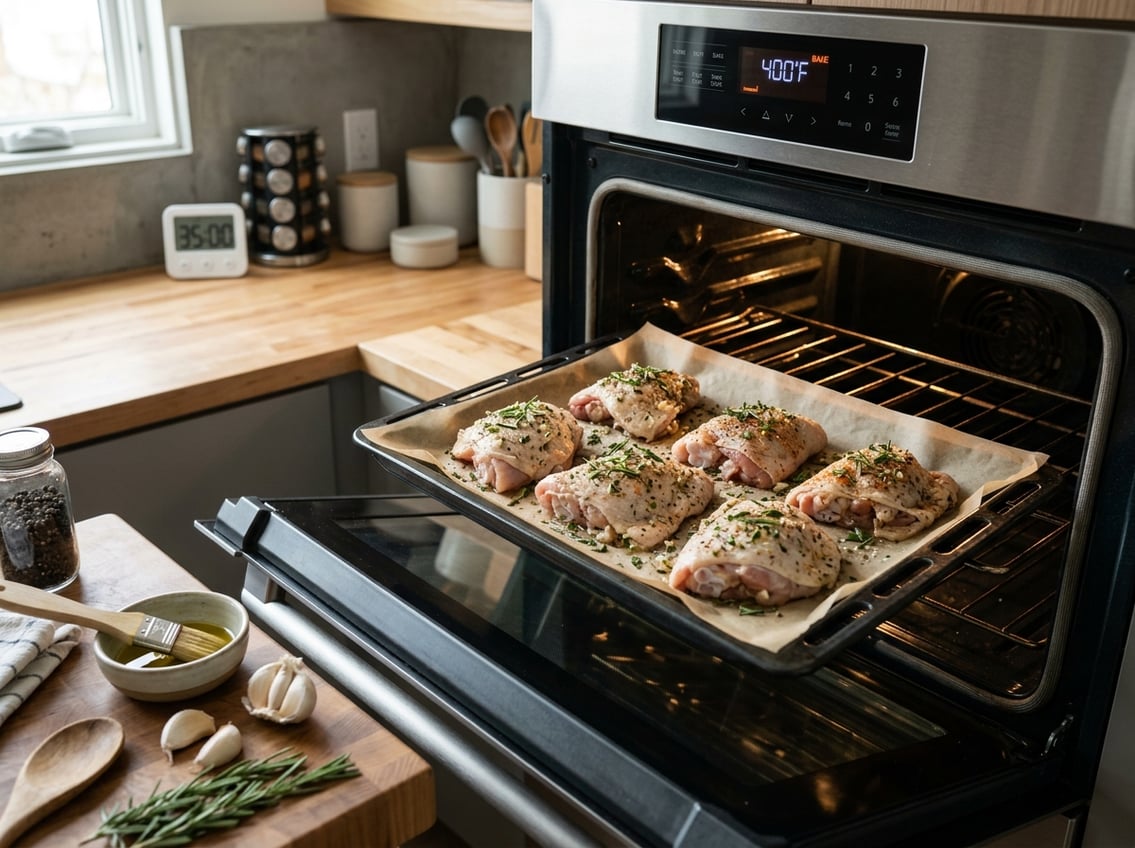
Use the right oven temperatures, baking times for bone-in versus boneless cuts, and straightforward prep steps for crisp skin and moist meat. Try practical seasoning ideas and storage tips to make the most of leftovers.
Best Oven Temperatures for Baking Chicken Thighs
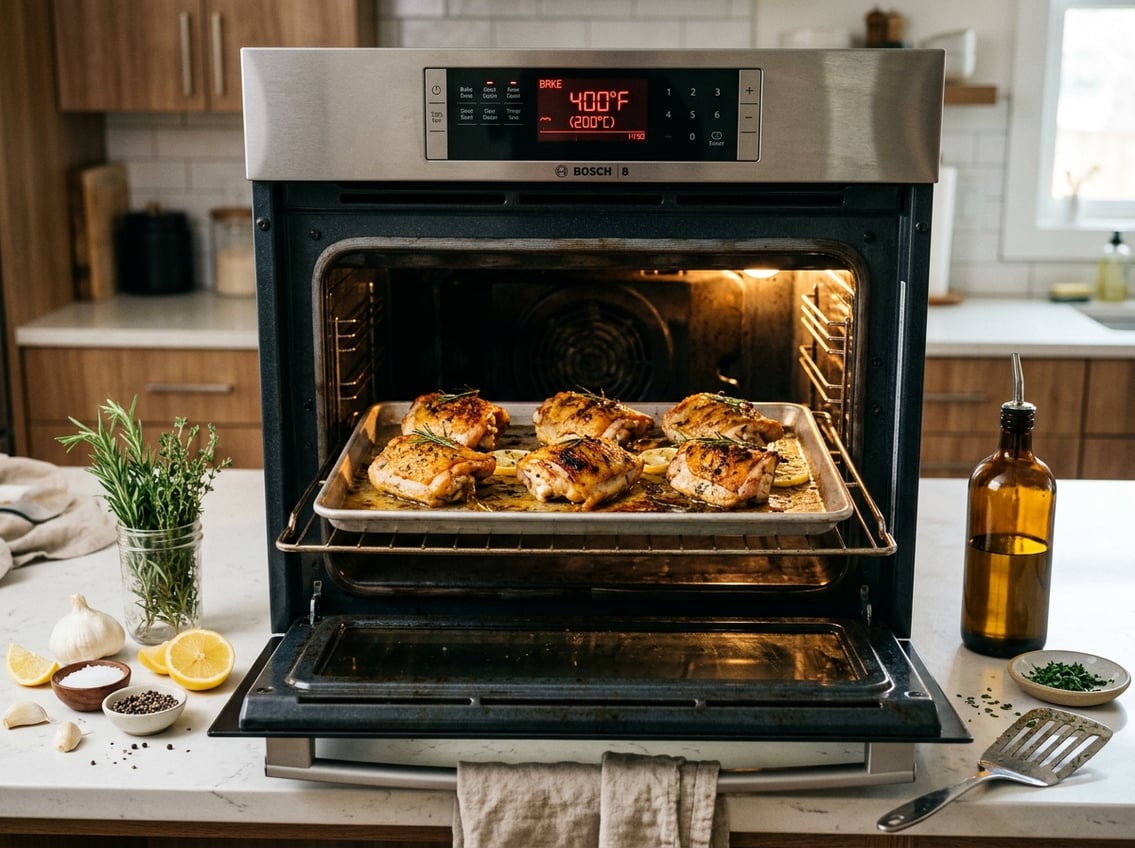
Pick a temperature that balances crisp skin and a juicy interior, then match it to the thigh type and size. Use an instant-read thermometer and aim for 165°F (74°C) in the thickest part to confirm doneness.
Choosing the Right Temperature for Juicy Results
Bake boneless, skinless chicken thighs at 400–425°F (204–218°C).
That range cooks the meat quickly, reduces moisture loss, and produces some surface browning.
At 425°F you get faster browning and a slightly firmer exterior. Check at 20–25 minutes for average 4–6 oz pieces.
Bake bone-in, skin-on thighs at 375–425°F.
Start at the higher end for crisp skin; expect 30–40 minutes depending on size and oven hot spots.
Insert an instant-read thermometer away from the bone; 165°F in the meat signals safety without overcooking.
Effects of High Versus Moderate Heat on Texture
High heat (425–500°F) crisps skin and creates a browned exterior quickly.
This works well when you want texture and shorter cook times, but can tighten proteins and risk dryness if pieces are large or left too long.
Moderate heat (350–400°F) gives a gentler cook and more even internal temperature.
Roasting chicken thighs at 375–400°F helps render fat under the skin and keeps dark meat tender.
For larger bone-in thighs, moderate heat reduces the gap between exterior doneness and center doneness.
Recommended Temperatures by Cut and Size
- Boneless, skinless (4–6 oz): 400–425°F for 20–25 minutes.
Check at 20 minutes; target 165°F. - Bone-in, skin-on (6–10 oz): 375–425°F for 30–40 minutes.
Use 375°F for very large thighs or 425°F for crisper skin. - Small or thin pieces (under 4 oz): 400–425°F for 15–20 minutes.
Shorter time prevents drying.
Preheat a rimmed baking sheet in the oven for skin-on thighs to jump-start browning.
Rest thighs 5 minutes after baking to let juices redistribute before slicing.
Baking Times for Bone-In and Boneless Thighs
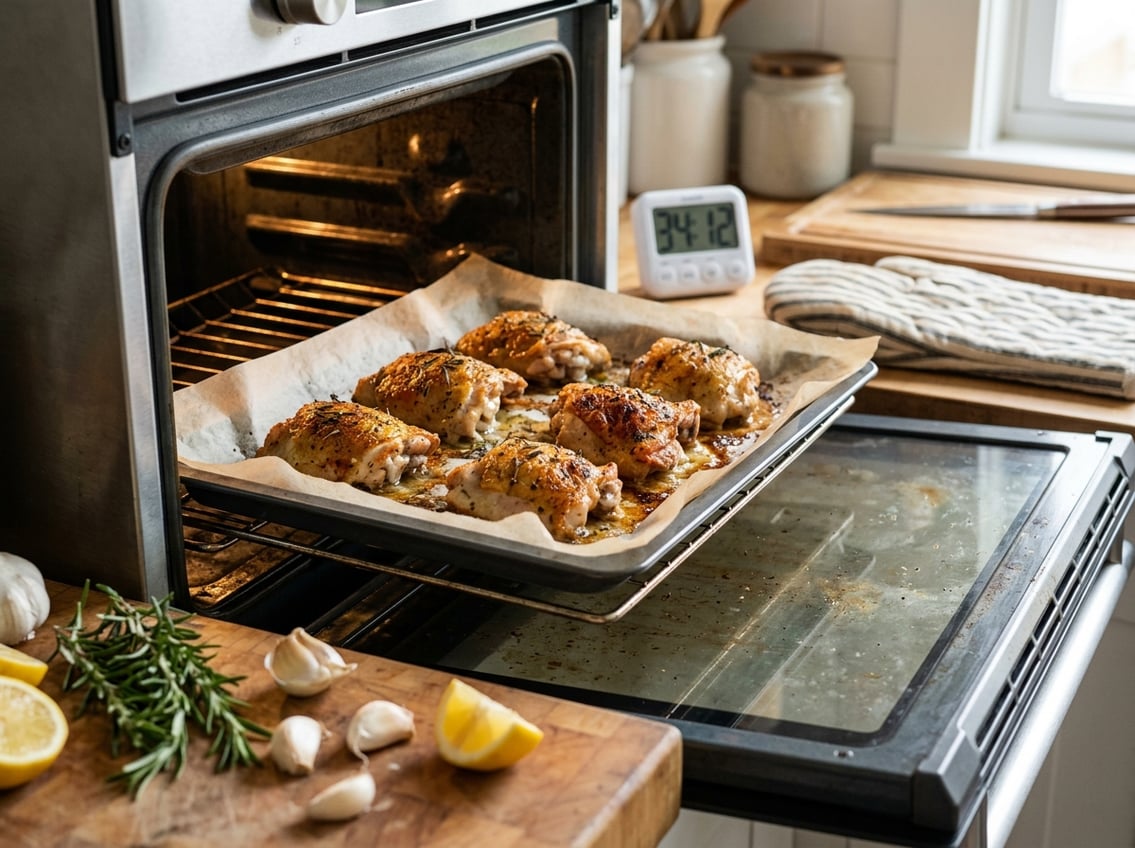
Bone-in, skin-on thighs take longer and benefit from higher heat for crisp skin. Boneless, skinless thighs cook faster and need careful timing to avoid drying.
Bone-In, Skin-On Chicken Thighs: How Long to Bake
Bake bone-in, skin-on chicken thighs at 400°F (205°C). Plan on about 35–45 minutes for average 6–8 oz thighs; larger pieces may need up to 50 minutes.
High heat helps render fat and crisp the skin. If you want extra-crispy skin, finish with 425°F (220°C) for the last 5–10 minutes or use the oven broiler for 1–2 minutes while watching closely.
Check doneness with an instant-read thermometer inserted near the bone; target 165°F (74°C). Let the thighs rest 5–7 minutes so juices redistribute before serving.
If you bake covered, add 6–10 minutes to the time and expect softer skin.
Boneless, Skinless Chicken Thighs: How Timing Differs
Boneless, skinless thighs cook faster because there’s no bone and less fat. Bake at 375°F–400°F (190°C–205°C) for about 20–30 minutes for typical 4–6 oz pieces.
Thinner cutlets or pounded pieces may finish in 14–18 minutes. Avoid overcooking; boneless thighs become dry if left in the oven too long.
Use an instant-read thermometer and remove at 165°F (74°C), or pull at 160°F (71°C) and rest to reach 165°F from carryover heat.
If you want browned edges, use 400°F and check earlier. Arrange pieces in a single layer with space between them and flip once halfway through for uniform cooking.
Factors Affecting Cook Time (Weight, Thickness, Starting Temperature)
Weight and thickness matter more than oven settings. A 10 oz bone-in thigh can need 10–15 minutes longer than a 6 oz thigh.
Thicker meat increases internal cooking time. Refrigerated thighs take longer than room-temperature ones.
Let meat sit 15–20 minutes out of the fridge for more even cooking, but don’t leave poultry at room temperature longer than 2 hours.
Convection ovens reduce times by about 15% and promote crisper skin. Baking on a rack above a sheet pan promotes airflow and uniform browning compared with baking directly in a casserole dish.
Always confirm doneness with a thermometer rather than by time alone.
How to Prepare and Bake Chicken Thighs for Optimal Results
Prep, season, and use the right tools so your baked chicken thighs come out juicy inside with crisp skin. Arrange thighs, apply salt and aromatics, and choose racks or liners to control browning and clean-up.
Properly Prepping and Arranging Thighs
Pat each chicken thigh dry with paper towels to remove surface moisture; this promotes crisp skin when you bake chicken thighs.
Trim excess fat and loose skin but keep most skin intact because it renders and protects the meat during baking.
If using bone-in thighs, bring them to room temperature for 15–20 minutes before baking to promote even cooking. For boneless thighs, a 10–15 minute rest is sufficient.
Arrange thighs skin-side up on a rimmed baking sheet or in a shallow roasting pan with at least 1 inch between pieces. Crowding traps steam and makes skin soggy.
For extra air circulation, place thighs on a wire rack set inside the pan so hot air reaches the underside and the skin crisps evenly.
Seasoning for Maximum Flavor
Salt early and deeply: season thighs liberally with kosher salt 30–60 minutes before baking or right before placing in the oven. Salt penetrates and enhances juiciness.
Add black pepper and 1–2 teaspoons of a dry rub per pound—smoked paprika, garlic powder, and onion powder work well.
For a simple wet marinade, mix olive oil, lemon juice, minced garlic, and herbs; marinate 30 minutes to 2 hours in the fridge.
Don’t exceed 4 hours if the marinade is acidic, which can change texture. Pat dry again if a wet marinade leaves the skin wet before baking.
Finish with a light brush of oil or a sprinkle of coarse salt right before baking at your chosen temperature (425°F is common for crisp skin) to boost browning.
Tools Needed for Success (Racks, Liners, etc.)
Use a rimmed baking sheet to catch juices and prevent spatter. Line the sheet with foil or parchment for easy cleanup.
Avoid placing skin directly on parchment if you want maximum crisping—use a wire rack instead. A 1/2-inch wire cooling rack raised on the pan lets air circulate and yields crisp, evenly browned skin.
If you don’t have a rack, place thighs on a bed of halved onions or potato slices to lift them slightly and add flavor.
Use an instant-read thermometer to check doneness: insert into the thickest part without touching bone; target 165°F internal temperature.
A silicone basting brush helps apply oil or glaze in the last 5–10 minutes. Keep tongs and a spatula on hand for safe handling and transfer to a resting plate for 5–10 minutes before serving.
Checking Doneness: Internal Temperatures and Visual Cues
Use an instant-read thermometer to verify safety and target texture. Check color, juices, and firmness to confirm doneness when baking chicken thighs.
Aim for the right temperature in the thickest part and combine that reading with clear visual and tactile signs.
Safe Internal Temperatures Using an Instant-Read Thermometer
Insert an instant-read thermometer into the thickest part of the thigh, avoiding bone and visible fat. For food safety, the USDA minimum is 165°F (74°C).
Many cooks prefer thighs pulled to 175–185°F (79–85°C) for more tender, shreddable meat.
Take the probe out only once it stabilizes—usually 2–5 seconds for a good instant-read model. If the reading is below target, return thighs to the oven and recheck after 5–10 minutes.
Account for carryover cooking: meat temperature can rise about 3–8°F (2–4°C) while resting.
If you bake bone-in thighs, check near the bone but not against it. For boneless thighs, probe the center.
Calibrate or test your thermometer occasionally in ice water (32°F/0°C) to ensure accuracy.
Visual and Textural Signs of Properly Cooked Thighs
Look for opaque, evenly colored meat with no translucent or glossy areas. Juices should run clear when you cut between the bone and meat or pierce the thickest part.
Press the thigh with tongs or a fork: properly cooked dark meat feels firmer than raw but still yields slightly under pressure.
Bone-in thighs may show a small gap where the meat retracts from the bone when fully cooked.
If you baked chicken thighs at 400–425°F for about 25–40 minutes, use both the thermometer and these cues before serving.
Seasoning Ideas and Chicken Thighs Recipe Variations
Try bold, simple seasoning blends and clear application methods so your thighs end up flavorful and evenly seasoned. Focus on salt levels, where to apply dry versus wet seasonings, and how long to marinate or rest before baking.
Classic Garlic Powder and Herb Blends
Garlic powder is a reliable backbone for baked chicken thighs; it distributes flavor evenly and won’t burn like fresh garlic at high heat.
For 4 bone-in thighs, use: 1–1½ teaspoons garlic powder, 1 teaspoon kosher salt, ½ teaspoon black pepper, and 1 teaspoon dried thyme or Italian seasoning.
Pat thighs dry, rub the mix under and over the skin, and let rest 20–30 minutes at room temperature or up to 12 hours refrigerated.
For crisper skin, add 1 tablespoon oil to the rub and arrange thighs skin-side up on a hot sheet pan at 425°F (218°C). Bake 25–35 minutes until the internal temp reads 165–175°F (74–79°C).
Finish with a squeeze of lemon and chopped parsley to brighten the garlic-herb profile.
Marinades, Spice Rubs, and Glazes
Choose marinades for deeper, penetrative flavor. Choose rubs for texture and crispiness. Choose glazes for a glossy, sticky finish.
A basic marinade: ⅓ cup olive oil, 1 tablespoon Dijon or mustard, 1 tablespoon minced garlic or 1 teaspoon garlic powder, 1½ teaspoons salt, and 1 tablespoon lemon juice or vinegar. Marinate 30 minutes to 12 hours.
Dry rub example for 4 thighs: 1 tablespoon paprika, 1 teaspoon garlic powder, 1 teaspoon onion powder, 1 teaspoon salt, ½ teaspoon cayenne, 1 teaspoon brown sugar (optional). Press into meat and bake skin-side up at 425°F for 25–40 minutes.
Glaze options: honey-mustard (2 tbsp honey + 1 tbsp mustard) or soy-ginger (2 tbsp soy sauce + 1 tsp grated ginger + 1 tsp honey). Brush last 5–8 minutes of cooking so the glaze sets without burning.
Storing and Reheating Baked Chicken Thighs
Store cooled chicken within two hours in airtight containers or heavy-duty freezer bags to preserve texture and food safety. Reheat only once when possible, warming to an internal temperature of 165°F (75°C) while keeping meat moist and, if desired, restoring skin crispness.
How to Store Baked Chicken for Freshness
Place cooled baked chicken thighs in shallow, airtight containers. This speeds cooling and reduces bacterial growth.
Refrigerate at 40°F (4°C) or below. Use the chicken within 3–4 days.
For longer storage, freeze in portions so you thaw only what you need. Wrap individual thighs tightly in plastic wrap, then place them in a labeled freezer bag.
Frozen baked chicken stays safe for up to 3 months. For best quality, use it within 1–2 months.
Avoid stacking hot pieces together. This traps moisture and softens the skin.
If you have breaded or crisp-skinned thighs, separate layers with parchment. This helps retain texture when reheating.
Best Reheating Techniques
Oven: Preheat to 325–350°F (165–175°C). Place thighs in a single layer in a baking dish, add 1–2 tablespoons of chicken broth or water, cover with foil, and heat for 15–20 minutes until the internal temperature reaches 165°F (75°C). Remove the foil for the last 5 minutes so the skin crisps.
Air fryer: Preheat to 350°F (175°C). Lightly brush thighs with oil, place in one layer, and reheat for 5–8 minutes, flipping once. Check that the temperature reaches 165°F (75°C).
Skillet: Heat a splash of broth or oil over medium heat. Cover and cook for 5–10 minutes, turning occasionally.
This method works well for boneless or skinless thighs and gives quicker results.
Microwave: Use only for small portions. Place on a microwave-safe plate, add a tablespoon of water, cover with a damp paper towel, and reheat in 1–2 minute bursts.
Check the temperature frequently to avoid drying.


