
How Do You Know When Chicken Thighs Have Gone Bad: Spotting, Storage, and Safety
You need to know right away if chicken thighs are safe to cook or if they might make you sick. Watch for unusual color like gray, green, or yellow, a sour or sulfur-like odor, or a slimy, tacky texture. Any of these signs mean the thighs are spoiled and you should throw them away.
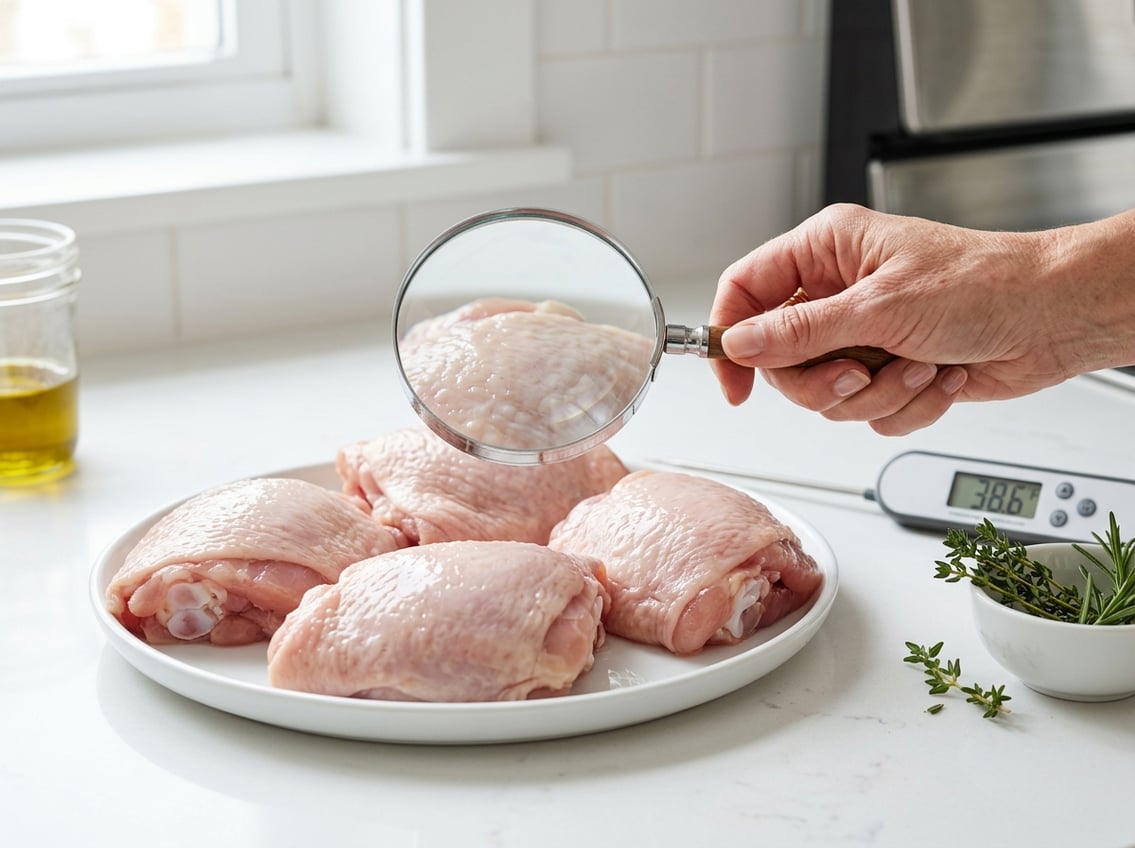
Check color, smell, and texture together rather than relying on just one sign. Use package dates and storage time—1 to 2 days in the fridge for raw thighs, 3 to 4 days for cooked—to decide whether to keep or toss them.
Visual Signs of Chicken Thigh Spoilage
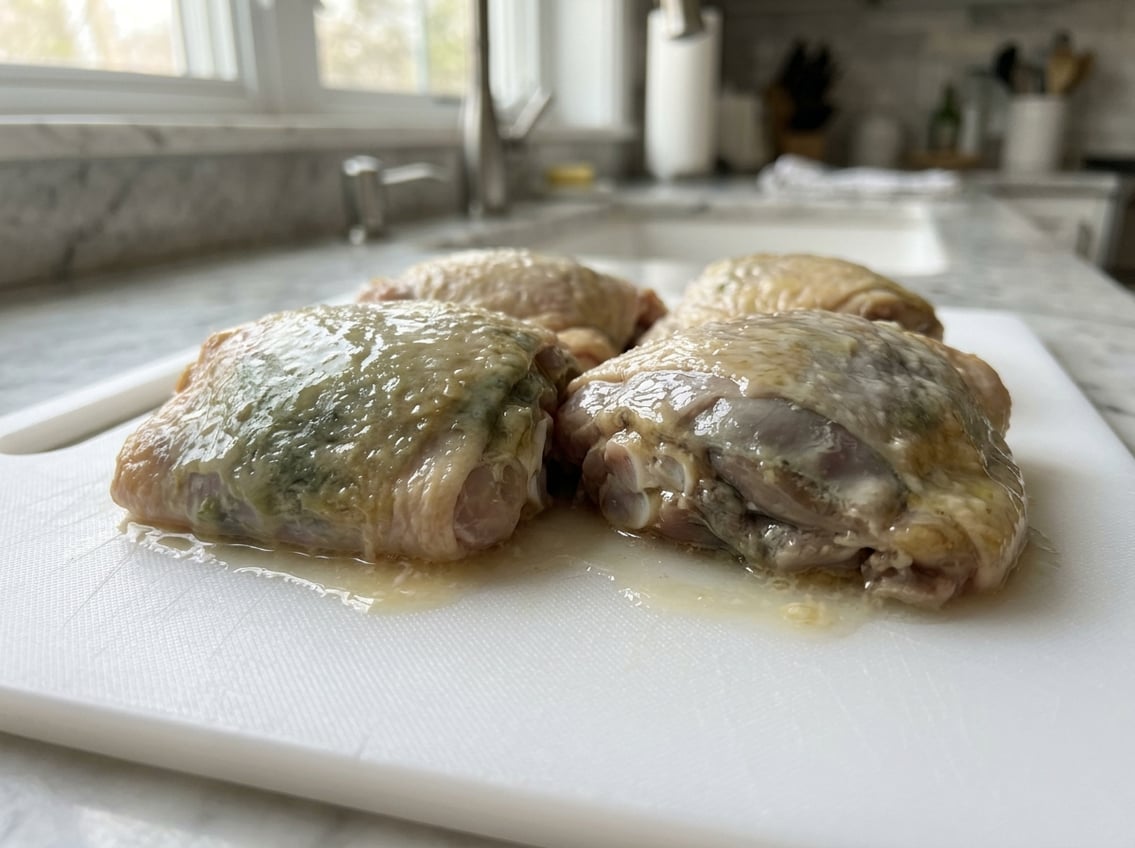
Check the chicken visually before you touch or smell it. Look for color changes, fuzzy growths, and damaged or leaking packaging.
Discoloration and Mold
Fresh raw chicken thighs look pale pink with white or slightly yellow fat. If you see gray, green, or dark brown patches, throw the thighs away.
Small surface darkening can appear from air exposure. Broad gray-green areas or streaks usually mean spoilage.
Mold shows up as fuzzy spots in green, black, or white. You cannot save chicken by cutting away mold; throw out the whole piece or package.
If you see a dull, milky sheen replacing the normal glossy surface, that tacky look often means bacterial breakdown even if you don’t see mold.
Packaging Integrity and Leaks
Inspect the package for swelling, tears, or liquid pooling. Bulging packaging means gas from bacterial growth and you should discard the product right away.
A small amount of clear or cloudy liquid is normal. Thick, sticky, or foul-smelling juices point to spoilage.
If the vacuum seal is broken or the package has sticky residue outside, don’t risk it. That broken barrier allows contamination and raises the chance the chicken thighs are bad.
Smell and Texture as Freshness Indicators
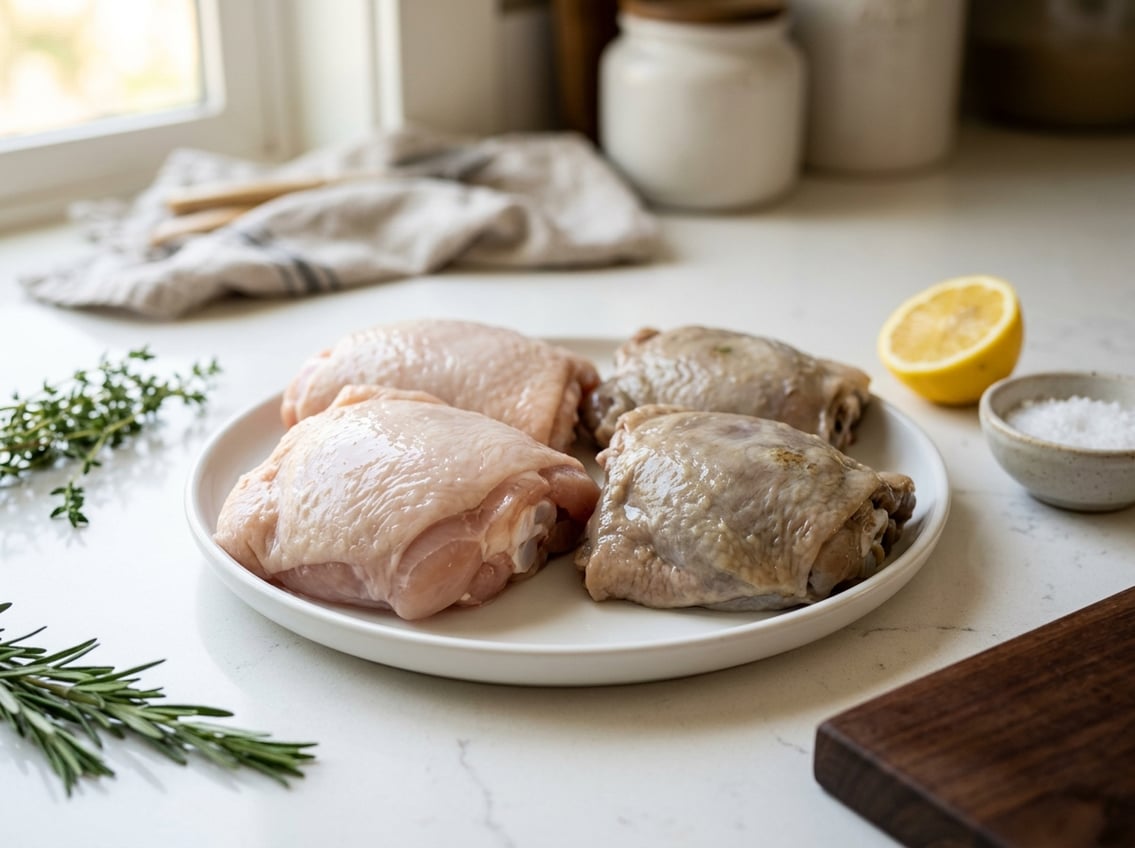
Pay attention to smell and feel when you handle chicken thighs. A strong sour or sulfur-like odor or a slimy, tacky surface means you should throw the meat away.
Recognizing Off Odors
Fresh raw chicken has little to no scent. If you smell sour, ammonia-like, or rotten-egg odors when opening the package or touching the thighs, treat that as a sign of spoilage and do not cook it.
Odors can be subtle at first. Sniff close to the meat and compare it to other raw poultry you know is fresh.
Marinades, packaging gases, or strong seasonings can mask smells, so use smell along with color and texture checks.
If cooked chicken smells sharp, sour, or putrid when reheating or after sitting in the fridge more than 3 or 4 days, throw it out.
Detecting Slimy or Sticky Surfaces
Fresh chicken thighs feel moist but not slippery. Run your fingers over the skin or flesh; a slimy, sticky, or tacky residue means spoilage.
Sliminess can develop before the smell changes. If you notice a translucent film or your hands feel coated after touching raw thighs, throw them away.
Do not try to rinse the sliminess off. Rinsing spreads bacteria.
For cooked chicken, texture should be firm and dry compared to raw meat. If leftovers feel unusually soft, mushy, or gummy after refrigeration, throw them out.
Shelf Life and Proper Storage Methods
Keep raw and cooked chicken thighs at safe temperatures and use airtight wrapping to preserve quality and prevent cross-contamination.
Refrigeration Timelines
Store raw chicken thighs in the coldest part of your fridge at 40°F (4°C) or below. Use raw thighs within 1 to 2 days of purchase. Cooked thighs keep 3 to 4 days when chilled quickly in shallow containers.
Keep thighs in their original packaging if you’ll cook them within 24 hours. Otherwise, transfer to a sealed container or heavy-duty zip-top bag to stop juices from contaminating other foods.
Label with the date so you can track freshness. If the refrigerator temperature is above 40°F, throw the meat out or cook it right away.
When thawing frozen chicken thighs in the fridge, allow 24 hours for a small package and up to a day longer for larger or bone-in pieces. Cook thawed thighs within 1 to 2 days.
Freezing Chicken Thighs Safely
Freeze chicken thighs at 0°F (-18°C) or colder for long-term storage. For best texture, freeze raw thighs within 1 to 2 days of purchase and use within 6 to 9 months. Cooked thighs keep quality for about 2 to 6 months.
Remove as much air as possible before sealing to prevent freezer burn. Use heavy-duty freezer bags, vacuum sealers, or wrap tightly in plastic wrap followed by aluminum foil.
Label packages with the freeze date and portion sizes. Thaw frozen chicken thighs safely in the refrigerator, in cold water changed every 30 minutes, or in the microwave if cooking right away.
Never thaw on the counter.
How Freezer Burn and Refreezing Affect Chicken Thighs
Freezer exposure and repeated thawing can change both the safety and eating quality of chicken thighs.
Identifying Freezer Burn
Freezer burn shows up as dry, grayish-white patches on the surface of frozen chicken thighs. Air reached the meat and caused dehydration and oxidation.
Texture becomes leathery or chalky at those spots, and the meat often flakes or crumbles when thawed. Smell usually stays mild, so odor alone won’t show freezer burn.
Color changes and dry, discolored spots are the clearest signs. Freezer burn reduces flavor and juiciness but does not make the chicken unsafe to eat.
Trim severely affected areas before cooking. Prevent freezer burn by removing air using vacuum-seal bags or squeezing out air from resealable freezer bags and freezing portions flat.
Guidelines for Refreezing Chicken Thighs
You can refreeze raw chicken thighs only if you thawed them in the refrigerator and they never rose above 40°F (4°C). If you thawed by cold water or microwave, cook before refreezing.
Refreezing makes texture worse. Ice crystals from the first freeze puncture cell walls, and more cycles increase moisture loss and make meat dry or tough.
Label packages with date and portion size before the first freeze to avoid multiple thaw and refreeze cycles. If you plan to refreeze, cook the thawed thighs first. Cooked chicken refreezes better and stays safer than raw meat that’s been thawed more than once.
Best Practices for Handling and Preventing Contamination
Keep raw chicken thighs separate, keep surfaces and hands clean, and cook to a safe temperature.
Preventing Cross-Contamination
Store raw chicken thighs in sealed containers or leak-proof bags on the bottom shelf of the fridge to stop juices from dripping on other foods. Use a dedicated cutting board and utensils for raw poultry, or wash them with hot soapy water and sanitize after contact.
Wash your hands for at least 20 seconds after handling raw chicken, especially before touching produce, plates, or seasoning.
Keep marinades used on raw chicken separate from cooked food. Boil any marinade you want to reuse as a sauce for at least one minute to kill bacteria.
Label or color-code equipment if you cook often to avoid mix-ups. When shopping, keep chicken in a separate grocery bag and place it last on the checkout conveyor to reduce exposure to other items.
Safe Thawing and Cooking
Thaw chicken thighs in the refrigerator. You can also place them in a sealed bag and submerge them in cold water, changing the water every 30 minutes.
Use the microwave’s defrost setting immediately before cooking if you need to thaw quickly. Do not thaw at room temperature, as bacteria can multiply on the surface even if the interior stays frozen.
Cook chicken thighs until they reach an internal temperature of 165°F (74°C). Measure this with a probe thermometer in the thickest part, avoiding the bone.
Let cooked thighs rest for a few minutes. Carryover heat will finish the cooking and help ensure they are done.
Discard chicken thighs if you notice a sour odor, slimy texture, greenish or gray discoloration, or sticky residue. These signs indicate spoilage and increase the risk of foodborne illness.


