
What Is the Temperature of Chicken Thighs: Safe and Best Practices
You want to know the safe and best temperatures for chicken thighs so you can stop guessing and start cooking with confidence.
Cook chicken thighs to at least 165°F (74°C) for safety. Many cooks aim for 175–195°F to break down connective tissue and get more tender, flavorful results.
Use an instant-read meat thermometer. Insert it into the thickest part of the thigh, avoiding bone, for an accurate reading.
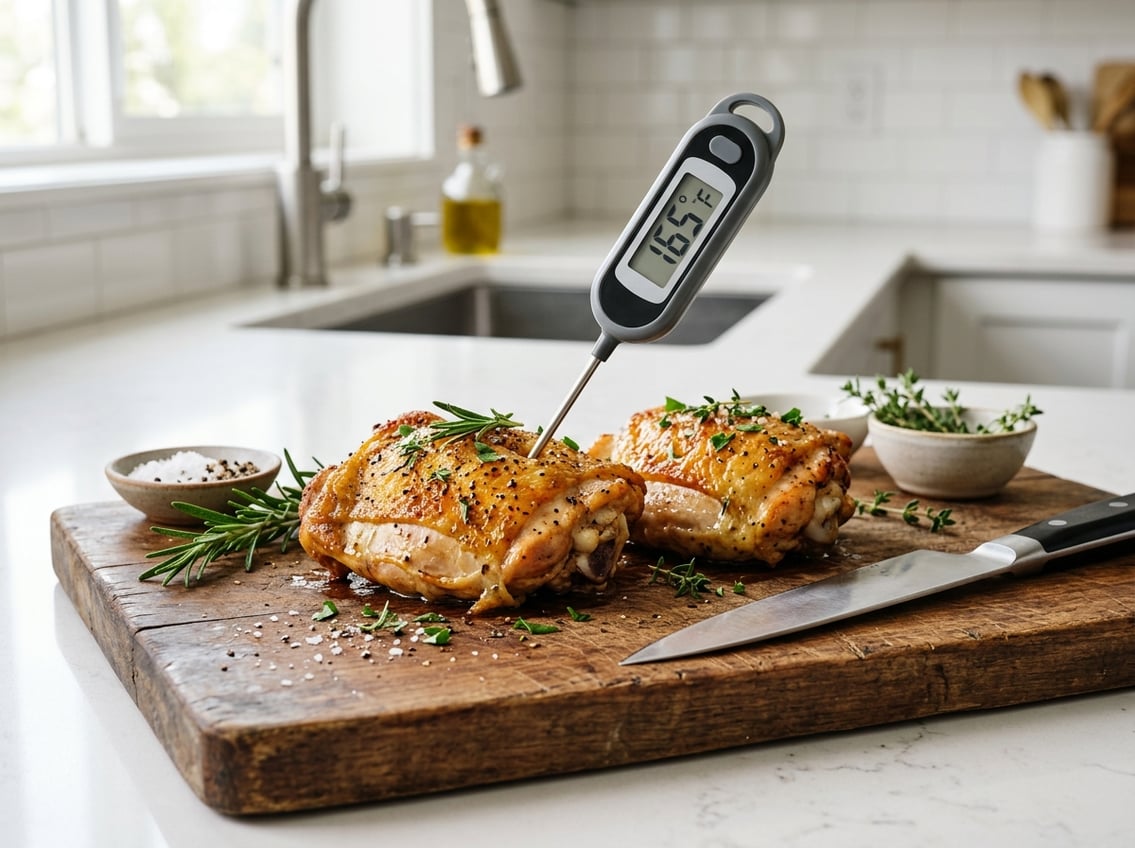
You need to know safe internal temperatures, the temperatures that improve texture and flavor, how to measure temperature correctly, and which cooking methods and times help you hit those targets.
You’ll also get tips to enhance juiciness and avoid common thermometer and timing mistakes so your next batch of chicken thighs turns out reliably excellent.
Safe Internal Temperatures for Chicken Thighs
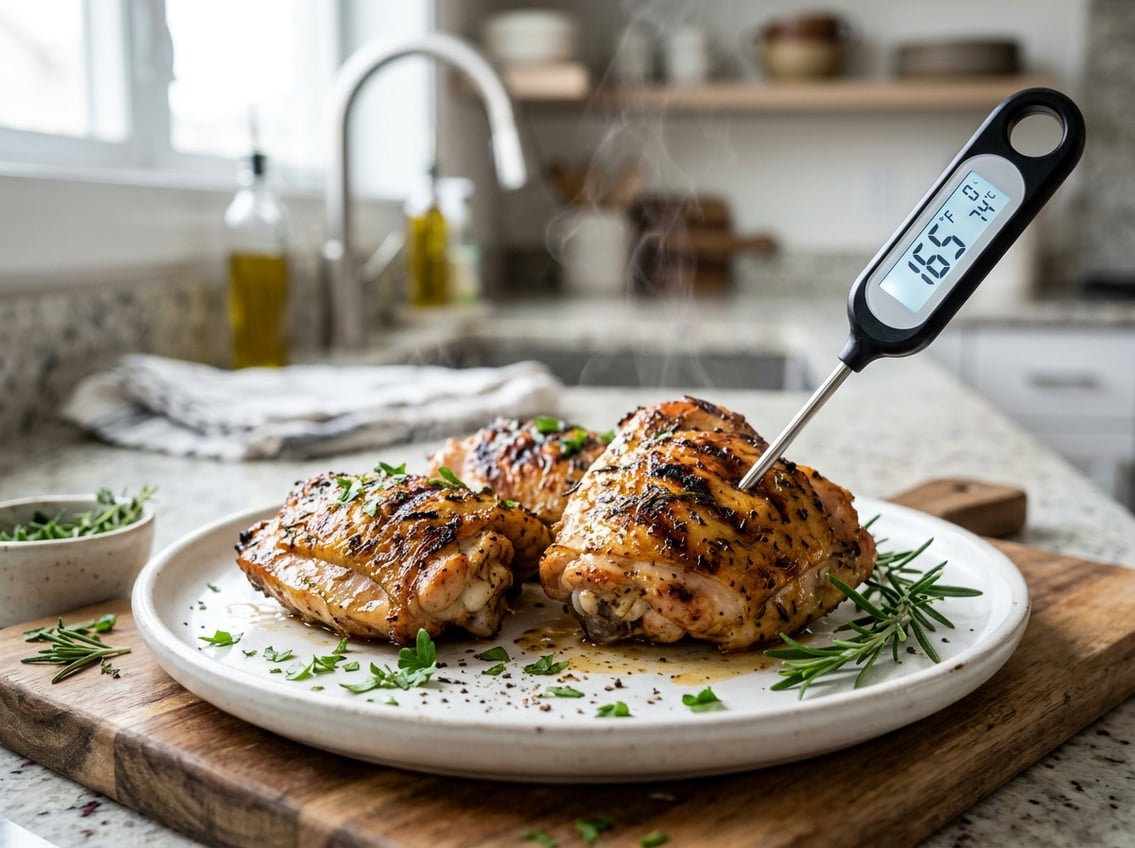
You need clear, evidence-based targets and practical checks to ensure chicken thighs are both safe and tasty.
Focus on the correct internal temperature, why 165°F (74°C) matters, hazards of undercooking, and why color or juices can mislead you.
USDA Guidelines and Food Safety
The USDA sets a minimum safe internal temperature for all poultry at 165°F (74°C) measured with an instant-read thermometer.
Insert the probe into the thickest part of the thigh, avoiding bone, and wait for a stable reading before taking action.
The 165°F standard relies on time-temperature relationships that quickly reduce pathogens like Salmonella and Campylobacter to safe levels.
For practical cooking, the USDA goal keeps you from relying on guesswork such as cooking time alone, which varies by oven, pan, and piece size.
If you hold thighs at slightly lower temperatures, you must compensate with longer hold times to achieve the same bacterial reduction. This approach is generally used only in professional or sous-vide contexts.
For home cooking, reach 165°F and then let the meat rest briefly for carryover heat to equalize.
Role of 165°F (74°C)
At 165°F (74°C), the interior of the thigh reaches a temperature that inactivates common poultry pathogens within seconds.
Treat this as the minimum safe target rather than an aesthetic ideal. A thermometer gives you an objective measure so you can stop second-guessing doneness.
Dark meat contains more connective tissue and fat than breast meat. Thighs remain moist across a wider temperature range, and many cooks prefer higher temps (170–195°F) to break down collagen into gelatin for a more tender texture.
Hitting 165°F ensures safety regardless of whether you aim for a lower, juicier finish or a higher, more gelatinized result.
Risks of Undercooking
Undercooked thighs can harbor Salmonella and Campylobacter, which cause foodborne illness with symptoms ranging from stomach cramps to severe dehydration.
Symptoms can be especially dangerous for young children, older adults, pregnant people, and anyone with a weakened immune system.
Even if meat appears warm, interior pockets near bone or cartilage can remain below safe temperatures.
Cross-contamination is another risk. Juices from undercooked thighs can contaminate surfaces and other foods.
Use a thermometer and avoid tasting to test doneness. Visual checks won’t eliminate microbial risk.
Why Color and Juices Are Unreliable Indicators
Color and juices vary with age, diet, cooking method, and exposure to smoke or marinades, so they do not reliably indicate safety.
A thigh can show pink near the bone while still having reached 165°F, or it can appear uniformly white yet still be under 165°F in a dense pocket.
Juices that run clear are not definitive proof of safety. Clear juices can appear before the entire interior reaches 165°F, and pink juices can remain after safe temperatures are achieved due to myoglobin and hemoglobin reacting to heat or curing agents.
Rely on an instant-read thermometer placed in the thickest part of the thigh, at least ¼ inch from bone, for a dependable check.
Optimal Temperatures for Flavor and Texture
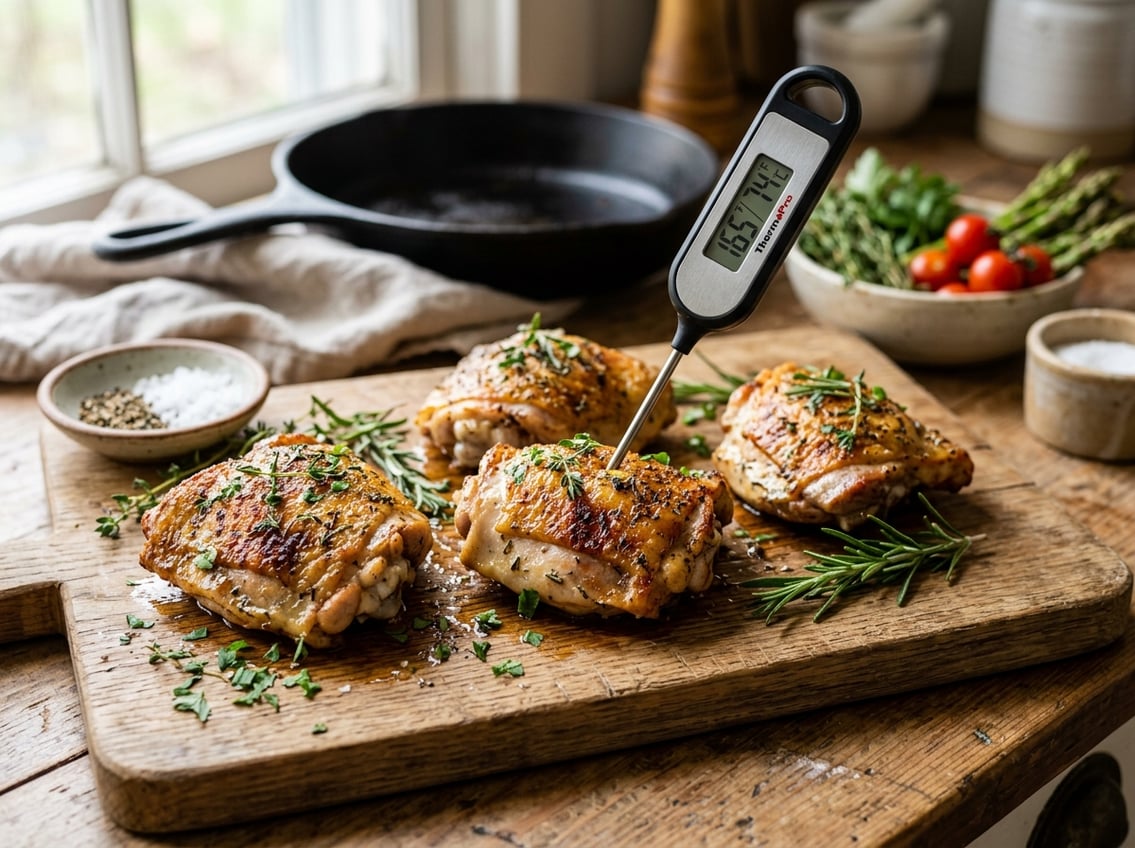
A narrow range of internal temperatures controls whether thighs stay juicy, turn tender, or become stringy.
Focus on temperature targets between 165°F and 195°F, understand collagen breakdown, and plan for carryover heat.
Collagen-Breakdown Sweet Spot
Collagen in dark meat converts to gelatin as it heats, which makes thighs tender and juicy.
That conversion happens gradually between roughly 140°F and 195°F, but the practical sweet spot for most home cooks sits between 175°F and 195°F.
At 175°F the meat is noticeably more tender than at 165°F because more collagen has softened without the meat becoming stringy.
If you want meltingly tender thighs, hold the meat in the 185–195°F zone for a short time. This yields rich texture and pronounced poultry flavor.
Use an instant-read thermometer in the thickest part of the thigh, avoiding bone, and allow a minute for an accurate reading.
Differences From Chicken Breasts
Breasts are lean and best served at the USDA minimum of 165°F to avoid dryness.
Thighs contain more connective tissue and fat, so they tolerate—and often benefit from—higher internal temperatures.
Where breasts dry out past 165°F, thighs gain succulence as collagen breaks down.
You can safely take thighs to 175–195°F for improved mouthfeel while still maintaining food safety.
Adjust cooking technique (lower heat, longer time, braise or indirect grilling) to reach those temperatures without burning the exterior.
When to Aim Above 165°F
Aim above 165°F whenever tenderness matters more than juiciness alone.
For crisp skin and shredded or falling-off-the-bone results, target 185–195°F.
For roasted thighs that still cling to the bone but are tender, 175–180°F is often ideal.
If you choose lower-temperature pasteurization (e.g., holding meat at 150–160°F for an extended time), follow precise time/temperature tables to ensure safety.
For most home cooks, reaching at least 165°F quickly then continuing to 175–195°F combines safety with superior texture.
Carryover Cooking Considerations
Carryover cooking raises internal temperature after you remove thighs from heat—typically 5–10°F for small cuts and more for large pieces.
Pull bone-in thighs 3–7°F below your final target. For example, remove at 180°F if you want a final 185–187°F after resting.
Rest thighs 5–15 minutes under loose foil to let juices redistribute and collagen settle.
During that rest, the temperature will continue rising, so factor that into your pull temperature.
Always recheck the thickest part before serving if precision matters.
How to Accurately Measure Chicken Thigh Temperature
Use a reliable thermometer, insert it into the thickest part of the thigh away from bone, and allow the probe to stabilize.
Proper tool choice, correct probe placement, and knowing when to read versus when to leave the probe in will prevent under- or overcooking.
Choosing the Right Thermometer
Pick a meat thermometer rated for accuracy within ±1–2°F if possible.
A quality instant-read thermometer gives fast, precise readings and is best for spot-checking finished thighs.
Look for a device with a thin probe to minimize juice loss and a fast response time (under 5 seconds for top models).
If you prefer hands-off cooking, use a leave-in probe thermometer that can withstand oven temperatures and connect to a display or app.
Ensure the cable and probe are oven-safe and position the display outside the oven where you can monitor carryover cooking.
Calibrate cheap thermometers before use by testing them in ice water (32°F) and boiling water (212°F at sea level).
Thermometer Placement Tips
Always insert the probe into the thickest part of the thigh, perpendicular to the bone.
Avoid touching bone or fat; bone reads hotter and gives a falsely high number.
Aim for at least 1/4 inch away from bone to get an accurate meat temperature.
For bone-in thighs, place the probe between the bone and the meaty portion, pushing toward the center of the thigh.
For boneless thighs, probe through the center from the side.
Let the thermometer sit until the reading stabilizes. Instant-read units often stabilize in 3–10 seconds, while leave-in probes may take longer to reflect final internal temp.
Instant-Read vs. Leave-In Thermometers
Instant-read thermometers excel at quick checks and are ideal once cooking is nearly complete.
You pull the thigh, insert the probe into the thickest spot, wait for the reading, then return the thigh to the oven or skillet if needed.
They reduce heat loss because checks are brief.
Leave-in thermometers monitor temperature continuously and handle long bakes or braises without opening the oven.
Many models alert you at a target temperature.
Use a leave-in probe when you want to track the entire cook or rely on carryover cooking to reach a final internal temp.
Cooking Techniques and Times for Chicken Thighs
You should target an internal temperature of 165°F (74°C) for safety.
Many cooks aim for 175–185°F (79–85°C) for more tender dark meat.
Choose method based on time, skin preference, and whether the thighs are bone-in or boneless.
Baking Chicken Thighs
Bake boneless thighs at 425°F (218°C) for 20–30 minutes.
Bake bone-in, skin-on thighs at 375–400°F (190–204°C) for 30–45 minutes.
Place thighs skin-side up on a rimmed sheet pan or in a shallow baking dish to promote even browning and crisp skin.
Pat skin dry and season or oil lightly to improve crisping.
Use a probe thermometer in the thickest part, not touching bone.
Let thighs rest 5–10 minutes; carryover heat raises internal temperature a few degrees.
If you want extra-crisp skin, broil for 1–3 minutes at the end while watching closely.
Grilling Chicken Thighs
Preheat the grill to medium (about 375–450°F / 190–230°C).
For boneless thighs, grill 5–8 minutes per side.
For bone-in, grill 8–12 minutes per side depending on thickness.
Start skin-side down to render fat, then move to indirect heat if charring occurs before the center cooks.
Maintain zones for direct sear and indirect finish.
Close the lid between flips to keep temperature steady.
Verify doneness with an instant-read thermometer in the thickest area.
Rest thighs 5 minutes before serving to lock in juices.
Roasting Chicken Thighs
Roast bone-in, skin-on thighs at 400–425°F (200–218°C) for 35–45 minutes until skin is golden and meat reaches your target temperature.
Use a rack in your roasting pan so air circulates and fat drips away.
Season under the skin for deeper flavor and baste once midway for added moisture.
For a braise-then-roast technique, simmer thighs in a flavorful liquid until tender, then finish under high heat or broil to crisp the exterior.
How Long to Cook Chicken Thighs
Cooking time varies by method, size, and bone presence.
Quick reference:
- Boneless, baked at 425°F: 20–30 minutes
- Bone-in, baked at 375–400°F: 30–45 minutes
- Grilled boneless: 5–8 min per side
- Grilled bone-in: 8–12 min per side
- Slow cooker: LOW 6–7 hours or HIGH 3–4 hours
Always confirm with a thermometer: 165°F (74°C) minimum; 175–185°F (79–85°C) yields more tender results for thighs.
Rest 5–10 minutes to allow juices to redistribute before slicing or serving.
Enhancing Flavor and Tenderness
Use acid, salt, fat, and time deliberately to build flavor and break down connective tissue.
Targeted techniques such as marinades, layered seasoning, and a short rest will help your thighs reach the ideal texture without losing juiciness.
Marinating Chicken Thighs
Marinades both flavor and tenderize. Include an acid (vinegar, lemon, yogurt) to loosen muscle fibers and salt to penetrate and season.
Combine 1 part acid, 2–3 parts oil, and aromatics (garlic, ginger, herbs). Add 1–2% kosher salt by weight for reliable seasoning.
Marinate bone-in thighs 4–12 hours in the fridge. Boneless can do 1–4 hours.
Avoid overly long acidic marinades (over 12 hours) or the meat can become mushy.
For convenience, use a dry-brine: coat with salt and refrigerate uncovered for 8–24 hours to draw in moisture and concentrate flavor.
If you plan to cook to higher internal temps (175–195°F) for tenderness, favor marinades with oil and spices rather than high sugar, which can burn during long, low-heat cooks.
Seasoning Strategies
Pat thighs dry before applying rubs to promote browning and crisp skin.
Start with a base of kosher salt and black pepper. Layer flavors with smoked paprika or cumin for depth, and garlic powder for savory notes. Add a pinch of sugar only if you’ll finish hot and fast.
Use a two-stage approach for longer cooks. Apply an initial bold rub before cooking, then brush on a finishing glaze in the last 10–15 minutes if you want shine and extra flavor.
For wet cooking such as braising or slow roasting, add aromatics to the cooking liquid. This infuses the meat while keeping the skin protected.
Measure salt carefully—about 3/4 to 1 teaspoon kosher salt per pound—to avoid oversalting.
Taste-test a small seared piece if unsure, then adjust for the batch.
Resting Chicken Thighs
Resting lets juices redistribute and collagen relax, which improves tenderness and slicing yield.
Rest bone-in thighs 5–10 minutes, tented loosely with foil after high-heat finishes. For pieces cooked to 185–195°F for pull-apart texture, rest 10–15 minutes to let gelatin settle.
If you used a glaze, let it set for 2–3 minutes before tenting.
For shredded applications, rest until the thighs reach about 15–20°F below serving temperature, then pull while still warm for easier shredding.
Check internal temperature with a probe in the thickest part (avoiding bone) before resting to ensure you hit your target for safety and texture.
Common Mistakes and Pro Tips
Measure internal temperature accurately and account for bone presence. Check more than one piece.
Use a reliable instant-read meat thermometer and adapt cooking time based on technique and thickness.
Avoiding Overcooking
Overcooking dries thighs quickly, even though dark meat tolerates higher temps.
Aim for an internal temperature based on texture: 165°F (74°C) is safe. 175–185°F (79–85°C) yields tender results. 190–195°F (88–91°C) gives meltingly soft meat for shreddable thighs.
Use an instant-read meat thermometer. Insert into the thickest part of the thigh, avoiding bone.
Pull thighs from heat a few degrees before your target because carryover raises internal temp 3–8°F.
Rest thighs 5–10 minutes uncovered to let juices redistribute.
For uniform doneness, start with room-temperature thighs and avoid extremely high direct heat for long periods.
Bone-In vs. Boneless Thighs
Bone-in thighs take longer to reach target temperature and retain heat differently than boneless pieces.
The bone conducts heat and can make the meat near it cook faster, while the interior farther from the bone lags.
Expect 10–20% longer cook time for bone-in pieces at the same oven or grill temp.
When probing with a meat thermometer, avoid touching bone. Bone gives falsely high readings.
Measure ¼–½ inch away from the bone in the thickest flesh.
If you need consistent timing, remove bones or group similar pieces together. This prevents thinner boneless thighs from overcooking while bone-in ones reach temperature.
Checking Multiple Pieces
One thigh’s temperature doesn’t guarantee the rest are done.
Thickness, placement on the pan, and proximity to heat cause variance of 5–15°F between pieces.
Test at least three of the largest or thickest pieces, especially those near the edges or center of the grill or oven.
Record readings and note locations that run hotter or cooler. Adjust future spacing or rotation based on these notes.
For large batches, pull and rest thighs as they hit your target internal temperature.
Use a calibrated instant-read thermometer and check a few seconds after insertion for an accurate, stable reading.
Visual Versus Actual Temperature Checks
Color and juice clarity can mislead you. Brown skin or clear juices do not confirm safe internal temperature for chicken thighs.
Use a meat thermometer to ensure safety and achieve your desired texture. Insert the probe into the thickest part and keep it away from the bone.
Allow the thermometer to stabilize. For thin probes, wait a second. For older dial thermometers, allow longer.
If you prefer visual cues, combine them with temperature checks. Skin should be crisp if applicable, and meat fibers should separate easily near 190–195°F for shreddable thighs.
Always verify with a thermometer.


