
Are Chicken Thighs Bad for Weight Loss? The Truth Explained
You don’t need to ditch chicken thighs to lose weight. They can fit into a sensible plan when you control portions and cooking methods.
Chicken thighs provide high-quality protein and nutrients that support satiety and muscle maintenance. Their higher fat and calorie content means how you prepare and portion them matters more than the cut itself.

Chicken thighs can help or hinder your goals depending on nutrition, cooking swaps, and portion guidance. Here’s how they compare to other proteins and how you can keep them on your menu without stalling progress.
Do Chicken Thighs Cause Weight Gain?
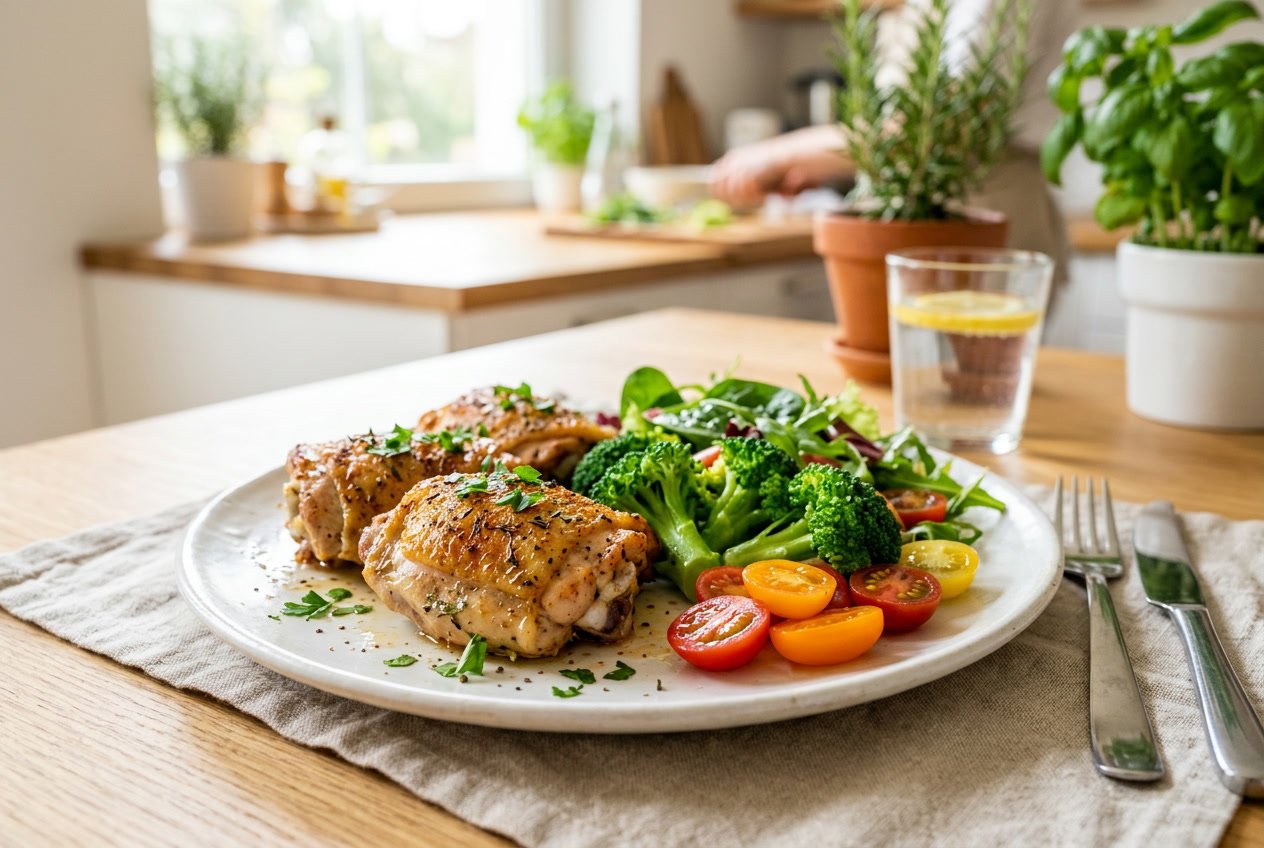
Chicken thighs can add to your daily calories if you eat large portions or prepare them with added fats. They provide protein and fats that affect satiety and total energy intake.
Understanding Calorie Content
A typical cooked, skin-on chicken thigh (about 3.5 ounces / 100 g) contains roughly 210–250 calories. Skinless, the same portion is closer to 160–180 calories.
Serving size matters. A common restaurant portion is often 6–8 ounces, doubling the calories compared with a 3–4 ounce home portion.
Cooking method changes calories quickly. Frying or braising in oil, butter, or cream can add 100–300+ calories per serving.
Grilling, baking, or poaching keeps added calories minimal. Track the whole meal because sides like mashed potatoes, sauces, and bread can push your meal well past a single-meal calorie budget.
The Role of Fat in Chicken Thighs
Chicken thighs contain more fat than breasts, including both saturated and unsaturated fats. A skinless 3.5-ounce thigh has about 8–10 grams of total fat; with skin, it can rise to 12–15 grams.
The unsaturated fats in thighs help nutrient absorption and taste. Fat is energy-dense at 9 kcal/gram, so small increases meaningfully raise calorie totals.
If you want to control weight, remove the skin, trim visible fat, and choose low-fat cooking methods. Use herbs, citrus, and spices for flavor instead of heavy sauces.
Including chicken thighs within a calorie-controlled meal plan—paired with vegetables and whole grains—lets you benefit from their protein without automatically causing weight gain.
How Chicken Thighs Affect Weight Loss
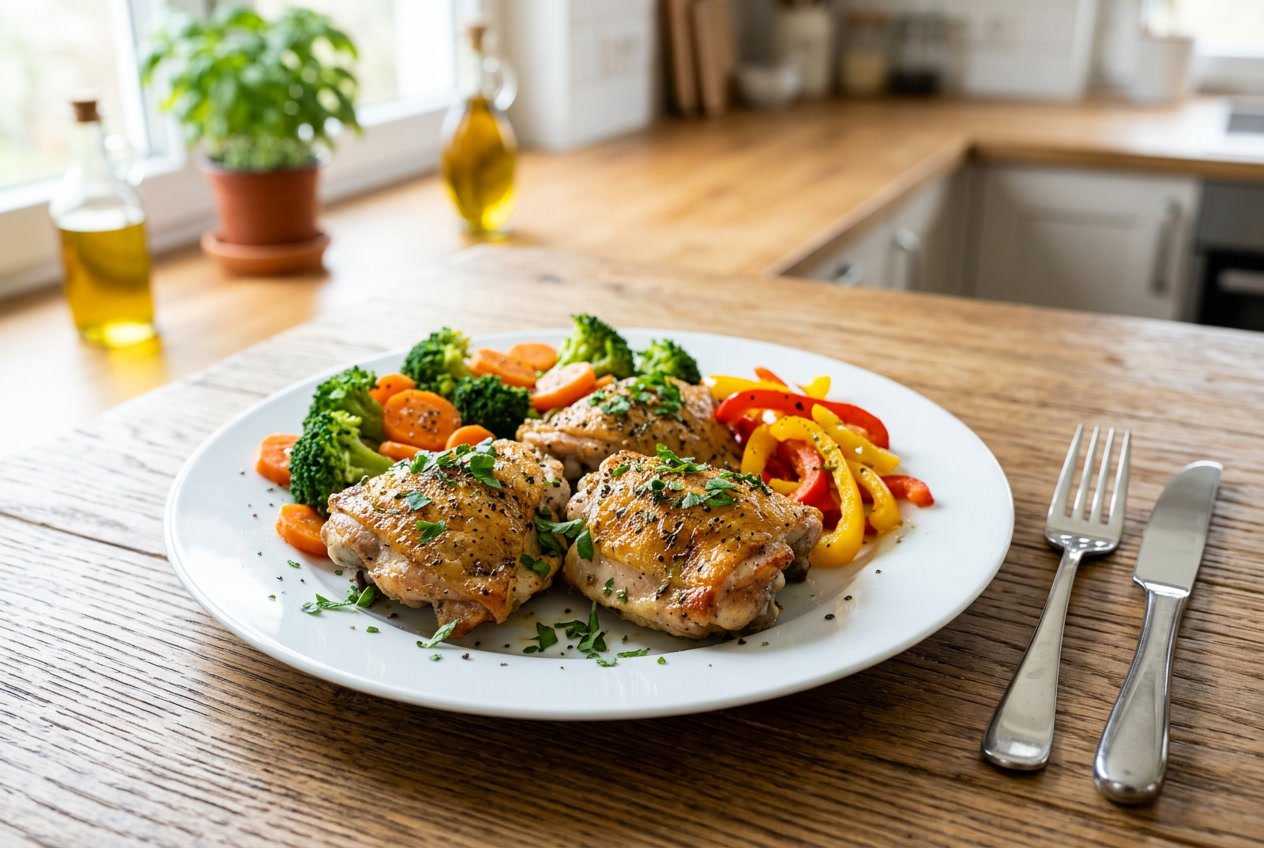
Chicken thighs provide concentrated protein and moderate fat, which influence hunger, calorie intake, and muscle preservation. Choose skinless or control portions to reduce extra calories while keeping nutrient density.
Protein and Satiety
Chicken thighs supply about 25–26 grams of protein per 3-ounce cooked serving. That protein slows stomach emptying and increases post-meal fullness, helping you eat fewer snacks and smaller portions later in the day.
Protein also has a higher thermic effect than carbs or fat. Digesting a chicken-thigh meal burns slightly more calories.
To maximize satiety with thighs, prioritize boneless, skinless cuts and pair them with fiber-rich vegetables or whole grains.
Aim for 20–30 grams of protein at a meal. One typical thigh plus a cup of steamed broccoli and ½ cup quinoa will meet that target for most adults.
Muscle Maintenance and Metabolism
Maintaining lean mass preserves resting metabolic rate during weight loss. The high-quality protein in chicken thighs supports muscle repair after resistance exercise.
If you train, include thighs as one of several protein sources across the day to hit your total daily protein goal (often 0.6–1.0 g per pound of bodyweight, depending on activity and goals).
Thighs contain essential amino acids like leucine that trigger muscle protein synthesis. Distribute 3–4 protein servings (including chicken thighs) across meals to keep synthesis stimulated and reduce muscle loss.
If you consume thighs with excess added fats or large portions, total calories can exceed your weight-loss target.
Nutritional Profile of Chicken Thighs
A 100-gram cooked, skinless chicken thigh gives you a solid dose of high-quality protein with moderate fat and several key micronutrients. You get roughly 200–210 calories, about 25–27 g protein, and 8–10 g total fat per 100 g, depending on whether the cut is boneless or bone-in.
Vitamins and Minerals in Chicken Thighs
Chicken thighs supply multiple B vitamins, notably niacin (B3) and vitamin B6, which support energy metabolism and protein synthesis. You also receive smaller amounts of riboflavin (B2) and pantothenic acid (B5).
Selenium appears in appreciable amounts and helps antioxidant defenses and thyroid function. Zinc and iron are present at higher levels than in white meat, supporting immune function and oxygen transport.
Typical micronutrient values per 100 g (approximate):
- Niacin: ~7–10 mg
- Vitamin B6: ~0.5–0.7 mg
- Selenium: ~15–20 µg
- Zinc: ~1–2 mg
- Iron: ~0.8–1.2 mg
These nutrients make chicken thighs more nutrient-dense than many processed protein options. Removing the skin lowers fat and calories while retaining most vitamins and minerals.
Comparison to Other Lean Protein Sources
Chicken thighs are higher in calories and fat than breast. They have roughly 25–27 g protein per 100 g versus about 31 g in breast.
Thighs provide more iron and zinc than breast meat, which can matter if you need those minerals. They also contain more monounsaturated and some saturated fat; that fat increases calorie density but improves satiety.
Compared with fish or lean cuts of pork, thighs are similar in protein yet usually higher in saturated fat than lean fish and lower in omega-3s. Compared with plant proteins like lentils and beans, thighs offer complete amino acids and higher bioavailable iron and zinc.
If you want to reduce calories while keeping protein, choose skinless, boneless chicken thigh and control portion size to match other lean protein sources.
Healthy Cooking Methods for Weight Loss
Choose cooking methods that cut added calories while keeping protein and flavor. Focus on high-heat grilling, oven baking, and gentle poaching to limit fat, preserve nutrients, and make portion control easier.
Best Ways to Prepare Chicken Thighs
Grilling and baking rank highest for weight-loss goals because they don’t require much added fat. Grill chicken thighs over medium-high heat 5–7 minutes per side for bone-in, or 4–5 minutes per side for boneless.
Bake at 400°F (200°C) for 20–30 minutes for bone-in thighs or 18–22 minutes for skinless, boneless cuts. Poaching in unsalted broth or water keeps thighs moist with zero added fat.
Stir-fry using a nonstick pan and 1 teaspoon oil, and toss with lots of vegetables to stretch the meal. Use marinades based on citrus, vinegar, herbs, or dry rubs to add flavor without calories.
Skinless vs. Skin-On
Skinless chicken thighs contain substantially fewer calories and less saturated fat than skin-on thighs. A 100 g skinless cooked thigh typically has about 20–30 kcal fewer and several grams less fat than the same piece with skin.
Remove skin before cooking to cut calories reliably. Keep skin-on only when you plan to roast or grill at high heat and then remove excess fat after cooking.
If you prefer skin-on for texture, reduce portion size and pair with nonstarchy vegetables to balance the meal.
Limiting Added Fats
Measure oils and avoid pouring directly from the bottle. Use a teaspoon or spray.
Replace frying with methods like grilling, baking, or poaching to eliminate the need for oil. When you do use oil, choose 1 teaspoon of olive oil for drizzling or brushing (about 40 kcal) instead of multiple tablespoons.
Use nonstick cookware or a well-seasoned cast-iron pan to brown thighs with minimal fat. Trim visible fat and pat pieces dry before cooking so they sear quickly and don’t absorb excess oil.
Finish with acid (lemon juice, vinegar) or fresh herbs to boost flavor without adding calories.
Portion Control and Meal Planning Tips
Keep servings reasonable, track calories for a few days, and build meals around protein, non-starchy vegetables, and a controlled portion of whole grains. Practical swaps and simple plating rules make consistent portion control easier to follow.
Recommended Portion Sizes
Aim for 3–4 ounces (about the size of your palm) of cooked chicken thighs per meal to control calorie intake. That portion contains roughly 150–200 calories depending on whether skin is left on.
Removing skin reduces fat and calories. Weigh or estimate portions when you start to calibrate your eye.
Use a food scale, measuring cups, or visual cues: one palm = protein, one fist = vegetables, one cupped hand = carbs. If you track calories, log the cooked weight since raw and cooked weights differ.
Adjust portions for your needs. Increase to 5–6 ounces after intense workouts or reduce to 2–3 ounces if you’re in a larger calorie deficit.
Keep total daily protein near your target (e.g., 0.6–1.0 g per pound bodyweight) to support satiety and muscle.
Balancing Meals With Chicken Thighs
Pair the chicken thigh portion with at least a fist-sized serving of non-starchy vegetables to add volume without many calories. Vegetables increase satiety and fiber, which helps you feel full on fewer calories.
Limit higher-calorie additions like sauces, dressings, and fried toppings. Measure oils and nut-based sauces; a tablespoon of oil adds roughly 120 calories.
Prefer dry rubs, citrus, vinegar-based dressings, or yogurt sauces made with measured olive oil. Plan meals across the day so protein is distributed.
If you have chicken thighs for dinner, choose leaner proteins or plant-based choices at other meals to keep overall calorie intake aligned with your weight-loss goal.
Use a simple weekly template: 3 nights chicken thighs, 2 nights fish or legumes, 2 nights lean turkey or tofu.
Combining With Vegetables and Whole Grains
Create balanced plates: half non-starchy vegetables, one-quarter protein (chicken thigh portion), and one-quarter whole grains. Examples: 3–4 oz chicken thigh + 1 cup roasted broccoli + ½ cup cooked quinoa.
Choose high-fiber whole grains—quinoa, farro, barley, or brown rice—to slow digestion and stabilize blood sugar. A typical grain portion is ½ cup cooked (about 100–120 calories).
Use vegetables to bulk meals and replace some grains when you need fewer carbs. Swap ½ cup rice for an extra cup of steamed greens to cut 100–150 calories while keeping meal volume.
When meal planning, list servings and calories for each element to stay within your daily target.
Dietary Considerations and Daily Choices
Chicken thighs provide protein, energy, and essential micronutrients while also contributing more fat than breast meat. Your choices about portion size, cooking method, and meal pairing determine whether thighs fit into a healthy eating pattern.
Chicken Thighs in a Balanced Diet
You can include chicken thighs as part of a balanced diet by prioritizing portion control and cooking method. A typical serving is 3–4 ounces cooked (about the size of a deck of cards), which supplies roughly 18–20 g protein and 8–10 g fat.
This fits well into a 1,500–2,500 kcal daily plan depending on your goals. Choose preparations that limit added saturated fat and sodium.
Grill, bake, roast, or braise thighs and remove visible skin when you want lower fat. Favor dressings and sauces made with olive oil or other sources of monounsaturated and polyunsaturated fats.
Pair thighs with high-fiber vegetables and whole grains to improve satiety and nutrient density. For example:
- 3 oz roasted thigh + 1 cup steamed broccoli + ½ cup brown rice
This balances protein, fiber, and healthy fats while keeping calories reasonable.
How Often Can You Eat Chicken Thighs?
Your daily calorie needs and macronutrient targets determine how often you can eat chicken thighs. If you aim for 25–30% of calories from protein and a moderate-fat diet, eating thighs 3–5 times a week works for many people.
You can eat thighs more often if you control portions and vary fat sources at meals. Avoid eating fried or heavily sauced thighs every day, since those add saturated fat and calories.
Rotate chicken thighs with lean cuts, fish, legumes, and plant-based proteins to meet your micronutrient needs. Watch your weekly saturated fat intake and get most fats from monounsaturated and polyunsaturated sources.
This approach lets you enjoy the flavor of thighs while keeping your diet balanced and healthy.

