
What Is the Best Temperature for Chicken Thighs: Expert Cooking Guide
You want juicy, safe chicken thighs without guesswork. Aim for an internal temperature between 175°F and 195°F for the most tender results. While 165°F is the minimum safe temperature, higher temps (around 190–195°F) break down connective tissue and yield meltingly tender dark meat.
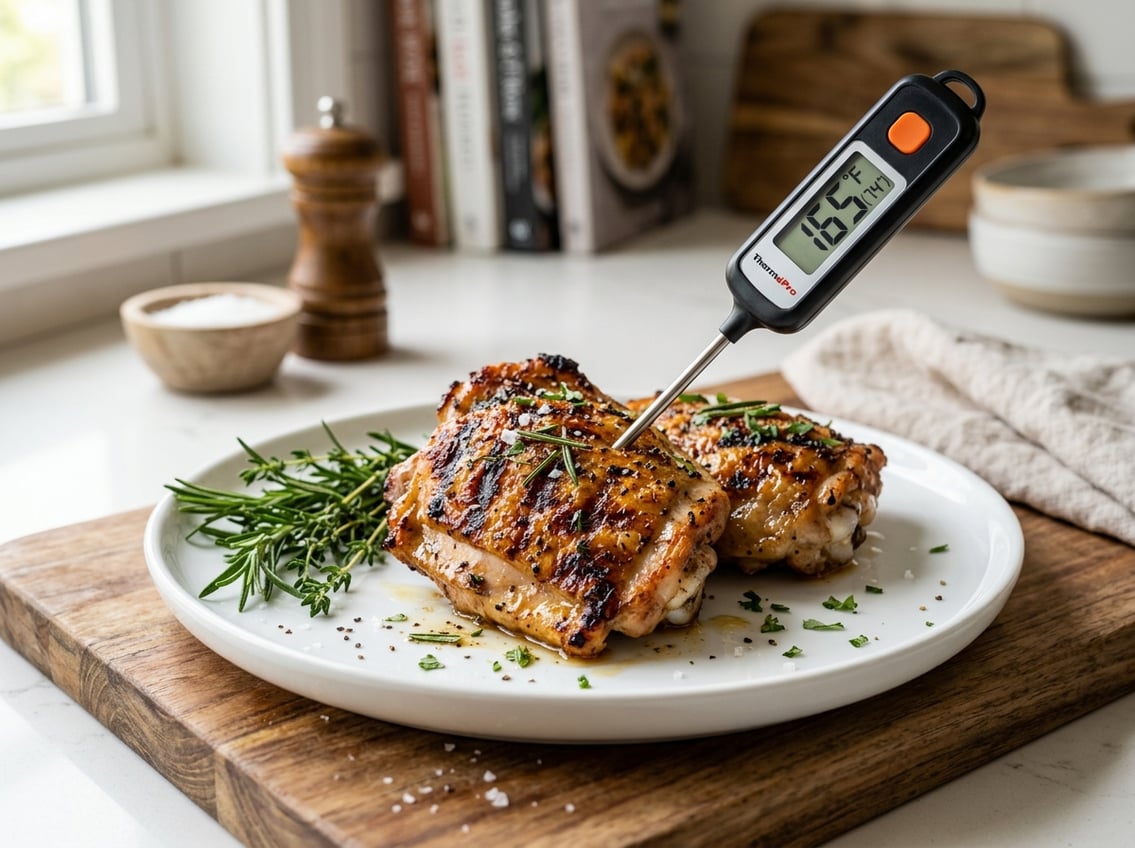
This guide explains why that temperature range works, how bone-in and boneless thighs cook differently, and which tools and techniques help you hit the target every time.
Understanding Safe and Optimal Internal Temperatures
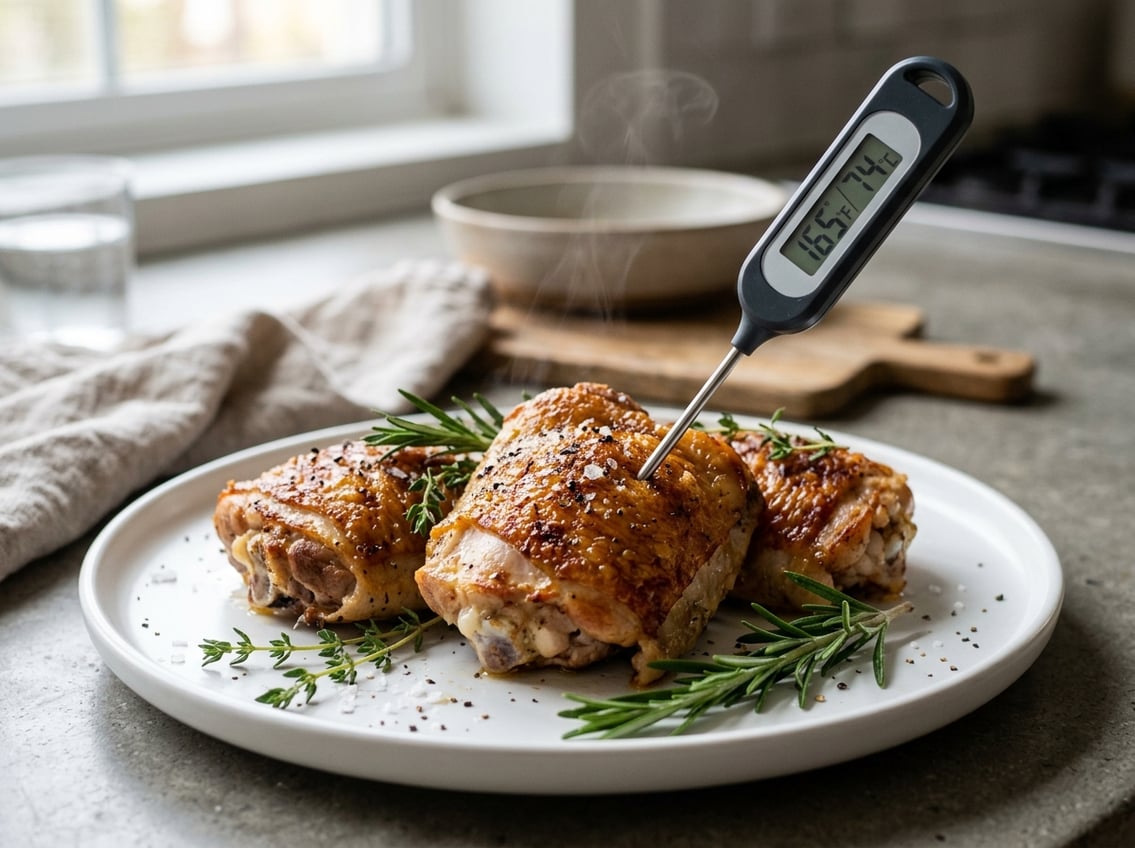
You need clear targets and accurate measurement to cook thighs that are both safe and tender. Use an instant-read meat thermometer and plan cook times around the temperature you want to reach.
USDA Safety Guidelines for Chicken
The USDA sets a minimum safe internal temperature of 165°F (74°C) for poultry to ensure pathogens like Salmonella and Campylobacter are destroyed. Insert your meat thermometer into the thickest part of the thigh, avoiding bone, and wait for the reading to stabilize for an accurate result.
Meeting 165°F quickly reduces risk, but time at temperature matters too. Lower temperatures can be safe if held long enough, though that requires precise time-and-temperature control you rarely need at home.
For home cooks, rely on the thermometer rather than cooking times alone. Typical oven or grill cook times vary, but always verify doneness by temperature.
Why Higher Temperatures Improve Texture
Chicken thighs contain more connective tissue and collagen than breasts. As collagen converts to gelatin between roughly 140–195°F, the meat becomes more tender and moist.
Holding thighs at higher internal temperatures (above 175°F) breaks down collagen further, producing a silky texture rather than dry, fibrous meat. Cooking thighs to higher temperatures often improves eating quality.
You can achieve this by slow roasting, braising, or indirect grilling. Monitor temperature frequently; temperatures over 210°F can make meat stringy, so stay within the collagen-breakdown window and use a thermometer to guide when to stop cooking.
Best Temperature Range for Juicy Thighs
Aim for an internal temperature range of 175–195°F (79–91°C) for juicy, tender thighs.
- 165°F: safe and acceptable, cooks faster, retains some chew.
- 175°F: reliably tender and still clings to the bone.
- 190–195°F: very tender, near-melting texture from maximal collagen conversion.
Use an instant-read meat thermometer to check the thickest part of the thigh, keeping the probe at least 1/4 inch from bone. Expect varied cook times: a 4–6 oz boneless thigh will reach target quicker than a bone-in piece.
Plan for slower methods if you target 190–195°F; those temperatures need more time but reward you with markedly better texture.
Comparing Bone-In and Boneless Chicken Thighs
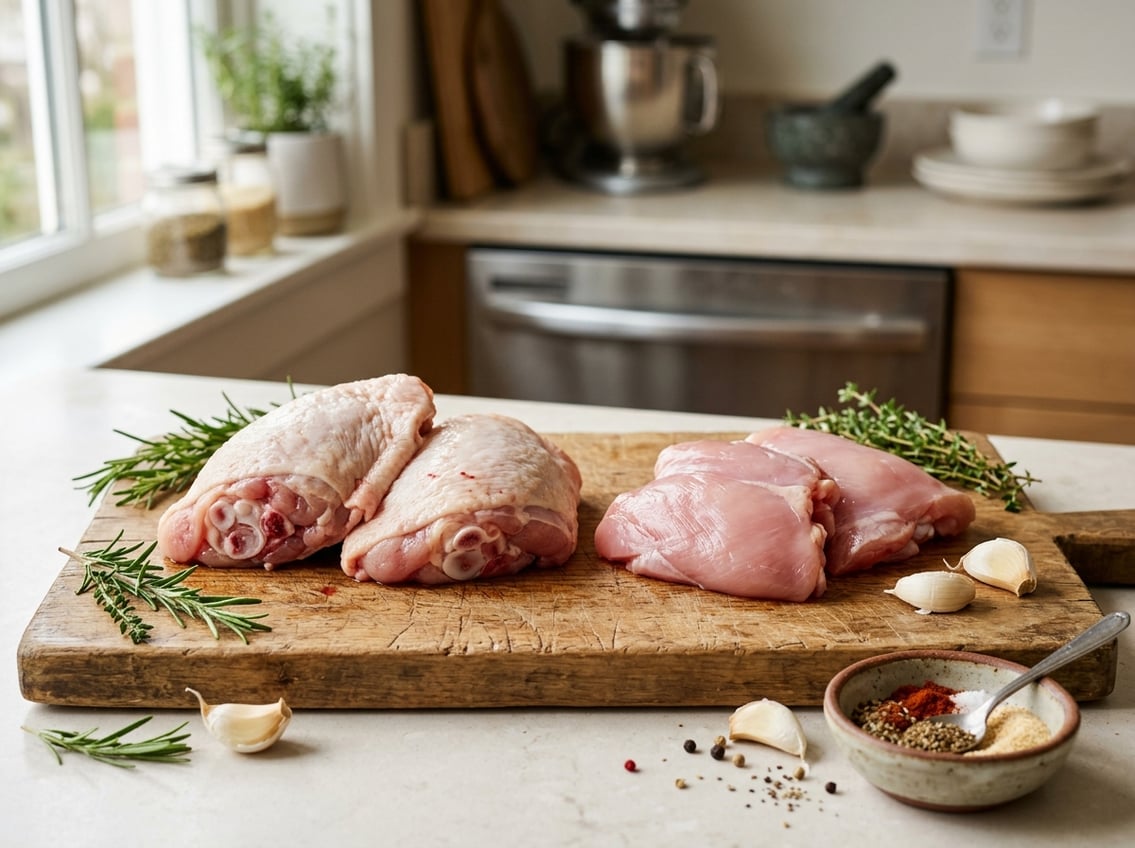
Bone-in thighs take longer to reach a safe, juicy finish but give you crisper skin and deeper flavor. Boneless thighs cook faster and more evenly, which makes them better for quick pans or skewers.
Timing and technique change depending on whether you want pull-apart tenderness or a quick, moist result.
Differences in Cooking Times
Bone-in chicken thighs generally require about 35–45 minutes in a 375–425°F oven, or 25–30 minutes on a 450°F grill with indirect heat early to avoid burning the skin. The bone slows heat penetration and insulates the meat, so plan for longer cook times and check temperature near the thickest part of the meat, avoiding the bone.
Boneless chicken thighs usually finish in 18–30 minutes in the same oven range, or 10–15 minutes on a hot grill. They cook more evenly because there’s no bone to alter heat flow, but they also lose juiciness faster if you overshoot the target temp. Use an instant-read thermometer and start checking a few minutes earlier than you expect.
Ideal Temperatures for Each Cut
For bone-in thighs, aim for an internal temperature between 175°F and 195°F depending on the texture you want. Cook to 175°F for meat that clings to the bone but is tender.
Push toward 190–195°F when you want gelatinized connective tissue and very tender, falling-apart meat. Monitor temperature in the thickest muscle, at least 1/4″ from bone.
For boneless thighs, target 165–175°F for the best balance of safety and juiciness. If you stop at 165°F you’ll be safe and still moist.
170–175°F yields a slightly more tender result without the long collagen breakdown bone-in pieces allow. Rest boneless thighs 5 minutes after cooking to let juices redistribute; for bone-in, rest 10–15 minutes for carryover and easier carving.
Key practical tips:
- Use an instant-read thermometer for accuracy.
- Avoid touching bone when probing.
- Adjust oven or grill time based on thigh size and whether skin is on.
Essential Tools and Techniques for Accurate Cooking
Use a reliable instant-read thermometer and control cooking heat to hit the right doneness without drying the meat. Manage probe placement, avoid bone contact, and adjust time or method if you target a higher internal temperature for more tender thighs.
How to Use a Meat Thermometer Correctly
Insert an instant-read thermometer into the thickest part of the thigh, avoiding contact with bone by at least 1/4 inch. Hold the probe steady until the reading stabilizes; many high-quality models display a final value within 1–3 seconds.
Check temperature in several spots if pieces vary in size. For bone-in thighs, test near the center of the meat, not the joint.
Calibrate digital thermometers occasionally by testing in an ice bath (32°F / 0°C) and boiling water (212°F / 100°C) to confirm accuracy.
Set your target: 165°F is the USDA safe minimum, while 175–195°F yields progressively more tender, gelatinized dark meat. Rest thighs 5–10 minutes after cooking; carryover heat rises a few degrees and juices redistribute.
Avoiding Common Cooking Mistakes
Don’t rely on time alone; oven variations and thigh sizes change cook time. Use the thermometer as your primary doneness check instead of guessing by color or touch.
Avoid placing thighs crowded on a sheet pan. Crowding traps steam and prevents skin crisping.
Space pieces so air circulates and the surface dries quickly for browning. Don’t probe repeatedly in the same spot; repeated piercing lets juices escape.
Use tongs or a spatula to turn meat, and only probe once (or in a couple of places) near the end of cooking. If you prefer very tender, fall-off-the-bone thighs, cook slower at lower heat or braise until the internal temperature reaches 190–195°F.
Oven Cooking Methods
You can use moderate to high oven heat to balance juicy meat with crisp skin. Choose temperature and timing based on whether thighs are bone-in or boneless and whether you prefer faster browning or slow tenderness.
Recommended Oven Temperatures
For bone-in, skin-on thighs, set your oven between 375°F and 425°F (190–220°C).
375°F gives even cooking and fewer hot-spot burns; expect 30–45 minutes depending on size.
425°F speeds skin browning and decreases time to about 25–35 minutes, but watch for flare-ups or darkening.
For boneless, skinless thighs, use 350°F–375°F (175–190°C) and plan 20–30 minutes.
Higher heat can dry lean boneless pieces, so use the lower end if you want more forgiving results.
Always verify doneness with a meat thermometer.
Aim for an internal temperature of 165°F (74°C) for safety, but many chefs cook bone-in thighs to 175°F (79°C) to break down connective tissue and yield more tender meat.
Tips for Crispy Chicken Thighs
Pat skin dry with paper towels before seasoning. Moisture prevents crisping.
Lightly coat skin with oil (1 tsp per thigh) and use coarse salt to draw out moisture and enhance browning.
Start on the stovetop if you want extra sear. Pan-sear skin-side down in an ovenproof skillet for 4–6 minutes, then transfer to a preheated oven to finish.
This method combines intense surface browning with controlled oven cooking.
Use a wire rack on a sheet pan to lift thighs off fat drippings so air circulates and skin crisps evenly. Finish under the broiler for 1–2 minutes if necessary, watching closely to prevent burning.
Grilling and Marinating Techniques
You can use exact grill temps for bone-in and boneless thighs, and marinade ingredients and timing change cook behavior and final juiciness. Follow the specific temps, placement, and resting guidance below to grill and marinate with predictable results.
Optimal Grilling Temperatures
Set grill surface to about 375°F (190°C) for bone-in, skin-on thighs and cook 30–40 minutes using indirect heat with occasional flips. For boneless, skinless thighs, set surface to 425°F (218°C) and grill 18–25 minutes over direct heat, flipping once halfway.
Remove thighs at 160°F (71°C) and rest 5–7 minutes; carryover raises them to the safe 165°F (74°C).
Use a probe thermometer in the thickest part, avoiding bone contact. If flare-ups occur, move pieces to the cooler side and finish indirectly.
For crisp skin, sear skin-side down 2–3 minutes at high heat (450°F/232°C) at the end, then rest.
Impact of Marinating on Cooking
Marinades change surface moisture, sugar content, and acidity, all of which affect browning and cook time. Sugar-heavy marinades (honey, brown sugar) brown faster and can burn at high direct heat; apply them in the last 5–10 minutes.
Acidic marinades (vinegar, citrus) tenderize by loosening proteins. Limit marinating to 2–4 hours for thighs to avoid a mushy texture.
Salt-first or brine-style marinades improve moisture retention and shorten visible cooking shrinkage.
If you use a wet marinade, pat thighs dry before grilling to promote a better sear and reduce flare-ups.
For even flavor, reserve a small portion of unused marinade as a finishing sauce. Never reuse marinade that contacted raw chicken unless boiled for at least 1 minute.
Cooking Time Guidelines
You need clear timing based on method, oven temperature, and thigh size to hit safe, juicy results. Use a thermometer and allow for resting carryover when deciding doneness.
Time Estimates by Cooking Method
Baking (bone-in, 375°F / 190°C): plan 35–45 minutes. Check at 35 minutes with an instant-read thermometer in the thickest part; 165°F (74°C) is safe, but many prefer 175–180°F (79–82°C) for fall-apart thighs.
Baking (boneless, 400°F / 205°C): expect 20–30 minutes. Higher heat speeds cooking and crisps the exterior; start checking at 20 minutes.
Pan-searing then oven-finish: sear 4–6 minutes per side over medium-high, then roast at 375°F for 12–18 minutes for bone-in, or 8–12 minutes for boneless.
Grilling: direct medium-high heat takes about 6–8 minutes per side for bone-in, or 4–6 minutes per side for boneless. Use an instant-read thermometer to confirm.
Use these as targets, not absolutes. Probe placement, oven variance, and marinade sugars that brown quickly all affect timing.
Adjusting for Thigh Size and Thickness
Smaller or thinner thighs cook faster. Boneless thighs around 3–4 oz usually finish in 18–25 minutes at 400°F.
Bone-in 6–8 oz thighs need 35–45 minutes at 375°F. Thickness matters more than weight.
A 1-inch thick thigh will take roughly 20–25 minutes at 400°F. A 1.5-inch thigh can need 30–40 minutes.
Dense marinades, cold-from-fridge meat, or crowded pans can increase time by 5–15 minutes. Flip the thighs midway for even browning when roasting or grilling.
Measure temperature in the thickest part without touching bone. Aim for a minimum of 165°F, and 175–180°F for more tender results.


