
Can You Use Chicken Thighs Instead of Breasts? Expert Cooking Guide
You can often swap chicken thighs for breasts and get tastier, more forgiving results, especially in slow-cooked, braised, or saucy dishes, if you adjust cooking time and seasoning.
Use thighs when you want richer flavor and juicier texture; cook them a bit longer and season more boldly.
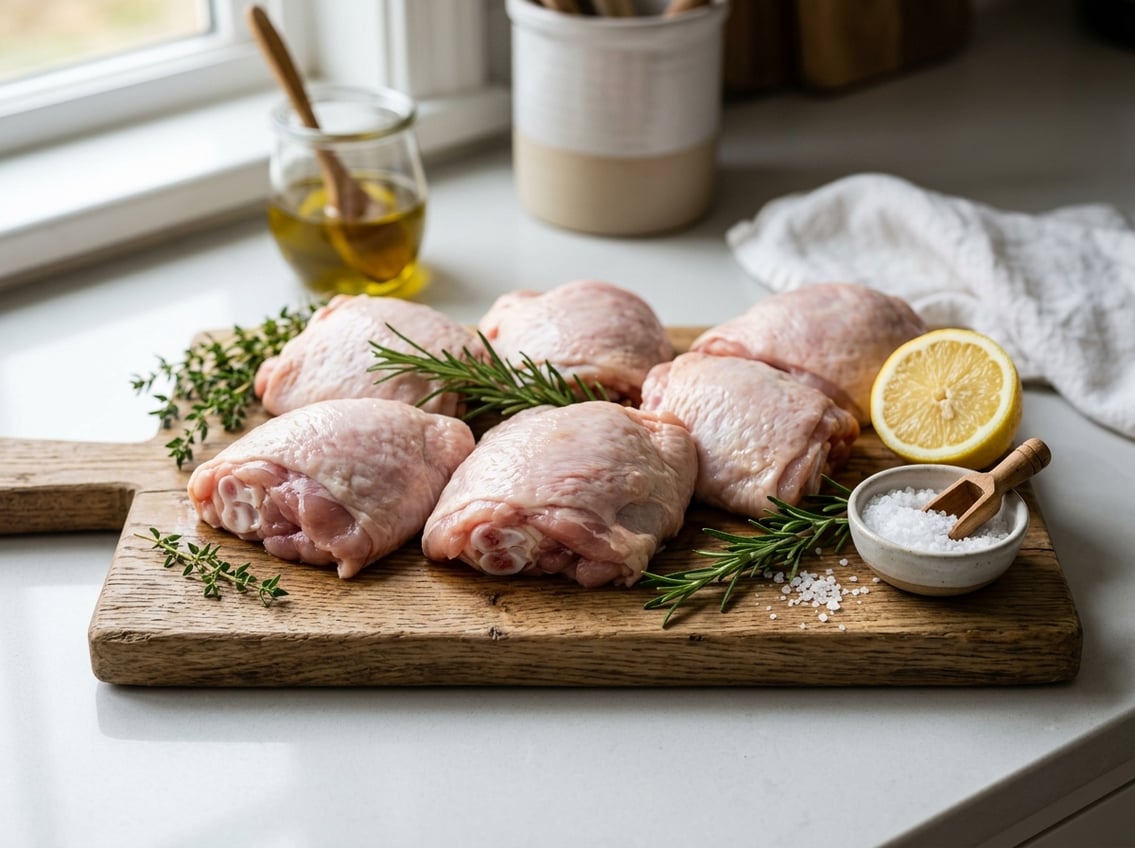
If you care about cost, flavor, and moisture over a leaner profile, choose thighs for stews, curries, and one-pan meals.
Below are the key differences, when the swap works best, how to adjust techniques for boneless versus bone-in or skin-on options, and practical tips for using thighs in popular recipes.
Key Differences Between Chicken Thighs and Breasts
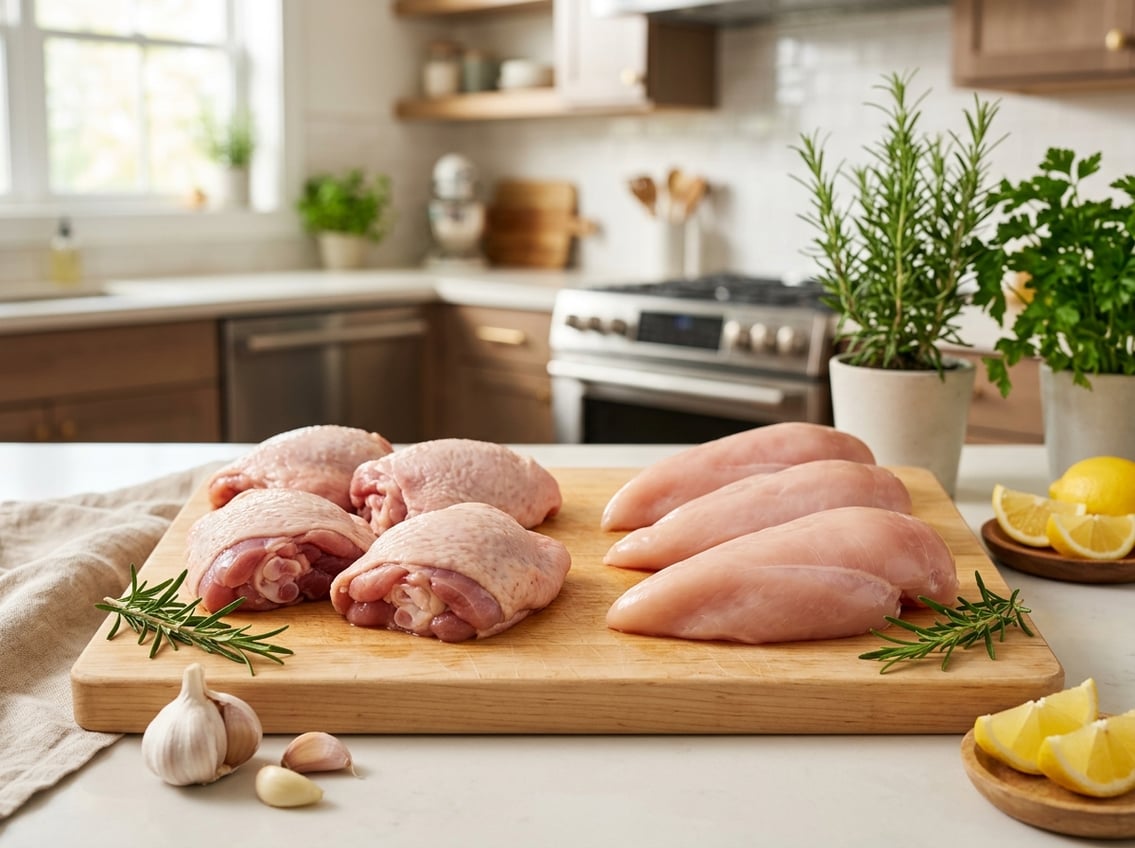
You’ll notice differences in taste, cooking tolerance, calories, and price that affect how each cut performs in recipes and meal planning.
These details help you choose the cut that matches your dish, cooking method, and nutrition goals.
Texture and Flavor
Chicken thighs come from the bird’s dark meat and contain more connective tissue and fat.
That makes thighs juicier and more forgiving of longer cook times, so they stay tender when braised, roasted, or grilled.
Thighs also have a richer, more pronounced chicken flavor that holds up well to bold marinades and spices.
Chicken breasts are lean white meat with a mild flavor and firmer, denser texture.
They cook faster and can dry out if overcooked, so use shorter high-heat methods, brining, or moist cooking (poaching, sous vide) to keep them juicy.
Breasts work best when you want a neutral base that showcases sauces or sides.
Nutritional Content
Per 100 grams, boneless skinless chicken breast provides higher protein with lower fat and fewer calories than an equal amount of thigh.
If you focus on calorie control or lean-protein targets, chicken breast is a better choice.
Thighs contain more total fat and saturated fat, which raises calorie density.
They also provide slightly higher amounts of iron and zinc because dark meat stores more of these minerals.
Both cuts supply complete protein and B vitamins; your choice depends on whether you want lower calories or greater fat and micronutrient balance.
Cost and Availability
Chicken thighs usually cost less than chicken breasts at most grocery stores.
You’ll often find thighs sold bone-in or boneless, skin-on or skinless, giving you flexible price points and cooking options.
Chicken breast tends to be sold boneless and skinless more frequently and can cost more per pound, especially when labeled as premium (organic, free range).
Both cuts are widely available year-round.
Sales, bulk packs, and local sourcing can shift prices, so buy thighs for cost savings or breasts for lean convenience.
When to Substitute Chicken Thighs for Breasts
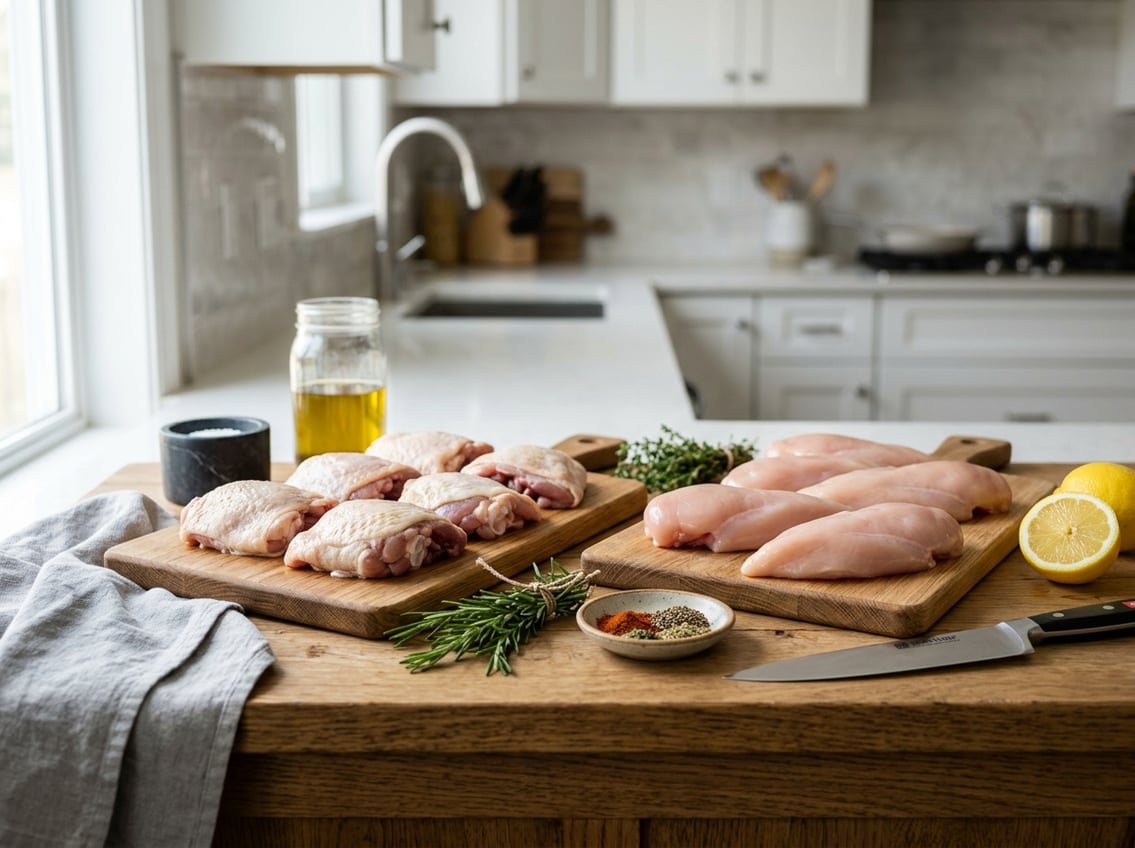
Use thighs when you want more fat, flavor, and forgiveness in cook time.
Adjust weight and cooking time: plan about two small boneless thighs per 6–8 oz breast, and increase cooking time for bone-in pieces.
Best Recipe Types for Substitution
Pick thighs for slow braises, stews, and high-heat searing.
Thighs’ extra fat and connective tissue hold up in recipes like chicken cacciatore, curries, and braised dishes where long cooking breaks down collagen and boosts sauce richness.
For grilling, kebabs, and pan-searing, use boneless thighs trimmed of excess fat so pieces cook evenly without drying.
In quick stir-fries or salads where lean texture matters, breasts still perform better, but boneless thighs work if you shorten marinade acid time and watch heat closely.
Swap rules:
- Weight: 1 breast ≈ 2 small boneless thighs (or 1.5 if large boneless).
- Bone-in: add about 10–15% more cooking time; expect less edible meat per piece.
- Reduce added oil by 25–50% when using thighs.
Benefits of Substituting in Different Cuisines
You gain juiciness and deeper flavor across many cuisines.
In Italian dishes like chicken cacciatore, thighs enrich tomato sauces and tolerate long simmering without becoming stringy.
In Asian stir-fries and curries, thighs absorb marinades and spices, delivering bolder taste; trim and cut into uniform pieces for even cooking.
For BBQ and smoky preparations, thighs resist drying on the grill and develop a better char.
Nutrition and texture trade-offs:
- Thighs: higher fat, more iron and zinc, richer mouthfeel.
- Breasts: leaner, milder, better for light salads and quick bakes.
Adjust seasoning and sauce reduction to balance thighs’ rendered fat and preserve the intended texture.
How to Successfully Make the Swap
Change time and temperature and tweak seasoning as needed.
Pay attention to bone-in vs. boneless and whether skin is on, since those affect cook time, moisture, and flavor.
Adjusting Cooking Time and Temperature
Chicken thighs cook differently than breasts because they have more fat and often bone.
If you use boneless, skinless thighs in a recipe that calls for breasts, reduce high-heat searing time by a few minutes but increase overall cooking time slightly for even doneness.
For example, grill breasts 4–6 minutes per side; grill boneless thighs 5–7 minutes per side and check internal temperature.
For bone-in or skin-on thighs, lower oven temperature by about 25°F (15°C) compared with breasts and extend roasting time until thighs reach 165°F (74°C) at the thickest point.
In slow-cooker or braise recipes, thighs tolerate long, moist cooking and often become more tender than breasts, so follow liquid and timing guidance for thighs.
Always use a meat thermometer and rest the meat 5–10 minutes before slicing.
Modifying Seasonings and Marinades
Thighs have a richer, more pronounced flavor and higher fat, so scale back strong salt or acid in marinades that were balanced for lean breasts.
If a breast recipe uses 1 tablespoon salt per pound, reduce to ¾ tablespoon per pound for thighs and taste a sauce before final seasoning.
Match marinade length to cut: thighs tolerate longer marinating (2–12 hours) without drying, which deepens flavor.
For quick cooks like stir-fries, use bolder spices or a short brine to penetrate the darker meat.
If the original recipe relied on the neutral taste of breasts, add aromatics like garlic, smoked paprika, or soy for balance.
For skin-on thighs, pat skin dry and season it separately to promote crisping.
Choosing Between Bone-In, Boneless, and Skinless Options
Pick the cut that matches your cooking method, time, and flavor goals.
Consider cooking time, moisture retention, and whether you want crispy skin or easy prep.
Bone-In Chicken Thighs
Bone-in chicken thighs keep more flavor and moisture during cooking because the bone conducts heat slowly and helps the meat stay juicy.
Use them for roasting, braising, or grilling when you want deeper flavor and a meaty texture.
Expect slightly longer cook times and plan for 3/4–1 pound per person if they’re the main protein.
The bone adds weight and reduces yield compared with boneless pieces, so factor that into portioning and cost.
If you make stock, save the bones for extra collagen and body.
Handle them carefully when carving; serve them whole or quartered to showcase the skin and browning.
Boneless Chicken Thighs
Boneless chicken thighs cook faster and more evenly and make portioning easier, which works well for stir-fries, sheet-pan meals, and weeknight sauces.
They substitute for breasts without drying out because thighs have higher fat content; cook them to 165°F (74°C) and rest briefly to retain juiciness.
They cost a bit more per pound than bone-in cuts but save prep time and knife work.
Use marinades or quick sears to develop flavor.
When a recipe calls for diced or shredded chicken, boneless thighs are usually the most efficient choice.
Skinless Chicken Thighs
Skinless chicken thighs remove the crisp-skin element but keep the thigh’s richer flavor and fat level.
Choose them for braises, soups, stews, or dishes where you want tender meat without extra fat on the surface.
They cook faster than skin-on, bone-in thighs and won’t produce the same caramelized crust, so rely on sauces or reductions for flavor.
Portion planning matches boneless thighs at about 1/2 pound per person for a main course.
If you want a crisp surface, briefly pan-sear them in a little oil, but know the result won’t match the texture of rendered skin.
Cooking Methods Best Suited for Each Cut
Chicken breasts work best with quick, dry-heat methods that preserve leanness and prevent drying.
Chicken thighs tolerate longer cooking, higher temperatures, and moist-heat methods because their fat and connective tissue add flavor and keep meat tender.
Grilling, Searing, and Baking
For grilling and searing, use boneless, skinless chicken breasts when you need fast, even cooking and minimal flare-ups.
Pound breasts to even thickness (about ½ inch) so they finish at the same time.
Cook over medium-high heat 3–5 minutes per side until internal temperature reaches 165°F (74°C).
Rest 5 minutes before slicing to retain juices.
For thighs, use bone-in, skin-on for grilling or high-heat searing; the skin protects meat and crisps nicely.
Sear skin-side down in a hot, oven-safe skillet 4–6 minutes until deeply browned, then finish in a 400°F (200°C) oven until thighs reach 175–180°F (79–82°C) for tender texture.
Boneless thighs take less time but still benefit from a short rest.
Tips:
- Use a meat thermometer for accuracy.
- Oil and high-smoke-point fats help reduce sticking.
- Use acidic marinades for breasts (shorter time), longer for thighs.
Slow Cooking, Braising, and Stewing
Choose thighs for slow cooking, braising, and stewing because their connective tissue breaks down into gelatin, creating moist, flavorful results.
Use bone-in, skin-on thighs or trim skin for leaner dishes; both handle long braise times (1.5–3 hours) at low temperatures without drying out.
If you use breasts in slow recipes, cut them into large pieces and reduce cooking time to avoid a stringy, dry texture.
Add breasts near the end of a braise (last 30–45 minutes) or poach gently at 160–170°F (71–77°C).
Steps:
- Brown thighs first to build flavor, then add 1–2 cups liquid per pound and simmer gently.
- For stews, maintain a low simmer; for pressure cooking, reduce time by about 25% for thighs and more for breasts.
- Thighs deliver richer mouthfeel and carry bold spices better; breasts keep flavors lighter and leaner.
Tips for Successful Substitution in Popular Dishes
Swap breasts for thighs when you want more flavor and less risk of drying out.
Adjust cooking time, moisture, and seasoning to match the dish’s method and timing.
Adapting Traditional Recipes
When a recipe calls for breasts, reduce direct high-heat time and increase braising or simmering time for thighs.
If roasting, add 10–20 minutes at 375°F (190°C) for bone-in thighs, and check for 165°F (74°C) internal temp.
For quick pan-seared or stir-fry recipes, cut thighs into uniform strips or thin them slightly so they cook through as quickly as breasts.
Use a thermometer or cut a test piece to check doneness.
Reduce added fat compared with breasts because thighs already have more fat; trim excess skin or blot rendered fat during cooking.
Adjust salt and acidic marinades slightly lower; acid extracts more flavor from fattier meat.
For dishes that rely on a clean, mild texture (like chicken salad), shred cooled cooked thighs and mix with light dressing to balance the richer flavor.
Favorite Chicken Thigh Dishes
Chicken thighs excel in stews like chicken cacciatore. First, sear to brown, then simmer in tomato, wine, and aromatics until fork-tender.
The extra fat enriches the sauce. Thighs hold up to long simmer times without drying.
For grilling or kebabs, cut boneless skinless thighs into even cubes. Marinate them for 30–60 minutes to tenderize and prevent flare-ups.
Grill over medium-high heat until charred spots appear. Make sure the internal temperature reads 165°F (74°C).
For pan sauces and quick dinners, brown the thighs first. Deglaze with stock or wine, then finish cooking in the sauce for 8–12 minutes.
This technique locks in juices and creates a glossy sauce. Serve with grains or pasta.


