
Where Is the Thigh on a Whole Chicken: Anatomy, Cuts, and Cooking Tips
You can find the thigh on a whole chicken at the upper part of each leg, where it connects to the body just above the drumstick.
The thigh is the dark-meat section between the hip joint and the lower leg. It has a richer flavor and forgiving texture when cooked.
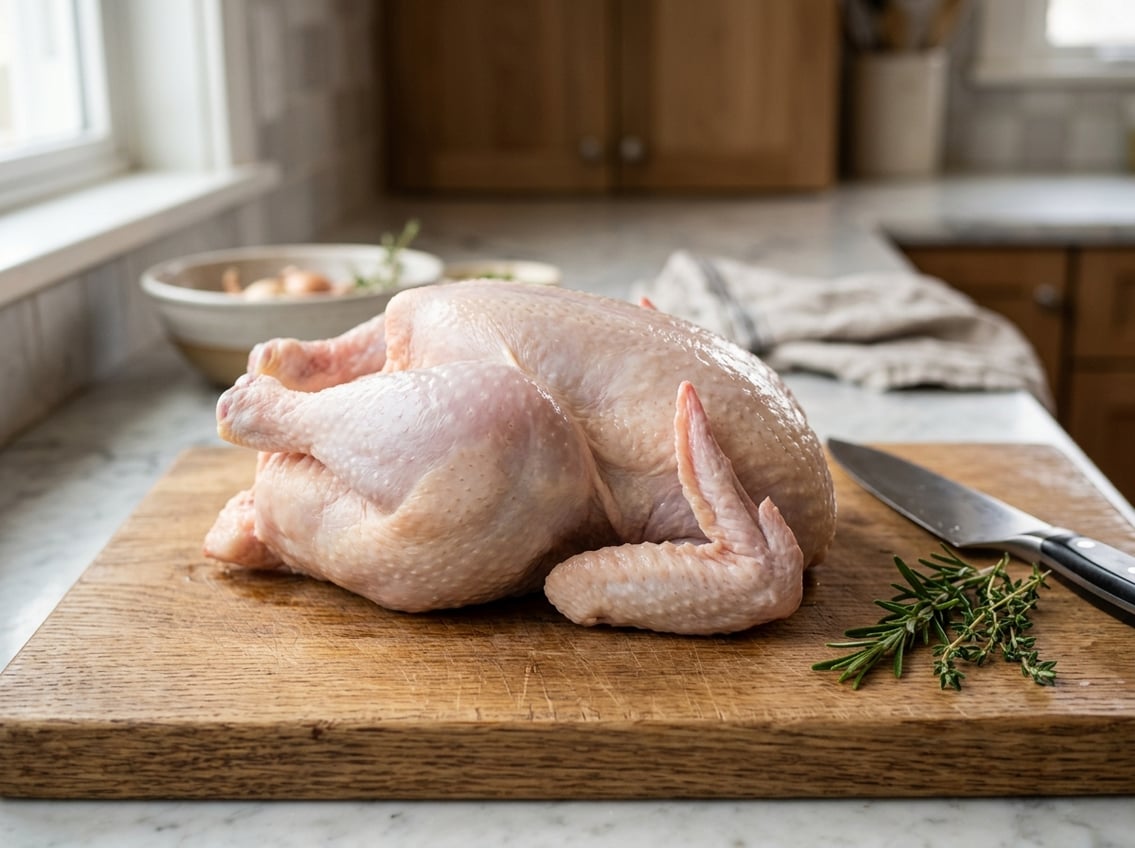
Knowing this spot helps you probe for doneness and carve cleanly.
You can also use this knowledge to choose the right recipes, from braises to roasted whole birds.
Understanding Chicken Anatomy
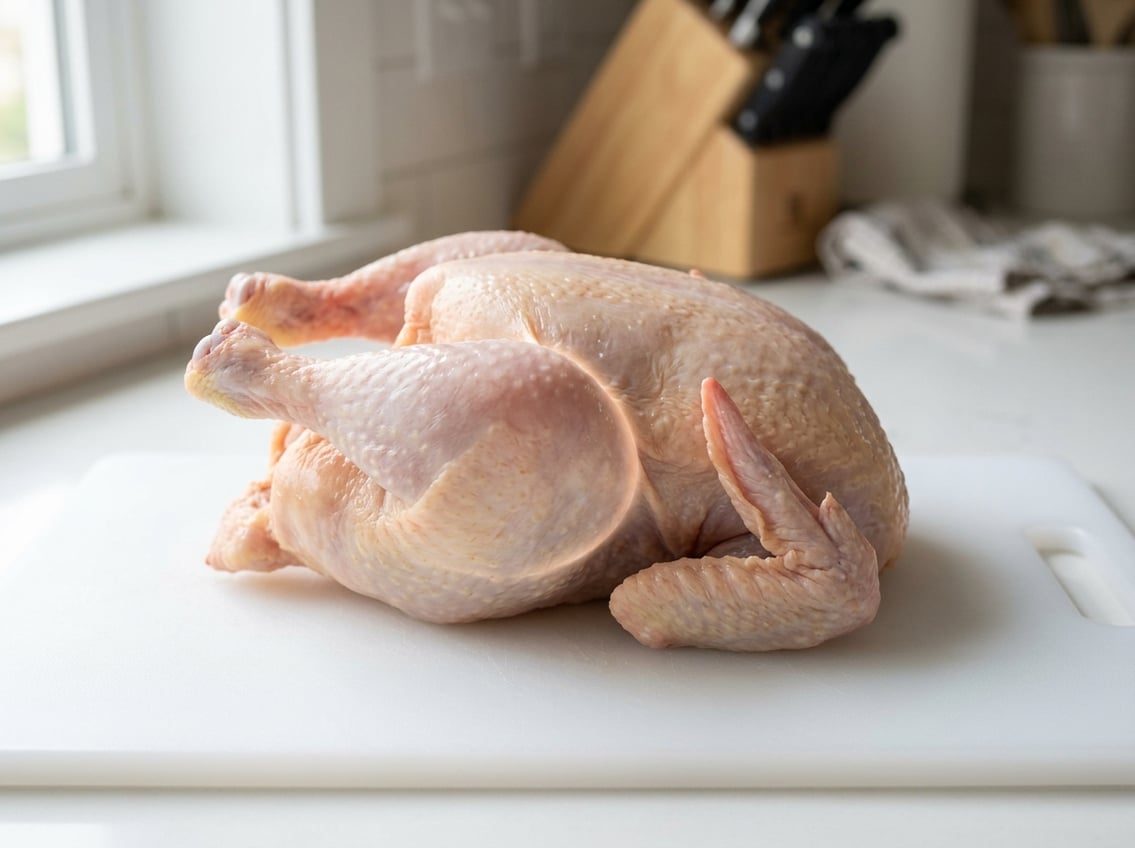
You will learn exactly where the thigh sits on the bird and how it connects at the hip.
Knowing these details helps you carve and buy the right pieces for a recipe.
Identifying the Thigh in Relation to Other Chicken Parts
Look at a whole chicken breast-side up.
The thigh forms the upper portion of each leg, directly above the drumstick and beside the breast.
It’s broader and flatter than the rounded drumstick and sits closer to the body at the hip joint.
The thigh has darker flesh and often more visible fat than the breast.
When the skin is intact, the thigh appears as the meaty area between where the leg meets the body and where the lower leg begins.
This makes it easy to separate during carving.
The Role of the Hip Joint and Positioning
The hip joint anchors the thigh to the bird’s body and defines the thigh’s range of motion.
You can feel the joint where the thigh meets the body; it’s the pivot point you use when pulling the leg away to expose the joint for removal.
When you carve, cut along the natural joint line rather than through bone.
This keeps the meat intact and avoids rough cuts.
Knowing the hip joint location also helps you identify oyster meat, which sits nearby on the back and is separate from the thigh.
Distinguishing Light Meat and Dark Meat
The muscles in the thigh do more sustained work than the breast.
That higher activity raises myoglobin levels and fat content, producing a richer flavor and juicier texture.
Thigh meat tolerates longer cooking and higher temperatures without drying out.
The contrast with the lean, pale breast meat explains why recipes often use thighs for slow-cook methods like braising or roasting.
Exploring Leg Quarters and Chicken Cuts
A leg quarter combines the thigh, drumstick, and a portion of the back into one piece.
It’s a common retail cut and offers concentrated dark meat and skin for roasting or grilling.
Common chicken cuts include:
- Whole chicken — all parts intact
- Leg quarter — thigh, drumstick, and back portion
- Thigh only — bone-in or boneless, skin-on or skinless
Knowing these cuts helps you choose the right piece for flavor and cooking time.
Leg quarters give you both dark meat and a sturdier joint structure.
Separated thighs are more convenient for uniform cooking.
Locating the Thigh on a Whole Chicken
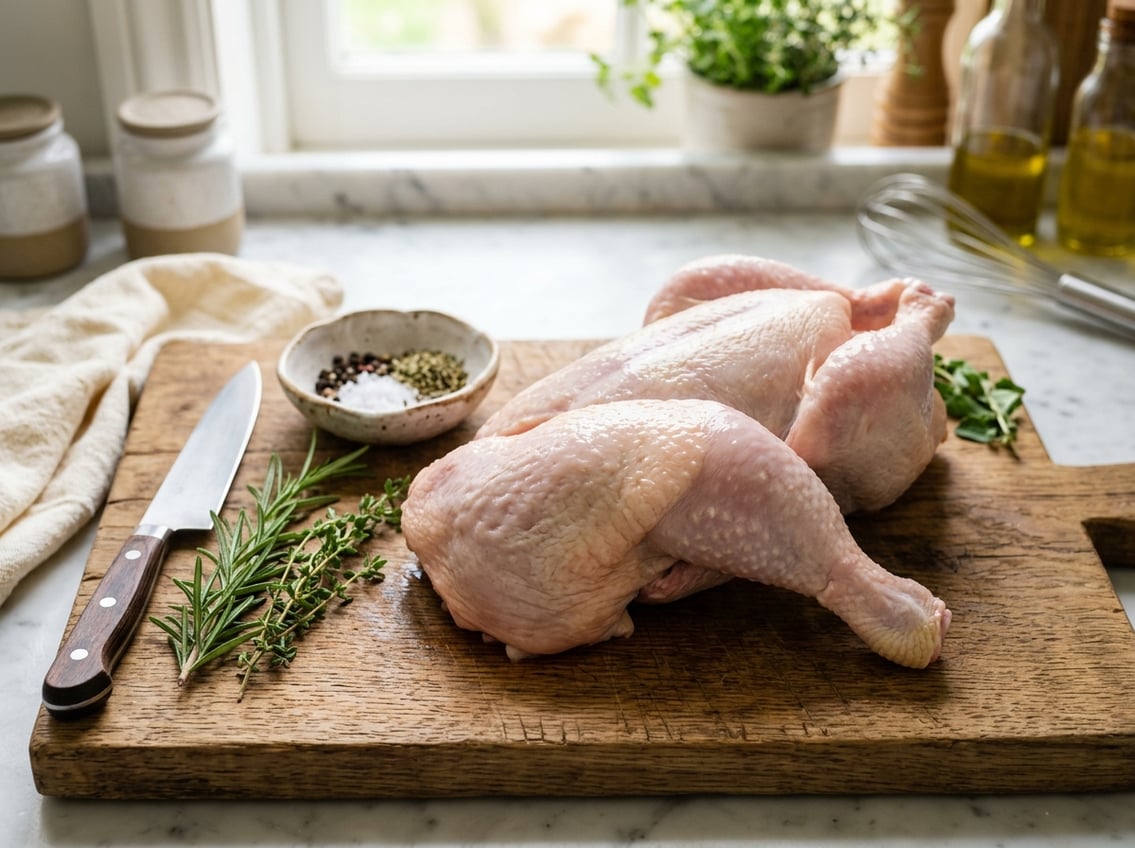
You can find the thigh by looking at the upper leg where it joins the body and by comparing shape and placement to the drumstick and breast.
Visual cues like joint lines, meat thickness, and position under the wing make identification quick whether the bird is raw, roasted, or sold in pieces.
Spotting the Thigh on Store-Bought Chickens
When the chicken is sold whole, the thigh sits on each side of the cavity, tucked under the wing and above the drumstick.
Look for the meaty section attached at the hip joint; it forms the upper portion of the leg quarter.
If the store chicken is pre-cut, you’ll find thighs sold as skin-on bone-in pieces or boneless skinless portions.
Bone-in thighs are shorter and wider than drumsticks and will include part of the hip joint.
Boneless thighs will be flattened, thicker, and more irregular in shape.
Check packaging labels for “thigh” or “leg quarter” to confirm.
Differentiating the Thigh from the Drumstick
The thigh occupies the upper leg between the hip joint and the knee.
The drumstick is the lower leg from the knee to the ankle.
The thigh is broader, flatter, and contains a larger muscle mass, while the drumstick is narrower with a single long bone.
Probe the thickest part of the thigh (just above the drumstick) to test doneness.
When carving, follow the joint where the thigh meets the body to separate the thigh without cutting through bone.
Size, shape, and joint location make confusion unlikely once you know these markers.
Thigh Placement Relative to the Breast and Wing
The thigh sits lateral to the breast, forming the outer edge of the leg quarter when the chicken lies breast-side up.
You’ll find it directly below the wing hinge, attached at the hip joint that connects the leg to the body cavity.
When carving, pull the wing back to expose the thigh joint and slide a knife along the hip joint to detach cleanly.
The proximity to the breast means cooking times differ.
The thigh’s dark meat tolerates longer cooking and higher temperatures without drying, so position and heat management matter when roasting a whole chicken.
Types of Chicken Thighs and Related Cuts
You’ll find thighs sold in several forms that change cooking time, flavor, and how you handle them.
Know whether you’re buying bone-in, boneless, whole leg, or a leg quarter to pick the right recipe and temperature.
Bone-In vs. Boneless Chicken Thighs
Bone-in chicken thighs include the femur and usually have the skin attached.
The bone slows heat transfer, so these thighs take longer to reach safe internal temperature but stay juicier during roasting or braising.
Probe the thickest part of the meat without touching bone when checking temp.
Boneless thighs are trimmed from the bone and often sold skin-on or skinless.
They cook faster and are easier to cut into strips for stir-fries or kebabs.
Choose boneless, skinless thighs when you need uniform pieces or faster pan-cooking.
For maximum flavor and less risk of drying, keep skin-on or brine before cooking.
Leg Quarters vs. Separate Thighs
A leg quarter combines the thigh and drumstick plus part of the back.
Leg quarters give you larger portions and benefit from low-and-slow methods like roasting or smoking because the combined mass holds moisture and tolerates longer cook times.
Separate thighs remove the drumstick at the knee joint, giving you individual upper-leg pieces for recipes calling specifically for thighs.
Buying separate thighs simplifies even cooking when a recipe targets thigh-only textures or portion sizes.
If a recipe lists leg quarters, expect longer roast times and adjust temperature checks accordingly.
Comparing Chicken Thighs and Drumsticks
Thighs are the upper leg and contain more connective tissue and intramuscular fat than chicken breast fillet.
This yields deeper flavor and a more forgiving texture if slightly overcooked.
You’ll notice darker color and a richer taste compared with white meat.
Drumsticks are the lower leg and offer a firmer, meatier bite with a single central bone that’s easy to eat on the bone.
Drumsticks and thighs cook at similar rates when left bone-in, but thighs often stay moister because of their higher fat content.
Pick drumsticks for handheld meals and thighs when you want shreddable, succulent meat for stews, curries, or pulled-chicken dishes.
Cooking with Chicken Thighs
Chicken thighs give you flavorful meat that holds up to longer cooking and wet methods.
You’ll learn how roasting a whole bird keeps thigh meat juicy and how thighs behave in soups and stews.
Roasting a Whole Chicken for Juicy Thighs
Roast the chicken breast-side up at 425°F (220°C) for 40–50 minutes for a 3–4 lb bird to get crispy skin and well-cooked thighs.
Pat the skin dry, season under the skin, and truss loosely so heat reaches the thighs evenly.
If the breast browns too fast, move the pan to a lower rack or tent the breast with foil after 30 minutes.
Check the thigh at the thickest part without touching bone; aim for 165°F (74°C) final.
Rest the bird 10–15 minutes to let juices redistribute before carving thigh quarters from the hip joint.
Using Thighs in Soups or Stews
Use bone-in thighs for soups and stews to add collagen and richer flavor to the broth.
Brown the thighs first in a hot pan, then simmer gently 30–45 minutes until meat pulls easily from the bone.
If you prefer boneless thighs, add them near the end of simmering so they stay tender and don’t fall apart.
For consistent texture, cut boneless thighs into 1–1½ inch pieces and simmer 15–25 minutes.
Skim fat off the surface if you want a leaner broth; the dark meat will still keep the soup flavorful.
Ideal Cooking Temperatures for Thighs
Always cook chicken thighs to a safe internal temperature of 165°F (74°C).
For bone-in thighs, measure at the thickest fleshy part, avoiding bone contact for an accurate reading.
If you cook low-and-slow, you can target 175–195°F (79–90°C) for more collagen breakdown and fall-apart texture.
For quick methods, aim for 165–170°F (74–77°C) and allow a 5–10 minute rest so carryover heat completes the cook.
Buying, Storing, and Preparing Chicken Thighs
Buy thighs with firm flesh and intact skin when possible.
Refrigerate or freeze promptly.
Keep bones, skin, and packaging separate from ready-to-eat foods.
Plan cook times because thighs take longer than breasts.
Storing Chicken Thighs for Freshness
Store raw chicken thighs in the coldest part of your refrigerator at 0–4°C (32–40°F).
Keep them in their original sealed packaging or transfer to an airtight container or heavy-duty freezer bag.
Use fresh thighs within 1–2 days.
For longer storage, freeze thighs flat in a single layer on a tray, then move into labeled freezer bags.
Frozen thighs keep best for 6 months.
Thawed thighs should be cooked within 24 hours and never refrozen unless fully cooked first.
If brining or marinating, do so in the fridge only.
Discard marinade that touched raw meat, or boil it for 1–2 minutes before using as a sauce.
Tips for Butchering and Separating Cuts
To separate a thigh from a whole chicken, work on a clean cutting board and use a sharp chef’s knife or boning knife.
Pull the leg away from the body to expose the hip joint, cut through skin and connective tissue, then slice through the joint.
Avoid sawing through bone.
If you want boneless thighs, place the thigh skin-side down, feel for the bone with your fingers, cut along both sides of the bone, then slide the knife under and remove it.
Trim excess fat and the silver skin for even cooking.
Save bones and trimmings for stock.
Roast them first for richer flavor, then simmer with aromatics 4–6 hours.
Label any DIY cuts with date and cut type before freezing.
Selecting the Best Chicken Thighs at the Store
Look for thighs that are plump, moist, and pale pink to slightly reddish.
Avoid slimy or grayish pieces.
If buying skin-on thighs, the skin should be intact and free of tears.
Skin holds moisture and protects the meat during roasting.
Check the sell-by date and choose packages without excessive liquid.
For bone-in vs. boneless: bone-in thighs yield more flavor and stay juicier during long cooking.
Boneless thighs cook faster and are easier to portion.
Consider certified labels if important to you, such as organic, antibiotic-free, or pasture-raised.
Compare prices by weight.
Pick thighs near the front of the display to ensure fresher stock.
Comparing Chicken Thighs to Other Popular Cuts
Thighs deliver richer flavor, more fat, and greater cooking forgiveness than lean cuts.
You’ll notice differences in color, cooking time, and best uses when you compare thighs with breast fillets, drumsticks, and whole wings.
Thigh vs. Breast Fillet
Chicken thigh offers dark meat with higher fat and myoglobin. This gives it a deeper taste and helps it stay moist during longer cooking.
If you grill, braise, or roast, thighs handle higher heat and longer times without drying out.
A breast fillet is lean white meat. It provides more protein per ounce and fewer calories, but it dries quickly if you overcook it.
Use a thermometer for breasts and pull them at 160–165°F to keep the texture moist.
Choose thighs when you want more iron and slightly higher zinc content. Choose breast fillets when you want lower fat and a leaner macro profile.
For quick, high-heat recipes like stir-fries or pan-seared pieces, the breast fillet cooks faster and more evenly. For slow-cooked stews, curries, or dishes that benefit from rendered fat, pick thighs.
Differences Between Thigh, Drumstick, and Whole Wing
Thighs (upper leg) sit between the hip and knee and contain the femur. The meat is tender and moderately fatty.
Drumsticks (lower leg) have a single long bone and denser connective tissue. They contain slightly less meat than thighs.
Drumsticks work well for roasting and frying when bone-in presentation and handheld eating matter.
Whole wings combine three parts: drumette, flat, and tip. They are smaller with a higher skin-to-meat ratio.
Wings brown and crisp quickly. They suit high-heat frying or baking for crispy skin and concentrated flavor.
Choose thighs for forgiving, longer cooks. Drumsticks offer a balanced option for roasting or frying.
Whole wings are best for quick cooking and a focus on crispy skin. Select based on your desired texture and cooking method.


