
Which Is Better: Chicken Thighs or Chicken Breast? Nutrition, Cooking, and Health Insights
Decide between chicken thighs and chicken breasts based on what you want from a meal: lean protein and lower calories, or richer flavor and more satisfying fat.
If you prioritize lower calories and higher protein per ounce, choose chicken breast. If you want juicier texture, more iron and zinc, and greater satiety, choose chicken thighs.
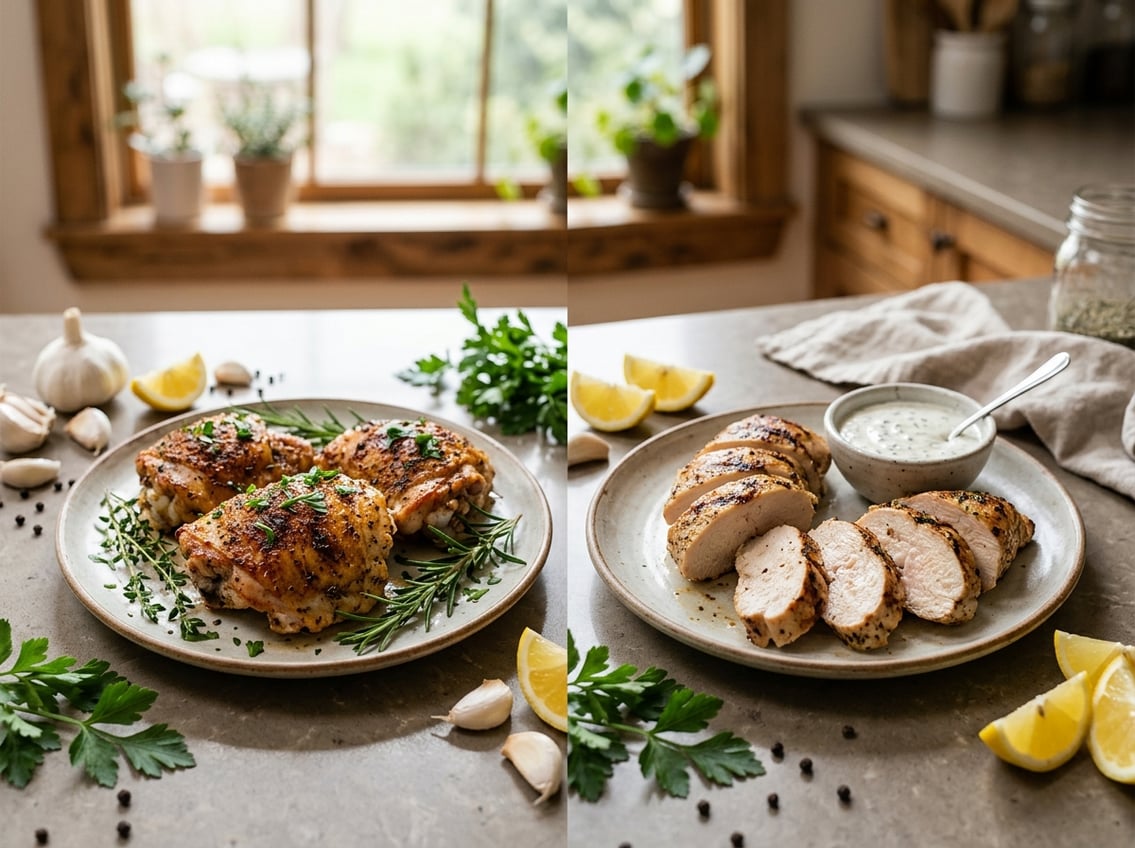
Nutrition, cooking methods, flavor, and cost all affect which cut fits a given dish or goal. Use these comparisons to pick the right cut for weight goals, quick meals, slow-cooked comfort dishes, or budget-friendly cooking.
Key Nutritional Differences
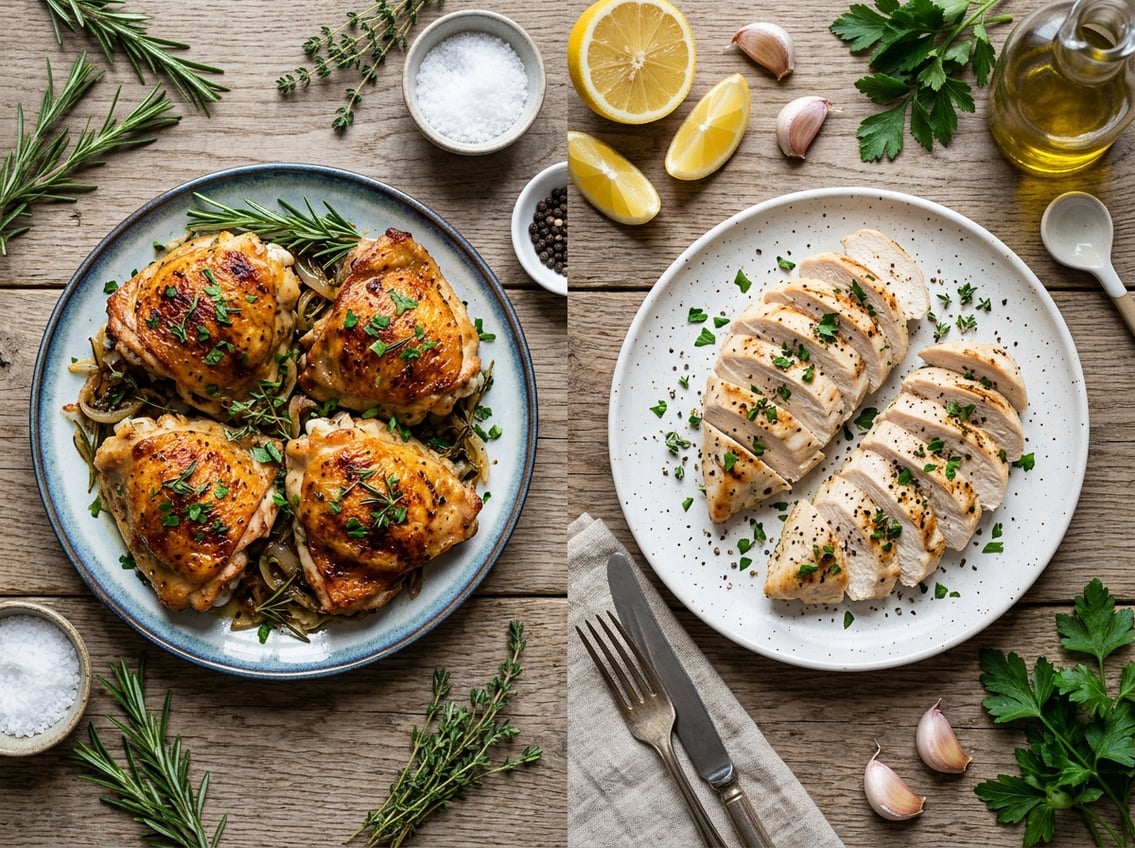
Breasts and thighs differ in protein density, total fat, calorie count, and certain micronutrients tied to muscle type. These differences change with skin on or off and with cooking method, so check nutrition facts for the specific preparation you plan to eat.
Protein Content Comparison
Chicken breast gives more protein per 100 g than thigh, making it a common choice when you want lean protein. Roasted, skinless breast typically provides about 30–31 g protein per 100 g, while skinless thigh provides roughly 24–25 g.
If your goal is maximizing grams of protein per calorie, breast usually works better because it has fewer calories for each gram of protein. Thigh still supplies complete, high-quality protein and may be preferable when you want more flavor and tenderness.
Fat and Calorie Breakdown
Skinless chicken thigh contains about two to three times the total fat of skinless breast, raising its calorie density. Breast has about 165 kcal and 3–4 g fat per 100 g; thigh has about 175–190 kcal and 8–9 g fat per 100 g (roasted, meat only).
Leaving the skin on increases calories and saturated fat for both cuts. Thighs also have more monounsaturated and polyunsaturated fats, which contribute flavor and juiciness. Grill, roast on a rack, or trim visible fat to control calories.
Micronutrients and Myoglobin
Thigh (dark meat) contains higher amounts of zinc, iron, and certain B vitamins such as B12 and riboflavin compared with breast (white meat). These minerals support immune function, oxygen transport, and cellular energy.
Dark meat has more myoglobin, the muscle pigment that stores oxygen. That gives thighs a darker color and richer flavor. Breasts remain a good source of selenium, phosphorus, and vitamin B3.
Cholesterol and Sodium Levels
Chicken breast and thigh have similar cholesterol content per weight, usually around 60–90 mg per 100 g depending on cooking and whether skin is present. Portion size matters more than cut for cholesterol control.
Plain, unprocessed chicken is low in sodium. Added salt, brining, or marinades can raise sodium dramatically. If you buy pre-seasoned or injected chicken, check labels since both cuts can end up with high sodium levels depending on processing.
Understanding Cooking Applications
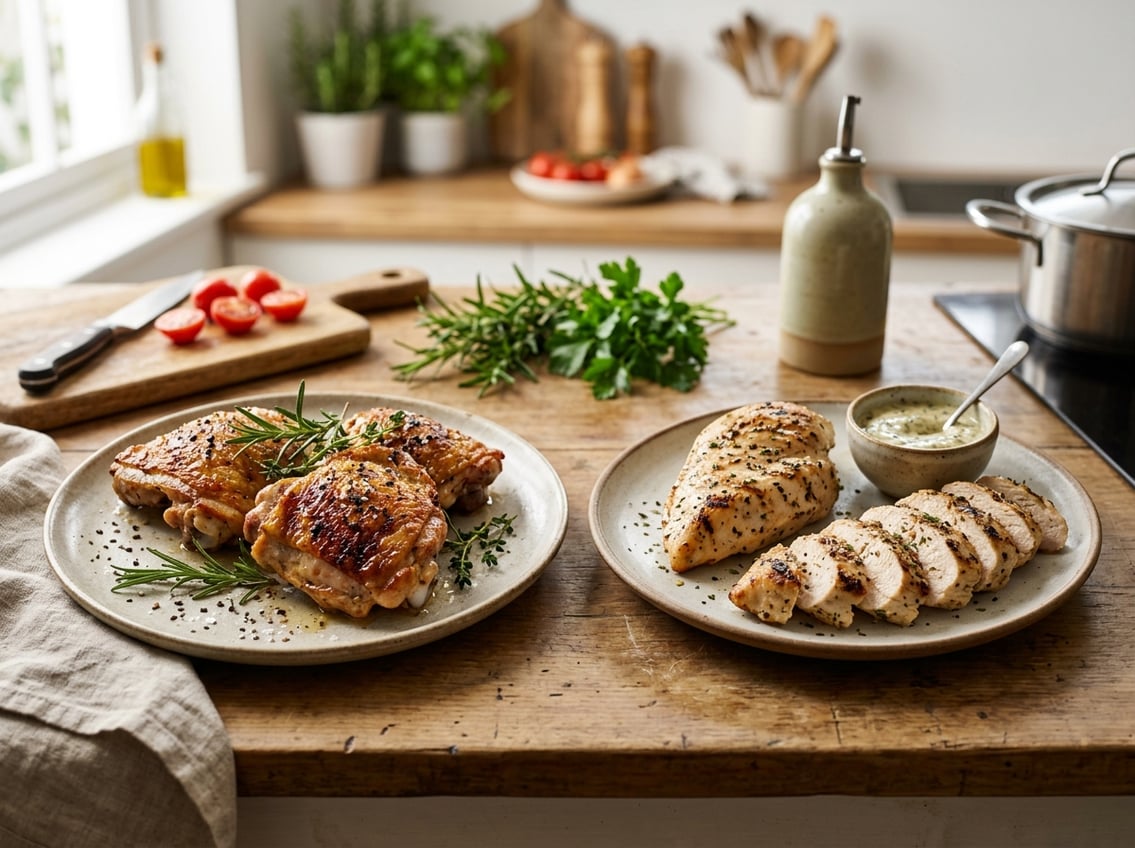
Choose the cut that matches your cooking method and desired texture. Thighs give more forgiving fat and flavor for long or moist cooking. Breasts work best when you need lean, firm slices quickly.
Consider skin-on and bone-in for extra flavor and moisture, especially when grilling or roasting.
Best Uses for Grilled Chicken
For high-heat grilling, use boneless, skin-on thighs if you want juicy, forgiving meat that tolerates longer grill times without drying. Thighs develop a good char and stay tender at 165–175°F. Cook over medium heat to render fat without burning the skin.
If you prefer a leaner result and quick cook time, choose thin, boneless chicken breasts. Pound breasts to even thickness, oil lightly, and sear over high heat for 3–6 minutes per side depending on thickness. Rest for 5 minutes before slicing to retain juices.
Use a thermometer for accuracy. For skin-on pieces, start skin-side down to crisp, then move to indirect heat to finish. Marinades with acid (lemon, vinegar) should be brief on breasts to avoid toughness.
Baked and Roasted Options
For oven roasting, skin-on thighs deliver the most reliable moistness and flavor. Roast at 400°F for 25–35 minutes until skin is crisp and internal temp hits 175°F for fall-apart tenderness. Toss vegetables and pan juices together for a complete meal.
If you want a lean baked option, use boneless, skinless breasts and brine or marinate to improve moisture. Bake at 375°F and check at 18–25 minutes depending on thickness. Aim for 160–165°F internal and allow carryover rest.
Try a sheet-pan approach: place skin-on thighs on a hot sheet to crisp, and bake breasts on a separate tray or move breasts after initial sear to avoid overcooking. Use compound butter or a glaze in the last 5–10 minutes to boost flavor.
Slow-Cooked Dishes and Stews
Choose thighs for slow-cooked dishes and stews. Their higher fat and connective tissue break down into rich texture and mouthfeel. Use bone-in thighs when possible to extract extra collagen and flavor into the broth.
Cook thighs low and slow: simmer at a gentle low boil or in a slow cooker for 4–8 hours depending on method. Thighs tolerate long times without drying and often fall off the bone, which is ideal for stews, braises, and shredded preparations.
If you use breasts in slow cooking, add them late in the process or cut into large pieces to avoid stringiness. For stocks, include bones and skin to boost gelatin and body. Season toward the end to preserve depth and balance.
Stir-Fries and Quick Meals
For stir-fries and high-heat skillet work, use boneless, skinless breasts for quick, uniform cooking and clean slicing. Cut into thin, even strips, toss with a little cornstarch and oil, and cook in a hot wok for 2–4 minutes to keep meat tender.
Thighs also work well in quick dishes when cut small. They offer more flavor and remain juicy even if slightly overcooked. Use thighs for dishes where a richer mouthfeel helps, such as saucier stir-fries or noodle bowls.
Keep sauces ready and vegetables prepped because both cuts rely on brief, high-heat contact. Finish with a splash of acid or soy-based seasoning to brighten the dish and balance the meat’s natural richness.
Flavor and Texture Characteristics
You’ll find clear trade-offs: one cut holds moisture and fat for richer flavor, the other gives a firmer, milder bite that takes seasoning well. These differences affect how you should cook and season each piece.
Juiciness and Moisture Retention
Dark meat in chicken thighs naturally retains more moisture than chicken breast because of higher fat and collagen. Cooked skinless chicken thighs stay more forgiving; the internal fat and connective tissue melt during cooking and keep the meat tender.
Skinless chicken breast dries out faster, especially if cooked past 160–165°F. Shorten cooking time, brine, or add fat (butter, oil, or sauces) to preserve juiciness. For sliced preparations like salads or stir-fries, breast holds shape better but requires careful timing to avoid a dry, stringy texture.
Impact of Fat Content on Taste
Fat carries flavor and umami compounds, so chicken thighs taste richer and more savory than chicken breast. The extra fat in thighs contributes both mouthfeel and deeper browned flavors when seared or roasted.
Skinless chicken, whether thigh or breast, loses some flavor compared with skin-on pieces because you remove a significant source of rendered fat. Thighs still outperform breasts in flavor intensity. If you prefer a cleaner, lighter profile, use breast and boost taste with marinades, aromatics, or finishing fats.
Role in a Healthy Diet
Both cuts supply high-quality protein and important B vitamins. Thighs deliver more fat-soluble nutrients and iron, while breasts give more protein with fewer calories.
Choose based on your daily calorie needs, how long you need meals to keep you full, and whether you need extra dietary fat for nutrient absorption.
Supporting Metabolism and Muscle Growth
You rely on protein to maintain and build muscle and to support metabolic processes. A 3.5-ounce (100 g) cooked chicken breast provides about 22–24 g protein with very low fat, making it efficient for hitting specific protein targets around workouts or meals when you want minimal extra calories.
Thighs give slightly less protein per ounce but contain more iron, zinc, and fat-soluble vitamins that support energy production and metabolic enzymes. The extra fat in thighs also helps absorb vitamins A, D, E, and K from the rest of your meal.
Chicken is not a major source of omega-3s, so include fatty fish or fortified foods if that’s a priority. Use breasts when protein-per-calorie matters most and thighs when you need sustained energy and better micronutrient density.
Choosing for Weight Management Goals
If your goal is weight or fat loss, prioritize lean protein that fits your calorie target. Chicken breast typically has fewer calories and less saturated fat per serving, so it lets you increase protein intake while keeping total calories lower.
If satiety and meal satisfaction drive adherence, thighs can be advantageous because their higher fat content slows digestion and reduces hunger between meals. Watch portion size and remove skin if you need to limit saturated fat or total calories.
Balance matters: rotate breasts and thighs across meals to meet protein goals, support nutrient variety, and match each day’s energy needs.
Cost, Accessibility, and Practical Considerations
Price, local availability, and how each cut fits your cooking routine matter when deciding between chicken thighs and chicken breasts. Consider weekly budgets, storage, and which cut saves time or yields better results for the dishes you make most.
Affordability and Availability
Chicken thighs usually cost less per pound than boneless, skinless chicken breasts in most U.S. grocery markets, especially if you buy bone-in or skin-on thighs. That price gap widens when stores run promotions or when demand favors breasts.
If you shop bulk or frozen, thighs are often the cheaper option and hold up well in long-term storage. Skinless chicken breast can be more expensive but appears more often in pre-portioned packs, which saves prep time and reduces waste if you cook for one. Check unit price per ounce when comparing.
Versatility in Meal Planning
Thighs handle long cooking methods and bold flavors better. They stay moist in stews, braises, and sheet-pan dinners. Use skin-on or skinless chicken thighs for curries, slow-cooker recipes, or grilled kebabs where fat and connective tissue improve texture and mouthfeel.
Breasts shine in quick-cook meals and calorie-controlled plans. They sear, poach, and slice for salads or sandwiches without much added fat. If you rely on meal prep, skinless chicken breast gives predictable portion sizes and lean macros.
Combine both cuts across the week. Use thighs for slower, comfort dishes and breasts for fast, lean meals to balance cost, taste, and nutrition.
Making the Best Choice for Your Needs
Choose the cut that fits your goals. Pick skinless chicken breast when you need higher protein with minimal fat, or skinless chicken thigh when you want more flavor and satiety.
Match portion size and cooking method to your calorie target and meal schedule.
Personal Preference and Dietary Requirements
Decide by what you prioritize. If you aim for higher protein per calorie, choose skinless chicken breast—about 22–24 g protein per 100 g cooked, with very low fat. Use breasts for post-workout meals or when you track macronutrients precisely.
If you prefer richer taste and longer fullness, pick skinless chicken thigh. Thighs provide more fat and slightly less protein per 100 g, which can help reduce snacking and improve meal satisfaction.
Consider medical needs. If you’re managing cholesterol or limiting saturated fat, favor skinless chicken breast and trim visible fat. If you have higher calorie needs or struggle to eat enough, add thighs to meet energy goals without oversized portions. Rotate both cuts across the week to balance nutrients like iron and zinc (higher in thighs) and B vitamins (rich in breasts).
Tips for Healthier Cooking Methods
Adjust cooking methods to protect protein content and texture. Use quick, high-heat methods like grilling, sautéing, or broiling for skinless chicken breasts, and monitor internal temperature to 165°F (74°C) to avoid drying.
Marinate with acid such as lemon or yogurt, or brine briefly to keep breasts tender. For skinless chicken thighs, choose longer, gentler methods like braising, slow roasting, or sous-vide to coax flavor and keep meat juicy.
Thighs tolerate higher internal temperatures without drying. They also handle bold seasonings well.
Remove skin to lower saturated fat. Cook on a rack or in steam to reduce added oils.
Measure portions (3–4 oz cooked) to control calories and protein per meal. To get lower-fat results from thighs, trim visible fat and drain cooking juices.
For leaner breasts, add healthy fats like a drizzle of olive oil or avocado to aid absorption of fat-soluble vitamins.


