
Should Chicken Thighs Be Pink in the Middle? Color, Safety, and Cooking Techniques Explained
You might notice a faint pink tint in the center of cooked chicken thighs and worry it means the meat is unsafe.
If the thickest part of the thigh reaches 165°F (74°C) on a meat thermometer, a slight pink color does not mean the chicken is unsafe to eat.
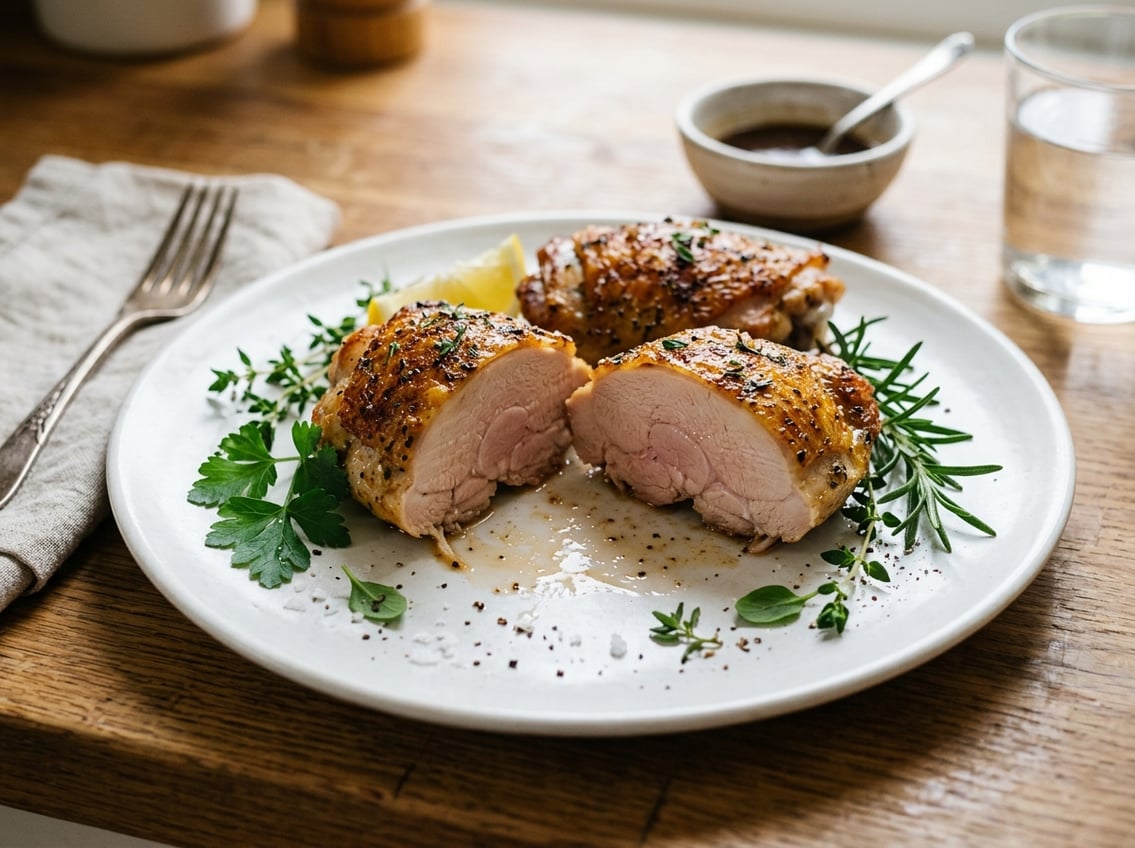
Chicken thigh meat can stay pink due to myoglobin, brines, smoking, and cooking methods.
A thermometer gives a more reliable safety check than visual cues.
You can follow practical tips to know when pink chicken thighs are safe and what to do if they still look pink after cooking.
Understanding Chicken Thigh Color Changes
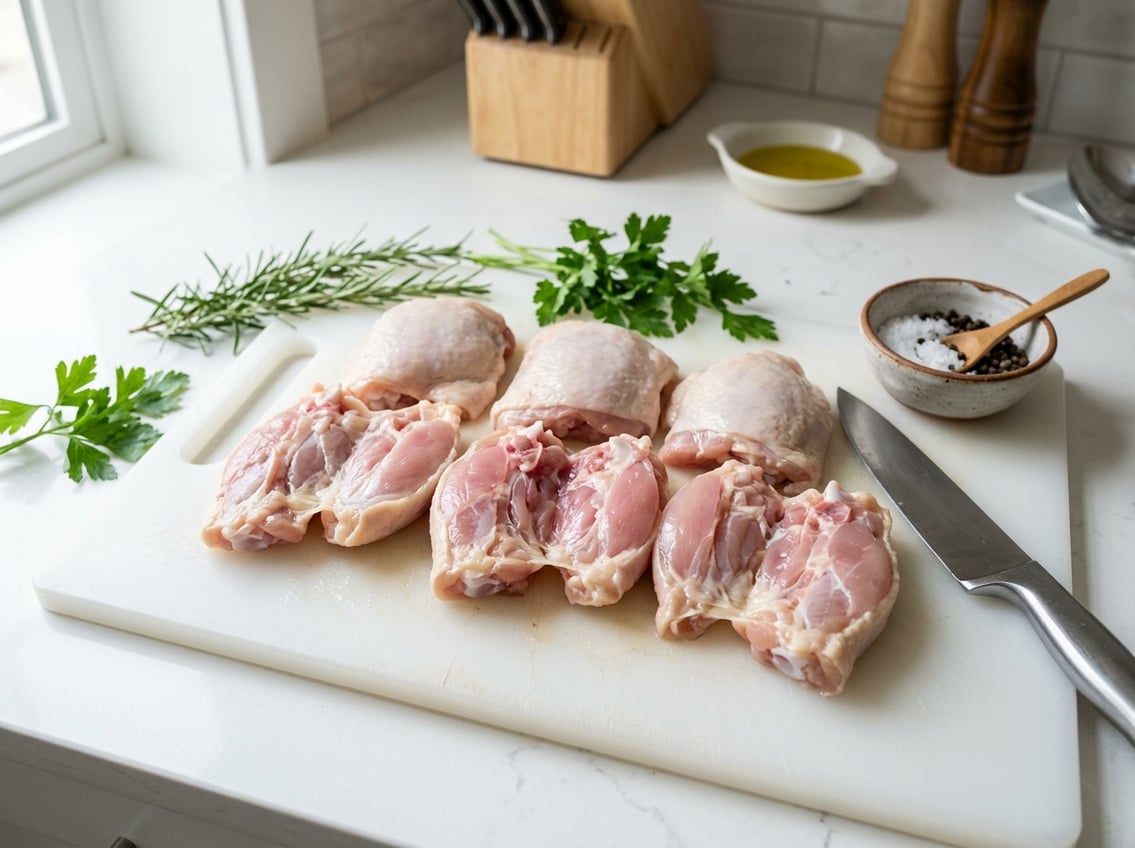
Thigh meat can stay pink even when safe to eat.
Cooking or handling steps can make pinkness more likely, and the area near the bone often looks different from the rest of the meat.
Why Dark Meat Remains Pink
Chicken thighs are “dark meat” because their muscles have more myoglobin than breast meat.
Myoglobin stores oxygen in muscle fibers and gives cooked dark meat a deeper hue; it can remain pink after proteins denature at safe temperatures.
Use temperature, not color, to check doneness.
The USDA safe minimum is 165°F (74°C) in the thickest part; if your thermometer reads that, the meat is safe even with a pink tint.
Breeds, age, and processing affect myoglobin levels.
Younger birds and certain breeds may show a stronger pink, so expect variation between packages.
Common Causes for Pinkness After Cooking
Several factors besides myoglobin cause a pink chicken thigh.
Brining or marinating with salt, sugar, or acidic ingredients can change surface chemistry and lock in a pink tone.
Smoke exposure or nitrites from cured ingredients can create pink pigments that persist after cooking.
High-heat searing or quick grilling can set surface proteins while the interior continues cooking, leaving a pink band.
Slow-cooking can intensify color by breaking down connective tissue and concentrating pigments.
Causes of pinkness include:
- Myoglobin content
- Marinating or brining
- Smoking or cured additives
- Cooking method and time
Use a thermometer to confirm doneness when any of these factors are present.
Pink Near the Bone Explained
Pink meat close to the bone often results from bone marrow pigments and lower heat transfer around the bone.
Bones conduct heat differently, so the meat immediately adjacent can remain slightly darker or pinker even when the center reaches safe temperature.
If you roast bone-in thighs, expect a pink rim next to the bone.
This is especially common with young chickens and with cooking methods that don’t expose the bone to direct high heat.
Place a meat thermometer in the thickest muscle, not touching bone, for the best read.
Smoking can exaggerate pink near the bone through the smoke ring effect, a pink layer caused by reactions between smoke compounds and myoglobin.
That ring looks like undercooking but is cosmetic when internal temperature is correct.
Safe Internal Temperature and Food Safety
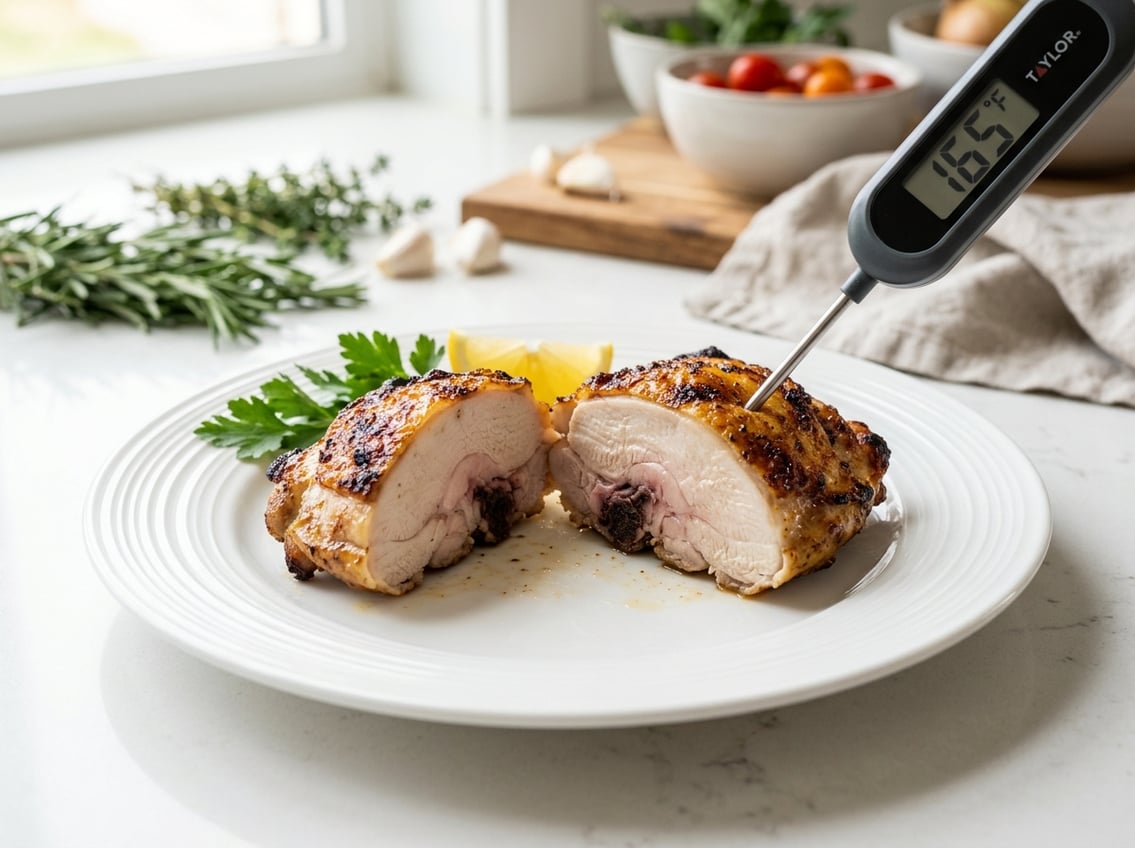
Use measured temperature, not meat color, to judge safety.
Proper cooking destroys pathogens, and carryover cooking can raise internal temperature slightly after you remove meat from heat.
Recommended Cooking Temperatures
Set a digital or instant-read thermometer into the thickest part of the thigh, avoiding bone.
The USDA minimum safe internal temperature for poultry is 165°F (74°C); maintain that temperature for an instant read to ensure pathogens are killed.
If you cook to a slightly higher temperature for texture, such as 170–175°F for shreddable thighs, monitor moisture loss.
Carryover cooking can increase internal temperature by 3–10°F after you remove the meat, so you can pull bone-in thighs a few degrees below your target if you plan to rest them for 5–10 minutes.
Checklist:
- Insert probe into thickest muscle, not touching bone.
- Wait for a steady reading.
- Check more than one piece when cooking batches.
Dangers of Undercooked Chicken
Undercooked chicken can contain harmful bacteria that cause gastroenteritis.
Symptoms include nausea, vomiting, abdominal cramps, fever, and diarrhea; they can appear within hours to days of eating contaminated meat.
Young children, pregnant people, older adults, and immunocompromised individuals face higher risk.
For those groups, strict adherence to 165°F (74°C) is critical.
Visual cues like pink near the bone or slightly rosy meat do not guarantee safety; rely on temperature readings.
Cross-contamination is also a risk.
Use separate cutting boards, wash hands and utensils, and refrigerate leftovers promptly at 40°F (4°C) or below.
Role of Salmonella and Campylobacter
Raw poultry often contains Salmonella and Campylobacter.
Cooking to 165°F in the thickest part of the thigh inactivates both, reducing the risk of foodborne illness.
Salmonella infection can cause prolonged fever and dehydration.
Campylobacter often leads to bloody diarrhea and, rarely, Guillain–Barré syndrome.
Both bacteria can be present on skin, in juices, and near bone marrow, which explains why meat near the bone can look pink even when safe.
Control temperature, rest the meat, and handle chicken hygienically to prevent infection.
Accurate Doneness: Visual Cues Versus Thermometers
Temperature is the only reliable way to confirm safety.
Visual signs can help but often mislead.
Use a thermometer as your primary check and treat color or juice appearance as secondary clues.
Using a Meat Thermometer Versus Relying on Color
Use a meat thermometer to verify doneness every time.
Insert an instant-read thermometer into the thickest part of the thigh, avoiding bone.
Read 165°F (74°C) as the minimum safe temperature for chicken, though thighs often taste better at 175–185°F when connective tissue breaks down.
Color alone can trick you.
Thigh meat may stay slightly pink even after reaching 165°F because of myoglobin, marinades, or the bone’s influence.
If you eyeball, press the meat to judge firmness, but always confirm with a thermometer before serving.
Types of thermometers:
- Instant-read: quick spot checks.
- Leave-in/digital: continuous monitoring during roasting.
Check multiple pieces when cooking a batch to ensure even temperature.
Juices Run Clear: Myth or Fact?
Piercing a thigh and watching juices run clear gives some information, but it’s not definitive.
Clear juices can appear before the internal temperature reaches 165°F, especially near the bone, so this test can provide false reassurance.
Pink juices or a faint pink tinge don’t automatically mean the chicken is unsafe.
Bone-in thighs often retain pinkness around the bone even when the center has reached a safe temperature.
Use the “juices” check only as a quick visual hint, and confirm with a thermometer.
Quick rule:
- If juices are clear and thermometer reads ≥165°F, the chicken is safe.
- If juices are clear but thermometer reads <165°F, continue cooking.
- If juices are pink but thermometer reads ≥165°F, the chicken is safe to eat.
Cooking Methods That Influence Color
Different cooking techniques change both the surface and internal color of chicken thighs by altering proteins, pigments, and how heat moves through the meat.
You’ll see pink hues from chemical reactions, bone heat retention, or added ingredients rather than from unsafe internal temperature.
Smoking, Grilling, and the Smoke Ring
Smoking and low-temperature grilling introduce nitric oxide and other compounds from wood smoke that react with myoglobin, producing a persistent pink “smoke ring” just below the surface.
That ring can extend several millimeters to a centimeter into the meat and does not indicate undercooking.
High-heat grilling or quick pan-searing creates a well-browned exterior while the interior can remain pinker near the bone because bone conducts heat more slowly than muscle.
When you measure doneness, insert a probe thermometer into the thickest part of the thigh away from bone.
165°F (74°C) at the internal center proves safety even if pink persists.
If you want less pink near the bone, raise cooking temperature moderately or finish thighs in a 375–400°F oven for 5–10 minutes to equalize heat without drying the meat.
Impact of Marinating and Brining
Brining and acidic marinades change meat chemistry and can deepen or preserve pink tones in cooked thighs.
Salt in a brine increases water retention and raises the meat’s pH slightly, which can make myoglobin more stable and keep the interior appearing pink after cooking.
Acidic marinades (vinegar, citrus) denature surface proteins and can both tenderize and alter color perception.
They sometimes make the meat look more translucent or pink even when fully cooked.
To control color without sacrificing juiciness, use a short brine (30–90 minutes) or a balanced marinade, then rely on a thermometer for doneness.
Checklist:
- Measure temperature away from bone.
- Avoid overlong exposure to strong curing agents.
- Adjust final cooking steps if you want a paler interior.
Avoiding Overcooked and Undercooked Thighs
Control temperature and timing to keep thighs juicy and safe.
Use a proper thermometer, account for carryover cooking, and rest meat briefly to let the internal temperature stabilize.
Getting Tender Texture Without Sacrificing Safety
Cook bone-in or boneless thighs to a safe internal temperature while keeping them moist.
Aim for 165°F (74°C) as the minimum safe internal temperature, then remove from heat a few degrees earlier if you plan to rest.
Carryover cooking will raise the temperature by 3–7°F (2–4°C).
This lets collagen break down without drying the meat.
Use moderate, steady heat rather than high temperatures.
Braising, low-and-slow roasting, or pan-roasting with a covered finish often yields tender results.
If you prefer higher final browning, sear briefly at high heat then finish in a 325–350°F oven until the thermometer reads the safe zone.
Rest thighs 5–10 minutes before slicing.
Resting redistributes juices and completes carryover cooking.
Slice against the grain for the best texture.
Tips for Using Thermometers Correctly
Choose an instant-read meat thermometer for quick, accurate checks.
Leave-in probes work well for oven cooking.
Insert the probe into the thickest part of the thigh, avoiding contact with bone, which reads hotter and gives false high values.
Check temperature toward the end of cooking and again after resting if you removed the meat early for carryover.
For consistency, calibrate your thermometer periodically in ice water (should read 32°F/0°C) or boiling water (approx. 212°F/100°C, adjusted for altitude).
If juices are still pink but the thermometer reads 165°F, the meat is safe.
If you’re cooking for vulnerable people, you may choose to hold thighs at 165°F longer or finish until juices run clear for extra reassurance.
What to Do if Your Chicken Thighs Are Still Pink
Check the internal temperature and the juices first.
If the thermometer reads safe and juices run clear, pink color alone often isn’t a hazard.
When Pink Is Safe
If your meat thermometer inserted into the thickest part of the thigh (not touching bone) reads at least 165°F (74°C), the chicken is safe to eat even if the meat looks pink near the bone or in spots.
Dark meat contains more myoglobin and connective tissue, which can retain a pink hue after reaching safe temperature.
Smoking, brining, or marinades with nitrites can also cause persistent pink color without indicating undercooking.
Use a probe thermometer for accuracy and test multiple thighs if sizes vary.
Let the cooked thighs rest 5 minutes; carryover heat evens temperature and can reduce pinkness while juices redistribute.
If temperature and juices check out, you do not need to continue cooking to eliminate the pink color.
When to Be Concerned
Be concerned if the thermometer reads below 165°F (74°C). Cloudy juices with a reddish tinge or rubbery texture can also indicate undercooking.
Reheat or discard thighs left at room temperature for over 2 hours. Bacterial growth can make them unsafe regardless of color.
If any thigh tests under 165°F, return it to the oven or stovetop and cook it until it reaches the correct temperature. Measure temperature and cut into the thickest part to inspect the juices.


