
How Long Does Chicken Thighs Take to Boil: Timing, Tips, and Best Methods
Boneless chicken thighs usually take about 10–12 minutes in gently simmering water. Bone-in thighs need roughly 15–18 minutes to reach a safe internal temperature.
Keep the liquid at a low simmer and make sure the thickest part of the thigh reaches 165°F (74°C) for safe, juicy results.
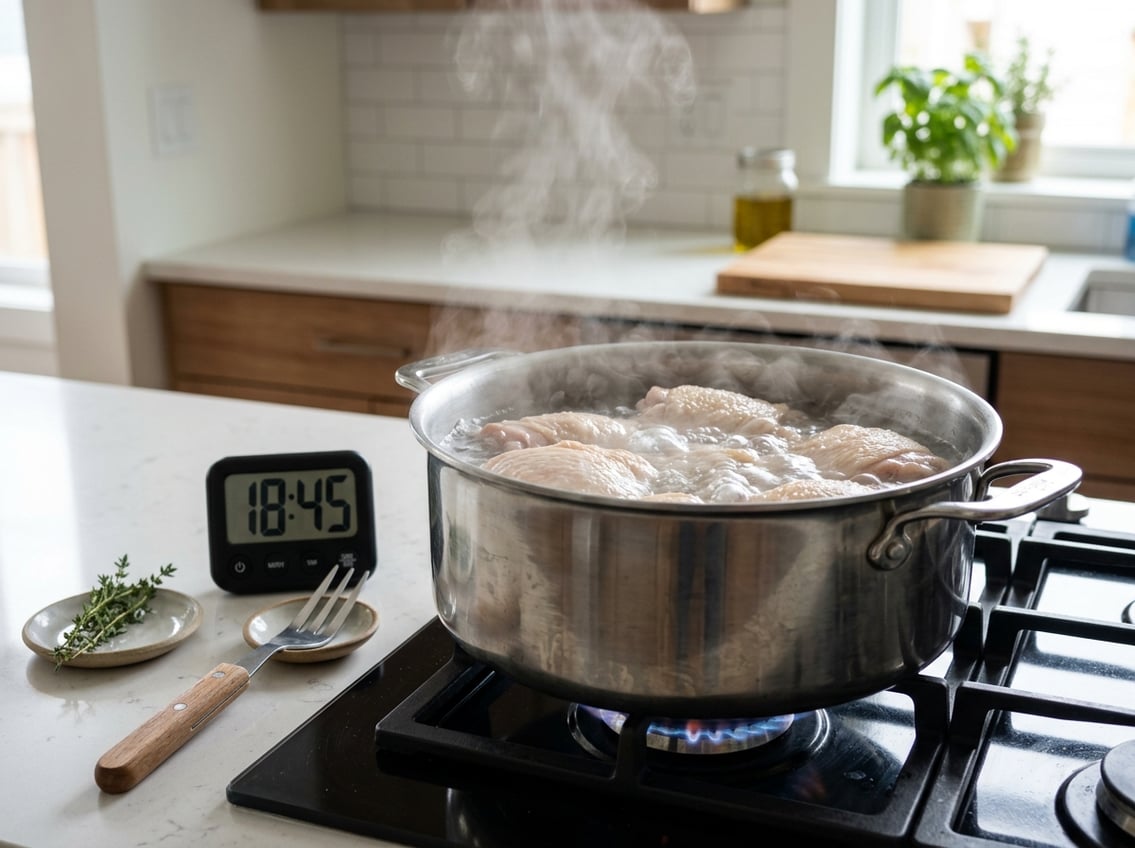
Cooking times vary because of the bone, frozen state, and thickness of the pieces. Simple equipment and good prep help keep the meat tender.
You’ll find a step-by-step method, tips for boiling from frozen, and easy ideas for using cooked thighs in salads, soups, or quick meals.
Boiling Time for Chicken Thighs
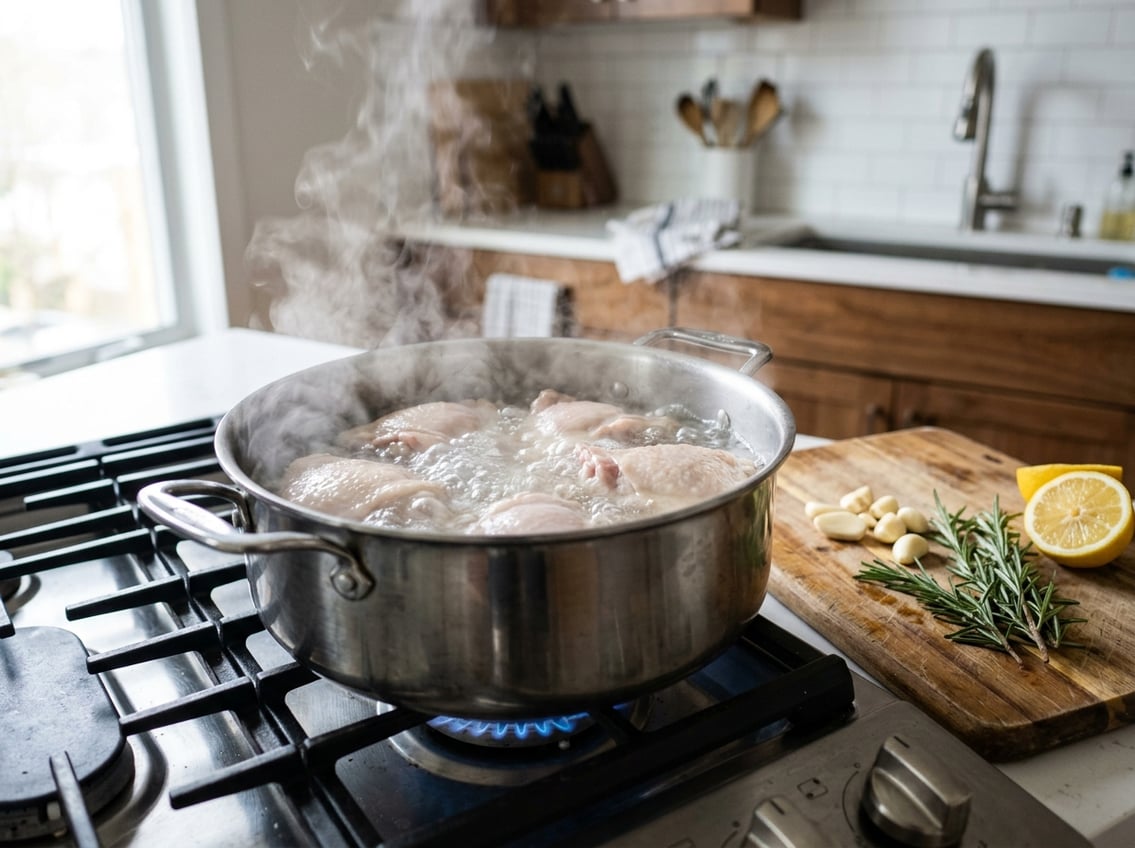
Cooking times depend on temperature and whether the pieces are frozen. Use a probe thermometer to confirm 165°F (74°C) internal temperature.
Fresh Boneless Chicken Thighs
Boneless thighs finish in about 10–12 minutes when simmered gently in water or broth. Arrange pieces in a single layer with about 2 inches of liquid above them.
Start with cold liquid, bring to a gentle simmer, cover, and maintain a low simmer. Check the thickest piece with a probe thermometer and remove the chicken at 165°F (74°C).
Rest the meat 3–5 minutes before slicing or shredding. If thighs are very large (thicker than 1 inch), add 2–3 minutes.
Avoid a rolling boil since rapid agitation can toughen the meat.
Fresh Bone-In Chicken Thighs
Bone-in thighs need roughly 15–18 minutes in a gentle simmer to reach 165°F (74°C). The bone slows heat transfer, so plan for a longer cook time than boneless cuts.
Use enough liquid to cover the thighs by about 2 inches and keep the pot partially covered. Test near the bone with a thermometer; the thickest point without touching bone should read 165°F (74°C).
Let rest 5 minutes after cooking. For more tender meat to shred, simmer for 20–25 minutes and check temperature frequently.
Frozen Boneless Chicken Thighs
Frozen boneless thighs need about 12–17 minutes depending on shape and thickness. Individually frozen, flat pieces often take 12–14 minutes, while compact or rolled pieces take 15–17 minutes.
Place frozen thighs in cold liquid, bring to a simmer, lower heat, and cover. Stir or flip once halfway through for even cooking.
Always confirm doneness with a probe thermometer at the thickest point: 165°F (74°C). If pieces are frozen together, thaw first for consistent timing.
Frozen Bone-In Chicken Thighs
Frozen bone-in thighs require 22–26 minutes of gentle simmering to reach 165°F (74°C). The bone and frozen state slow heat penetration.
Start in cold liquid, bring to a simmer, then reduce heat and cover. Check temperature near the bone without touching it.
If pieces separate as they thaw, adjust time to the lower end of the range. For best texture, thaw bone-in thighs overnight before boiling.
Key Factors Affecting Boiling Time
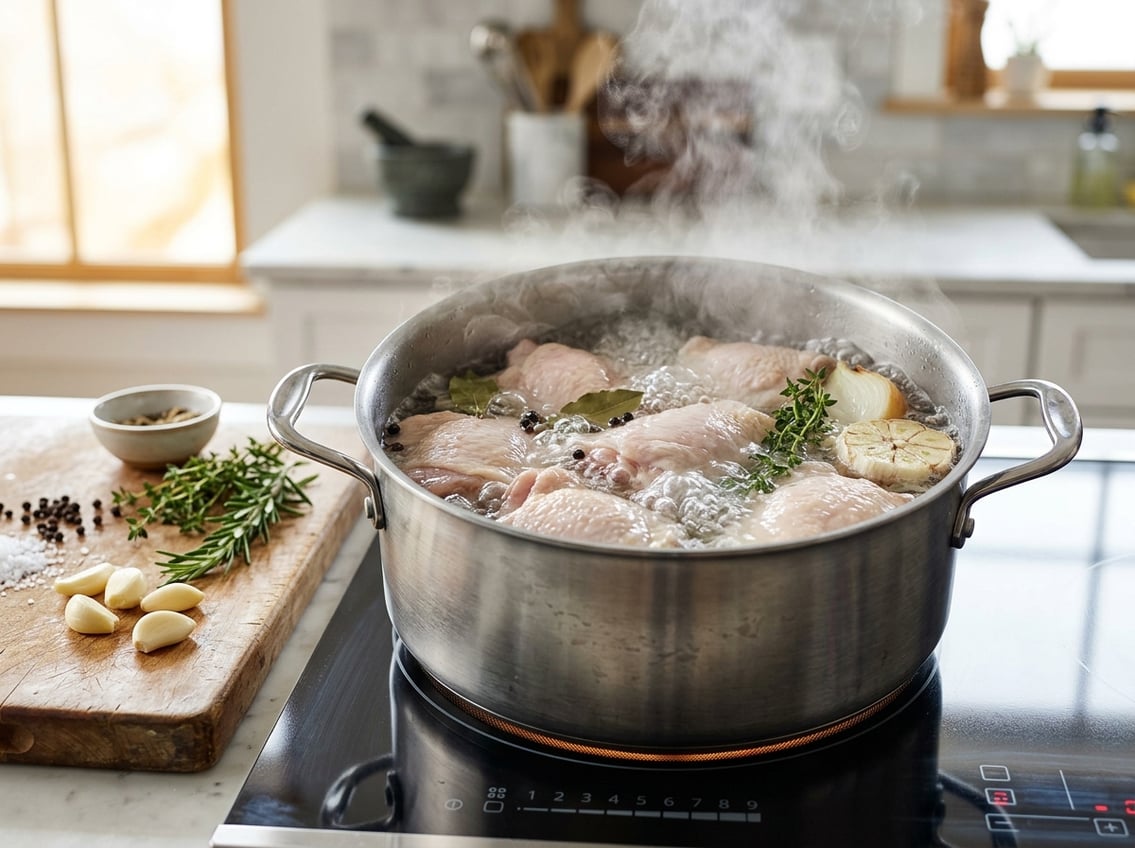
Boiling time depends on whether the thigh has a bone, if it’s frozen, and how thick the piece is. These factors change how fast heat reaches the center and how long you should simmer.
Bone-In vs. Boneless
Bone-in thighs take longer because the bone absorbs and redistributes heat. Expect bone-in pieces to need roughly 15–25 minutes of gentle simmering depending on size.
Measure doneness with an instant-read thermometer at the thickest point near the bone. Boneless thighs heat more quickly and typically need about 8–12 minutes of simmering for medium pieces.
Flip once halfway through for even cooking. For more flavor in the cooking liquid, use bone-in thighs. For quick, easily sliced meat, opt for boneless thighs.
Frozen vs. Fresh
Frozen boneless chicken thighs take longer than fresh ones. Add about 2–5 minutes to the simmering time for frozen boneless thighs.
Frozen bone-in thighs require 5–10 extra minutes because the bone and thicker mass take longer to thaw and cook. Always verify internal temperature.
Start with cold water and bring it up to a simmer when cooking from frozen. If using fresh thighs, bring water to a boil first, then reduce to a gentle simmer.
Chicken Thickness and Size
Thickness matters more than weight. A thin boneless thigh (about 1/2 inch) will reach 165°F in under 10 minutes of simmering.
A thick bone-in thigh (over 1 inch) can need 20 minutes or more. Use consistent sizing in one batch to avoid overcooking small pieces.
Remove smaller pieces as they reach 165°F and let bigger ones continue simmering. Probe the thickest part with an instant-read thermometer for reliable results.
Aim for 165°F for boneless pieces. Many cooks target 170–175°F for bone-in thighs to get more tender, shreddable meat.
Essential Equipment and Preparation Steps
You need the right pot, basic tools, and a simple prep routine for consistent results. Focus on even heat, proper seasoning, and trimming or thawing so the thighs cook through without drying.
Choosing the Right Pot
Pick a heavy-bottomed pot or Dutch oven that holds the thighs in a single layer with 2–3 inches of water above them. A 4- to 6-quart pot works for 4–6 thighs.
Use a lid to maintain a gentle simmer and a slotted spoon or tongs for lifting the hot thighs. If you plan to save the cooking liquid as stock, use a stainless steel or enameled pot.
Avoid thin, warped pans that create hot spots. Keep a reliable instant-read thermometer on hand to verify doneness.
Prepping Chicken Thighs
Trim excess fat and loose skin with kitchen shears to reduce foam and grease in the cooking liquid. If thighs are frozen, thaw in the refrigerator or add 15–20 minutes to boiling time if cooking from frozen.
Pat thighs dry before seasoning or searing. For boneless thighs, sear after boiling if you want browned skin or texture.
If you plan to shred the meat, longer gentle simmering (up to 40–60 minutes for bone-in) produces more tender, pull-apart results. Arrange thighs in a single layer in the pot so heat reaches each piece evenly.
Submerge them fully and avoid stacking. Stacked pieces cook slower and unevenly.
Adding Seasonings and Aromatics
Season the poaching liquid to infuse flavor into the meat and any stock you’ll keep. Start with 1–2 teaspoons salt per quart of water.
Add whole aromatics like 1 onion halved, 2 crushed garlic cloves, 1–2 bay leaves, and 6–8 peppercorns. Fresh herbs like thyme and parsley, and vegetable scraps such as celery or carrot, add savory depth.
Add delicate herbs toward the end of cooking. Skim foam occasionally for clearer broth and better-tasting results.
Step-by-Step Guide to Boiling Chicken Thighs
Start with cold water that covers the thighs by about 2 inches and season the liquid. Use a thermometer and plan time by type: fresh boneless 20–25 minutes, fresh bone-in 25–30 minutes, add 15–20 minutes if frozen.
Simmering vs. Rapid Boiling
Use a gentle simmer for even cooking and juicier meat. Bring the pot to a rolling boil, then immediately reduce heat until small bubbles rise steadily.
That gentle movement keeps the meat tender and helps connective tissue break down. Rapid boiling speeds cooking but risks drying or tearing the meat.
Simmering for bone-in thighs lets collagen convert to gelatin, giving tender meat and richer stock. For boneless thighs, keep simmer time toward the lower end to avoid overcooking.
Checking for Doneness
Always verify temperature with an instant-read thermometer. Insert into the thickest part without touching bone and target 165°F (74°C) minimum.
For extra tenderness in bone-in thighs, you can cook to 175–185°F (79–85°C). If you don’t have a thermometer, cut into the largest thigh; juices should run clear and the center should not be pink.
Test several pieces if sizes vary. Rest thighs 5–10 minutes after removing from liquid to let juices redistribute.
Tips for Flavorful Results
Season the poaching liquid with 1–2 teaspoons salt per quart of water and aromatics such as a halved onion, 2 crushed garlic cloves, 1–2 bay leaves, and 8–10 whole peppercorns. Add fresh herbs like thyme or parsley in the last 10 minutes for brighter flavor.
Keep thighs submerged and skim foam during the first few minutes for clearer broth. If you want crispy skin, remove skin after boiling, pat dry, then sear in a hot skillet or broil 2–4 minutes.
Save the cooking liquid as stock for soups or sauces; strain and cool before refrigerating.
How to Boil Chicken Thighs From Frozen
You can cook frozen chicken thighs without thawing if you allow extra time and check temperature. Aim for an internal temperature of 165°F (74°C) and keep the pieces in a single layer.
Boiling Frozen Boneless Chicken Thighs
Place frozen boneless chicken thighs in a saucepan with enough water or broth to cover them by about 2 inches. Bring the liquid to a rolling boil, then reduce to a gentle simmer.
Timing depends on shape and thickness. Flat, individually frozen boneless thighs (about 1 inch thick) need 12–14 minutes after the liquid simmers.
Thicker or rolled pieces often need 15–17 minutes. Use a probe thermometer in the thickest part; read 165°F (74°C) to confirm doneness.
If pieces are stuck together, break them apart as soon as they loosen, then continue simmering until each piece reaches 165°F. Season the cooking liquid with 1–2 teaspoons salt per quart and add aromatics for better flavor.
Boiling Frozen Bone-In Chicken Thighs
Arrange frozen bone-in chicken thighs in a single layer in a pot and add water or stock so the thighs sit under about 2 inches of liquid. Bring to a boil, then lower to a steady simmer.
Bone-in thighs need more time because heat must reach the bone. Expect about 22–26 minutes of simmering for individually frozen bone-in thighs.
If thighs thaw and separate during cooking, test each piece and continue simmering until the internal temperature at the thickest point next to the bone reaches 165°F (74°C). Move pieces occasionally and avoid overcrowding.
Remove skins after cooking if they appear rubbery, or sear skin for 4–6 minutes in a hot oiled pan to crisp it.
Creative Ways to Use Boiled Chicken Thighs
Boiled chicken thighs work well shredded for fast meal prep or chunked into soups, salads, and rice bowls. Both approaches save time, add protein, and make leftovers versatile for several meals.
Shredding and Meal Prep
Shred warm boiled chicken thighs with two forks or use a stand mixer on low for 30–45 seconds to create consistent strands. Remove skin and bones first if you want leaner meat.
Keep some skin for richer flavor in tacos or enchiladas. Portion shredded chicken into 3–4 serving containers, with about 4–6 oz per serving, for easy grab-and-go lunches.
Store with 1/4 cup of the cooking liquid or a light dressing to prevent drying. Refrigerate up to 3–4 days or freeze in flat bags for 2–3 months.
Try different flavors by tossing with BBQ sauce, pesto, or a lemon-garlic marinade before sealing containers. Use labeled stickers with the date and suggested uses to make meal decisions easier later.
Adding to Soups, Salads, and Rice Dishes
Cube or shred boiled chicken thighs. Add them to brothy soups in the last 5–10 minutes of simmering so the meat warms without falling apart.
Strain the cooking liquid and use it as a base for noodle soups or bean stews.
For salads, cool the chicken and toss it with crisp greens, sliced cucumber, and cherry tomatoes. Add a tangy vinaigrette and 4–6 oz of chicken per serving.
In rice bowls, combine chicken with steamed vegetables and a drizzle of soy or teriyaki sauce. Top with a soft-boiled egg for a balanced meal.
Gently reheat chicken in the dish to keep it tender. Adjust seasoning after adding chicken, since the cooking liquid may already contribute salt and aromatics.


