
What Are the Benefits of Chicken Thighs: Nutrition, Cost, and Cooking
You’ll find chicken thighs deliver more than rich flavor. They give you a protein-dense, nutrient-packed option that fits many diets and budgets.
Chicken thighs provide substantial protein, important minerals like iron and zinc, and a balance of fats that make them a practical choice for everyday meals when you prepare them with healthy cooking methods.

If you want meals that stay juicy, stretch across recipes, and keep grocery costs down, choose thighs whether you grill, bake, or braise them.
This article covers nutrition details, how their fats and macros affect health, budget-friendly benefits, smart cooking methods, and simple recipes to make them both tasty and nutritious.
Rich Nutritional Profile

Chicken thighs deliver concentrated protein, B vitamins, minerals like iron and zinc, and a mix of mono- and saturated fats.
You get more calories and fat per ounce than breast meat, but also higher levels of certain micronutrients that support energy and immunity.
Protein Quality
Chicken thigh protein provides all nine essential amino acids, making it a complete, high-quality protein for muscle repair and daily maintenance.
A typical 3-ounce (about 85 g) skinless, boneless serving supplies roughly 18–20 g of protein, making it a practical source for meeting your daily needs without relying on supplements.
Protein from chicken thighs digests efficiently and pairs well with resistance training or recovery from illness.
If you need to control calorie or saturated fat intake, remove the skin; the protein content remains nearly the same while calories and fat drop significantly.
Essential Vitamins and Minerals
Chicken thighs contain higher amounts of several micronutrients compared with breast meat.
Expect meaningful amounts of B vitamins—especially niacin, B6 and B12—which help with energy metabolism and red blood cell formation.
Thighs also supply iron and zinc; iron supports oxygen transport and zinc supports immune function and wound healing.
Selenium and potassium appear at useful levels too, contributing to antioxidant defense and electrolyte balance.
If you include the skin, sodium and fat rise; keeping thighs skinless and pairing them with vegetables amplifies micronutrient density per calorie.
Comparison With Other Chicken Cuts
Compared with chicken breast, thighs have more total fat (including some saturated fat) and more calories per equivalent serving.
A 3-ounce skinless thigh typically has about 160–170 kcal and ~9 g fat, while the same amount of breast has nearer 120–140 kcal and ~3 g fat.
Protein differences are small; both cuts provide roughly 18–22 g per 3 ounces.
Thighs outshine breast in certain minerals (iron, zinc) and B vitamins, which can matter if you prioritize micronutrient intake or taste.
Choose thighs when you want richer flavor, satiety, and micronutrients.
Choose breast when you need lower calories and fat.
Macronutrients and Healthy Fats
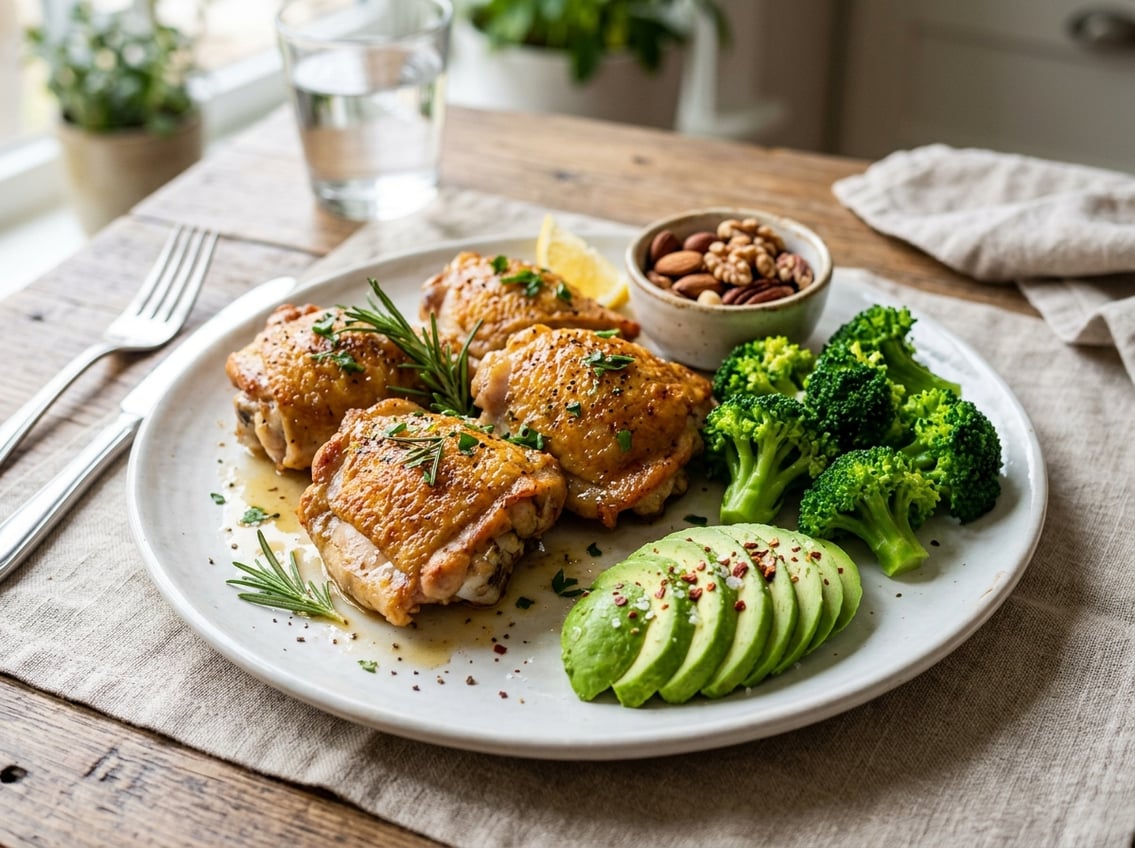
Chicken thighs deliver substantial protein per serving and contain more total and saturated fat than breast meat.
They also supply essential micronutrients like iron and zinc while providing a mix of monounsaturated and saturated fatty acids that affect flavor and satiety.
Fat Content Explained
A 3-ounce cooked skinless chicken thigh typically contains about 9 grams of total fat and roughly 20 grams of protein.
That fat includes about 2 grams of saturated fat; the rest is mainly unsaturated.
Calories for this portion run near 160–170 kcal, making thighs moderately calorie-dense compared with skinless breast.
Fat affects cooking outcomes and satiety.
The higher fat content helps thighs stay moist during roasting or braising, and it slows digestion so you feel full longer.
If you track macronutrients, account for the extra fat by adjusting portion size or pairing with low-fat sides.
Healthy Fats in Chicken Thighs
Most of the unsaturated fat in chicken thighs is monounsaturated, similar to the fats found in olive oil.
Monounsaturated fats support heart health when they replace saturated fats in your diet.
Thighs also contain small amounts of polyunsaturated fats, including omega-6 fatty acids, which your body needs in controlled amounts.
These fats contribute to nutrient absorption (for vitamins A, D, E, K) and provide a concentrated energy source.
When you choose thighs over ultra-processed protein options, you get natural fats rather than industrial trans fats.
Cooking methods that don’t add excessive oil preserve the thigh’s healthier fat profile.
Skinless Versus Skin-On Options
Keeping the skin adds about 100 calories and increases total and saturated fat substantially per 3-ounce serving.
For example, a roasted thigh with skin may approach 270–280 kcal and around 18 grams of fat.
Removing the skin cuts fat roughly in half while retaining most protein and micronutrients.
Choose skin-on when you need flavor and moisture for slow-roasting or grilling; the skin renders and bastes the meat.
Choose skinless if you want to lower calories and saturated fat without losing the thigh’s natural juiciness.
You can also cook skin-on and remove the skin before eating to gain both benefits.
Health Advantages for Diet and Lifestyle
Chicken thighs deliver concentrated protein, key minerals, and modest healthy fats that support muscle, bone, immunity, and appetite control.
Choosing skinless thighs and cooking methods like grilling or baking keeps calories and saturated fat lower while preserving nutrients.
Muscle and Bone Support
Chicken thighs provide high-quality protein—about 20–32 grams per 3–4 ounce cooked serving—which supplies all nine essential amino acids you need to build and maintain muscle mass.
That protein helps repair exercise-related muscle damage and supports strength as you age.
Thighs are also a useful source of vitamins and minerals tied to bone health.
They contain vitamin B12 and iron, which assist red blood cell formation and oxygen delivery to tissues, and they supply zinc and phosphorus that contribute to bone maintenance.
If you prioritize strength training or are concerned about age-related muscle loss, include chicken thigh in balanced meals to help meet daily protein targets more affordably than many other animal proteins.
Immune and Heart Benefits
Chicken thighs contain zinc, selenium, and B vitamins—nutrients that support immune cell function and help your body respond to infection.
Selenium in particular plays a role in antioxidant defenses, which helps protect cells from oxidative stress.
On heart health, thighs offer modest unsaturated fats alongside saturated fat.
If you remove the skin and use low-fat cooking methods, a typical 3-ounce serving has about 6–9 grams of total fat and roughly 2 grams saturated fat, which fits within dietary recommendations when balanced across the day.
Pair thighs with vegetables, whole grains, and limited added sodium to further reduce cardiovascular risk factors while keeping nutrient density high.
Satiety and Weight Management
Protein-rich foods like chicken thighs increase satiety more than carbohydrate-dense options, so you feel full longer after a meal.
The combination of protein with some fat in thighs slows gastric emptying and stabilizes blood sugar, reducing hunger-driven overeating.
To maximize this benefit, serve thighs with fiber-rich vegetables and whole grains; the fiber-plus-protein combination improves fullness per calorie and supports sustainable weight-management habits.
Cost-Effectiveness and Versatility
Chicken thighs give you high protein per dollar and flexible options for weeknight meals and batch cooking.
You get juicy thighs that hold flavor, plus storage and prep advantages that save time and money.
Budget-Friendly Protein Choice
You’ll often pay less per pound for chicken thighs than for boneless, skinless breasts, especially when you buy bone-in or bulk packs.
That lower price stretches your grocery budget and lets you serve larger families or meal-prep batches without raising costs.
Thighs deliver substantial protein and calories, so you can meet protein targets with smaller overall expense.
If you compare price-per-gram of protein, thighs frequently win when sold whole or on sale.
Practical cost tips:
- Buy bone-in or family packs for the lowest unit price.
- Trim and debone at home to increase yield and reduce cost per serving.
- Use thighs in recipes that feed multiple people (stews, casseroles, sheet-pan meals) to maximize value.
Meal Prep and Storage Benefits
You can cook large batches of chicken thighs and refrigerate or freeze portions without losing much juiciness.
The higher fat and connective tissue protect meat from drying in reheating, so pre-cooked thighs remain flavorful for lunches and dinners.
Boneless, skinless thighs speed meal prep; they marinate faster and cut into uniform pieces for stir-fries, salads, or grain bowls.
Bone-in thighs add depth to broths and soups, so save bones for stock to extend value across meals.
Storage reminders:
- Refrigerate cooked thighs within 2 hours; keep up to 3–4 days.
- Freeze portions in airtight containers for 2–6 months.
- Label packages with date and use thawed thighs within 24 hours for best texture and safety.
Healthy Cooking Methods
Use techniques that reduce added fat and excess sodium while preserving the thigh’s natural juices and nutrients.
Focus on temperature control, minimal oil, and flavor from herbs, citrus, and spice blends rather than heavy sauces.
Baking Chicken Thighs
Baking lets you cook boneless or bone-in chicken thighs evenly with little added fat.
Preheat the oven to 400°F (200°C) for crisp skin and tender meat; for skinless thighs use 375°F (190°C) to avoid drying.
Arrange thighs on a rimmed baking sheet or a roasting pan with a wire rack so air circulates and fat drains away.
Season with a dry rub or a light brush of olive oil (1 tsp per thigh) plus garlic, paprika, and lemon zest to keep sodium low.
Use an instant-read thermometer and pull thighs at 165°F (74°C); they will rest and reach safe temperature while remaining juicy.
For one-pan meals, add root vegetables tossed in the same pan and rotate vegetables partway through to ensure even browning.
Grilling Chicken Thighs
Grilling gives you char and smoke without heavy fats, making it ideal for both skin-on and skinless grilled chicken thighs.
Preheat the grill to medium-high (about 400°F) and oil the grates lightly to prevent sticking.
For skin-on thighs, start skin-side down over direct heat for 3–4 minutes to crisp, then move to indirect heat to finish.
Use a simple marinade of olive oil (1–2 tbsp total), lemon juice, garlic, and herbs for 20–60 minutes; avoid sugary marinades that burn quickly.
Turn thighs every 4–6 minutes and check doneness with a thermometer at the thickest point.
Rest for 5 minutes before serving to lock in juices.
For a leaner option, remove skin after cooking to keep flavor while cutting fat.
Stir-Frying and Oven Techniques
Stir-frying boneless, skinless chicken thigh strips cooks protein fast while retaining moisture and nutritional value.
Cut thighs into uniform pieces so they cook evenly.
Heat a wok or large skillet until hot, then add 1 tbsp oil total for several servings and cook in batches to avoid steaming.
Use high heat, quick tosses, and aromatics like ginger, scallion, and low-sodium soy or citrus to add flavor without excess salt.
For oven alternatives, try a high-heat sheet-pan roast at 425°F with vegetables spread in a single layer; the higher temp gives a similar Maillard crust to pan-searing.
Both methods yield tender chicken thigh with concentrated flavor while keeping added fats and sodium moderate.
Tasty and Nutritious Recipe Ideas
Use chicken thighs for fast weeknight dinners, meal prep, or richer weekend dishes.
They bring flavor, moisture, and versatility whether you roast, grill, braise, or pan-sear.
Popular Chicken Thigh Recipes
Try these dependable preparations that highlight juicy chicken thighs and straightforward techniques.
- Garlic-herb baked thighs: Rub with olive oil, minced garlic, rosemary, and lemon zest; roast at 425°F for 25–30 minutes until internal temp reaches 165°F.
- Sheet-pan Mediterranean: Arrange thighs with cherry tomatoes, olives, red onion, and chickpeas; roast for an all-in-one meal.
- Slow-cooker shredded chicken: Cook thighs with salsa or BBQ sauce on low 4–6 hours for tender meat perfect for tacos or salads.
- Stir-fry slices: Thinly slice boneless thighs, marinate briefly in soy and ginger, and flash-cook with crunchy vegetables.
Each method keeps thighs moist while delivering different textures—crispy skin, tender shred, or quick-seared slices—so you can match the recipe to your time and appetite.
Healthier Alternatives to Fried
If you like fried chicken thighs, you can keep crispiness with fewer calories and less oil.
- Oven “fried” thighs: Coat in seasoned whole-wheat panko and bake at high heat on a rack. The rack lets fat drip away.
- Air-fryer method: Lightly spray panko-coated thighs and air-fry at 400°F for 18–22 minutes. Turn once for even browning.
- Searing then finishing in oven: Sear skin-side down to render fat. Finish in a moderate oven to crisp without deep frying.
These methods use less oil and still give you a crunchy texture. Add spices like smoked paprika, garlic powder, and black pepper for bold flavor without extra salt.
Incorporating Into Balanced Meals
Use chicken thighs as the protein anchor and pair them with whole grains and vegetables.
Combine a roasted thigh with 3/4 cup cooked quinoa and a cup of steamed broccoli. Add a light vinaigrette for fiber and nutrients.
Portion two boneless thighs, about 6 to 8 oz cooked, with roasted root vegetables. Add a mixed-greens salad in airtight containers for meal prep.
For lighter meals, shred thighs into a bowl with brown rice and pickled cucumbers. Add a handful of spinach and a drizzle of tahini for healthy fats.
Aim for 3 to 4 oz cooked thigh per serving if you want to control portions. Use 6 to 8 oz for higher-protein needs.
Rotate cooking methods and sides to keep meals varied and balanced.


