
Can I Use Chicken Thighs Instead of Breasts? Cooking Tips and Best Practices
You can often swap chicken thighs for breasts, but the success depends on the dish and a few simple adjustments.
Thighs bring more fat, richer flavor, and forgiving juiciness, so they work best where moisture and robustness matter. You’ll need to tweak cooking time, temperature, or sauce to match the original recipe.
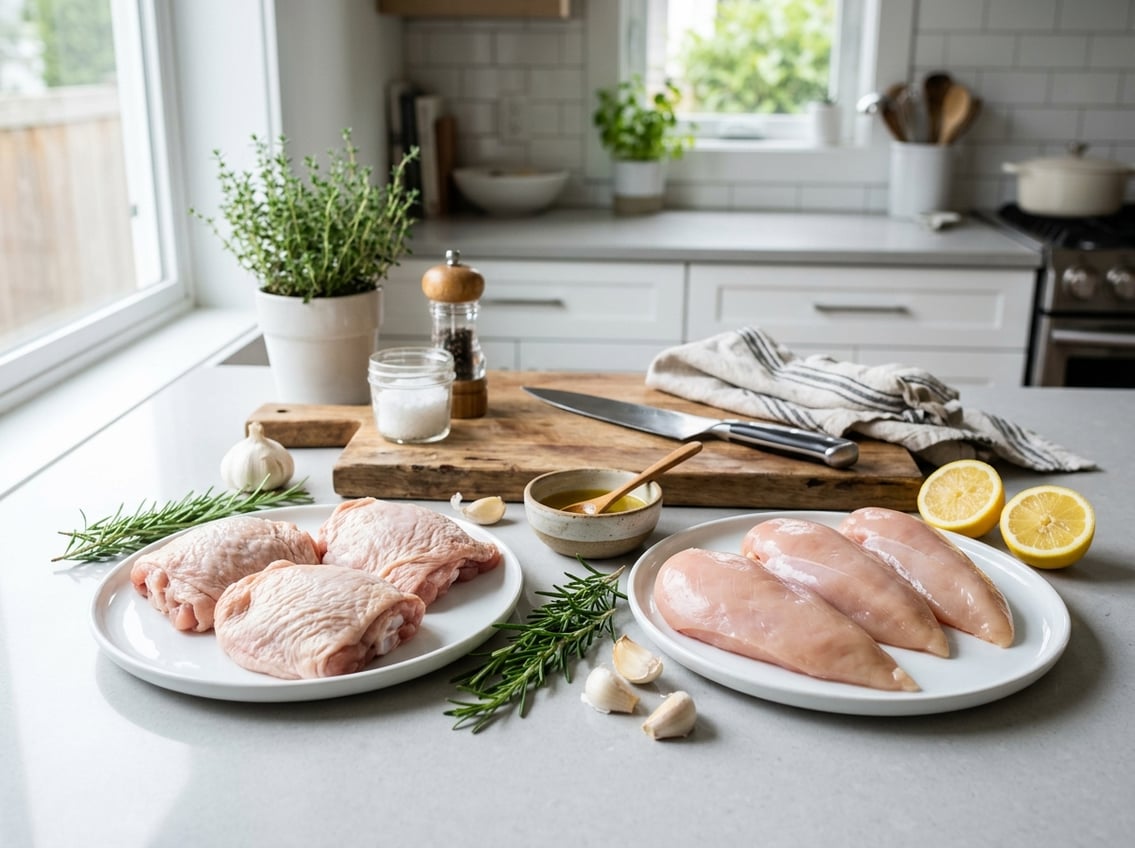
Texture, taste, and nutrition differ between the cuts, affecting grilling, braising, and sautéing.
Key Differences Between Chicken Thighs and Breasts
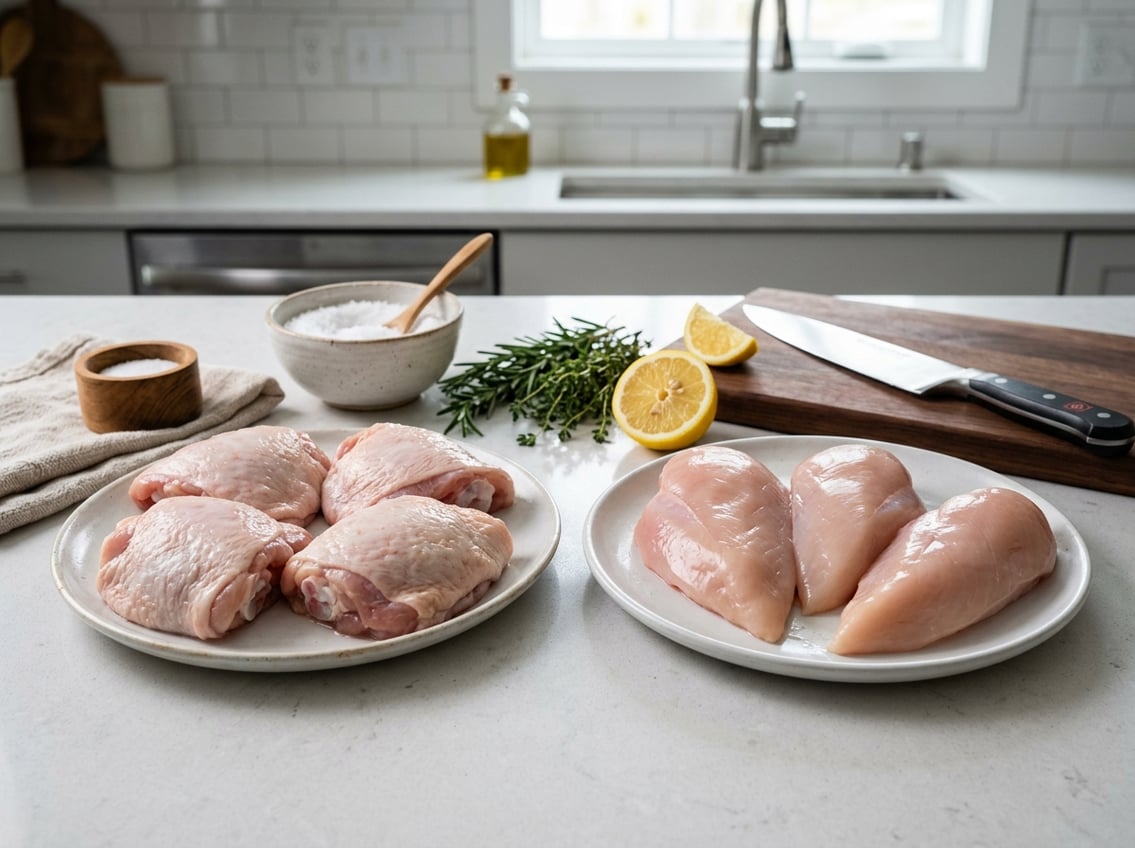
Thighs and breasts differ most in flavor, fat content, and how they behave during cooking.
These differences affect seasoning choices, cooking times, and which recipes will give you the best results.
Flavor and Texture Contrast
Chicken thighs have a darker, richer taste because they contain more fat and connective tissue.
That fat carries flavor and keeps the meat moist during long cooking, so thighs stand up well to bold marinades, braises, and high-heat searing.
Chicken breasts are milder and leaner with a firmer, drier texture when overcooked.
They absorb delicate flavors quickly and work best with quick-cooking methods like grilling, sautéing, or poaching to preserve tenderness.
If you want juicy, forgiving meat for stews, curries, or BBQ, use thighs.
If you need a neutral-tasting, lean piece for slicing, sandwiches, or pan sauces, use breasts.
Nutritional Differences
Per 3.5 oz (100 g) cooked, chicken breasts typically provide more protein and fewer calories and saturated fat than thighs.
Breasts commonly have about 30–31 g protein and roughly 165 kcal, while thighs often deliver ~24–26 g protein and 210–250 kcal depending on skin and cooking method.
Thighs contain more iron and zinc and a higher overall fat content.
This can increase calorie density but also improves mouthfeel.
If you’re tracking macros, breasts help lower fat and calorie intake.
If you prioritize micronutrients or satiety, thighs can be a better fit.
Trim skin or choose boneless, skinless cuts to reduce added fat.
Use a kitchen thermometer to reach 165°F (74°C) for safety without overcooking either cut.
Size and Structure Variations
A single chicken breast is usually larger and thicker than an individual thigh, which affects portioning and cook time.
One 6–8 oz breast may equal one or two thighs by weight, so adjust quantities when substituting.
Breasts are predominantly white muscle with less connective tissue, so they cook more quickly and can dry out if left too long.
Thighs are fattier with more collagen; they tolerate longer cooking and benefit from low-and-slow methods that break collagen into gelatin.
Bone-in cuts add flavor but extend cooking time.
Boneless, skinless breasts and thighs cook faster and more uniformly, making them convenient for stir-fries or quick bakes.
When It Makes Sense to Substitute Chicken Thighs for Breasts
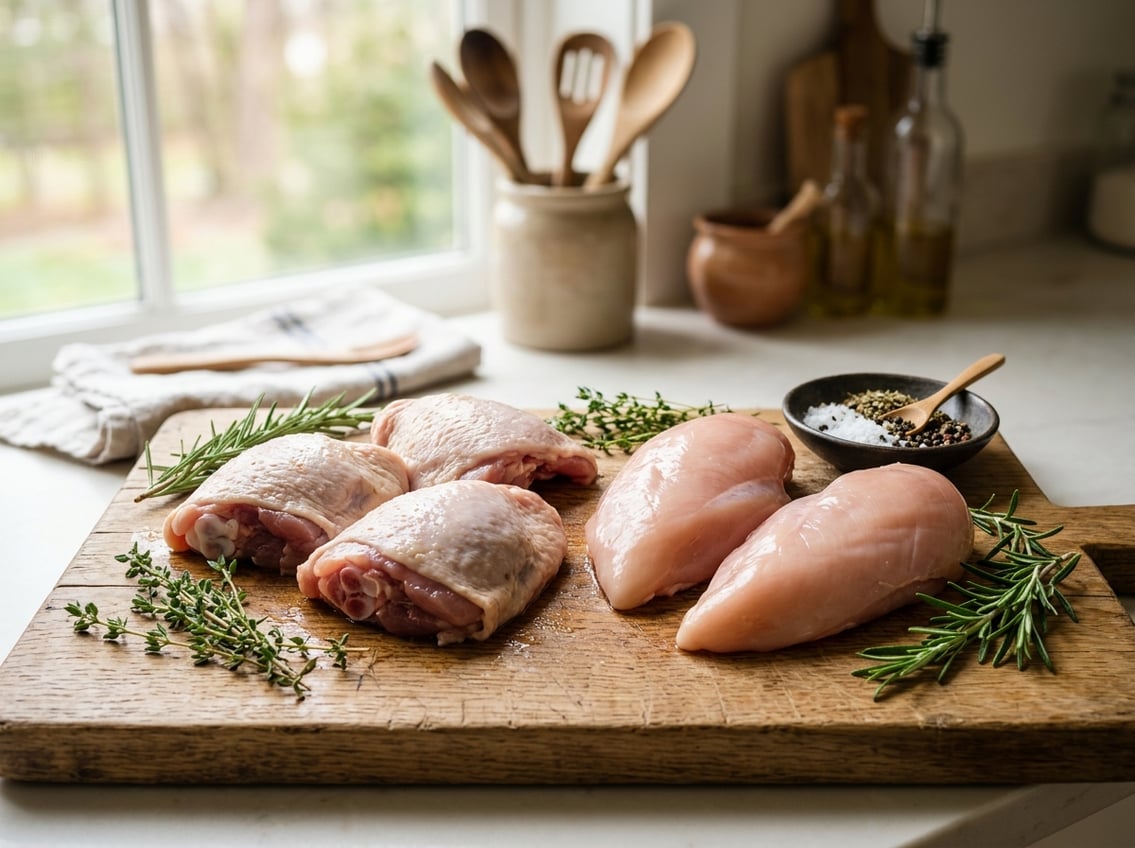
You can swap thighs for breasts when you want richer flavor, more forgiving texture, or better performance in longer cooking.
Pay attention to fat content, portion size, and cooking method to get predictable results.
Recipes That Benefit from More Fat and Richness
Use boneless chicken thighs when the dish needs deeper flavor and mouthfeel.
Thighs have more intramuscular fat than breasts, so they add savory richness to curries, tomato-based sauces, tacos, and barbecue dishes.
That extra fat also carries spices and aromatics better, so your dish tastes more integrated.
Portion differently: one medium thigh often equals about 3–4 oz cooked, while a large breast can be 6–8 oz.
Trim excess skin if you want less surface fat but keep some for flavor.
For breaded or pan-seared applications, thighs brown well and stay juicy, giving you more consistent results than lean breasts.
Dishes Suited for Longer Cooking Times
Use thighs for slow-cooked braises, stews, and long-simmered soups.
The connective tissue in thighs breaks down during extended cooking, yielding tender, succulent meat that won’t dry out.
Thighs tolerate hours of low heat without becoming stringy, unlike breasts that can shred and dry.
If a recipe calls for shredding—like pulled chicken enchiladas or chili—use thighs for better texture.
Keep heat low and allow fat to render slowly.
Use bone-in thighs when you want extra gelatin and body in the cooking liquid.
Considerations for Fast Cooking Methods
Be cautious when using thighs in high-heat, quick recipes such as chicken stir-fry or thin-cut pan-frying.
Thighs stay juicier but can release more fat into the pan, which affects searing and sauce consistency.
Slice thighs thin and pat dry to promote even browning in a stir-fry.
Adjust cooking time: thighs need slightly longer to reach safe temperature but resist overcooking better than breasts.
For uniform results, cut thighs into equal-size pieces, cook in a single layer, and drain excess fat if the sauce becomes greasy.
If a recipe emphasizes very lean meat or very light texture, keep breasts or reduce thigh fat.
Techniques for Adjusting Recipes with Substitutions
Change timing, seasoning, and portioning when you swap thighs for breasts.
Pay attention to weight, fat content, and whether the thighs are bone-in or boneless to get consistent results.
Cooking Time and Temperature Adjustments
Thighs tolerate higher heat and longer cooking without drying because they contain more fat and connective tissue than breasts.
For boneless chicken thighs, sear 3–4 minutes per side over medium-high heat, then finish in a 375–400°F (190–200°C) oven for 10–15 minutes until the internal temperature reaches 175°F (79°C).
If you use bone-in thighs, add 5–10 minutes to roasting or braising times; the bone slows heat penetration.
When a recipe calls for breasts at 165°F (74°C), raise the target to 175°F for thighs to break down collagen and render fat.
Use an instant-read thermometer and check thickness—thicker pieces need lower heat for longer to avoid overbrowning.
For quick methods like stir-fries, cut boneless thighs into uniform strips so they cook as fast as breasts would.
Reduce pan oil when switching to thighs, since they will release more fat during cooking.
Seasoning and Marinade Modifications
Thighs have a richer, more savory flavor than breasts, so reduce or rebalance salty and strongly spiced components.
Cut marinade acid (vinegar, lemon) by about one-third if the original recipe uses aggressive acid meant to tenderize lean breast meat.
Lower added oil by half for pan-seared or baked dishes because thighs render more fat.
Match seasoning intensity to cooking method.
Use bolder rubs, smoked paprika, cumin, or soy-based marinades for thighs that will be grilled or roasted.
For delicate sauces—lemon-dill or white wine—thicken or reduce the sauce 3–5 minutes more to prevent dilution by thigh juices.
When using boneless chicken thighs in salads or light dishes, pat them dry and use brighter finishing elements (vinegar, fresh herbs) to cut richness.
Matching Portion Sizes and Weights
Thighs are smaller and heavier in fat, so convert by weight, not piece count, when a recipe specifies grams or ounces.
One large boneless, skinless breast (6–8 oz / 170–225 g) equals roughly 2 boneless thighs (3–4 oz / 85–115 g each).
If a recipe asks for 1 pound (450 g) of breast, substitute about 1 pound of boneless thighs.
For bone-in thighs, increase to ~1.25–1.3 pounds to account for bone weight.
When a recipe is volume-based (cups of shredded or diced chicken), cook thighs first then measure, since shrinkage and fat loss differ from breasts.
In plated servings, plan on 4–6 oz (115–170 g) cooked thigh meat per person, slightly more than the breast portion to match protein content.
Choosing Between Bone-In and Boneless Thighs
Decide on bone-in or boneless based on cooking time and dish type.
Use bone-in thighs for slow braises, soups, or roasting where extra flavor and moisture matter; expect 5–10 minutes longer cook times.
Choose boneless chicken thighs for stir-fries, kebabs, cutlets, or any recipe that needs uniform pieces and faster, predictable cooking.
Account for yield differences: bone-in thighs contain roughly 25–30% bone by weight, so increase quantity if the recipe lists edible meat weight.
Trim excess skin or fat from boneless thighs when a leaner profile is required to mimic breasts in salads or light sautés.
Best Cooking Methods for Thighs Versus Breasts
Thighs and breasts respond differently to high heat, slow cooking, and moist methods.
Match the cut to the method: use quick, high heat for breasts to avoid drying; use longer, gentler or higher-fat techniques for thighs to render connective tissue and boost flavor.
Grilling and Pan-Searing Differences
When you grill or pan-sear chicken breasts, flatten to even thickness (about 3/4 inch) so they cook through before the outside chars.
Sear breasts over medium-high heat for 3–5 minutes per side depending on thickness, then rest 5 minutes to let juices redistribute.
Use an instant-read thermometer and remove at 155–160°F; carryover heat will bring it to 165°F.
Thighs tolerate and benefit from higher direct heat and longer searing.
For boneless thighs, sear 4–6 minutes per side until browned and 165–175°F depending on preferred texture.
Bone-in thighs need slightly lower heat and more time; start skin-side down to render fat, then finish indirect or in the oven.
For stir-fry, slice both cuts thin and cook on very high heat.
Use breasts for a lean, tender bite and thighs for richer, more forgiving results that stay moist under intense stir-fry heat.
Oven Baking and Roasting Tips
For oven baking, set breasts at 375°F and plan 18–25 minutes for boneless breasts (depending on thickness).
Brine or marinate briefly to add moisture and prevent overcooking.
Bake on a sheet with a thermometer probe to avoid guesswork.
Roast thighs at higher heat (400–425°F) to crisp skin and render fat while keeping meat juicy.
Bone-in, skin-on thighs usually need 30–40 minutes; boneless thighs need 20–30 minutes.
Use a rack to allow air circulation and baste or finish under the broiler for extra crispness.
If cooking mixed pieces together, start thighs first or roast at moderate heat and finish breasts separately to prevent breast dryness.
Slow-Cooking and Braising Applications
Use thighs for slow-cooking and braising because they have more connective tissue and fat that break down into gelatin, keeping the meat tender.
In a slow cooker, cook thighs on low for 6–8 hours or high for 3–4 hours with enough liquid to cover at least half the pieces.
Use breasts in braises for shorter times and with more attention; overcooking turns them dry and stringy.
Add breasts near the end of the braise (last 30–45 minutes) or poach gently in simmering liquid until just done.
For stews and stir-fry-style braises, cut thighs into bite-sized pieces.
They hold together in sauces and absorb flavors better than breasts.
Recipe Adaptations and Substitution Guidelines
When you swap thighs for breasts, adjust quantity, cooking time, and seasoning to match the darker meat’s weight, fat level, and flavor.
Pay attention to portion equivalence, moisture retention in quick-cook dishes, and how thighs affect liquid and fat balance in long-simmer recipes.
How Many Thighs to Use for a Breast
A typical boneless, skinless chicken breast weighs about 6–8 oz (170–225 g).
Boneless, skinless thighs average 3–4 oz (85–115 g) each.
Use this quick conversion:
- 1 large breast ≈ 2 boneless thighs.
- 1 medium breast ≈ 1½–2 thighs.
If a recipe lists weight, match ounces rather than piece count.
For example, if it calls for 1.5 lb (24 oz) of breast, use six 4-oz thighs.
If serving size matters, note that thighs yield slightly less white-meat volume per ounce due to higher fat and connective tissue.
Adjust calorie-sensitive menus accordingly.
Texture and Moisture in Stir-Fries
Thighs tolerate high heat without drying. They work well for chicken stir-fry.
Cut thighs into uniform strips about 1/2 to 3/4 inch thick. This helps ensure even cooking.
Use a hot pan or wok and cook in small batches to avoid steaming. Sear strips for 1 to 2 minutes per side until browned.
Add sauce and cook for another 1 to 2 minutes. Thighs release more fat, so wipe excess with a paper towel between batches or reduce added oil by 25 to 50 percent.
Marinate briefly for 20 to 30 minutes in soy, rice wine, and a little acid to tenderize and season. If using cornstarch for a glossy sauce, toss the thigh pieces lightly to help it adhere.
Maintaining Balance in Stews and Casseroles
Thighs add richness and hold up well during long braises and slow bakes. Decrease added fats if the recipe assumes lean breast meat.
Reduce oil or butter by 1 to 2 tablespoons for every pound of thighs to prevent greasy results. Thighs render more collagen and can thicken braising liquid.
Check consistency after 45 to 60 minutes and thin with stock if needed. If the recipe times for breasts, extend cooking by about 15 to 25 percent until the thighs reach 165°F (74°C) and the connective tissue is tender.
For layered casseroles, place thighs toward the bottom where heat and moisture concentrate. Trim visible fat to avoid puddles on top.
Advantages and Considerations of Using Chicken Thighs
Chicken thighs offer richer flavor, better moisture retention, and often lower cost than breasts. You’ll trade some leanness for juiciness and need to adjust cooking time and seasoning to match the cut you choose.
Cost-Effectiveness and Availability
You’ll typically pay less per pound for chicken thighs than for chicken breasts, especially boneless chicken thighs. Supermarkets and wholesale clubs often price thighs lower because demand for breasts is higher.
That can save you money when feeding a family or planning batch meals. Buy boneless chicken thighs for quicker prep and even cooking.
Bone-in thighs hold heat better in slow-cooked dishes, but bones add weight and cook time. If you rely on grocery deals, thighs are easier to stock and freeze without losing quality.
Flavor Improvements and Versatility
Thighs contain more intramuscular fat than breasts, so they stay moist and tolerate higher-heat methods like pan-searing, roasting, and grilling without drying out. That fat also carries and amplifies marinades, spice blends, and sauces.
You’ll get more pronounced flavor in curries, braises, and stir-fries. Use thighs in recipes that call for breasts with minor adjustments.
Reduce cooking temperature or cut larger thighs into even pieces to match breast cooking times. For breaded or uniform-shape recipes, boneless chicken thighs hold shape well but may need light pounding for consistent thickness.
Suitability for Different Dietary Needs
If you follow a lower-fat or stricter calorie plan, chicken breasts remain the leaner choice. 100 g of cooked breast contains fewer calories and less saturated fat than the same weight of thigh.
You can fit thighs into balanced diets by trimming visible fat and controlling portion size.
Thighs offer slightly higher amounts of iron and zinc, which is useful if you want more of those minerals.
Thighs also suit slow-cooked, protein-rich meals for athletes and active people who benefit from the extra calories and flavor.


