
How Long Do I Cook Chicken Thighs in the Oven: Timing, Temperatures, and Tips
You can bake boneless chicken thighs at about 425°F for roughly 20–30 minutes. Bake bone-in, skin-on thighs at 400–500°F for about 30–40 minutes, or until an instant-read thermometer registers 165°F in the thickest part.
Boneless thighs: ~20–30 minutes at 425°F; bone-in, skin-on thighs: ~30–40 minutes at 400–500°F; cook to an internal temperature of 165°F.
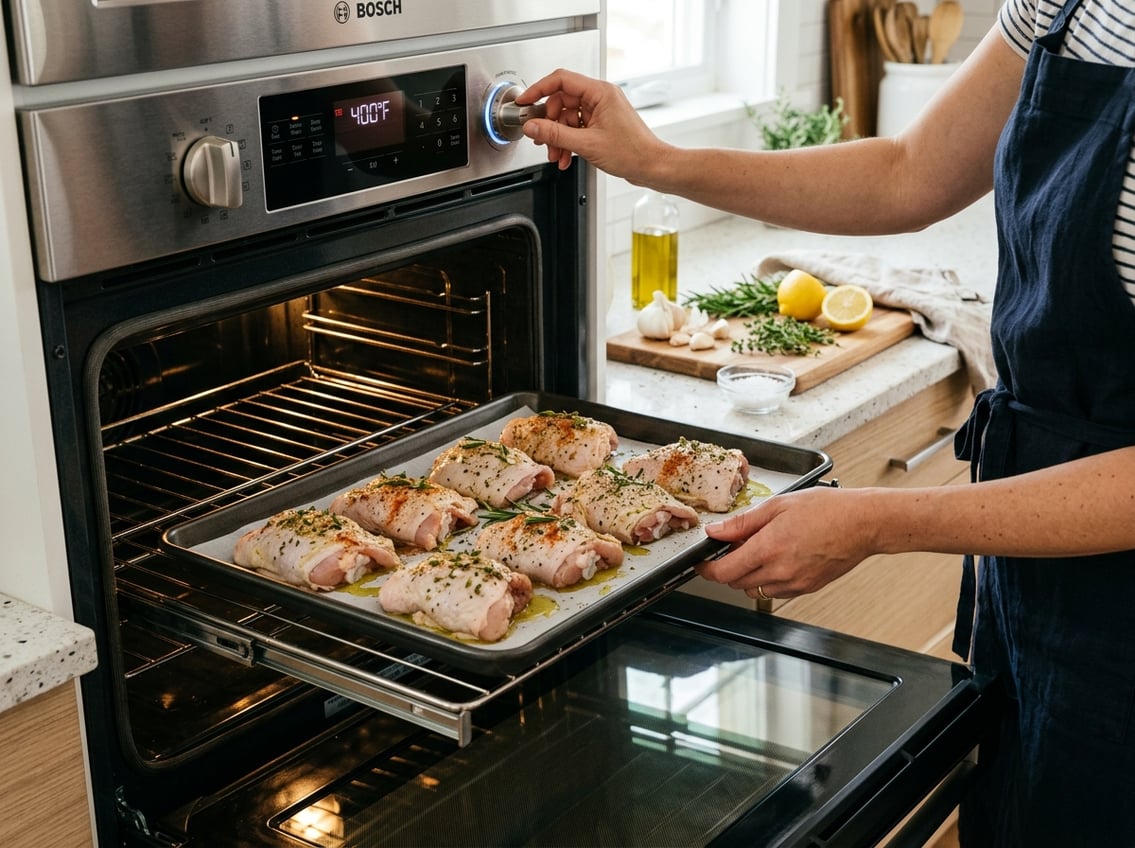
If you want crisp skin, use higher heat and start on a preheated baking sheet. For juicier boneless pieces, bake slightly less time at 425°F or broil briefly at the end.
Oven Temperatures and Recommended Cook Times
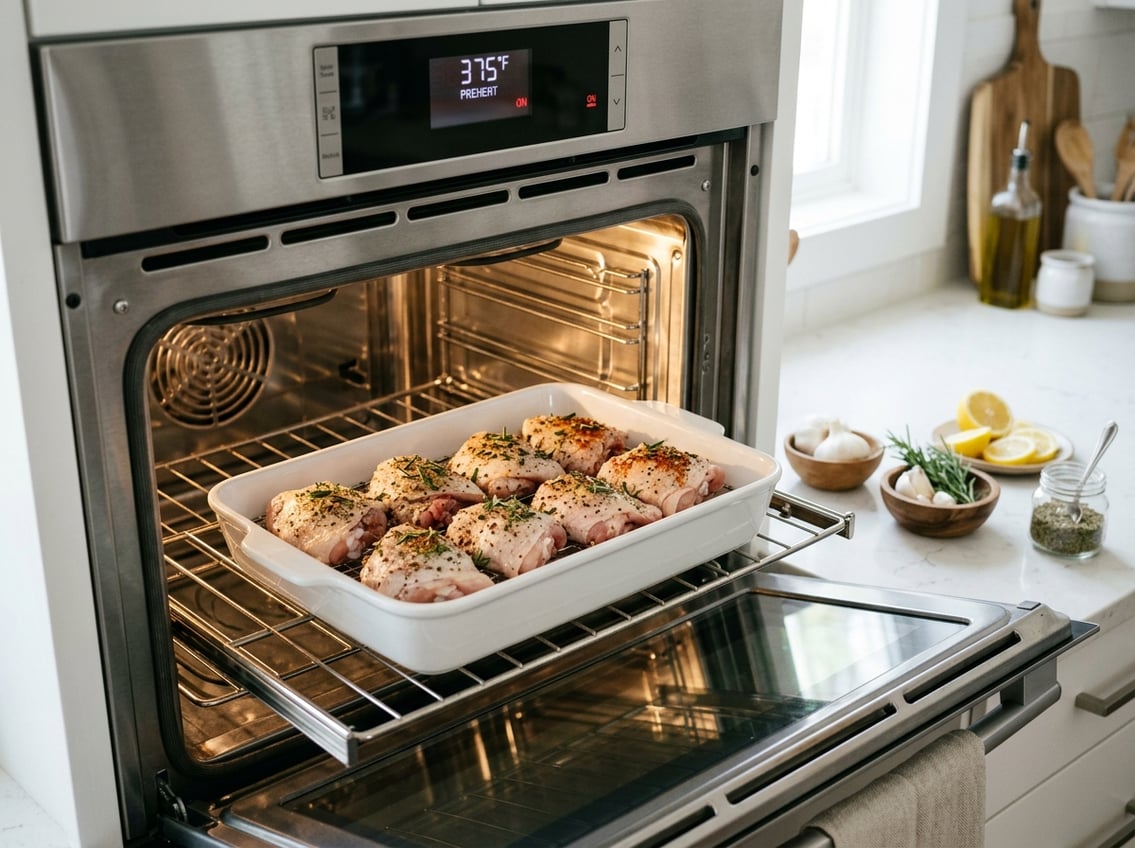
Oven temperature controls texture. Higher heat crisps skin and shortens baking time.
Moderate heat yields more evenly cooked thighs. Match temperature to whether your thighs are boneless or bone-in and to the texture you want.
Choosing the Right Temperature
Choose 375–425°F (190–220°C) for most oven-baked chicken thighs.
Bake at 375°F for gentler cooking that keeps meat tender with larger bone-in pieces.
Use 400–425°F when you want crisp skin and shorter bake times for boneless or skin-on thighs.
If you preheat to 425°F, expect surface browning in 20–30 minutes for boneless thighs and about 25–35 minutes for small bone-in pieces.
Lower temps (350–375°F) need 35–50 minutes for bone-in thighs but reduce risk of drying when you’re unsure of size.
Cooking Times for Different Cuts
Boneless, skinless thighs: roast at 400–425°F for about 20–30 minutes.
Small, boneless pieces may finish closer to 18–22 minutes; thicker pieces need the upper end.
Bone-in, skin-on thighs: roast at 375–400°F for about 30–45 minutes.
At 350°F, plan for 40–50 minutes for 4–8 ounce thighs.
Use a rack or elevated pan to let heat circulate and crisp skin.
If you use 500°F flash-roasting, reduce time to roughly 20–30 minutes for bone-in skin-on, watching closely to prevent burning.
Always factor in oven variability and thigh size. Increase time for larger pieces and decrease for thinner ones.
Why Internal Temperature Matters
Target an internal temperature of 165°F (74°C) in the thickest part of the thigh for safety.
Insert an instant-read thermometer without touching bone.
Remove at 165°F and rest 5–10 minutes; the temperature may rise slightly during resting.
If you want very tender, shreddable thighs for braised-style dishes, cook to 175–185°F.
Bone-In vs. Boneless Chicken Thighs in the Oven
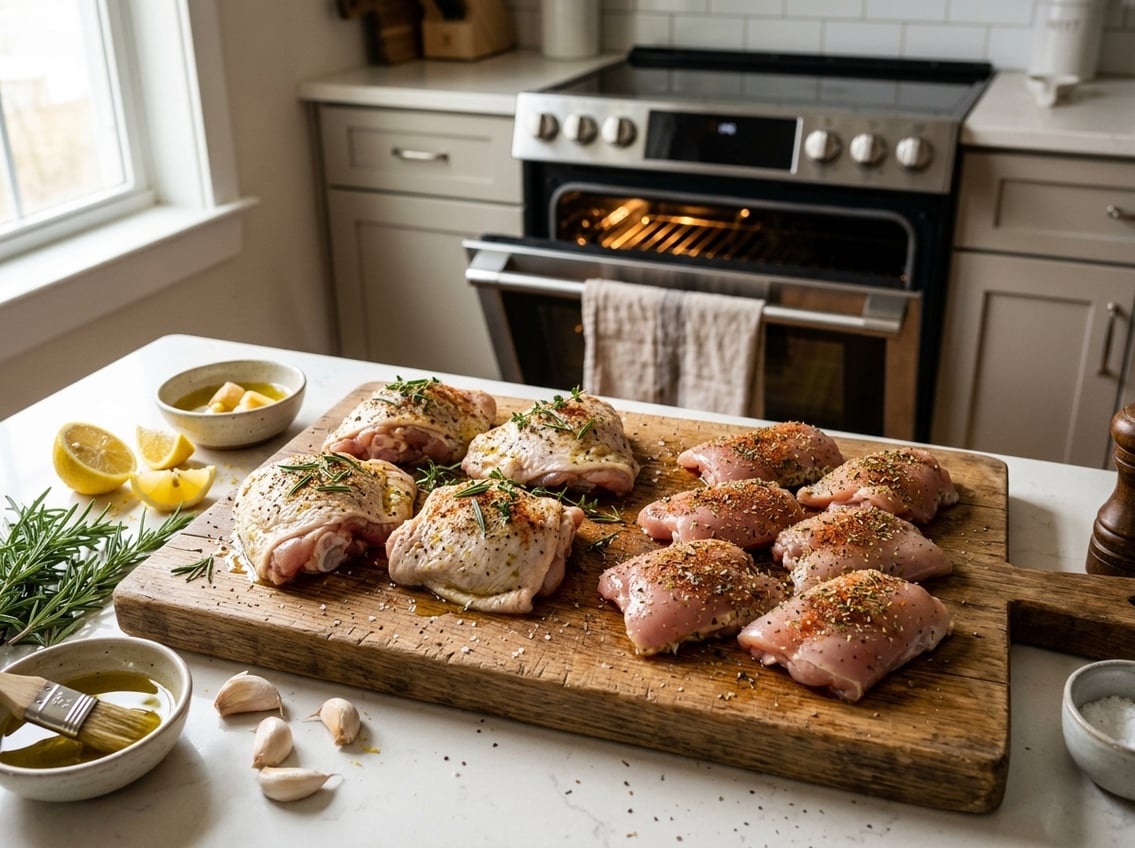
Bone-in thighs take a bit longer but offer more flavor and moisture. Boneless thighs cook faster and are easier to slice and serve.
Adjust cook time by weight and thickness. Always use an instant-read thermometer to reach a safe internal temperature.
Bone-In Chicken Thighs
Bone-in chicken thighs need more oven time because the bone slows heat penetration.
Roast at 375–400°F (190–205°C) and plan for roughly 35–45 minutes depending on thigh size.
The bone helps retain moisture and concentrates flavor. Use higher-heat finishes (425°F) for crisp skin without drying the meat.
Check doneness at the thickest point, not touching bone; the target internal temperature is 165°F (74°C).
For even cooking, arrange thighs skin-side up on a rimmed baking sheet or in a roasting pan with space between pieces.
Rest thighs 5–10 minutes after baking to let juices redistribute.
Boneless Chicken Thighs
Boneless chicken thighs cook faster because there’s no bone to slow heat transfer.
Bake boneless chicken thighs at 375–425°F (190–220°C) and expect 20–30 minutes depending on thickness.
Thinner, flattened pieces finish near 20 minutes at higher heat. Thick, unpacked pieces need closer to 25–30 minutes.
Boneless thighs are convenient for slicing and absorb marinades quickly.
Watch closely to avoid overcooking; they become dry if left in the oven too long.
Aim for the same safe internal temperature, 165°F (74°C), checked at the center.
Use a single layer on a baking sheet so air circulates and the exterior browns evenly.
If you want crisp edges, broil for 1–2 minutes at the end while monitoring.
Adjusting Time for Different Sizes
Size and thickness change bake times more than bone presence does.
Smaller boneless pieces subtract about 5–7 minutes; oversized bone-in thighs add 5–10 minutes.
If you double the quantity on one pan, add 5–8 minutes because crowded pans reduce airflow.
For precise timing, rely on internal temperature rather than clock time.
Insert an instant-read thermometer into the thickest, meatiest part (avoiding bone) and remove at 165°F (74°C).
Rest for 5–10 minutes; carryover cooking will raise the internal temp slightly.
Skin-On vs. Skinless: Crispiness and Juiciness
Choosing skin-on gives you crisp, flavorful skin and extra fat for juiciness.
Choosing skinless shortens cook time and reduces surface fat but needs a little help to stay moist.
Skin-On Chicken Thighs for Crispy Results
Skin-on chicken thighs deliver the crispest results when you start with dry skin and high heat.
Pat the skin fully dry with paper towels, season under and over the skin, then roast at 400–425°F (204–218°C) to render fat and crisp the surface.
Place thighs skin-side up on a wire rack set over a baking sheet to allow hot air to circulate and fat to drip away.
For the best texture, avoid overcrowding the pan; give each thigh at least 1 inch (2.5 cm) of space.
If you want extra browning, finish under the broiler for 1–3 minutes while watching closely.
Use an instant-read thermometer: pull thighs at 165°F (74°C) for safe, juicy meat while the skin remains crisp.
Cooking Skinless Chicken Thighs
Skinless chicken thighs cook faster and produce leaner baked chicken thighs that benefit from moisture-enhancing techniques.
Roast at 375–400°F (190–204°C) for even cooking, typically 20–30 minutes depending on thickness.
Check internal temperature at the thickest point; 165°F (74°C) is the safe target.
Marinate or brine skinless thighs for 30 minutes to 2 hours to add moisture and flavor before roasting.
Alternatively, coat with a light oil or butter and a sprinkle of salt to encourage gentle browning without drying.
If you want crisp edges on skinless thighs, use a hot cast-iron skillet for the first 3–5 minutes to develop sear, then finish in the oven.
Rest meat 5 minutes after cooking to let juices redistribute.
Tips for Moisture and Texture
Control temperature, spacing, and timing to balance crispiness and juiciness across both styles.
Use a thermometer to avoid overcooking; each additional 5–10°F dries meat noticeably.
For skin-on: start high to render fat, then reduce heat if needed to finish without burning.
For skinless: brine or marinate and cook at steady heat to retain moisture.
Small techniques make a big difference:
- Pat skin dry and salt under the skin (skin-on).
- Brine 30–120 minutes or use an oil-based marinade (skinless).
- Use a wire rack to keep thighs crisp.
- Rest 5 minutes before serving to lock in juices.
Best Practices for Oven-Baked Chicken Thighs
Master a few staging and temperature steps to get juicy meat and crisp skin every time.
Focus on dry skin, even thickness, correct oven placement, and finishing methods like broiling or air-frying for extra crispness.
Preparation and Seasoning
Pat the thighs dry with paper towels to remove surface moisture; this is the single best step to promote browning and crisp skin.
Trim excess fat and tuck skin where needed so pieces lie flat and cook evenly.
Season early when possible: salt at least 30 minutes before cooking or up to overnight in the fridge for deeper flavor and better moisture retention.
Use a simple rub of kosher salt, black pepper, garlic powder, and paprika, or a marinade with acid (lemon or vinegar) for 30–120 minutes to tenderize.
Bring thighs to near room temperature for 20–30 minutes before baking so they cook more evenly.
If pieces vary in size, pound thicker areas lightly or separate large bone-in pieces from smaller ones so they finish at the same time.
Placement and Cooking Methods
Preheat the oven to the target temperature: 400–425°F (200–220°C) for skin that crisps while staying juicy, or 350–375°F (175–190°C) for gentler cooking.
Use a rimmed baking sheet or shallow roasting pan; line with foil or parchment for easier cleanup and to prevent sticking.
Arrange thighs skin-side up with about 1 inch (2–3 cm) between pieces for proper air circulation.
Use a wire rack set over a sheet pan if you want maximum airflow under the skin.
For bone-in, bake 30–40 minutes at 425°F depending on size; for boneless, check at 20–30 minutes.
Always verify doneness with a meat thermometer: 165°F (74°C) in the thickest part near the bone.
Rest 5–10 minutes before serving to let juices redistribute.
Broiling and Air Fryer Options
Finish under the broiler for 1–3 minutes to further crisp skin.
Move the rack 6–8 inches below the broiler and watch closely to prevent burning.
You can transfer partially baked thighs to an air fryer basket set to 400°F for 3–6 minutes to achieve very crisp skin.
Alternatively, cook boneless thighs entirely in the air fryer at 380–400°F for 10–14 minutes, flipping halfway.
Check temperature at the center.
When using broiler or air fryer finishes, pull thighs at 160–162°F if you expect a 3–5°F rise while resting.
Variations: Flavoring, Marinades, and Serving Suggestions
Choose seasonings that withstand oven heat. Pick marinades that tenderize without burning.
Plan sides that match the chicken’s intensity. Simple salt-and-pepper or a bold glaze both work well when you bake chicken thighs.
Simple Seasonings and Marinades
For everyday baked chicken thighs, start with kosher salt and freshly ground black pepper.
Add garlic powder, smoked paprika, and a drizzle of olive oil for a reliable 35–40 minute bone-in bake at 400°F (205°C).
If you prefer a short marinade, mix 2 tbsp oil, 1 tbsp acid (lemon juice or vinegar), 1 tsp salt, and herbs (rosemary or thyme).
Marinate 30 minutes to 4 hours in the fridge.
For buttermilk-style tenderness, soak thighs in 1 cup buttermilk with 1 tsp salt for 2–6 hours, then bake.
Pat dry before baking to get brown, crisp skin.
Adding Glazes and Sauces
Use glazes near the end of baking so sugars don’t burn.
Brush on barbecue, honey-soy, or a bourbon glaze in the last 10–12 minutes and switch to broil for 2–3 minutes for caramelized edges.
For a sticky finish, reduce 1/2 cup sauce on the stove until syrupy, then brush twice: once at 10 minutes remaining, once after you pull the thighs from the oven.
If you want pan sauce, remove baked chicken thighs, deglaze the roasting pan with 1/2 cup chicken stock and 1/4 cup white wine or vinegar, scrape browned bits, and stir in 1 tbsp butter to finish.
Serving and Side Ideas
Serve baked chicken thighs with starches that absorb sauce, such as mashed potatoes, rice pilaf, or buttered couscous.
Roast vegetables like carrots, Brussels sprouts, or quartered potatoes on the same sheet pan. These vegetables cook in about the same time at 400°F and pick up flavorful drippings.
For lighter meals, place thighs over a leafy salad with a vinaigrette that matches the chicken’s seasoning, such as lemon in both.
Shred leftovers for sandwiches, tacos, or grain bowls. Reheat them gently in a 350°F oven covered for 10–12 minutes to keep them moist.
Storage, Reheating, and Meal Prep Tips
Chill cooked thighs quickly and store them in airtight containers. Reheat gently to keep them juicy and safe to eat.
How to Store Baked Chicken Thighs
Let cooked thighs cool to room temperature within 2 hours after cooking, or within 1 hour if the room is above 90°F.
Pat excess oil off the skin with a paper towel before storing to help keep the skin crisp.
Use airtight glass or BPA-free plastic containers. Arrange pieces in a single layer if possible. If you need to stack them, separate layers with parchment paper for easier portioning.
Label containers with the date cooked.
Refrigerate at 40°F (4°C) or below and use within 3–4 days. For longer storage, freeze in portion-sized bags or vacuum-sealed packs for up to 3 months.
Thaw overnight in the fridge before reheating.
How to Reheat Without Drying Out
Heat frozen or refrigerated thighs until they reach an internal temperature of 165°F (74°C). Use an instant-read thermometer for accurate results.
For the oven method, place thighs in a baking dish. Add 1 or 2 tablespoons of chicken stock or water per cup of thighs.
Cover with foil and bake at 325–350°F (160–175°C) for 12–20 minutes, depending on size. Remove the foil and broil for 1 or 2 minutes if you want crisp skin.
To use the stovetop, warm a skillet over medium-low heat. Add 1 teaspoon of oil and a splash of broth.
Cover the skillet and heat for 4–6 minutes, flipping once. For the microwave, slice or arrange pieces in a single layer.
Cover loosely with a microwave-safe lid or damp paper towel. Heat for 60–90 seconds on medium power, then check and add 30-second bursts until you reach 165°F.
Use low or medium heat and avoid long reheating times. Let the chicken rest for 2 minutes before serving.


