
Best Way to Reheat Chicken Thighs: Juicy Results Every Time
You want juicy, safe-to-eat chicken thighs that taste freshly cooked, not dry. The oven works best for reheating chicken thighs because it heats evenly and lets you add a little liquid and cover the pan to retain moisture while reaching a safe internal temperature of 165°F.
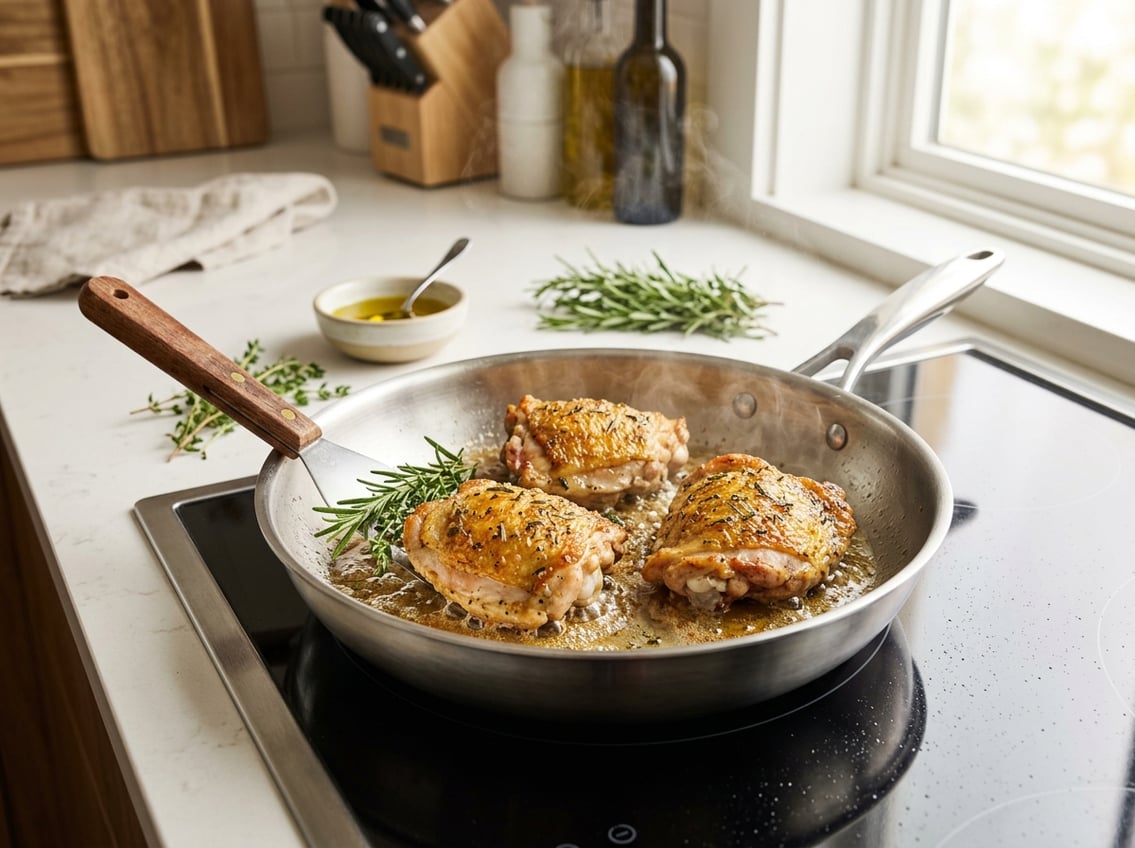
This guide walks you through choosing the right method for your situation: oven, stovetop, air fryer, or microwave. You’ll also get tips for preventing dryness, reheating from frozen, storing leftovers safely, and handling different styles like fried, roasted, or shredded thighs.
Choosing the Optimal Method for Reheating
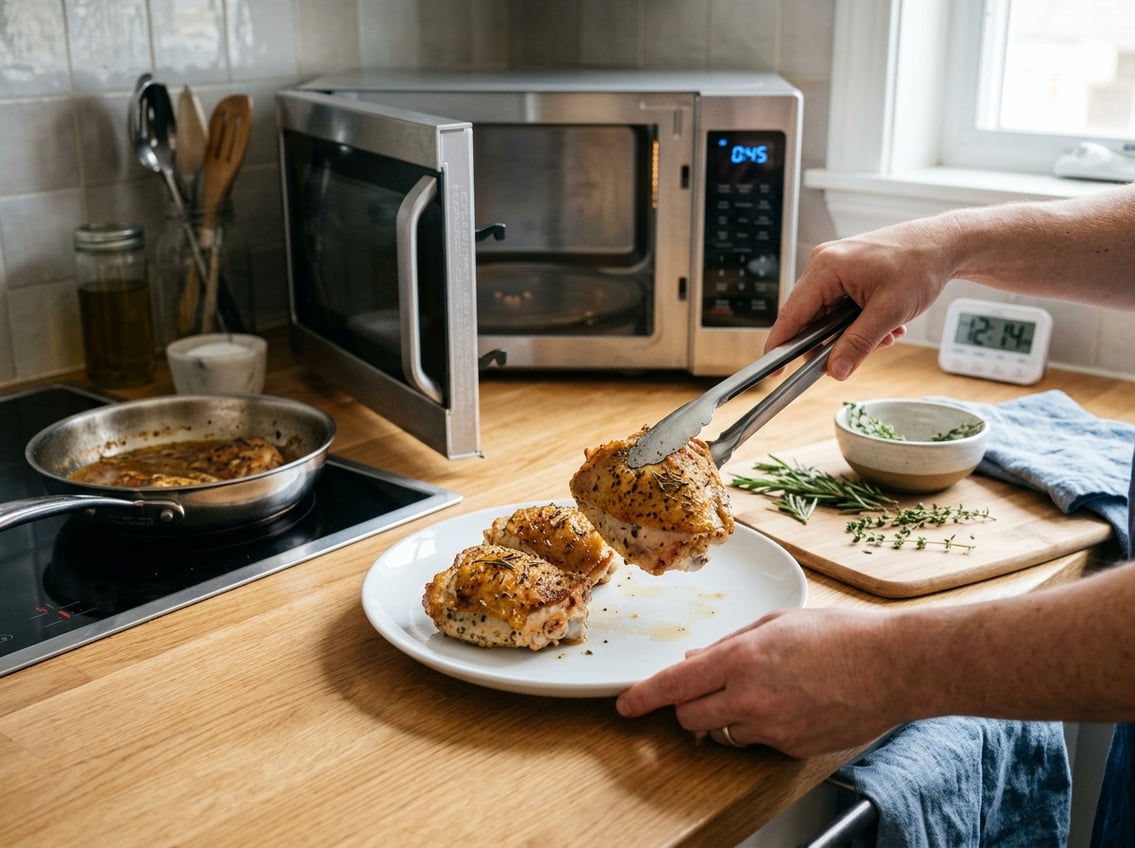
Pick a method that matches your goal. Restore crispness for fried or breaded thighs, or preserve moisture for roasted or sauced thighs.
Temperature control, added moisture, and cooking time determine both safety and final texture.
Oven Method Overview
The oven works best if you want even reheating and to keep bone-in or thick chicken thighs juicy. Preheat to 325–350°F, place thighs in a single layer in a shallow baking dish, and add 1–2 tablespoons of broth or water per cup of chicken to prevent drying.
Cover loosely with foil for 10–20 minutes depending on size, then uncover and bake 5–8 minutes if you want the skin to crisp. Check with a meat thermometer to verify the internal temperature reaches 165°F at the thickest part near the bone.
This method works well for casseroles and sauced preparations where slow, even heat prevents rubberiness.
Air Fryer Advantages
The air fryer quickly restores exterior crispness, making it the best way to reheat fried chicken or breaded thighs. Preheat the air fryer to 350–375°F, arrange thighs in a single layer with space around each piece, and reheat for 4–8 minutes, flipping once for even crisping.
The air fryer uses circulating hot air to recreate crunchy skin without overcooking the interior. Check that the internal temperature reaches 165°F.
Use a light spray of oil on breaded pieces to revive color and texture.
Stovetop and Microwave Comparison
The stovetop works well for shredded, sliced, or boneless thighs and saucy dishes. Warm a nonstick pan over medium-low heat, add a splash of broth or sauce, then cover and gently heat, stirring or turning occasionally until 165°F is reached.
The microwave is fastest for small portions but risks uneven heating and soggy skin. Use it only for boneless, diced, or shredded thighs.
Cover with a damp paper towel, heat in 30–45 second intervals on medium power, and rotate pieces between intervals. Finish in a hot pan or under the broiler for 1–2 minutes if you want some crispness.
Step-By-Step Guide to Oven Reheating
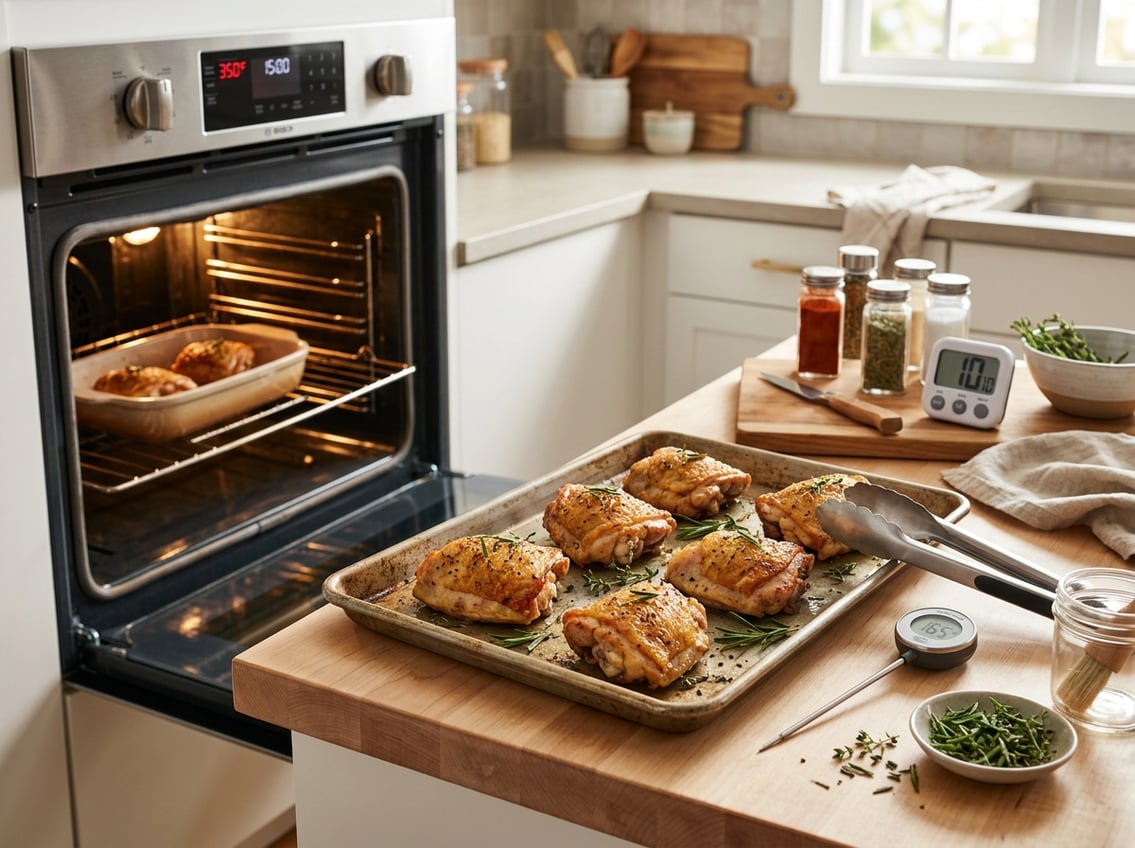
This section gives precise oven settings, moisture tips, and temperature checks for safe, juicy chicken thighs.
Preparation and Temperature Settings
Preheat your oven to 350°F (175°C). This temperature reheats chicken thighs evenly without overcooking the exterior.
Arrange thighs in a single layer in an oven-safe dish or sheet pan. Avoid stacking pieces.
If pieces vary in size, place larger ones toward the center of the pan. Let chilled chicken rest at room temperature for about 10–15 minutes before baking.
If the thighs are frozen, thaw in the refrigerator overnight first. Plan for 20–25 minutes as a baseline for bone-in or larger thighs.
Boneless, smaller pieces may finish in 12–18 minutes. Use these times as starting points and adjust for thickness.
Using Foil and Adding Moisture
Cover the dish tightly with aluminum foil to trap steam and prevent surface drying. Foil creates a gentle-steam environment that preserves juiciness while the interior heats up.
Add 2–4 tablespoons of water, chicken stock, or pan juices to the bottom of the dish for every 2–4 thighs. For sauced thighs, spoon sauce over each piece before covering.
If you want crisp skin, remove the foil for the last 5 minutes and increase the oven to 400°F (200°C) or use the broiler for 2–4 minutes. Watch closely, as broiling can burn the skin quickly.
Avoid baking directly on a dry sheet pan without moisture or cover.
Checking for Optimal Internal Temperature
Use an instant-read thermometer to confirm the internal temperature reaches 165°F (75°C). Insert the probe into the thickest part of the thigh without touching bone for accuracy.
Check temperature near the end of the recommended time window. If the thermometer reads 160–164°F, return the dish to the oven for a few minutes and recheck.
After reaching 165°F, remove the thighs and rest for 3–5 minutes. Resting allows juices to redistribute.
If you lack a thermometer, cut into the thickest part; juices should run clear and meat should feel hot throughout.
Tips for Preventing Dryness and Maintaining Juiciness
Follow these steps to lock in moisture, control heat, and restore texture so your reheated chicken thighs stay tender and flavorful.
Covering and Moisture Techniques
Keep the meat from losing steam. When reheating in the oven, place thighs in a baking dish, add 2–4 tablespoons of chicken broth or pan sauce per pound, and cover tightly with foil.
On the stovetop, reheat over low heat in a skillet with a splash of broth and a fitted lid. In the microwave, cover the thighs with a damp paper towel or microwave-safe lid and heat in short bursts, flipping once.
For all methods, use a probe thermometer to confirm 165°F in the thickest part.
Best Practices for Crispy Skin
If you want crisp skin, separate texture-restoring steps from the main reheating. Reheat the meat gently first (covered, with liquid) until just 160–165°F, then finish uncovered at higher heat to crisp.
For the oven, uncover and broil 1–3 minutes or bake at 425°F on a wire rack for 5–8 minutes. For the air fryer, preheat to 375–400°F and crisp for 3–6 minutes.
Avoid microwaving for crispy skin. Pat skin dry before the finishing step and brush a light coat of oil to promote browning.
Resting and Serving Recommendations
Let the thighs rest 5–8 minutes after reheating so juices redistribute. Tent loosely with foil during resting to retain warmth.
Slice against the grain and serve immediately with any warmed pan juices or sauce. If you reheat for later service, hold at 140–150°F in a low oven (covered) for up to 1 hour.
Reheating Frozen and Stored Chicken Thighs Safely
Handle frozen or refrigerated cooked chicken thighs so they heat evenly and reach a safe internal temperature without drying out. Thaw in the refrigerator when possible, and use methods that restore moisture while eliminating cold spots.
Thawing Before Reheating
Thaw cooked chicken thighs in the refrigerator for 24 hours for every 1–2 pounds. Individual thighs usually need 12–24 hours.
Place the thighs on a shallow tray or in a sealed container to catch any juices and keep them below 40°F (4°C) while thawing. If you need to speed the process, use the microwave defrost setting only for brief periods and rotate pieces every 30–60 seconds.
After microwave thawing, reheat immediately. Never thaw cooked chicken thighs on the counter.
Store any unused cooked thighs in airtight containers in the fridge for 3–4 days or freeze for longer storage.
Oven Instructions for Frozen Chicken Thighs
Preheat the oven to 350°F (175°C). Arrange thawed or fully defrosted thighs in a single layer on a baking sheet or in a shallow baking dish.
Add 1–2 tablespoons of broth, sauce, or a light brush of oil per cup of chicken to preserve moisture. Cover the dish tightly with foil to trap steam and promote even heating.
For refrigerated (thawed) thighs, bake 15–20 minutes until a meat thermometer reads 165°F (74°C) in the thickest part. For fully frozen thighs, increase to 30–40 minutes and check temperature in multiple spots.
Remove the foil for the last 5 minutes if you want to crisp skin. Let the thighs rest 2–3 minutes before serving.
If you plan to store leftovers again, cool quickly to room temperature within two hours and refrigerate in shallow sealed containers for up to 3–4 days.
Guidelines for Storing Cooked Chicken Thighs
Store cooked chicken thighs promptly in shallow, airtight containers and chill them quickly to limit bacterial growth. Label containers with the date and place them on a refrigerator shelf where the temperature stays at or below 40°F (4°C).
Proper Storage for Leftovers
Transfer hot chicken thighs into shallow airtight containers within two hours of cooking. Spread pieces in a single layer or use multiple small containers so the meat cools evenly.
Use resealable bags, plastic containers, or glass storage with tight lids. Remove excess air from bags and press sauces into the container to keep meat moist.
Freeze leftovers you won’t eat within 3–4 days. Wrap each thigh or portion in foil or freezer bags and label with the date.
When storing in the freezer, keep cooked chicken thighs for up to four months for best quality. Thaw frozen cooked chicken in the refrigerator overnight or in cold water if you need it sooner.
Never thaw at room temperature.
Safe Time Limits and Food Safety
Refrigerated cooked chicken thighs remain safe for 3–4 days when kept at 40°F (4°C) or lower. If you can’t use them in that window, move them to the freezer.
Before reheating leftover chicken, check for warning signs: sour or off smell, slimy texture, or color changes. Discard if any of these appear.
When reheating, heat to an internal temperature of 165°F (74°C) and use a food thermometer to confirm safety. Avoid reheating more than once.
If you must reheat multiple times, store in small portions so you only reheat what you will eat.
Reheating Specific Chicken Styles
Choose a method that matches the chicken’s coating and cut to preserve texture and safety. For breaded or crispy pieces use dry, high heat. For sauced or plain thighs, use gentle, even reheating with added moisture.
Approaches for Fried Chicken
Treat fried chicken as a balance between crisp and moist. Use an air fryer or oven at 375–400°F (190–204°C).
Arrange pieces on a wire rack over a baking sheet so hot air circulates and the coating crisps. Reheat for 4–8 minutes, flipping once, until the coating is flaky and the thickest part reaches 165°F (74°C).
If you only have a microwave, cut larger pieces into smaller portions and place them on a microwave-safe plate with a paper towel underneath. Use 20–30 second bursts at medium power.
Finish in a hot skillet or under a broiler for 1–2 minutes to recover some crunch. Avoid slow, low-temperature methods that leave the crust soggy.
Bone-In vs Boneless Thighs
Bone-in thighs need longer, gentler heating to reach a safe temperature without drying the meat. Use a 325–350°F (160–175°C) oven and cover loosely with foil.
Add a tablespoon of broth or water per piece to maintain juiciness. Bake for 15–25 minutes depending on size.
Check the temperature with a probe thermometer near the bone for 165°F (74°C).
Boneless thighs reheat faster and work well with stovetop or skillet methods. Slice into even pieces and warm in a covered skillet over medium-low with a splash of stock or sauce.
Stir occasionally for 5–8 minutes until the meat reaches 165°F. You can use the microwave for quick reheats if you cover and use short intervals.
Finish boneless thighs in a hot pan if you want a slight sear.


