
What Is the Temperature for Chicken Thighs to Be Done: Safe, Juicy, and Perfect Results
Cook chicken thighs to a safe minimum of 165°F. For richer, more tender results, aim for 175–195°F depending on your desired texture.
For juicy, slightly firm thighs, cook to about 175°F. For meltingly tender, fall-off-the-bone dark meat, aim for 190–195°F.
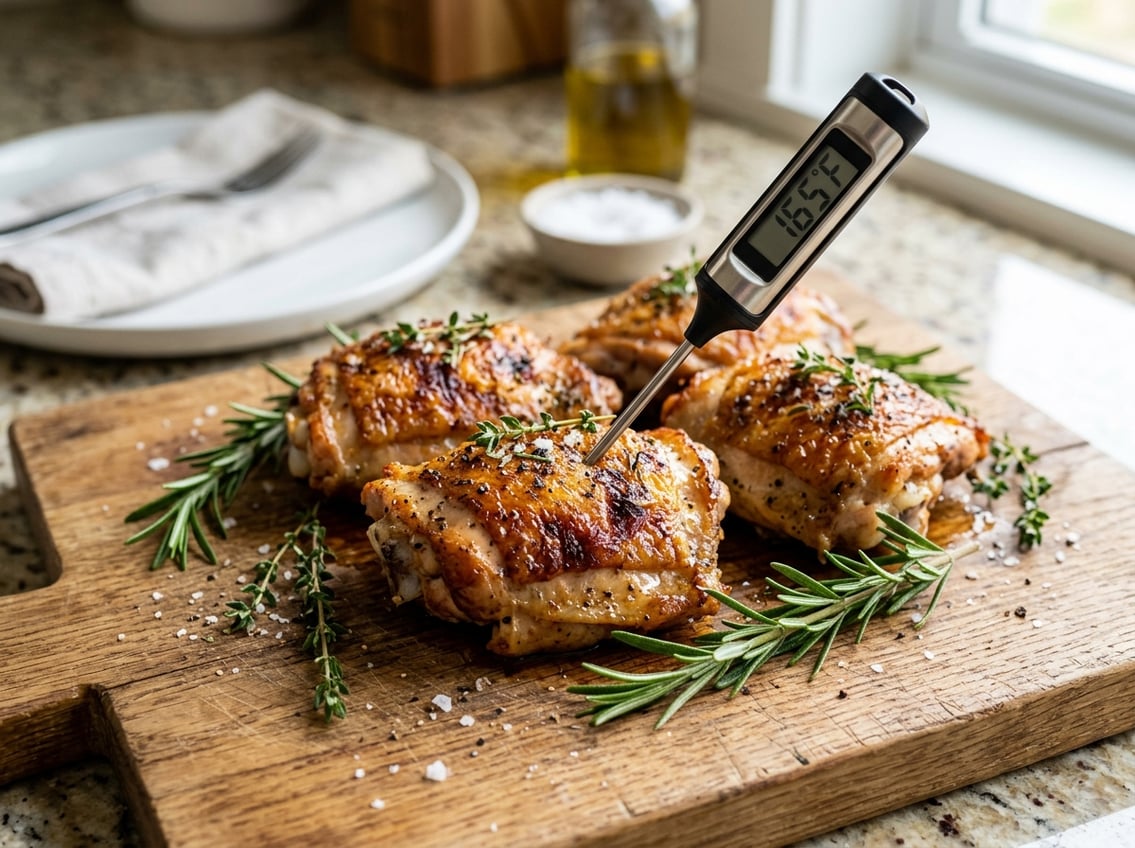
You can check doneness accurately with an instant-read thermometer. Bone-in and boneless thighs behave differently, and slower cooking or higher final temps break down connective tissue to change texture.
You’ll find safe temperatures, timing, oven settings, and simple tweaks to boost flavor and crisp skin so your next batch comes out just right.
Understanding Safe Internal Temperatures
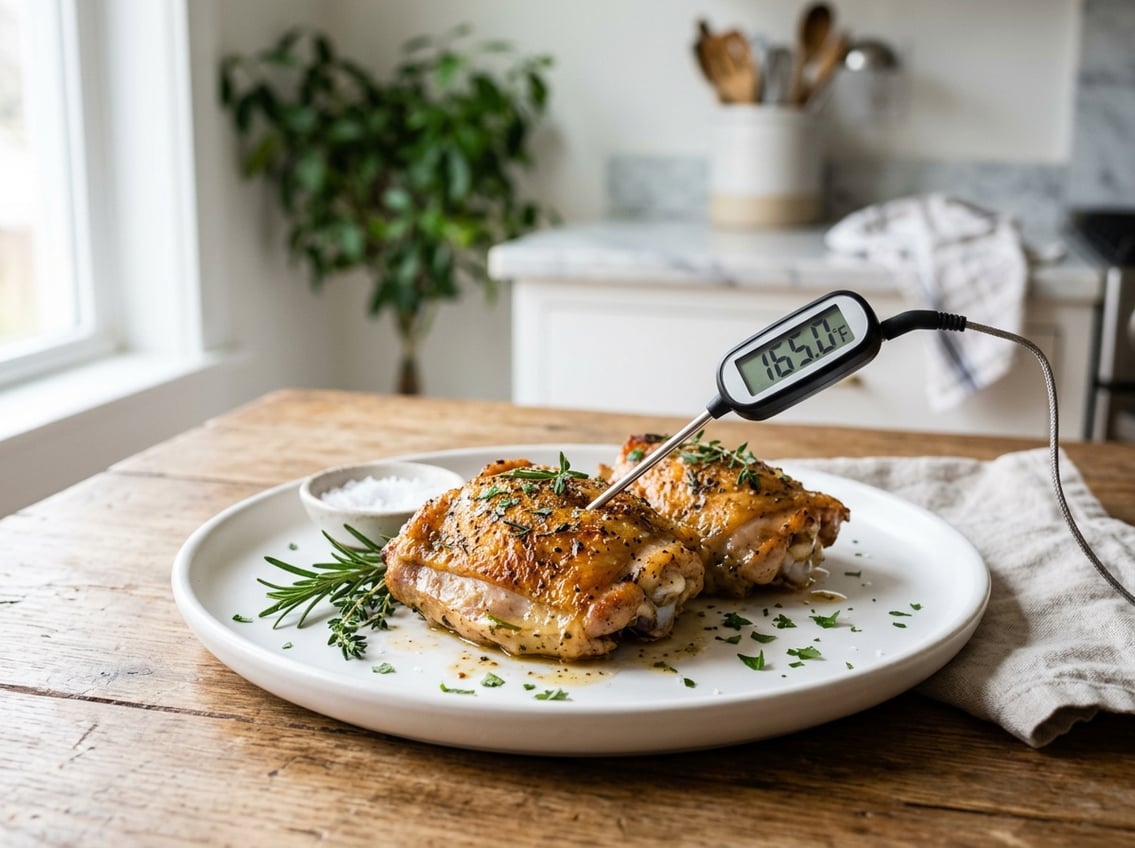
You need to reach a safe internal temperature to kill pathogens. You can choose higher final temperatures to change texture and tenderness.
Use an instant-read thermometer in the thickest part of the thigh, avoiding bone, to check doneness.
USDA Minimum Recommendations
The USDA sets the minimum safe internal temperature for all poultry at 165°F (74°C). At this temperature, common pathogens like Salmonella are effectively reduced.
Insert an instant-read thermometer into the thickest part of the thigh, at least 1/4 inch from bone, and wait for a stable reading.
If you hold meat at temperatures below 165°F, you must extend the cooking time to achieve equivalent pathogen reduction. For home cooking, following 165°F is the simplest and safest approach.
Why Higher Temperatures Can Improve Results
Cooking chicken thighs to 175–195°F improves texture because dark meat contains more connective tissue and collagen. As temperature rises above 165°F and collagen breaks down, the meat becomes juicier and more tender.
Higher internal temperatures usually require longer cooking time or gentler heat to avoid drying the exterior. Roasting or braising thighs to 190–195°F produces a melting texture.
Grilling indirect or slow-roasting to 175°F gives a balance of juiciness and firmness. Track both internal temperature and approximate cooking time for reliable results.
How to Accurately Measure Doneness
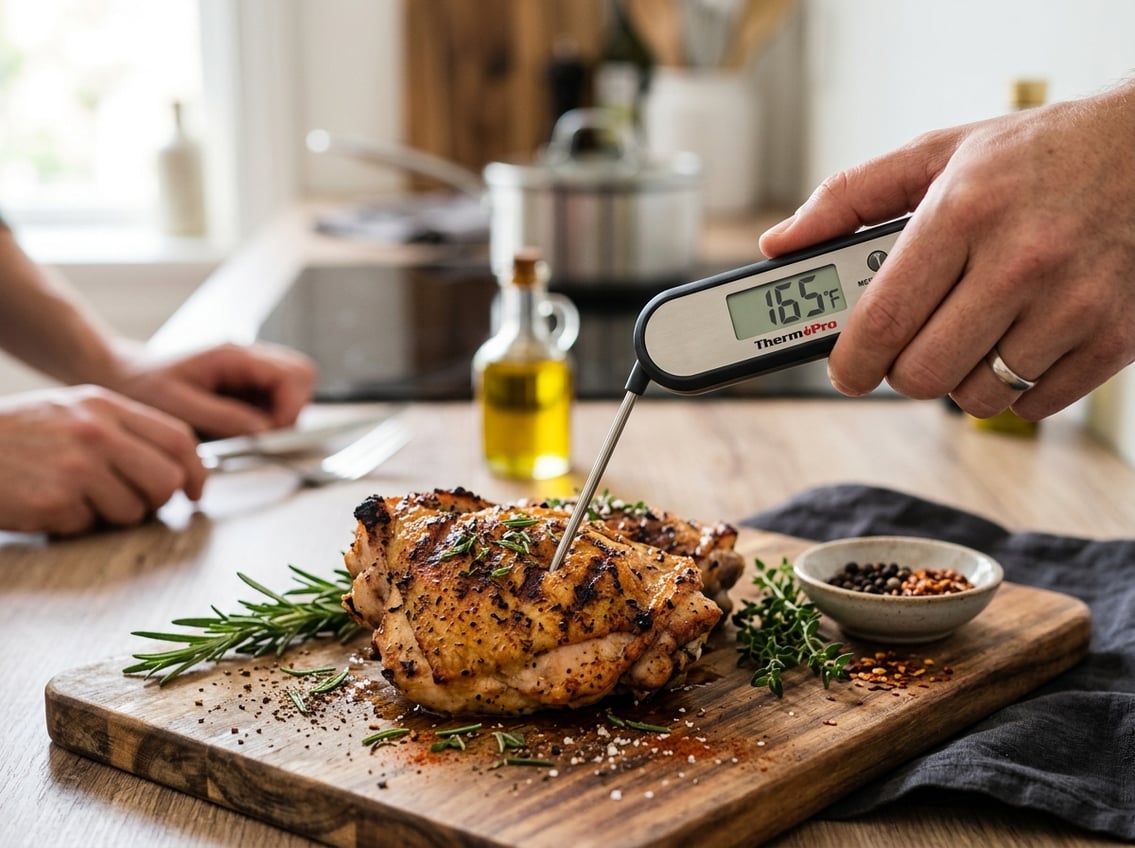
Use a reliable thermometer and place the probe into the thickest part of the thigh. Allow a short rest so carryover heat finishes the job.
Avoid relying on color or juices alone; temperature gives a numeric, repeatable result.
Using a Meat Thermometer
Use a calibrated meat thermometer and insert the probe into the thickest part of the thigh, avoiding bone and large fat pockets. Bone heats faster and gives a falsely high reading.
Read the thermometer when the probe has stabilized. For digital probes, wait until the display stops changing; for dial types, allow a full 15–20 seconds before reading.
Target the chicken thigh internal temperature at 165°F (74°C) for safety. For slightly more tender meat, remove boneless thighs at 160°F (71°C) and let them rest 3–5 minutes to reach 165°F by carryover.
Clean the probe with hot, soapy water or sanitizer between tests to avoid cross-contamination. Calibrate regularly by checking boiling water (should read ~212°F / 100°C at sea level) or ice-water (32°F / 0°C).
Instant-Read vs. Traditional Thermometers
Instant-read thermometers give a rapid, digital readout in 2–10 seconds and work well for quick spot-checks. They are convenient when you check multiple thighs during roasting or grilling.
Traditional dial or analog thermometers are sturdier but slower. They require 15–30 seconds for an accurate reading and can be left in meat during cooking if rated for oven use.
Use oven-safe models when monitoring without opening the oven frequently. Choose an instant-read if you value speed and frequent checks; choose a leave-in probe thermometer for continuous monitoring during long cooks.
Regardless of type, avoid touching bone and always verify accuracy with calibration checks.
Visual and Physical Cues
Color and juices can help but aren’t definitive. Fully cooked thigh meat will pull away slightly from the bone and the juices will run clear.
Check texture by pressing the thickest part; cooked thigh should feel springy and offer slight resistance, not mushy. Cut one thigh open only if you lack a thermometer; the meat should show no translucent, raw-looking bits near the bone.
Combine cues with temperature checks for best results. Use physical signs to locate where to probe, then confirm doneness with the thermometer.
Optimal Temperatures for Different Textures
Set temperatures to match the texture you want. Use moderate heat and shorter time for juicy, slightly firm thighs.
For shreddable, fall-off-the-bone results, use slow, prolonged cooking. Use an instant-read thermometer placed in the thickest part, avoiding bone, and measure after resting.
Juicy and Tender Chicken Thighs
For juicy, tender chicken thighs that still hold their shape, target an internal temperature of about 170–180°F (77–82°C). This range gives you cooked, safe meat while preserving moisture and a pleasant bite.
Cook boneless thighs faster than bone-in. Expect roughly 15–25 minutes at 400°F (204°C) for boneless, and 25–35 minutes for bone-in, depending on size.
Check the thickest part with an instant-read thermometer. Rest the thighs 5–10 minutes after cooking.
Carryover heat will rise a few degrees and settle the juices, improving texture. For crisp skin, finish at higher heat or under a broiler for 2–4 minutes after the thighs reach the target temp.
Fall-Off-The-Bone Results
For shredded, fall-off-the-bone thighs, cook to 190–195°F (88–91°C) and hold there long enough for collagen to break down. Use low-and-slow methods such as braising at 300–325°F (149–163°C) or slow-cooking for several hours.
Braises take 1.5–3 hours depending on liquid and pan size. Slow cooker times typically run 4–6 hours on low.
This higher range yields suppler meat and deeper flavor. Use a thermometer to avoid overshooting 205–210°F, where meat can become stringy and lose characteristic chicken flavor.
Risks of Overcooking
Overcooking can dry and toughen thighs, especially above 205°F (96°C). At this range, muscle fibers contract excessively and become stringy.
Cooking too quickly at high heat can sear the exterior while leaving the interior underdone. Monitor temperature rather than relying solely on time.
Insert the thermometer away from bone, pull the thighs a few degrees before your final target if you plan to rest them, and adjust cook time based on thickness.
Oven Temperatures and Cooking Times
Choose oven temperature based on skin crispness, cooking speed, and whether the thighs are bone-in or boneless. Internal doneness is reached at 165°F (74°C); oven temp controls texture and required minutes.
Baking at 375°F, 400°F, and 425°F
375°F gives you gentle, even cooking. Bone-in thighs take about 40–50 minutes and boneless thighs about 25–35 minutes.
Use a rack or rimmed sheet to allow airflow and promote even browning. 400°F balances speed and juiciness.
Boneless thighs commonly finish in 20–30 minutes; bone-in take roughly 30–40 minutes. Check the thickest part with an instant-read thermometer and avoid touching bone.
425°F produces crisper skin and shorter times. Boneless thighs often finish in 15–25 minutes; bone-in typically need 25–35 minutes.
Watch closely in the final 5–10 minutes to prevent the exterior from overbrowning while the interior reaches 165°F.
Temperature and Timing for Bone-In vs. Boneless Thighs
Bone-in thighs take longer because the bone slows heat penetration. At 375°F, add roughly 10–15 minutes versus boneless; at 425°F, the gap narrows to about 5–10 minutes.
Plan on 30–50 minutes depending on size and oven variability. Boneless thighs cook faster and more uniformly.
They respond well to higher temps (400–425°F) for shorter times that lock in juices. Aim for an internal temp of 165°F and rest the meat 5 minutes before serving.
If you want slightly more tender connective tissue, you can remove from the oven at 160–162°F and let it rest to reach 165°F.
Effects of 450°F and 204°C Baking
Baking at 450°F (204°C) accelerates browning and crisps skin quickly. Bone-in thighs can finish in 20–30 minutes; boneless may need 12–20 minutes.
This high heat suits smaller pieces or when you want a roasted exterior fast. Monitor internal temperature closely with an instant-read thermometer and check earlier than expected.
If the skin is browning too fast, tent loosely with foil to prevent burning while the center reaches 165°F. Preheat the baking sheet and space thighs so hot air circulates around each piece.
Key Factors That Affect Cooking
Thickness, connective tissue, skin, and resting time change how long thighs need to hit a safe and satisfying temperature. Pay attention to thigh size, whether skin stays on, and how you rest the meat to control juiciness and crispness.
Thickness and Size of Thighs
Thicker or larger thighs take longer to reach target internal temperatures than small, thin ones. Measure at the thickest point with an instant-read thermometer.
Bone-in thighs typically read differently than boneless because the bone conducts heat. If a thigh is 1 inch thick, expect shorter cook times and quicker surface browning.
For 1.5–2 inch thick pieces, use lower, slower heat or finish in the oven to avoid overbrowning while the interior reaches 165–195°F, depending on your texture goal.
Use consistent sizing when cooking multiple pieces. A uniform batch ensures even doneness and helps you achieve a crispy skin without undercooking the center.
Skin-On Versus Skinless
Skin affects heat transfer, moisture loss, and browning. Skin-on thighs protect the meat from direct heat, retain juices, and allow you to develop crispy skin by starting skin-side down in a hot pan or finishing under a broiler.
Skinless thighs cook faster and brown less on the surface, increasing the risk of drying if you push temperature too high. Season skin well and pat it dry to maximize crispiness.
For skinless, consider a brief high-heat sear and then lower oven heat to preserve moisture. If you want both safety and a crisp exterior, target an internal temp appropriate for your texture (165°F minimum), then rest and optionally apply a short high-heat finish to crisp the skin.
Carryover Cooking and Resting
Carryover cooking raises internal temperature after you remove thighs from the heat; thicker pieces can climb 5–10°F during resting. Pull thighs when the thermometer reads a few degrees below your target to avoid overshooting your desired doneness.
Resting for 5–10 minutes lets internal juices redistribute, improving tenderness and reducing surface moisture so skin can stay crisp. Tent loosely with foil to retain heat without steaming the skin.
For pull-apart tenderness, aim higher (190–195°F) before resting. For juicy, sliceable thighs, pull at 160–162°F and let carryover reach at least 165°F.
Enhancing Flavor and Texture
Marinades and finishing techniques control both taste and mouthfeel. Use acid, salt, and fat for flavor penetration, and focus on drying and high heat for skin crispness.
Benefits of Marinating Chicken Thighs
Marinating seasons chicken beyond the surface and tenderizes connective tissue without raising the final internal temperature. Use a balance of 1–2 tablespoons acid (such as vinegar or citrus) per cup of oil.
Add 1–2% salt by weight or about 1 teaspoon kosher salt per pound of meat. Include aromatics like garlic, ginger, and herbs, and add umami boosters like soy or fish sauce for deeper savory notes.
Timing matters. Marinate boneless thighs for 30 minutes to 4 hours.
Marinate bone-in thighs for 2 to 12 hours. Longer acid exposure can change texture, so avoid overnight citrus-only marinades.
Pat thighs dry before cooking to improve browning. Reserve some marinade before it touches raw meat if you want a finishing sauce, or boil used marinade for 5 minutes to make it safe.
Tips for Achieving Crispier Skin
Dryness and high surface temperature produce crisp skin.
After you season the thighs, refrigerate them uncovered on a rack for at least 1 hour or up to 24 hours to dry the skin’s surface.
Before cooking, pat the thighs dry with paper towels. Brush the skin with a thin coat of oil or melted butter to promote even browning.
Use two-stage heat. Start at high heat (425–450°F) for 10–15 minutes to render fat and set the crust.
Then lower the temperature to 350–375°F to finish cooking to your target internal temperature (175–195°F for tender dark meat).
For extra crisp, finish under a hot broiler or sear in a cast-iron skillet for 1–2 minutes with the skin side down.
Monitor the temperature with a probe thermometer to avoid overcooking and preserve crispness.


